Truck Lift Kit Installation Cost: 2026 Guide to Budgeting Your Suspension Upgrade
The most expensive part of a suspension upgrade isn't always the kit itself; it's often the price of correcting a "budget" installation that fails when you're miles deep in the Colorado backcountry. You've likely spent hours browsing forums and comparing parts, only to realize that the truck lift kit installation cost varies wildly from one shop to the next. It's frustrating when a simple quote doesn't account for the technical reality of your specific rig or the precision required for a safe, reliable build. We understand that confusion because we live for these machines just as much as you do.
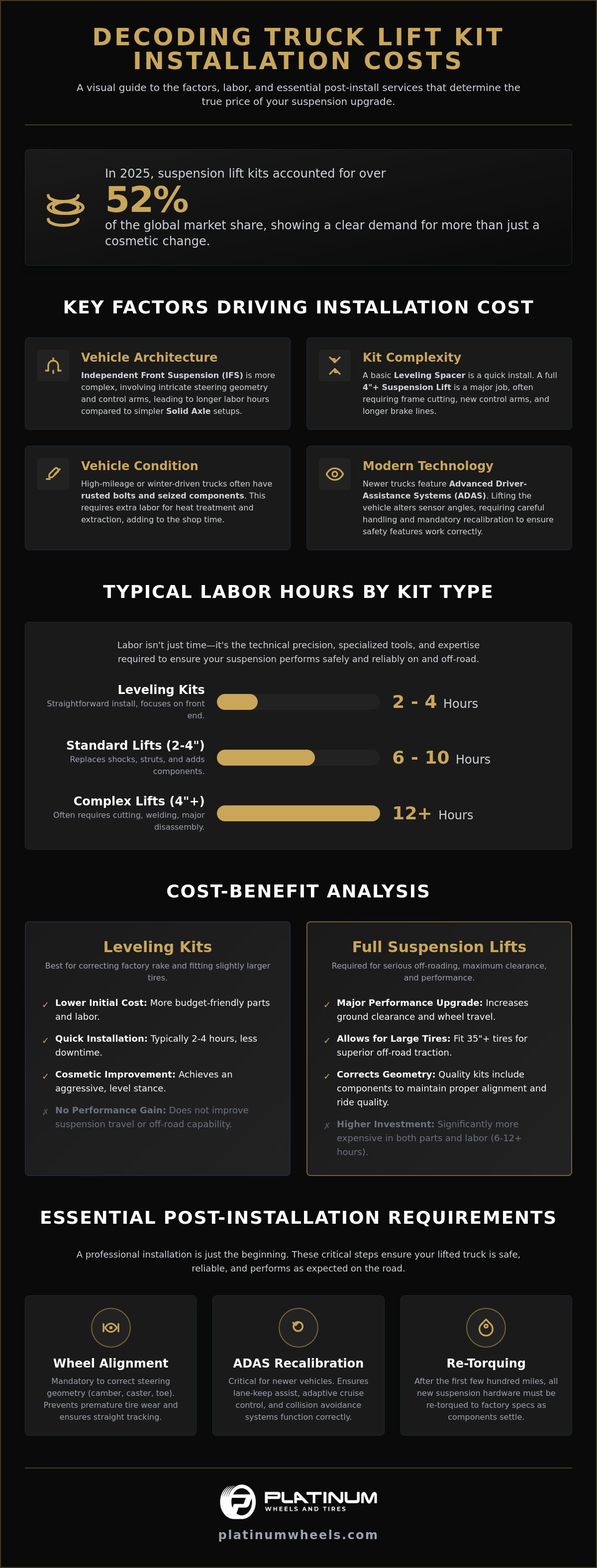
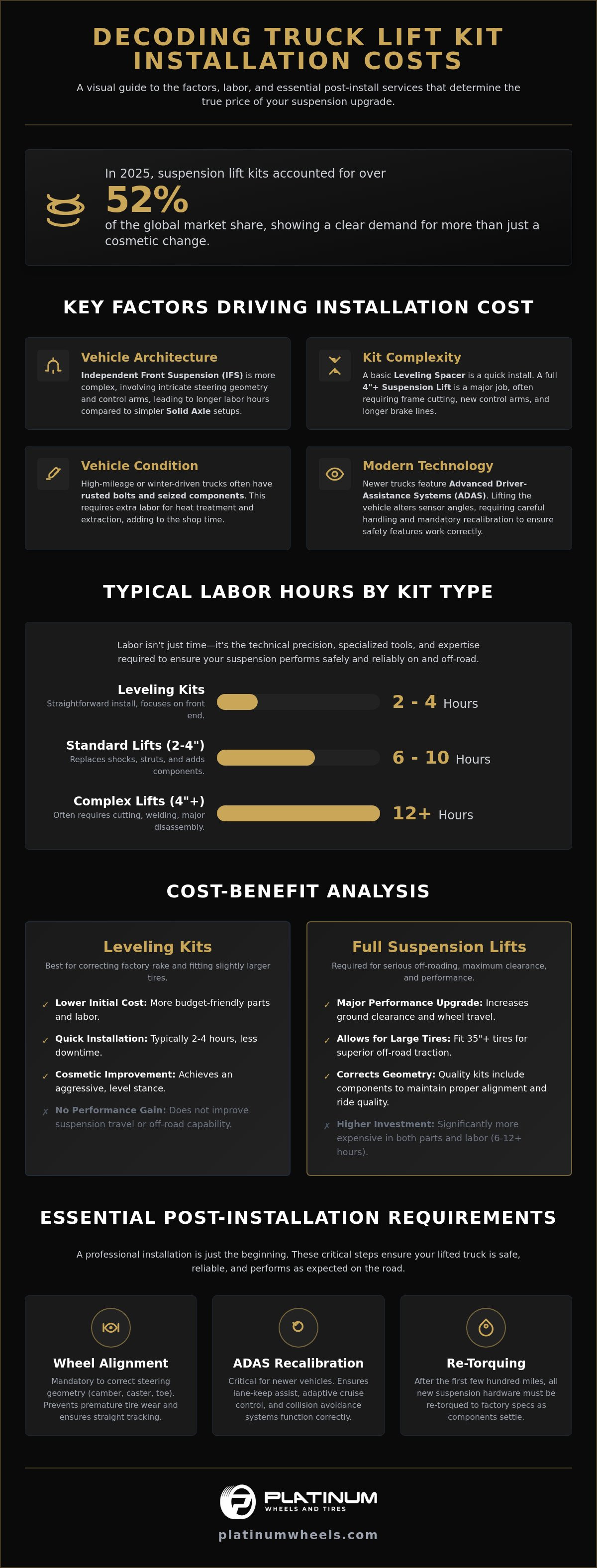
This guide breaks down exactly what drives those labor hours and helps you budget for a professional suspension upgrade that preserves your ride quality. Since suspension lift kits accounted for over 52% of the global market share in 2025, it's clear that most owners are looking for more than just a cosmetic change. You'll gain a clear understanding of why a six-inch lift requires significantly more shop time than a basic leveling spacer. We'll also provide an essential checklist of post-installation needs, such as professional alignments and re-torquing, so you can hit the trails with total confidence in your local expert's craftsmanship.
Key Takeaways
- Learn how your vehicle’s specific suspension geometry, like IFS versus solid axle, dictates the mechanical complexity and final price of your build.
- Understand how to calculate a realistic truck lift kit installation cost by evaluating labor hour requirements for different kit tiers and height levels.
- Compare the entry-point investment of a leveling kit against a full suspension lift to determine which upgrade best fits your Colorado off-roading goals.
- Identify critical post-installation requirements like professional wheel alignments and ADAS recalibrations that ensure your vehicle remains safe on the road.
- Discover why choosing a specialized suspension shop in Denver is vital for maintaining ride quality and performance on rugged mountain trails.
Factors That Influence Truck Lift Kit Installation Cost in 2026
No two trucks are built exactly the same, so your truck lift kit installation cost isn't a one-size-fits-all number. Whether you're prepping a Tacoma for the Alpine Loop or a heavy-duty Ram for towing through the Eisenhower Tunnel, several variables dictate the final shop bill. Precision matters when you're navigating Colorado's diverse terrain; a kit that isn't installed with an eye for detail will quickly show its flaws on a washboard mountain road. Understanding what happens under the chassis is the first step toward building a realistic budget.
Vehicle Architecture and Labor Difficulty
Modern trucks are more complex than ever. If your rig uses an Independent Front Suspension (IFS), the technician must work around intricate steering geometry and multiple control arms. This takes significantly more time than a traditional solid axle setup found on older vehicles or heavy-duty Jeeps. Additionally, 2026 models are packed with electronic sensors for lane-keep assist and adaptive cruise control. These systems require careful handling and recalibration to ensure your safety tech doesn't malfunction after the height change. For those driving older, high-mileage trucks, expect a few extra hours for labor. Colorado winters are tough on undercarriages. Rusted bolts and seized components often require heat or specialized extraction tools to clear the way for new parts, which adds time to the clock.
Kit Complexity: Basic Spacers vs. Full Long-Travel Systems
The scope of the hardware determines the depth of the work. A basic leveling spacer might only take a couple of hours because it sits on top of existing components without requiring a complete teardown. However, a true suspension lift that provides four inches of clearance or more is a different beast entirely. These kits often include extended control arms to fix alignment angles, drop crossmembers that may require cutting the factory frame, and longer brake lines or driveshaft spacers.
Higher lifts often trigger a chain reaction. When you move beyond three inches, you typically need to modify the steering linkage and driveline angles to prevent high-speed vibrations. This complexity is exactly why the truck lift kit installation cost increases as you aim for more altitude. You aren't just paying for the height; you're paying for the technical precision required to keep that height from ruining your truck's drivability. Local expertise is vital here, as shops in the Denver metro area understand how these modifications handle the steep grades and sharp turns of our mountain passes.
Labor vs. Parts: Understanding the Suspension Investment
Budgeting for your upgrade requires looking past the price tag on the box. While the hardware is the most visible part of your purchase, the labor required to integrate those parts into your vehicle's existing systems is where the true performance is built. Many owners spend hours researching how much does it cost to lift a truck only to realize that the truck lift kit installation cost is heavily influenced by the precision of the technician's time. Choosing "drive-away" packages that bundle parts and labor often saves money in the long run because it eliminates the risk of missing components or incorrect fitment that can occur with piecemeal upgrades.
Typical Labor Hour Ranges for Common Installs
A shop labor rate represents the professional standard for technical expertise, specialized insurance, and the overhead of maintaining precision equipment. You aren't just paying for time; you're paying for the assurance that your vehicle is handled by someone who understands the specific stress points of a modified suspension. Depending on the complexity of your chosen system, here is what you should expect for labor hours:
- Leveling Kits: 2 to 4 hours. These are the most straightforward, focusing on the front end to match the rear height.
- Standard Suspension Lifts: 6 to 10 hours. This involves replacing shocks, struts, and often adding rear blocks or leaf springs.
- Complex High-Clearance Systems: 12 or more hours. These installs often require cutting, welding, or significant disassembly of the front-end geometry.
What You Get with Professional Installation
The value of professional installation goes far beyond simply bolting parts together. A specialized shop uses equipment you won't find in a home garage, such as heavy-duty coil spring compressors and high-capacity lifts. Technicians follow strict torque sequencing and perform "bushing clocking," a process where bolts are tightened only when the vehicle is at its new ride height to prevent premature bushing failure.
Every professional install includes a safety inspection of your critical steering components to ensure the new height hasn't compromised your tie rods or ball joints. This level of care protects your warranty on both the parts and the labor. If you're ready to see how these factors apply to your specific rig, you can explore our lift kits and leveling kits to start planning a build that handles the Front Range with ease. We focus on getting the geometry right the first time so you can enjoy the view without the vibration.
Leveling Kits vs. Full Suspension Lifts: A Cost-Benefit Analysis
Deciding between a leveling kit vs lift kit often comes down to how you plan to use your truck on the weekend. While both modifications alter your vehicle's stance, they serve very different purposes and carry distinct price tags. If you simply want to remove the factory "rake" where the front sits lower than the rear, a leveling kit is your entry point. However, if your goal involves conquering rugged mountain passes or fitting aggressive custom wheels and rims, a full suspension system is the superior investment for long-term performance.
The Leveling Kit: Budget-Friendly Stance
To understand the lower entry cost, you first have to ask: what is a truck leveling kit? These systems typically use strut spacers or torsion keys to raise the front end by one to three inches. Because this modification works within the existing suspension's footprint, the labor is significantly lower. Technicians don't have to disassemble the entire front end or drop the subframe, which keeps your initial truck lift kit installation cost manageable.
The trade-off is functionality. Leveling kits are excellent for aesthetics and clearing slightly larger tires, but they don't increase suspension travel. In fact, over-extending your factory shocks with a spacer can lead to a stiffer ride on Colorado's washboard roads. You'll get the look you want for the Front Range commute, but you might find yourself limited when the trail gets technical.
Full Suspension Lifts: Maximum Performance
When you move to a full suspension lift, you're paying for a complete re-engineering of your truck's capabilities. These kits provide the necessary ground clearance to navigate deep ruts and rocky obstacles without dragging your skid plates. Unlike a basic spacer, a full system improves ride quality by utilizing upgraded shocks and coilovers designed for the new height.
The higher labor commitment is due to the sheer volume of work. Installing a four-inch or six-inch lift often requires subframe drops, new steering knuckles, and leaf spring replacements in the rear. It's a complex process that ensures your CV axle angles remain safe, preventing premature wear. This precision is vital for Colorado drivers who demand reliability during long hauls into the backcountry. While the truck lift kit installation cost is higher upfront, the result is a rig that can comfortably run 35-inch tires and handle the abuse of off-road adventure without breaking a sweat.
Hidden Costs of Lifting a Truck: Alignments and Calibrations
Think of the "box price" of your kit as just the starting line. Once the hardware is on the truck, the real work of making the vehicle roadworthy begins. Many owners overlook the technical adjustments required to keep a lifted rig safe and efficient. If you don't account for these variables, your total truck lift kit installation cost can balloon unexpectedly. Beyond the alignment, you might discover a need for extended brake lines or driveshaft spacers to prevent binding at full suspension droop. Precision calibration is what separates a professional build from a dangerous DIY project, especially when you're relying on your truck to handle the steep grades and unpredictable weather of the Front Range.
Post-Install Alignment and Steering Geometry
Every time you change the ride height, you alter the caster, camber, and toe of your front end. Even a minor shift in these angles can cause your steering to feel "flighty" or lead to a vibrating steering wheel at highway speeds. More importantly, improper geometry ruins brand-new all terrain tires in just a few hundred miles. You'll see uneven tread wear that forces an early replacement, effectively doubling your tire budget. Professional shops include a comprehensive alignment in the total project quote to ensure your truck tracks straight and handles predictably on mountain curves. This step is non-negotiable for anyone who values their vehicle's performance and their own safety on the road.
Speedometer and Sensor Recalibration
Lifting a truck almost always leads to larger tire diameters. This change throws off your speedometer and disrupts your transmission's shift points, which can lead to sluggish performance or increased wear on your drivetrain. Modern trucks also feature Advanced Driver Assistance Systems (ADAS) that rely on cameras and radar positioned at a specific factory height. When you lift the vehicle, these sensors "see" the road from a new perspective. They must be recalibrated so your pre-collision braking and lane-keep assist continue to function accurately. Without this step, your safety tech might trigger at the wrong time or fail to engage when you need it most on a busy I-70 commute.
Don't forget the smaller details that keep your dash clear of warning lights. Upgrading your tpms sensors ensures your pressure monitoring stays active with your new wheel package. You should also have your headlights adjusted; a lifted truck's beams sit higher and can blind oncoming traffic on narrow canyon roads. This isn't just a courtesy; it's a safety requirement for nighttime driving in the high country. If you want a build that's as safe as it is capable, contact our team to discuss a comprehensive installation plan that covers every technical detail from the ground up.
Choosing a Professional Lift Kit Installer Near You in Denver
The Denver metro area is full of "garage guys" who promise to install your suspension for a fraction of the professional rate. While the lower initial truck lift kit installation cost is tempting, it often comes with a total lack of accountability. If a bolt shears on a steep grade near Georgetown or your steering fails on a narrow canyon road, you have no recourse. Entrusting your build to a specialized shop ensures that every component is installed to exact specifications, backed by a professional warranty that covers both the hardware and the craftsmanship. We view ourselves as your neighbors and fellow enthusiasts, which is why we prioritize your peace of mind over a quick transaction.
Choosing a local expert who understands Colorado driving conditions is vital. Our vehicles face unique challenges, from the corrosive magnesium chloride used on winter roads to the extreme temperature swings that can affect bushing longevity. A general mechanic might handle your oil changes and brake pads perfectly, but they often lack the specialized equipment required for high-clearance suspension geometry. You need a team that lives and breathes off-road performance, ensuring your rig is as capable in the mud of the Front Range as it is on the pavement of I-25.
Why Specialization Matters
Platinum Wheels focuses exclusively on wheels, tires, and suspension. We don't get distracted by general mechanical repairs because we believe mastery requires a singular focus. This specialization allows us to serve the entire Denver metro area, from Aurora to Lakewood and Thornton, with a level of precision that general shops can't match. We have extensive experience fitting 35-inch tires and coordinating complex aftermarket wheel and tire packages that require perfect clearance. When you work with specialists, you're getting a team that knows exactly how a specific kit will behave on your specific truck model before the first bolt is even turned.
Getting Your Custom Quote
To receive an accurate truck lift kit installation cost, transparency is the most important factor. When you call for an estimate, be prepared to provide your vehicle's year, make, and model, along with the specific tire size you intend to run. This information helps us calculate the exact labor hours needed for your build, including any necessary trimming or recalibrations. We take a consultative approach to every project, helping you avoid "hidden" expenses by identifying potential needs like extended brake lines or specialized alignment shims upfront.
We believe in building relationships, not just trucks. Our goal is to ensure you understand every aspect of your investment so you can drive away with total confidence. If you're ready to transform your vehicle with a team that respects your time and your rig, contact Platinum Wheels for a professional lift kit consultation today. Let's build a suspension system that's ready for whatever the Colorado backcountry throws your way.
Ready to Elevate Your Colorado Adventure?
Budgeting for a suspension upgrade means looking beyond the box price to the technical precision required for a safe, capable build. You now understand how vehicle architecture and modern sensor calibrations directly influence the final truck lift kit installation cost. By prioritizing professional labor over budget shortcuts, you ensure your rig handles the Front Range with the stability and comfort you expect. Whether you're choosing a subtle leveling kit for a daily driver or a full suspension system for rocky trails, the focus should always remain on long term performance and safety.
Don't leave your vehicle's geometry to chance. Get a Professional Lift Kit Installation Quote in Denver from specialized suspension experts who live for the off-road lifestyle. We provide premium off-road wheel and tire packages and have been serving the Colorado Front Range since day one. Our consultative approach ensures there are no surprises; just a perfectly fitted truck that's ready to conquer the high country. Your next mountain mission starts with a solid foundation. Let's get your build moving toward the summit today.
Frequently Asked Questions
How long does a truck lift kit installation usually take?
A professional installation typically takes anywhere from 2 to 12 hours depending on the complexity of the kit and your vehicle's architecture. Leveling kits are generally completed in a single morning, while comprehensive suspension systems involving subframe drops and leaf spring replacements often require a full shop day or more. We prioritize precision over speed to ensure every component is torqued correctly for Colorado's rugged terrain.
Will lifting my truck void my factory warranty?
Installing a lift kit won't automatically void your entire factory warranty. Under the Magnuson-Moss Warranty Act, a manufacturer can only deny a claim if they can prove the aftermarket modification directly caused the failure of a specific component. For example, a lift won't affect your radio warranty, but it might impact claims related to ball joints. It is always smart to discuss modifications with your local Denver dealership beforehand.
Do I need to buy new tires immediately after a lift kit installation?
You don't have to buy new tires immediately, but most owners choose to upgrade because factory tires often look undersized once the vehicle is raised. If you keep your original tires, ensure they still have proper clearance and that the new suspension geometry hasn't created any rubbing issues. Many Front Range drivers wait until their current set wears out before jumping to a larger 35-inch tire size.
Is an alignment included in the installation cost?
Most reputable shops include a professional wheel alignment in the total truck lift kit installation cost because it is essential for safety and tire longevity. Changing your vehicle's height immediately alters its steering geometry, including caster, camber, and toe. Skipping this step can lead to a vibrating steering wheel and rapid tread wear. We ensure your truck tracks straight before you leave the shop to protect your investment.
Can I install a lift kit myself to save on costs?
While you can install a basic leveling kit with standard tools, full suspension lifts require specialized equipment like heavy-duty coil spring compressors and high-capacity lifts. Attempting a complex install at home is physically demanding and often leads to geometry errors that are more expensive to fix later. Professional installation provides the peace of mind that your rig is safe for both highway speeds and rocky trails.
What is the difference in labor cost between a leveling kit and a lift kit?
The labor cost for a leveling kit is significantly lower because it only modifies the front end and doesn't require extensive disassembly. A full suspension lift involves replacing shocks, struts, and potentially leaf springs, which triples the required shop hours. When calculating the truck lift kit installation cost, remember that the extra time spent on a full lift ensures your CV axle angles remain within safe operational limits.
Do I need to recalibrate my speedometer after a lift?
You should recalibrate your speedometer if your lift kit is paired with larger tire diameters. Larger tires travel a further distance per revolution, which causes your speedometer to read slower than your actual speed. This adjustment also corrects your transmission's shift points and ensures your odometer remains accurate. It is a vital step for maintaining your truck’s performance and avoiding potential speeding tickets on the commute.
How does a lift kit affect my truck’s resale value?
A high-quality, professionally installed lift kit often increases the resale value for buyers looking for a turn-key off-road vehicle. However, a poorly executed or budget installation can decrease value, as buyers fear underlying safety issues. Keeping detailed documentation of your professional install from a specialized Denver shop is the best way to prove the quality of the work and protect your vehicle's long-term equity.