
Expert 4 Inch Lift Kit Guide for Denver Truck Owners
What if a 4 inch lift kit gives your truck the stance you want but still doesn’t clear the tires you had in mind? That can happen because fitment depends on your vehicle, the kit design, wheel specifications, and tire size. It’s also worth considering how a lift may affect ride quality and everyday handling, especially if your truck or SUV is part of your daily routine around Denver.
The right setup involves more than lift height. A suspension lift can raise the frame and add clearance beneath parts of the chassis, but four inches doesn’t guarantee a particular tire size or the same driving feel on every vehicle. Matching the components to your vehicle and how you use it helps set realistic expectations before installation.
This guide explains what a 4-inch suspension lift changes, what it doesn’t promise, and how to assess vehicle-specific fitment. You’ll also find practical guidance on tire clearance, wheel choices, supporting components, and why installation planning should account for alignment. At Platinum Wheels, lift installation and wheel-and-tire fitment are planned together to help create a cohesive setup for Colorado Front Range driving.
Key Takeaways
- Use your vehicle’s year, model, drivetrain, and existing modifications to narrow down compatible lift options.
- Plan tire diameter alongside wheel width and offset to account for potential rubbing points.
- Weigh daily driving, winter conditions, towing, and trail use when deciding whether a 4 inch lift kit fits your priorities.
- Build a setup plan around your tire goals, wheel specifications, and the lift kit’s required components.
- Coordinate professional installation with wheel-and-tire fitment for a cohesive truck or SUV setup.
What a 4-Inch Lift Kit Changes on a Truck or SUV
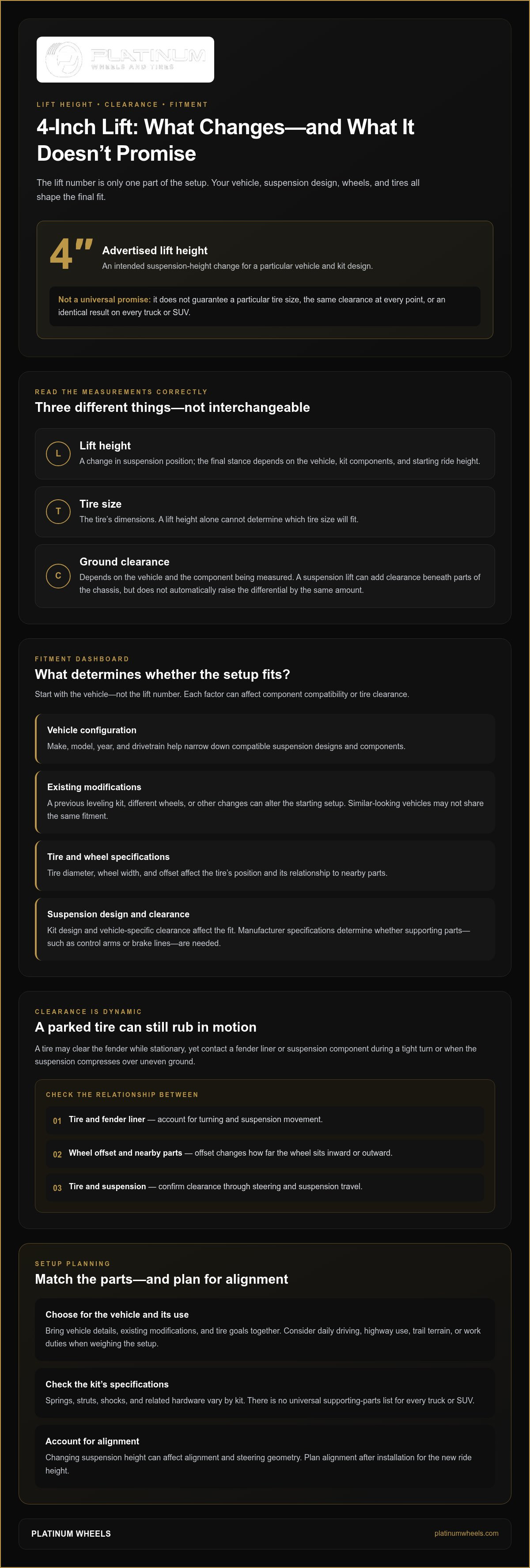
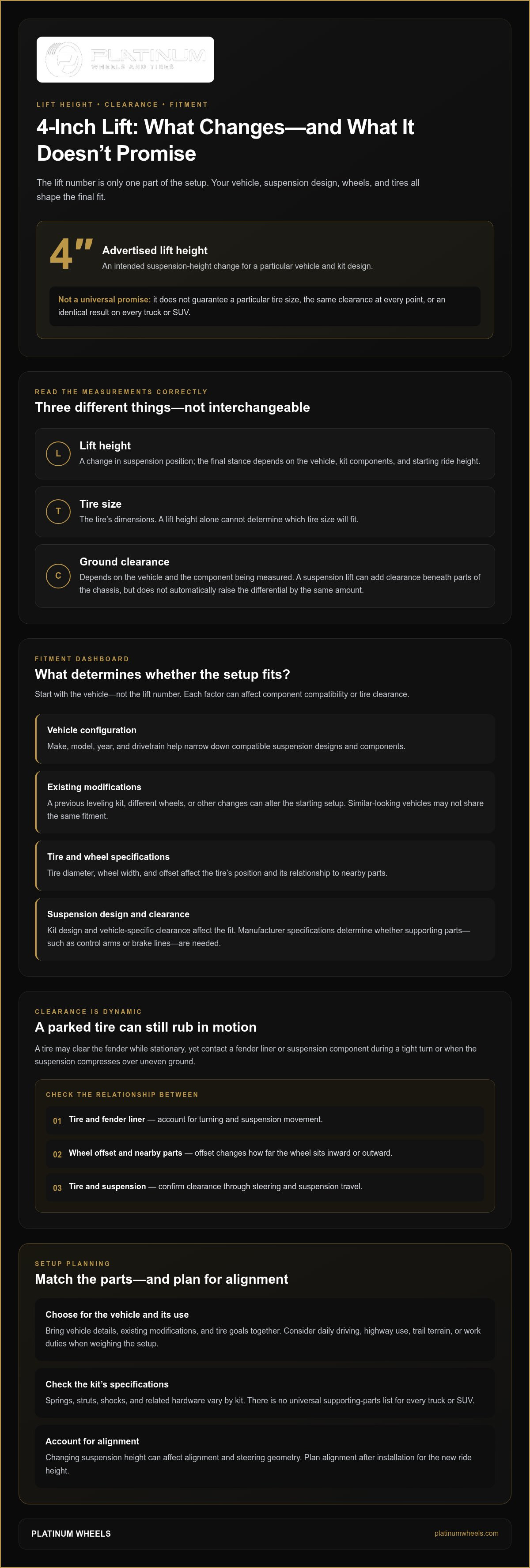
A suspension lift changes the vehicle’s suspension height, but the advertised number doesn’t promise a specific tire size or four inches of extra clearance at every point. Keep these terms distinct: lift height describes a change in suspension position; tire size describes the tire’s dimensions; ground clearance depends on the vehicle and the component being measured. The Suspension lift overview explains the basic concept and common goals, including appearance and off-road use.
A 4 inch lift kit is designed to raise the truck or SUV’s body and frame relative to its axles through changes to the suspension. That can increase clearance beneath parts of the chassis, but it doesn’t automatically raise the differential by the same amount. The result depends on the vehicle’s suspension design, the kit’s components, wheel and tire dimensions, and installation.
What does a 4-inch lift actually raise?
The advertised height describes the intended change for a particular vehicle and kit design, not a universal measurement across all trucks and SUVs. Vehicle-specific components and the starting ride height influence the final result, so the installed stance may differ from what the number alone suggests.
A body lift raises the body relative to the frame, while a suspension lift changes suspension height. A leveling kit generally addresses the vehicle’s front-to-rear stance rather than providing the same type or amount of lift as a full suspension system. These changes affect fitment differently, so the terms aren’t interchangeable.
Why do truck owners choose a 4-inch lift?
Owners may want a taller stance, more clearance beneath the chassis, or room to consider larger tires. Those goals can overlap, but one doesn’t guarantee the others. Tire fit depends on the vehicle, wheels, tires, and suspension setup, while usable clearance depends on the lowest components and where the vehicle will travel.
Start with the job the vehicle needs to do:
- Daily driving: Consider the taller step-in height and how the modified stance fits your regular commute.
- Highway use: Prioritize a setup that suits consistent road driving, not appearance alone.
- Trail use: Think about the terrain and the specific underbody clearance you want to improve.
- Work use: Account for how the truck is loaded and what its regular duties require.
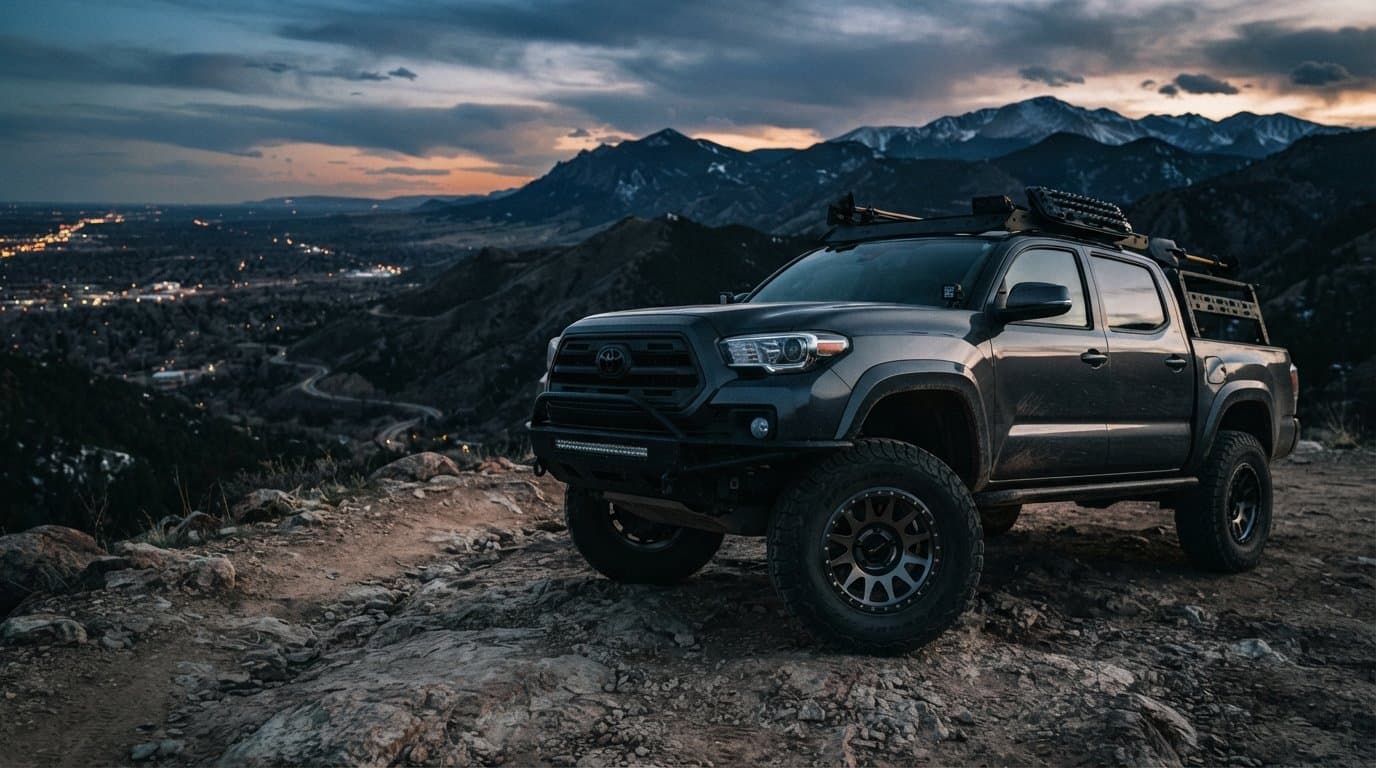
For Colorado Front Range drivers, a truck may handle paved commutes as well as routes toward trails and outdoor destinations. That local mix can shape your priorities, but a lift by itself doesn’t guarantee off-road performance. Matching the kit and wheel-and-tire setup to the vehicle and its intended use is what makes a height change a considered upgrade.
How a 4-Inch Lift Kit Affects Suspension, Tires, and Fitment
Fitment starts with the vehicle, not the lift number. Make, model, year, and drivetrain can affect which suspension design and components fit. For drivers researching factory equipment and trim specs on popular platforms like Ram trucks or Jeep SUVs, automotive dealerships such as Tom Whiteside Chrysler Dodge Jeep Ram can help clarify baseline vehicle configurations. Existing modifications matter too: a previous leveling kit, different wheels, or other changes may alter the starting setup. Don’t assume a 4 inch lift kit made for one configuration will fit another, even if the vehicles look similar.
Lift height alone cannot determine tire fitment. Tire diameter, wheel width and offset, suspension design, and vehicle-specific clearance all play a part. Tire clearance means more than whether a tire sits inside the fender while parked. It also needs room near the fender liner, suspension, and steering components as the wheels turn and the suspension moves over uneven ground.
How lift height relates to tire clearance
A larger tire may clear the fender at rest yet rub a liner or suspension component during a tight turn or when the suspension compresses. Wheel offset affects how far the wheel sits inward or outward, changing its relationship to nearby parts. That’s why lift height by itself can’t guarantee that a particular wheel-and-tire combination will fit without rubbing.
Choose tires based on where you drive, not just the space available. For a closer look at tread and use considerations for local conditions, read our Colorado all-terrain tire guide.
Why suspension geometry and supporting parts matter
Lift kits use different designs and combinations of springs, struts, shocks, and related hardware. Depending on the vehicle and kit, supporting components such as control arms or brake lines may also be part of the fitment plan. The applicable manufacturer’s specifications guide which components are needed. There isn’t one universal parts list for every truck or SUV.
Changing suspension height can affect alignment and steering geometry. Plan for alignment after installation so the vehicle can be set up for its new ride height. For broader context on how suspension-height options differ, see our leveling kit versus lift kit guide.
Fitment planning also sits alongside road-use considerations. The National Highway Traffic Safety Administration’s federal vehicle modification regulations discussion distinguishes federal vehicle standards from the regulation of suspension alterations, which is addressed at the state level.
Bring the vehicle details, existing modifications, and tire goals together before choosing components. Platinum Wheels coordinates lift installation with wheel-and-tire fitment for Colorado Front Range drivers. Explore vehicle-matched lift and wheel-and-tire planning as you shape a setup around your truck or SUV.
Is a 4-Inch Lift Kit Right for Daily Driving and Colorado Roads?
A four-inch lift can make a truck or SUV taller to climb into, change how it feels through turns, and affect how easily it fits into familiar routines. Those changes aren’t identical for every vehicle. The kit design, tires, wheels, and installation all shape the result, so weigh the everyday tradeoffs alongside the appearance or added clearance you want.
What changes for daily driving after a lift?
Expect a higher step-in and a taller position behind the wheel. The changed ride height can affect sightlines and your sense of the vehicle’s size, especially in parking garages or tight spaces. Tire construction and suspension components also influence ride feel. Ride and handling depend on the matched kit, vehicle, tires, and installation. A lift shouldn’t be treated as a guarantee of factory-like comfort or improved handling.
How should Colorado driving plans shape the decision?
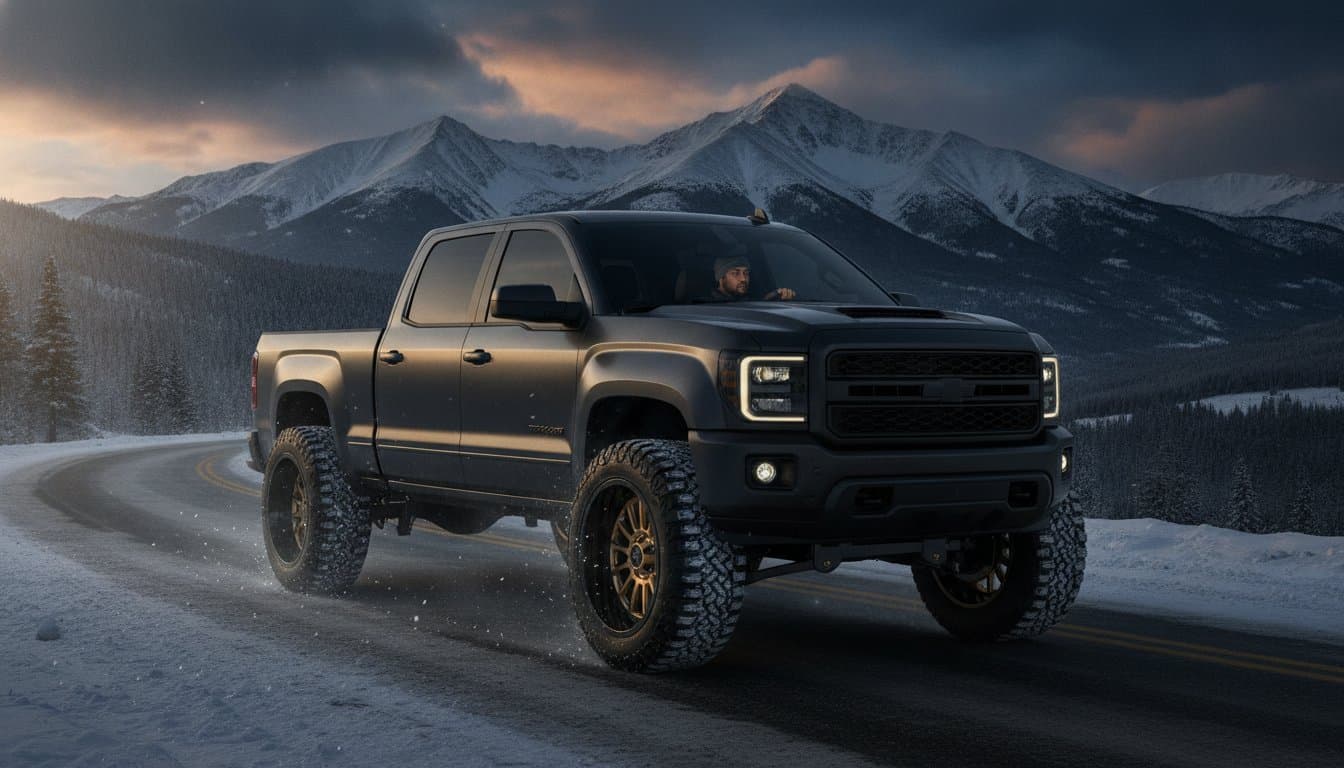
Think about the miles you drive most, then compare them with the occasional trips you want the truck to handle. Denver commuting, snow-season travel, mountain routes, and trail use place different demands on the setup. A taller stance may suit your goals, but it doesn’t replace appropriate tires, attentive driving, or fitment planned for your specific vehicle.
| Driving priority | What to weigh |
|---|---|
| Daily commuting | Step-in height, parking clearance, and comfort on regular paved routes. |
| Winter driving | Choose tires for the conditions; added height alone doesn’t provide winter traction. |
| Mountain routes | Consider how the truck’s taller stance and tire setup suit your usual roads and travel needs. |
| Towing or work | Keep the vehicle’s regular loads and duties in the decision, not just its appearance. |
| Trail use | Focus on the terrain and the specific clearance you want, while accounting for everyday convenience. |
A 4 inch lift kit may make sense for a truck that regularly heads toward trails, while a daily commuter may place more value on easy entry and familiar road manners. Neither priority is automatically right or wrong. Decide which tradeoffs you’re comfortable living with on ordinary days, not only how the vehicle will look or perform on an occasional outing.
How to Plan a 4-Inch Lift Kit and Wheel-and-Tire Setup
A well-planned 4 inch lift kit starts with your vehicle’s exact configuration and ends with a wheel-and-tire combination that suits how you drive. Work through the details in order instead of choosing a lift and hoping the rest of the setup falls into place.
What information should you gather before choosing a kit?
Start with the vehicle details and your goals. Manufacturer fitment information helps match a kit and its components to the specific truck or SUV, while tire and wheel choices define the rest of the setup. Use this checklist to prepare:
- Identify the vehicle: Record the year, make, model, trim, and drivetrain.
- Note current changes: List any existing suspension modifications, including a leveling kit or previous lift.
- Define its use: Describe your regular driving, work needs, and plans for winter roads or trails.
- Set tire goals: Choose the tire type and desired size based on use, then account for clearance and potential rubbing.
- Record wheel specifications: Gather wheel diameter, width, and offset, since these affect how the tire sits relative to suspension and bodywork.
- Match the kit: Compare the vehicle details with the manufacturer’s compatibility information and specified components.
For more context on wheel styles and fitment considerations, see our custom wheel and rim guide. Treat the kit, tires, and wheels as one coordinated decision, not separate upgrades.
What happens during professional installation?
Installation planning typically starts with assessing the vehicle’s existing setup, then moves to installing the vehicle-matched kit, fitting the selected wheels and tires, and planning a post-installation alignment. The specific checks and components depend on the vehicle and kit design, so the manufacturer’s instructions guide the work. Include alignment in the plan because suspension height changes can affect steering geometry and tire wear.
At Platinum Wheels, professional lift-kit installation is coordinated with wheel-and-tire fitment, including mounting and balancing. This brings the suspension choice and final fitment together as part of one vehicle-specific setup.
When planning your truck or SUV’s upgrade, explore lift-kit installation and wheel-and-tire fitment with Platinum Wheels.
Get a Vehicle-Matched 4-Inch Lift Kit Installed at Platinum Wheels
A successful upgrade isn’t just about choosing a lift height. Your vehicle’s configuration, daily driving, Colorado travel plans, tire goals, and wheel fitment all help shape the right setup. Platinum Wheels is a locally owned Colorado Front Range shop specializing in truck and SUV lift and leveling installations, with wheel and tire options to coordinate the rest of the build.
How Platinum Wheels helps coordinate the setup
Professional installation is part of the fitment plan. Platinum Wheels works with vehicle-specific lift and leveling setups, then coordinates suspension changes with custom wheels, off-road rims, and tires. This joined-up approach accounts for how wheel dimensions and tire choice relate to the vehicle and its intended use, rather than treating the lift as a standalone change.
Wheel-and-tire packages can bring key details together, including TPMS sensors, mounting, and balancing. Fitment depends on the vehicle and selected components, so the goal is a coherent setup built around the truck or SUV, not a one-size-fits-all recipe.
What to bring to your lift-kit planning conversation
Bring the details that will make the planning conversation practical. The more clearly you can describe your vehicle and how you use it, the easier it is to consider kit compatibility alongside tire and wheel choices.
- Vehicle information: Year, make, model, trim, and drivetrain.
- Existing modifications: Note any current lift, leveling changes, or other suspension modifications.
- Driving priorities: Share your regular commute, work or towing needs, winter driving, and Colorado trips or trail plans.
- Tire preferences: Describe the tire style you want and any size goals, keeping fitment in view.
- Wheel details: Bring current or preferred wheel dimensions, including width and offset if known.
Use the conversation to weigh those details together. A 4 inch lift kit should be considered in the context of the vehicle, its manufacturer-specific fitment, and the tires and wheels you intend to run, not by height alone. Platinum Wheels connects lift installation with coordinated wheel-and-tire fitment for Colorado Front Range drivers.
To plan a vehicle-matched setup, explore lift kit installation at Platinum Wheels.
Build a Lifted Setup Around Your Truck’s Needs
A 4 inch lift kit is a starting point, not a universal promise of tire clearance, ground clearance, or a particular ride. The best plan matches the kit to your vehicle’s exact configuration, then considers tire size, wheel specifications, and how you use your truck or SUV. Daily commutes, winter roads, work duties, and trail trips may call for different priorities.
Think of installation and wheel-and-tire fitment as parts of the same upgrade. Professional installation, vehicle-specific planning, and attention to alignment help bring the components together. At Platinum Wheels, a locally owned Colorado Front Range shop, lift and leveling installations can be coordinated with custom wheels, tires, TPMS sensors, mounting, and balancing.
For drivers in Denver, Aurora, Lakewood, Englewood, Wheat Ridge, Commerce City, Westminster, Thorton, Broomfield, Arvada, Golden, Littleton, Parker, Highlands Ranch, Castle Rock, Boulder, Fort Collins, and Colorado Springs, Platinum Wheels brings lift installation and wheel-and-tire fitment together in one plan. Explore lift kit installation at Platinum Wheels to map out an upgrade around how you drive.
Frequently Asked Questions
What does a 4-inch lift kit do?
A 4 inch lift kit changes the suspension height, raising the vehicle’s frame and body relative to its axles. This can create more clearance beneath parts of the chassis and change the truck’s stance, but it doesn’t add the same amount of clearance everywhere or guarantee a particular tire size. The final result depends on the vehicle, kit design, wheels, tires, and installation.
What size tires can I fit with a 4-inch lift?
There isn’t one tire size that fits every truck with a 4-inch lift. The right fit depends on the vehicle’s year, make, model, drivetrain, suspension design, and existing modifications, along with tire diameter and wheel width and offset. Clearance at the fenders, suspension, and steering components matters, including as the wheels turn and the suspension moves. Use the kit manufacturer’s fitment information to guide your tire choice.
Will a 4-inch lift affect my truck’s ride?
It can change how your truck feels on the road, but the result varies by vehicle and setup. Suspension components, tire size, and tire construction all influence ride quality and handling. A lift may also change entry height and how the vehicle feels through turns. Don’t assume a modification will preserve or improve the factory ride. A vehicle-matched kit and careful installation help make the setup more cohesive.
Can I daily drive a truck with a 4-inch lift?
Yes, a lifted truck can serve as a daily driver, but consider the practical changes before choosing a setup. A taller vehicle may be harder to climb into and can feel different on familiar roads. Think about commuting, parking, winter travel, and work or towing needs alongside appearance or trail use. Added height doesn’t replace tires suited to road conditions or attentive driving.
Does a 4-inch lift kit require new wheels and tires?
Not always. Your existing wheels and tires may work if their specifications and clearance suit the vehicle and lift, but the lift itself doesn’t guarantee that fit. If you want larger tires, wheel width and offset also affect how they sit and whether they may rub. Plan the suspension, wheels, and tires together, and account for TPMS sensors and proper mounting and balancing when changing the wheel-and-tire setup.
Does a 4-inch lift need an alignment?
Yes. Plan for a wheel alignment after installing a lift kit. Changing suspension height can affect steering geometry, and alignment helps set the wheels to the appropriate angles for the vehicle’s new setup. It’s an important step for vehicle control and to help limit uneven or premature tire wear. Include alignment in the installation plan, rather than treating it as an optional extra after the lift is complete.
How do I choose the right 4-inch lift kit for my truck?
Choose a 4 inch lift kit by matching manufacturer fitment information to your truck’s year, make, model, trim, drivetrain, and existing suspension changes. Then weigh daily driving, work, winter travel, trail use, tire type and size, and wheel specifications. Platinum Wheels supports truck and SUV lift and wheel-and-tire upgrades across Denver, Aurora, Lakewood, Englewood, Wheat Ridge, Commerce City, Westminster, Thorton, Broomfield, Arvada, Golden, Littleton, Parker, Highlands Ranch, Castle Rock, Boulder, Fort Collins, and Colorado Springs.