What Is a Truck Leveling Kit? A Complete Guide to Stance and Clearance
Your truck didn't come from the factory ready for the rugged demands of the Front Range. Most manufacturers design pickups with a noticeable nose-down rake, which might help slightly with aerodynamics but leaves your rig looking a bit weak and limited on the trail. If you've ever dealt with tires rubbing during a tight turn or felt your front end bottom out on a Colorado fire road, you've probably wondered, what is a truck leveling kit? It's a precision suspension adjustment designed to raise the front of your vehicle to match the rear, creating a perfectly balanced profile that's ready for work or play.
We understand the desire for a truck that performs as well as it looks. You want a rig that commands respect on the road and handles the dirt with confidence. In this guide, you'll discover how a leveling kit transforms your stance and provides the clearance needed to fit 33-inch or 35-inch tires without the headache of constant trimming. We'll walk through the technical differences between basic spacers, leveled struts, and high-performance coilover packages. By the end, you'll know exactly how to prep your truck for mountain driving while maintaining the smooth, reliable ride quality you expect.
A leveling kit is the most effective way to fix your truck's stance without compromising its utility. If you've been wondering what is a truck leveling kit and how it can transform your rig, this guide provides the professional insights you need. We agree that a truck should look as capable as it performs, and we promise to show you how to achieve that perfect balance. Below is a preview of the essential topics we cover to help you prepare your vehicle for the Colorado terrain.
• The Foundation: We define the mechanics of a leveling kit and explain why manufacturers design trucks with a nose-down factory rake. You will learn the technical purpose behind this design and how a leveling kit corrects it for a more aggressive profile.
• Stance and Fitment: Learn how to achieve a perfectly level profile while gaining the essential ground clearance needed for 33-inch or 35-inch off-road tires. We explain how to avoid tire rubbing while navigating rocks or snow.
• Kit Options: Compare the differences between affordable spacers, leveled struts, and high-performance coilover systems. We help you identify which kit type is compatible with your specific truck brand and driving habits.
• Geometry and Ride: Understand how suspension modifications affect your CV axles and control arms. We address the common concerns regarding ride quality to ensure your truck remains comfortable on the highway.
• Local Expertise: Discover why professional installation is critical for ensuring your truck survives the demanding conditions of the Denver Front Range. We highlight the importance of expert calibration for long-term reliability.
Defining the Truck Leveling Kit and the Concept of Factory Rake
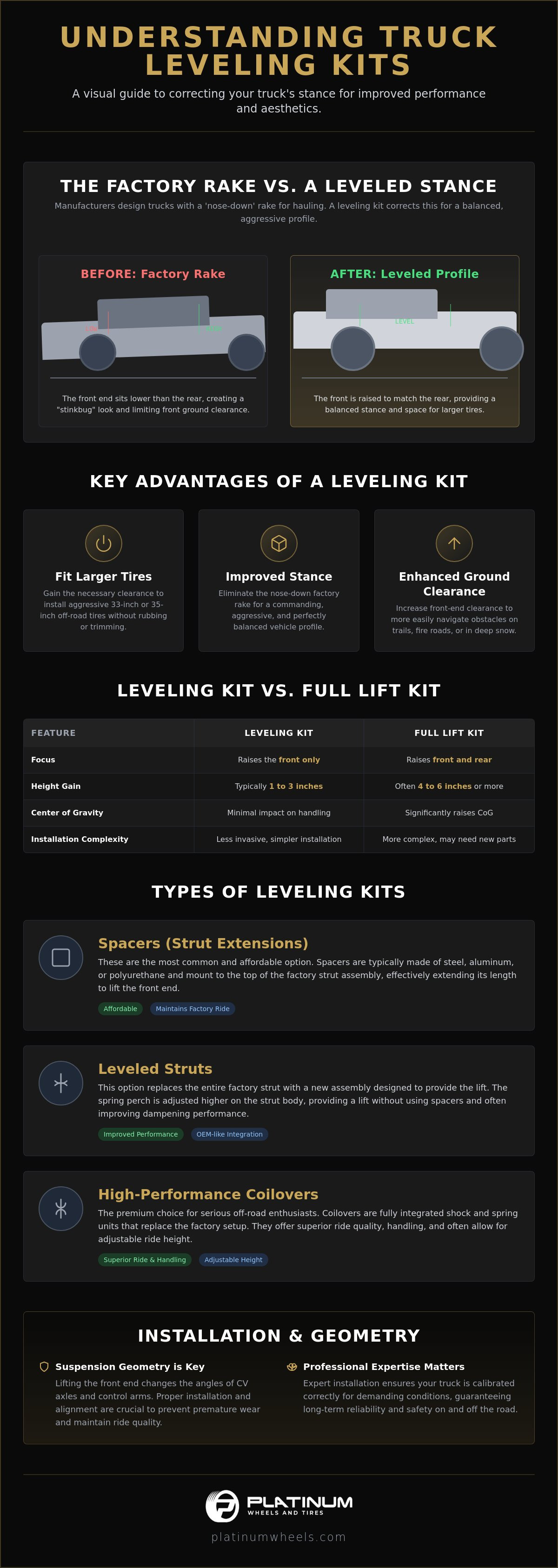
Walk into any dealership along the Front Range and you'll notice that almost every new pickup sits with its nose pointed toward the pavement. This isn't a manufacturing error; it's a deliberate design choice known as factory rake. For many owners, this uneven stance is the first thing they want to change. When people ask us, what is a truck leveling kit, they're usually looking for a way to fix that "stinkbug" look. Simply put, a leveling kit is a suspension modification designed to raise the front of your vehicle by one to three inches, bringing it perfectly in line with the height of the rear.
While factory rake serves a specific purpose for heavy hauling, it often feels impractical for daily Colorado driving. If you aren't constantly towing a heavy trailer, that nose-down attitude just limits your ground clearance and makes your truck look less capable than it truly is. A leveling kit provides a precision geometry correction that creates a balanced, aggressive profile without the complexity of a full-scale overhaul.
The Engineering Behind Factory Rake
Manufacturers engineer trucks with a higher rear end because they expect the vehicle to carry significant weight. Rear leaf springs are designed to compress under a heavy payload or tongue weight. When you drop a trailer onto the hitch, the rear drops, and the truck levels out. However, when the bed is empty, that extra height in the back can make the steering feel "flighty" or disconnected, especially when you're navigating the crosswinds and high speeds of I-70. By leveling the truck, you redistribute the visual and physical balance, shifting the aesthetic from a utility-focused work horse to a refined, off-road ready rig.
Leveling vs. Lifting: Choosing Your Path
Choosing the right modification depends on how you plan to use your truck. A leveling kit is a specialized type of suspension lift that focuses exclusively on the front axle. Because it typically stays within the one to three-inch range, it is much more affordable and easier to install than a full lift kit. Here are the primary differences to consider:
- Focus: Leveling raises only the front; lifting affects both axles to increase overall height.
- Height: Leveling usually caps at 3 inches, while lifts often reach 4 to 6 inches or more.
- Center of Gravity: Leveling has a minimal impact on handling, whereas tall lifts significantly raise the center of gravity.
- Complexity: Leveling kits are less invasive and usually don't require lengthening brake lines or driveshafts.
For many of our neighbors, a leveling kit offers the perfect "sweet spot." It provides enough room to fit larger tires and gives the truck a commanding presence on the road. It also serves as the essential foundation for choosing custom wheels and rims that truly fill out the wheel wells and complete the look of your build.
Why Truck Owners Choose Leveling Kits: Aesthetics and Clearance
Most truck owners decide to modify their suspension because they're tired of the "stinkbug" look. While we've discussed what is a truck leveling kit in terms of its mechanical definition, its true value lies in how it changes your daily driving experience. Beyond the visual appeal of a balanced profile, these kits provide functional advantages that are especially relevant for the varied terrain of the Denver Front Range. You gain a more commanding view of the road, which helps with visibility in heavy I-25 traffic, and you finally get the clearance needed to turn your pickup into a true off-road machine.
A level stance isn't just about vanity; it's about preparation. When your truck sits higher in the front, you're better equipped to handle unexpected obstacles without damaging expensive bodywork. Before you commit to a build, it is helpful to understand How Lift Kits Impact Driving Performance, as even a modest front-end adjustment can alter your fuel economy and handling dynamics. If you're ready to see how these changes look on your specific rig, our team at Platinum Wheels can help you visualize the perfect setup.
Fitting Larger Off-Road Wheels and Tires
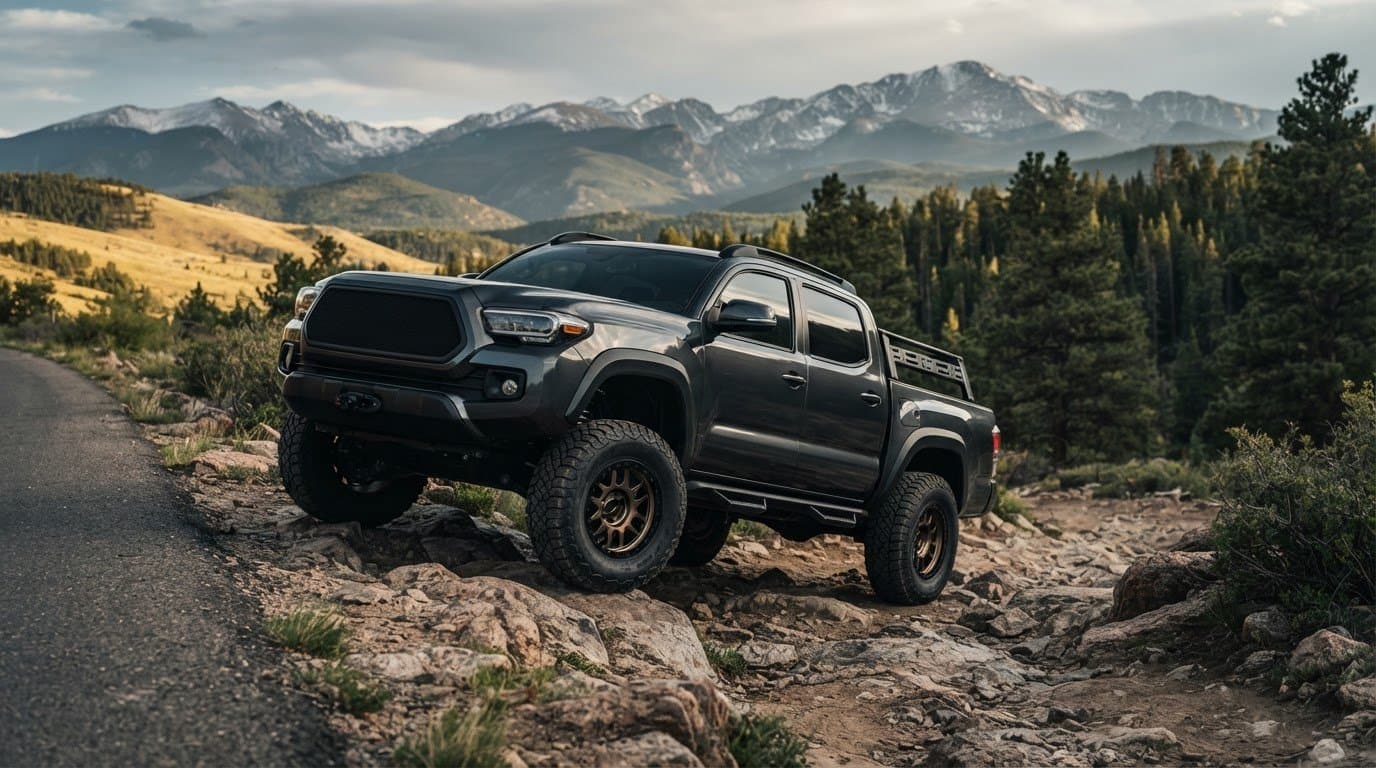
The primary reason for installing a leveling kit is often the desire for bigger rubber. A standard 2-inch leveling kit typically opens up enough space to fit 33-inch tires comfortably, and on some larger platforms like the Ford F-250 or Ram 2500, it can even accommodate 35-inch tires. However, height is only half of the equation. To avoid the dreaded "tire rub" when you're making full-lock turns into a parking spot, you must consider the relationship between your new height and your wheel offset. Using a kit to create space allows you to pair your rig with high-quality all terrain tires that provide the grip you need for mountain passes while maintaining a rub-free ride.
Improving Ground Clearance for Colorado Trails
In Colorado, ground clearance is a necessity rather than a luxury. The factory air dam hanging off your front bumper is often the first thing to get ripped off when navigating ruts or deep snow. By raising the front end, you protect the most vulnerable parts of your undercarriage from bottoming out on light trails or fire roads. This extra two inches of lift can be the difference between clearing a hidden rock and a costly trip to the repair shop. When winter hits, a level stance also prevents your front bumper from acting like a snowplow in deep drifts, ensuring you can navigate high-country roads with confidence.
The Different Types of Leveling Kits: From Spacers to Performance Coilovers
Choosing the right hardware starts with understanding that your truck's suspension design dictates the solution. While the goal remains the same, the path to achieving a level stance depends on whether you drive a late-model half-ton or a heavy-duty workhorse. When determining what is a truck leveling kit for your specific rig, you'll generally choose between three primary methods. Each offers a different balance of cost, complexity, and performance on the road. We don't believe in "one size fits all" solutions because a kit that works perfectly on a Ford F-150 might not be the right choice for a Ram 1500 with air suspension.
Strut Extensions and Spacer Kits
Spacer kits are the most popular and cost-effective entry point for modern trucks with independent front suspensions. This method involves bolting a spacer, usually made of high-grade aluminum or polyurethane, onto the top of your factory strut assembly. It's a straightforward fix that retains your factory spring rate, meaning your truck will ride very similar to how it did on day one. However, spacers have limits. If you go too large, you risk overextending your ball joints or CV axles. We recommend staying within the manufacturer's suggested tolerances to ensure your suspension can still "droop" or travel downward properly when you hit a pothole.
Torsion Keys and Replacement Springs
If you're driving a heavy-duty rig like a Silverado 2500 or a Sierra 3500, your suspension likely relies on torsion bars rather than coil springs. In these cases, we use re-indexed torsion keys. These replacement keys allow you to "crank" the suspension to a higher position without compromising the structural integrity of the bar itself. For older coil-sprung trucks, we often suggest replacement front coil springs. This method not only levels the truck but also refreshes a worn-out suspension. These kits require professional indexing and a precise alignment to prevent the truck from feeling stiff or "bouncy" on the highway.
Performance Coilover Upgrades
For the enthusiast who spends weekends exploring the Rockies, a performance coilover upgrade is the ultimate solution. Instead of adding a spacer to a factory part, you replace the entire front strut with a high-performance unit. These systems feature larger shock bodies for better heat dissipation and sophisticated valving that reacts faster to terrain changes. Many coilovers are also height-adjustable, allowing you to fine-tune your stance to the exact millimeter. While the upfront investment is higher, the improvement in damping and control makes it the preferred choice for anyone who demands precision on both washboard roads and paved mountain passes.
Performance Impact: How Leveling Affects Ride Quality and Geometry
A common concern for many owners is whether their rig will ride like a lumber wagon after a modification. When asking what is a truck leveling kit, you're really asking how it will change the feel of your daily commute. The truth is that a properly selected and installed kit shouldn't ruin your ride. In fact, many high-end systems actually improve the way your truck handles the bumps on I-25. However, because you're altering the factory-designed geometry, there are specific mechanical changes you need to monitor to ensure long-term reliability and safety.
Addressing the "Stiff Ride" Myth
Most basic spacer kits don't change your spring rate at all. They simply shift the entire strut assembly downward. While this preserves the original feel of the springs, it can limit your shock travel. If you hit a large dip, the shock might "top out" sooner than it did before, which creates a jarring sensation. Conversely, moving to a full coilover system can provide a more supple ride because the components are specifically valved for the new height. You should also be aware that raising the front end increases wind resistance. This shift in aerodynamics can cause a slight dip in fuel economy, though for most Colorado drivers, the trade-off for better clearance is worth the minor change at the pump.
Suspension Geometry and Long-Term Wear
Lifting the front end changes the operating angle of your CV axles and control arms. On 4WD trucks, steep angles can lead to premature wear on CV boots, eventually causing them to tear and leak grease. This is where professional expertise becomes vital. For kits over 2 inches, we often recommend upgraded Upper Control Arms (UCAs). These aftermarket arms are designed with a different pivot point that corrects the geometry, ensuring your ball joints aren't under constant stress. Maintaining proper "droop," which is the ability of the suspension to move downward, is essential for keeping your tires in contact with the road and preventing a bouncy ride.
The Critical Role of Re-Alignment
Installing a leveling kit changes your toe and camber settings instantly. If you drive away without a precision alignment, you'll notice steering "pull" and uneven tire wear within just a few hundred miles. A professional alignment brings these specs back into the "green zone," protecting your investment in new rubber. During this process, it's a great time to have a technician check your TPMS sensors to ensure your monitoring system is correctly calibrated for your new setup. If you're ready to transform your truck and ensure it's done right, you can browse our leveling kit options and find the perfect match for your build.
Professional Installation: Why Local Expertise Matters in the Denver Front Range
While you now have a clear understanding of what is a truck leveling kit and how it alters your rig's performance, the final step is ensuring the hardware is installed with absolute precision. Many online forums suggest that a leveling kit is a simple driveway project that only takes a few hours with basic tools. However, this perspective overlooks the significant safety risks and technical complexities involved. Handling heavy suspension components requires professional-grade spring compressors and high-torque impact tools that most home garages simply don't have. In the Denver Front Range, where our vehicles face extreme temperature swings and demanding mountain passes, a "close enough" installation isn't an option.
Local expertise is vital because Colorado driving conditions are unique. The road salt used on I-25 and the magnesium chloride applied to mountain roads can wreak havoc on cheap, unplated hardware. We select and install kits that are designed to survive our winters without seizing or corroding. Our commitment at Platinum Wheels goes beyond just bolting on parts; we provide a consultative approach that ensures your suspension longevity is prioritized alongside your truck's new stance. We treat every vehicle like it's our own, verifying that every component is dialed in for the long haul.
Precision Fitment for Larger Tire Packages
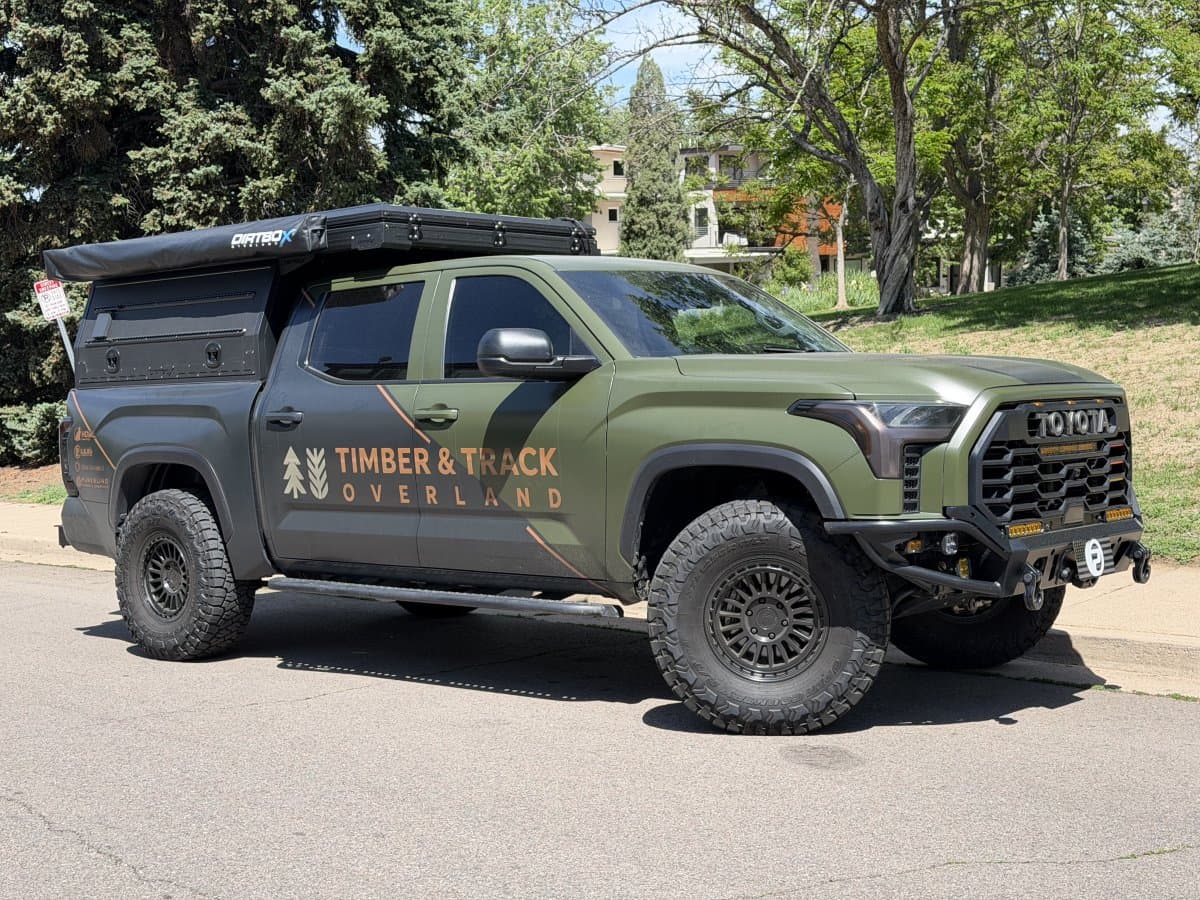
One of the biggest advantages of professional installation is our ability to predict exactly how your truck will react to new dimensions. We've seen hundreds of setups, and we know exactly where a 35-inch tire is likely to rub on a late-model F-150 or a Toyota Tacoma. Instead of "hacking" up your inner fenders or air dams after the fact, we use our experience to guide your choice of wheel offset and tire width from the start. We focus on the "Trim vs. Level" debate, aiming to maximize your tire size through proper suspension adjustment rather than invasive body modifications. This expertise allows us to create seamless wheel and tire packages that look factory-finished but perform with off-road authority.
Safety and Component Longevity
Safety is our primary concern during every installation. We don't just tighten bolts; we verify factory torque specs and carefully check for any interference with critical systems like brake lines and ABS sensors. A slight misalignment or a pinched sensor wire can lead to expensive repairs or dangerous failures on the trail. By choosing a specialist who focuses exclusively on truck and SUV suspension enhancements, you ensure your rig remains predictable and safe. Platinum Wheels is proud to serve the Aurora, Lakewood, and Denver communities with expert craftsmanship. If you're ready to upgrade your stance and clearance, come talk to a team that understands the specific demands of Colorado driving.
Take the Next Step Toward Your Perfect Build
A leveling kit is more than just a cosmetic upgrade. It's a strategic modification that corrects factory rake, protects your undercarriage from Colorado's rugged trails, and creates the essential clearance needed for aggressive tire packages. Whether you choose a simple spacer or a high-performance coilover system, understanding what is a truck leveling kit is the first step toward unlocking your vehicle's full potential. You've learned how these kits affect suspension geometry and why a professional alignment is non-negotiable for maintaining safety and tire life.
At Platinum Wheels, we have focused exclusively on truck and SUV suspension enhancements since our founding. We take pride in serving the Denver, Aurora, and Front Range communities with expert craftsmanship and neighborly advice. Our team has the specific experience required to ensure precise fitment for 35-inch tire packages without the need for unnecessary body trimming. If you're ready to transform your truck's stance and performance, we're here to help you navigate the technical details. Get a Professional Leveling Kit Quote at Platinum Wheels today and see why local expertise makes all the difference for your next adventure.
Frequently Asked Questions
Will a leveling kit void my truck warranty?
A leveling kit typically does not void your entire vehicle warranty. Under the Magnuson-Moss Warranty Act, a manufacturer cannot legally deny a warranty claim unless they can prove the aftermarket part directly caused the failure. If you have a suspension-related issue, the dealer might deny coverage for those specific components, but your engine, transmission, and electronics remain protected. We always suggest choosing high-quality hardware to maintain your peace of mind.
Can I install a leveling kit myself at home?
While a DIY installation is technically possible, it is often dangerous without professional-grade spring compressors and a vehicle lift. Many modern trucks require significant disassembly of the front suspension, and improperly seated springs can lead to catastrophic failure. Beyond the safety risks, you will still need a professional shop to perform the mandatory alignment immediately after the work is finished to prevent your tires from wearing out within a few hundred miles.
How much does a truck leveling kit cost with installation?
The total investment for a leveling kit depends on whether you choose a basic spacer or a high-performance coilover system. While spacers are the most budget-friendly hardware, the labor remains a significant factor because the front suspension must be partially disassembled regardless of the kit type. When you ask what is a truck leveling kit investment, remember to factor in the cost of a precision alignment, which is essential for protecting your tires and ensuring a safe ride.
Does a leveling kit affect towing or payload capacity?
A leveling kit does not change your truck's official payload or towing capacity, as these figures are determined by the manufacturer's frame and powertrain specs. However, because you have removed the factory rake, your truck will "squat" more noticeably when a heavy trailer is attached. If you frequently tow near your vehicle's limit, you might consider adding rear air bags or helper springs to maintain a level profile when the bed is fully loaded.
Will a leveling kit make my fuel economy worse?
Most drivers notice a small decrease in fuel economy after leveling their truck. By raising the front end, you increase the amount of air traveling underneath the vehicle, which creates more aerodynamic drag at highway speeds. The impact is usually minor, often less than one mile per gallon. However, if you use your new clearance to fit much heavier mud-terrain tires, the increased rolling resistance will have a more significant effect on your overall fuel consumption.
What is the biggest tire size I can fit with a 2-inch leveling kit?
A 2-inch leveling kit generally allows you to fit 33-inch or 35-inch tires, depending on your truck's specific make and model. While height is important, the wheel offset and backspacing are equally critical for preventing tire rub during full-lock turns. For example, a Ford F-150 can often clear 35-inch tires with a level, while a mid-sized truck like a Tacoma might require minor trimming to fit anything larger than a 33-inch tire without interference.
Is a wheel alignment necessary after installing a leveling kit?
A professional wheel alignment is absolutely necessary after any suspension modification. When you change the height of the front end, you instantly alter the toe and camber settings of your steering geometry. Driving even a short distance without an alignment can lead to a crooked steering wheel, poor handling, and rapid, uneven tire wear. We include an alignment as a standard part of our installation process to ensure your rig remains safe and predictable.
What is the difference between a leveling kit and a lift kit?
The primary difference between these two modifications is the amount of height added and which axles are affected. When considering what is a truck leveling kit versus a lift, remember that leveling only raises the front by 1 to 3 inches to match the rear. A full lift kit raises both the front and rear axles, often by 4 to 6 inches or more. Lift kits are more complex, expensive, and require more extensive modifications to the driveshaft and brake lines.