The Best All Season Tires for Lifted Trucks: A 2026 Buyer’s Guide
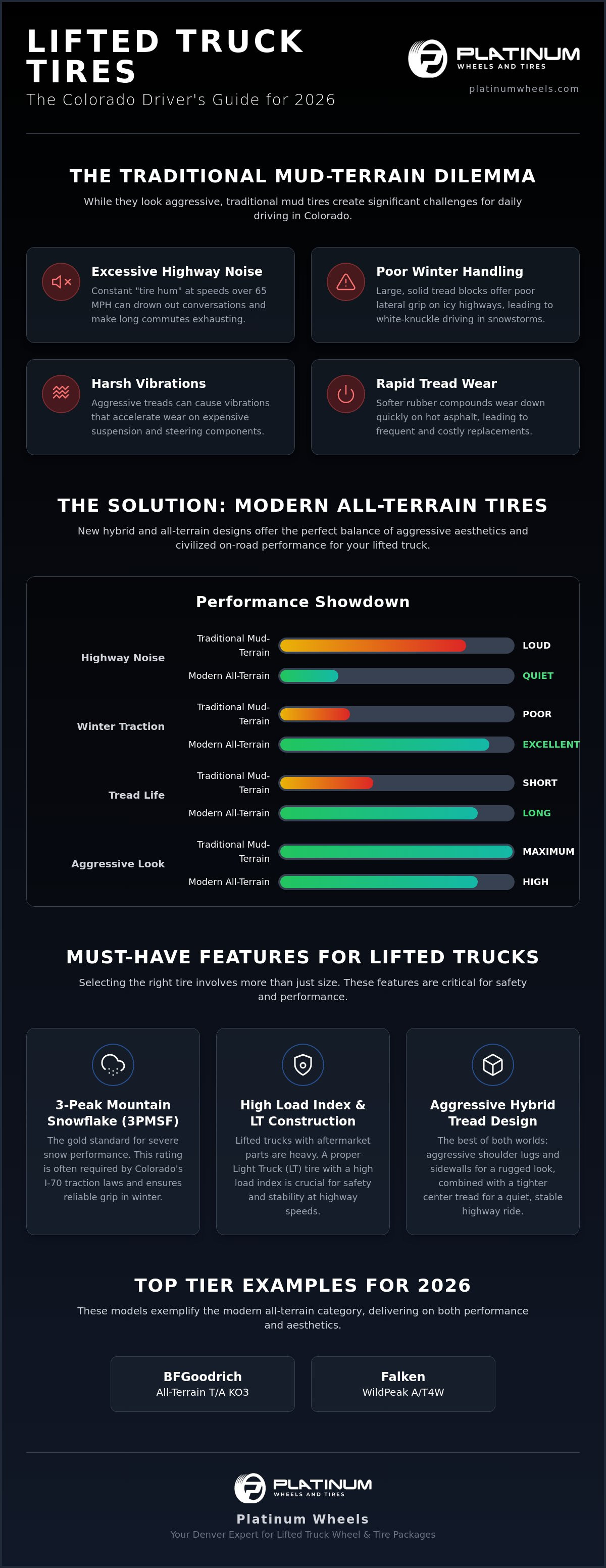
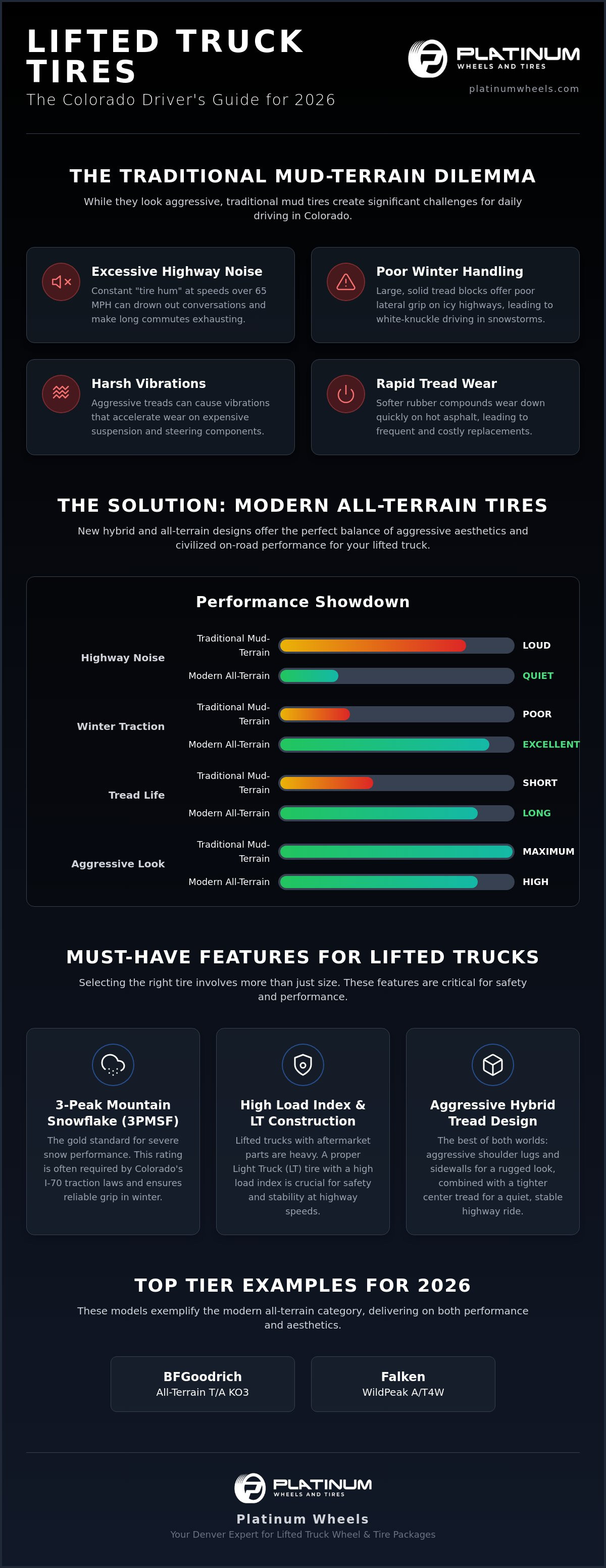
What if you could keep the aggressive stance of your lifted rig without the deafening hum and white-knuckle winter handling of traditional mud tires? Most Colorado drivers believe that choosing all season tires for lifted trucks means sacrificing a rugged off-road look for a boring highway tread. It's a common frustration to invest in a high-quality suspension upgrade only to deal with rapid tread wear, annoying vibrations, and poor traction during a surprise Denver snowstorm.
You shouldn't have to settle for a loud ride or unsafe winter performance just to maintain your truck's identity. We understand that your vehicle needs to handle the I-25 commute as well as it handles a weekend in the high country. This 2026 guide reveals how to achieve a quiet highway ride and longer tread life without losing that bold aesthetic. We'll preview the latest 3-Peak Mountain Snowflake rated options, like the BFGoodrich All-Terrain T/A KO3 and Falken WildPeak A/T4W, ensuring your setup delivers both professional-grade performance and the peace of mind you deserve in any weather.
Key Takeaways
- Learn why modern All-Weather tires with the 3-Peak Mountain Snowflake rating are the superior alternative to loud mud-terrains for Colorado driving.
- Discover how to select all season tires for lifted trucks that maintain an aggressive stance while eliminating highway vibration and excessive road noise.
- Master sizing and wheel offset techniques to fill your wheel wells perfectly on 2-inch or 4-inch lifts without causing tire rub.
- Understand the critical importance of load index ratings and TPMS sensor integration for maintaining the safety systems of your heavy, modified rig.
- Explore how custom wheel and tire packages can be tailored to handle the specific environmental demands of the Front Range and mountain passes.
The Challenge of Finding All Season Tires for Lifted Trucks
Lifted truck owners are reaching a breaking point with traditional mud-terrain tires. While those massive, chunky lugs look incredible in the driveway, the reality of driving them through Denver traffic or up to the ski resorts is often loud and exhausting. Constant road noise and steering wheel vibration can turn a premium build into a chore to drive. This has sparked a massive shift toward finding all season tires for lifted trucks that offer a civilized ride without neutering the vehicle’s aggressive personality.
Choosing the wrong rubber for a modified suspension leads to several common headaches:
- Excessive "tire hum" that drowns out the radio at 65 MPH.
- Vibrations that accelerate wear on expensive suspension components.
- Poor lateral grip on icy Colorado highways.
- Rapid, uneven tread wear on hot asphalt.
In the context of a heavy-duty or lifted vehicle, all-season tires aren't the same as the rubber you'd find on a local sedan. For a truck with a 4-inch lift and added weight from steel bumpers or winches, an all-season must possess a higher load index and reinforced sidewalls. Standard passenger tires simply lack the structural integrity to support these modified rigs; they wear out prematurely and compromise safety at highway speeds. We focus on finding setups that provide the durability of a light truck (LT) tire with the manners of a daily driver.
Why Highway Manners Matter for Your Lifted Rig
Commuting along the Front Range requires a tire that can pivot from dry asphalt to slushy mountain passes in a single trip. Aggressive mud-terrain tires often struggle with fuel economy because their high rolling resistance forces your engine to work harder. Switching to a refined all-season tread can noticeably improve your MPG, saving you money at the pump over thousands of miles. Beyond the wallet, the reduction in road noise makes long trips to the mountains much more enjoyable. All-season patterns also provide more biting edges for wet pavement, significantly shortening braking distances compared to the solid blocks of a mud tire.
The Aesthetic Dilemma: Performance vs. Stance
The biggest fear for any enthusiast is the "under-tired" look. If the tread is too smooth or the sidewall is too plain, a lifted truck can look disproportionate and weak. Finding the middle ground means looking for tires that feature aggressive sidewall lugs even if the center tread is optimized for the street. A hybrid tire is a specialized design for 2026 that fuses high-void outer shoulders for off-road traction with a densely packed center rib for highway stability and silence. This allowing you to maintain that wide, commanding stance while enjoying a ride that's smooth enough for daily duty.
All-Season vs. All-Terrain: What Do You Actually Need?
Choosing the right all season tires for lifted trucks is a balancing act between the dry, hot pavement of a Denver summer and the sudden, heavy snow of a mountain pass. Most drivers believe they must choose between a smooth-riding highway tire and a rugged off-road beast. However, the tire market in 2026 has introduced a sophisticated middle ground that perfectly suits the lifted lifestyle. The secret lies in the tread design. While standard all-seasons use shallow grooves for water evacuation, high-performance truck tires incorporate deep siping. These tiny slits in the tread blocks allow the tire to flex and bite into ice, providing the grip you need without the roar of a mud tire.
Durability is the next major factor. Lifted 4x4s are significantly heavier than stock vehicles, especially once you add aftermarket bumpers, racks, or winches. Standard all-season compounds can struggle under this extra weight, leading to heat buildup and "chunking" on the trail. We recommend looking for tires with a high load index and reinforced internal construction to ensure your rig remains stable at highway speeds. For more information on keeping your vehicle in top shape, the NHTSA provides excellent resources on Safety and Maintenance for Lifted Tire Setups.
Understanding the 3-Peak Mountain Snowflake Rating
In Colorado, the M+S (Mud and Snow) rating on a sidewall isn't enough for serious winter travel. The 3-Peak Mountain Snowflake (3PMSF) symbol is the gold standard, indicating the tire has been tested for severe snow performance. This rating is often a requirement for I-70 traction laws during winter storms. Top 2026 models like the BFGoodrich All-Terrain T/A KO3 and the Falken WildPeak A/T4W are technically all-terrain tires, but they behave like all season tires for lifted trucks by offering a quiet ride and incredible winter safety. These "all-weather" solutions are the real answer for Front Range drivers who want year-round reliability.
Highway Terrain (HT) vs. All-Terrain (AT)
Highway Terrain (HT) tires are designed for maximum comfort and longevity on asphalt. While they offer the longest tread life warranties, they often look "weak" on a lifted truck. Most of our customers prefer a "mild" All-Terrain (AT) tire. These provide the aggressive sidewall look that matches a lift kit while maintaining a rubber compound that stays soft in freezing temperatures. If you're unsure which tread pattern balances your commute with your weekend adventures, reach out to our local experts for a personalized recommendation. We'll help you weigh the benefits of a 60,000-mile warranty against the need for off-road durability.
Sizing and Fitment: Making All-Seasons Look Aggressive
One of the biggest concerns for truck enthusiasts is the aesthetic gap that occurs when moving away from chunky mud tires. If the tire doesn't fill the wheel well properly, a lifted rig can quickly lose its commanding presence. Achieving a muscular look with all season tires for lifted trucks requires a strategic approach to sizing. You aren't just looking for height; you're looking for the right combination of width and diameter to ensure your truck looks purposeful rather than "under-tired."
When you increase your ride height with a 2-inch or 4-inch lift, the factory tire size often looks disproportionately small. This is where the "pizza cutter" look comes from. Tall, skinny tires might work for certain narrow trails, but they often fail to deliver the wide, stable stance that most Colorado owners desire. To fix this, focus on increasing the tire width alongside the height. A wider footprint not only improves lateral stability on the highway but also provides that sought-after "bulge" beyond the fender line that defines a well-built truck.
Upsizing for the Perfect Stance
Moving from a 33-inch to a 35-inch tire is the most common upgrade for trucks with a 3-inch to 4-inch lift. However, every vehicle has different clearance tolerances. Before you commit to a specific size, use our wheel tire size calculator to see how a larger diameter will affect your speedometer and clearance. Increasing the wheel width from an 8.5-inch to a 10-inch rim can also stretch the tire's sidewall slightly. This makes an all-season tread appear more aggressive by squaring off the shoulder blocks, helping you fill that extra space created by your suspension upgrade.
Offset and Backspacing for Lifted Trucks
Wheel offset is the secret weapon for making a milder tread look rugged. By choosing a negative offset, you push the wheel and tire further away from the suspension components and toward the outside of the vehicle. This creates a wider track and a more aggressive stance. Pairing a set of black truck wheels in Denver with a wide-offset all-season setup provides a high-contrast, custom look that masks the lack of massive mud lugs.
Be mindful of the geometry, though. Extreme offsets can lead to rubbing on fender liners or the front bumper valance during full-lock turns. Our team specializes in finding the "sweet spot" where you get the maximum width without needing to perform major trimming or compromising your suspension's lifespan. Balancing these technical specs ensures your all season tires for lifted trucks look as good as they perform on the I-70 corridor.
Safety and Maintenance for Lifted Tire Setups
Installing a lift kit and all season tires for lifted trucks is a mechanical overhaul that demands ongoing attention. A higher center of gravity puts unique stresses on your rubber and suspension components. If you ignore proper maintenance, you'll quickly see uneven tread wear and feel a decrease in handling precision on winding mountain roads. Safety isn't just about the initial install; it's about how the vehicle behaves at 75 MPH on a rainy afternoon.
Professional alignment is mandatory after any suspension modification. A lift kit alters your vehicle's steering geometry, specifically the caster and toe angles. Without a precise alignment, your new tires will "scrub" against the pavement, leading to premature bald spots and a frustrating pulling sensation in the steering wheel. Likewise, you should stick to a strict rotation schedule every 5,000 to 6,000 miles. Larger-than-stock tires are prone to "cupping" if left in the same position too long, which creates a rhythmic thumping sound often mistakenly blamed on the tire's quality.
Load Range E vs. Load Range C
Most modern half-ton trucks come with Load Range C tires from the factory. However, when you move to a lifted setup with heavy aftermarket wheels and added gear, you should almost always step up to a Load Range E tire. These tires feature 10-ply construction, providing the stiff sidewalls needed for towing and cornering stability. Running under-rated tires on a heavy, lifted vehicle can lead to catastrophic sidewall failure and unpredictable swaying at highway speeds. You'll also need to adjust your air pressure (PSI). Larger volume tires often require different pressures than the factory door placard suggests to achieve an even contact patch across the tread.
TPMS and Dash Light Management
Swapping your factory wheels for custom rims often triggers the dreaded dash light headache. Your TPMS sensor system is calibrated to specific factory parameters. When you change tire volume and operating pressures, the system may flag a fault even if your tires are perfectly inflated. It's critical to have these sensors properly integrated and recalibrated during installation. We ensure your sensors are synced and functioning before you leave the shop, keeping your safety systems active and your dashboard clear of warnings. Ready to upgrade your rig with a setup that's as safe as it is stylish? Schedule your expert tire consultation with our Denver team today.
Why Platinum Wheels is Your Denver Expert for Lifted Tires
Our team lives and breathes the Colorado lifestyle, driving the same slushy mountain passes and sun-baked highways as you. Selecting the perfect all season tires for lifted trucks requires more than just looking at a catalog; it takes a deep understanding of how suspension geometry interacts with our local weather patterns. We specialize in the specific demands of the Front Range, ensuring your vehicle remains a capable daily driver whether you're navigating a July rainstorm in Denver or a February blizzard in the high country.
Every build we handle is treated with a focus on precision and reliability. Whether you are currently weighing the benefits of leveling kits vs lift kits or you've already completed your suspension work, we provide the technical expertise to finish the job correctly. Our "Platinum Fitment" guarantee is our promise to you: we deliver a setup with no rubbing, no annoying vibrations, and a stance that commands respect on the road.
A Consultative Approach to Your Build
Stop settling for "one size fits all" advice from big-box retailers who don't understand the nuances of a modified 4x4. As a premier wheel shop near me, we take a consultative approach to every project. We don't just sell rubber; we test-fit setups to ensure your 35-inch or 37-inch tires work perfectly with your specific lift height and wheel offset. This hands-on process allows us to identify potential clearance issues before you leave the shop. We take pride in serving the Arvada, Denver, and Aurora communities with honest, expert advice that prioritizes your safety and peace of mind.
Get Started on Your Lifted Truck Upgrade
Ready to transform your driving experience? Booking a fitment consultation at our Arvada or Denver locations is the first step toward a rig that handles as well as it looks. By combining your suspension service with a new tire purchase, you maximize efficiency and ensure your entire system is tuned for peak performance. We focus on optimizing all season tires for lifted trucks for maximum longevity and comfort, helping you get the most out of your investment. Don't let a loud, vibrating ride ruin your commute. Browse our custom wheel and tire packages today.
Elevate Your Colorado Driving Experience
Finding the right all season tires for lifted trucks is about more than just picking a tread pattern; it's about reclaiming your highway comfort while keeping that rugged stance you worked hard to build. We've explored how modern all-weather technology and precise wheel offsets can eliminate road noise and vibrations without sacrificing performance. A successful build relies on technical details like load index ratings and seamless TPMS integration to keep your rig safe on every mountain pass.
At Platinum Wheels, we specialize in Colorado truck builds that demand both style and resilience. Our team provides expert suspension integration and carries top-tier brands like Nitto, Toyo, and Fuel to ensure your vehicle is ready for any Front Range adventure. Whether you're commuting through Denver or exploring the high country, your truck deserves a setup that doesn't compromise.
Build your custom wheel and tire package at Platinum Wheels today! We're here to help you dial in the perfect fitment and get you back on the road with total confidence.
Frequently Asked Questions
Are all-season tires okay for a lifted truck?
Yes, all-season tires are a great choice for a lifted truck if you prioritize highway comfort and daily usability. Many Colorado drivers find that mud-terrain tires are overkill for the I-25 commute. Switching to an all-season or all-weather tread reduces road noise and improves wet-weather traction. Just ensure the tire has a sufficient load rating to handle the extra weight of your modified suspension and aftermarket accessories.
What is the quietest tire for a lifted truck?
Mild all-season or highway-terrain (HT) tires are the quietest options for a lifted rig. These tires feature a closed-shoulder design that traps air within the tread, preventing the loud whining sound common with mud-terrain lugs. If you want a rugged look with a silent ride, look for a hybrid tire. These offer aggressive sidewalls for aesthetics but use a dense center rib to keep the cabin quiet at highway speeds.
Do all-season tires look good with a lift kit?
All-season tires can look excellent with a lift kit if you get the wheel fitment right. The trick is to use a wider wheel and a negative offset to push the tire out toward the fender flares. This creates a muscular, wide track that fills the wheel wells perfectly. Pairing a mild tread with a set of custom black wheels provides a high-end, street aesthetic that many modern truck owners prefer.
Can I use highway tires on a lifted truck in the snow?
You can use highway tires in the snow, but only if they carry the 3-Peak Mountain Snowflake (3PMSF) rating. Standard all-season tires often harden in freezing temperatures, losing their grip on icy Colorado roads. For mountain driving, we recommend all-weather tires that feature deep siping. These tiny grooves bite into the snow and ice, providing safe braking and acceleration during winter storms on I-70 or through the foothills.
How much do all-season tires for lifted trucks cost in Denver?
Pricing for all season tires for lifted trucks in the Denver area fluctuates based on tire diameter and wheel width. Larger 35-inch or 37-inch tires require more material and reinforced sidewalls, making them a higher investment than stock sizes. While market trends in early 2026 showed a rise in manufacturing costs for the truck category, choosing a premium set now ensures better tread life and fewer replacements over the life of your vehicle.
Will all-season tires improve my lifted truck's gas mileage?
You will likely see an improvement in gas mileage when switching from aggressive off-road rubber to all season tires for lifted trucks. Mud tires have high rolling resistance due to their heavy weight and wide tread gaps. All-season tires are typically lighter and roll more smoothly on asphalt. This reduces the strain on your drivetrain, which is especially helpful for lifted trucks that already face aerodynamic challenges from their increased height.
What is the best tire for a lifted truck that never goes off-road?
The best choice for a truck that stays on the pavement is a premium all-weather or highway-terrain tire. These models are engineered specifically for longevity and wet-weather safety. They provide the most stable ride for high-speed commuting while offering a 60,000-mile or higher tread life warranty. Since you aren't worried about mud traction, you can focus entirely on ride quality and year-round performance in our local climate.
Do I need a specific load rating for lifted truck tires?
Yes, most lifted trucks require a Load Range E rating. Modified rigs are often heavier than stock due to lift kits, larger wheels, and heavy-duty bumpers. A Load Range E tire features 10-ply construction, which prevents sidewall flex and ensures the vehicle remains stable during cornering or towing. Using a tire with a lower load rating can lead to a squishy feel and increases the risk of a blowout under heavy loads.