TPMS Sensor Guide: Avoiding the Dash Light Headache in 2026
Imagine you are halfway up a steep mountain pass when the temperature drops fifteen degrees in minutes and that dreaded yellow horseshoe light starts blinking on your dash. It is more than just an annoyance; it is a major distraction when you need to focus on the road most. We all know the frustration of a dashboard light that refuses to go away, especially after you have just invested in a high-quality set of custom wheels. You want your ride to look sharp and perform safely without constant electronic interference or the fear of a tire failure in the backcountry.
This guide helps you master the tpms sensor so you can drive with total peace of mind. We will explain exactly how these precision tools work and why they are the most critical safety component of your custom wheel and tire package. You will learn the technical differences between direct and indirect systems, how to maintain sensor health during Colorado's brutal temperature swings, and how to ensure a seamless transition when upgrading to aftermarket rims. We are moving beyond the basic definitions to give you the expert knowledge required to keep your system accurate and your dashboard clear through 2026 and beyond.
Key Takeaways
- Learn why your vehicle's monitoring system is a vital safety requirement and how it protects you from high-speed tire failures.
- Identify the differences between direct and indirect technology to understand how your truck actually tracks air pressure.
- Discover why a specialized tpms sensor is necessary when upgrading to custom wheels to ensure perfect compatibility and performance.
- Master the impact of Colorado's climate on your tire pressure to avoid frustrating false alarms during sudden mountain temperature drops.
- Find out how professional programming ensures your new wheel and tire package integrates seamlessly with your vehicle's onboard computer.
What is a TPMS Sensor and Why Does Your Truck Need It?
A Tire-pressure monitoring system (TPMS) is far more than a simple dashboard warning. It is an active safety feature designed to provide real-time data about the air pressure inside your tires. For truck owners in Denver, this technology is indispensable. Whether you are airing down for a weekend on the trails or maintaining high speeds on the highway, your tpms sensor acts as a silent guardian against catastrophic tire failure. Proper inflation is the foundation of vehicle safety. When your tires drop below their recommended pressure, the contact patch changes, which compromises your ability to steer and brake effectively. In the unpredictable conditions of the Rockies, where a sudden storm can turn dry pavement into a slick mess, having accurate pressure readings is the difference between a controlled stop and a dangerous slide.
The TREAD Act and Automotive Safety
The federal government recognized the critical nature of tire pressure following several high-profile rollover accidents involving tire delamination in the early 2000s. To protect drivers, Congress passed the Transportation Recall Enhancement, Accountability, and Documentation (TREAD) Act. This legislation mandated that all light motor vehicles under 10,000 pounds must include a monitoring system to alert drivers when a tire is significantly under-inflated. The TREAD Act is a federal safety mandate requiring tire pressure monitoring for all light vehicles that reached full implementation in 2007. Beyond just following the law, these systems prevent dangerous heat-related blowouts. Under-inflated tires flex more, which generates excessive heat that can cause the rubber to fail at high speeds. By catching low pressure early, the system also reduces the risk of hydroplaning by ensuring the tire tread stays properly seated against the road surface.
Economic Benefits of a Working TPMS
Maintaining a functional tpms sensor is a smart financial move for any enthusiast. Tires are one of the most expensive recurring costs for a truck, especially if you have invested in premium mud-terrain or all-terrain rubber. Proper inflation ensures your tires wear evenly across the entire tread, preventing premature replacement.
- Reduced Rolling Resistance: Properly inflated tires move more easily. This directly improves your miles per gallon and saves you money at the pump.
- Preventing Cupping: Low pressure often leads to "cupping" or "feathering." This is a type of uneven wear that creates loud road noise and ruins your ride quality.
- Protecting Your Investment: A set of custom wheels and tires represents a significant upgrade. Keeping the sensors active ensures you don't ruin a brand-new tire because of a slow leak you didn't notice until it was too late.
Our team understands that a truck isn't just a tool; it's a lifestyle. Keeping your monitoring system in top shape protects that lifestyle, ensuring every trip into the mountains is as safe as it is enjoyable. We prioritize precision because we know that when you are miles from the nearest paved road, reliability is the only thing that matters.
Direct vs. Indirect TPMS: Understanding the Technology
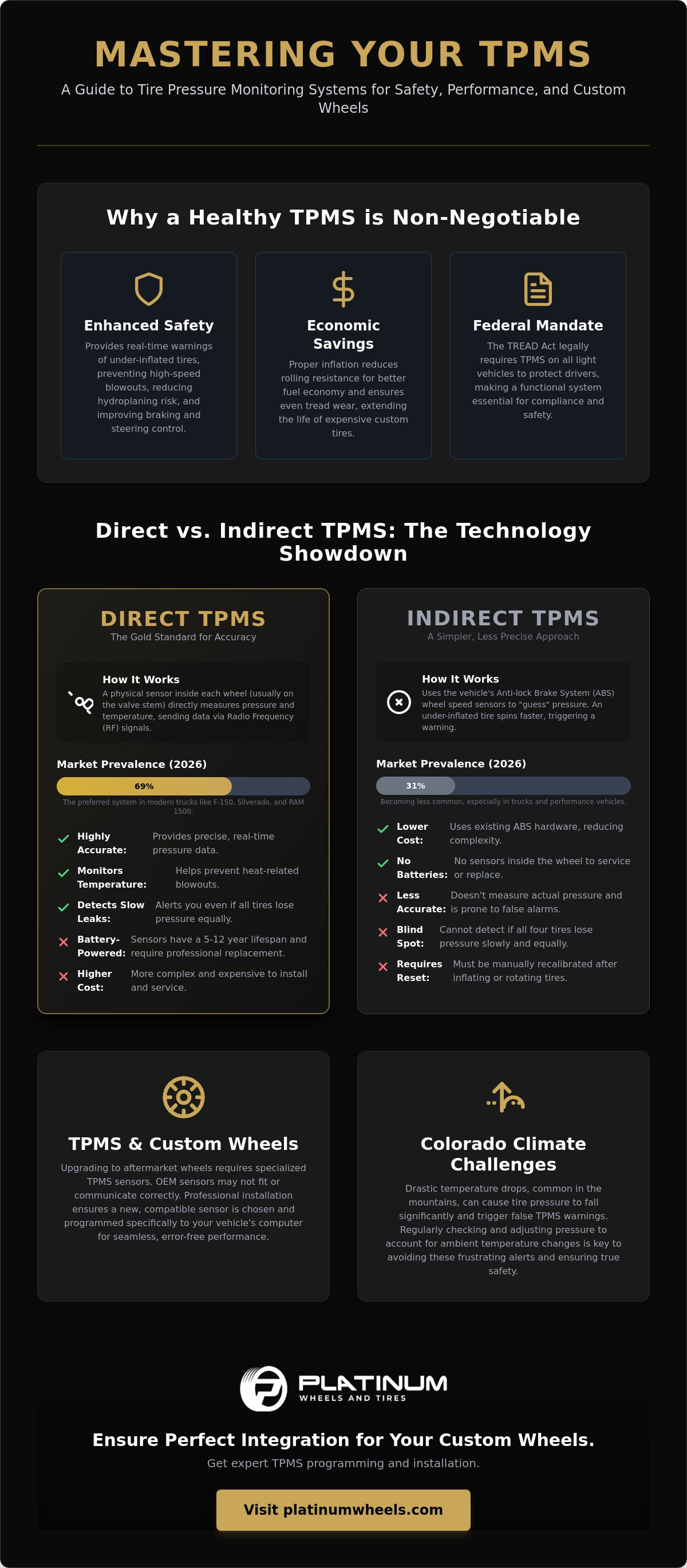
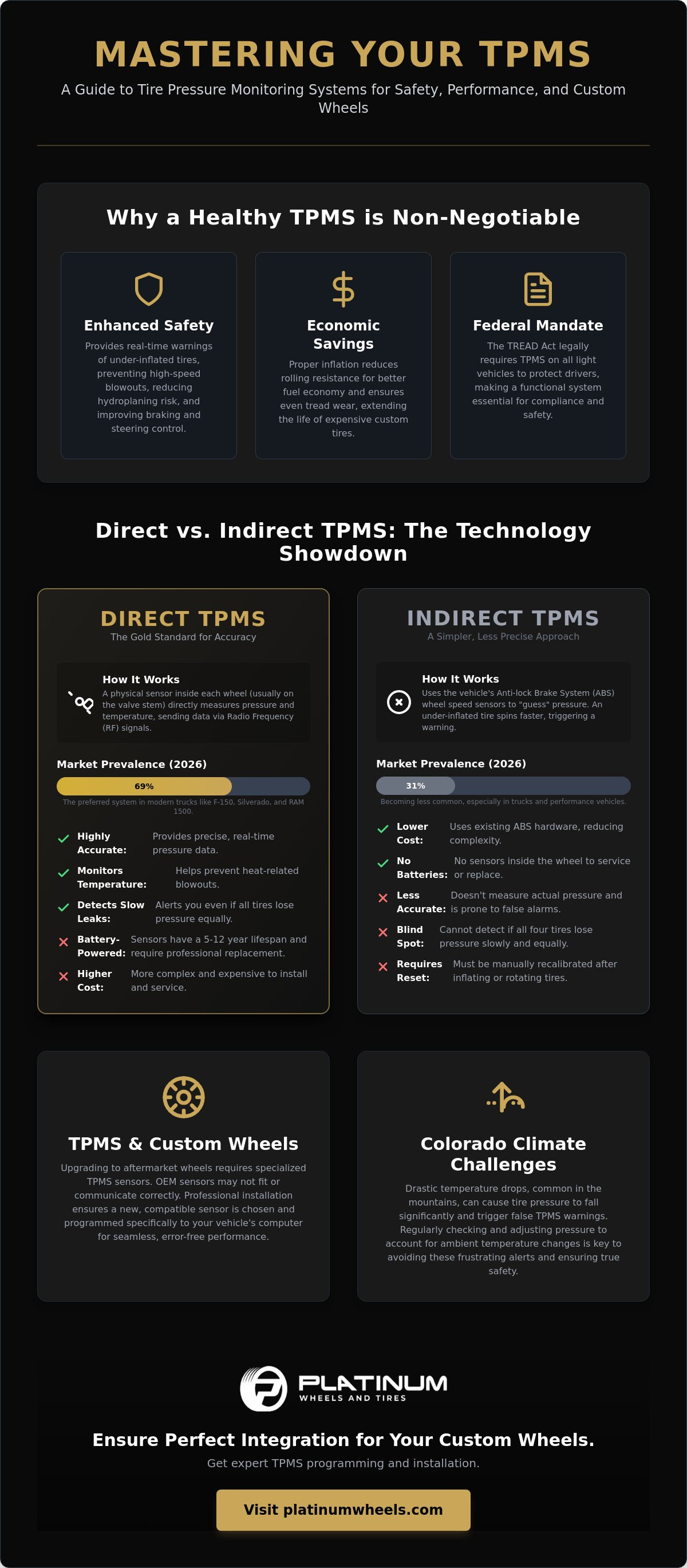
Choosing the right technology for your setup starts with knowing what is already under your truck. Most modern heavy hitters like the Ford F-150, Chevy Silverado, and RAM 1500 rely on direct monitoring. This means a physical tpms sensor is mounted inside each wheel, usually integrated with the valve stem, to provide a constant stream of data to your vehicle's computer. In 2026, direct systems account for approximately 69% of the market because they offer the precision that modern drivers demand. While indirect systems exist, they are becoming less common in the truck world because they don't actually measure air. Instead, they guess it based on wheel speed. For anyone who hauls heavy loads or hits the trails, that kind of guesswork just isn't enough.
How Direct Sensors Communicate
These units are impressive pieces of hardware that do a lot of heavy lifting behind the scenes. They use Radio Frequency (RF) signals to broadcast pressure and temperature data directly to the Electronic Control Unit (ECU). To preserve power, many sensors utilize piezoelectric technology; this allows the device to stay in a "sleep mode" until it detects the centrifugal force of a spinning wheel. Once you start moving, the sensor wakes up and begins its report. The internal battery is sealed within the unit and typically lasts between 5 and 12 years, with the average lifespan being around 7 years. If you are nearing that seven year mark, it is often a smart move to install new sensors when you purchase a new wheel and tire package to avoid the labor costs of a second teardown later.
The Limitations of Indirect Systems
Indirect systems are a different breed entirely. They rely on the Anti-lock Braking System (ABS) to track how fast each wheel is spinning. An under-inflated tire has a slightly smaller diameter, causing it to spin faster than a properly inflated one. While this is a cost-effective solution for manufacturers, it has major flaws for the enthusiast. If all four of your tires lose pressure at the same rate during a sudden Colorado cold snap, an indirect system might not trigger an alarm because the relative wheel speeds haven't changed.
- Diameter Sensitivity: Upgrading to 35-inch or 37-inch tires significantly changes the math for indirect systems.
- Recalibration Needs: Any change in tire size or even a simple rotation usually requires a full system reset to keep the calculations accurate.
- Lack of Real-Time Data: You won't see your actual PSI on the dash; you only get a warning when the system thinks something is wrong.
For off-roaders, direct sensors are the gold standard. When you are traversing jagged rocks or soft sand, you need to know your exact PSI in real-time to maintain traction and prevent rim damage. Indirect systems simply cannot provide that level of granularity, which is why we always recommend sticking with direct sensor technology for any serious truck build.
TPMS and Custom Wheels: Why Your Upgrade Needs New Sensors
Upgrading your truck with a bold set of rims is a major milestone for any build. Many enthusiasts overlook the small piece of tech that keeps the whole setup legal and safe. Reusing your old sensors might seem like a way to save a few bucks, but it often leads to a major headache down the road. The process of un-mounting a used tpms sensor from a factory wheel is a delicate operation. These units are often brittle from years of heat cycles and road salt. One slip of the tire iron can snap the housing or damage the internal seals. This leaves you with a leak that is impossible to find until the tires are already mounted and balanced on your new rims.
Beyond the physical risk, consider the aesthetics. Your factory sensors likely come with standard gray rubber valve stems. If you have invested in a premium set of matte black or polished chrome wheels, those cheap-looking stems stick out. We always recommend fresh sensors with high-quality stems that complement the finish of your rims. This ensures your build looks as professional as it performs. Don't let a small, weathered component undermine the look of your entire investment.
Fitment Challenges with Aftermarket Rims
Aftermarket wheel designs often feature aggressive offsets and unique barrel shapes that differ significantly from OEM specs. These variations can interfere with how a standard sensor sits against the rim. If the sensor doesn't seat perfectly, you risk constant air leaks or physical damage from the tire bead during installation. While you browse our guide on custom wheels and rims, pay close attention to the barrel clearance. Specific deep-dish styles require low-profile sensors to ensure the unit doesn't get sheared off by the internal wheel components during heavy use or off-road articulation.
The Advantage of Pre-Programmed Sensor Packages
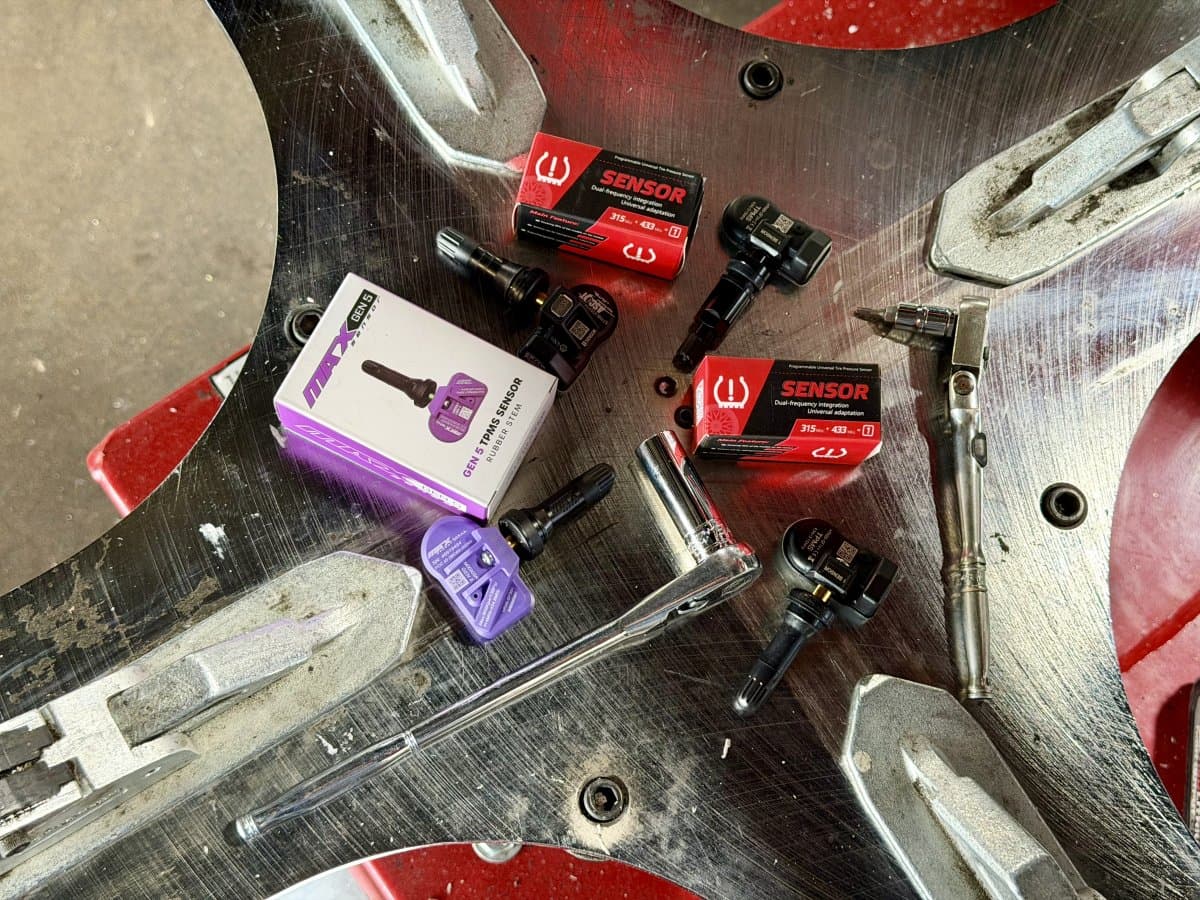
The most efficient way to handle an upgrade is with a pre-programmed package. Instead of struggling with a standard relearn process that might not take, we use sensors pre-coded to your specific VIN. We often recommend cloning your existing sensor IDs. This trick fools your truck's computer into thinking the original wheels are still on the vehicle. It is a foolproof way to avoid the "Christmas tree" effect on your dashboard, where every warning light suddenly starts blinking after you install a lift kit or a new wheel package. This proactive approach saves time and ensures your safety systems are active from the first mile.
Troubleshooting: Managing TPMS in the Colorado Climate
Denver winters are famous for swinging fifty degrees in a single afternoon. These rapid shifts create a unique challenge for your tpms sensor, often leading to the "morning light" phenomenon. For every 10-degree drop in ambient temperature, your tires lose approximately 1 PSI. On a crisp October morning when the mercury hits freezing, your tires might sit 4 or 5 PSI lower than they did during the previous day's commute. This is enough to trigger a low-pressure warning even if you don't have a leak. It is a common source of anxiety for local drivers, but understanding the physics of our region helps you stay calm when the dash starts glowing.
Altitude adds another layer of complexity. Climbing from the 5,280-foot elevation of Lakewood up to the 11,158-foot Eisenhower Tunnel changes the external atmospheric pressure acting on your tires. While modern sensors are designed to compensate for these shifts, extreme changes in elevation combined with cold mountain air can cause readings to fluctuate. Beyond the environment, physical damage from trail debris or internal corrosion from road salt can also compromise the unit. If you've been wheeling in the high country, it's easy for a rock to strike the valve stem and crack the housing of a weathered sensor.
The Altitude and Temperature Factor
Cold air is denser, meaning the air molecules inside your tire take up less space and exert less pressure against the sidewalls. You might notice the warning light disappears after fifteen minutes of highway driving. This happens because the friction between the rubber and the pavement generates heat, expanding the air back to its normal volume. To minimize these annoying fluctuations, many enthusiasts opt for a nitrogen fill. Nitrogen molecules are larger and less susceptible to pressure changes caused by temperature swings, providing a more stable ride through the seasons. If you are tired of the constant adjustments, you can schedule a professional system check to ensure your sensors are calibrated for the local terrain.
When to Seek Professional Help
It is vital to distinguish between a simple low-pressure alert and a system malfunction. A solid light usually means you just need to add air. However, a flashing TPMS light usually indicates a sensor hardware failure. This could mean the internal battery has died or the sensor is no longer communicating with the vehicle's onboard computer. Ignoring these signals is risky, especially if you run high-load E-rated tires on a heavy-duty truck. These tires require precise inflation to handle the weight of a trailer or a bed full of gear. A failure in the monitoring system means you are flying blind, which can lead to rapid heat buildup and a dangerous blowout on a steep mountain grade.
Expert TPMS Integration at Platinum Wheels
Installing a tpms sensor correctly requires more than just a wrench and a steady hand. It demands specialized equipment and a deep understanding of vehicle-specific software. At Platinum Wheels, we take a comprehensive approach to every build, ensuring your monitoring system is as robust as your new tires. While big-box retailers often use "one-size-fits-all" sensors that can lead to connectivity drops, we utilize state-of-the-art programming tools designed for the specific protocols of major truck and SUV brands. From Aurora to Boulder, we serve the Front Range with a level of precision fitment that protects your investment and your safety.
Choosing a local specialist means you are working with technicians who understand the nuances of high-performance setups. We don't just mount tires; we calibrate systems to work in harmony with your vehicle's computer. This attention to detail is what prevents those frustrating return trips to the shop because a light won't stay off. We prioritize your peace of mind by verifying every signal before your truck ever leaves our bay.
Professional Mounting and Balancing
The mounting process is where most sensors are at risk. High-leverage tire machines can easily crush a sensor if the technician isn't careful. Our team uses precision techniques to position the tpms sensor safely away from the tire bead during installation. Once the rubber is on the rim, we perform a thorough "Relearn" procedure. This final step syncs the new hardware with your ECU, ensuring the dash display matches the actual pressure in your tires. If you have recently installed a lift kit or leveling kit, we also verify that the increased height and changed angles haven't interfered with the signal transmission between the wheel and the receiver.
Your Local Denver Wheel and Tire Experts
We are more than just a shop; we are part of the Colorado off-road community. We understand the demands you place on your truck because we live the same lifestyle. This passion translates into a higher standard of care. We treat every vehicle like our own, checking everything from the specific torque on the sensor nut to the quality of the valve cap. When you want a setup that looks incredible and functions flawlessly, trust the experts who know the local terrain. Upgrade your truck with a custom wheel and tire package at Platinum Wheels and experience the difference that professional integration makes for your daily drive and your weekend adventures.
Drive with Confidence in the High Country
Mastering your vehicle's tire monitoring system is the best way to ensure your truck is ready for any adventure. You now understand that a high-quality tpms sensor is more than a convenience; it is a vital safety tool that preserves your expensive custom wheel and tire investment. By choosing direct sensor technology and accounting for Colorado's extreme temperature drops, you can keep your dashboard clear and your focus on the trail ahead. Expert calibration ensures your truck's computer stays in perfect sync with your new hardware, even when you are miles from the nearest paved road.
We specialize in precision off-road truck fitment for drivers across the entire Denver Front Range. Every package we build includes expert programming to guarantee your safety systems work flawlessly from the moment you leave our shop. Don't let a blinking dash light or a preventable leak ruin your next trip into the mountains. Get a Quote for Your Custom Wheel and Tire Package today and let our team handle the technical details for you. We look forward to helping you build a truck that performs with absolute reliability on every Colorado peak.
Frequently Asked Questions
Why is my TPMS light on when my tires look full?
Visual inspections are often deceiving because a tire can be significantly under-inflated before it shows a visible bulge. Most systems trigger a warning when pressure drops 25 percent below the manufacturer's recommendation. You should always use a high-quality digital gauge to verify the actual PSI rather than relying on your eyes alone. If the pressures are correct, the light could indicate a sensor hardware issue or a system error that requires professional diagnosis.
Can I replace a TPMS sensor battery or do I need a new sensor?
You must replace the entire unit when the battery dies. Manufacturers seal these batteries inside the sensor housing with epoxy to protect the electronics from moisture, road salt, and extreme vibration. This design ensures the tpms sensor remains durable throughout its life, but it makes individual battery replacement impossible. Most sensors last between five and ten years, so if one battery fails, the others are likely close behind.
Do I need to reset my TPMS after rotating my tires?
Yes, most modern vehicles require a relearn procedure after a tire rotation. Your truck's computer needs to know which sensor is located at which corner of the vehicle to provide accurate location-based alerts. Without a reset, the dashboard might tell you the front left tire is low when the actual problem is at the rear right. Some trucks perform this automatically after a short drive, while others require a manual reset through the dash menu or a handheld tool.
Will aftermarket wheels work with my factory TPMS sensors?
Most aftermarket rims are compatible with factory sensors, but fitment isn't always guaranteed. The internal barrel shape and the angle of the valve stem hole can vary significantly between different wheel styles. Some aggressive off-road rims require specialized low-profile sensors to avoid contact with the tire bead during installation. We recommend checking the clearance of your specific wheel choice to ensure the factory hardware seats properly without leaking.
How much does it cost to replace a TPMS sensor in Denver?
The total cost depends on your vehicle's specific requirements and whether you choose an OEM or a high-quality aftermarket unit. For owners of specialized European vehicles, shops like Euro Performance Auto Shop LLC offer the expertise needed to manage intricate sensor systems and routine maintenance. You should factor in the price of the hardware along with the labor for dismounting the tire, installing the new unit, and performing the electronic relearn procedure. Many truck owners choose to replace their sensors during a new tire installation to save on labor costs, as the tire is already off the rim.
What happens if I drive with a faulty TPMS sensor?
Driving with a dead sensor removes your primary safety net for detecting slow leaks and rapid heat buildup. You won't receive a warning if a tire begins to lose air on the highway, which significantly increases the risk of a high-speed blowout. Additionally, a non-functioning system will keep a warning light illuminated on your dash, which can mask other critical alerts and may cause your vehicle to fail certain safety inspections.
Can cold weather in Colorado trigger my TPMS light?
Cold snaps are the leading cause of "false" alarms for Denver drivers. Air contracts as the temperature drops, leading to a loss of approximately 1 PSI for every 10-degree decrease. If your tires were already near the lower limit, a chilly mountain morning can easily pull the pressure down enough to trip the sensor. The light may turn off once the tires warm up during highway driving, but it is a clear sign that you need to top off your air.
Do all tires, including the spare, have TPMS sensors?
This varies by manufacturer and model year. Many modern full-size trucks include a sensor in the spare tire so the system can monitor its readiness, while most SUVs and smaller vehicles only track the four active tires. If your spare has a sensor and it loses pressure, it can trigger the dash light even if your four main tires are perfectly inflated. Check your owner's manual to see if your spare is part of the monitoring loop.