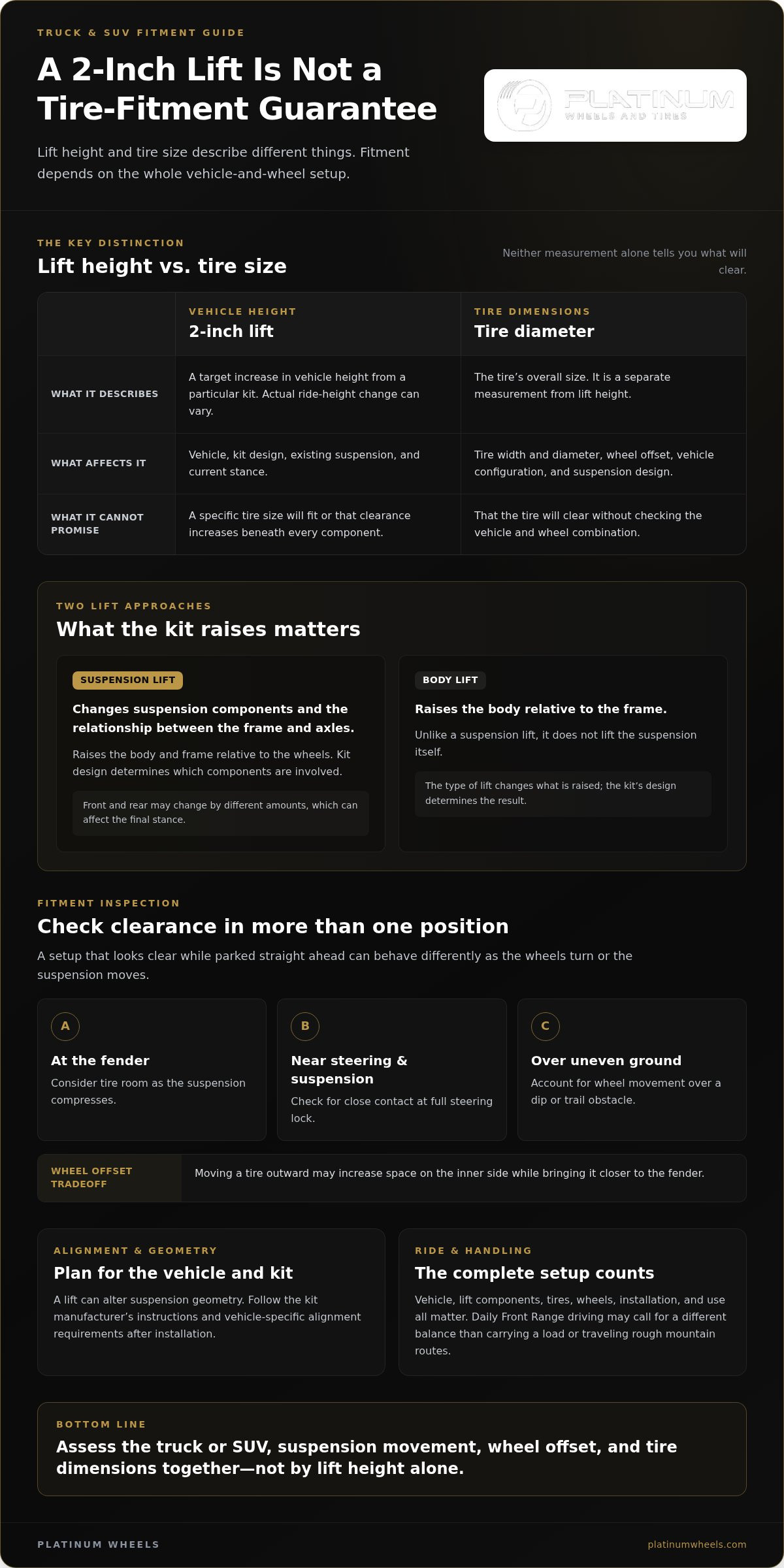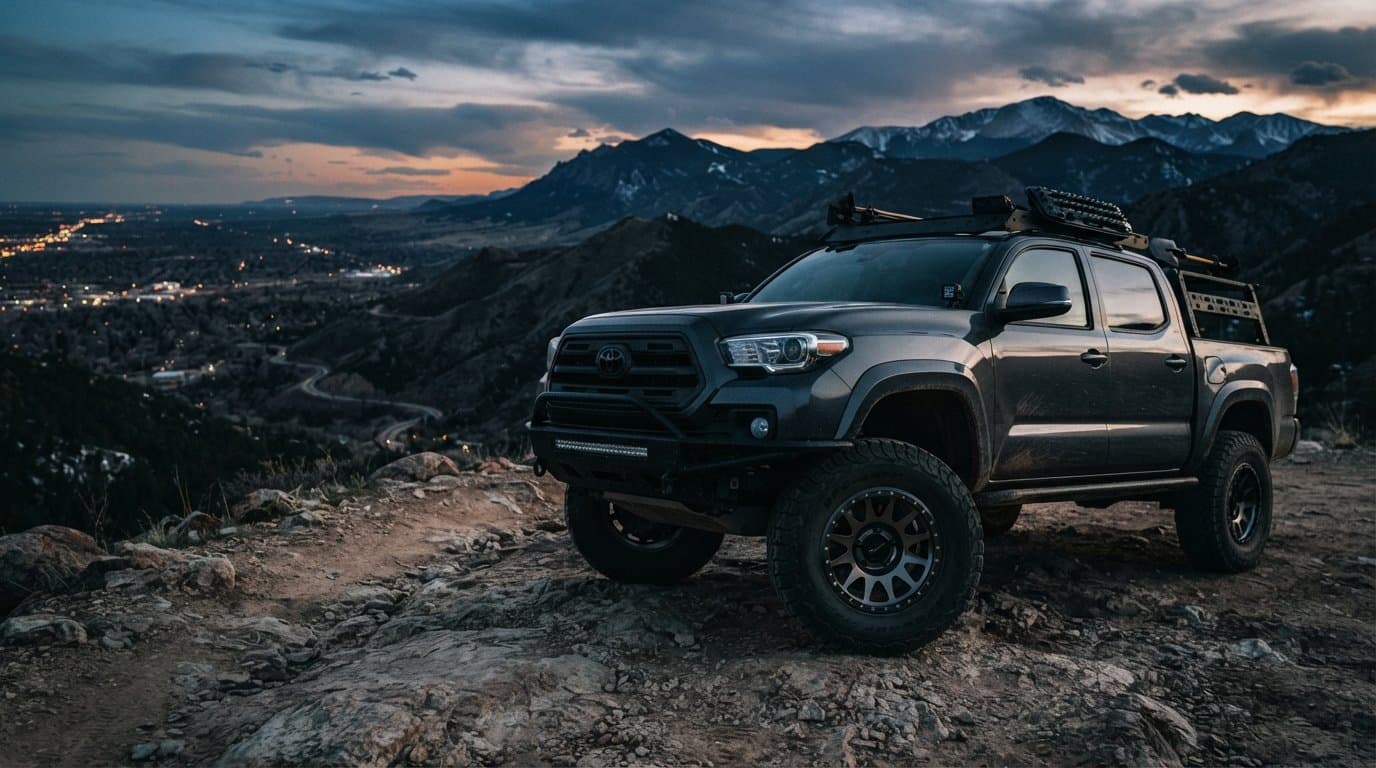
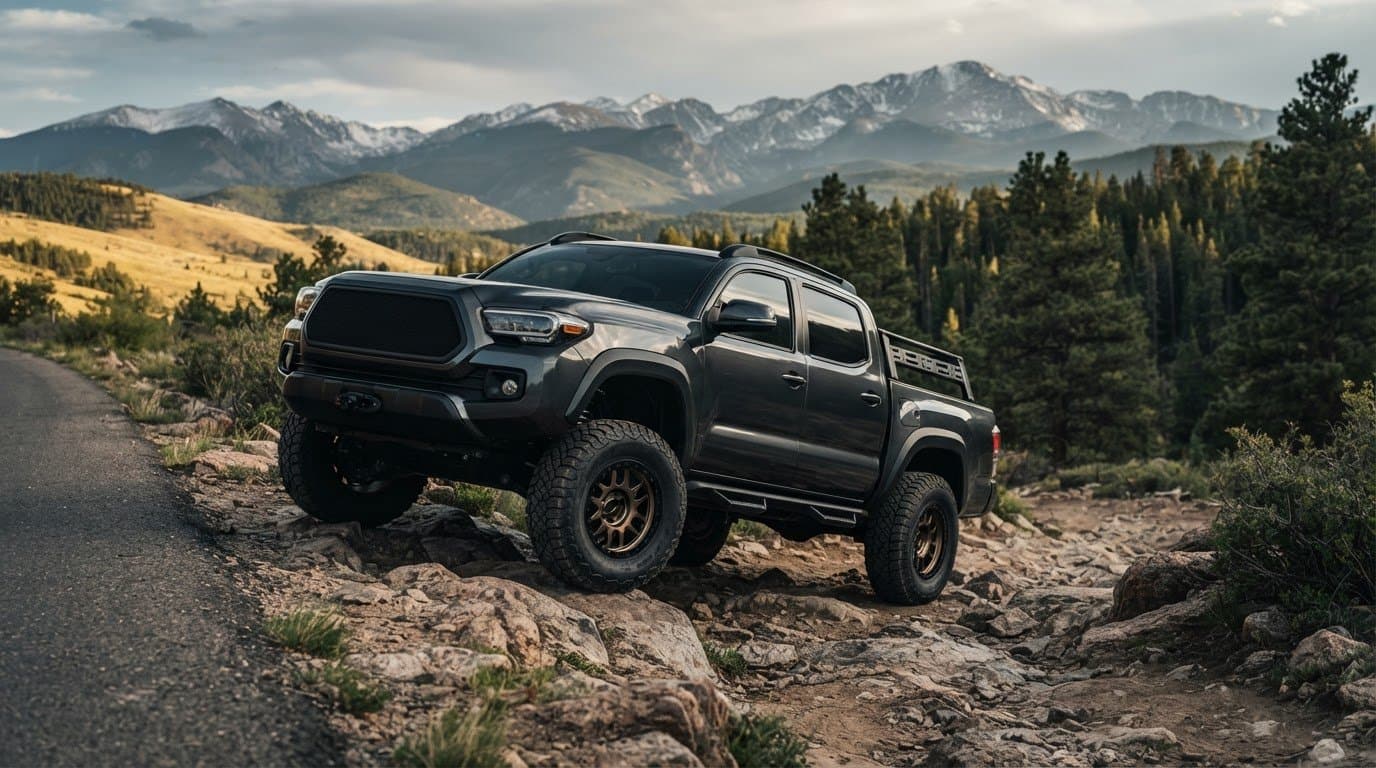
Top 2 Inch Lift Kits for Denver Off-Roading and Performance
What if a 2 inch lift kit still leaves your truck rubbing? A lift can create more room, but it doesn’t guarantee that a particular tire size will clear. Your truck’s year, make, model, wheel offset, tire dimensions, and suspension design all affect fitment.
It’s reasonable to want more clearance for Colorado trails without giving up the comfort and control you rely on for daily driving. Choose a setup around your vehicle and goals rather than assuming two inches automatically means bigger tires will fit or that ride and alignment will stay unchanged.
This guide explains what a two-inch lift changes, what it doesn’t, and how to assess tire clearance before upgrading. You’ll also learn what to consider about ride quality, handling, and alignment, and how lift, wheel, and tire choices work together for Denver streets, Front Range weather, and mountain routes. Platinum Wheels installs lift and leveling kits and coordinates them with wheel-and-tire fitment to help match the setup to your truck and the way you drive.
Key Takeaways
- A 2 inch lift kit can change stance and add clearance, but it doesn’t guarantee a specific tire size will fit.
- Compare a lift with a leveling kit or taller setup based on your goals, fitment needs, and acceptable tradeoffs.
- Match tire and wheel choices to your vehicle and driving plans, from Front Range commuting to mountain trips.
- Account for suspension geometry, alignment, and ride considerations when planning an upgrade.
- Coordinating lift installation with wheel, tire, and TPMS fitment can help prevent avoidable surprises.
What a 2-Inch Lift Kit Changes on a Truck or SUV
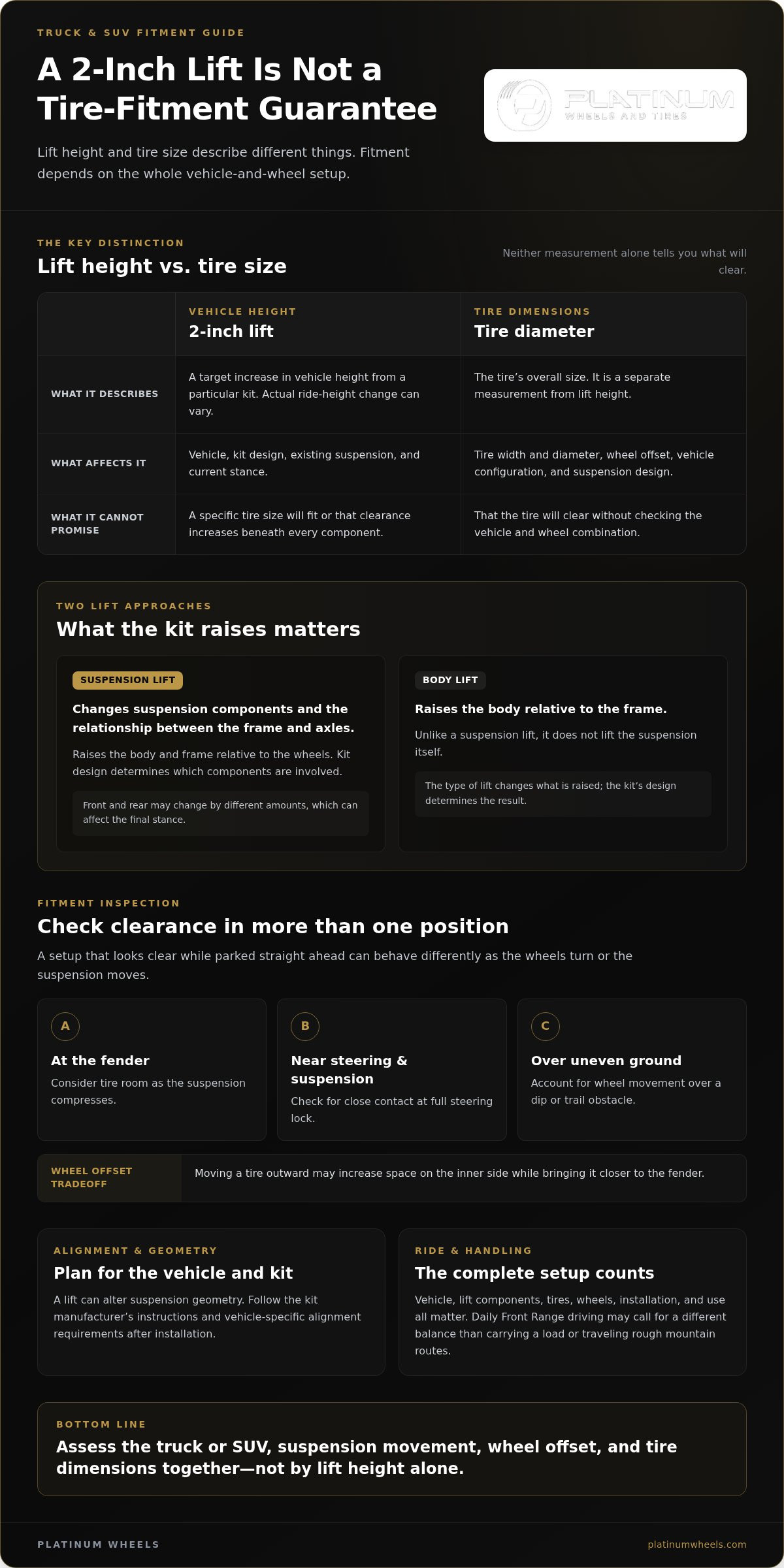
A two-inch lift describes a target increase in a vehicle’s height from a particular kit, not a two-inch increase in tire diameter. The actual change in ride height can vary with the vehicle, kit design, and existing suspension and stance. Lifting the vehicle and fitting a larger tire are related choices, but they aren’t the same measurement.
A lift changes the vehicle’s height; tire diameter describes the tire’s overall size. Neither number alone tells you what will clear. A 2 inch lift kit may be chosen to adjust stance, add space beneath parts of the vehicle, or help accommodate a carefully selected tire-and-wheel setup. The result depends on the specific truck or SUV, not just the advertised lift figure.
What does a two-inch lift actually raise?
With a suspension lift, components in the suspension system change the relationship between the frame and axles, raising the body and frame relative to the wheels. The kit’s design determines which components are involved. A Suspension lift differs from a body lift, which raises the body relative to the frame without lifting the suspension itself. A lift may also change the front and rear by different amounts, so the final stance can look different from the advertised number. For example, a truck with a factory nose-down rake may appear more level after a front-focused change.
What a 2-inch lift does not guarantee
Two inches of lift doesn’t guarantee clearance for a particular tire. Tire width and diameter, wheel offset, and vehicle configuration all influence how the tire sits and whether it contacts nearby components. Clearance can also depend on suspension design and movement through its range. A tire that fits one truck with a similar lift may not fit another in the same way.
Height alone doesn’t promise a specific appearance or a universal improvement in capability, either. A modest lift can change stance and create additional space in some areas, but it doesn’t automatically increase clearance beneath every component. Treat advertised lift height as a starting point, then assess the vehicle and intended wheel-and-tire combination together. That keeps the decision grounded in fitment rather than a number on a kit description.
How a 2-Inch Lift Kit Affects Clearance, Suspension, and Ride
Added ride height can create more space between the body and tires, but it doesn’t raise every point underneath the vehicle by the same amount. Fender clearance is only one part of fitment. A tire may still sit close to suspension or steering components, and available space can change as the wheels turn or the suspension moves over uneven ground.
Lift height alone cannot determine tire fitment; clearance depends on the vehicle, tire dimensions, wheel offset, and how the suspension and steering move. Matching a 2 inch lift kit to a particular truck or SUV takes more than comparing the advertised lift figure with a tire’s diameter.
How lift height and tire clearance interact
Check clearance in more than one place. At the fender, consider whether the tire has room as the suspension compresses. Near suspension and steering components, check whether the tire or wheel comes close at full steering lock. A setup that looks clear while parked straight ahead may behave differently during a tight turn or when a wheel moves upward over a dip or trail obstacle.
Wheel offset affects where the tire sits in relation to the vehicle. Tire width and overall diameter matter, too. Moving the tire outward may increase space on the inner side while bringing it closer to the fender. Vehicle configurations differ, so don’t treat a fitment example from another truck as proof that the same combination will work for yours.
Alignment, ride, and daily drivability
A lift can alter suspension geometry, and the amount and type of change depend on the vehicle and kit design. Follow the kit manufacturer’s instructions and vehicle-specific requirements for alignment after installation. Correct fitment and alignment help position the wheels as intended, but neither should be assumed from lift height alone.
Ride and handling depend on the complete setup: the vehicle, lift components, tires, wheels, installation, and how you use the truck. A daily driver on Front Range roads may have different priorities from a vehicle that regularly carries a load or travels rough mountain routes. Tire choice and pressure also affect how the vehicle feels, so consider the whole combination rather than expecting the lift by itself to preserve the original ride.
Platinum Wheels coordinates lift installation with wheel-and-tire fitment, helping Denver-area drivers plan around their vehicle and intended use. Explore lift and tire fitment as a combined upgrade, with clearance and alignment considerations included in the plan.
Is a 2-Inch Lift Enough? Compare Fitment Goals and Tradeoffs
“Enough” depends on what you want the truck to do and how you want it to sit. A modest suspension lift may suit a restrained stance change, added clearance, or occasional trail use when the vehicle still sees regular Front Range commuting. But a 2 inch lift kit doesn’t guarantee that a particular tire size will fit. Vehicle configuration, wheel offset, and tire dimensions still shape the result.
When a two-inch lift may suit your goals
Consider a modest lift if you want a measured change and your tire goals suit the vehicle’s available clearance. Daily driving, changing weather, and occasional unpaved roads may call for a different balance than frequent trail use or a larger tire-and-wheel upgrade. Choose based on your truck or SUV and the complete setup, not height alone.
| Goal | Likely benefit | Fitment dependency | Tradeoff |
|---|---|---|---|
| Subtle height and stance change | A modest shift in ride height and appearance | Vehicle design, kit approach, and current front-to-rear stance | May not deliver the look or tire clearance you have in mind |
| Reduce a nose-down stance | A more level-looking profile | Factory rake and how the chosen leveling kit changes front height | A leveling kit addresses stance differently from a suspension lift |
| More room for a tire goal | Potentially more space, depending on the complete setup | Tire dimensions, wheel offset, steering and suspension clearance | Lift height alone can’t establish tire fitment |
| More height for a broader build | Greater potential for clearance, depending on vehicle and components | Suspension design, kit requirements, and wheel-and-tire combination | A larger lift may bring added changes to geometry, ride, and setup needs |
When another setup may be a better match
If your main goal is to reduce the factory front-to-rear rake, a leveling kit may address that stance preference without being equivalent to a suspension lift. If your tire-clearance goal exceeds what a modest lift and compatible wheel setup can provide, the plan may need a different combination of components. Neither option is automatically better for every truck.
Use the vehicle, tire goal, and everyday driving needs to guide the decision. For a closer look at how the options differ, read this leveling kit versus lift kit guide. A vehicle-specific fitment review helps turn your preferred stance into a realistic upgrade plan.
Plan a 2-Inch Lift for Colorado Roads, Wheels, and Tires
A good fitment plan starts with your truck, not a tire-size guess. Before choosing a 2 inch lift kit, work through these details so the lift, wheels, and tires suit the way you drive around Denver and the Front Range.
Match the lift to your truck, tires, and wheels
- Identify your vehicle. Record its year, make, model, trim, drivetrain, and existing suspension details. Similar-looking trucks can have different configurations that affect fitment.
- Define your driving use. Front Range commuting puts everyday road manners first. Changing weather can make tire choice especially important, while mountain trips and rougher roads may bring different clearance priorities. Decide how often each use case matters.
- Set a tire goal. Compare tire diameter and width with vehicle-specific fitment information. All-terrain tires may suit mixed road and trail use; the Colorado all-terrain tire guide can help you weigh that choice.
- Choose wheels as part of the setup. Wheel width and offset affect how far the tire sits inward or outward. That position can influence inner-component clearance, fender clearance, and the truck’s stance. Explore the custom wheels and rims guide for more on wheel selection.
- Review clearance. Assess the tire’s space at the fender and near suspension and steering components, including through steering turns and suspension movement. Don’t assume a combination will clear just because it works on another vehicle.
- Plan installation. Match the kit to the vehicle and follow its installation and alignment guidance. Coordinating lift, wheel, tire, and TPMS planning helps bring the upgrade together as one fitment package.
Account for Colorado driving and road-use requirements
Think through where the truck will spend most of its time. A commuter may value a measured setup for daily roads. A driver heading into changing weather should choose tires suited to expected conditions, while mountain travel may call for careful attention to clearance and the complete wheel-and-tire combination. A lift doesn’t replace suitable tires or cautious driving, and more height alone doesn’t guarantee better performance.
For a vehicle-specific plan, Platinum Wheels brings lift installation and wheel-and-tire fitment together for Denver and Front Range drivers. Plan your lift and tire fitment around your vehicle, wheel choice, and Colorado driving needs.
Get a 2-Inch Lift Kit Professionally Fitted in the Denver Area
A well-planned upgrade starts with more than choosing a lift height. Platinum Wheels serves Denver and Colorado’s Front Range with professional lift-kit and leveling-kit installation, alongside wheel-and-tire fitment. The process connects your vehicle, driving goals, and intended setup so the parts work together as a considered upgrade.
What to expect from professional lift installation
Start with the vehicle and your goals. Share the truck or SUV’s year, make, model, trim, and existing setup, along with how you use it and the tires or stance you’re considering. Those details help shape a vehicle-specific plan instead of relying on a general assumption about what a two-inch lift can accommodate.
Next, choose a suitable lift or leveling kit and install it according to the vehicle and kit requirements. Exact procedures vary by vehicle and selected kit. After installation, follow the applicable alignment guidance and review wheel-and-tire clearance. The aim is to consider how the components fit together, without assuming every vehicle follows the same steps or produces the same result.
Coordinate the lift with a complete wheel-and-tire setup
Decide on the intended tire and wheel combination as part of the lift plan, not as an afterthought. Tire dimensions and wheel specifications influence fitment, while TPMS sensor compatibility matters when selecting wheels or replacing tires. Planning these pieces together can help reduce avoidable surprises, such as finding that a preferred combination doesn’t suit the vehicle’s clearance or stance goals.
For a wheel-and-tire change, include mounting and balancing in the installation plan, and account for the TPMS sensors required by the setup. Coordinating these details with the lift lets you consider the finished package as a whole, from suspension height to wheel position and tire fit.
Whether you’re building a Front Range daily driver or preparing for occasional mountain travel, professional planning helps keep the upgrade focused on your truck and intended use. Platinum Wheels brings lift installation and wheel-and-tire fitment together for Denver-area drivers. Explore lift and leveling services and plan your setup with the complete fitment picture in mind.
Build a Lifted Setup That Fits Your Drive
The right 2 inch lift kit is a vehicle-specific fitment choice, not a guarantee of tire clearance. Start with your truck’s configuration and driving goals, then consider how lift height, wheel offset, tire dimensions, and alignment work together. A setup for Denver commuting and changing Front Range weather may call for different priorities than one built around regular mountain trips.
Platinum Wheels combines professional lift-kit and leveling-kit installation with custom wheel-and-tire fitment and TPMS sensor options. That coordinated approach helps you plan the complete upgrade around your vehicle, rather than treating the lift, tires, and wheels as separate decisions. Drivers in Denver and communities across Colorado’s Front Range can explore lift and leveling services at Platinum Wheels and take the next step with a setup tailored to their goals.
Choose carefully and plan fitment as a whole to build a truck that suits the roads ahead.
Frequently Asked Questions
Will a 2-inch lift kit fit my truck?
A 2-inch lift kit can fit many trucks, but compatibility depends on your vehicle’s year, make, model, trim, drivetrain, and suspension configuration. Review the kit’s vehicle-specific application and installation instructions rather than relying on lift height alone. Your intended wheels and tires matter, too. Platinum Wheels plans lift, wheel, and tire choices around the vehicle and your fitment goals.
Can I fit 33-inch tires with a 2-inch lift?
Not necessarily. A two-inch lift doesn’t guarantee that 33-inch tires will clear your truck. Tire width and actual dimensions, wheel offset, vehicle configuration, steering movement, and suspension travel all affect fitment. A size that works on one vehicle may rub on another, even with a similar lift. Review vehicle-specific fitment information for the exact wheel-and-tire combination before choosing tires.
Does a 2-inch lift affect ride quality or handling?
It can, though the effect depends on your vehicle, kit design, tires, wheels, and installation. Changes to suspension geometry may influence how the truck feels, while tire type and size also contribute to ride and handling. Consider your usual driving, including commuting, carrying loads, and occasional trail use. Follow the kit’s vehicle-specific installation and alignment guidance, and don’t assume the ride will remain exactly as it was.
Is a 2-inch lift kit the same as a leveling kit?
No. A lift kit and a leveling kit address different height or stance goals, though the exact approach depends on the vehicle and selected kit. A leveling setup typically focuses on changing the front-to-rear stance, while a suspension lift changes ride height through suspension components. Compare what each option changes on your specific truck before deciding. The right choice depends on your desired stance, clearance needs, and tire plans.
Do I need an alignment after installing a 2-inch lift?
Follow the lift manufacturer’s instructions and your vehicle’s requirements for alignment after installation. A suspension change can affect geometry, and alignment settings are specific to the vehicle and kit. A proper check helps establish that the wheels are positioned as intended for the completed setup. Don’t assume that every kit has identical alignment steps; include alignment guidance in the installation plan.
Is a 2-inch lift suitable for driving in Colorado?
It can suit some Colorado drivers, depending on the vehicle, tires, and everyday use. Front Range commuting, changing weather, and mountain trips each bring different priorities, and a lift isn’t a substitute for suitable tires or careful driving. Platinum Wheels serves drivers in Denver, Aurora, Lakewood, Englewood, Wheat Ridge, Commerce City, Westminster, Thorton, Broomfield, Arvada, Golden, Littleton, Parker, Highlands Ranch, Castle Rock, Boulder, Fort Collins, and Colorado Springs.
Can I install a 2-inch lift kit myself?
That depends on your mechanical experience, tools, vehicle, and the kit’s installation requirements. Suspension work involves vehicle-specific procedures, and alignment or fitment checks may also be needed afterward. Read the manufacturer’s instructions before deciding whether a DIY installation is appropriate for you. Platinum Wheels professionally installs lift and leveling kits and coordinates wheel-and-tire fitment with the upgrade. Explore lift and leveling services at Platinum Wheels to plan a setup around your vehicle and driving goals.