How Much Does It Cost to Lift a Truck? 2026 Denver Price & Installation Guide
What if that "budget" lift kit you found online ends up costing you double after your first white-knuckle drive down I-25? It's a common concern for Colorado drivers who want the aggressive look of a taller rig but dread the thought of unpredictable labor costs or a truck that wanders across lanes. When you're trying to figure out how much does it cost to lift a truck in 2026, the sticker price of the parts is only the beginning of the story. You aren't just buying components; you're investing in the suspension geometry and long-term safety of your daily driver.
We agree that nothing beats the feeling of a truck that's perfectly dialed in for the Front Range, yet we know how frustrating it is to get hit with surprise fees post-installation. You deserve a transparent look at the real investment required to transform your rig without compromising ride quality or your peace of mind. This guide provides a clear breakdown of parts and labor for various lift heights, covers the essential hidden expenses like professional alignments and TPMS recalibration, and helps you choose quality components that won't fail when the pavement ends.
Key Takeaways
- Identify the three primary price tiers for suspension upgrades, ranging from basic leveling kits to high-performance systems built for Colorado's rugged terrain.
- Learn exactly how much does it cost to lift a truck in the Denver metro area, including a breakdown of local labor rates versus national averages.
- Budget for essential "hidden" expenses like speedometer recalibration, wheel alignments, and TPMS sensor integration to avoid surprise bills.
- Understand the mechanical risks of cutting corners with DIY installs and why specialized tools are required for modern suspension geometry.
- Discover why bundling your lift kit with a new wheel and tire package can save you significant money on labor and long-term maintenance.
The Total Cost to Lift a Truck in 2026: Parts and Labor Breakdown
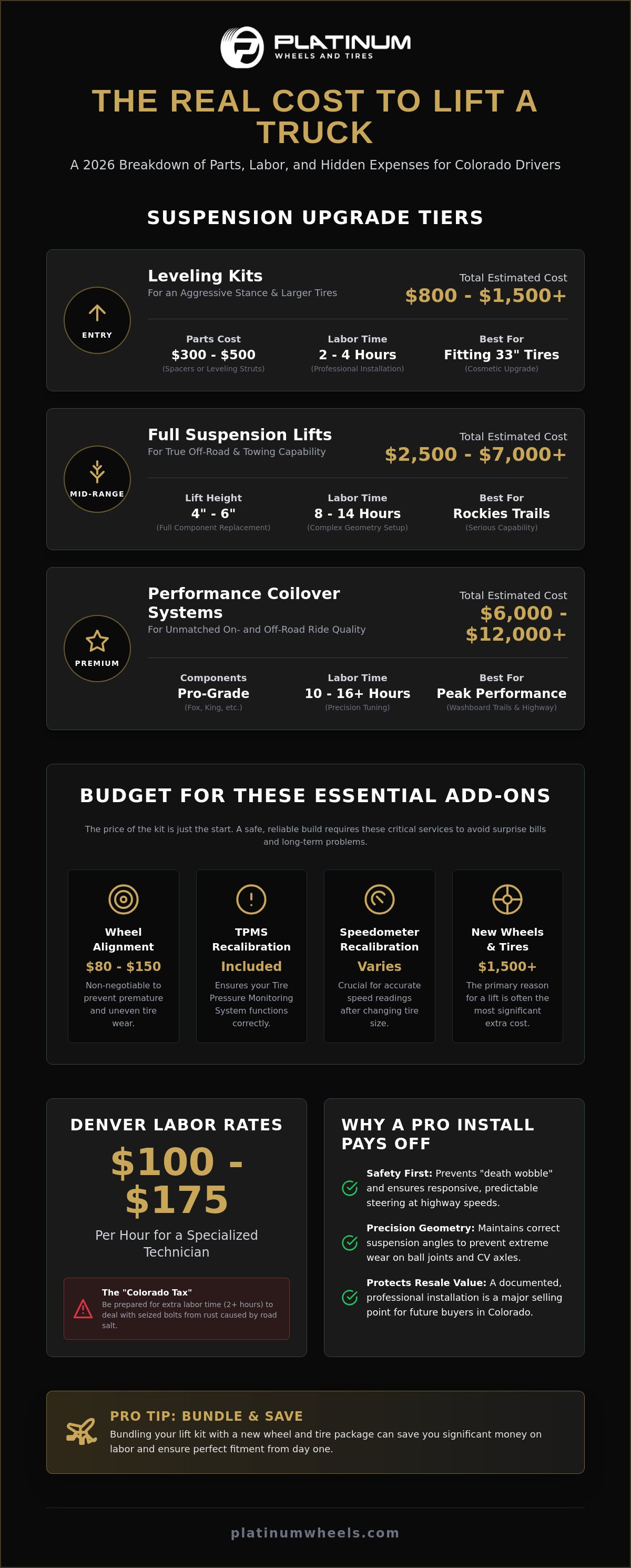
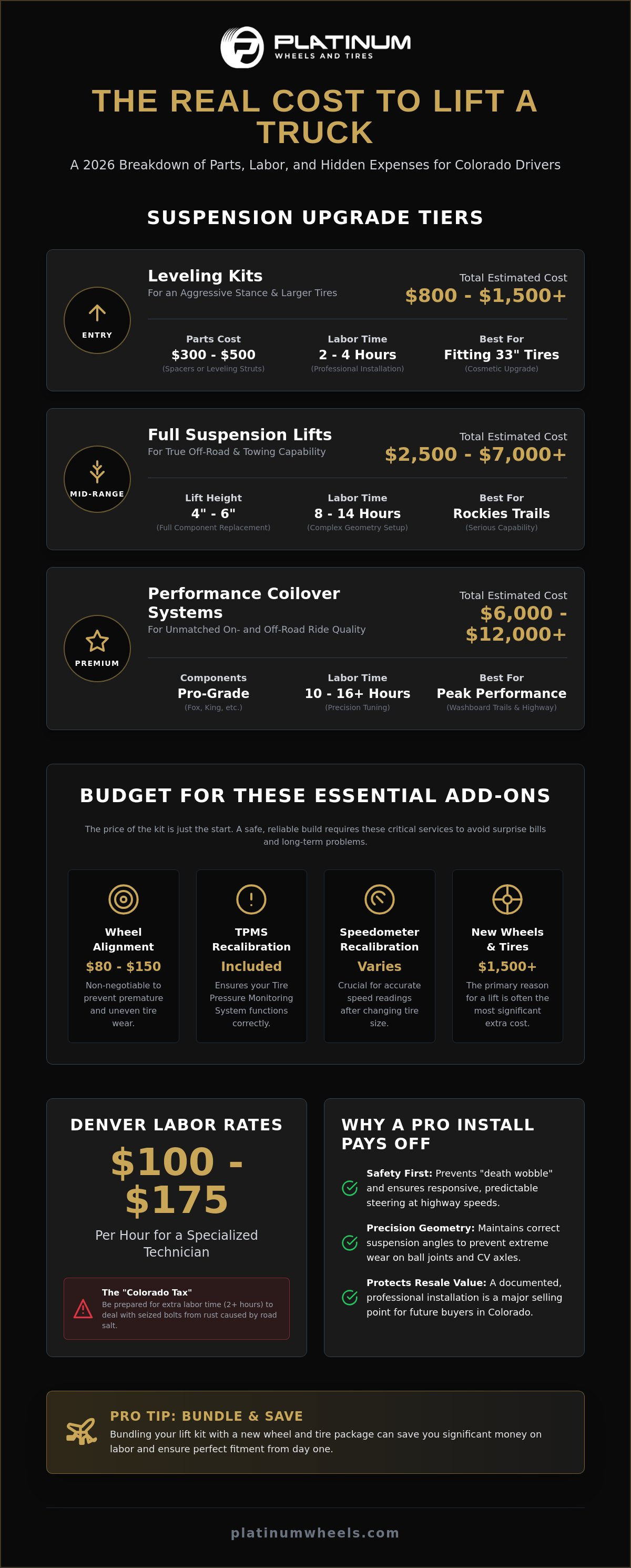
Determining exactly how much does it cost to lift a truck depends on your performance goals and the specific demands of the Front Range. In 2026, Denver truck owners are looking for more than just a taller stance; they want a suspension that survives the daily I-25 commute and weekend climbs into the Rockies. We categorize these builds into three distinct tiers: entry-level leveling kits, mid-range suspension lifts, and premium performance systems. Each tier carries a different price tag for both the hardware and the specialized labor required to keep your vehicle safe on mountain roads.
Estimated Price Ranges by Kit Type
Entry-level leveling kits are the most cost-effective way to gain clearance for larger tires. These typically involve spacers or torsion keys that raise the front of the truck to match the rear. While parts are affordable, professional labor usually accounts for two to four hours of shop time to ensure the suspension lift components are torqued to factory specifications. Mid-range suspension lifts, often in the 4-inch to 6-inch range, are a significant step up. These systems replace shocks, springs, and control arms, requiring eight to fourteen hours of labor. Premium coilover systems represent the top of the market. These use high-end shocks from brands like Fox or King to provide superior ride quality on washboard mountain trails, though the hardware costs reflect their professional-grade engineering.
Labor Costs: What You Are Actually Paying For
Labor rates in the Denver metro area often differ from national averages due to the high demand for specialized off-road technicians. Local specialty shops typically charge between $100 and $175 per hour. When asking how much does it cost to lift a truck, you have to account for the "Colorado Tax." This isn't a government fee; it's the extra time required to deal with chassis rust caused by winter road salts. An older truck with seized bolts can easily add two hours to an installation timeline. You are paying for precision; a professional install ensures your suspension geometry remains intact, preventing the dreaded "death wobble" and keeping your steering responsive at highway speeds.
Choosing a professional installation is also an investment in your truck's future resale value. Buyers in Colorado look for documented builds from reputable shops. A hack-job lift kit installed in a driveway often leads to uneven tire wear and compromised braking, which can tank your vehicle's value. By contrast, a precision-installed kit with a documented alignment and TPMS recalibration proves the truck has been maintained to a high standard, making it a much more attractive asset when it's time to trade up.
Leveling Kits vs. Full Suspension Lifts: A Price Comparison for Denver Owners
Selecting between a level and a lift is the first major fork in the road for any Denver owner. While both modify your stance, the financial impact and mechanical consequences vary wildly. If you're primarily cruising suburban streets in Castle Rock and want to fit 33-inch tires, a leveling kit is the logical entry point. However, if your weekends involve rock crawling near Boulder or heavy towing through the Eisenhower Tunnel, a full suspension lift becomes a necessity rather than a luxury. Understanding what is a truck leveling kit helps you realize it's a solution for stance, while a full lift is a solution for capability.
The True Cost of a Leveling Kit
Leveling kits are popular because they offer a quick cosmetic fix. You can find basic spacers for $300 to $500, but the hardware is only half the equation. Cheap spacers often change the angle of your upper control arms, putting extreme stress on your ball joints. We've seen many owners save money on the kit only to spend it later on premature suspension repairs. A more robust option involves leveling struts, which replace the factory shocks and provide a better ride, often pushing parts and labor closer to $1,000. Even for a modest 2-inch level, a professional wheel alignment, typically $80 to $150, is non-negotiable. Skipping this step leads to ruined tires in just a few thousand miles. When calculating a truck lift cost breakdown, always factor in the alignment and the potential need for larger tires.
The Investment in a Full Suspension Lift
Moving to a full lift is a much larger commitment. These kits include shocks, leaf springs or blocks, and drop brackets to keep your driveline angles correct. Because you're essentially rebuilding the bottom half of your truck, labor hours often double or triple compared to a simple level. This is where you see the "Death Wobble" if things aren't done right. For those serious about performance, the extra investment for a 4-inch or 6-inch lift, which can range from $3,000 to over $8,000 for premium systems, pays off in trail durability and high-speed stability. Determining how much does it cost to lift a truck with a full suspension system requires looking at component longevity. If you're unsure which path fits your driving style, our team can help you find the right lift kits and leveling kits for your specific model. Keeping your suspension quiet and capable requires quality parts that handle the harsh Colorado climate without squeaking or binding.
The 'Hidden' Expenses: Tires, TPMS, and Speedometer Recalibration
The box of parts sitting in your garage is only the entry fee for a proper suspension build. When calculating how much does it cost to lift a truck, many owners overlook the essential components that make the vehicle actually drivable after the height change. A 3-inch lift looks aggressive, but without upgraded Upper Control Arms (UCAs), your alignment technician often cannot get your caster settings back to factory specifications. This leads to a truck that "hunts" on the highway or feels unstable during sudden maneuvers. In the demanding environment of the Front Range, where steep grades and high-speed mountain passes are the norm, these supporting modifications are vital for safety. Under federal vehicle modification law, professional shops must ensure they aren't making safety systems inoperative, which is why electronic calibration is a non-negotiable part of a modern build budget.
Wheel and Tire Packages: Bundling to Save
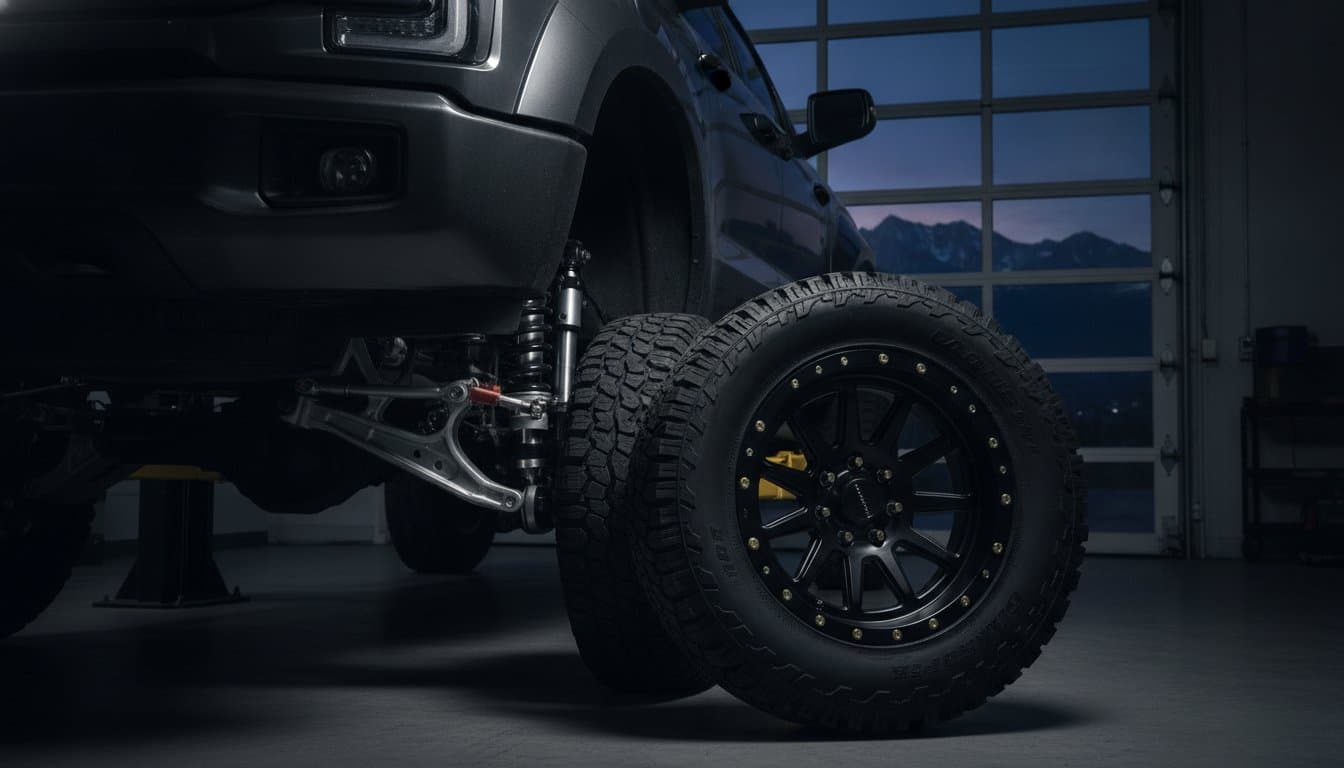
Lifting a truck without upgrading your rubber usually leaves the wheel wells looking noticeably empty. Most Denver builds transition to high-quality all terrain tires that provide the necessary traction for slushy mountain passes and loose gravel trails. Pairing these with custom wheels and rims with the correct offset prevents the tires from rubbing against your new suspension components. There is a significant price jump between 33-inch and 35-inch setups. This isn't just due to the tire price; larger 35-inch tires often require additional trimming or "cab mount chops" to clear the wheel wells during full-lock turns. Bundling these together at the time of your lift installation often saves you hundreds in repeated labor and alignment fees.
Electronic and Safety System Recalibration
Modern trucks are essentially rolling computers. When you increase your tire diameter, your speedometer reads slower than your actual speed. This discrepancy confuses your transmission's shift points, which can lead to "hunting" for gears and increased heat during mountain climbs. Recalibrating the speedometer is necessary for both transmission health and ensuring your odometer remains accurate. Your tpms sensor system also needs to be correctly synced to the new wheel setup. In 2026, a standard TPMS relearn in the Denver area typically ranges from $49 to $71, while replacing a damaged sensor starts around $59.95. These electronic adjustments are often the final piece of the puzzle that influences how much does it cost to lift a truck when you are aiming for a factory-quality finish that keeps your lane-keep assist and emergency braking systems functional.
Professional Installation: Why Cutting Corners Costs More in the Long Run
The temptation to tackle a suspension project in a driveway is high, especially when you're looking at how much does it cost to lift a truck and seeing labor quotes that reach into the thousands. Online forums are filled with enthusiasts claiming they finished a build in a weekend with basic hand tools. However, modern truck suspensions are complex systems of geometry and high-tension components. A mistake during a DIY install doesn't just result in a crooked steering wheel; it can lead to the "death wobble," a violent shaking of the front end that occurs at highway speeds. This isn't just a nuisance; it's a critical safety failure that can compromise your braking performance and put you and other Denver drivers at risk.
Professional shops utilize specialized equipment that the average hobbyist simply doesn't have in their garage. Heavy-duty wall-mounted spring compressors are required to safely handle high-rate coils, and precision torque wrenches ensure every bolt meets the manufacturer's exact specifications. When a pro handles the job, they also perform a post-installation safety inspection and a mandatory re-torque after the first 50 to 100 miles. This ensures that as the new components settle, nothing has backed off or loosened under the stress of Colorado's undulating roads.
Avoiding the 'Buy It Twice' Trap
We've seen it countless times: an owner buys a bargain-bin lift kit and installs it themselves, only to find the ride quality is unbearable. Within months, the improper angles have ruined a set of high-end shocks or shredded a pair of expensive tires. By the time they bring the truck to a specialist to fix the vibrations and clunks, the total bill far exceeds what a professional installation would have cost originally. Fixing a "bad" lift involves more than just tightening bolts; it often requires replacing damaged bushings and correcting botched geometry. Doing it right the first time is the only way to protect your investment.
Warranty and Peace of Mind
When you choose professional installation, you're buying more than just a technician's time; you're buying a warranty. A DIY project has no fallback if a component fails or a noise develops. By contrast, a reputable local shop provides the support you need when you're exploring a trail in the Rockies and notice something feels off. At Platinum Wheels, we focus exclusively on suspension and wheel fitment. This specialization means we understand the nuances of how different kits interact with specific truck models, ensuring your rig handles as well on the street as it does in the dirt. If you want to ensure your build is trail-ready and safe for the family, contact us for a professional lift kit installation quote today.
Ready for an Upgrade? Get a Precision Lift Quote in Denver
Transitioning from researching components to actually pulling the trigger on a build is a significant step. You've seen the technical breakdowns and understand that determining how much does it cost to lift a truck involves balancing hardware quality with professional labor. Now, you need a number that reflects your specific vehicle and your unique driving goals. At Platinum Wheels, we don't just provide a generic estimate; we offer a precision quote tailored to the rigors of the Front Range. Whether you're commuting through the Tech Center or navigating technical trails near Estes Park, your suspension needs to be as versatile as your lifestyle.
Our Service Area and Local Commitment
We take pride in serving the entire Front Range corridor, from the truck-heavy communities of Fort Collins down to the ambitious builders in Colorado Springs. Our shop is a hub for owners in Aurora, Lakewood, and Littleton who want more than a transactional experience. We are enthusiasts who live and breathe the automotive lifestyle, meaning we understand exactly how Colorado's terrain affects your components. The salt on our winter roads and the extreme temperature swings at high altitudes require a specific approach to installation and maintenance. We focus on quick turnaround times and meticulous attention to detail, ensuring your truck is back on the road and ready for the weekend without unnecessary delays.
Contact Us for a Personalized Estimate
Every build starts with a conversation. We want to know if your truck is a dedicated daily driver that needs to maintain a factory-smooth ride or a weekend warrior destined for the mud. Perhaps you're building a dedicated crawler that needs maximum articulation and clearance. By discussing your goals upfront, we help you avoid the common mistakes that lead to costly repairs later. When you ask us how much does it cost to lift a truck, we provide a comprehensive breakdown that can include premium wheel and tire packages, TPMS sensors, and all necessary electronic recalibrations. This all-in-one approach doesn't just simplify the process; it saves you significant money on labor and alignment fees by doing the job right the first time.
Stop guessing about your budget and start planning your build with experts who understand the local landscape. We offer the precision, transparency, and consultative guidance you need to transform your vehicle with confidence. Reach out to our team today to discuss your vision and receive a detailed, no-surprises estimate for your next project. Contact Platinum Wheels for a Truck Lift Installation Quote and let's get your rig mountain-ready.
Elevate Your Rig with Confidence
Transforming your truck is about more than just adding height; it's about engineering a vehicle that handles the specific demands of Colorado's rugged terrain. We've broken down the differences between leveling kits and full suspension systems, highlighting why cutting corners on labor or skipping "hidden" expenses like alignment and recalibration always costs more in the long run. When you're ready to stop wondering how much does it cost to lift a truck and start seeing a precision build in your driveway, local expertise makes the difference.
Our specialized suspension technicians understand the nuances of fitment and geometry, ensuring your rig remains safe on the highway and capable on the trail. We serve the entire Front Range with a focus on reliability; we offer complete wheel and tire packages that take the guesswork out of your upgrade. Don't settle for a compromised ride when you can have a build that's backed by professional craftsmanship and neighborly service.
Get Your Custom Truck Lift Installation Quote from Platinum Wheels
Your truck is a major investment, and it deserves a suspension that's built to last through every mountain pass and weekend getaway. We're excited to help you dial in the perfect stance and get you back on the road with a rig you're proud to drive.
Frequently Asked Questions
How much does it cost to lift a truck in Denver?
The total investment for a truck lift in Denver varies based on your choice between a simple level or a high-performance suspension system. Most owners should budget for the kit hardware, expert labor, and supporting modifications like larger tires and speedometer recalibration. When you're calculating how much does it cost to lift a truck, remember that local labor rates reflect the specialized expertise needed for mountain-ready builds that handle the Front Range with ease.
Is a leveling kit cheaper than a lift kit?
Leveling kits are the most budget-friendly way to modify your truck's stance. These kits require fewer parts and less labor because they only raise the front of the vehicle to match the rear factory height. While they're perfect for fitting slightly larger tires and removing the factory rake, they don't provide the significant ground clearance or suspension travel found in a full lift kit. If you plan on serious off-roading, a full suspension system is a better long-term investment.
How long does a professional lift kit installation take?
A professional installation typically ranges from four hours for a leveling kit to over twelve hours for a full suspension system. The timeline depends on your truck's condition and the specific hardware being installed. Older vehicles often require extra time to manage rusted bolts or seized components caused by Colorado's winter road salts. We recommend scheduling a full day for complex builds to ensure every bolt is torqued and the alignment is perfect.
Do I need an alignment after installing a lift or leveling kit?
You must perform a professional wheel alignment immediately after any suspension modification. Changing your truck's ride height alters the caster, camber, and toe settings. Skipping this step leads to rapid, uneven tire wear and can make the truck feel unstable at highway speeds. A precision alignment ensures your steering remains responsive and protects the investment you've made in your new tires and suspension components.
Will a lift kit void my truck's factory warranty?
Installing a lift kit won't automatically void your entire truck's factory warranty. Under federal law, a dealership cannot deny a warranty claim unless they can prove the aftermarket suspension components directly caused the mechanical failure. While the new parts themselves aren't covered by the manufacturer, your powertrain and electronics remain protected. Choosing professional installation helps ensure your build meets high standards, which reduces the likelihood of any dealership disputes regarding your warranty coverage.
Do I need new shocks if I install a lift kit?
Most full suspension lift kits include longer shocks that are specifically valved for the new ride height and larger tires. While some basic leveling kits use spacers with your factory shocks, upgrading is the better choice for Colorado's varied terrain. Performance shocks provide better heat dissipation and control on washboard mountain roads. This upgrade prevents your suspension from feeling bouncy and ensures a much smoother ride during both daily commutes and off-road adventures.
How much does labor cost for a truck lift installation?
Labor prices are based on the total hours needed to complete the installation and the specialized tools required for the job. More complex kits that replace control arms and leaf springs naturally involve higher labor fees than simple spacer installs. When determining how much does it cost to lift a truck, you're paying for the technician's ability to maintain your rig's safety. A professional shop ensures your suspension geometry is corrected, which prevents expensive tire wear and handling issues.
Can I still tow my trailer after my truck is lifted?
You can still tow with a lifted truck, but you'll likely need a drop-hitch to keep your trailer level. Lifting the vehicle changes the towing geometry and raises the center of gravity, which affects stability during mountain climbs. For those who tow heavy loads frequently, we often suggest adding air springs or upgraded leaf packs to prevent rear-end sag. These modifications ensure your truck stays level and controlled while hauling through the high country.