Why Buy Aftermarket Wheel and Tire Packages? The 2026 Denver Buyer’s Guide
Is your truck's factory stance holding you back from the aggressive look and off-road capability you actually need for the Front Range? Many Denver drivers assume that choosing aftermarket wheel and tire packages is just about style, but the reality is that poor fitment can turn your dream build into a vibrating, rubbing nightmare. You want that wide, confident stance without hearing the dreaded sound of rubber hitting the fender liner every time you turn into a parking spot. It's completely normal to feel overwhelmed by technical specs like negative offset and backspacing while worrying if your expensive new investment will even clear your brake calipers.
This guide will strip away the confusion and give you the technical mastery needed to select a package that fits perfectly the first time. We'll break down the latest 2026 Colorado traction laws, explain how to maintain your ride quality, and show you why professional local installation is the only way to ensure your TPMS sensors and suspension work in total harmony. Get ready to transform your vehicle into a trail-ready machine that looks as good as it performs on the climb to Eisenhower Pass.
Key Takeaways
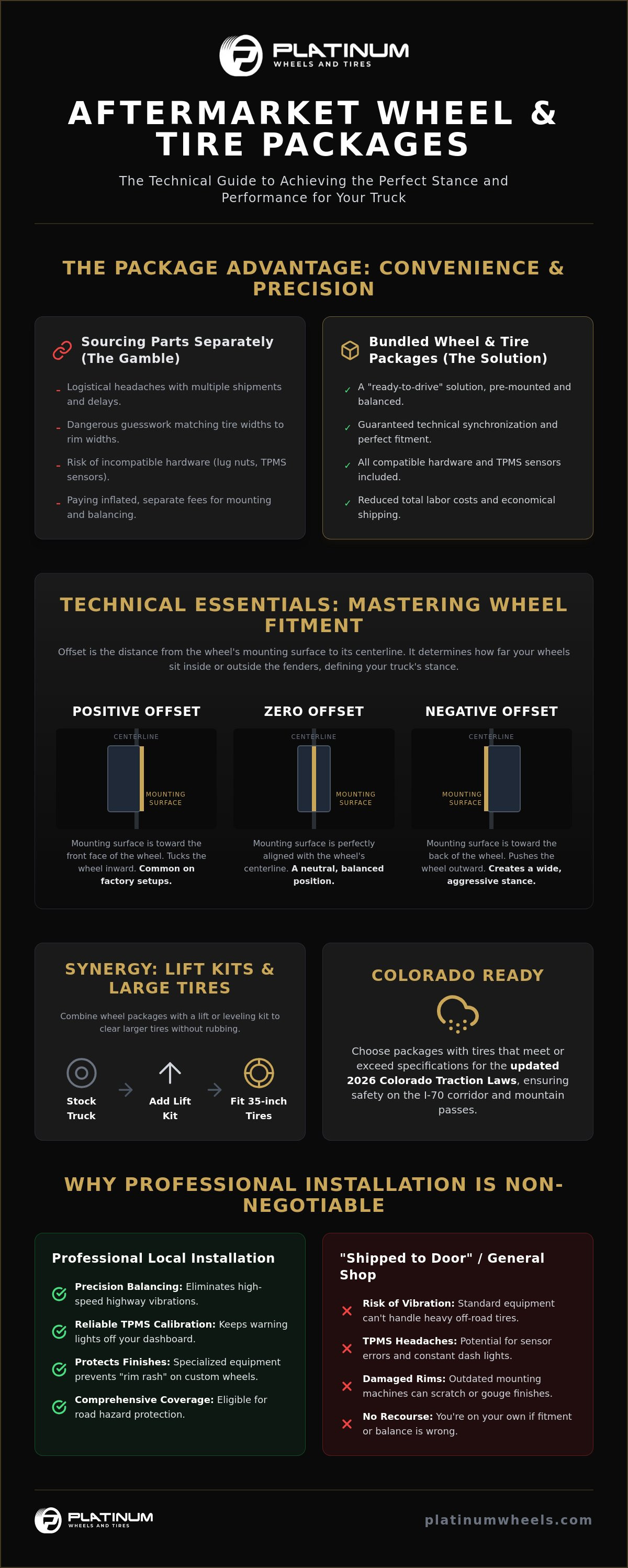
- Learn why bundling your rims and rubber into aftermarket wheel and tire packages provides a "ready-to-drive" solution that eliminates the hassle of sourcing parts separately.
- Decipher technical specs like offset and backspacing to ensure your new setup provides an aggressive stance without damaging your suspension or fenders.
- Identify the specific tire ratings required to navigate the I-70 corridor safely and remain compliant with updated 2026 Colorado Traction Laws.
- Discover how to coordinate your wheel package with lift or leveling kits to successfully fit 35-inch tires on your specific truck or SUV model.
- Recognize the value of professional local installation for achieving precision balancing and reliable TPMS sensor calibration on large-diameter wheels.
What Are Aftermarket Wheel and Tire Packages and Why Buy Them Together?
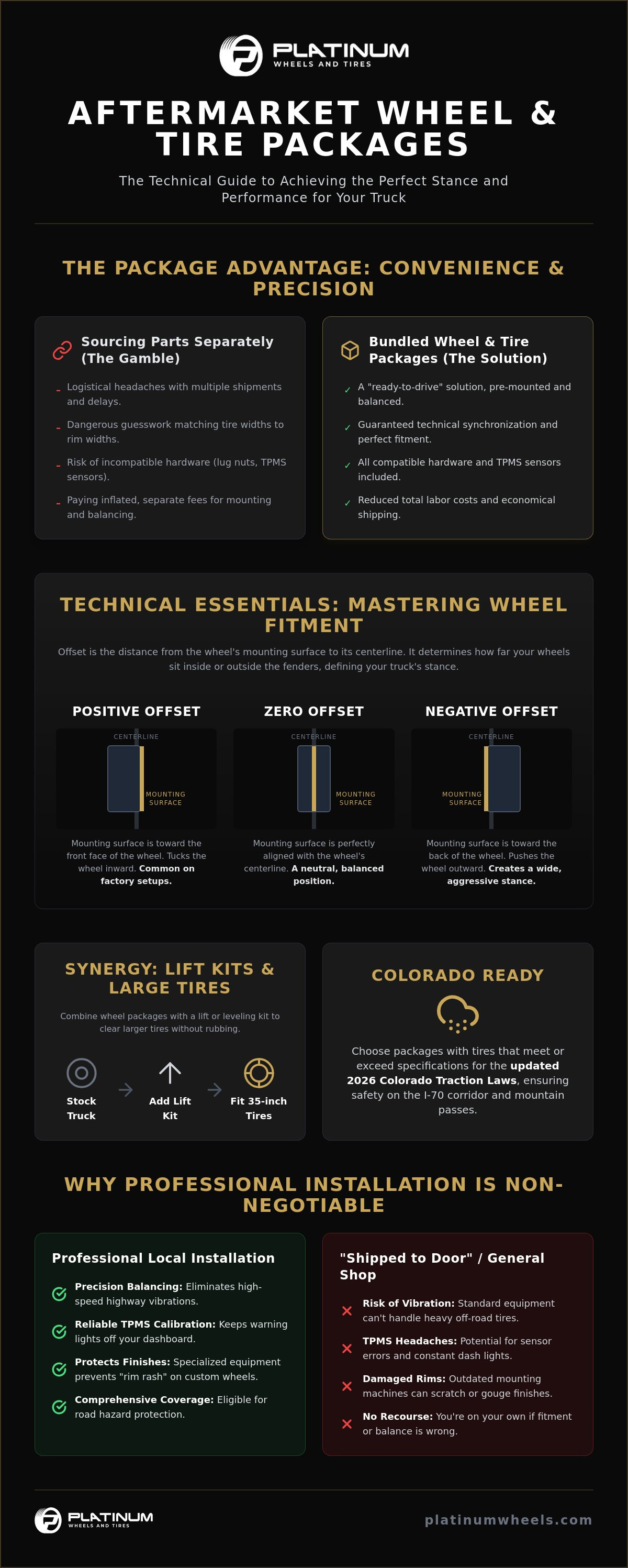
Think of an aftermarket wheel and tire package as a precision-engineered ecosystem for your truck. It's a bundled set of four or more Custom Wheels and high-performance tires that arrive pre-mounted and professionally balanced. Buying them together ensures technical synchronization from the start. You won't have to guess if a 12.5-inch wide tire is safe on a 9-inch rim; the package is designed so the tire width perfectly matches the rim width. This creates optimal bead seating and sidewall stability, which are critical for both highway safety and off-road durability.
Sourcing your rims and rubber separately is a logistical gamble that often leads to unexpected delays and fitment errors. When you choose aftermarket wheel and tire packages, you bypass the frustration of coordinating multiple shipments that might arrive weeks apart. It's a streamlined, "ready-to-drive" solution. Bundling also simplifies your investment by reducing total labor costs. You avoid paying separate, often inflated mounting and balancing fees at a general repair shop, and shipping a complete assembly is frequently more economical than handling individual components.
The Convenience of Bundled Solutions
Choosing a package eliminates the dangerous guesswork of matching tire load ratings with wheel weight limits. We ensure all critical hardware is included and compatible from day one. This includes the correct lug nut seat types and programmed tpms sensors to keep your dashboard clear of warning lights. Beyond the technical specs, there is a massive aesthetic benefit. You get the confidence of seeing a curated "look" that is proven to work, rather than hoping your components look right together once they're finally bolted onto your vehicle.
The Professional Mounting and Balancing Factor
High-speed balancing is non-negotiable for heavy off-road tires. Standard equipment at a general service station often lacks the precision to handle the mass of a 35-inch mud-terrain tire, which leads to annoying highway vibrations. Professional packaging utilizes specialized equipment to protect expensive custom finishes. Taking a high-end rim to an unqualified shop risks "rim rash" from outdated mounting machines. When you buy a bundled package, you're often eligible for comprehensive road hazard protection that covers the entire assembly, giving you peace of mind when you're airing down for Colorado's rocky trails.
Technical Essentials: Understanding Fitment, Offset, and Backspacing
Understanding fitment is the difference between a truck that turns heads and one that grinds its tires against the frame. While bolt patterns and center bores are the non-negotiable foundation of any installation, the real magic happens when you master the relationship between the wheel and the suspension. If the bolt pattern doesn't match, the wheel simply won't bolt up. If the center bore is too small, it won't seat on the hub. These are the basics, but deeply Understanding Wheel Offset and Backspacing is how you achieve a custom look that actually performs on the road.
Wheel offset is the distance from the mounting surface to the true centerline of the wheel. A positive offset tucks the wheels inward, which is common on stock setups. A zero offset aligns the mounting surface perfectly with the centerline. Negative offset pushes the wheel outward, creating that wide, aggressive stance. Backspacing is a related but different measurement; it's the distance from the mounting surface to the back edge of the rim. You need both specs to ensure your aftermarket wheel and tire packages don't collide with your brake calipers or sway bars during a full-lock turn.
Achieving the Perfect Stance
In the Denver truck community, negative offset is the go-to choice for creating a "poked" look that stands out on the street. This wider track doesn't just look better; it can also provide a more stable footprint for off-road traction. However, wheel width plays a massive role here too. A wider rim stretches the tire sidewall, which changes the contact patch and the overall profile of your off road wheel tire packages. You'll want to visualize these changes carefully before committing to a specific rim width.
Clearance and Suspension Geometry
Going too deep or too wide leads to the "rubbing" reality, where tires catch on the bumper or the inner fender liner. This is especially true when fitting 35-inch tires, which often require specific backspacing to clear the upper control arms. Changing your offset also alters the "scrub radius," which is the pivot point where your tire turns. If this is shifted too far, your steering can feel heavy or unpredictable, and it puts extra stress on your wheel bearings. If you're feeling stuck on the math, you can consult our local experts to verify your specific suspension clearance before you buy.
Choosing the Right Package for Colorado Terrain and Weather
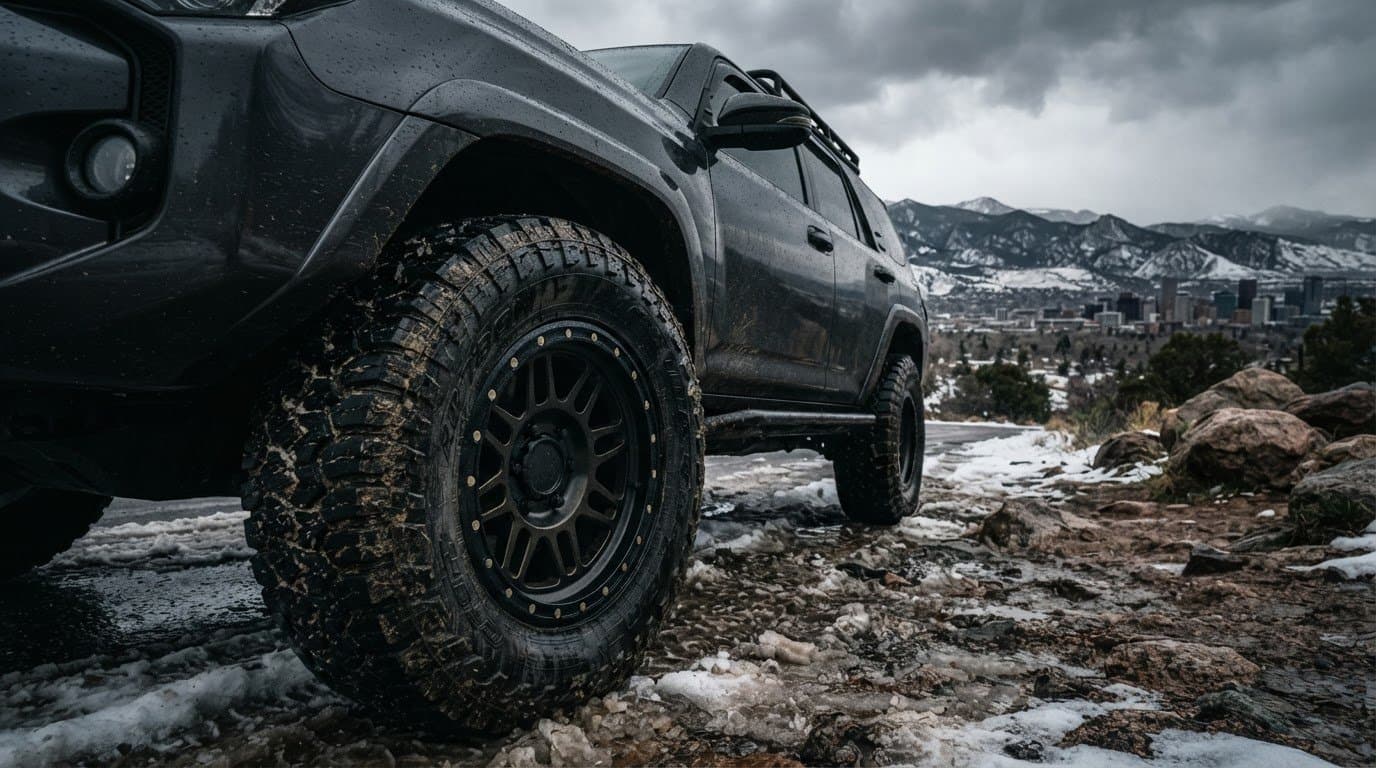
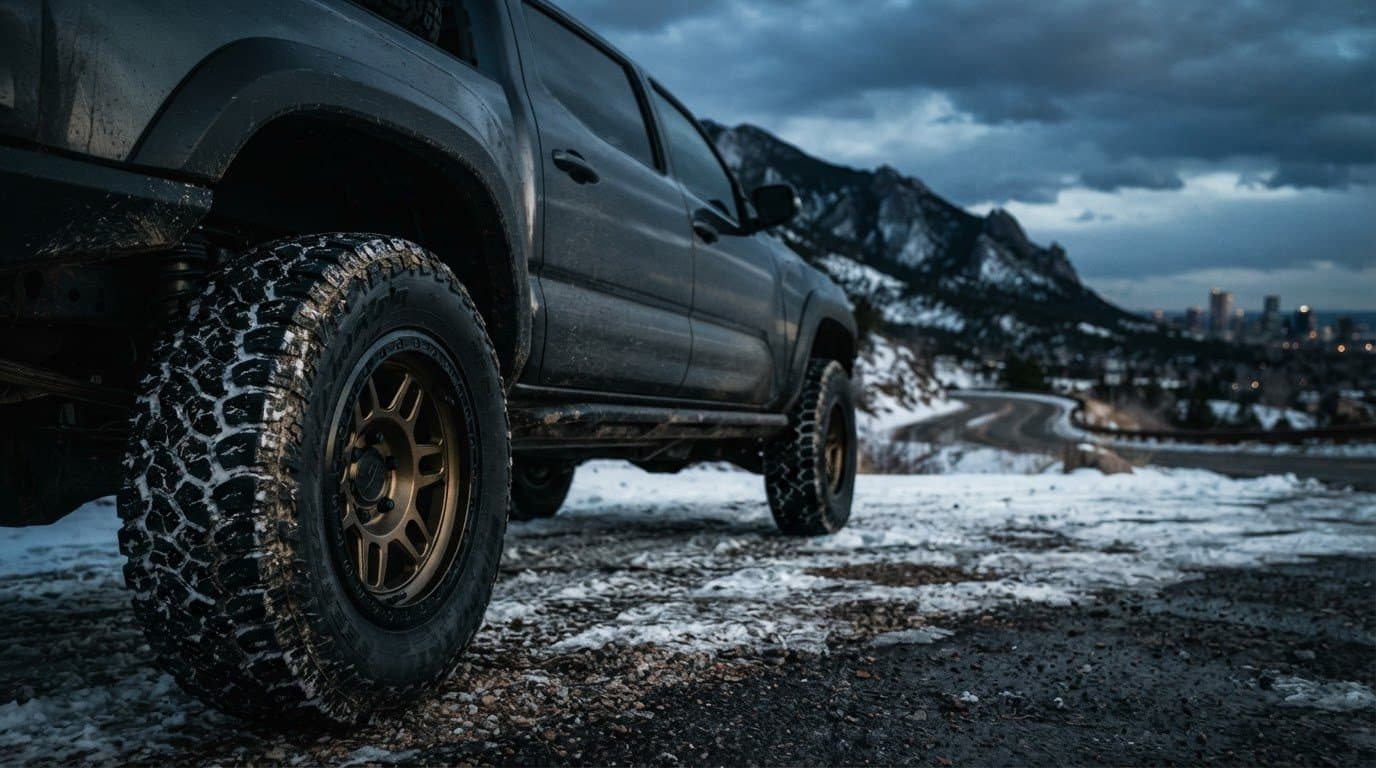
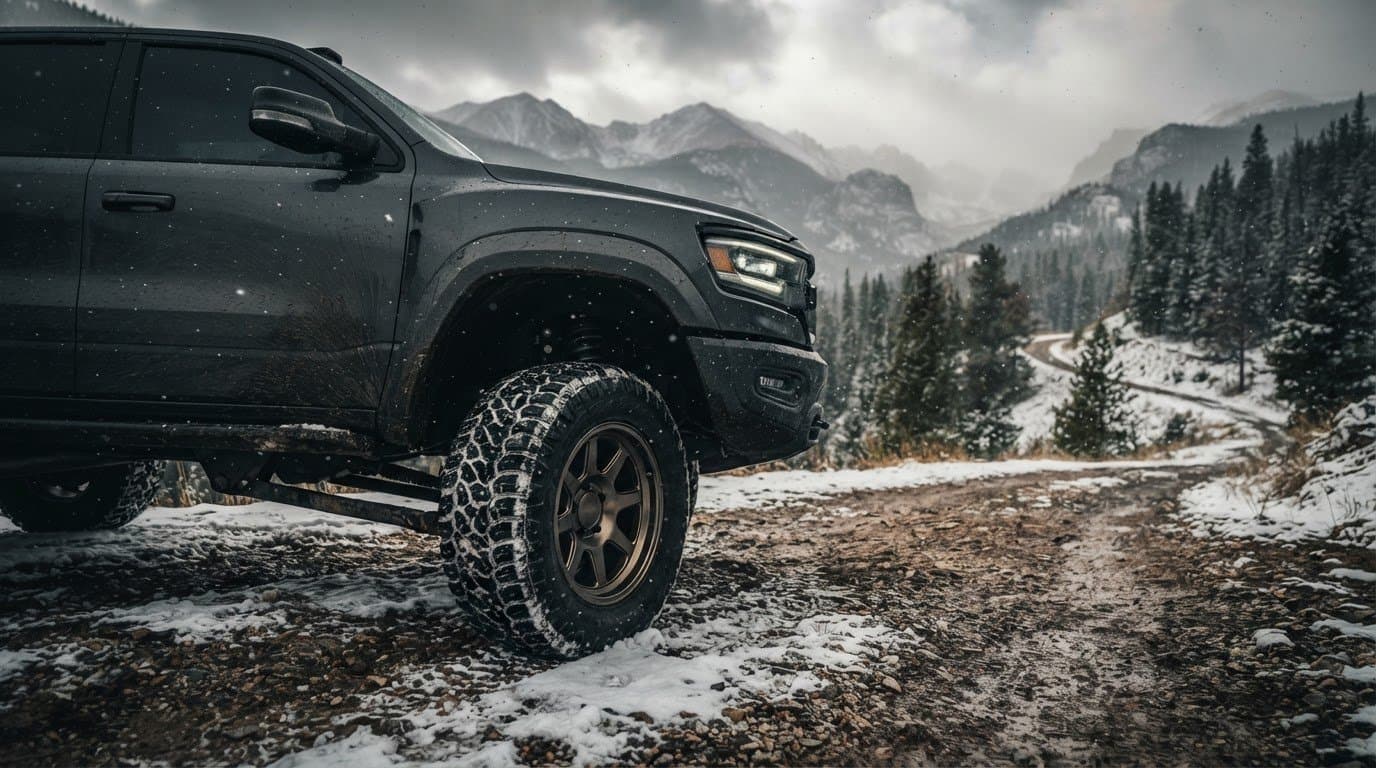
Colorado's high-altitude environment demands more from your gear than a typical suburban commute. Choosing between different aftermarket wheel and tire packages requires a deep understanding of how specific rubber compounds and rim materials react to the Rockies. From the slushy asphalt of the I-70 corridor to the jagged rocks of the San Juan Mountains, your setup must be versatile. For most Denver drivers, the Three-Peak Mountain Snowflake (3PMSF) rating is non-negotiable. This certification ensures your tires handle severe snow, keeping you compliant with the Colorado Traction Law that runs from September 1st through May 31st. Failing to have the right tread depth or rating can result in a $50 fine plus a $17 surcharge if you cause an obstruction during a traction law activation.
Your choice of rim material also dictates how your truck survives the trail. Alloy rims are the popular choice because they're lightweight and improve fuel efficiency, but steel rims offer a level of durability that's hard to beat for dedicated rock crawling. If you bend a steel rim on a remote trail, you can often hammer it back into shape to get home. Additionally, pay close attention to sidewall strength. Load Range E tires have become the gold standard for mountain towing and off-roading because their 10-ply construction resists punctures from sharp shale and provides the stability needed when hauling a trailer over steep grades. Even if you're not navigating the Rockies, you can discover Done Wright Towing & Transport to see how professional-grade towing and transport standards ensure vehicle safety during any journey.
When preparing for heavy-duty hauling, it is equally important to ensure your equipment is up to the task. For those looking for reliable towing solutions, you can explore 7x4 Single Axle Box Trailers to see how high-quality engineering ensures safety and durability on any terrain.
The All-Terrain Advantage for Daily Drivers
If your truck spends 90% of its time on pavement but needs to perform on weekend adventures, balancing highway noise with trail grip is essential. Many modern all terrain tires are designed specifically for this hybrid lifestyle. Top picks for 2026 feature advanced silica compounds that stay flexible during Colorado’s extreme temperature swings, preventing the rubber from turning into hard plastic when the thermometer drops below freezing. These tires provide a quiet ride at 75 mph while still offering enough biting edges to climb loose dirt trails.
Mud-Terrain Packages for the Dedicated Off-Roader
For those who prioritize the ultimate custom look and maximum traction, mud-terrain packages are the clear winner. These aggressive tread patterns excel in deep mud and heavy, unplowed snow where all-terrain tires might struggle. You'll need to accept a trade-off in road noise and a slight dip in fuel economy, but the visual impact and off-road capability are unmatched. MT tires feature massive shoulder lugs that act like paddles, ensuring you don't get stuck when the trail turns into a bog.
Synergy: How Your Wheel Package Works with Lift and Leveling Kits
Your truck’s factory suspension is rarely designed with a wide-stance wheel package in mind. Achieving that perfect look usually requires a strategic suspension upgrade to ensure your new aftermarket wheel and tire packages operate without interference. Most modern pickups come from the factory with a "rake," meaning the front sits lower than the rear. While this helps with aerodynamics and towing, it severely limits your ability to fit larger rubber. Coordinating your wheel choice with the right suspension modification is the only way to prevent your tires from becoming expensive fender-rubbing headaches.
Even with a quality lift, you might encounter the need for minor trimming. Plastic fender liners and lower bumper valances are common catch points during full-lock turns. It's better to plan for these adjustments during the installation process rather than discovering them on a steep trail. You also need to consider suspension travel. If your wheels are too wide or your lift isn't tall enough, the tire can bottom out against the fender when the suspension articulates over a rock or a deep pothole. Ensuring your wheel package and suspension work in harmony is the key to a build that's as functional as it is attractive.
Leveling Kit Basics for Wheel Upgrades
Deciding between a leveling kit vs lift kit is the first step in your upgrade journey. Leveling kits are incredibly popular in Denver because they offer a cost-effective way to clear slightly larger tires while maintaining that comfortable factory ride quality. If you want to fit 35 inch wheel and tire packages, a leveling kit is often the bare minimum requirement for most half-ton trucks. It levels out the stance and provides just enough clearance in the wheel wells for an aggressive setup without the complexity of a full suspension overhaul.
Fitting 35-Inch Tires and Beyond
Fitting 35 inch tires for trucks requires more than just vertical height. You must also account for wheel width and offset to ensure the tire doesn't rub against the frame or the upper control arms. High-offset wheels are often necessary to keep the tire centered correctly within the wheel well during the entire range of motion. Once your package is bolted on, a professional alignment is non-negotiable. This protects your tire investment from uneven wear and ensures your truck tracks straight on the highway. If you're ready to see how a new stance changes your ride, explore our suspension and wheel options to find the perfect match for your vehicle.
Why Professional Local Installation Beats "Shipped to Door"
Online retailers often promise a "ready-to-drive" experience by shipping pre-mounted sets directly to your driveway. However, the reality of shipping aftermarket wheel and tire packages across several states is that lead weights can shift or fall off in transit, and the balance can be compromised before the rubber even touches the asphalt. When you choose local installation, you gain one-stop accountability. If you notice a slight vibration while cruising down I-25, you don't have to mediate a frustrating dispute between a national shipping company and a third-party shop. You simply return to the experts who sold and installed the set for an immediate resolution.
Precision is critical when dealing with large diameters and heavy off-road rubber. Many general repair shops lack the specialized equipment required to perfectly balance 20-inch or 22-inch rims paired with aggressive tread. We utilize high-end machinery designed specifically for these high-mass combinations to ensure a smooth ride at highway speeds. Expert TPMS programming is another common pitfall for DIY or generic installers. We sync your sensors correctly to your vehicle’s computer from day one, so you won't be stuck staring at a persistent dashboard warning light. Plus, having a local partner makes routine maintenance like rotations and re-balancing effortless and reliable. Beyond mechanical maintenance, you can read more about specialized automotive enhancements like professional window tinting that keep your cabin cool and protected.
A complete vehicle transformation often goes beyond the wheels and suspension. For enthusiasts who want to upgrade their cabin technology alongside their truck's exterior, you can discover Music In Motion to explore specialized mobile electronics and custom installation options.
The Platinum Wheels Difference in Denver
We provide fitment advice that national websites simply can't replicate because we understand the specific vehicle mix and terrain of the Front Range. Our team knows exactly how a particular custom wheels and rims finish will hold up against Colorado’s winter road salt and summer trail debris. We’ve personally tested these wheel and tire combinations on local trails like Red Cone and Kingston Peak. This real-world experience means we know exactly where the limits of suspension travel and traction lie for your specific build, ensuring your truck performs as well as it looks.
Ready to Upgrade Your Ride?
Before you commit to a new setup, run through a final checklist to ensure a seamless experience. Have your vehicle’s exact year, make, and model ready, but also think about the specific "look" you want—whether that's a flush, tucked, or aggressive stance. Consider your budget for both the hardware and the professional installation that protects your investment. Scheduling a consultation is the best way to ensure every technical detail, from offset to load rating, is handled with precision. Visit Platinum Wheels in Denver to build your custom package today!
Transform Your Truck for the Front Range Today
Choosing the right aftermarket wheel and tire packages is about more than just picking a design that catches your eye. It's a technical commitment to ensuring your vehicle handles Colorado's unpredictable mountain passes and rugged weekend trails with absolute precision. By mastering the relationship between offset and suspension travel, you avoid the common pitfalls of rubbing and poor ride quality. You also ensure your build remains compliant with state traction laws, keeping you safe and legal during those heavy winter storms on the I-70 corridor.
At Platinum Wheels, we are truck enthusiasts who specialize in the perfect synergy between lift kits and custom wheel packages. Serving Denver, Aurora, and the entire Front Range, our team provides the professional installation and technical expertise that national online retailers simply can't match. We understand the local trails because we drive them too. Stop guessing about fitment and start building a truck that performs as aggressively as it looks. Build Your Custom Wheel and Tire Package at Platinum Wheels and get ready for your next adventure with total peace of mind. Your dream stance is just one consultation away.
Frequently Asked Questions
Do aftermarket wheel and tire packages come with TPMS sensors?
Yes, most high-quality aftermarket wheel and tire packages include pre-installed and programmed TPMS sensors. This allows for a seamless transition from your factory setup without the hassle of dismounting your old tires to swap sensors. It's a "plug-and-play" solution that keeps your dashboard free of warning lights from the moment you drive out of the shop.
Will 35-inch tires fit on my truck with just a leveling kit?
Most modern half-ton trucks need a 2-inch to 2.5-inch leveling kit to fit 35-inch tires. Even with this lift, you'll likely need to choose a wheel with the correct offset to prevent the rubber from rubbing against the frame or inner fender liners. It's a tight fit that often requires minor plastic trimming to ensure full clearance during sharp turns.
What is the difference between wheel offset and backspacing?
Offset measures the distance from the hub mounting surface to the wheel's centerline, while backspacing measures from the mounting surface to the innermost edge of the rim. While they're related, offset dictates how far the wheel sticks out from the fender for that custom stance. Backspacing is the critical spec that ensures your rims don't collide with your brake calipers or control arms.
How does changing my wheel size affect my speedometer?
Upsizing your tires will cause your speedometer to display a speed that is lower than your actual travel speed. A larger tire has a greater circumference, meaning it travels further with every single rotation. If you move from a 31-inch stock tire to a 35-inch tire, your speedometer could be off by 5 to 8 mph at highway speeds, which may require a digital recalibration.
Can I use my factory lug nuts with aftermarket wheels?
You generally cannot use factory lug nuts because most aftermarket wheel and tire packages require a specific lug nut seat or a thinner diameter "tuner" nut. Factory hardware is often too bulky to fit into the recessed lug holes of custom rims. We provide the specific lug kit needed with your package to ensure your wheels are torqued safely and correctly.
Is it better to get all-terrain or mud-terrain tires for Colorado winters?
All-terrain tires with the Three-Peak Mountain Snowflake (3PMSF) rating are almost always better for Colorado winters than mud-terrain tires. Mud-terrains lack the dense siping found in all-terrains, which means they can't grip packed snow or ice as effectively. For the I-70 corridor, an all-terrain tire offers a much safer balance of winter traction and highway comfort during slushy conditions. The engineering behind these rubber compounds is fascinating; for those interested in high-performance industrial materials, you can check out Plastiques Elastomères.
How do I know what bolt pattern my truck uses?
You can identify your bolt pattern by referencing your vehicle’s year, make, and model in a fitment database or by measuring the distance between your wheel studs. For example, most late-model F-150s use a 6x135 pattern, while many Chevrolets use a 6x139.7 pattern. If you're unsure, visit us in Denver for a quick measurement to ensure your new rims seat perfectly on the hub.
Why is professional balancing so important for off-road wheel packages?
Professional balancing is essential because the sheer mass of off-road tires makes even a tiny weight discrepancy feel like a violent shake at 65 mph. Standard balancing machines aren't always calibrated for the weight of 35-inch or 37-inch tires. We use specialized equipment to achieve a precision balance that protects your suspension and prevents your steering wheel from vibrating during long mountain drives.