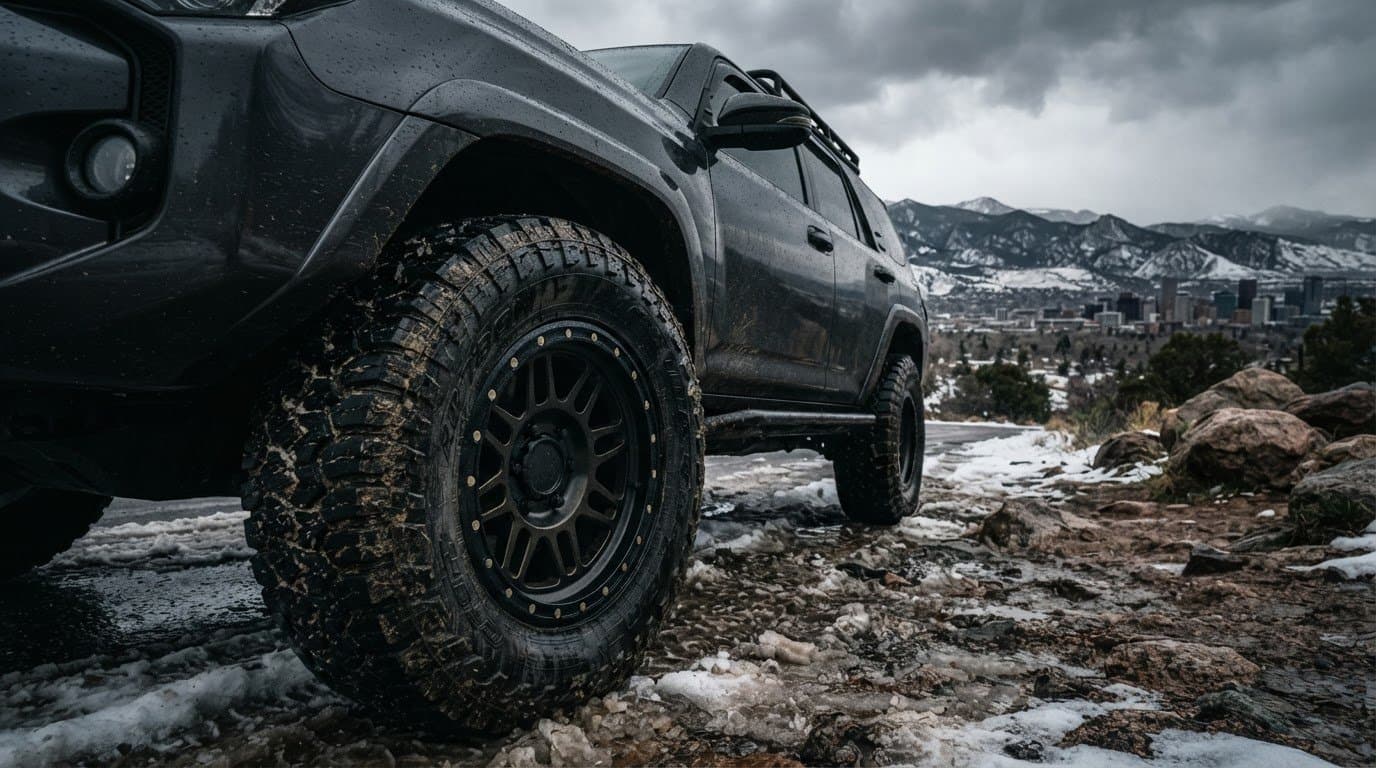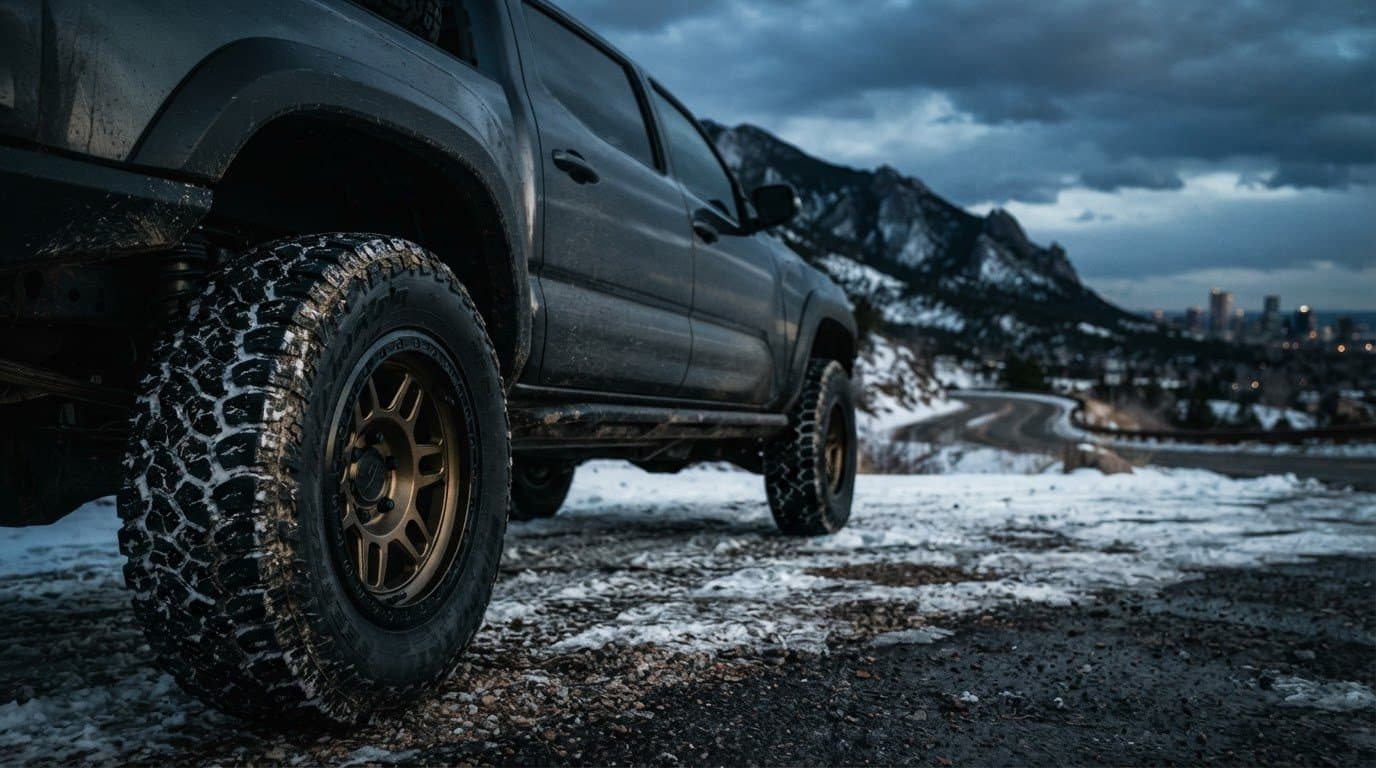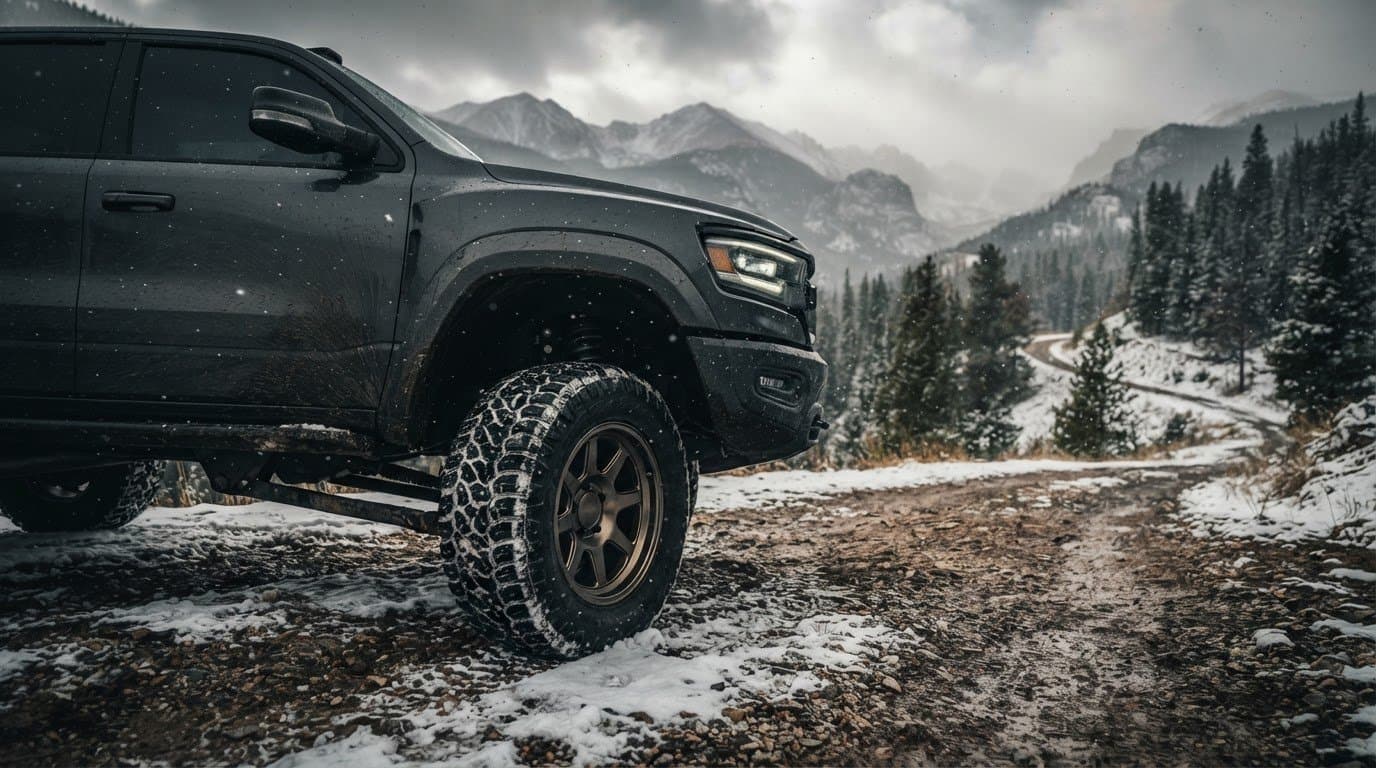
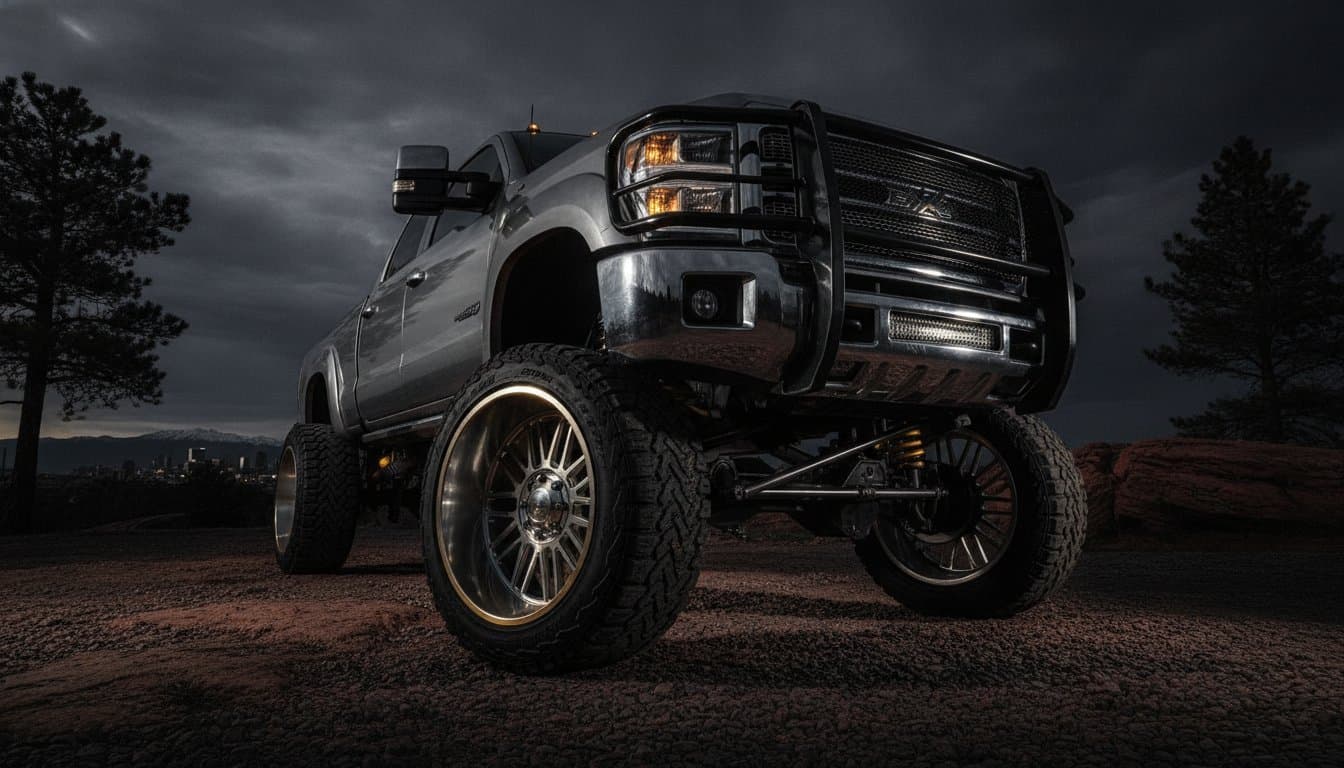
The Complete Guide to Wheel and Rim Packages for Trucks in 2026
Most truck owners shopping for wheel and rim packages for trucks think they're buying a set of parts. They're not. They're buying a precision-engineered system, and if even one component is off, you're looking at rubbing fenders, failed TPMS sensors, and a ride that fights you every mile down I-25.
You already know what you want: an aggressive stance that turns heads in the trailhead parking lot, without sacrificing the smooth highway manners you need for your daily commute through Denver. That tension is real, and it's exactly why so many truck owners end up frustrated after spending serious money on wheels that technically fit but practically don't work for their life.
This guide cuts through the jargon and gives you a clear, confident framework for choosing the right package for your truck and Colorado's specific demands. You'll learn what a complete package actually includes (TPMS, balancing, and all), how to decode fitment specs so nothing rubs, and why the right setup won't compromise your towing capacity or fuel economy. By the end, you'll know exactly what to ask for and why it matters.
Key Takeaways
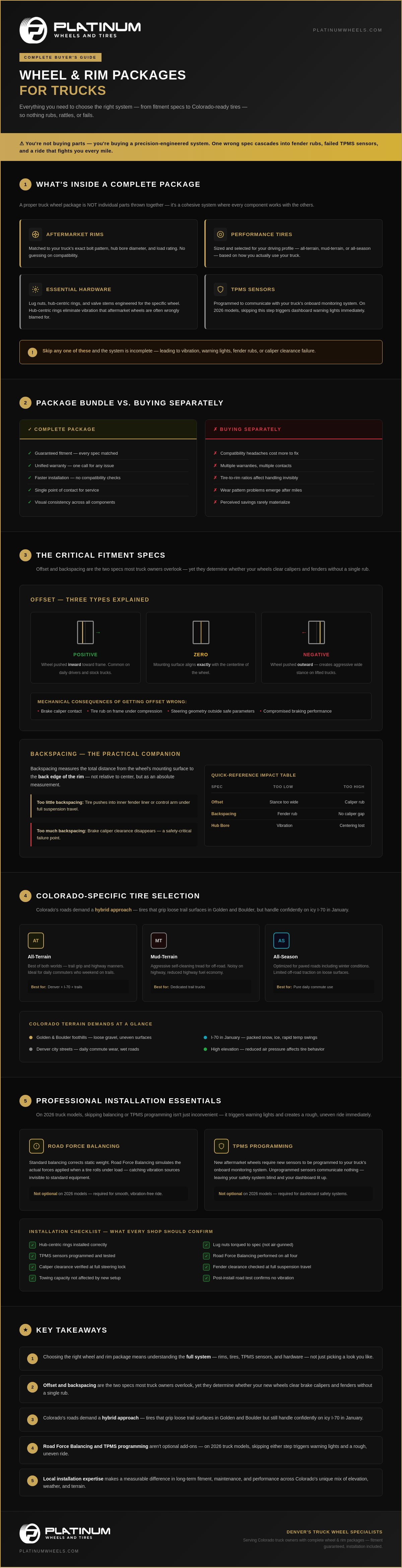
- Choosing the right wheel and rim packages for trucks means understanding the full system — rims, tires, TPMS sensors, and hardware — not just picking a look you like.
- Offset and backspacing are the two specs most truck owners overlook, yet they determine whether your new wheels clear your brake calipers and fenders without a single rub.
- Colorado's roads demand a hybrid approach: tires that grip loose trail surfaces in Golden and Boulder but still handle confidently on icy I-70 in January.
- Road Force Balancing and proper TPMS programming aren't optional add-ons — on 2026 truck models, skipping either step can trigger warning lights and a rough, uneven ride.
- Local installation expertise makes a measurable difference in long-term fitment, maintenance, and performance across Colorado's unique mix of elevation, weather, and terrain.
What Are Wheel and Rim Packages for Trucks?
Think of a wheel and rim package as a complete, engineered answer to a specific question: what does this truck need to perform at its best? It's not a collection of parts thrown together for a deal. A properly built package combines aftermarket rims, performance tires, mounting hardware, and integrated TPMS sensors into a single, cohesive system where every component is chosen to work with the others. That distinction matters more than most buyers realize before they're standing in a shop trying to figure out why their new wheels don't clear the brake calipers.
The core appeal is threefold: guaranteed fitment, cost efficiency, and visual consistency. When a package is built around your truck's exact specifications, from bolt pattern to hub bore diameter, you're not gambling on compatibility. Understanding the fundamentals of wheel sizing and fitment specifications makes it clear why a single mismatched measurement can cascade into expensive problems. Packages short-circuit that risk entirely.
What's Included in a Standard Package?
A complete package covers every component that touches the road or connects to your truck's safety systems. Here's what you should expect:
- Aftermarket wheels (rims) matched to your truck's bolt pattern, hub bore, and load rating
- Performance tires sized and selected for your driving profile, whether that's all-terrain, mud-terrain, or all-season
- Essential hardware including lug nuts, hub-centric rings, and valve stems engineered for the specific wheel
- Integrated TPMS sensors programmed to communicate with your truck's onboard monitoring system
Skip any one of those, and the system is incomplete. Hub-centric rings, for example, are easy to overlook but critical: they fill the gap between the wheel's center bore and the hub, eliminating the vibration that aftermarket wheels are often wrongly blamed for.
The Convenience Factor: Why Bundling Beats Individual Buying
Sourcing rims, tires, and hardware separately sounds like a way to save money. In practice, it creates compatibility headaches that cost more to fix than the initial savings justified. Tire-to-rim width ratios affect handling, sidewall stability, and wear patterns in ways that aren't obvious until you've put a few thousand miles on a mismatched setup. When all components arrive together as part of curated wheel and rim packages for trucks, the installation process is faster, the warranty is unified, and there's a single point of contact if anything needs attention down the road. That's not a small convenience. It's the difference between a setup that performs and one that frustrates.
The Technical Side: Offset, Backspacing, and Fitment
Offset is the most misunderstood spec in truck customization, and that misunderstanding costs people real money. It's not just a number that determines how aggressive your stance looks. It's the measurement that decides whether your wheels clear your brake calipers, whether your tires rub your frame under compression, and whether your steering geometry stays within safe operating parameters. Get it wrong, and no amount of visual appeal makes up for the handling problems you've introduced.
Offset is measured in millimeters and describes the distance between the wheel's mounting surface and its true centerline. Positive offset pushes the wheel inward, toward the truck's frame. Zero offset aligns the mounting surface exactly with the centerline. Negative offset pushes the wheel outward, creating that wide, aggressive stance you see on lifted trucks. Each choice has mechanical consequences that go well beyond aesthetics, and federal tire and wheel safety standards exist precisely because those consequences affect braking, handling, and occupant safety.
Offset vs. Backspacing: A Simple Breakdown
Backspacing is offset's practical counterpart. Where offset is a relative measurement from center, backspacing measures the total distance from the wheel's mounting surface to the back edge of the rim. A wheel with insufficient backspacing will push your tire into the inner fender liner or control arm under full suspension travel. Too much backspacing and the caliper clearance disappears. For trucks running on the narrower trails around Golden and the Boulder foothills, getting this number right is the difference between a clean run and a fender full of tire marks.
Here's a quick reference for how offset affects your truck's stance and clearance:
- High positive offset: Wheel sits tucked inward; common on stock configurations; limits aggressive stance but protects suspension components
- Zero offset: Neutral positioning; a reliable baseline for most mild customization builds
- Negative offset: Wheel pushes outward; creates the wide look; increases stress on wheel bearings and factory suspension if taken too far
One thing competitors rarely mention: running extreme negative offset without accounting for your truck's factory suspension geometry puts chronic lateral stress on the wheel bearings and hub assemblies. The wide look has a mechanical cost, and that cost compounds over time on Colorado's rough terrain.
Interactions with Lift and Leveling Kits
Offset doesn't exist in isolation, especially once a lift or leveling kit enters the picture. Running 35 inch tires for trucks almost always requires a leveling kit at minimum to prevent front-end rubbing during turns. But adding lift changes your truck's scrub radius, which is the geometric point around which your front wheels steer. Wider wheels with negative offset amplify this change, making steering feel heavy and unpredictable, particularly on loose gravel or icy pavement.
Before committing to any wheel and rim packages for trucks that involve a significant offset change, cross-reference your suspension setup. The leveling kit vs lift kit guide breaks down exactly how each option affects clearance and geometry, which is essential reading before you finalize wheel sizing. Bolt pattern precision matters just as much here: a 6x135 pattern is not interchangeable with a 6x139.7, and on a heavy-duty truck carrying load, "close enough" isn't a standard that keeps you safe. If you're building a setup that needs to work across both trail and highway, talking through the full fitment picture with a knowledgeable local installer is the smartest first move you can make.
Colorado-Specific Performance: Matching Tires to Your Rims
Colorado doesn't let you pick a lane. One morning you're airing down on a rocky two-track outside Evergreen, and by afternoon you're merging onto a salt-slicked I-70 in a February snowstorm. No other state stacks those demands quite so aggressively, which is exactly why generic tire advice from national retailers misses the mark for Front Range truck owners. The right wheel and rim packages for trucks here require what you might call a Colorado Hybrid approach: off-road grip that handles loose shale and decomposed granite, paired with winter traction credentials that actually hold up at elevation.
Rim diameter plays directly into this equation in a way most buyers don't anticipate. A 17-inch wheel carries more sidewall height than a 20-inch, and that extra rubber gives you meaningful cushion when you air down on the trail. Dropping to 18-20 PSI on a 20-inch setup leaves you with far less sidewall flex to absorb rocks and roots, which increases the risk of pinch flats on Colorado's jagged terrain. If serious off-road use is part of your regular rotation, that extra inch of sidewall on a 17-inch rim isn't a style compromise; it's a functional advantage.
Load ratings demand equal attention. Hauling a camper trailer up the Eisenhower Tunnel at 11,000 feet puts sustained stress on your tire's internal structure that flat-highway ratings don't fully represent. Always match your tire's load index to your truck's GVWR plus trailer tongue weight, and confirm that the rating holds at speed. The federal tire and wheel safety standards published by NHTSA provide a clear framework for understanding load ratings, and they're worth reviewing before you commit to any package that'll see regular towing duty on mountain passes.
For winter capability, the Three-Peak Mountain Snowflake (3PMSF) rating is non-negotiable for Colorado drivers. An M+S designation alone isn't sufficient; it's a self-certified label that doesn't require standardized snow traction testing. The 3PMSF rating means the tire has passed a specific performance threshold in packed snow conditions. On Berthoud Pass or the switchbacks above Idaho Springs, that distinction matters in ways you'll feel through the steering wheel.
All-Terrain vs. Mud-Terrain for the Rockies
For most Colorado truck owners who split time between trail and highway, all terrain tires deliver the most practical daily balance. They handle gravel forest roads and dirt trails confidently without the aggressive highway noise and accelerated wear that mud-terrain tires generate on pavement. Mud-terrain tires excel in deep clay and wet loam, but Colorado's primary off-road surfaces are rocky and dry, conditions where an all-terrain's tighter tread pattern actually bites more efficiently. The 2026 hybrid tire category, blending an aggressive tread block with tighter void ratios, is worth evaluating if you want to push closer to mud-terrain performance without sacrificing highway manners.
Wheel Materials: Alloy vs. Steel in the High Desert
Alloy wheels earn their premium at altitude. Reduced unsprung weight improves throttle response and fuel efficiency, both measurable factors when your engine is already working harder against thinner air above 8,000 feet. Modern alloy finishes have also caught up to Colorado's brutal road chemistry; quality powder-coat and machine-cut treatments resist magnesium chloride brine far better than older chrome-style finishes. On long descents like the stretch from Vail Pass into Glenwood Canyon, alloy's superior heat dissipation keeps brake temperatures in check in ways that steel simply can't match. Steel wheels remain a valid choice as dedicated winter or spare setups, but for a primary package that performs year-round, alloy is the clear answer for Colorado conditions.
Professional Installation: Ensuring a Safe and Balanced Ride
Choosing the right wheel and rim packages for trucks is only half the equation. How those components get installed determines whether your investment performs the way it should or spends its first year fighting you. The gap between a competent general tire shop and a specialist installer becomes most visible the moment you put a set of 35-inch or 37-inch tires on a heavy-duty truck and try to push it down the highway at speed.
The Road Force Advantage
Standard spin balancing measures weight distribution. Road Force Balancing measures something more important: how the tire and rim interact under actual load conditions. A specialized Road Force machine presses a roller against the rotating tire to simulate the pressure of pavement contact, identifying stiffness variations in the tire's construction that standard balancing simply can't detect. The result is a tire that's balanced not just in rotation, but in real-world rolling behavior.
This matters enormously with oversized off-road tires. A 37-inch all-terrain tire carries significantly more mass than a passenger car tire, and even a minor stiffness variation in the carcass compounds into noticeable high-speed vibration. Road Force Balancing catches those "out of round" tires before they ever touch the road, giving you the option to match-mount the tire to the rim at the optimal orientation and eliminate the problem at the source. With standard balancing, that same tire might get a handful of weights slapped on it and still shake at 70 mph on I-25.
TPMS and Modern Safety Tech
TPMS on 2026 truck models is not plug-and-play. Modern trucks use direct-sensing systems where each sensor broadcasts a unique ID that must be registered to the vehicle's ECU. Swap in new sensors without programming them correctly, and your dash light stays on indefinitely, or worse, you lose real-time pressure monitoring entirely without realizing it.
The cost-benefit question on sensors is straightforward: new sensors come with fresh battery life and full manufacturer specifications. Rebuilding old sensors with replacement valve cores and seals can work, but it resets none of the battery life, and a sensor failure at altitude on a loaded truck is a problem you don't want to troubleshoot roadside. Professional calibration after installation ensures every sensor communicates accurately with your truck's computer, keeping that dashboard clean and your safety systems fully operational.
Two installation details that rarely get discussed deserve equal attention:
- Proper torque sequencing: Lug nuts tightened unevenly or to the wrong spec can warp brake rotors and create dangerous wheel movement over time. A torque wrench isn't optional; it's the baseline.
- Hub-centric fitment verification: Hub-centric rings must seat fully and cleanly before torque is applied. A ring that's slightly off-center introduces the same vibration that aftermarket wheels often get blamed for incorrectly.
After installation, a 50-mile re-torque is non-negotiable. New wheels seat against the hub as you drive, and lug nuts can lose clamping force in that initial break-in window. Skipping the re-torque is how wheels come loose, and on Colorado's mountain grades, that's not a risk worth taking for the sake of convenience.
Professional installation from a team that specializes in truck fitment protects every dollar you've put into your package. Talk to Platinum Wheels about professional truck wheel installation and get your setup done right the first time.
Choosing Your Package in Denver: The Platinum Wheels Advantage
There's a fundamental difference between clicking "add to cart" on a national retail site and sitting down with someone who drove the switchbacks above Idaho Springs last weekend. That difference is exactly what separates a wheel and rim package that works from one that technically ships on time. Local expertise isn't a soft benefit. It's the variable that determines whether your setup performs on the Apex trail outside Golden or fights you every time you drop into a rut.
Aftermarket wheel and tire packages require ongoing attention that no warehouse can provide. Torque checks, seasonal pressure adjustments, TPMS recalibration after a sensor replacement, and fitment tweaks as suspension components wear: these are the realities of owning an aggressive build in Colorado. A local shop that knows your truck and your driving habits is a resource you'll return to. A national retailer's customer service line isn't.
Expert Consultation for Colorado Drivers
Matching your build to a specific destination changes the conversation entirely. A package optimized for the Alpine Loop's loose shale and sustained grades looks different from one built around Moab's sandstone ledges and slickrock. Sidewall height, tread compound hardness, and rim diameter all shift based on where you actually wheel, not just where you wish you did. At Platinum Wheels, that conversation happens before a single spec is locked in.
Seeing finishes in person matters more than most buyers expect. A photo of a matte black wheel on a white background tells you almost nothing about how that finish reads against your truck's color in direct Colorado sunlight. Evaluating samples in person eliminates the buyer's remorse that online-only shoppers regularly experience after delivery.
Aggressive fitments sometimes require minor trimming of the inner fender liner to achieve full suspension travel without contact. That's a normal part of the process for lifted trucks running wider tires, and it's something a specialist handles cleanly during installation rather than leaving you to discover on the trail. Understanding the full scope of aftermarket wheel and tire packages means knowing that fitment is a process, not just a transaction.
Ready to Transform Your Truck?
The process at Platinum Wheels moves efficiently from consultation to road-ready. You'll discuss your driving profile, whether that's weekend trail runs out of Arvada, heavy towing through the mountains, or a work truck that needs durability above everything else. From there, wheel and rim packages for trucks are built around your actual specifications, not a generic vehicle category. Professional installation follows, including Road Force Balancing and full TPMS programming, so the truck leaves the shop performing correctly from the first mile.
Local support means a real point of contact if anything needs attention after installation. That accountability doesn't exist with a shipped-to-door package. Explore our custom wheel and tire packages today and build your setup with a team that knows Colorado's roads as well as you do.
Build the Setup Your Truck Actually Deserves
Getting wheel and rim packages for trucks right comes down to three things: fitment specs that work with your suspension, tires matched to where you actually drive, and professional installation that doesn't cut corners on balancing or TPMS calibration. Skip any one of those, and the rest of your investment underperforms.
Colorado's terrain doesn't forgive a lazy build. The right package handles Berthoud Pass in February and a rocky two-track in July without compromise. That kind of versatility doesn't happen by accident. It happens when someone with expert Denver-based installation experience, specialized off-road suspension knowledge, and high-performance TPMS calibration builds your setup around your truck's actual specs and your real driving habits.
You've got the framework. Now put it to work. Build your custom wheel and tire package at Platinum Wheels and leave the shop with a setup that performs exactly the way you planned it. Your truck's best miles are still ahead.
Frequently Asked Questions About Wheel and Rim Packages for Trucks
What is the biggest tire I can run on my truck without a lift?
Most half-ton trucks can fit 265/70R17 or 275/65R18 tires without any suspension modification, though the exact limit depends on your cab configuration, fender design, and factory suspension height. Extended and crew cab trucks often have slightly tighter clearances than standard cabs due to frame geometry. The safest approach is to verify fitment against your specific year and trim before purchasing, since even trucks sharing the same platform can have different wheel well dimensions.
Does wheel offset affect my truck's towing capacity?
Offset doesn't directly reduce your truck's rated towing capacity, but it does affect the mechanical stress on the components that support that capacity. Running significant negative offset increases lateral load on your wheel bearings and hub assemblies with every mile, and that wear compounds under the sustained stress of towing heavy loads on mountain grades. Your truck's tow rating assumes factory geometry; deviating substantially from that geometry without accounting for it accelerates component wear over time.
Why do I need new TPMS sensors with a wheel and rim package?
Your factory TPMS sensors are physically mounted to your stock wheels, so they don't transfer to new rims. On 2026 truck models, each sensor broadcasts a unique ID that your vehicle's ECU must recognize to maintain active pressure monitoring. Installing new wheels without compatible, properly programmed sensors leaves your dash warning light on and disables real-time pressure data. Fresh sensors also come with full battery life, which matters on a loaded truck navigating high-altitude passes where a pressure drop is the last problem you want to troubleshoot roadside.
What is the difference between wheel offset and backspacing?
Offset is a relative measurement in millimeters from the wheel's centerline to its mounting surface, and it can be positive, zero, or negative. Backspacing measures the total distance from the mounting surface to the back edge of the rim in inches. Both numbers describe how far your wheel sits inward or outward, but backspacing gives you a more practical clearance check against your inner fender liner, brake caliper, and control arm. Most installers use both specs together to confirm fitment before a wheel and rim package for trucks gets mounted.
How do larger wheels and tires affect my fuel economy?
Larger tires increase rolling resistance and rotational mass, both of which require more energy to maintain highway speed. Oversized tires also affect your speedometer and odometer calibration, which can make fuel economy appear worse than it actually is if you're calculating MPG manually. The impact varies by tire size and tread pattern; an aggressive mud-terrain tire creates more aerodynamic drag than an all-terrain of the same diameter. At Colorado's higher elevations, where your engine already works harder against thinner air, that added resistance is a real factor worth building into your decision.
Do I need a leveling kit for a 33-inch or 35-inch wheel package?
A 33-inch tire often fits under a stock suspension on full-size trucks, but clearance during full steering lock and suspension compression is tight enough that a leveling kit is strongly recommended to prevent contact. A 35-inch tire almost always requires at minimum a 2-inch leveling kit to clear the front fender liner during turns. Adding lift also changes your scrub radius and steering geometry, so the leveling kit choice should be made alongside your wheel offset selection, not independently of it.
Are alloy wheels strong enough for heavy off-roading in Colorado?
Quality forged or cast alloy wheels handle Colorado's off-road terrain reliably when they're rated appropriately for your truck's load. The key is matching the wheel's load rating to your truck's GVWR and confirming the alloy grade meets the demands of technical terrain. Budget alloys can crack on sharp rock impacts, but a properly spec'd alloy wheel from a reputable manufacturer is durable enough for the rocky trails around the Front Range and mountain passes. If you're running extreme technical terrain regularly, discuss load ratings and construction method with your installer before committing to a specific wheel.
How often should I rotate my off-road truck tires?
Off-road truck tires should be rotated every 5,000 to 6,000 miles, which is more frequent than the standard 7,500-mile interval most passenger car owners follow. Aggressive all-terrain and mud-terrain tread patterns wear unevenly when left in the same position, particularly on trucks that mix highway driving with loaded trail use. If you're running a full-size spare that matches your package, including it in a five-tire rotation extends the life of all five tires measurably and keeps tread depth consistent across the set.