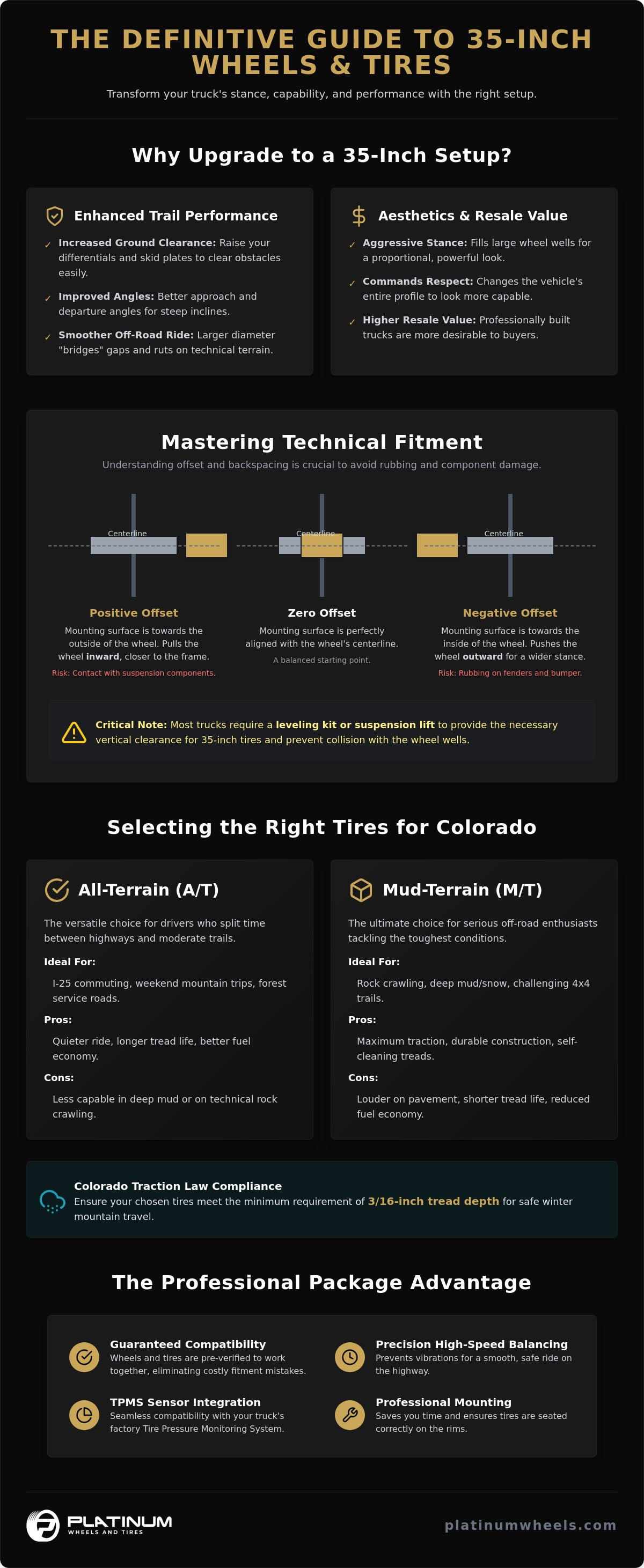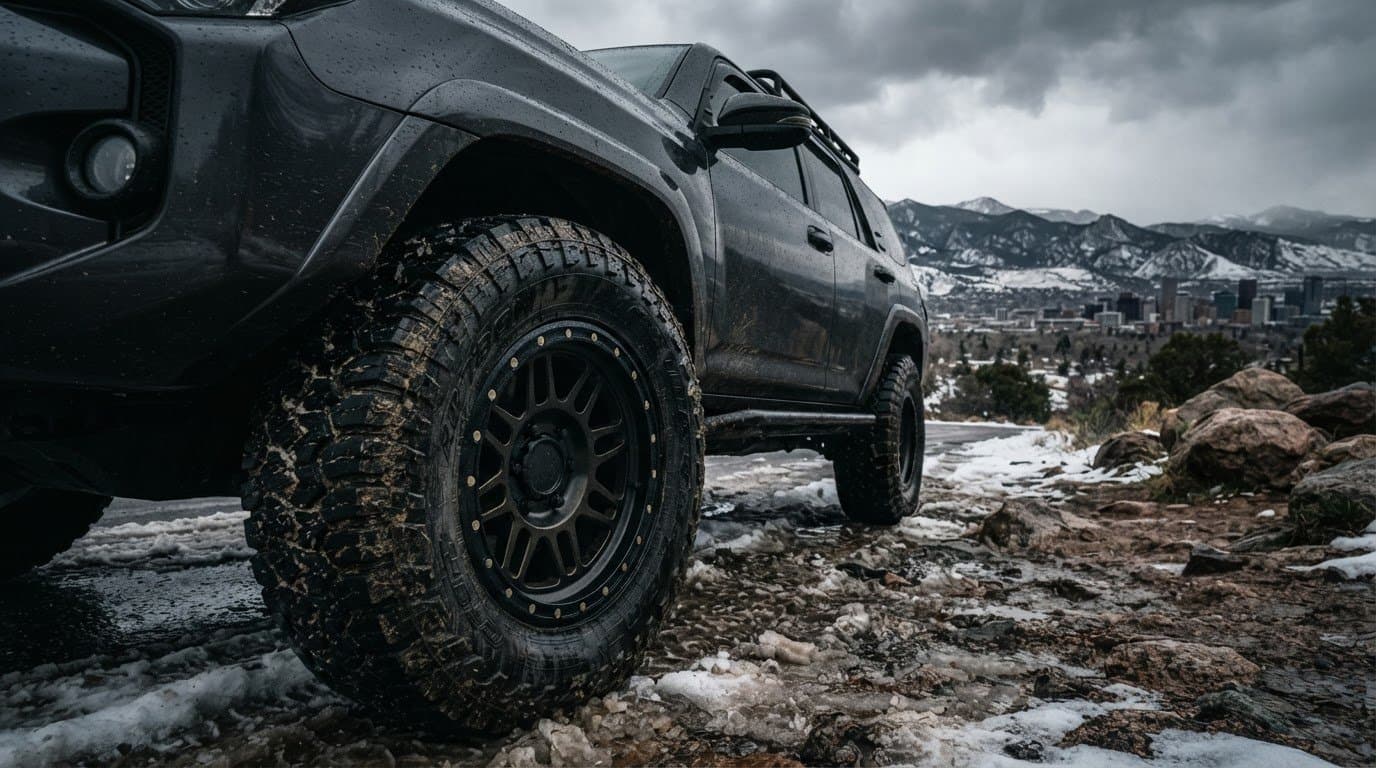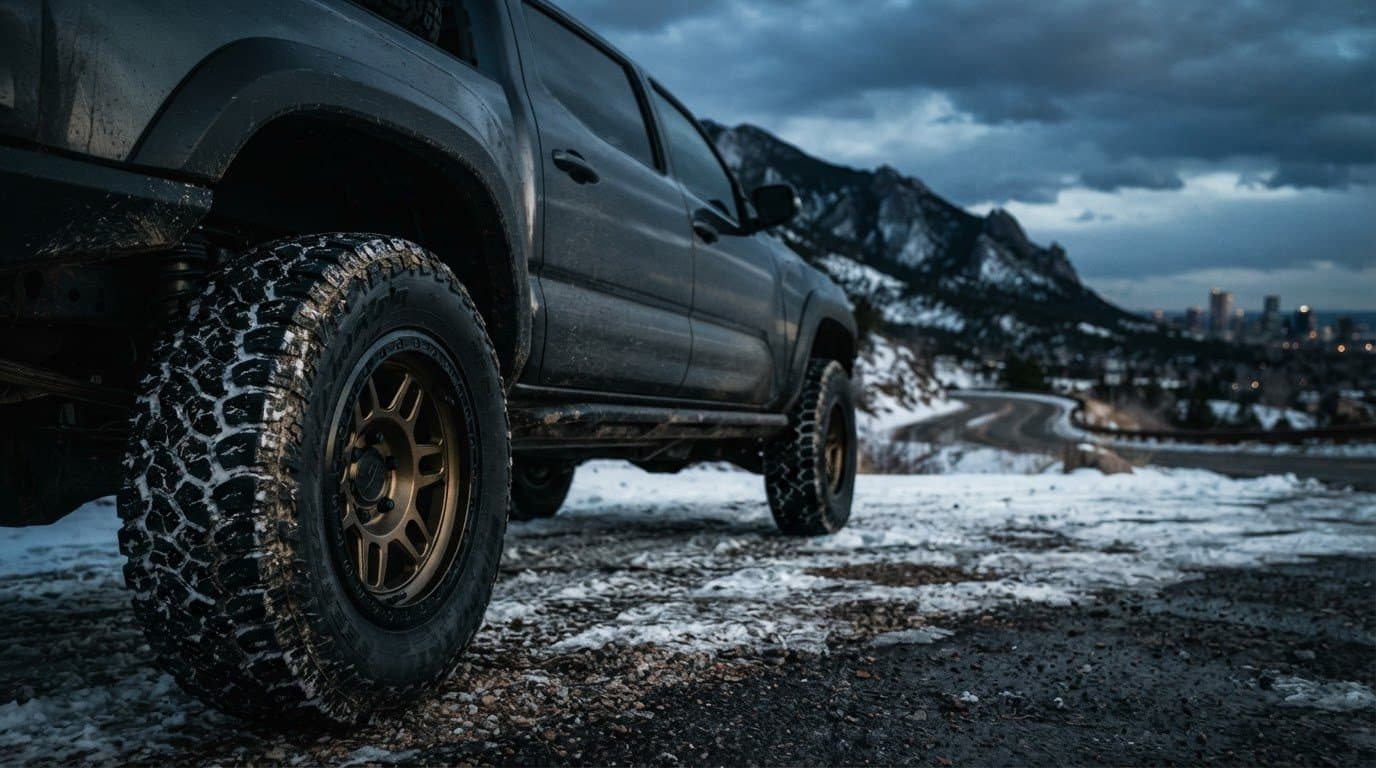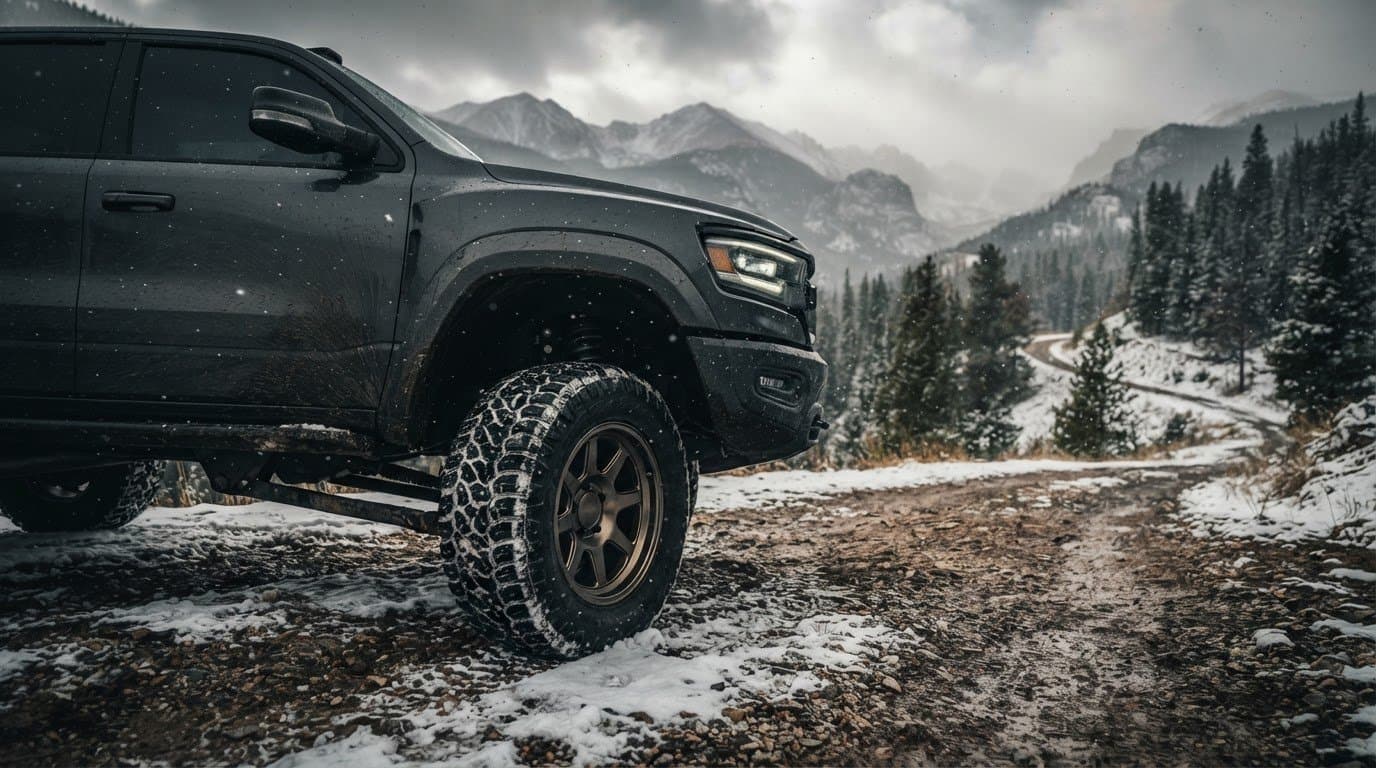
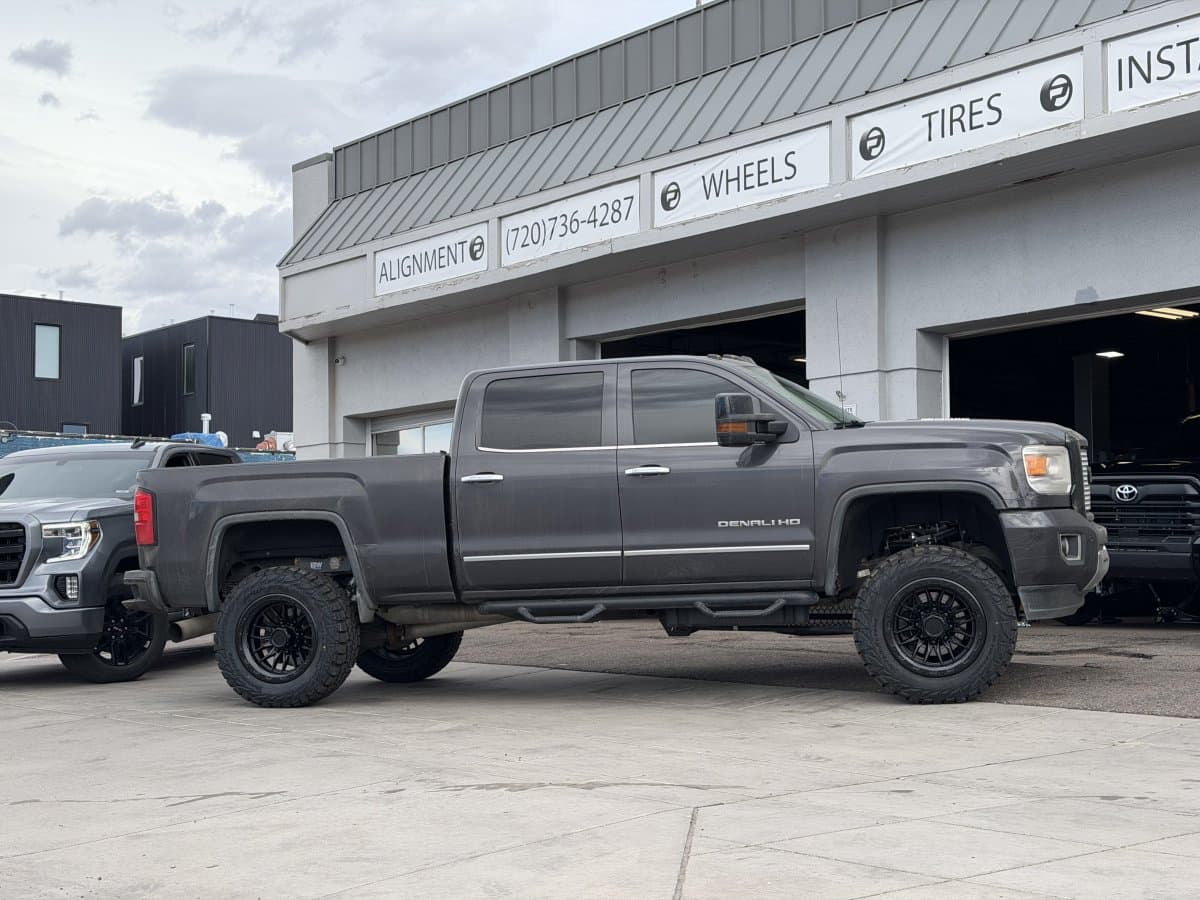
Best 35 Inch Wheel and Tire Packages: The Ultimate 2026 Buying Guide
Most truck owners treat a massive set of rubber as a simple cosmetic upgrade, but the wrong setup can turn your daily driver into a vibrating, rubbing nightmare on the I-25. You want that aggressive stance and the ground clearance to handle weekend trails, yet the math behind offset and backspacing often feels like a high-stakes calculus final. It's frustrating to invest in 35 inch wheel and tire packages only to find your tires are chewing through fender liners the first time you pull into a parking spot. We understand that you need a rig that looks bold and performs reliably when the weather turns.
This guide will help you master the technical requirements and performance benefits of 35-inch setups to transform your truck’s capability and stance. You'll learn how to navigate the 2026 landscape, including meeting the 3/16-inch tread depth requirements of the Colorado Traction Law while maintaining a smooth highway ride. We're going to break down the best combinations of wheels and tires available this year. You will walk away knowing exactly how to achieve that perfect fitment without the guesswork.
Key Takeaways
- Learn how to achieve the perfect aggressive stance and increased ground clearance while ensuring your truck remains capable on Colorado's toughest trails.
- Demystify the complex math of wheel offset and backspacing to guarantee your setup clears internal suspension components and brake calipers without rubbing.
- Compare All-Terrain and Mud-Terrain options to find the ideal balance for I-25 commuting and meeting the latest Colorado Traction Law requirements.
- Discover why professional 35 inch wheel and tire packages offer superior reliability through precision high-speed balancing and integrated TPMS sensor compatibility.
- Understand how pairing your wheel upgrade with a professional leveling kit installation creates a seamless, factory-plus look tailored specifically to your vehicle’s geometry.
Why Upgrade to a 35-Inch Wheel and Tire Package?
Stepping up to a 35-inch setup is the definitive turning point for any truck build. It's the moment your vehicle stops looking like a stock commuter and starts looking like a purpose-built machine. For many Denver drivers, this upgrade is driven by necessity as much as style. Whether you're facing deep drifts on a mountain pass or technical rock sections in the high desert, the extra rubber provides a safety margin that factory tires simply can't match. Choosing 35 inch wheel and tire packages ensures that every component is engineered to work in harmony, eliminating the guesswork that often leads to vibration or fitment issues.
Investing in a bundled package offers a clear financial advantage over sourcing parts individually. When you purchase your wheels and tires together, you're getting a system that has been pre-verified for compatibility. This prevents the costly mistake of buying a tire that won't seat correctly on a specific rim width or an offset that interferes with your suspension. Plus, bundled packages usually arrive with professional mounting and high-speed balancing already completed. This saves you significant shop time and ensures your rig is ready for the road the moment the lugs are torqued down.
Performance Benefits on the Trail
Size matters when the pavement ends. A larger rolling diameter allows your truck to "bridge" gaps between rocks and ruts rather than falling into them. This creates a much smoother ride on washboard roads and technical trails. By increasing the overall height of your tire, you're also physically raising your differentials and skid plates further from the ground. This extra clearance is vital for Colorado off-roading, where a single inch can be the difference between clearing an obstacle and an expensive recovery.
Beyond height, 35s significantly improve your approach and departure angles. You'll find you can nose into steep inclines without scraping your front valance. For most modern half-ton trucks, 35-inch tires are considered the "sweet spot." They provide maximum capability without requiring the extreme, permanent modifications often needed for 37-inch tires. Before you commit to a specific size, Understanding Tire Codes will help you decipher the sidewall markings to ensure your load rating meets your towing needs.
Aesthetic and Resale Value
Modern trucks are designed with massive wheel wells that make factory 31 or 32-inch tires look undersized. A 35-inch setup fills that negative space, creating a proportional and powerful look that commands respect on the I-25. It changes the entire profile of the vehicle, giving it a wider, more stable appearance. This visual "pop" isn't just for show; it's a signal that the truck is equipped for serious work. For readers who appreciate this level of prestige and craftsmanship in all their investments, you can visit Luxury Time NYC to discover premium timepieces that complement a high-performance lifestyle.
High-quality custom wheels and rims also tend to hold their value exceptionally well in the secondary market. A "built" truck with a professional 35-inch setup is often more desirable to buyers who want a turn-key off-road vehicle. There is a clear psychological impact when you walk out to a truck that looks capable and bold. It builds confidence in your vehicle's ability to handle anything the Colorado climate throws your way.
The Technical Fitment: Offset, Backspacing, and Clearance
Installing 35 inch wheel and tire packages isn't a simple "plug and play" procedure. Most modern half-ton trucks are designed for 31 to 33-inch tires from the factory, meaning a 35-inch diameter will almost always require a leveling kit or a full suspension lift to provide the necessary vertical clearance. Without this extra height, the tire will likely collide with the top of the wheel well or the front bumper when the suspension compresses. Beyond height, you have to account for the horizontal position of the wheel, which is governed by offset and backspacing.
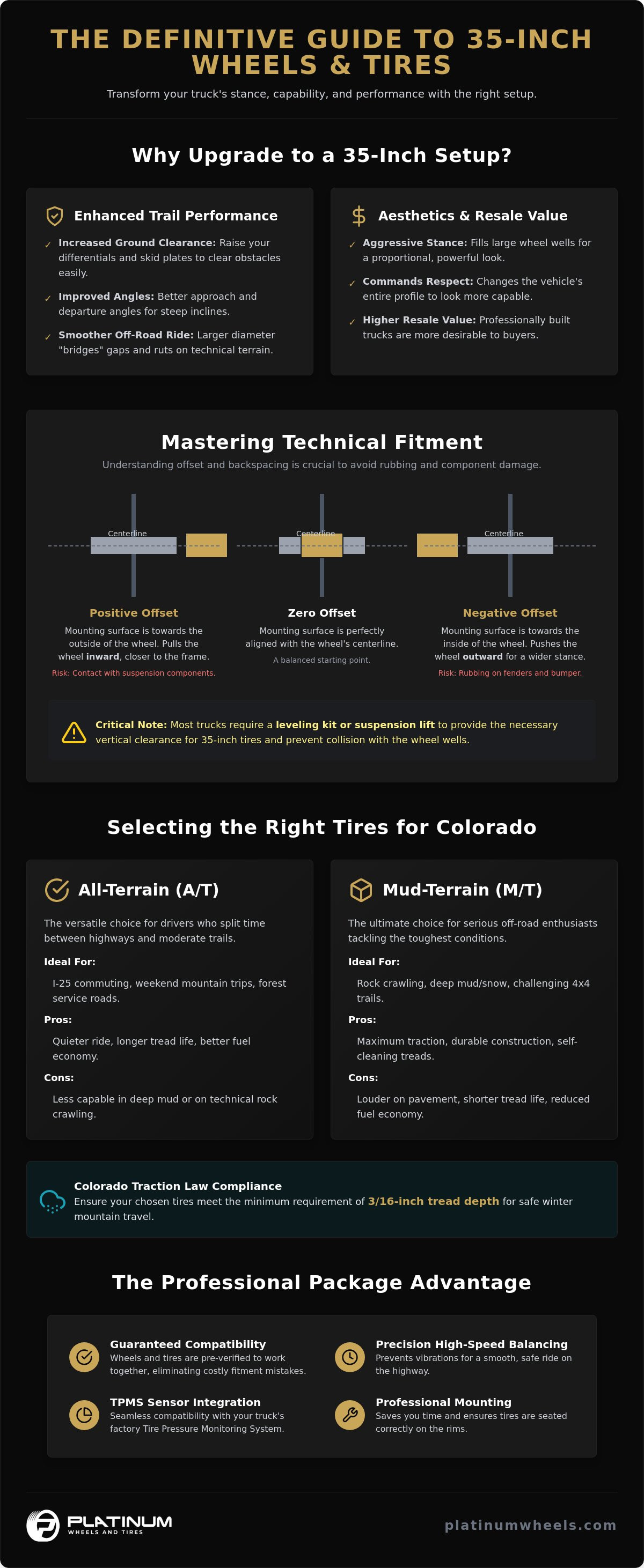
Wheel offset is the distance from the hub-mounting surface to the centerline of the wheel. A positive offset pulls the wheel toward the truck's frame, while a negative offset pushes it outward, creating that sought-after "poke" or wide stance. Backspacing is a related measurement that ensures internal clearance for brake calipers and suspension components. If your backspacing is too deep, your new rims could grind against your control arms. Changing these dimensions also affects your scrub radius, which is the pivot point of your steering. An extreme scrub radius can lead to heavy steering feel or increased wear on your wheel bearings. For a deeper look at how to select safe dimensions for your vehicle, you can review the NHTSA Tire Safety Guidelines.
The Math of the Perfect Stance
Achieving a flush look usually requires a 9-inch wide wheel with a moderate positive offset, such as +12mm or +18mm. If you want an aggressive wide stance, you'll likely look at 10 or 12-inch wide wheels with deep negative offsets. Remember that as the wheel gets wider, the tire profile stretches, which can change how much room you have inside the wheel well. Ford F-150 owners must be particularly careful with front crash bars, while Chevy owners often deal with the "square" wheel well design that limits tire swing. RAM owners frequently find that 35s rub on the factory control arms if the backspacing isn't calculated with precision.
Solving the Rubbing Issue
Rubbing typically occurs on the plastic fender liners, the metal frame horns, or the upper control arms during a full lock turn. High-clearance aftermarket bumpers are a popular way to gain more room at the front of the wheel well for 35-inch setups. Trimming is a standard part of aggressive fitment that involves carefully removing small amounts of plastic or metal to ensure your tires have a full range of motion. If you're feeling overwhelmed by the math, the team at Platinum Wheels can help you dial in the exact specifications for your specific truck model.
Selecting the Right Tires for Colorado Terrain
Choosing the right rubber for your 35 inch wheel and tire packages is about more than just an aggressive profile. In Colorado, your tires must survive a 70-degree afternoon in Denver and a sub-zero blizzard on Vail Pass within the same day. This regional volatility makes the Three-Peak Mountain Snowflake (3PMSF) rating essential. Unlike a standard M+S marking, the 3PMSF symbol indicates the tire has been tested for actual acceleration on packed snow. If you're planning to tow a camper or haul heavy gear, prioritize Load Range E ratings. These tires feature a 10-ply construction that prevents sidewall flex under heavy loads, ensuring your truck remains stable when you're descending steep mountain grades.
Handling these heavy-duty components requires technical precision. Because of the weight and size involved in 35-inch setups, professional shops adhere to strict OSHA safety standards for wheel servicing to ensure every assembly is mounted safely and balanced correctly. This isn't just about safety; it's about protecting your investment from premature wear caused by improper installation.
All-Terrain: The Versatile Choice
For about 90% of our local drivers, all terrain tires are the smartest investment. They offer a sophisticated balance between off-road grip and on-road manners. You won't have to deal with the deafening hum that aggressive mud tires often produce on I-70. Modern AT designs feature siping, which are small slits in the tread blocks that provide extra biting edges for icy roads. They're the top performers for mixed conditions where you're constantly switching between dry pavement and dirt trails.
Mud-Terrain: For the Dedicated Adventurer
Choose a Mud-Terrain (MT) tire if your weekends involve deep mud or sharp, technical rock crawling. These tires feature massive tread blocks and wide voids designed to eject debris and "self-clean" as you drive. However, there are trade-offs to consider. MT tires generally have longer braking distances on wet pavement and will wear down faster if they're driven exclusively on dry asphalt.
If you can't decide, hybrid tires are an excellent middle ground often found in 35 inch wheel and tire packages. These rugged terrain options combine the quiet center tread of an AT with the aggressive sidewall lugs of an MT. They're perfect for the enthusiast who wants the look of a trail rig without sacrificing the ability to have a clear conversation in the cab at highway speeds.
What Is Included in a Professional Package?
Buying 35 inch wheel and tire packages as a single unit ensures that every small piece of hardware is present and accounted for. You won't find yourself halfway through an installation only to realize your factory lug nuts don't fit the narrower recesses of your new custom rims. A professional package includes the essential hardware often overlooked by DIYers, such as hub-centric rings that center the wheel perfectly on the axle to eliminate high-speed vibrations. Every component, from the high-performance tires to the premium wheels, is selected to ensure mechanical compatibility and peak performance on Colorado roads.
A complete package arrives ready for immediate installation. This means the tires are already mounted onto the rims and pressurized to the correct specifications for your vehicle's weight. We include vehicle-specific lug nuts and center caps to finish the look. By bundling these components, you avoid the logistical headache of transporting four massive 35-inch tires to a shop in the back of your truck. Instead, you receive a precision-engineered system that is ready to transform your rig. Build your custom 35-inch wheel and tire package today to see how easy the upgrade process can be.
The Critical Role of TPMS
Don't make the mistake of trying to swap old, brittle sensors into a brand-new setup. You should install a new tpms sensor with every new wheel package to ensure your safety systems remain functional. Platinum Wheels uses OEM-quality sensors that are programmed specifically for your truck's make and model. This prevents the frustrating "low tire pressure" dash light that often plagues aftermarket installs. Generic sensors often fail to sync or have shorter battery lives, whereas our professional-grade hardware ensures your dash remains clear and your peace of mind stays intact.
Mounting and Road Force Balancing
Massive 35-inch tires carry significant rotating mass, which makes precision balancing absolutely vital. We use specialized high-speed balancing equipment to identify and correct even the slightest heavy spots in the tire or wheel. This is the best defense against the "death wobble" or steering wheel shakes that can occur at highway speeds. Our technicians take extreme care during the mounting process to protect the finish of your custom rims, using touchless equipment that never leaves a mark. This level of precision ensures your truck rides as smoothly on the I-25 as it did the day it left the showroom floor.
The Platinum Wheels Advantage: Denver’s 35-Inch Experts
Choosing the right setup is a major decision for your truck's performance and safety. While national websites offer generic databases, they lack the hands-on experience of fitting hundreds of rigs for Colorado’s unique conditions. At Platinum Wheels, we provide local expertise that ensures your 35 inch wheel and tire packages fit perfectly from the moment you leave our shop. We understand the nuances of every major truck platform, allowing us to recommend specific offsets that provide the look you want without the mechanical headaches you fear.
We operate as a true one-stop-shop for Denver truck enthusiasts. You don't have to coordinate between a tire retailer and a suspension shop. We combine the selection of premium wheel packages with professional leveling kit installation under one roof. This integrated approach ensures that your suspension geometry is optimized for your new larger tires. Plus, our showroom allows for in-person consultations. You can see and feel different wheel finishes, from textured matte black to deep bronze, ensuring the final result matches your vision exactly.
Beyond the Box: Custom Suspension Tuning
Installing 35s is only the first step in a complete transformation. To ensure your truck handles correctly, we often recommend specific leveling kits tailored to your vehicle's weight and intended use. A larger tire diameter also changes your gear ratio and speedometer accuracy. We provide speedometer calibration services to ensure your dash displays the correct speed and your transmission shift points remain optimized. Our commitment to your safety continues after the install, as we provide re-torquing services to ensure every lug nut remains seated perfectly after your first few hundred miles on the road.
Serving the Colorado Front Range
Our shop is a hub for the local truck community, serving drivers from Aurora to Castle Rock and everywhere in between. We aren't just technicians; we're enthusiasts who spend our weekends on the same trails you do. This deep connection to the local off-road scene means we only recommend 35 inch wheel and tire packages that we trust to handle the Rocky Mountains. We value precision, transparency, and the peace of mind that comes from knowing your rig was built by local professionals who stand behind their work. Browse our wheel and tire packages today!
Ready for a Trail-Proven Transformation?
Upgrading your truck is about more than just height; it's about engineering a system that handles the I-25 as well as it handles the backroads. You've learned how critical it is to balance wheel offset with suspension clearance to avoid the frustration of tires rubbing. You also know how to select the right 3-Peak Mountain Snowflake rated tires to stay safe during Denver winters. By choosing professional 35 inch wheel and tire packages, you ensure that every detail, from TPMS programming to high-speed balancing, is handled with precision.
Our team specializes in leveling and lift kits, ensuring your rig has the perfect geometry for premium brands like Nitto, Toyo, and Fuel Off-Road. We provide expert installation in Denver and Aurora for drivers who refuse to settle for generic setups. Build Your Custom 35-Inch Package at Platinum Wheels and get the stance your truck deserves. Your next adventure is waiting, and we can't wait to see you out on the trails with a rig that's built to perform.
Frequently Asked Questions
Do I need a lift kit to fit 35-inch tires on my truck?
Yes, almost every modern half-ton truck requires a leveling kit or a lift kit to clear 35-inch tires safely. Without this extra height, your tires will rub against the fender liners or front bumper during tight turns. While some heavy-duty trucks might fit them with minor trimming, a 2-inch leveling kit is the industry standard. It provides a clean, functional fitment that preserves your truck's turning radius.
Will 35-inch tires affect my gas mileage and towing capacity?
You'll likely see a decrease in fuel economy because larger tires are heavier and create more rolling resistance. While your truck's official towing capacity doesn't change, the larger diameter effectively changes your gear ratio. This can make the engine work harder when pulling heavy loads up mountain passes. Consider re-gearing your differentials if you tow frequently with 35 inch wheel and tire packages to maintain power.
What is the best wheel offset for a 35-inch tire setup?
The ideal offset depends on whether you want a flush look or an aggressive wide stance. For a flush fitment that stays mostly under the fenders, look for a positive offset between +12mm and +20mm. If you prefer an aggressive look with the tires poking out, a negative offset like -12mm or -24mm is common. Be aware that lower offsets increase the likelihood of rubbing on the front bumper.
Do 35-inch tires fit on stock wheels?
They can fit, but it's rarely the best solution for your rig. Most factory wheels are only 7.5 or 8 inches wide, which is too narrow for a 12.50-inch wide tire. This causes the tread to bulge and wear unevenly over time. Additionally, stock wheels often have high positive offsets that pull the tire too close to the suspension, causing it to rub against the upper control arms.
How much louder are 35-inch mud-terrain tires on the highway?
Mud-terrain tires are significantly louder than all-terrain or factory tires. The large gaps between the tread blocks trap air and create a distinct humming sound at highway speeds. If you spend most of your time on the I-70, a hybrid or all-terrain tire provides a much quieter cabin experience. The noise level also tends to increase as the tires wear down and the rubber hardens.
Can I use my factory TPMS sensors in my new 35-inch wheel package?
It's possible to transfer them, but we strongly advise against it for several reasons. Factory sensors have a limited battery life, and the rubber seals can fail when moved to a new rim. Installing new, pre-programmed sensors ensures your system works perfectly from day one. This prevents the hassle of having to dismount your massive tires later just to fix a dead sensor battery or a slow leak.
What is the difference between a 35x12.50 and a metric equivalent tire size?
A 35x12.50 is a flotation size measured in inches, while metric sizes like 315/70R17 use millimeters for width. A 315/70R17 is the metric equivalent of a 35-inch tire and is a popular choice for 35 inch wheel and tire packages. Metric sizes often provide more options for load ratings, which is helpful if you need a specific ply rating for heavy towing or hauling gear.
How do 35-inch tires perform in Colorado snow and ice?
Performance depends entirely on the tire's tread pattern and rubber compound. A 35-inch tire with a Three-Peak Mountain Snowflake rating will handle packed snow and ice with confidence on mountain passes. However, a dedicated mud tire without siping can be quite slippery on icy Denver streets. The wider footprint of a 35-inch tire can also cause the truck to float on top of deep snow rather than cutting through.