Best BFGoodrich Tires for Denver Off-Roading & Snow
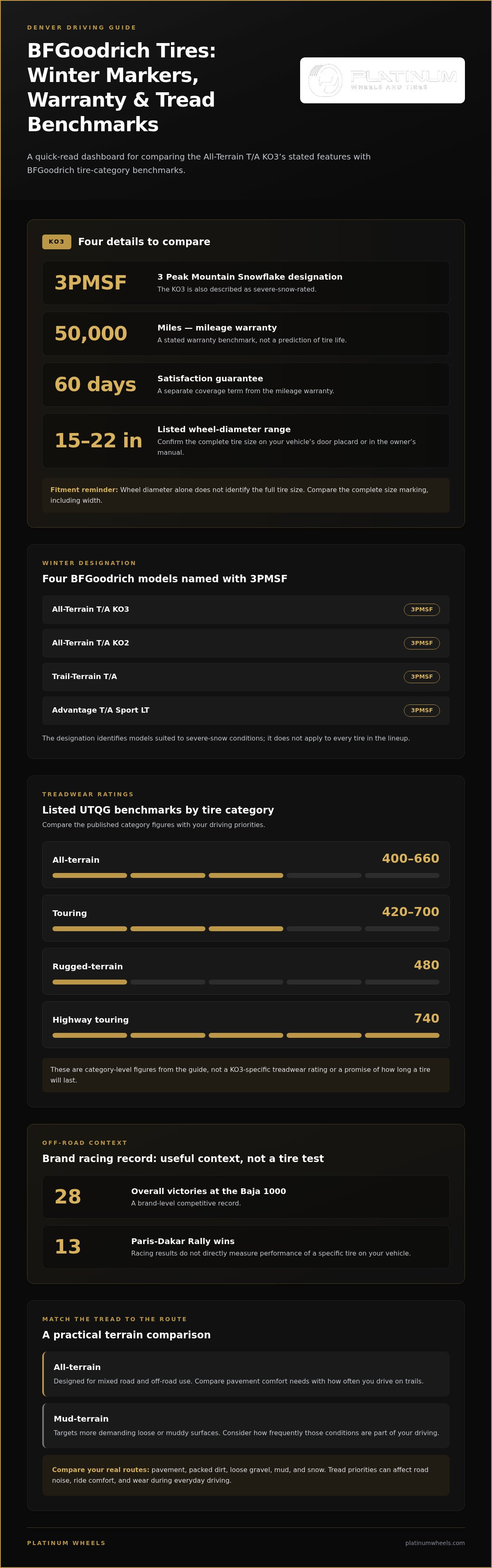
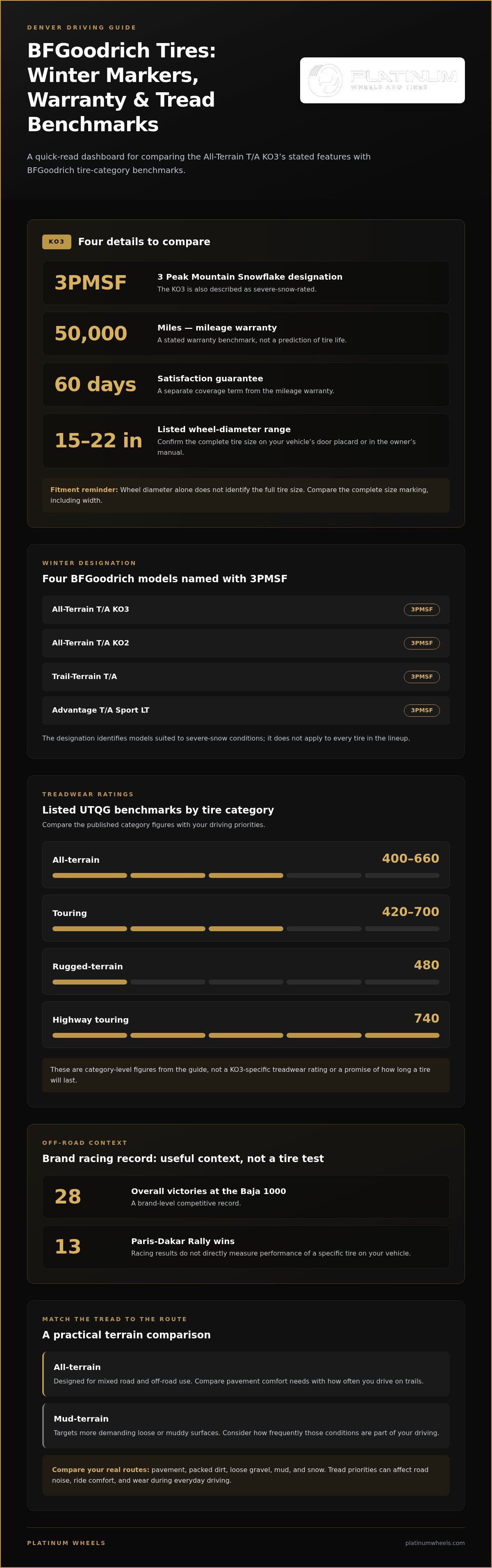
For Denver drivers who split time between snowy roads and rough trails, the BFGoodrich All-Terrain T/A KO3 is a strong starting point among BFGoodrich tires. It carries the 3 Peak Mountain Snowflake designation, is described as severe-snow-rated, and comes with a 50,000-mile mileage warranty and a 60-day satisfaction guarantee.
Winter capability matters, but it’s only one part of choosing the right tire. Tread that grips loose terrain can also affect road noise, ride comfort, and wear during everyday driving. Weigh your usual routes against your off-road plans.
This guide compares BFGoodrich tires for Denver-area driving, including their off-road traction, winter use, tread life, and comfort. You’ll also learn how to compare warranty terms, weigh trade-offs, and narrow your options to a tire that suits your vehicle and driving habits.
Key Takeaways
- The All-Terrain T/A KO3 combines severe-snow capability with off-road-focused tread, making it a useful option to compare for Denver’s changing road and trail conditions.
- Its 3 Peak Mountain Snowflake designation, 50,000-mile mileage warranty, and 60-day satisfaction guarantee are key points to weigh when evaluating coverage.
- Match tread style to how often you drive on pavement versus rough terrain, since traction priorities can affect ride comfort and tread wear.
- Compare warranty terms by tire model; coverage differs across the BFGoodrich lineup.
- Before choosing a tire and installation setup, consider vehicle fitment, intended use, and whether your wheel or suspension setup affects the combination.
All-Terrain T/A KO3 features and warranties
The All-Terrain T/A KO3 combines severe-snow capability with a warranty package worth comparing. Its size range and winter designation help Denver drivers assess fit and seasonal use.
To find the right size, read the tire-size label on your vehicle’s door placard or consult the owner’s manual. Compare the full size marking with the tire you’re considering, including its width and wheel diameter.
KO3 Features
The All-Terrain T/A KO3 is described as severe-snow-rated and carries the 3 Peak Mountain Snowflake designation. That gives shoppers a concrete winter-use marker to compare alongside the tire’s all-terrain purpose. The model is listed in sizes from 15 to 22 inches, so the available range spans multiple wheel diameters, but the correct fit still depends on your vehicle’s specified tire size.
Start with your vehicle’s placard, then compare the complete size marking, not just the wheel diameter. For example, a 17-inch wheel alone doesn’t identify the tire width or other size details. Keep the vehicle’s intended use in view too: a snow designation is useful context, while your balance of pavement and rough terrain helps define what you need from an all-terrain tire.
Warranty Details
The KO3 carries a mileage warranty of 50,000 miles and a 60-day satisfaction guarantee. These are separate coverage details, so compare each on its own rather than treating them as one promise. The mileage figure provides a stated warranty benchmark; the satisfaction guarantee has a defined 60-day period.
Read the applicable warranty terms before choosing, especially if coverage matters to your decision. A stated mileage warranty doesn’t predict how long a tire will last in your conditions. Terrain, driving habits, and maintenance all affect wear, so treat warranty coverage as one comparison point, not a promise of tire life.
When comparing BFGoodrich tires, write down three items: your vehicle’s specified size, the wheel diameter, and your main driving conditions. This simple step helps separate a tire that fits from one that suits your routine. A KO3 may be worth considering if severe-snow capability and all-terrain use both matter, but fitment comes first.
- Read the placard: Record the complete tire size specified for your vehicle.
- Match the wheel: Compare its diameter with the KO3’s listed 15-to-22-inch range.
- Compare coverage: Note the 50,000-mile mileage warranty and 60-day satisfaction guarantee separately.
Those checks make the KO3’s winter designation, fit, and warranty easier to evaluate together. Start with the required size, then weigh snow use, terrain, and the two coverage terms against your driving needs.
Off-road traction and durability
BFGoodrich tires suit different conditions by model, not by brand name alone. For snow, rain, and off-road driving, match the tire’s intended use and markings to your routes. The All-Terrain T/A KO3 and KO2 carry the 3 Peak Mountain Snowflake designation, while the Trail-Terrain T/A and Advantage T/A Sport LT carry it too.
That designation identifies models suited to severe-snow conditions, not every tire in the lineup. Rain traction also depends on tread design, tire condition, vehicle setup, and road surface. A driver commuting on wet pavement and visiting gravel trails, for example, has different priorities from someone who regularly crosses rocky terrain.
Traction Depends on Your Terrain
Start by listing the surfaces you encounter most: pavement, packed dirt, loose gravel, mud, or snow. All-terrain tires are designed for mixed road and off-road use, while mud-terrain tires target more demanding loose or muddy surfaces. This distinction helps narrow your options without assuming one tread suits every Denver-area drive.
Next, consider how much time you spend on each surface. A truck used mostly on paved streets may call for predictable road manners alongside occasional trail traction. Frequent trail use can make off-road grip a higher priority. Compare the tire’s snow designation and intended category with your actual routes, rather than choosing by aggressive-looking tread alone.
What Racing Records Can Tell You
BFGoodrich has a substantial off-road racing record: the brand has earned 28 overall victories at the Baja 1000 and won the Paris-Dakar Rally 13 times. These results show a long association with competitive off-road driving. They provide useful brand context, but racing victories aren’t a direct measure of how a particular tire will perform on your vehicle.
For durability, assess the specific model and how you use it. Sharp rocks, hard impacts, repeated low-traction surfaces, and long pavement commutes place different demands on tires. Check tread condition regularly for uneven wear or visible damage, which can point to the effects of driving conditions or vehicle setup. A motorsport record shouldn’t replace these practical checks.
For a mixed-use truck, compare all-terrain and mud-terrain options against your common surfaces, winter needs, and daily comfort priorities. Explore all-terrain and mud-terrain tire options as part of that comparison. The right balance comes from the tire category, fitment, and terrain you actually drive, not racing history alone.
Tread wear and ride comfort
BFGoodrich tires have different treadwear ratings and are designed for different driving priorities. Compare the listed rating with your highway mileage, trail use, and comfort expectations.
Tread Wear
The listed UTQG treadwear ratings give a useful comparison across BFGoodrich tire categories. All-terrain tires range from 400 to 660, touring tires range from 420 to 700, rugged-terrain tires are rated 480, and highway touring tires are rated 740. These figures are ratings, not a promise of how many miles a tire will last.
Use category figures as a starting point, not a direct ranking across every model. Highway touring and all-terrain tires serve different needs, so compare options within the category that fits your routine. A truck driven mostly on paved roads, for example, puts different demands on its tread than one regularly driven over rough terrain.
To assess wear over time, inspect the tread consistently and note changes across the tire. Uneven wear can make a single rating less useful for judging how your own vehicle performs. Follow your vehicle’s guidance for tire pressure and watch for changes in wear patterns as your routes and driving habits shift.
For a practical comparison, write down the tire category, its listed UTQG treadwear rating, and your main use. A 480 rugged-terrain rating, for instance, belongs in a different comparison than the 740 highway touring rating. The rating helps frame the choice; the category and your driving pattern explain how relevant it is.
Ride Comfort
Ride comfort depends on more than a treadwear rating. Tread design, tire size, road surface, and vehicle setup all shape what you hear and feel on the highway. Moving from a road-focused tire to a more aggressive tread may change the sound or response, so weigh everyday pavement use alongside trail plans.
Think through a familiar route before choosing: a smooth-pavement commute has different comfort priorities from regular travel on uneven gravel. The tire’s intended category helps organize the decision. Touring and highway touring options serve different needs from rugged-terrain tires, while all-terrain choices bridge regular road driving and off-road use.
Compare the complete tire fitment, not just the tread category. Size and vehicle setup affect how a tire interacts with the road, and an incompatible fit can undermine the driving feel you want. Start with your vehicle’s specified size, then weigh highway driving against the rough terrain you actually encounter.
A balanced choice connects the rating to your routine: prioritize a suitable category, then consider treadwear, road comfort, and trail use together. The 400-to-660 all-terrain range shows why comparing a specific tire’s rating matters more than assuming every model wears alike. Use the figures as context, and let your daily routes guide the final trade-off.
Manufacturer warranty coverage
Warranty coverage is model-specific, so compare the exact tire name and warranty type. The BFGoodrich G-FORCE PHENOM T/A has a 6-year standard limited warranty. That duration gives you a clear starting point, but the warranty’s written terms explain what coverage applies and how a claim is assessed.
Separate warranty labels before comparing tires. A standard limited warranty, a mileage warranty, and a satisfaction guarantee describe different coverage categories. For example, the G-FORCE PHENOM T/A’s 6-year standard limited warranty should be considered on its own terms, rather than treated as a mileage promise or satisfaction period. The warranty name and model should match your purchase records.
Use a simple review process before choosing. First, match the warranty to the exact model name. Next, identify the coverage period and conditions in the written terms. Keep the warranty information with your purchase records so you can refer to the correct coverage if you need to discuss a claim.
- Model: Confirm the tire name is G-FORCE PHENOM T/A.
- Duration: Note the 6-year standard limited warranty.
- Terms: Read the written conditions for the warranty category.
- Records: Keep the warranty details with your tire purchase information.
A warranty period doesn’t cover every situation that could affect coverage. The written conditions matter, and each tire model has its own applicable warranty. For instance, don’t assume a warranty attached to the G-FORCE PHENOM T/A applies to another BFGoodrich model. Compare each tire’s coverage rather than transferring one model’s terms across the lineup.
For Denver drivers comparing tires for highways and rough terrain, warranty coverage is one factor alongside fitment, tread category, and driving conditions. A longer stated period may catch your attention, but the warranty type and terms explain what that period means. Compare the named model, its coverage label, and the written conditions.
Before deciding, write down the model name and warranty type for each tire you’re considering. Put the G-FORCE PHENOM T/A’s 6-year standard limited warranty beside the other model’s stated coverage, then compare the actual terms. This clear, model-by-model approach helps prevent confusion between limited warranties, mileage coverage, and satisfaction guarantees.
Where can I buy BFGoodrich tires near me, and what does installation cost?
Denver drivers comparing BFGoodrich tires can bring their vehicle and driving priorities to Platinum Wheels for a free Wheel & Tire Fitment Consultation. Share your tire-size information and explain whether you prioritize highway driving, winter roads, or off-road terrain. That context helps narrow the tire category and fitment before discussing installation.
Fitment is the first practical step. Read the tire-size label on your vehicle’s door placard or consult its owner’s manual, then compare the full size marking with the tire you’re considering. A matching wheel diameter alone isn’t enough; width and other size details matter too. If your truck has custom wheels or a modified setup, include those details when discussing BFGoodrich tires and fitment.
Installation needs depend on the specific job, so one price won’t describe every vehicle and tire combination. Tire size, wheel configuration, and the work needed to mount and balance tires affect the scope. Replacing tires on existing wheels differs from setting up a wheel-and-tire package. Note whether your vehicle uses TPMS sensors, as they may also be part of the setup.
Compare tire cost and installation as separate parts of the purchase. Ask for an itemized explanation of what the job includes, such as mounting, balancing, and sensor-related work. That makes it easier to compare the tire, labor, and any additional components, and to understand how your BFGoodrich tires and wheel combination affect the installation plan.
Before choosing a shop, prepare a concise summary of your vehicle and how you use it. Include the vehicle year, make, model, tire size, wheel details, and usual road conditions. A daily Denver commute with occasional dirt roads, for example, calls for a different discussion than frequent trail driving. This context helps narrow suitable tire categories and fitment considerations.
- Record: Copy the complete tire size from the vehicle placard.
- Describe: Note winter, highway, and off-road priorities.
- Compare: Review tire, installation, and sensor-related charges separately.
For all-terrain and mud-terrain choices, compare tread purpose with your actual routes before settling on a setup. Explore all-terrain tire options as you narrow the fit for your truck or SUV. Keep size, terrain, and installation scope together in your decision, so your chosen tires suit both the vehicle and everyday use.
Platinum Wheels: Custom Truck Wheels & Off-Road Rims
Platinum Wheels can help turn your tire choice into a complete truck or SUV setup. If you’ve narrowed down your preferred tread but need wheels suited to your vehicle and driving plans, explore Custom Truck Wheels & Off-Road Rims and Wheel & Tire Packages.
For Denver drivers balancing pavement, snow, and trails, the right combination starts with fitment and intended use. Platinum Wheels offers All-Terrain & Mud-Terrain Tires, plus Lift Kits & Leveling Kits for drivers planning changes to their vehicle’s stance and off-road setup. Consider how each choice works with your tire size and daily driving before deciding.
Bring your vehicle details and priorities, whether you’re replacing tires or planning a broader setup. Contact Platinum Wheels for a free Wheel & Tire Fitment Consultation and discuss your wheel and tire needs.
Build a Setup That Fits Your Next Drive
Shape your next purchase around the roads and trails you actually drive. Before choosing BFGoodrich tires, decide how you balance daily pavement, winter travel, and off-road plans. Then consider whether wheel selection or vehicle stance belongs in the same project. Weighing those choices together can help keep your setup aligned with your priorities.
Platinum Wheels offers All-Terrain & Mud-Terrain Tires, Custom Truck Wheels & Off-Road Rims, and Wheel & Tire Packages. If you’re comparing BFGoodrich tires with a wheel change, consider how the combination suits your vehicle and intended use. Bring your vehicle details and driving priorities to a free Wheel & Tire Fitment Consultation to focus your next step.
Contact Platinum Wheels about tires to discuss a setup for your driving needs. Choose with confidence and get ready for the roads and trails ahead.
Frequently Asked Questions
What types of tires does BFGoodrich make?
BFGoodrich makes tires for passenger vehicles, SUVs, and trucks, including all-season, touring, performance, all-terrain, and mud-terrain categories. A driver mainly using paved roads might compare touring options, while a truck owner planning regular trail driving could explore all-terrain or mud-terrain models. Start with your vehicle’s required fitment, then narrow your choices by the surfaces and conditions you regularly encounter.
What are the best BFGoodrich tires for cars, SUVs, and trucks?
The right choice depends on fitment and intended use. Drivers mainly on city streets can compare road-focused models, while SUV owners can weigh everyday comfort against winter or trail use. Truck drivers who need one set for commuting and occasional dirt roads can consider all-terrain options. Match the full size and load requirements to your vehicle before choosing BFGoodrich tires for your routine.
What is the BFGoodrich tire warranty and mileage guarantee?
Warranty coverage depends on the specific model and warranty type. A mileage warranty, standard limited warranty, and satisfaction guarantee are distinct terms, so don’t assume one applies across the lineup. When comparing models, record each one’s stated coverage separately and read the applicable terms. This gives you a clearer basis for comparing BFGoodrich tires without confusing different types of coverage.
How long do BFGoodrich tires last, and when should they be replaced?
Service life varies with the tire model, vehicle setup, driving habits, and road conditions, so a warranty figure isn’t a guaranteed lifespan. Check tread and sidewall condition during routine vehicle care, and watch for uneven wear, visible damage, or changes in handling. If one tire wears differently from its pair, have the tire and vehicle setup assessed before continuing regular driving.
How much do BFGoodrich tires cost in the United States?
Pricing for bfgoodrich tires varies widely depending on the specific model, tire size, and your choice of retailer or installation provider at Platinum Wheels. Entry-level passenger car tires may start around $150 per tire, while heavy-duty all-terrain and mud-terrain options for trucks and SUVs typically range from $250 to over $400 per tire. Always request a detailed quote that includes mounting, balancing, and local taxes.
What do BFGoodrich tire reviews and ratings say about performance and durability?
The KO3 is described as severe-snow-rated and carries the 3 Peak Mountain Snowflake designation, but performance depends on the model, fitment, terrain, and driving conditions. Listed UTQG treadwear ratings range from 400 to 660 for all-terrain tires; these ratings are not mileage guarantees, and regular checks for wear and damage are useful.
What are the most popular BFGoodrich all-terrain and mud-terrain tires?
The named all-terrain options are the BFGoodrich All-Terrain T/A KO3 and KO2. No specific mud-terrain model is identified.