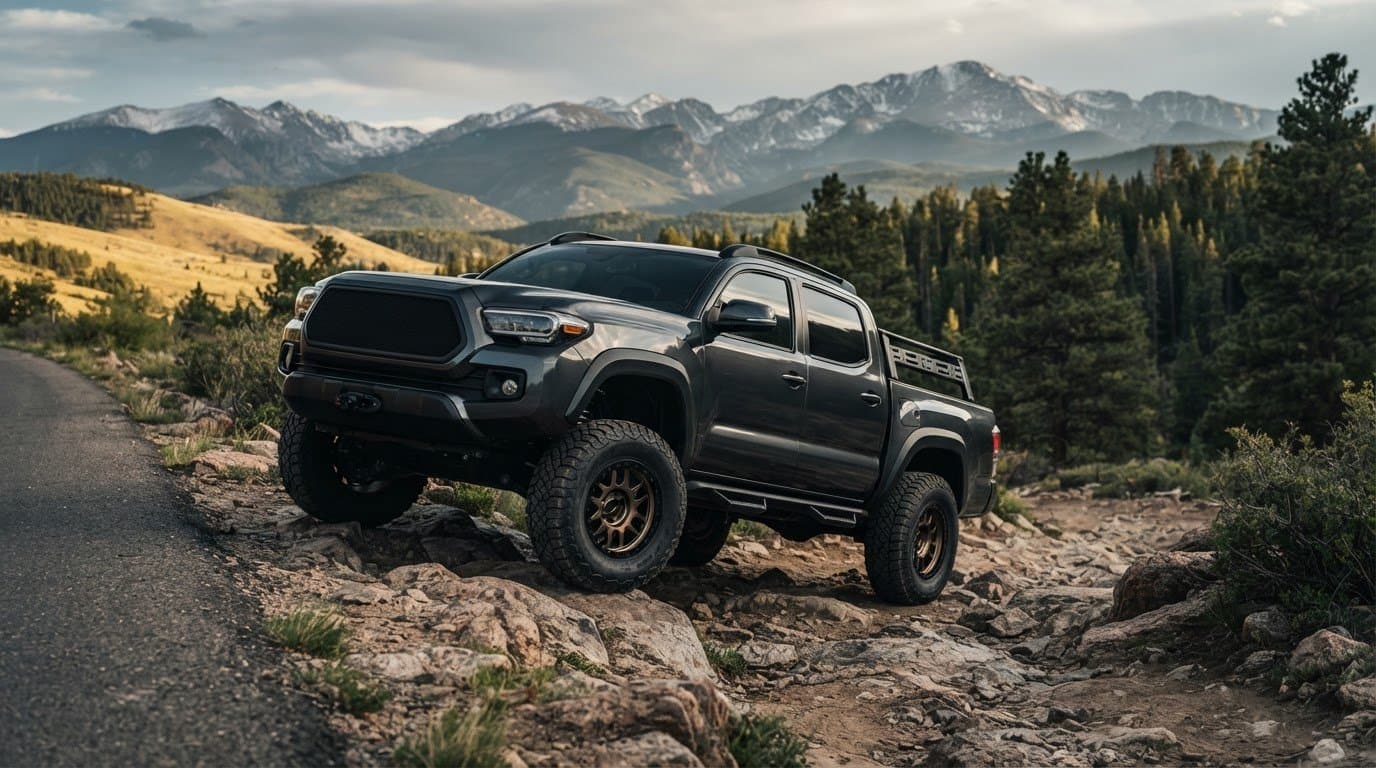

Denver F-150 Lift Kit Guide: Top Off-Road Upgrades
What if your truck could conquer the steep grades of the Rockies on Saturday and still glide down I-25 like a luxury sedan on Monday morning? You want that aggressive, level stance and the clearance for 35-inch tires, but you shouldn't have to sacrifice your daily commute or live in fear of the notorious "death wobble." It's common to feel overwhelmed by the technical gap between a basic leveling spacer and a full suspension overhaul, especially when you're trying to figure out which wheel offset prevents rubbing on tight mountain turns. Choosing the right f-150 lift kit requires more than just picking a height; it requires an understanding of how every component works together to maintain your vehicle's integrity.
This guide helps you master the technical details of lifting your F-150 to achieve the perfect balance of aggressive off-road capability and smooth Colorado highway driving. We'll break down the differences between lift heights, explain how to maintain factory alignment, and show you exactly how to pair your suspension with the right wheel and tire package for the Front Range. From sensor recalibration for the latest models to navigating local height regulations, you'll find everything needed to build a truck that performs as good as it looks.
Key Takeaways
- Learn why increased ground clearance and improved approach angles are vital for safely navigating Colorado's rugged mountain trails.
- Compare the technical mechanics of a front-end leveling spacer versus a full f-150 lift kit to choose the right path for your budget.
- Identify the ideal lift height for your goals, from the 2-inch daily driver "sweet spot" to the 4-inch professional choice for 35-inch tires.
- Master the "Golden Rule" of wheel offset and tire width to achieve an aggressive stance while avoiding the dreaded "pizza cutter" look.
- Understand why professional calibration is essential for maintaining accurate speedometer readings and ensuring your truck's safety sensors function correctly.
Why an F-150 Lift Kit is the Essential Colorado Upgrade
Driving an F-150 in Colorado isn't just about getting from A to B. It's about having a vehicle that can handle a Friday night in LoDo and a Saturday morning in the high country. A factory-spec truck is a masterpiece of engineering, but it's designed for the average driver on flat pavement. For those of us living along the Front Range, installing an f-150 lift kit is often the first step in unlocking the truck's true potential. It provides the necessary separation between your expensive undercarriage and the jagged granite of a mountain trail.
Beyond just height, a lift kit fundamentally alters your truck's geometry. By raising the chassis, you significantly improve your approach, breakover, and departure angles. This means you can climb steeper obstacles without sacrificing your front valence or dragging your hitch. While a higher center of gravity requires a more mindful driving style, the tradeoff is a vehicle that no longer feels limited by factory clearances. It's about defining your build early: do you want a trail-ready beast or a refined daily driver with a bit more backbone? We suggest a consultative approach to ensure your components match your specific terrain goals.
Quality matters in the Rockies. Denver’s winter road treatments are notoriously harsh on suspension components. Choosing an f-150 lift kit with high-grade coatings or stainless steel hardware ensures your investment doesn't succumb to rust after a single season of slushy commutes. Precision-engineered parts maintain their integrity when the temperature drops, keeping your ride smooth and your alignment true.
Ground Clearance for the Front Range
Many F-150 owners realize the need for more height the first time they bottom out on moderate trails near Golden or Boulder. Factory clearance is often insufficient for the rocky reality of Colorado. Lifting your truck protects vital components like the oil pan and differentials from stray debris and rock strikes. Plus, that added height offers a distinct psychological advantage on I-25, giving you a clear view of traffic patterns well ahead of your hood, which helps you react faster to sudden stops.
Improving the F-150 Stance and Presence
Most Ford trucks leave the factory with a noticeable "rake," where the front sits lower than the rear to accommodate heavy towing loads. A lift or leveling system corrects this, creating a balanced and aggressive profile. This extra room also allows for a wider tire footprint, which increases lateral stability on uneven terrain. In the context of F-150 suspension geometry, stance refers to the specific combination of vertical lift height and lateral wheel offset that determines the truck's physical profile and tire-to-fender alignment.
Leveling Kit vs. Lift Kit: Which Ford Suspension Path is Yours?
Deciding between a leveling kit and a full f-150 lift kit is the most critical choice you'll make for your build. It's the difference between a minor cosmetic adjustment and a total transformation of your truck's mechanical DNA. To understand how these choices perform specifically in the Front Range environment, explore our Leveling Kit vs. Lift Kit: The Ultimate 2026 Guide for Colorado Truck Owners.
Technically, a leveling kit uses spacers at the top of your factory struts to raise the front end, usually by 1.5 to 2.5 inches. This eliminates the factory rake. A full suspension lift is far more complex. It involves a subframe drop that physically lowers the front differential and steering components to maintain proper CV axle angles. While a leveling kit is a budget-friendly gateway, a full lift provides the structural integrity needed for aggressive trail work. Both options impact your work capacity. Removing the factory rake means your truck might "squat" when hauling heavy loads, so consider rear air bags or add-a-leaf kits if you tow frequently.
The Case for the F-150 Leveling Kit
This is the go-to option for urban drivers in Lakewood or Aurora who want a bolder look without a massive commitment. It's budget-friendly and preserves the smooth factory ride quality you bought the truck for. You can comfortably fit 33-inch tires, which is plenty for light weekend camping and snowy commutes. However, keep in mind that you aren't getting extra suspension travel. If you push it too hard on a washboard road, you'll find the limits of your factory shocks quickly.
The Case for a Full Suspension Lift
If you're a dedicated off-roader or want that unmistakable "show truck" presence, a full suspension lift is the only way to go. These kits provide maximum clearance and the necessary room for 35 to 37-inch tires. You'll gain superior damping from upgraded shocks like Fox or Bilstein, which makes a massive difference on technical trails. The downsides are real: higher entry costs, potential gear ratio changes to keep your power band, and the inevitable "will it fit in the garage?" anxiety. It's a bold choice for those who value performance above all else. If you're ready to see what's possible, our team can help you explore custom wheel and tire packages that perfectly complement your new height.
Choosing Your Height: 2-Inch, 4-Inch, or 6-Inch F-150 Lifts
Selecting the right height for your f-150 lift kit is a decision that dictates your truck's personality and its utility in the Front Range. While a taller truck offers undeniable presence, every inch added affects your center of gravity, fuel economy, and where you can actually park. It's about finding the intersection between the trails you want to conquer and the daily responsibilities your truck must fulfill. You also need to consider your vehicle's safety technology. Modern F-150s use radar and cameras for Adaptive Cruise Control and Lane Assist; raising the chassis shifts the field of view for these sensors, making professional recalibration a non-negotiable step in your build process.
2-3 Inch Kits: The Practical Daily Driver
For many owners, a 2 to 3-inch system is the "sweet spot" for a daily driver. These kits provide enough clearance to safely navigate snowy mountain passes while maintaining accessibility to most parking garages in downtown Denver. When selecting a kit in this range, we recommend looking at full coilover replacements rather than simple strut spacers. Coilovers offer significantly better rebound and compression control, which eliminates the "floaty" feeling on the highway. Pushing the front suspension beyond 2.5 inches of lift creates extreme angles that exceed the safe operating range of factory upper control arms. If you want to go higher than that, you'll need a system that addresses your truck's geometry more comprehensively.
4-6 Inch Systems: The Performance Heavyweights
If your goal is to fit 35-inch tires without aggressive trimming, a 4-inch lift is the professional choice. For those making a bold statement or tackling the most technical Rocky Mountain trails, a 6-inch f-150 lift kit provides the ultimate clearance. These systems are far more involved than smaller kits because they include drop crossmembers and extended steering knuckles to keep your CV axles and tie rods at functional angles.
At these heights, upgraded shocks from brands like Fox or Dirt Logic become essential. These performance shocks are designed to handle the increased unsprung weight of larger wheel and tire packages, providing the damping needed to prevent "death wobble" and ensuring a plush ride on washboard roads. These systems are also perfect for accommodating the "negative offset" wheel look popular throughout Colorado, giving your truck a wide, stable footprint that looks as capable as it performs.

Wheel and Tire Fitment: What Actually Fits Your Lifted Ford?
Picking the right f-150 lift kit is only half the battle. The other half is ensuring your wheels and tires actually work together without shredding your fender liners. The "Golden Rule" of F-150 fitment is a delicate dance between lift height and wheel offset. If you go too wide without enough height, you'll rub on every turn. If you go too tall with narrow tires, you end up with the dreaded "pizza cutter" look, which is a massive truck sitting on skinny stilts. For a deep dive into the top combinations for this year, check out The Best Offroad Tires and Wheels for Colorado: 2026 Roundup & Fitment Guide.
One specific F-150 challenge is the intrusion beam. These high-strength steel bars are vital for crash safety, but they sit right where a 35-inch tire wants to be at full lock. Many amateur installs involve simply cutting these out, but a professional build uses specific offsets or high-clearance beams to maintain safety while providing the necessary room. It's a technical hurdle that separates a quality build from a dangerous one. We always prioritize keeping these safety features intact while achieving the clearance you need.
The Role of Wheel Offset and Backspacing
Your factory wheels have a high positive offset, which tucks them deep into the wheel well. Most 4-inch and 6-inch kits require aftermarket wheels because the factory rims won't clear the new, beefier steering knuckles. This is your chance to decide on your truck's profile. A "flush" look keeps the tire edge even with the fender, while a "poke" setup uses a negative offset to push the wheels out for a wider, more aggressive stance. You can learn more about these measurements in our Custom Wheels and Rims: The Ultimate Denver Truck Owner’s Guide (2026).
All-Terrain vs. Mud-Terrain for Lifted Trucks
In Colorado, your tire choice needs to be as versatile as the weather. Mud-terrains look incredible on a lifted truck and provide maximum traction in deep slush or dirt. However, they often struggle on the icy patches of I-70. All-terrains are often the smarter choice for Denver drivers, offering a quieter ride and better siping for winter grip. For 4-inch and 6-inch lifts, 35-inch tires are the industry standard, providing the perfect fill for the wheel well without requiring massive body modifications. Explore our top picks in Choosing the Best All-Terrain Tires for Colorado: The Complete 2026 Guide.
Ready to see these combinations in person? Browse our wheel and tire packages to find the perfect match for your F-150's new height.
Professional Installation: Why Your F-150 Needs Expert Calibration
Installing an f-150 lift kit is a major mechanical surgery for your truck. While the appeal of a "backyard" install is strong for DIY enthusiasts, the complexity of modern Ford suspension makes professional oversight a necessity rather than a luxury. An amateur installation often leads to misaligned thrust angles, where the rear axle isn't square to the frame, causing the truck to "dog-track" down the highway. This doesn't just feel unstable; it puts immense stress on your ball joints and bushings, leading to premature failure that can cost thousands to rectify. At Platinum Wheels, we serve Denver, Aurora, and the Front Range with precision suspension tuning that ensures your build is as safe as it is capable.
Beyond the hardware, your truck's brain needs an update. When you move from factory tires to 35 or 37-inch rubber, your speedometer and odometer will become inaccurate. This affects your shift points and fuel economy calculations. We use specialized diagnostic tools to recalibrate the F-150’s computer, ensuring the vehicle understands its new rolling diameter. This is a critical step that many general repair shops overlook, but it’s essential for maintaining the performance you expect from a late-model Ford.
Aligning for Longevity and Safety
A standard "Toe-and-Go" alignment isn't enough for a lifted truck. Because your center of gravity has shifted, we perform specialized alignments that focus on camber and caster to ensure your new tires don’t wear out in 5,000 miles. We often utilize adjustable track bars and control arms to bring the suspension geometry back to within factory specifications. We also prioritize steering wheel centering. Since the F-150 uses an electronic rack-and-pinion system, a steering wheel that is even slightly off-center can confuse the stability control sensors, leading to unexpected braking or warning lights during mountain maneuvers.
TPMS and Safety System Integration
Modern trucks are packed with electronics that don't always play nice with aftermarket parts. Preserving your tire pressure monitoring system is a top priority when we build new wheel and tire packages. If sensors aren't swapped or programmed correctly, you'll be stuck with a permanent dash light. For a deeper look at how to manage this, read our TPMS Sensor Guide: Avoiding the Dash Light Headache in 2026. We specifically handle the 2021-2026 F-150 sensor recalibration process, ensuring that your truck's advanced driver assistance systems remain fully functional after your f-150 lift kit is installed. We don't just bolt on parts; we integrate them into your vehicle's ecosystem for total peace of mind.
Take the Next Step Toward Your Ultimate F-150 Build
Building an F-150 that masters the technical terrain of the Rockies while maintaining a smooth commute through Denver is a matter of precision. You now understand that the right f-150 lift kit does more than just add height; it transforms your truck's geometry to handle everything from washboard trails near Boulder to the fast-paced flow of I-25. Whether you opt for a practical leveling system or a 6-inch performance heavyweight, the success of your project depends on expert integration and technical calibration.
Platinum Wheels is here to ensure your vision becomes a reality with the mechanical accuracy your Ford deserves. As Colorado’s trusted experts for truck suspension and wheel fitment, we serve the entire Front Range from Denver to Fort Collins. Every package we install includes precision alignment and TPMS calibration, so your safety systems and tire life are never compromised. Don't settle for "close enough" fitment when you can have professional-grade perfection.
Get a Professional F-150 Lift Kit Consultation at Platinum Wheels and start your journey toward a more capable, aggressive truck today. Your next mountain adventure is waiting.
Frequently Asked Questions
Will a lift kit void my Ford F-150 factory warranty?
A lift kit doesn't automatically void your entire factory warranty. Under federal consumer protection laws, a dealer must prove that an aftermarket part directly caused a specific failure to deny coverage for that repair. For example, a lift won't affect your engine warranty, but it could impact claims related to suspension wear. We recommend discussing your build with our experts to ensure your upgrades meet high standards for safety and reliability in Colorado.
Can I fit 35-inch tires on my F-150 with just a leveling kit?
Fitting 35-inch tires on an F-150 with only a leveling kit is difficult and usually requires aggressive trimming of the inner fender liners and intrusion beams. While some owners attempt this with specific wheel offsets, it often leads to rubbing during tight turns or over bumps. For a rub-free experience on Colorado trails, we suggest a 4-inch or 6-inch system designed to accommodate the larger rolling diameter and width of 35-inch rubber.
How much does a professional F-150 lift kit installation cost in Denver?
The cost of a professional f-150 lift kit installation in Denver depends on the complexity of the suspension system and the desired height. A basic leveling kit requires less labor than a 6-inch subframe drop system. You should also factor in the cost of a specialized alignment and computer recalibration for larger tires. We provide detailed consultations to help you understand the total investment required for a safe, high-performance setup tailored to your specific driving needs.
Do I need to change my gear ratio after lifting my F-150 and adding larger tires?
Changing your gear ratio isn't always mandatory, but it's highly recommended if you move to 35-inch or 37-inch tires. Larger tires effectively change your final drive ratio, which can make your truck feel sluggish when climbing steep mountain grades like Floyd Hill. Re-gearing helps restore the factory power band and reduces stress on your transmission. This is especially important for Denver owners who frequently tow or drive in high-altitude environments.
Will a lift kit significantly decrease my F-150’s fuel economy?
Installing an f-150 lift kit and larger tires will typically decrease your fuel economy. The increased ride height creates more aerodynamic drag, while heavier wheels and tires increase unsprung weight and rolling resistance. Most owners see a drop of 1 to 3 miles per gallon depending on the tire tread pattern and driving habits. Choosing a high-quality all-terrain tire over a heavy mud-terrain can help mitigate some of these efficiency losses for your daily commute.
What is the difference between a spacer lift and a coilover lift for a Ford?
A spacer lift is a budget-friendly option that sits on top of your factory struts to provide height without changing the spring rate. A coilover lift replaces the entire factory strut and spring assembly with a high-performance unit. Coilovers offer significantly better damping and adjustable ride height, which is vital for handling washboard roads in the Front Range. While spacers are great for aesthetics, coilovers are the superior choice for off-road performance and longevity.
How do I know if my F-150 has a factory leveling kit or rake?
You can determine if your truck has a factory rake by measuring the distance from the center of the wheel hub to the bottom of the fender flare on both the front and rear axles. Most stock F-150s sit about 2 to 3 inches higher in the rear to account for sagging when towing. If these measurements are nearly equal, your truck likely has a leveling kit installed. Understanding this baseline is the first step in planning your suspension upgrade.
Does a 6-inch lift kit make the F-150 unstable at highway speeds?
A 6-inch lift doesn't inherently make an F-150 unstable at highway speeds if it's installed correctly. High-quality systems include drop crossmembers that keep your steering geometry and center of gravity in check. When paired with wider wheels and tires, the truck gains a more stable footprint. However, professional alignment and the use of performance shocks are essential to prevent swaying or wandering when you're cruising at high speeds on I-25 or other local highways.