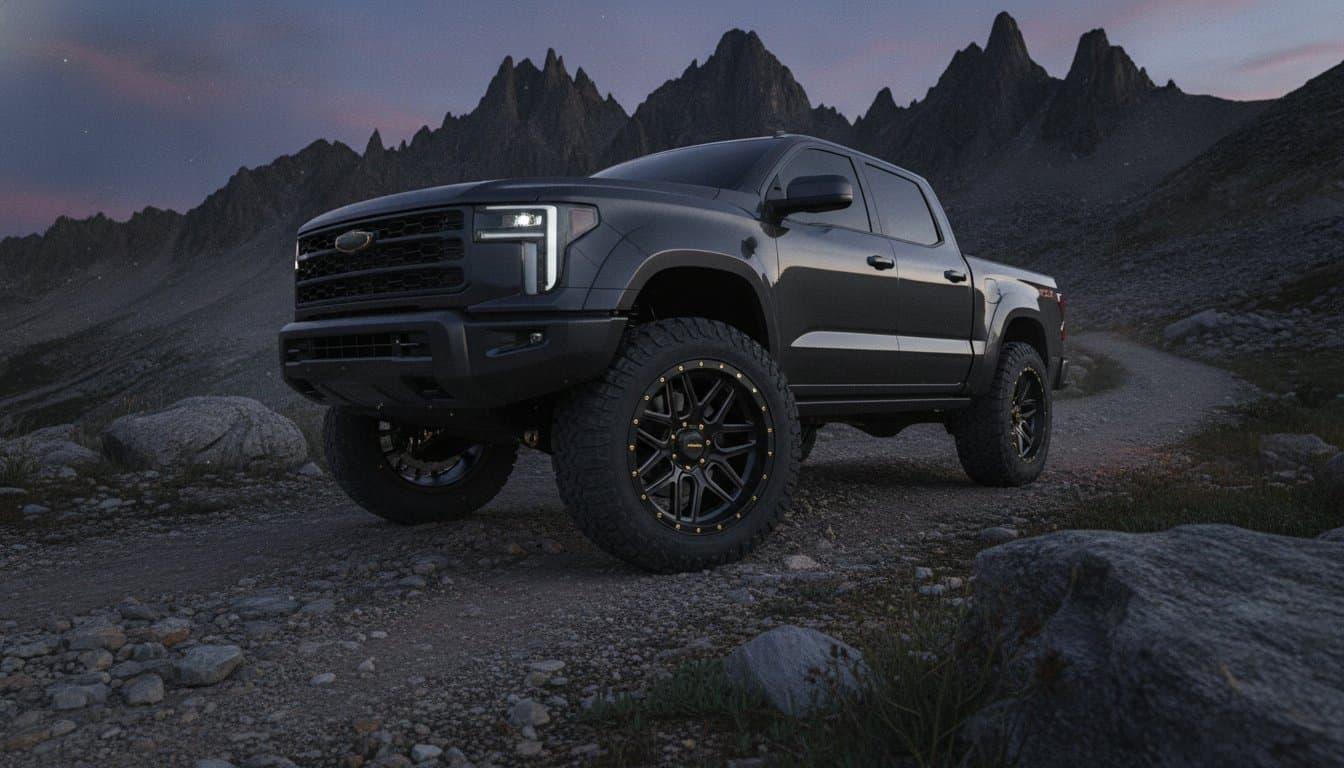
Ford Wheels in Denver: Custom Off-Road Rims & Packages
Imagine pulling up to a trailhead near Idaho Springs, ready to tackle a technical climb, only to hear the sharp sound of rubber scrubbing because your new ford wheels don't have the right offset. It's a frustrating reality for many truck owners who want a more aggressive look but get lost in the technical weeds of backspacing and suspension clearance. You want your rig to stand out on the streets of Denver and perform on the rugged trails of the Front Range, yet the fear of buying the wrong setup often leads to hesitation or a costly mistake that ruins your weekend plans.
We know that choosing aftermarket rims is about more than just aesthetics; it's a technical upgrade that must handle the unique demands of Colorado terrain. You deserve a wider stance and the ability to run 35-inch tires without compromising your suspension or dealing with annoying TPMS sensor lights. This guide shows you how to navigate fitment specifications and tire packages so you can achieve a flawless, rub free build. We will explore the best aftermarket options for your truck and explain why working with a local expert who knows our mountain roads ensures peak performance and total peace of mind.
Key Takeaways
- Decide between factory reliability and the aggressive customization of aftermarket upgrades to match your specific daily driving or off-road needs.
- Master the mechanics of offset and backspacing to ensure your new ford wheels provide a wider stance while avoiding suspension rubbing.
- Protect your investment by choosing wheel finishes that resist Denver's winter road chemicals and lightweight designs that help maintain power at high altitudes.
- Streamline your upgrade process with complete wheel and tire packages that include professional TPMS sensor integration for a seamless transition.
- Discover why local specialist installation is the key to achieving perfect fitment for the demanding trails of the Front Range.
Ford Wheels: Choosing Between OEM and Aftermarket Upgrades
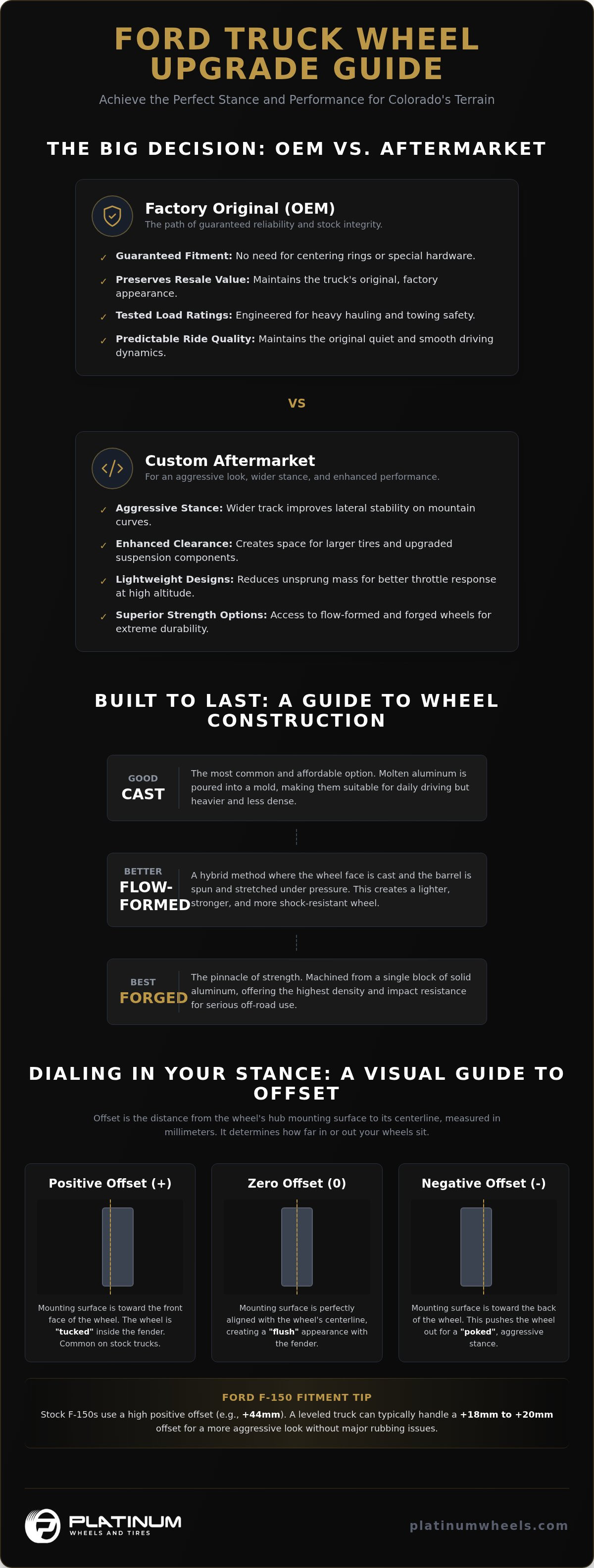
Choosing the right set of ford wheels often comes down to how you plan to use your truck along the Front Range. While factory rims provide a baseline of reliability, they are frequently designed for the average driver, not the enthusiast heading into the backcountry. Upgrading your wheels is a technical decision that impacts your vehicle's center of gravity, scrub radius, and overall durability. It's a balance between the predictable engineering of the factory and the specialized performance of the aftermarket.
OEM wheels are a solid choice if your priority is maintaining a completely stock appearance and high resale value. These rims are tested to meet strict factory load ratings, which is essential for those who spend their time hauling heavy campers or trailers through the Eisenhower Tunnel. They offer a conservative fitment that ensures you won't have to worry about suspension interference or complex fitment math.
The Benefits of Ford OEM Style Rims
Sticking with original equipment means you get guaranteed fitment without the need for centering rings or specialized lug nuts. These wheels are designed to match the specific aesthetics of your Ford trim level, keeping the look cohesive and professional. If you happen to clip a curb or damage a rim on a hidden rock, finding an identical replacement is usually a straightforward process. For the daily commuter who stays on the pavement, the factory setup offers a quiet, predictable ride that maintains the truck's original driving dynamics.
Why Aftermarket Ford Wheels Dominate the Denver Scene
If you've ever felt your truck lean too much on a sharp mountain curve, you understand the need for a wider track. Aftermarket ford wheels allow for aggressive offsets that push the tires out, significantly improving lateral stability. This wider stance isn't just for looks; it provides the clearance needed for heavy-duty suspension components and larger brake kits. By reducing unsprung mass through lightweight alloy designs, you also get better throttle response and improved fuel efficiency, which are both welcome benefits when driving at high altitudes.
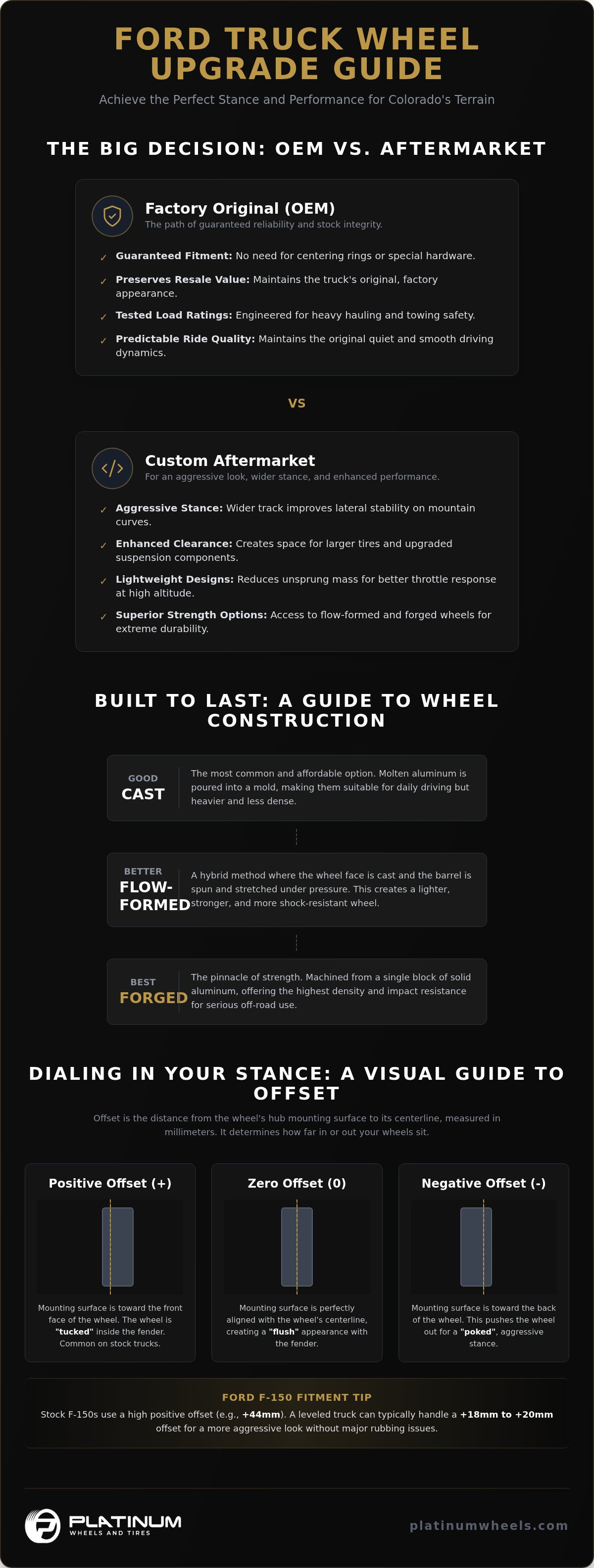
Durability depends heavily on construction methods. Cast wheels are the most common and affordable, but they are also the heaviest. Flow-formed wheels offer a significant step up, using high-pressure rollers to strengthen the barrel while keeping weight low. For the serious off-roader, forged wheels represent the pinnacle of strength. Carved from a single block of solid aluminum, they withstand the harshest impacts on technical trails without cracking, making them the ultimate insurance policy for your rig when you're miles away from the nearest paved road.
Mastering Fitment: Offset and Backspacing for Modern Ford Trucks
Achieving the perfect stance for your rig requires a deep dive into the geometry of your wheel wells. Wheel offset is the distance from the hub mounting surface to the wheel centerline. This measurement, usually in millimeters, determines how far your ford wheels will sit from the body. A high positive offset keeps the wheel "tucked" inside the fender, while a zero or negative offset creates that aggressive "poked" look popular on Denver streets. If you push too far in either direction, you risk hitting the suspension components or the outer fender lip.
Backspacing is equally critical because it measures the distance from the hub mounting surface to the back edge of the wheel. While offset focuses on the wheel's position relative to the body, backspacing ensures you clear the brake calipers and control arms. On modern Fords, the "Rub Zone" is a real concern. For the F-150, the front crash bars are the primary friction point. On the Bronco, the inner plastic liners often catch the tread during full lock turns. Getting these numbers right is the difference between a smooth ride and a shredded tire.
F-150 and Super Duty Fitment Specifics
Stock F-150s typically run a high positive offset, around +44mm. If you're staying at stock height, you'll want to stay close to that number to avoid rubbing. However, once you consider a leveling kit vs lift kit, your options expand significantly. A leveled truck can often handle a +18mm or +20mm offset, giving it a more planted feel without requiring heavy trimming. For Super Duty owners, load rating is the priority. F-250 and F-350 setups must handle thousands of pounds of tongue weight; choosing a wheel with an 8-lug pattern and a high structural rating is non-negotiable for mountain hauling.
Ford Bronco: The New Standard for Off-Road Fitment
The Bronco has changed the game for off-road fitment. If your rig has the Sasquatch package, you already have wider flares and higher clearance from the factory. Standard Broncos require more careful planning to fit 35-inch tires. Many owners opt for beadlock-capable ford wheels, which allow you to air down safely for traction on technical trails like Kingston Peak. Be aware that moving to a deep negative offset can change your steering geometry, potentially increasing steering effort or wear on your ball joints. To ensure your setup is trail-ready without the headaches, it's best to consult with a local expert at Platinum Wheels.
Colorado Performance: Ford Rims Built for the Front Range
Driving a truck in Colorado presents a unique set of challenges that standard factory testing often misses. From the steep grades of the Eisenhower Tunnel to the jagged rocks on the way to St. Mary's Glacier, your ford wheels must be engineered for more than just a commute. Environmental factors like high altitude and corrosive road chemicals mean that the material and finish of your rims are just as important as their style. Choosing the right setup requires a balance of weight, durability, and finish protection to ensure your rig performs as well as it looks.
Magnesium chloride is the silent killer of custom finishes along the Front Range. This liquid de-icer, used extensively on Denver roads and I-70, is far more corrosive than traditional rock salt and can pit raw aluminum or cheap chrome in a single season. To protect your investment, look for wheels with high-quality powder coatings or PVD finishes that act as a barrier against chemical oxidation. Altitude also plays a role in your wheel choice. At 10,000 feet, your engine works harder to produce power; reducing unsprung mass with lighter, flow-formed wheels helps maintain throttle response and efficiency during those long mountain climbs.
Trail-ready designs are essential for anyone venturing off the pavement. Look for wheels with recessed valve stems and reinforced rim edges to prevent trail damage from hidden rocks. Bead-lock styling is popular for Colorado rock crawling because it provides a rugged aesthetic while protecting the outer rim lip from jagged granite. These features ensure that a weekend trip to the backcountry doesn't end with a flat tire or a cracked rim.
Winter Driving in the Rockies
Selecting the right finish is only half the battle during a Colorado winter. While wide wheels offer great flotation on sand or mud, narrower wheels often perform better in deep snow by "cutting" through to the pavement. For year-round performance, pairing your rims with high-quality all terrain tires ensures you have the traction needed for icy mountain passes without sacrificing comfort on the highway. This combination allows your Ford to transition seamlessly from a snowy morning in Denver to a dry trail in Moab.
Off-Road Durability on Colorado Trails
Impact resistance is a non-negotiable factor when you're tackling technical routes like Black Bear Pass. Your ford wheels must have a load rating that exceeds your truck's GVWR to handle the dynamic forces of rock crawling. Additionally, consider the "openness" of the wheel design. Spoke patterns that allow for easy debris clearance are vital; wheels that trap mud and rocks can cause significant balancing issues and vibrations after a day on the trail. A smart design balances aggressive aesthetics with the functional need to keep your braking system cool and clear of trail grit.
Maximizing Value with Ford Wheel and Tire Packages
Bundling your new ford wheels with the right set of tires is the most efficient way to upgrade your rig while protecting your wallet. Choosing aftermarket wheel and tire packages eliminates the logistical headache of hauling loose rims to a separate shop. It also ensures that the mounting and balancing are performed on specialized equipment designed for oversized off-road fitments. This precision is vital for maintaining high-speed stability on I-70, where even a slight imbalance can lead to significant vibrations and uneven tread wear.
One technical detail often overlooked is the use of hub-centric rings. Most aftermarket wheels feature a universal center bore to fit multiple vehicle platforms. Since Ford trucks rely on a hub-centric design, these rings bridge the gap between the vehicle's hub and the wheel's center. Without them, the weight of the truck rests solely on the lug studs, which can cause shaking at highway speeds. Including these in your package ensures a factory-smooth ride regardless of how aggressive your new stance looks.
Essential Components of a Truck Package
The foundation of any great package is the tire choice. All-terrain tires offer a balanced approach for Denver drivers who split their time between city streets and weekend trails. If you're frequently tackling deep mud or jagged rocks, mud-terrain tires provide the maximum traction needed, though they come with increased road noise. Integrating a new tpms sensor into the assembly is mandatory for modern Fords. This prevents the dreaded dashboard warning light and keeps your safety systems functioning correctly. Don't forget about lug nuts; aftermarket ford wheels usually require a conical seat style, which is different from the flat seat style found on many OEM rims.
Ready-to-Drive Solutions
Opting for a complete package removes the guesswork of DIY installation. Professional shops ensure that 35-inch or 37-inch tire upgrades have the necessary clearance to avoid rubbing against the wheel liners or suspension components. This is especially helpful for owners who want to swap between a dedicated winter setup and a summer off-road set. A pre-assembled package allows you to make the transition in your own driveway with basic tools. If you're ready to transform your truck's performance and appearance, explore our custom Ford packages at Platinum Wheels today.
Professional Ford Wheel Installation in Denver and Beyond
Precision matters when you're modifying a heavy-duty truck or a high-performance SUV. While a general mechanic might handle a standard tire swap, they often lack the specialized equipment and technical knowledge required to dial in a complex off-road fitment. Specialized wheel shops understand the nuances of scrub radius, brake caliper clearance, and the specific load requirements of ford wheels. Entrusting your rig to an expert ensures that your suspension geometry remains sound and your vehicle stays safe on both the highway and the trail.
The Platinum Wheels advantage lies in our deep-rooted expertise in custom wheels and rims. We don't just bolt parts on; we provide a consultative experience that prioritizes your peace of mind. During a professional consultation, we evaluate your aesthetic goals alongside technical constraints like fender clearance and suspension travel. Our reach extends across the entire Front Range, providing reliable service to truck owners from Aurora down to Colorado Springs who demand high standards and expert craftsmanship.
Local Expertise for Denver Truck Owners
Operating in the Rockies requires more than just mechanical skill; it requires an understanding of how our environment dictates vehicle performance. We know which finishes will survive a salty winter commute and which offsets provide the stability needed for off-camber trail sections. Our service is designed to be fast and efficient, respecting the busy lifestyles of Colorado residents who would rather be exploring the backcountry than sitting in a waiting room. We pride ourselves on transparent, honest advice that treats every customer like a neighbor, ensuring you get the right setup the first time without high-pressure sales tactics.
Beyond the Install: Long-Term Care
Your relationship with your new ford wheels doesn't end when you leave the shop. Aftermarket components require specific maintenance to ensure longevity and safety. We always recommend a torque check after the first 50 to 100 miles of driving, as new lug nuts can occasionally settle. This simple step prevents hardware from loosening under the stress of mountain driving. Additionally, rotating oversized tires every 3,000 to 5,000 miles is essential for maximizing tread life and maintaining a quiet ride. By following a consistent maintenance schedule, you ensure your Ford remains trail-ready and reliable for years of Colorado adventures.
Elevate Your Rig for the Front Range
Transforming your truck into a trail-ready machine requires more than just picking a style; it's about mastering the technical details of offset and backspacing to ensure a rub free ride. We've explored how the right ford wheels can handle the unique challenges of Colorado, from resisting magnesium chloride to maintaining power at high altitudes. By choosing a complete package, you streamline the upgrade process with professional TPMS integration and precision balancing that factory setups simply don't match.
At Platinum Wheels, we bring specialized expertise to every F-150, Super Duty, and Bronco build. We've served the Denver Front Range with a focus on high standards and neighborly advice since our inception. Whether you're looking for an aggressive stance or a reliable winter setup, our team is here to guide you through every step of the process. Browse Our Premium Ford Wheels and Book Your Denver Installation Today to see the difference that expert local knowledge makes. Your next mountain adventure is waiting, and we're ready to help you get there with confidence and style.
Frequently Asked Questions
Will installing aftermarket wheels void my Ford factory warranty?
Installing aftermarket ford wheels doesn't void your entire factory warranty. According to the Magnuson-Moss Warranty Act, a manufacturer can only deny a warranty claim if they prove that the aftermarket part directly caused the failure. If you have a transmission issue, your custom rims shouldn't affect the claim. We focus on professional fitment to ensure your setup doesn't put undue stress on factory components, keeping your rig compliant and safe for Colorado trails.
What is the bolt pattern for a Ford F-150?
Most modern Ford F-150 trucks utilize a 6x135mm bolt pattern. This specific configuration has been the standard for the F-150 since 2004, providing a stable foundation for heavy loads. If you're driving an older model or a Super Duty, the pattern will differ. We always verify your specific year and trim level during our consultation to ensure your new rims provide a flawless fit for your Denver commute or weekend mountain excursions.
Can I use my factory Ford lug nuts on aftermarket wheels?
It's rare that factory Ford lug nuts work with aftermarket wheels. Original equipment hardware often features a large seat or a flat washer style that doesn't seat correctly in the narrower holes of custom rims. Most aftermarket options require a 60 degree conical or tapered seat lug nut to ensure the wheel stays centered and secure. Using the correct hardware is vital for safety, especially when navigating the steep grades and sharp turns of the Front Range.
What is the largest tire size I can fit on my stock Ford Bronco?
On a standard stock Ford Bronco, you can generally fit 33 inch tires without significant rubbing issues. If your Bronco has the Sasquatch package, it's already equipped to handle 35 inch tires from the factory. For those in Denver wanting to push to 37s, you'll need to consider a leveling kit or lift kit to provide the necessary clearance. We help you choose a package that balances aggressive tire size with the suspension travel required for technical Colorado trails.
Do I need to recalibrate my speedometer after getting larger wheels and tires?
You should recalibrate your speedometer if your new tire diameter is significantly larger than the original factory size. Larger tires cover more ground per revolution, which causes your speedometer to read lower than your actual speed. This discrepancy can also affect your transmission shift points and cruise control performance. Proper calibration ensures your Ford remains efficient and safe while you're cruising down I-70 or heading into the high country for a weekend getaway.
Why is my TPMS light on after installing new Ford wheels?
Your TPMS light is likely on because the sensors weren't swapped over or the system needs to relearn the new sensor IDs. Modern ford wheels rely on these sensors to monitor tire pressure for safety and fuel efficiency. If you've installed new sensors, they must be synced to your truck's computer using a specialized tool. We include TPMS sensor integration in our packages to prevent this dashboard headache and keep your safety systems functioning perfectly for every Denver drive.
What is the difference between hub-centric and lug-centric wheels for Fords?
Hub-centric wheels are designed so the center bore fits perfectly over the vehicle's hub, while lug-centric wheels rely on the lug nuts to center the wheel. Ford trucks are engineered to be hub-centric, which allows the weight of the vehicle to be supported by the hub rather than just the studs. We use hub-centric rings for most aftermarket installations to eliminate steering wheel vibrations and ensure a smooth, factory quality ride on the highways around Aurora and Lakewood.
How much does professional wheel installation cost in Denver?
The cost of professional installation in Denver depends on several factors, including the size of your tires and the complexity of your TPMS and suspension setup. Specialized wheel shops often provide better value than general mechanics because they use equipment designed specifically for oversized off-road fitments. While we don't quote flat rates without seeing the vehicle, we prioritize transparent advice and efficient service to get your Ford trail ready without the guesswork of a DIY installation.