The Best Offroad Tires and Wheels for Colorado: 2026 Roundup & Fitment Guide
What if the aggressive, wide-stance look you’re after is actually the silent culprit behind your white-knuckle drive up the Eisenhower Tunnel? It’s a common frustration for many Colorado drivers who want a rig that commands respect on the street but doesn't sacrifice stability when the pavement ends. Finding the right balance with offroad tires and wheels shouldn't feel like a guessing game of "will it rub or will it ride." You deserve a setup that provides relentless grip on the Alpine Loop while remaining quiet enough for a Monday morning commute through Denver.
We understand that you want a vehicle that performs as well as it looks without the headache of mechanical interference or deafening road noise. Discover the top-rated 2026 tire and wheel combinations specifically tailored for the Front Range's unique mix of high-speed highways and rugged mountain terrain. This guide breaks down the technical details of offset and backspacing to ensure a perfect fitment for your truck or SUV. We’ll explore the latest all-terrain and mud-terrain options that offer reliable traction for snowy mountain passes and summer rock crawls alike, giving you the peace of mind that your gear is as ready for the trail as you are.
Key Takeaways
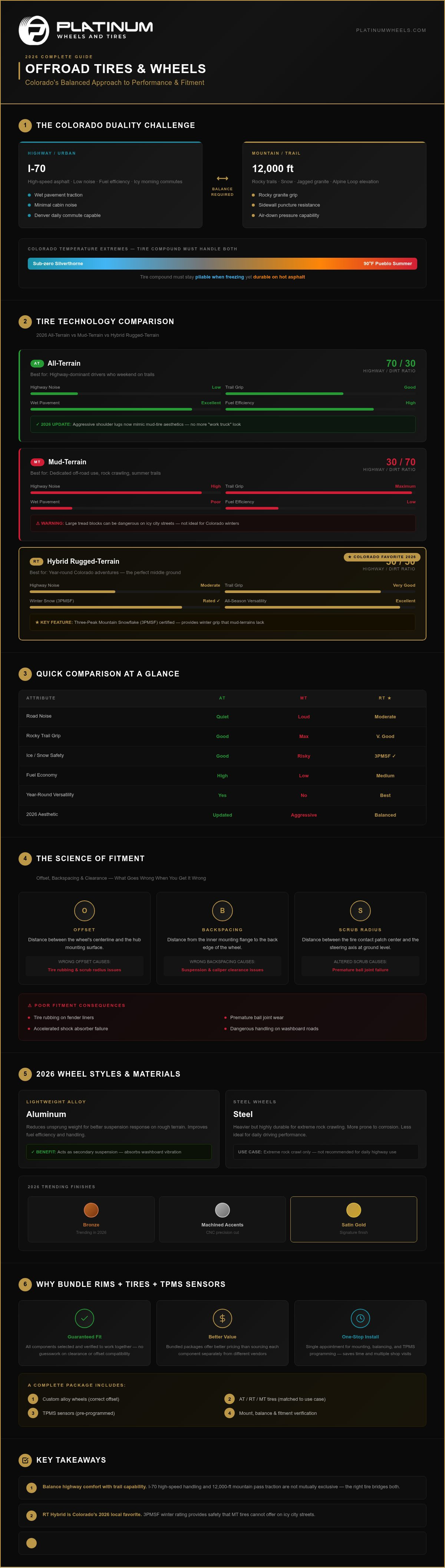
- Learn to balance highway comfort on I-70 with the rugged traction required for 12,000-foot Colorado mountain passes.
- Compare the 2026 performance specs for all-terrain and mud-terrain offroad tires and wheels to find your perfect grip-to-noise ratio.
- Understand how wheel offset and backspacing affect your vehicle’s scrub radius to prevent premature ball joint failure and tire rubbing.
- Discover why lightweight alloy rims and new finishes like bronze and machined accents are defining the 2026 aesthetic.
- See why it's more efficient to bundle your rims, tires, and TPMS sensors into a single package for a guaranteed fit and better value.
The Colorado Duality: Why Your Offroad Tires and Wheels Need a Balanced Approach
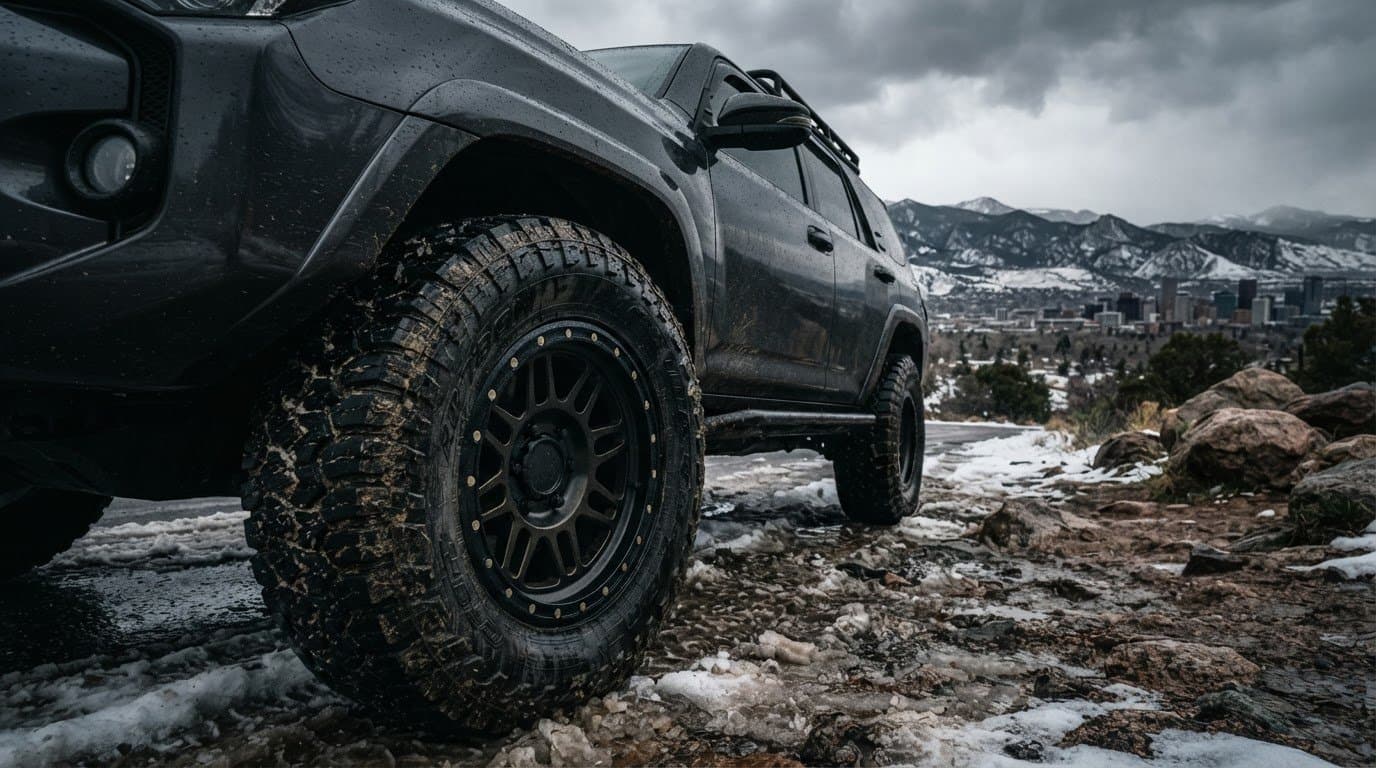
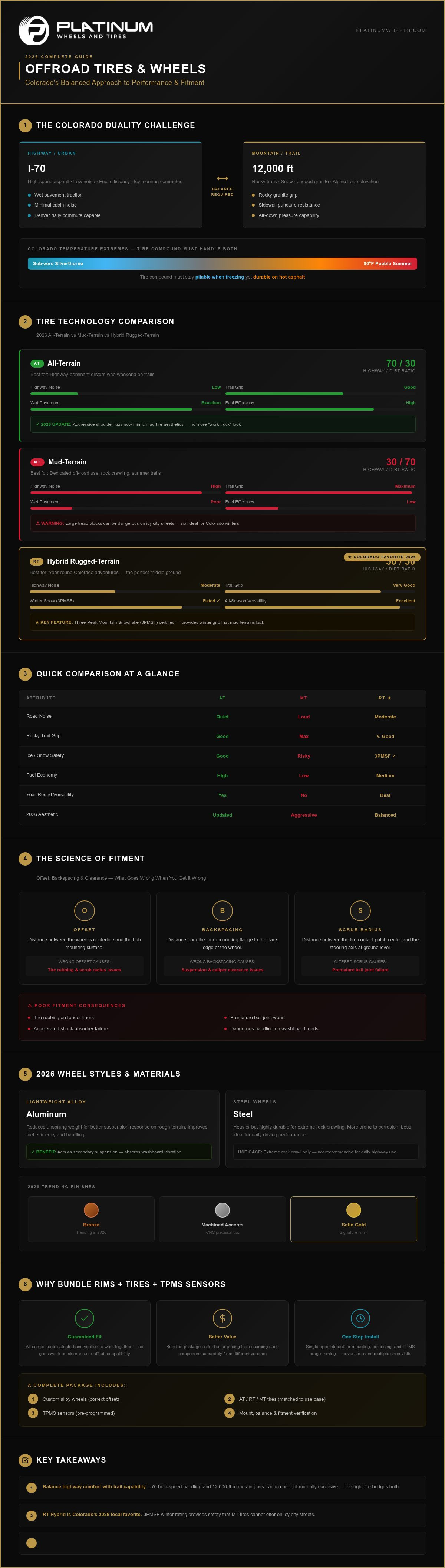
Driving from a sun-drenched Denver driveway to a snowy 12,000-foot summit in a single morning is a uniquely Colorado experience. This massive shift in elevation and terrain is why choosing offroad tires and wheels requires a balanced approach. You need gear that handles the high-speed rhythm of I-70 without sounding like a jet engine, yet possesses the grit to crawl over jagged granite in the San Juans. A setup that works in the desert of Moab might fail you on a slushy night in the foothills. Local expertise matters because our environment demands more from a vehicle than almost anywhere else in the country.
Aggressive styling doesn't have to mean a miserable daily drive. Modern engineering has bridged the gap between a mean-looking rig and a comfortable cabin. Colorado's extreme temperature swings also play a massive role in how your vehicle feels. A tire compound that works in the 90-degree heat of a Pueblo summer might turn into a hard, slippery hockey puck during a sub-zero morning in Silverthorne. We prioritize offroad tires and wheels that maintain their integrity across these extremes. We want your rubber to stay pliable when it's freezing but remain durable enough not to melt away on hot asphalt during a July road trip.
The right combination also protects your investment. High-quality wheels paired with the right tire volume act as a secondary suspension system. When you're rattling down miles of washboard forest service roads, your tires should soak up that high-frequency vibration. This prevents unnecessary wear on your ball joints and shocks, saving you money on repairs down the road. It's about building a synergy between your truck's mechanical limits and the terrain you love to explore.
Highway Manners vs. Trail Grit
Modern tread patterns use variable-pitch blocks to cancel out humming noises on the pavement. While quiet on the road, these designs still offer the reinforced sidewalls needed for airing down on rocky trails. Understanding off-road tire basics helps you choose a setup that balances the weight of larger off-road rims with the need for fuel efficiency during your weekly commute. You don't have to choose between a capable trail rig and a smooth highway cruiser.
Adapting to the Colorado Season Cycle
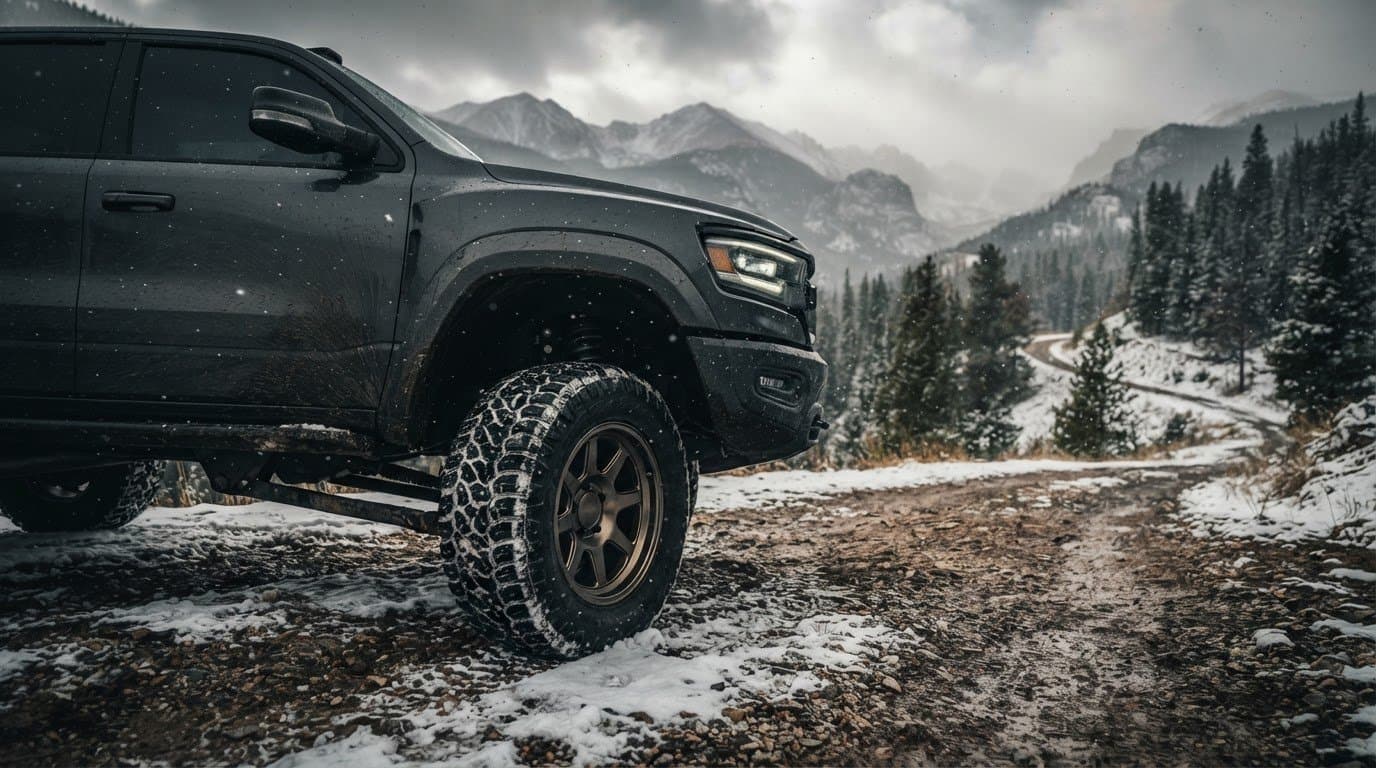
For 2026, the Hybrid or Rugged-Terrain tire has become the local favorite for its versatility. These tires often carry the Three-Peak Mountain Snowflake (3PMSF) rating, providing essential winter grip that traditional mud-terrains lack. While mud tires look great, their large tread blocks can be dangerous on icy city streets. Hybrids offer the perfect middle ground for year-round Colorado adventures, ensuring you're never caught off guard by a sudden mountain squall.
Tire Technology Comparison: All-Terrain, Mud-Terrain, and Hybrid Rugged-Terrain
Selecting the perfect tread pattern is the most critical decision in your offroad tires and wheels configuration. For 2026, major players like Nitto and Toyo have pushed the boundaries of rubber chemistry. They are engineering tires that remain pliable in freezing temperatures while offering the structural rigidity needed for technical trails. This year's releases focus on "smart" tread designs that adapt to different pressures, allowing for better performance when you air down for the weekend. Understanding the technical differences between All-Terrain (AT), Mud-Terrain (MT), and the increasingly popular Rugged-Terrain (RT) will help you avoid buying a tire that doesn't match your actual driving habits.
All-Terrain: Not Just for Work Trucks Anymore
The 2026 generation of All-Terrain tires has undergone a massive cosmetic overhaul. They no longer look like standard highway tires; instead, they feature aggressive shoulder lugs that mimic the look of old-school mud tires. These remain the gold standard for a 70/30 ratio of highway to dirt. They excel on wet pavement and light snow, making them a safe bet for year-round Denver driving. If you spend most of your time on the asphalt but want the capability to hit the trails on the weekend, Choosing the Best All-Terrain Tires for Colorado is a great place to start your research. These tires provide the peace of mind needed for icy morning commutes without looking out of place at a trailhead.
The Hybrid (RT) Revolution
Rugged-Terrain or Hybrid tires have quickly become the industry standard for 2026. These tires sit perfectly between AT and MT designs, offering the best of both worlds. They utilize a specialized void ratio; the gaps between tread blocks are wider than an AT to prevent mud caking but tighter than an MT to reduce noise. This creates enough biting edges to handle the sharp granite and technical obstacles of the Rockies while maintaining a contact patch that doesn't vibrate your steering wheel on I-70. Their durability is unmatched for those who treat their trucks as both a daily driver and a weekend warrior. It's the "aggressive stance" solution that won't ruin your highway fuel economy.
Mud-Terrain: Maximum Traction
Mud-Terrain tires remain the undisputed king for deep mud and technical rock crawling. They feature massive voids to eject debris and thick sidewalls to resist punctures from jagged rocks. However, they can be loud and lose traction on icy roads due to a lack of siping. If your rig is a dedicated trail machine or you frequently visit the southern mud pits, an MT is your best friend. For those looking to upgrade their setup today, you can explore our full range of custom wheel and tire packages to find the right match for your vehicle. We ensure your high-traction setup doesn't compromise your vehicle's safety or fitment.
2026 Roundup: The Best Offroad Wheel Styles and Materials
If tires are the muscle of your rig, then the wheels are the skeleton. Choosing the right rims for your offroad tires and wheels package is a decision that impacts everything from braking distance to how much your truck struggles on a steep mountain grade. For 2026, we've seen a massive shift away from heavy steel wheels toward advanced aluminum alloys. While steel is cheap and easy to hammer back into shape, its weight is a liability. Lightweight alloy rims dominate the premium market because they dissipate heat faster during heavy braking on mountain descents and reduce the rotational mass your engine has to turn. This means better throttle response when you're trying to clear an obstacle or merge onto I-70.
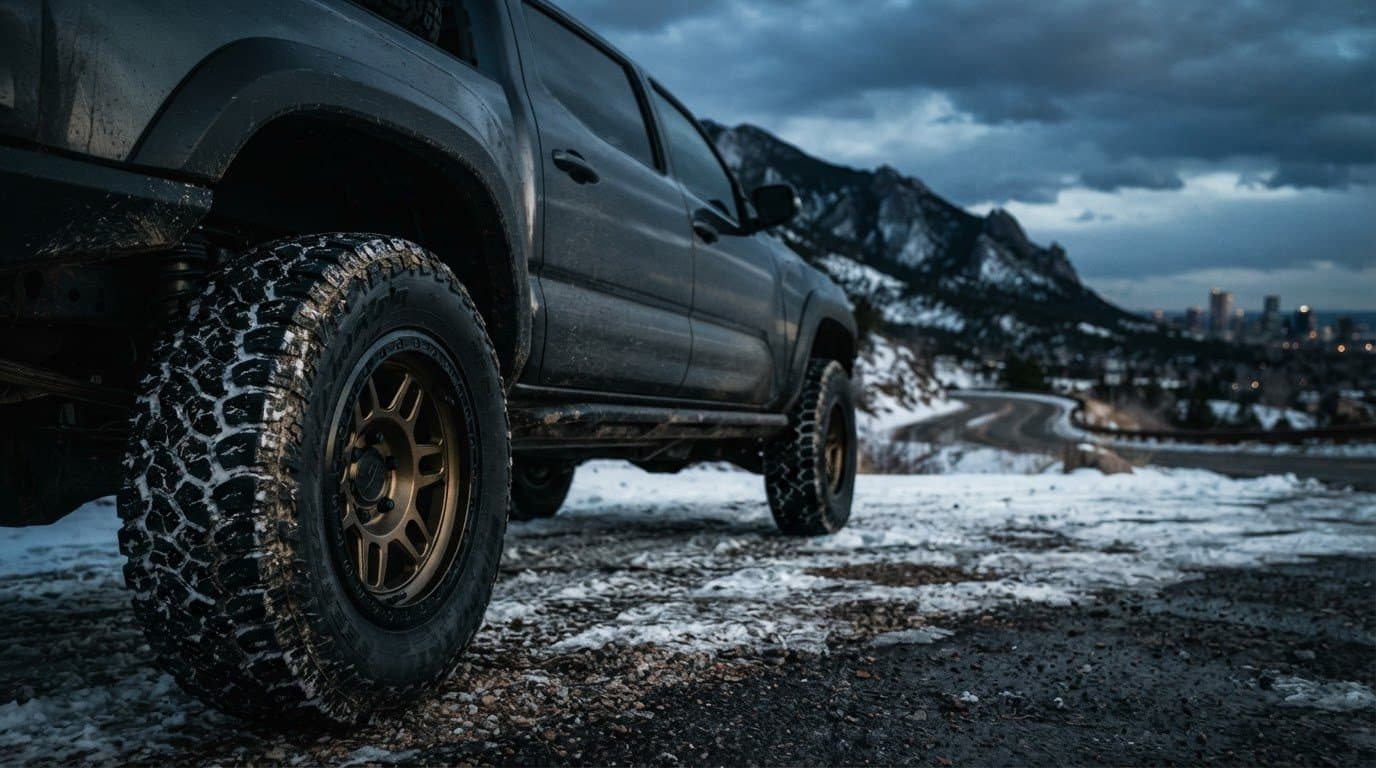
The 2026 aesthetic has moved past the "blacked-out" era. While matte black remains a staple, we are seeing a surge in bronze, anthracite, and machined accents. These finishes add a layer of sophistication and depth that makes a truck stand out in a crowded Denver parking lot. We are also seeing a major debate between true beadlocks and simulated beadlock wheels. Unless you are a hardcore rock crawler airing down to single-digit PSI, simulated beadlocks are the smarter choice for Colorado. They provide the aggressive "bolt-on" look and protect the outer lip from rock rash without the legal headaches and constant maintenance requirements of a true multi-piece beadlock system.
Finish and Maintenance in the Snow Belt
Colorado’s winter roads are a laboratory for corrosion. The magnesium chloride and road salt used by CDOT can be brutal on wheel finishes. Painted or clear-coated wheels generally hold up better against these chemicals than raw polished aluminum. If you are leaning toward a dark aesthetic, check out The Ultimate Guide to Black Truck Wheels in Denver for tips on choosing a finish that won't pit or peel after one season. We always recommend a thorough rinse after every winter storm to keep that 2026 luster alive.
Structural Integrity and Weight
Unsprung weight is the enemy of performance. Every extra pound in your wheel and tire combo makes your suspension work harder to keep the rubber on the road. Forged wheels offer the highest strength-to-weight ratio, though they come at a higher price point than standard cast wheels. If you drive a 2500 or 3500 series truck, proper load rating is non-negotiable. Ensure your chosen wheels are rated to handle the combined weight of your vehicle and whatever you’re towing. A wheel failure at highway speeds is a disaster you can easily avoid with the right technical guidance.
The Science of Fitment: Offset, Backspacing, and Clearance
Choosing the right stance for your offroad tires and wheels involves more than just picking a look. It is a precise calculation of how a wheel sits within the wheel well. Offset is the most critical measurement here. A positive offset pushes the mounting surface toward the front of the wheel, tucking it into the fender. A zero offset centers the mounting surface, while a negative offset pushes the wheel outward for that wide, aggressive stance. While a deep dish look is popular in the Denver truck scene, it changes the leverage applied to your suspension components. This is why understanding the technical side of fitment is vital for the long-term health of your rig.
A massive negative offset often leads to a "scrub radius" problem. This happens when the center of the tire's contact patch is no longer aligned with the steering axis. It forces the tire to "scrub" across the pavement during turns rather than pivoting smoothly. This creates immense stress on your ball joints and wheel bearings, often leading to premature failure. Backspacing is equally important, as it determines how much room remains between the inner rim and your control arms or brake calipers. If you upgrade to beefier aftermarket control arms, you'll likely need a wheel with less backspacing to prevent a catastrophic rub during full suspension compression.
Don't forget the small details like TPMS sensors. These systems are mandatory for safety and must be either transferred from your old setup or replaced with new units compatible with your vehicle's computer. We recommend installing new sensors with every 2026 wheel package to ensure your dash stays clear of warning lights. If you're ready to dial in your stance without the guesswork, check out our Custom Truck Wheels & Off-Road Rims selection today.
Leveling Kits vs. Lift Kits for 35-Inch Tires
Fitting 35-inch tires is the goal for many Colorado owners, but it usually requires a choice between a 2-inch level and a 4-inch lift. A leveling kit is often enough for street use, but you might experience rubbing when the suspension flexes on a trail. For a truly functional off-road setup, a 4-inch lift provides the necessary clearance without requiring you to hack away at your plastic liners. You can dive deeper into the pros and cons in our Leveling Kit vs. Lift Kit: The Ultimate 2026 Guide. We believe a daily driver shouldn't require aggressive trimming just to make a U-turn.
The Importance of Professional Installation
Precision is the difference between a truck that tracks straight and one that shakes at 75 MPH on I-70. Garage installs often skip the high-speed balancing and specialized alignment needed for oversized offroad tires and wheels. Our Denver shop uses road-force balancing to ensure every package is perfectly true. This meticulous approach allows us to offer a "zero-rub" guarantee. We take the time to measure every clearance point, ensuring your vehicle performs flawlessly whether you're at a stoplight or climbing a mountain pass.
The Platinum Synergy: Why Custom Wheel and Tire Packages Win
Building a rig that handles the high-altitude demands of the Rockies shouldn't involve a dozen different shipments from separate retailers. The real secret to a "zero-rub" setup is synergy. When you choose pre-assembled offroad tires and wheels, you eliminate the variables that lead to vibrations and fitment failures. Every component is selected to work in harmony with the others. By bundling your rims, tires, and TPMS sensors into a single package, you ensure that the load ratings and offsets are perfectly matched to your specific vehicle before they ever reach the mounting machine.
Financial sense is just as important as mechanical precision. Purchasing a complete package often results in significant cost savings compared to buying parts individually. You avoid multiple shipping fees and the hidden costs of third-party mounting and balancing that often lack the specialized equipment needed for oversized tires. Whether you're upgrading a Ford F-150, a Chevy Silverado, a RAM 2500, or a Toyota Tacoma, choosing an expert-curated bundle takes the guesswork out of the process. For a deeper dive into the value of this approach, read Why Buy Aftermarket Wheel and Tire Packages? to see how Denver owners are maximizing their builds this year.
Expert Consultation in Denver and Aurora
Our local expertise is what sets us apart from big-box online retailers. We understand that a RAM 1500 needs a different offset than a Toyota Tundra to achieve that perfect flush look without hitting the suspension. We provide a consultative experience for drivers across the Denver-Aurora-Lakewood corridor. Our team walks you through the selection process to ensure your 2026 setup is exactly what you envisioned. You can Find Expert Custom Truck Fitment in Arvada & Denver at our specialized shop locations. We handle everything from the initial selection to the professional installation of your lift or leveling kit.
Protecting Your Investment
We stand behind the craftsmanship of every build. Choosing a professional shop means your investment is backed by warranty coverage on both the high-end parts and the labor involved. We also provide road hazard protection and clear maintenance schedules to help you get the most out of your off-road setup. Regular rotations and balance checks are essential when you're alternating between rocky trails and high-speed highway commutes. Don't leave your vehicle's performance to chance. Build Your Custom Wheel and Tire Package with Platinum Wheels Today! and experience the difference that local, professional expertise makes for your Colorado adventures.
Command the Trail and the I-70 Commute
Colorado's terrain is unforgiving, but your vehicle's performance doesn't have to be. We've explored how the right 2026 gear, like the hybrid RT tires from Nitto and Toyo, provides the perfect middle ground for highway stability and mountain grit. Investing in the right offroad tires and wheels is about more than just an aggressive stance; it's about building a rig that can handle the 12,000-foot passes and the Monday morning commute with equal poise. You now understand that precision fitment isn't just about looks. It's about protecting your suspension from the stress of improper offset and scrub radius issues. By choosing a pre-assembled package featuring premium brands like Fuel or Method, you ensure a "zero-rub" experience that's ready for the trail from day one.
At Platinum Wheels, we specialize in expert fitment for Denver truck owners. Our team provides professional lift and leveling kit installation to make sure your oversized setup functions as beautifully as it looks. We're here to help. We navigate the technical details so you can focus on the adventure ahead. Ready for an upgrade? Explore our Custom Wheel and Tire Packages at Platinum Wheels!
Your next mountain pass is waiting. Let's make sure your rig is ready to conquer it with confidence.
Frequently Asked Questions
What are the best off-road tires for Colorado winters?
Look for the Three-Peak Mountain Snowflake (3PMSF) symbol on the sidewall. This rating ensures the rubber compound stays pliable in sub-zero Denver temperatures, unlike standard mud tires that can harden and lose grip. For 2026, many hybrid rugged-terrain tires from Nitto and Toyo offer this winter capability alongside aggressive trail performance. Choosing a tire with the 3PMSF rating provides the reliable traction required for safe mountain pass crossings during the unpredictable snow season.
Will 35-inch tires fit on my truck with just a leveling kit?
Fitment varies by vehicle, but 35-inch tires typically require more than just a 2-inch leveling kit to avoid rubbing during turns. On many late-model Ford and RAM trucks, a leveling kit can work if you choose a wheel with a conservative, near-factory offset. However, if you opt for a wide stance with a negative offset, you'll likely need a 4-inch lift or significant trimming of the plastic liners. We always recommend a professional test fitment to ensure full range of motion.
What is the difference between wheel offset and backspacing?
Offset measures the distance from the wheel's centerline to the mounting surface, affecting how far the wheel sticks out toward the fender. Backspacing measures the distance from the mounting surface to the back edge of the wheel, which determines clearance for your brakes and suspension components. While related, backspacing is a simpler physical measurement, whereas offset tells you where the wheel sits relative to the body. Both are critical for a perfectly fitted offroad tires and wheels package.
Do I really need to replace my TPMS sensors when I get new wheels?
Yes, we strongly recommend installing new TPMS sensors with your new wheel and tire package. While you can technically transfer old sensors, the seals often fail during the swap, and the internal batteries have a finite lifespan. Starting with fresh sensors ensures your safety system functions correctly from day one without warning lights on your dash. It also avoids the future labor cost of dismounting your tires just to replace a dead sensor. We include compatible sensors in our streamlined installation process.
How much louder are mud-terrain tires on the highway compared to all-terrain?
Mud-terrain tires are significantly louder than all-terrain options because of their large tread voids and heavy lugs. On the drive up I-70, this often results in a noticeable rhythmic hum that can make cabin conversation difficult. All-terrain tires use variable-pitch tread blocks specifically designed to cancel out road noise at highway speeds. If you value a quiet cabin during your daily commute but still want off-road capability, a hybrid rugged-terrain tire is the best middle ground for 2026.
Can I use my factory lug nuts with aftermarket off-road wheels?
Most aftermarket off-road wheels require new lug nuts because factory versions are often too wide to fit the smaller lug holes in custom rims. Aftermarket wheels typically use a "tuner style" or conical seat nut, while factory nuts might be flat or ball-seated. Using the wrong lug nuts is dangerous and can damage the wheel or cause it to loosen over time. We provide the correct high-strength lug nuts with every custom wheel package to ensure a secure, professional fit.
How do I know if my wheels have the correct load rating for towing?
Check the load rating stamp on the back of the wheel or consult the manufacturer's technical specification sheet. Your wheels must be rated to handle the maximum gross axle weight rating (GAWR) of your vehicle when fully loaded. For heavy-duty 2500 or 3500 series trucks used for towing, we prioritize wheels with a minimum rating of 3,500 pounds per wheel. Never exceed the lowest-rated component in your setup to ensure safety on steep mountain grades.
What is the 'zero-rub' guarantee at Platinum Wheels?
Our 'zero-rub' guarantee means we use our local expertise to select a wheel offset and tire size that won't interfere with your vehicle's body or suspension. We don't just guess; we measure your specific truck or SUV and account for your lift or leveling kit. This ensures that you can turn the steering wheel from lock to lock without any grinding or contact. It's our way of providing peace of mind for every custom offroad tires and wheels build.