Top Chevy Tahoe Tires for Denver & Front Range Roads
Imagine you are heading up the I-70 corridor on a Friday evening when a sudden dusting of snow turns the asphalt into a skating rink. You bought your Tahoe for its safety and presence, but if you are running the wrong rubber, that premium suspension won't save you from a white-knuckle drive. It's a common dilemma for Denver drivers. You want an aggressive, custom stance that turns heads at the job site, yet you're terrified of ruining the whisper-quiet highway ride that makes the High Country or Premier trims so special.
We understand that selecting the right chevy tahoe tires involves more than just picking a brand name. You need to balance the strict 3/16-inch tread depth requirements of the Colorado Traction Law with the technical realities of tire clearance and leveling kit fitment. This guide provides the expert insight you need to achieve a perfect setup. We will explore the best all-terrain options for mountain passes, how to maintain ride quality on 22-inch wheels, and which configurations provide that bold, leveled look without the dreaded rub.
Key Takeaways
- Understand how your Tahoe's trim level determines factory tire specifications and why Colorado's mountain passes require more than a basic mud and snow rating.
- Learn how modern tread technology allows you to choose aggressive chevy tahoe tires that provide rugged traction without sacrificing a quiet highway ride.
- Discover the precise clearance requirements for fitting 33-inch or 35-inch tires and how a leveling kit achieves that sought-after custom stance.
- Protect your safety and stay compliant with state laws by monitoring TPMS sensors and maintaining the 3/16-inch tread depth required for winter driving.
- Identify why a specialized wheel and tire package offers superior fitment and performance compared to a one-size-fits-all approach from general retailers.
Decoding Chevy Tahoe Tire Sizes and Colorado Driving Demands
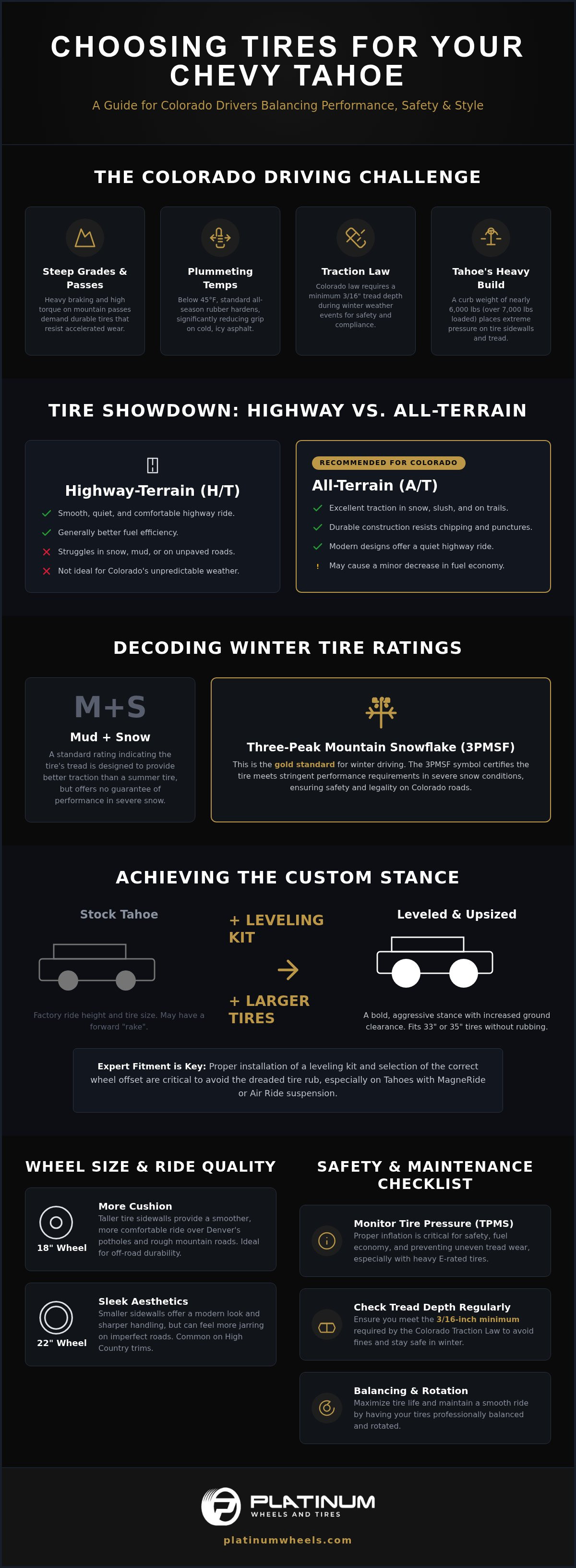
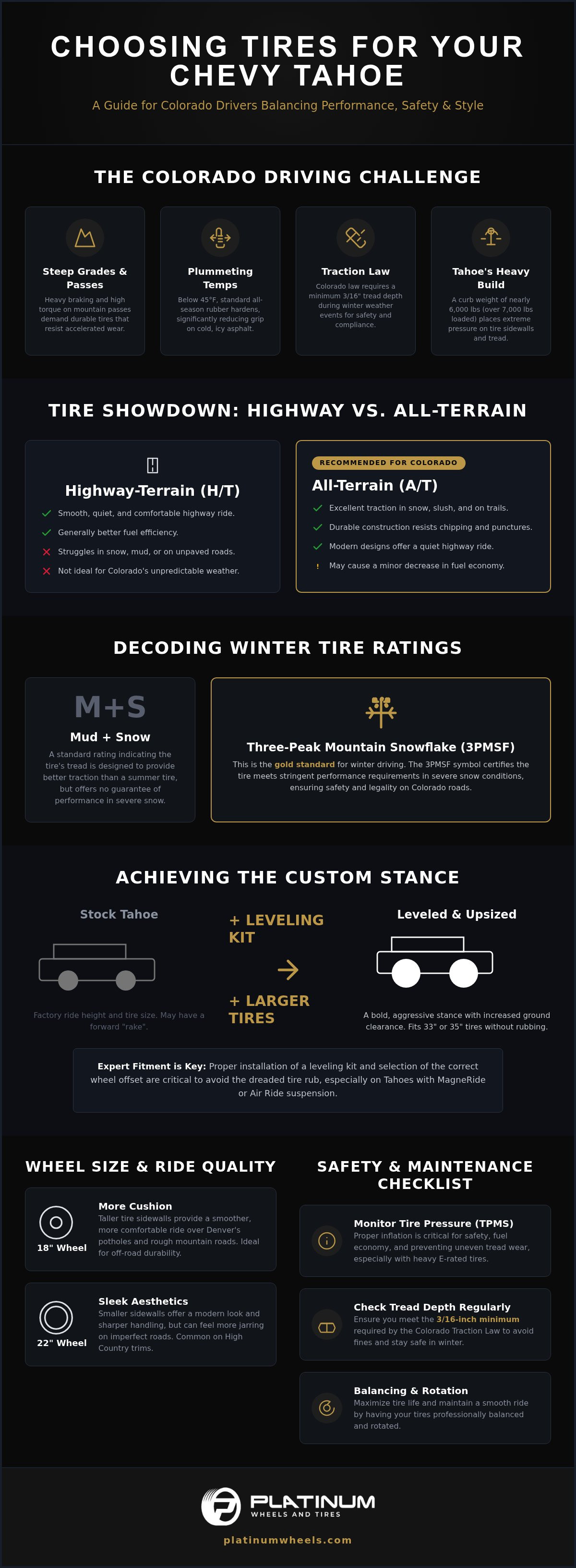
Your Chevy Tahoe is a powerhouse designed for family adventures and heavy duty hauling, but its performance is fundamentally limited by the rubber meeting the road. Selecting the right chevy tahoe tires for the Front Range requires a calculated approach. You have to consider the vehicle's nearly 6,000 pound curb weight alongside Colorado's unpredictable climate. Heavy curb weight doesn't just impact stopping distances; it accelerates tread wear during high torque climbs and heavy braking on steep mountain passes. A Tahoe loaded with gear and passengers can easily exceed 7,000 pounds, placing extreme pressure on the tire's shoulder blocks during every hairpin turn.
Common Tahoe Tire Sizes by Year and Trim
Tahoe trim levels dictate your factory wheel diameter, typically ranging from 18 to 22 inches. The LS and LT trims often arrive with 265/65R18 or 275/60R20 setups, while the High Country pushes the limits with 22 inch wheels wrapped in 275/50R22 tires. For Denver drivers, understanding tire size codes is the first step in planning an upgrade. While larger wheels offer a sleek, modern aesthetic, the reduced sidewall height on 22 inch rims can make Denver's notorious spring potholes feel much more jarring. If you frequent mountain trails or want more cushion, transitioning to all terrain tires with a taller sidewall provides the durability needed for jagged rocks and the comfort required for daily commuting.
Why 'All-Season' Often Isn't Enough for the Front Range
Standard all season tires often fail when the temperature drops below 45 degrees. The rubber compounds in basic tires harden in the cold, which significantly reduces grip on icy I-70 grades. This is why many local Tahoe owners are moving toward Rugged Terrain (R/T) hybrids. These tires offer the quiet highway manners of an all season tire but feature the aggressive biting edges of a mud terrain. The Three-Peak Mountain Snowflake (3PMSF) rating serves as the gold standard for Colorado winter legality, certifying that a tire meets specific snow traction requirements beyond a standard M+S designation. Don't forget that the Colorado Traction Law requires a minimum 3/16 inch tread depth during active weather events. High quality rubber isn't just about style; it's a non negotiable safety feature for navigating the Rockies.
All-Terrain vs. Highway-Terrain: The Right Tread for Your Tahoe
Choosing between Highway-Terrain (H/T) and All-Terrain (A/T) tires often feels like a compromise between comfort and capability. Standard H/T tires provide a smooth, car-like experience on the pavement, but they frequently struggle when faced with a muddy trailhead or a sudden Denver blizzard. Conversely, many owners worry that aggressive treads will create a loud, droning hum at highway speeds. Modern tread technology has largely busted this 'noise vs. traction' myth. High-end manufacturers now utilize variable-pitch tread blocks and closed-shoulder designs to keep the cabin quiet while still providing deep grooves for off-road grip. When you select the right chevy tahoe tires, you don't have to sacrifice the luxury feel of your SUV for the sake of Colorado versatility.
Efficiency is another factor to weigh. Heavy-duty, E-rated tires offer incredible puncture resistance, but their added weight can impact your fuel economy. Switching from a standard load tire to a 10-ply E-rated version can increase unsprung weight by 10 to 15 pounds per corner, potentially dropping your MPG on long trips across the Front Range. Following NHTSA tire safety guidelines regarding proper inflation is essential to mitigate these losses and ensure your Tahoe remains stable under heavy loads.
The Case for All-Terrain Tires in Denver
For most Colorado drivers, an All-Terrain tire is the logical choice. These tires feature self-cleaning tread patterns that effectively eject slush and packed snow, preventing your tread from turning into a slick surface during spring storms. If you spend your weekends navigating gravel roads in the foothills or parking at unpaved trailheads, brands like Nitto, Toyo, and BFGoodrich offer the durability needed to resist rock chipping. These tires bridge the gap between daily commuting and rugged exploration, providing the "bite" required for steep, loose-surface inclines without the harshness of a dedicated mud tire.
Suspension Synergy: Tires and MagneRide
If your Tahoe is equipped with MagneRide or Air Ride suspension, tire selection becomes even more technical. These sophisticated systems use sensors to adjust damping in milliseconds based on road feedback. Excessive unsprung weight from an 'over-tired' setup can lead to a jittery ride as the sensors struggle to manage the heavier mass of the wheel and tire assembly. You want to balance tire stiffness with the Tahoe's luxury damping to maintain that signature cloud-like ride quality. If you are unsure which weight rating best complements your specific trim, consulting with a fitment expert can help you avoid a setup that feels too stiff for city driving.
Upsizing Your Tahoe: Leveling Kits, Offset, and Clearance
Most Tahoe owners notice the factory rake immediately. It's that slight nose-down posture designed for aerodynamics and towing, but it often limits your choice of chevy tahoe tires. Installing a leveling kit raises the front end by approximately two inches, creating a balanced profile that accommodates larger rubber and improves ground clearance. Choosing between a leveling kit vs lift kit fundamentally changes your fitment options. While a level is perfect for a clean 33-inch tire setup, jumping to 35-inch tires typically requires a full suspension lift to avoid significant metal trimming or permanent modifications to your wheel wells.
When you start upsizing, the relationship between wheel offset and clearance becomes critical. If you stick with factory wheels but go with a wider tire, you risk the sidewall rubbing against the upper control arm. This is a common issue for owners comparing all-terrain and highway tires for their next upgrade. All-terrain options often feature aggressive side lugs that require a slightly lower offset wheel to push the tire away from the suspension components. Precision fitment ensures you get the look you want without compromising the Tahoe's tight turning radius.
Clearance and Rubbing: The Tahoe Fitment Reality
Tahoe wheel wells are notoriously tight at the rear of the front fender. If your wheel offset is too aggressive, you'll likely experience rubbing on the plastic liner or the frame during full-lock turns. While some enthusiasts perform the "NorCal Mod" to cut away metal behind the liner, we focus on setups that maintain your vehicle's integrity. Common rubbing points include:
- The front wheel well liner at half-turn
- The upper control arm with wide tires on high-offset wheels
- The outer fender edge during suspension compression
Using the correct wheel offset instead of bulky wheel spacers ensures a safer, more predictable fitment for your SUV.
The Benefits of Complete Wheel and Tire Packages
Opting for aftermarket wheel and tire packages is the most efficient way to achieve the perfect Denver stance. These packages arrive pre-mounted and precision-balanced, which is vital for maintaining a vibration-free ride at 75 mph on E-470. Whether you want a "flush" look where the tire sits even with the fender or a more "aggressive" poke for a wide-track feel, a complete package ensures all components work in harmony. You'll save on installation labor and avoid the headache of piecing together a setup that might not clear your brakes or MagneRide sensors.
Maximizing Tahoe Tire Life: TPMS, Balancing, and Maintenance
Maintaining your chevy tahoe tires is a high-stakes task given the vehicle's substantial weight and the extreme environmental shifts found along the Front Range. A standard passenger car might forgive a few psi of neglect, but a three-ton SUV requires technical precision to prevent uneven wear. High-pressure nitrogen is a popular choice for local drivers because it resists the pressure fluctuations caused by rapid altitude and temperature changes. If you are still using standard air, check your pressures weekly during the winter months to ensure your contact patch remains optimal for icy conditions. Extreme Colorado temperature swings frequently trigger false TPMS alerts as the air density changes overnight, so maintaining consistent pressure is the only way to keep that dash light off.
Road Force Balancing is another essential service for Tahoe owners, especially those running 20-inch or 22-inch wheel packages. Unlike traditional spin balancing, Road Force machines apply a load roller to simulate the weight of the vehicle on the tire. This identifies "hard spots" or rim runout that a standard balancer would miss. This process is the only way to guarantee a vibration-free experience when cruising at highway speeds on E-470. If you have recently leveled your truck, as discussed in our fitment section, a specialized alignment is mandatory. Standard factory specs often don't account for the altered geometry of a leveled suspension, which can lead to "cupping" or feathering on aggressive all-terrain treads.
Tahoe TPMS: Avoiding the Dash Light Headache
Modern Chevy safety systems rely heavily on the tpms sensor to feed critical data to the StabiliTrak and braking computers. When you invest in a new wheel and tire package, replace the sensors rather than trying to swap old, brittle units. The "relearn" process for newer Tahoe models has become increasingly complex. It often requires specialized OBD-II tools that make DIY attempts frustrating and unsuccessful. Starting with fresh sensors ensures your safety systems function exactly as the engineers intended, providing peace of mind during heavy snowstorms.
Rotation Patterns for Tahoe 4WD Systems
Protecting your drivetrain is just as important as protecting your rubber. The Tahoe's 4WD system is sensitive to differences in tire diameter; even a small variance in tread depth can put unnecessary stress on the transfer case. To combat this, follow a "Cross-Forward" rotation pattern every 5,000 to 7,000 miles. This involves moving the rear tires to the front on the same side, while crossing the front tires to the opposite rear positions. Given the state of Colorado's rougher mountain roads and potholed city streets, check your alignment every six months. Catching minor shifts early prevents a single pothole from ruining a set of premium tires.
Ready to ensure your setup is dialed in for the long haul? Schedule a professional balance and alignment with our team to protect your investment today.
Expert Chevy Tahoe Tire Installation in Denver
Most general tire retailers focus on high-volume turnover, often overlooking the technical nuances that make a Tahoe unique. When you are investing in high-quality chevy tahoe tires, you need a technician who understands more than just a mounting machine. A general shop might get the tire onto the rim, but they rarely account for how a specific tread width interacts with your MagneRide sensors or the tight clearance of a leveled front end. We serve the entire Front Range, providing drivers from Denver and Aurora to Lakewood and Castle Rock with a specialized approach that treats your SUV as a complete performance system rather than just a set of four wheels. Precision matters when you are hauling a family through a blizzard on I-70.
The Platinum Wheels Advantage for Tahoe Owners
Our process begins with a consultative approach that prioritizes your specific driving habits. We don't just sell rubber; we help you navigate the complex world of custom wheels and rims to ensure your Tahoe looks as good as it performs. Because we specialize in both suspension and tires, we can install your leveling kit and your new tire package in a single visit. This integration is vital for achieving a perfect alignment and ensuring that your steering geometry remains within factory specifications. We are enthusiasts who live the Colorado lifestyle, so we know exactly which setups survive the gravel of the foothills and the heat of a Denver summer.
Choosing a local expert means you get a partner who understands regional demands. Whether you are commuting from Castle Rock or heading into the high country for a ski weekend, we ensure your tire choice reflects your reality. We focus on high-standards craftsmanship, using the latest balancing technology to eliminate the vibrations that often plague heavy SUVs on the highway. You won't find high-pressure sales tactics here; instead, you'll find a neighborly team dedicated to your peace of mind and vehicle safety.
Ready to Upgrade Your Tahoe's Stance?
Getting a personalized quote for your new look is a straightforward process. Before you visit our Denver area shop, take a moment to gather a few details about your vehicle. Knowing your specific trim level, such as a Z71 or a High Country, is essential because it dictates your brake size and factory suspension type. Think about your primary goals: are you looking for a whisper-quiet highway ride, or do you need maximum traction for off-road trails? Having this information ready allows us to provide a precise recommendation for your chevy tahoe tires and any necessary suspension adjustments.
Don't settle for a basic tire shop experience that ignores the details of your SUV's sophisticated engineering. Reach out to us today for a professional consultation and discover how the right tire and wheel package can transform your Tahoe's capability and curb appeal.
Ready for the Rockies: Your Tahoe's Next Chapter
Navigating the Front Range requires a vehicle that's as resilient as it is refined. You've learned that the right chevy tahoe tires do more than just fill out a wheel well; they provide the traction needed for I-70 snow squalls and the quiet comfort required for your daily Denver commute. By understanding the synergy between suspension geometry and tire weight, you can achieve that aggressive, leveled stance without sacrificing the luxury ride quality you expect from your SUV.
Maintaining your setup through proper Road Force balancing and TPMS care ensures your investment lasts for seasons to come. Don't settle for a generic fitment when you can have a precision-engineered solution tailored to Colorado's unique terrain. As specialized Tahoe leveling kit experts, we're here to help you dial in the perfect look and feel for your vehicle.
Upgrade your Chevy Tahoe with a custom tire and wheel package at Platinum Wheels today! We proudly serve Denver, Aurora, and the entire Front Range with a premium off-road tire inventory and unmatched technical expertise. Let's get your Tahoe ready for your next mountain adventure.
Frequently Asked Questions
What is the biggest tire I can fit on a stock Chevy Tahoe?
Generally, a 33 inch tire is the maximum size you can fit on a factory Tahoe without modifications. On stock 20 inch or 22 inch wheels, a 275/60R20 or a 285/45R22 typically fits with minimal issues. However, wheel offset is the deciding factor for clearance. For Denver drivers who frequent tight mountain switchbacks, sticking to these dimensions ensures you maintain your full turning radius without rubbing the inner liners during full lock maneuvers.
Do I need a leveling kit to run 33-inch tires on my Tahoe?
You don't strictly require a leveling kit for a standard 33 inch tire, but most owners in the Front Range prefer one. A leveling kit eliminates the factory rake and provides extra clearance for more aggressive all terrain tread patterns that might otherwise rub. This modification is especially useful for handling Colorado's deep snow buildup in the wheel wells. It creates a balanced, custom stance while ensuring your SUV remains functional on rugged trailhead roads.
Are all-terrain tires too loud for a Chevy Tahoe High Country?
Modern chevy tahoe tires in the all terrain category are remarkably quiet compared to older designs. Manufacturers now use variable pitch tread blocks to cancel out road hum, making them a great fit for premium trims like the High Country. You can enjoy the luxury of a quiet cabin while gaining the biting edges needed for icy I-70 climbs. These tires offer a perfect compromise between highway manners and the rugged versatility required for Colorado mountain life.
How do I know if my Tahoe has MagneRide and does it affect my tire choice?
You can identify MagneRide by checking for electronic sensors and wires connected to your shock absorbers; it is standard on most High Country and Premier trims. It definitely affects your tire choice because the system is tuned for specific unsprung weights. Selecting a tire that is too heavy can cause the suspension to feel jittery or overactive. We help you choose a weight rated tire that complements your Tahoe's sophisticated sensors to preserve that signature ride.
What is the best tire for Colorado snow on a heavy SUV like the Tahoe?
The best tire for Colorado snow is one that carries the Three Peak Mountain Snowflake (3PMSF) rating. For a heavy SUV like the Tahoe, you need a rubber compound that stays flexible in sub freezing temperatures. All terrain tires with this rating provide the deep siping required to grip ice and wide grooves to evacuate slush. This ensures you stay compliant with the Colorado Traction Law while navigating steep grades in the Rockies with total confidence.
Should I replace my TPMS sensors when I buy new tires for my Tahoe?
Replacing your TPMS sensors during a tire upgrade is highly recommended because their internal batteries have a limited lifespan. It is much more efficient to install new sensors when your chevy tahoe tires are already being mounted. This prevents you from having to pay for additional labor down the road when a battery eventually fails. Fresh sensors ensure your Tahoe's safety systems receive accurate data, which is vital for maintaining stability during unpredictable Front Range weather events.
How much does a Tahoe leveling kit and tire package cost in Denver?
The total cost for a leveling kit and tire package depends on your choice of tire brand and the specific suspension requirements of your trim level. Factors like MagneRide or Air Ride suspension can influence the complexity of the installation. We provide personalized quotes for our neighbors in Aurora, Lakewood, and Castle Rock to ensure you get the best value. Choosing a complete package often streamlines the process and ensures all components work together for a vibration free ride.
Will 22-inch wheels ruin the ride quality of my Tahoe?
While 22 inch wheels have less sidewall than 18 inch options, they won't ruin your ride if you choose the right tire. The key is selecting a tire with advanced damping characteristics to absorb sharp impacts from Denver's spring potholes. We also utilize Road Force balancing to ensure your larger wheel setup remains perfectly smooth at highway speeds. This technical approach allows you to enjoy the bold aesthetic of 22 inch rims without sacrificing the comfort your Tahoe was built for.