The Complete Guide to Truck Lift Kits: Performance, Types, and 2026 Trends
Imagine you're climbing the I-70 corridor toward the Divide, but instead of feeling the power of your rig, you're white-knuckling the steering wheel to combat a terrifying "death wobble." It's a common fear for many Colorado drivers looking to upgrade their stance. You want that aggressive look and room for 35-inch tires, but you shouldn't have to sacrifice a smooth, "factory-plus" ride or worry about your gas mileage tanking at high altitudes. We agree that a modification should improve your lifestyle, not complicate it.
This guide helps you master the technical side of truck lift kits so you can transform your vehicle's capability and stance with total confidence. You'll learn how to choose a system that maintains precision handling while clearing the toughest trails. We'll break down the latest 2026 trends in suspension technology, clarify the differences between body and suspension lifts, and ensure your setup stays legal and safe for the Front Range. From navigating Colorado height regulations to integrating with modern adaptive ride control, we've got the expert insights you need to build a truck that performs as good as it looks.
Key Takeaways
- Learn the critical differences between body lifts and suspension systems to ensure you achieve the right ground clearance for the trail without overspending.
- Discover how high-quality truck lift kits preserve vital suspension geometry, protecting your CV axles and maintaining a smooth ride on Denver highways.
- Master the "Colorado Daily" build to balance rugged off-road capability with the comfort and fuel efficiency required for high-altitude driving.
- Understand the impact of lifting on modern safety sensors and why professional calibration is essential for maintaining your vehicle's stability control.
- Get the technical blueprint for fitting 35-inch tires while keeping your vehicle’s handling precise, predictable, and ready for the I-70 corridor.
What Are Truck Lift Kits? Understanding the Basics of Suspension Upgrades
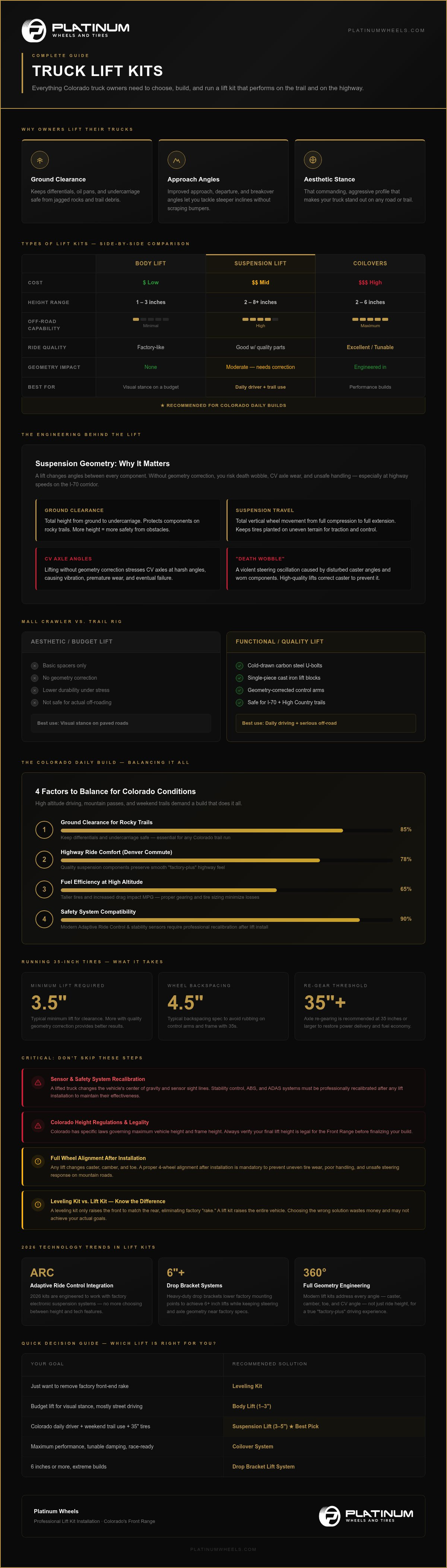
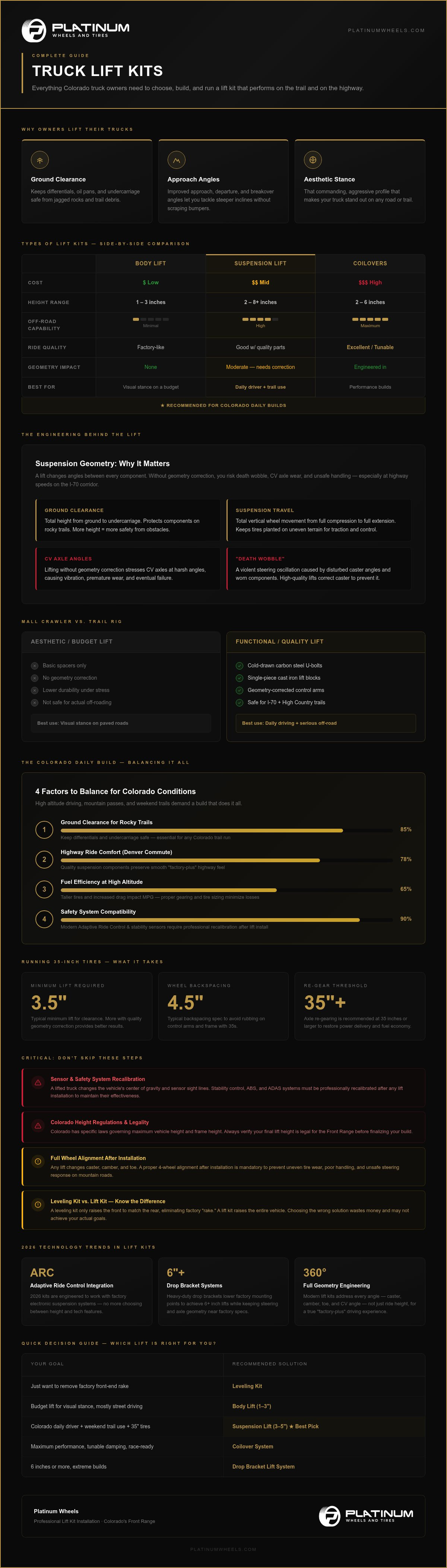
A truck lift kit is a precision-engineered system of components designed to increase your vehicle's ride height. It isn't just about adding a few inches of steel; it's a fundamental modification to your truck’s suspension architecture. By replacing or augmenting factory parts like springs, shocks, and control arms, these kits elevate the entire chassis. This modification allows for the installation of larger tires and changes how your vehicle interacts with both the pavement and the dirt. We see this as the first step in unlocking a truck's true potential, whether you're cruising through Denver or heading deep into the backcountry.
The primary goals of installing truck lift kits usually fall into three categories: ground clearance, approach angles, and aesthetic transformation. Increased ground clearance ensures your undercarriage stays safe from jagged rocks and debris. Improved approach, departure, and breakover angles allow you to tackle steeper inclines without scraping your bumpers. For many owners, a suspension lift provides that commanding, aggressive stance that makes a truck stand out in any parking lot. It's about creating a vehicle that looks as capable as it feels.
It's vital to distinguish these systems from simpler modifications. While a lift raises the entire vehicle, a leveling kit specifically targets the front end to eliminate the factory "rake" or nose-down lean. If you're torn between the two, our guide on leveling kit vs lift kit breaks down which option fits your specific goals. In 2026, the technology has evolved significantly. Modern kits are now designed to integrate seamlessly with sophisticated factory features like Adaptive Ride Control, ensuring you don't lose your high-tech comfort when you gain height.
Ground Clearance vs. Suspension Travel
Clearance is your best friend on Colorado's rocky trails, as it keeps your differential and oil pan away from expensive damage. However, height alone doesn't guarantee performance. You also need suspension travel to keep your tires in contact with the ground on uneven terrain. Suspension travel refers to the total vertical distance the wheel can move from full compression to full extension as it navigates uneven terrain. A well-designed lift kit provides both the height to clear obstacles and the "flex" needed to maintain traction when things get technical.
Aesthetic vs. Functional Lifting
There is a big difference between a "Mall Crawler" and a "Trail Rig." An aesthetic lift focuses on the look, often using basic spacers to achieve a certain height for a lower cost. A functional lift, however, uses high-quality components like cold-drawn carbon steel U-bolts and single-piece cast iron lift blocks to handle the stress of off-roading. Choosing functional components ensures your truck handles the I-70 corridor with stability while remaining durable enough for weekend adventures in the High Country. If you plan to actually use your truck lift kits in the dirt, investing in better components is a non-negotiable for safety and longevity.
Types of Lift Kits: Comparing Body Lifts, Suspension Lifts, and Coilovers
Selecting the right hardware for your rig depends entirely on your end goal. Are you looking for a more commanding presence on the road, or do you need the mechanical grit to handle a technical climb in the Rockies? Not all truck lift kits are created equal. Some focus purely on the visual profile, while others re-engineer the entire way your vehicle handles weight and impact. Understanding these distinctions is the first step toward a build that you'll love driving every single day.
For those aiming for massive height, usually 6 inches or more, drop bracket lifts are a common solution. These systems use heavy-duty brackets to lower the factory mounting points for the suspension, allowing for significant lift while keeping the critical steering and axle geometry close to factory specs. If you're ready to start your build, exploring our professional lift and leveling options can help you determine which system fits your specific truck model.
Body Lifts: Pros, Cons, and Limitations
Body lifts are the most budget-friendly way to make room for larger tires. This method uses high-grade spacers to raise the cab and bed off the frame, rather than modifying the suspension itself. While this is effective for tire clearance, it creates a visible gap between the frame and the body. Many owners use "gap guards" to hide this space. It's important to remember that body lifts provide zero performance benefits on the trail. They don't increase ground clearance at the axles or improve suspension travel. They are strictly for aesthetics and tire fitment.
Suspension Lifts: The Comprehensive Performance Choice
This is the gold standard for anyone serious about off-roading. A full suspension lift involves replacing factory springs, shocks, and control arms with performance-grade components. Unlike simple spacer lifts that just sit on top of factory parts, a full replacement kit increases articulation and durability. This is vital for Colorado's technical trails where you need your wheels to stay planted on uneven ground. While these modifications are exciting, always stay mindful of safety and legal standards. For example, some regions have a strict state law on suspension modifications that limits how high you can go. Colorado has its own set of rules regarding headlight and bumper heights that we help our customers navigate.
For the ultimate in mountain performance, coilover conversions offer the highest level of adjustability. These premium systems allow you to fine-tune your ride height and damping settings. This level of precision is perfect for high-speed desert runs or navigating the steep, variable terrain of the High Country. Whether you choose a rugged suspension system or a high-end coilover setup, the goal is always a "factory-plus" ride that feels stable on the I-70 corridor and unstoppable on the trail.
The Engineering Behind the Lift: How Geometry Affects Ride Quality
Lifting a truck changes the fundamental physics of how it moves. When you increase the distance between the frame and the ground, you alter the angles of every connected component. Engineering a high-quality build means accounting for these changes to ensure your rig remains reliable. Professional truck lift kits do more than just provide height; they recalibrate the suspension geometry to prevent premature wear. If these angles aren't corrected, you'll likely face expensive repairs down the road.
Constant Velocity (CV) angles are a primary concern for any four-wheel-drive owner. When you lift the front end, the CV axles sit at a steeper angle than the factory intended. Excessive angles put immense stress on the joints and can cause the protective boots to tear, leading to immediate axle failure. To combat this, many premium kits include differential drop spacers to keep the axles as flat as possible. Similarly, brake line extensions and driveshaft spacers are small but vital parts. They prevent your lines from snapping at full suspension flex and keep your driveshaft securely seated in the transmission.
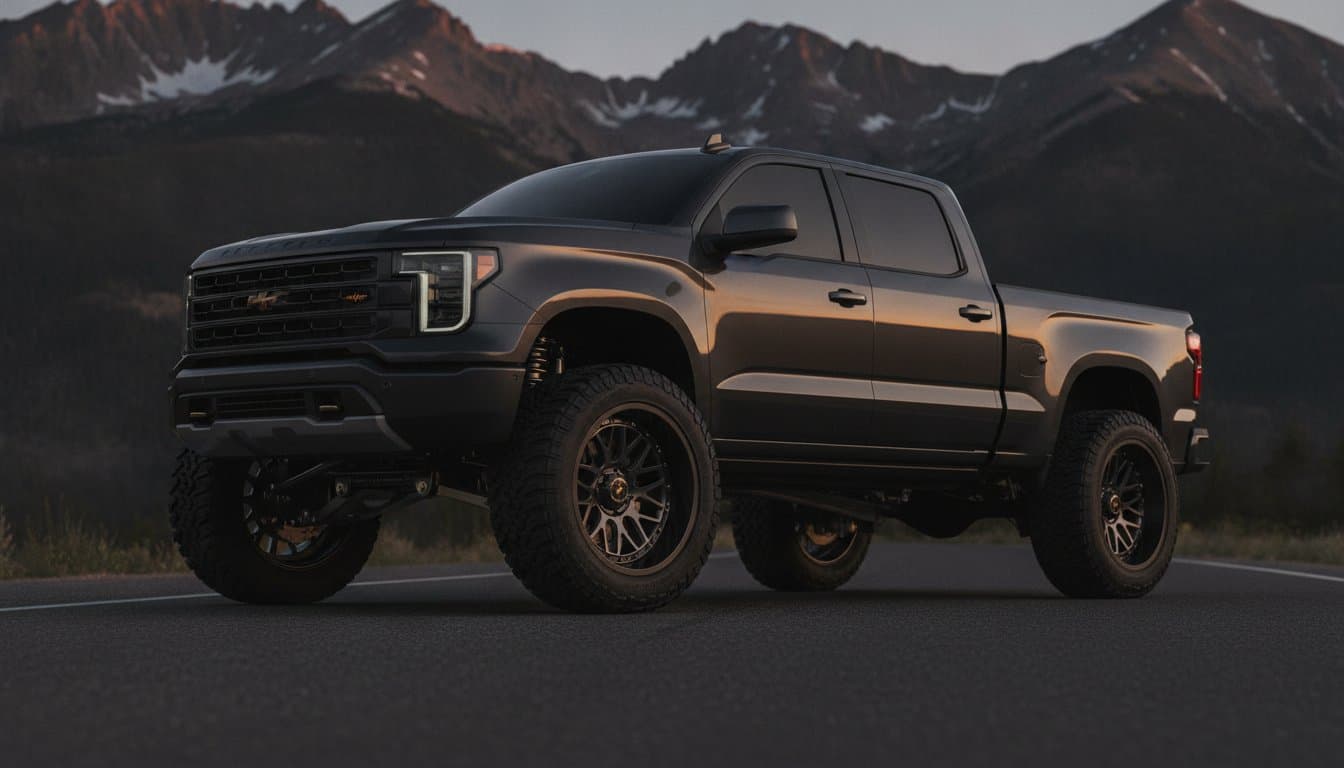
Steering stabilizers become essential once you move to 35-inch tires or larger. These heavy-duty dampers absorb the increased rotational force of bigger rubber, preventing the steering wheel from jerking when you hit a pothole. This is a critical safety feature for anyone frequenting the Front Range, where road conditions can change in a heartbeat. Without a stabilizer, the added leverage of oversized tires can lead to the "death wobble," a violent shaking that compromises your control of the vehicle.
Maintaining Proper Alignment and Caster
Precision alignment is the difference between a truck that tracks straight and one that fights you. "Bump steer" occurs when hitting a dip causes your truck to dart unexpectedly because the steering linkage is no longer parallel to the ground. High-quality truck lift kits often include dropped pitman arms or relocated track bars to fix this. Caster is the forward or backward tilt of the steering axis when viewed from the side; this angle is what allows your steering wheel to return to center after a turn and keeps your truck tracking straight on the highway. Aftermarket Upper Control Arms (UCAs) are often required to restore this caster, providing the stability you need for the I-70 corridor.
Shock Absorbers: The Heart of Your Ride Quality
Shocks dictate how your truck feels on every surface. Monotube shocks are the preferred choice for heavy-duty applications because their single-cylinder design dissipates heat faster than traditional twin-tube shocks. If you plan on long days of washboard roads in the High Country, remote reservoir shocks provide extra oil capacity to prevent "shock fade." The most important factor is matching the shock valving to the weight of your specific truck and gear. A heavy winch or a bed full of camping equipment requires different damping than a stock-weight vehicle to maintain that smooth, factory-plus ride quality.
Choosing the Right Lift Kit for Colorado: From Denver to the High Country
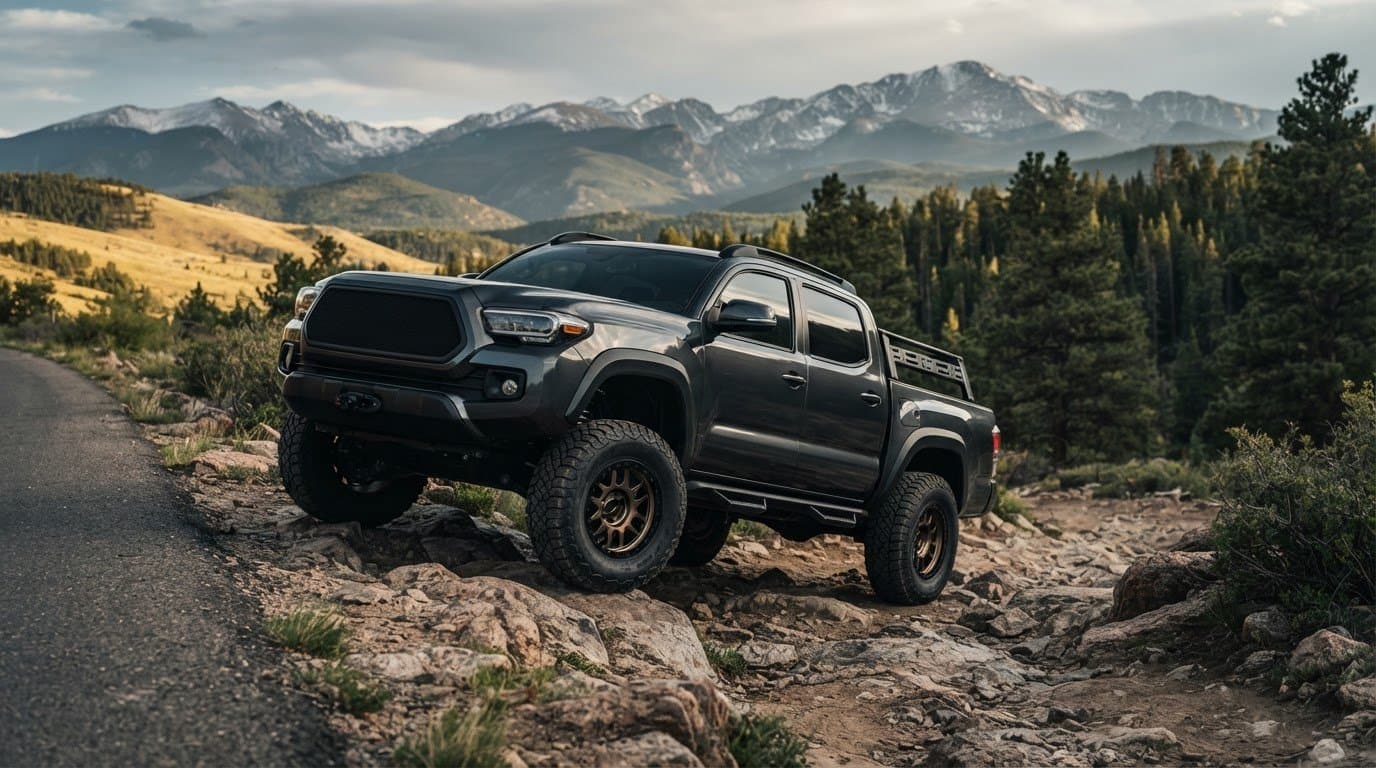
Living in the Front Range means your truck needs to be a multi-tool. You're dealing with steep grades, thin air, and unpredictable weather that can change in a single zip code. Choosing truck lift kits for this environment requires more than just picking a height from a catalog. You need a setup that handles the high-speed rhythm of the I-70 corridor while offering the durability to survive a technical trail in the High Country. We believe the best build is one that enhances your lifestyle without making your daily commute a chore.
Don't forget that as you climb toward the Continental Divide, your engine naturally loses power. Adding a heavy lift and massive tires increases rolling resistance and aerodynamic drag. If you're building a mountain rig, consider how a 6-inch system affects your power-to-weight ratio. Many local owners find that a moderate 2.5-inch to 4-inch lift provides the perfect balance of clearance for obstacles like rocks and fallen branches without making the truck feel sluggish at 10,000 feet. This "Colorado Daily" approach ensures you have the capability you need without sacrificing highway performance.
Practicality matters in the city, too. Before you commit to a massive setup, check your clearance. Standard Denver metro parking garages often have a height limit between 6 feet 8 inches and 7 feet. If you're running a heavy-duty truck with a 6-inch lift and 37-inch tires, you might find yourself hunting for street parking more often than you'd like. We always recommend measuring your current height and calculating the final stance to ensure your rig still fits your garage and your favorite downtown spots.
Terrain-Specific Kit Selection
Technical rock crawling in the San Juan Mountains requires maximum articulation and high-clearance control arms to navigate tight switchbacks and jagged peaks. If your adventures take you toward the high-speed gravel roads of the Eastern Plains, you'll want a setup with superior damping to handle washboard surfaces without vibrating your interior apart. For the classic Front Range overlander, a versatile "adventure" lift that balances increased payload capacity for camping gear with a smooth ride is usually the winning choice.
Corrosion Resistance for Colorado Winters
Colorado’s winter roads are brutal on undercarriage components. The magnesium chloride used for de-icing acts like a slow-motion acid on raw metal parts. Look for truck lift kits that feature stainless steel or zinc-plated hardware to prevent seizing and rust over time. It’s also wise to factor in a truck lift kit installation cost that prioritizes components with high-quality coatings. After a snowy mountain trip, make it a habit to spray down your suspension to remove salt buildup and keep your investment in top shape. If you're ready to build a rig that dominates the Rockies, consult with our experts to find the perfect fit for your specific truck and terrain goals.
Professional Lift Kit Installation: Why Precision Matters
Modern trucks are essentially computers on wheels, and modifying their height requires more than just a heavy-duty wrench. When you install truck lift kits, you're fundamentally moving the vehicle's center of gravity and altering the data points that its onboard safety systems rely on. Features like Electronic Stability Control (ESC) and Advanced Driver Assistance Systems (ADAS) use cameras and sensors to monitor the road. If your lift isn't installed with precision, your lane-keep assist or collision avoidance systems might misinterpret the truck's position, leading to erratic behavior or dashboard warning lights.
Precision fitment is about more than just clearing the shop floor. It’s about long-term reliability and safety. Every bolt must be torqued to specific manufacturer standards to handle the vibrations of Colorado's washboard roads. We emphasize a "factory-plus" approach, ensuring that every component—from the brake line brackets to the steering linkage—works in harmony. A professional alignment is the final, non-negotiable step in this process. Without it, your truck will fight you on the highway, and you'll find yourself replacing expensive tires much sooner than expected.
The 'Package' Advantage: Wheels, Tires, and Lift
One of the most common mistakes owners make is choosing their suspension in a vacuum. To get the best results, you should plan your custom wheels and rims at the same time as your lift. This allows us to calculate the exact offset and backspacing needed to prevent your tires from rubbing against the new, beefier control arms. By handling the entire suspension ecosystem in one shop, you ensure that the wheel and tire package is perfectly matched to the lift's height and travel. This holistic strategy eliminates the guesswork and ensures your rig is ready to drive the moment it leaves the bay.
Post-Installation Support and Re-Torquing
The job isn't done just because the truck is back on the ground. Suspension components go through a "settling" period during the first few hundred miles of driving. We require a critical 500-mile check-up for every installation. During this visit, we re-torque every major bolt and inspect the bushings to ensure everything remained tight after facing real-world road stress. This follow-up is a vital safety requirement that protects your investment and your peace of mind. If a component shows premature wear or a warranty claim is needed, having a professional installer means you have an advocate to handle the technical details with the manufacturer. Ready to transform your truck? Contact Platinum Wheels for a custom quote today and let’s build a rig that handles the Rockies with ease.
Elevate Your Colorado Drive with Confidence
Elevating your truck is a journey that starts with solid engineering and ends with a rig that's ready for any Colorado adventure. You now understand that a successful build balances aggressive aesthetics with the mechanical precision needed to handle high-altitude trails and highway speeds. By prioritizing proper suspension geometry and professional calibration, you ensure your vehicle remains a reliable tool rather than a liability on the I-70 corridor.
We take pride in being your local suspension experts, specializing in the unique fitment needs of Denver drivers. Our team focuses on creating a seamless "ready-to-drive" experience where truck lift kits, wheels, and tires work together in one high-performance package. This holistic approach eliminates the guesswork and ensures every component is matched for safety and longevity. Let's make sure your next modification delivers the "factory-plus" ride quality you deserve for your weekend escapes and daily commutes alike.
Build Your Custom Lift Kit and Tire Package at Platinum Wheels
Your truck is more than just a vehicle; it's your ticket to the High Country, and we're here to help you build it right. We look forward to seeing you at the shop and helping you transform your rig into the ultimate mountain machine.
Frequently Asked Questions
Will a lift kit void my truck's factory warranty?
Installing a lift kit won't automatically void your entire factory warranty. Under the Magnuson-Moss Warranty Act, a manufacturer can only deny a warranty claim if they can prove the aftermarket part directly caused the specific failure. While your suspension modifications might affect claims related to ball joints or CV axles, your engine, electronics, and other unrelated systems remain protected. It's always a good idea to check with your local dealer about their specific policies regarding modified vehicles.
What is the difference between a 3-inch and a 6-inch lift kit?
The primary difference lies in the complexity of the components and the resulting ground clearance. A 3-inch lift is often achieved through replacement springs or coilovers and is perfect for a "Colorado Daily" build that needs trail capability and highway comfort. A 6-inch kit is a more aggressive modification that usually requires drop brackets to keep your suspension geometry in check. While the 6-inch option allows for much larger tires, it also significantly changes the truck's center of gravity.
How much does it cost to install a truck lift kit in Denver?
Installation costs vary based on the complexity of the kit and the specific labor hours required for your vehicle's make and model. A simple leveling kit requires much less shop time than a comprehensive 6-inch suspension system that might involve cutting or welding. You should also factor in the cost of a professional alignment and any necessary recalibrations for modern safety sensors. We recommend getting a tailored quote to ensure all technical requirements for your specific rig are covered.
Do I need new shocks if I install a leveling kit?
It depends on the design of the kit you choose. Basic spacer-style leveling kits are designed to work with your factory shocks by sitting on top of the assembly. However, performance-oriented leveling kits often include extended-length shocks that are valved specifically for the new ride height. Upgrading your shocks during the installation is a great way to improve ride quality and ensure your suspension has enough travel for off-road adventures in the High Country.
How does a lift kit affect my truck's towing capacity?
Your truck's mechanical towing capacity doesn't change, but the way it handles a trailer certainly does. A higher center of gravity can lead to more sway, and the softer springs found in some truck lift kits might result in more "squat" under a heavy tongue weight. You'll likely need a drop hitch to keep your trailer level. If you plan on heavy towing at high altitudes, consider adding helper springs or airbags to maintain stability and safety.
Will my truck still fit in my garage after a 4-inch lift?
You'll need to measure your specific garage opening and your truck's new height very carefully. Most standard Denver metro parking garages have a clearance height between 6 feet 8 inches and 7 feet. A 4-inch lift plus the added radius of 35-inch tires can easily raise your roofline by 5 or 6 inches total. Don't forget to account for antennas or roof racks that might snag on a low-hanging garage door or beam.
What are the best lift kit brands for off-roading in Colorado?
Several leading manufacturers produce high-quality truck lift kits that are well-suited for the rugged terrain of the Rockies. Brands like BDS Suspension, ReadyLIFT, and Rough Country offer systems that integrate with modern 2026 truck technologies, including Adaptive Ride Control. These brands are popular because they use durable materials like cold-drawn carbon steel and cast iron blocks. Choosing a reputable brand ensures your rig can handle everything from washboard roads to technical mountain trails.
How often should I have my lifted truck's suspension inspected?
You should have your suspension inspected every 5,000 to 10,000 miles, or ideally during every oil change. It's also smart to do a quick visual check after any heavy trail use in the San Juan Mountains. Look for signs of leaking shocks, torn CV boots, or loose hardware. Regular inspections are vital for catching small issues before they lead to expensive repairs or leave you stranded in the backcountry.