Alloy Rim Wheels vs. Steel: The Ultimate Colorado Truck Owner’s Comparison (2026)
If you think your factory steelies are the only thing standing between you and a cracked rim on a rocky San Juan trail, you might be overlooking the most significant performance upgrade available for your rig. Choosing between steel and alloy rim wheels often feels like a gamble between bulletproof weight and flashy fragility. You want a truck that handles the steep I-70 climb without breaking a sweat, but you also need a finish that won't peel the moment CDOT drops the first layer of magnesium chloride on the road. It is a common frustration for Denver drivers who need to balance weekend trail capability with the daily grind of winter commuting.
This comparison clears up the confusion surrounding "mag wheels" versus modern aluminum alloys while addressing the specific durability concerns of the Colorado Front Range. You will learn exactly how unsprung weight impacts your fuel economy and which specific finishes actually survive our harsh road salt. We will break down the trade-offs between impact resistance and thermal efficiency to ensure your next wheel and tire package is built to handle the high-altitude demands of the Rocky Mountains.
Key Takeaways
- Understand the composition of alloy rim wheels and why their aluminum-based blend offers a superior weight-to-strength ratio compared to traditional stamped steel.
- Compare the durability of cast versus forged wheels to determine which manufacturing process best survives the rugged trails of the Colorado Front Range.
- Discover how improved heat dissipation and reduced unsprung weight enhance your truck’s braking performance and fuel efficiency during steep mountain descents.
- Learn how to select the correct load ratings and wheel diameters to maintain your vehicle’s GVWR and protect tire sidewalls on rocky terrain.
- Identify why professional Road Force balancing and expert TPMS integration are essential for a safe, vibration-free ride on oversized off-road tires.
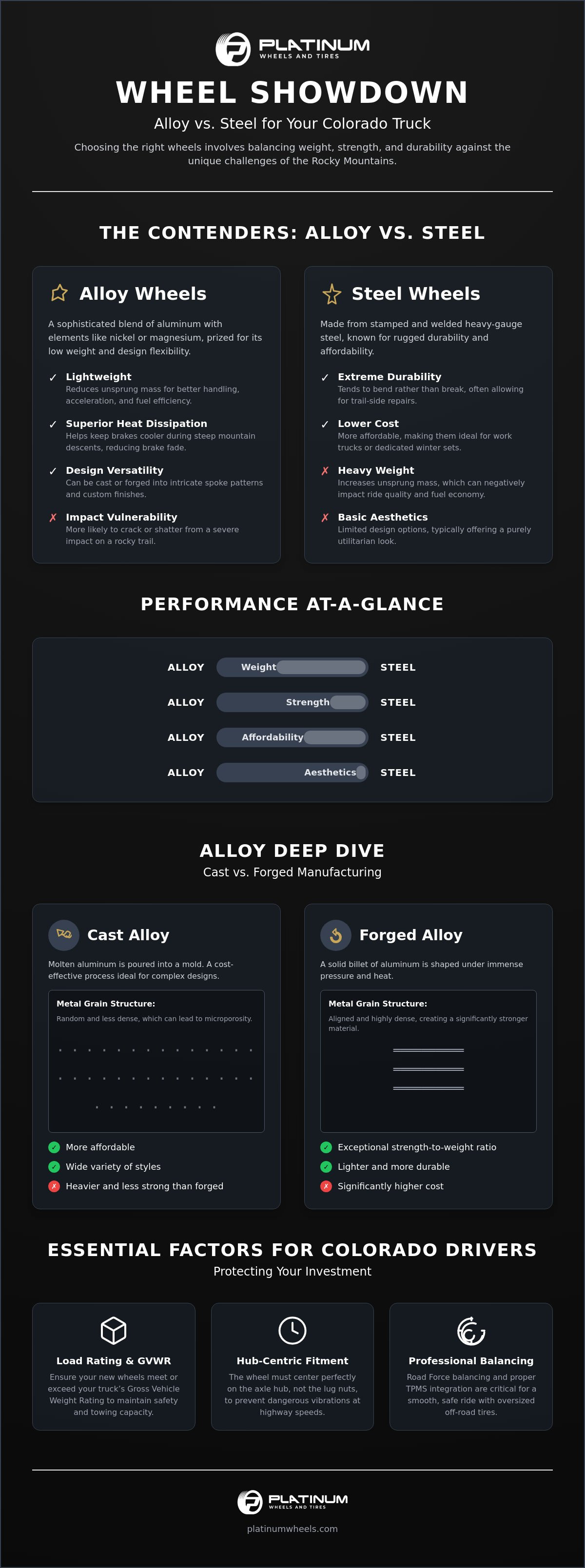
Understanding Alloy Rim Wheels: Composition and the Steel Alternative
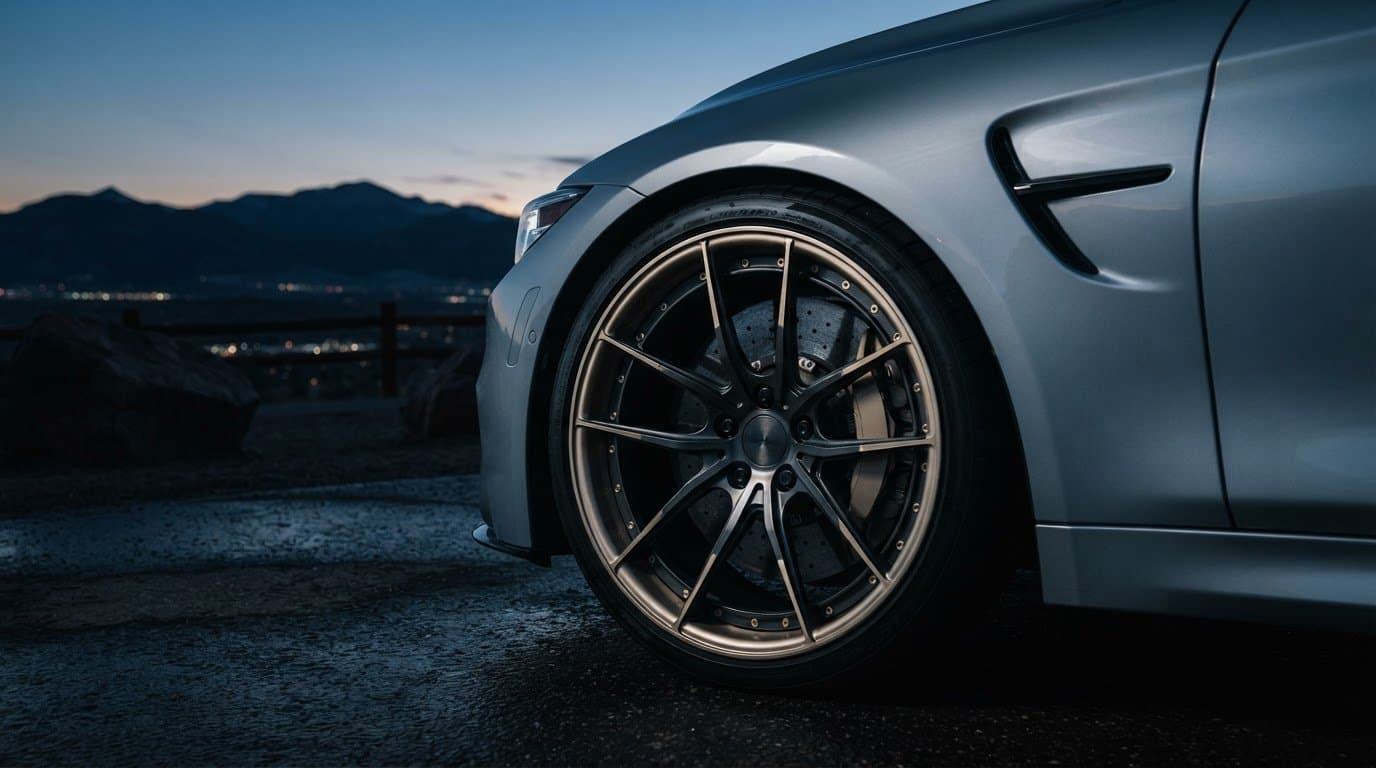
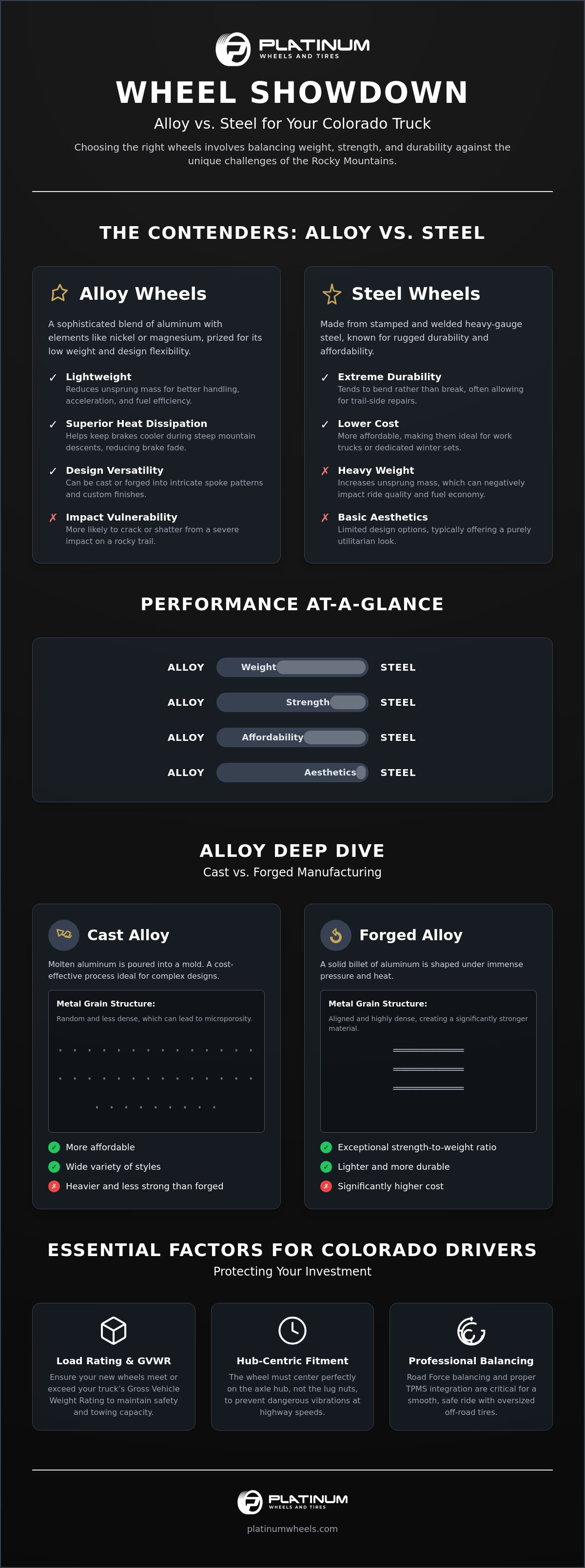
Choosing the right foundation for your truck starts with understanding exactly what is under the paint or powder coat. An Alloy wheel is not just a single piece of metal; it is a sophisticated blend of aluminum combined with elements like nickel, magnesium, or silicon. This mixture creates a material that is significantly lighter than traditional steel while maintaining the structural rigidity required for heavy-duty pickups. While many long-time enthusiasts still use the term "mag wheels," actual magnesium wheels are rare and usually reserved for high-end racing. Modern alloy rim wheels utilize aluminum because it offers the best balance of corrosion resistance and strength for the variable Colorado climate.
In contrast, traditional steel wheels are made by stamping two pieces of heavy metal together and welding them. They are functional and affordable, which is why you see them on base-model work trucks or as spare tires. However, steel lacks the aesthetic versatility of alloy. Because aluminum can be cast or forged into nearly any shape, designers can create the intricate spoke patterns and deep-dish offsets that define the modern off-road look. If you want your rig to stand out at a local meet or look sharp on the streets of Aurora, alloy is the standard choice.
The Anatomy of an Alloy Wheel
The primary ingredient in these wheels is aluminum, prized for its lightweight properties. Reducing weight at the corners of your vehicle, known as unsprung mass, allows your suspension to react faster to bumps and dips on the trail. To make the aluminum strong enough for a heavy truck, manufacturers add silicon. This addition improves the metal's flow during the manufacturing process and increases the final product's durability.
For truck owners, the way the wheel mounts to the truck is just as important as the metal itself. Most high-quality aftermarket options are designed to be hub-centric. This means the center hole of the wheel fits perfectly over the truck’s hub, ensuring the weight of the vehicle is supported by the axle rather than just the lug nuts. This precision prevents the steering wheel vibrations that often plague lower-quality setups on the highway.
Why Steel Wheels Still Exist
Steel wheels haven't disappeared entirely, and they still serve a specific purpose in the Rocky Mountains. Their greatest strength is their "bend-not-break" characteristic. If you take a hard hit against a jagged rock on a trail, a steel wheel will typically bend. In many cases, you can hammer that bend back into place well enough to keep the tire bead seated and get home safely. An alloy wheel, under the same extreme stress, is more likely to crack or shatter.
This durability makes steel a popular choice for dedicated winter-only wheel sets or for fleet vehicles that never leave the job site. Despite this, the industry for custom wheels and rims has shifted almost entirely toward alloy. The performance benefits, such as better brake cooling and improved fuel economy, simply outweigh the utilitarian nature of steel for most drivers who want a capable, all-around vehicle.
Cast vs. Forged Alloy: How Manufacturing Impacts Performance
Not all alloy rim wheels are created equal. While the base materials might look similar on a spec sheet, the way the metal is shaped determines how it handles a pothole on Speer Boulevard or a rocky descent in the Rockies. Most wheels on the market fall into two categories: cast or forged. Understanding the difference is the key to balancing your budget with your performance needs. Casting involves pouring molten aluminum into a pre-shaped mold. It is an efficient way to produce complex designs at a lower cost. However, the metal grain structure in a cast wheel is random and less dense than its forged counterparts.
Forging takes a different approach by using immense pressure to crush a solid block of aluminum, known as a billet, into its final shape. This process aligns the metal's grain, creating a significantly stronger and more ductile part. Because the material is stronger, manufacturers can use less of it. This leads to the performance benefits of lightweight wheels that enthusiasts crave. For the average Denver commuter, the choice often comes down to a price-to-performance ratio. While forged wheels offer the ultimate in strength, modern casting techniques have closed the gap for daily driving applications.
Gravity Casting vs. Low-Pressure Casting
Gravity casting is the most basic method. The metal is simply poured into a mold, which can lead to air pockets and inconsistencies. It is the most affordable option, but it is often the least durable for heavy truck use. Low-pressure casting is the standard for high-quality aftermarket rims. By using pressurized gas to force the molten metal into the mold, manufacturers significantly reduce porosity. This results in a denser, more reliable wheel that holds up better under the weight of a modern half-ton pickup.
The Forged Advantage for Off-Roading
When you are airing down for a weekend on the trails, forged wheels offer a level of peace of mind that casting cannot match. They are the gold standard for durability. Forged alloy is less likely to crack under extreme impact, which is vital when navigating jagged Colorado terrain. These wheels also shed significant weight. This reduction in unsprung mass saves your suspension components from premature wear and improves your truck's ability to track over uneven surfaces.
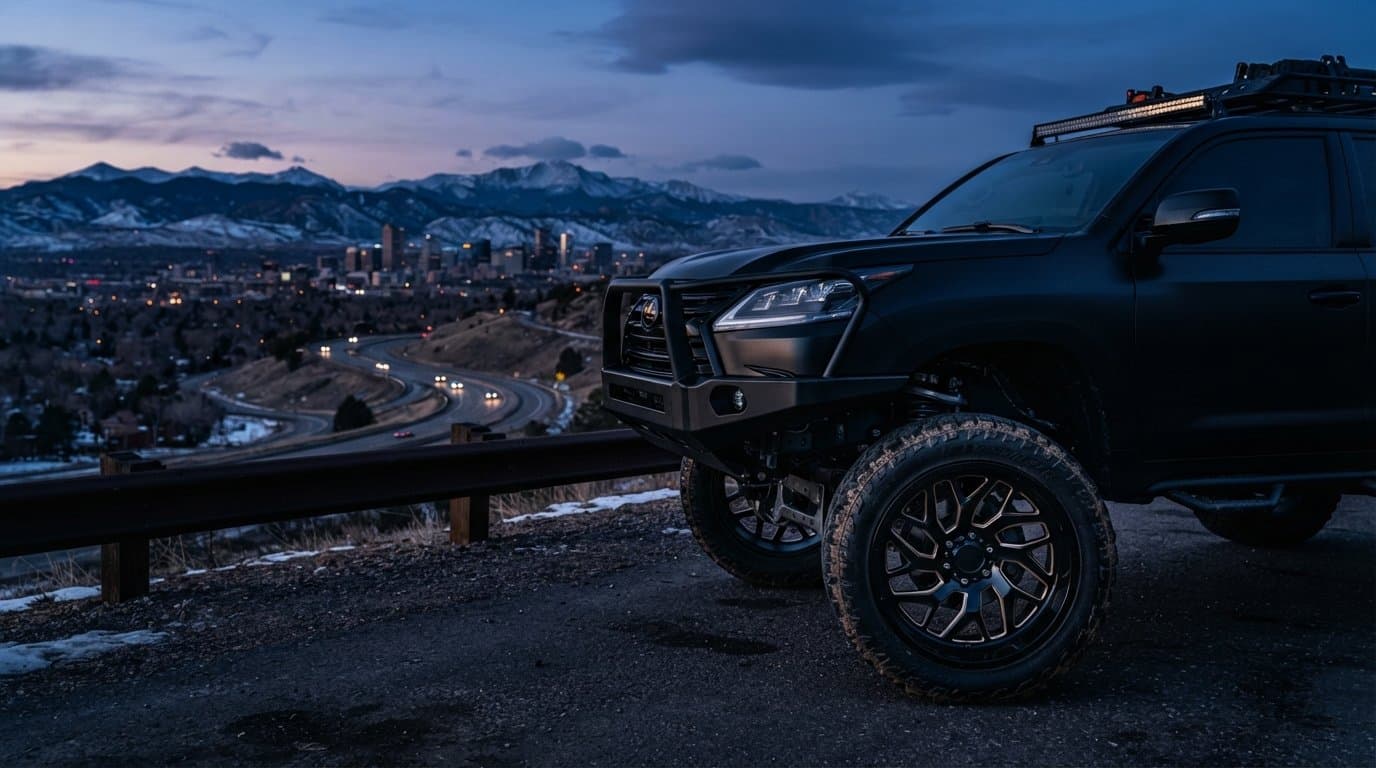
Forged options are especially critical for rigs running aggressive truck lift kits. The added leverage of larger tires puts extra stress on the wheel centers and lug seats. A forged wheel handles these high-load scenarios with ease. While the price point is higher, the long-term reliability is unmatched. If you are debating which manufacturing style fits your driving habits, come chat with the experts at Platinum Wheels to see the difference in person.
The Performance Showdown: Alloy vs. Steel in Colorado’s Climate
Colorado presents a unique set of challenges that test the limits of your vehicle's hardware. From the thin air of the high country to the chemical-laden slush of a Denver commute, your choice of wheels directly impacts how your truck survives the season. One of the most significant advantages of alloy rim wheels is the reduction in unsprung weight. Unlike the weight supported by your springs, unsprung weight includes everything from the suspension down. Lighter wheels allow your shocks and struts to react faster to the washboard surfaces common on our mountain access roads. This improved suspension response translates to better traction and a more composed ride when you are navigating the tight curves of I-70.
Beyond handling, the performance and durability of alloy wheels provide a measurable boost to fuel efficiency. Because it takes less energy to rotate a lighter mass, your engine doesn't have to work as hard to get those 35-inch tires moving from a stoplight in Aurora. While the "cracking vs. bending" debate often favors steel for extreme rock crawling, modern high-quality alloys are engineered to withstand significant impacts without failure. For the vast majority of truck owners, the trade-off is clear: you gain agility and efficiency without sacrificing the strength needed for most off-road excursions.
Mountain Driving and Brake Cooling
Long descents from the Eisenhower Tunnel put immense strain on your braking system, especially if you are hauling a trailer or a heavy camper. Aluminum is an excellent thermal conductor, meaning it draws heat away from your brake rotors much faster than steel. Most alloy rim wheels feature open-spoke designs that encourage massive airflow around the calipers. This cooling effect is vital for preventing brake fade, a dangerous condition where your pads lose their grip due to excessive heat. If you frequently tow through the mountains, the thermal advantages of alloy are a critical safety feature rather than just a cosmetic choice.
Winter Durability: Salt, Slush, and Finishes
Colorado’s use of magnesium chloride and road salt is notoriously aggressive on vehicle finishes. Steel wheels are prone to surface rust the moment their basic paint layer is chipped by a stray rock. Alloy wheels, however, offer better long-term resistance to oxidation. For drivers who don't want to swap to a dedicated winter set, the finish you choose is everything.
- Painted and Clear-Coated: These are the gold standard for Denver winters. The clear coat acts as a non-porous barrier against salt.
- Polished Aluminum: While beautiful, these require constant maintenance and can pit quickly if exposed to winter chemicals.
- Chrome: Generally not recommended for year-round Colorado use, as the plating can peel and bubble when salt gets behind the finish.
We typically recommend a high-quality painted finish with a durable clear coat for our local customers. This setup provides the aesthetic appeal of a custom wheel while offering the chemical resistance needed to look sharp after a trip through a slushy mountain pass.
Fitment and Durability: Choosing Alloy Wheels for Off-Road Use
Selecting the right set of alloy rim wheels for your truck involves more than just matching a bolt pattern. In the Colorado backcountry, your wheels are the bridge between your suspension and the terrain. One of the most overlooked factors is the wheel diameter. While 20-inch rims look great on the street, many off-road enthusiasts prefer a 17-inch wheel. This smaller diameter allows for a taller tire sidewall, providing more cushion when you hit a ledge and allowing you to air down for better traction on soft sand or deep snow.
Stance and clearance are equally important for a functional build. You need to understand positive vs negative wheel offset for trucks before making a purchase. A negative offset pushes the wheel outward, giving you a wider track and more clearance for suspension components, but it can also cause rubbing on the fenders if not paired with the right lift. For those tackling the most technical trails, beadlock-style wheels offer a rugged aesthetic and reinforced lips that help protect the tire bead during aired-down driving. These technical details ensure your truck performs as well as it looks.
Load Ratings and Vehicle Weight
Never assume that an alloy wheel is strong enough just because it fits the hub. A wheel designed for a mid-sized SUV is dangerous if mounted on a heavy-duty pickup like an F-250 or Ram 2500. You must ensure the wheel's load rating exceeds your truck’s Gross Vehicle Weight Rating (GVWR). You can usually find the load rating stamped on the back of the wheel hub or spokes. At Platinum Wheels, we verify every rating before installation to ensure your setup remains safe under heavy towing or high-load off-roading. Safety is always our primary concern when recommending specialized fitments.
TPMS and Modern Electronics Integration
Modern trucks rely on precise data to keep you safe on the road. Proper tpms sensor compatibility is a non-negotiable part of a wheel upgrade. Reusing old sensors in new wheels often leads to leaks or battery failure shortly after the swap. We recommend installing new sensors with your wheel and tire package to avoid the dreaded dash light headache. Professional shops use specialized tools to program these sensors to your vehicle’s computer, ensuring your safety systems function perfectly from the moment you leave the shop. Ready to upgrade your rig? Schedule your professional wheel fitment at Platinum Wheels today.
Professional Installation: Elevating Your Truck at Platinum Wheels
Choosing the right alloy rim wheels is only half the battle; the way they are mounted and balanced determines whether you enjoy the ride or spend your commute fighting a shaking steering wheel. While a DIY approach might seem like a fun weekend project, mounting oversized off-road tires on premium rims requires specialized equipment that most home garages simply don't have. Improper mounting often leads to scratched finishes, bead leaks, or damaged TPMS sensors. Professional installation ensures that your investment is handled with the precision it deserves. We use touchless mounting systems that protect the delicate clear coats and polished surfaces discussed earlier, ensuring your truck looks flawless from the moment it rolls out of the bay.
Balancing is where many generic shops fall short, especially when dealing with aggressive all-terrain or mud-terrain tires. We utilize Road Force balancing technology to ensure a smooth ride. This process doesn't just spin the wheel to find heavy spots. It applies a load roller to simulate the actual weight of the truck on the road. By identifying "hard spots" in the tire and matching them to the low points of the wheel, we can eliminate vibrations that standard balancers miss. This level of detail is essential for maintaining comfort during high-speed stretches of I-70 or E-470, preventing the premature wear of your suspension components.
Precision Fitment in Denver
Our consultative approach takes the guesswork out of custom builds. We don't just sell you a part; we look at your entire setup, including lift height and intended use. Serving the entire Front Range from Castle Rock to Fort Collins, we specialize in achieving that perfect "no-rub" fitment. Whether you are pushing for an aggressive stance with negative offsets or a tucked, factory-plus look, we verify every clearance point. We ensure your tires don't catch on the wheel wells or suspension arms during full articulation on the trail. This neighborly, expert guidance gives you peace of mind before you ever turn the key.
Ready to Upgrade Your Ride?
Selecting the right finish is much easier when you can see the depth of a matte powder coat or the shine of a machined face in person. Our shop serves as a hub for the local automotive community, providing a transparent and honest environment to discuss your goals. We combine our deep knowledge of alloy rim wheels with specialized truck rims Denver expertise to build packages that are as durable as they are stylish.
Buying a complete wheel and tire package locally means you get expert fitment, professional balancing, and a team that stands behind the work. Stop by our gallery to browse our recent builds or book a consultation to start your own transformation. Our team is ready to help you find the perfect balance of performance and personality for your Colorado rig.
Build Your Ultimate Colorado Rig Today
Balancing peak performance with long-term durability is the secret to a successful truck build in the Rockies. You now understand how the right manufacturing process and finish protect your investment against steep mountain passes and corrosive winter salt. Selecting high-quality alloy rim wheels isn't just a cosmetic choice. It's a tactical upgrade that reduces unsprung weight for better handling on the trail and ensures your brakes stay cool on those demanding descents from the Continental Divide. Precision fitment and load ratings are the final pieces of the puzzle that keep your vehicle safe and capable under any load.
As a locally owned independent shop, we specialize in specialized Colorado truck fitment and professional TPMS and suspension integration. We take pride in helping our neighbors find the perfect balance of style and utility. Whether you are prepping for a weekend on the trails or a winter commute through the foothills, we have the technical expertise to get it right the first time. Browse our Custom Wheel Gallery or Visit our Denver Shop Today to see the difference that expert craftsmanship makes. Your truck is ready for its next adventure, and we are ready to help you build the foundation it deserves.
Frequently Asked Questions
Are alloy rim wheels stronger than steel wheels?
Forged alloy rim wheels offer a superior strength-to-weight ratio compared to steel, though steel is more likely to bend rather than crack under extreme impact. This ductility makes steel popular for basic work trucks, while high-quality alloys provide the structural rigidity needed for performance-oriented builds. Most modern off-road alloys are specifically engineered to exceed the load ratings of factory steel wheels to ensure safety on the trail.
Do alloy wheels rust in Colorado winters?
Aluminum alloy wheels do not rust in the traditional sense because they contain no iron, but they can suffer from surface oxidation and pitting. Colorado’s road treatments, like magnesium chloride, can eat through polished or chrome finishes if they aren't properly maintained. Choosing a high-quality painted or clear-coated finish is the best defense against the chemical slush found on Denver roads during the winter months.
Can I use my factory TPMS sensors with aftermarket alloy wheels?
You can technically reuse factory sensors, but we recommend installing new ones during a wheel swap to ensure long-term reliability. Many factory sensors have integrated rubber valves that shouldn't be reused; the batteries also have a typical lifespan of five to seven years. Installing new TPMS sensors during the initial mounting process prevents the labor costs of dismounting the tires later when a battery eventually fails.
Why are forged alloy wheels so much more expensive than cast ones?
Forged wheels cost more because the manufacturing process uses extreme heat and pressure to create a denser, stronger metal structure. This requires more expensive machinery and higher-grade aluminum billets compared to the simple molds used for casting. The result is a wheel that is both lighter and significantly more durable. They are the gold standard for high-end off-road rigs that face heavy abuse.
Do alloy wheels improve gas mileage on trucks?
Replacing heavy steel wheels with lighter alloy rim wheels can lead to a slight improvement in fuel economy by reducing the vehicle's unsprung weight. Lighter wheels require less energy to rotate and stop, which takes some of the strain off your engine during stop-and-go city driving. While the gains might be modest, the cumulative effect on handling and acceleration makes the upgrade a smart choice for many Denver drivers.
What happens if I hit a curb or rock with an alloy wheel?
An alloy wheel is more likely to suffer a crack or "rash" from a hard impact than a steel wheel, which typically just bends. While minor cosmetic scratches can often be repaired by a specialist, a structural crack usually means the wheel must be replaced for safety reasons. This is why we emphasize choosing wheels with appropriate load ratings and protecting them with sufficient tire sidewall when heading into the backcountry.
Which alloy wheel finish is easiest to maintain in Denver?
A high-quality painted or powder-coated finish in satin or matte black is generally the easiest to maintain against Colorado’s road grime. These finishes hide brake dust and road salt much better than polished aluminum or chrome. They also offer a durable protective layer that stands up well to the frequent pressure washings required during a messy Front Range winter, keeping your rig looking sharp with less effort.
Can I put 35-inch tires on standard alloy rim wheels?
You can mount 35-inch tires on many alloy wheels, provided the rim width and offset are compatible with the tire's specifications. Most 35-inch tires require a wheel width between 8.5 and 10 inches to ensure proper bead seating and even tread wear. You also need to verify that your truck has the necessary clearance; this often requires a lift or leveling kit to prevent the tires from rubbing during tight turns.