Jeep Gladiator Wheels: Denver’s Top Off-Road Rims
The most aggressive looking Jeep gladiator wheels on the rack might actually be the worst choice for your weekend trip to the Rockies. While a deep dish look turns heads in downtown Denver, the wrong offset can lead to shredded fenders or compromised handling on a steep trail. You want that perfect, wide stance, but you also need a setup that clears your suspension and survives the 3/16-inch tread depth requirements of Colorado's traction laws.
It's frustrating to invest in a premium set of rims only to hear that dreaded rubbing sound every time you turn the wheel. We understand that you want your JT to look as capable as it feels without sacrificing technical precision or TPMS functionality. This guide will help you master Jeep Gladiator wheel fitment by breaking down the science of negative offset versus backspacing. You'll discover the best rim and tire combinations for local terrain, from 17x9 wheels with 35-inch tires for stock heights to heavy-duty 37-inch configurations that dominate the Front Range.
Key Takeaways
- Master the technical specs of the 5x127 bolt pattern and learn how negative offset creates the necessary clearance for 35-inch tires.
- Discover why 17-inch wheels are the preferred choice for Colorado trails, offering better sidewall protection and the ability to air down safely.
- Learn to pair your jeep gladiator wheels with the right Mud-Terrain or All-Terrain tires to balance off-road grip with everyday drivability.
- Understand the impact of rotational mass on your JT’s acceleration and fuel economy when moving to larger, heavier wheel and tire packages.
- Get expert insights on professional installation, from TPMS sensor compatibility to achieving a perfectly balanced ride for high-speed highway travel.
Why Stock Isn't Enough: The Case for Custom Jeep Gladiator Wheels
Jeep designed the Gladiator JT as a versatile mid-size truck, but the factory wheel specifications often lean toward conservative street performance rather than rugged trail capability. Most stock jeep gladiator wheels are engineered to minimize rolling resistance and maximize fuel economy for the average commuter. While this works for driving down I-25, it falls short when you head toward the tight switchbacks of the San Juan Mountains. Custom wheels provide the necessary width and structural integrity to support larger all terrain tires, which require a wider mounting surface to maintain a proper footprint and prevent uneven tread wear.
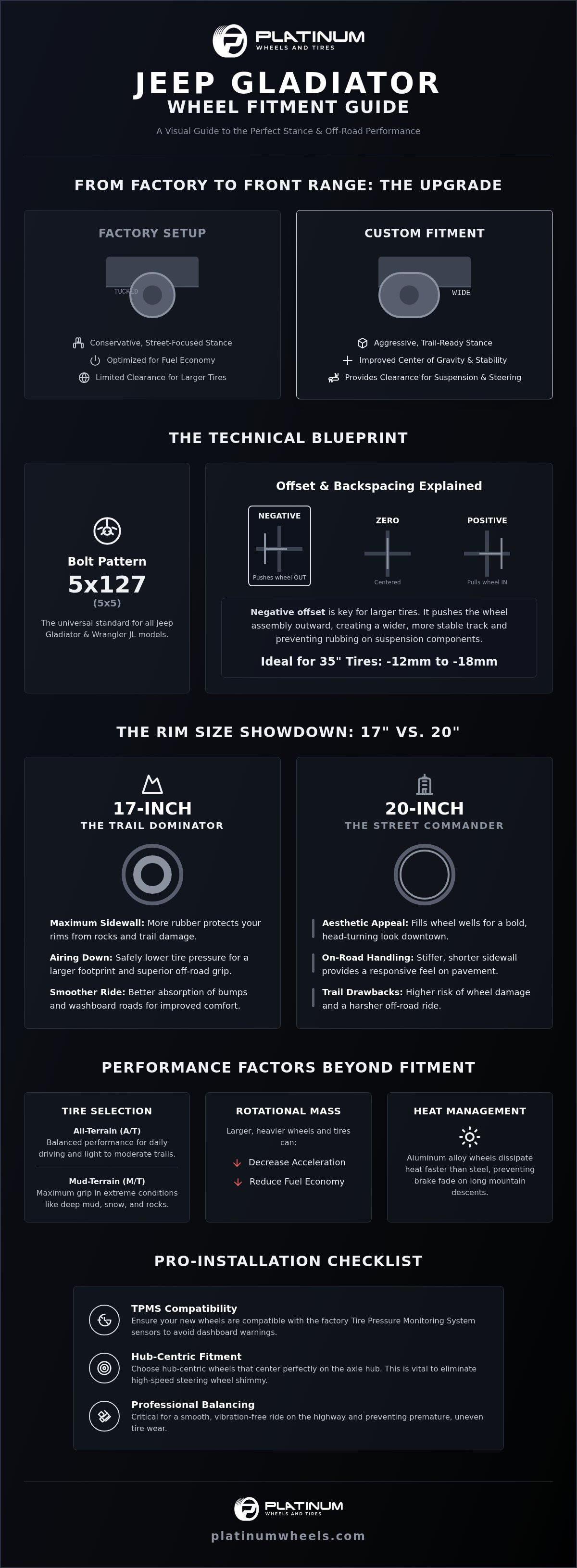
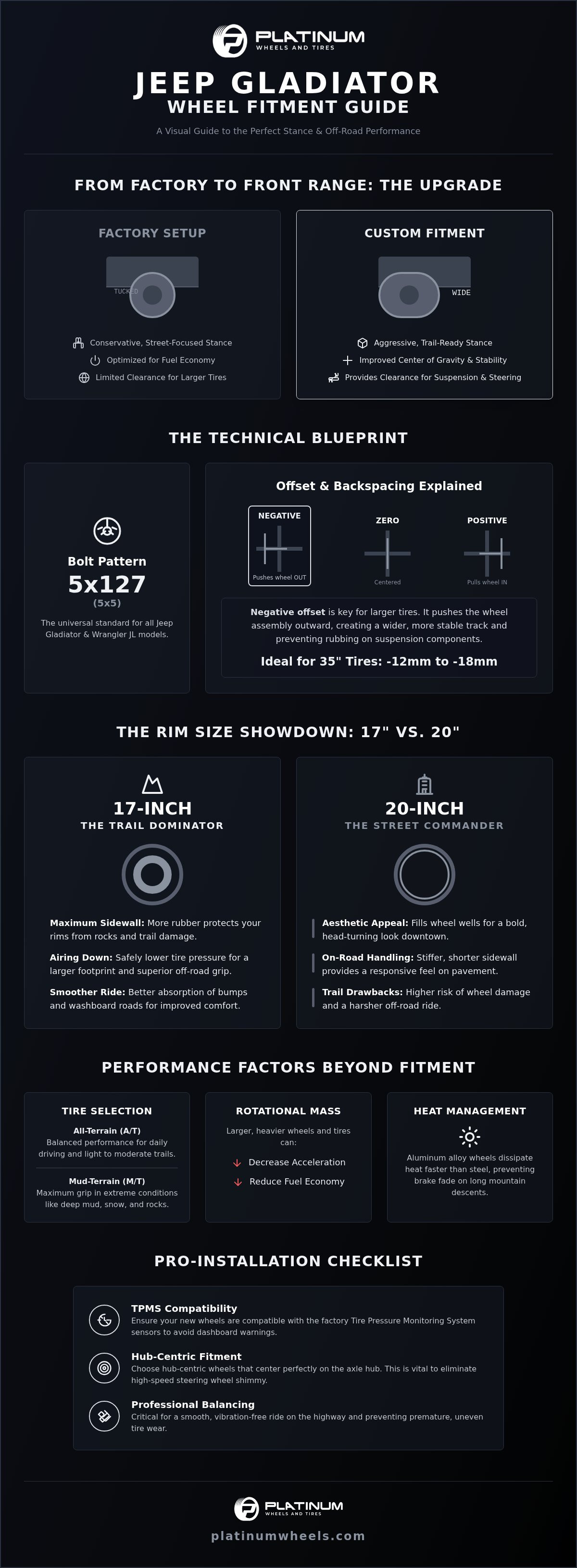
By increasing the wheel width and adjusting the offset, you effectively widen the vehicle's track. This adjustment improves the Gladiator's center of gravity, offering a more stable feel during off-camber trail sections where the truck might otherwise feel tippy. Understanding wheel and rim basics is essential here; the right rim doesn't just look better, it changes how your suspension interacts with the ground. Moving away from the tucked factory look allows for a more aggressive stance that provides functional clearance for suspension components and steering linkages.
Performance Gains Beyond the Pavement
Switching to high-quality alloy rims offers technical advantages that go beyond simple durability. Aluminum alloys dissipate heat significantly faster than traditional steel wheels, which is a critical benefit when your brakes are working hard on a long descent from the Eisenhower Tunnel. This thermal management helps prevent brake fade and protects your hub components over long term use. Additionally, custom jeep gladiator wheels are often lighter than their steel counterparts, reducing unsprung weight. Lower unsprung weight allows your shocks and springs to react more quickly to washboard roads and rocky terrain, resulting in a smoother ride and better tire contact. A wheel’s width directly correlates to tire sidewall stability, as a wider rim prevents the tire from rolling over the edge during sharp cornering or heavy lateral loads.
The Aesthetic Evolution of the JT Gladiator
The tucked look of factory wheels often leaves the Gladiator looking narrow and top-heavy. For 2026, the trend in the Colorado Jeep community has shifted toward a flush or slight poke stance, where the tire sits even with or just outside the fender flares. This aggressive posture isn't just about ego; it’s about creating a rig that looks as capable as it performs. Matching wheel finishes like matte black, bronze, or anthracite to specific Jeep paint codes creates a cohesive, professional appearance that stands out at local meetups. Investing in a personalized setup builds a sense of pride and connection within the local off-road culture, signaling that your truck is ready for more than just a grocery run. It's a statement of intent that shows you value precision and performance in every mountain mile.
Jeep Gladiator Wheel Specs: Bolt Patterns, Offset, and Backspacing
Getting the technical details right is the difference between a rig that handles like a dream and one that feels like it’s fighting you on every corner. For the Jeep Gladiator JT, the foundation of your search starts with the bolt pattern. Every model, including the newest 2026 releases, utilizes a 5x127 pattern, which is often referred to as 5x5 in the off-road community. This consistency with the Wrangler JL makes finding compatible jeep gladiator wheels easier, but the real challenge lies in the geometry of offset and backspacing.
Offset refers to the distance between the wheel's mounting surface and its true centerline. If you’re aiming to fit 35-inch tires without the rubber chewing into your suspension, you’ll likely need a negative offset. This pushes the wheel farther away from the frame. Backspacing is a similar measurement, calculating the distance from the mounting surface to the back edge of the rim. For those cruising at 75 mph on E-470, choosing hub-centric wheels is vital. These rims center themselves perfectly on the axle hub rather than relying solely on the lug nuts, which virtually eliminates the annoying steering wheel shimmy common with lower-quality setups.
Calculating the Perfect Offset for Your JT
A zero offset wheel sits perfectly centered over the hub. While this works for stock setups, most Denver Jeep owners want a wider, more stable footprint. Opting for an offset between -12mm and -18mm creates that signature wide stance that fills out the wheel wells. However, you must be careful. Pushing the wheels out too far can lead to rub points on the control arms or frame when you’re at full lock during a technical crawl.
TPMS Sensors and Your New Wheels
Whenever you swap your factory rims, you face the question of what to do with your tpms sensors. You can either transfer your original sensors or invest in a new set designed for your aftermarket rims. The 2026 Gladiator features an auto-learn system that makes syncing new sensors relatively painless, but compatibility is still key. Following NHTSA tire safety guidelines ensures that your monitoring system remains accurate, which is essential for safety when airing down for a trail or airing up for the drive home. Using non-compatible sensors on aftermarket rims often leads to a permanent warning light on your dash and a failure to detect dangerous pressure drops. If you’re feeling overwhelmed by the math of backspacing or sensor frequencies, our team can help you build ready-to-drive wheel and tire packages that are guaranteed to fit your JT perfectly.
The 17-Inch vs. 20-Inch Debate: Which Rims Fit Your Lifestyle?
Choosing the diameter of your jeep gladiator wheels is a decision that ripples through every aspect of your driving experience. While some owners prioritize the aggressive, rubber-heavy look of a traditional off-roader, others want the sharp, responsive handling that comes with a larger wheel. It isn't just a matter of taste; the size you pick affects everything from your gear ratio to how much you'll pay at the tire shop. Generally, 17-inch tires are more affordable and widely available for the JT platform, making them a practical choice for most builds.
Regardless of which size you choose, safety remains the top priority. Professional mounting is essential because larger diameters and heavy off-road tires require specialized equipment and expertise. Adhering to OSHA wheel service safety standards during installation ensures that your setup is secure and reliable, whether you're cruising through Lakewood or climbing a rocky ridge.
Why 17-Inch Rims Rule the Colorado Trails
For the dedicated trail enthusiast, 17-inch jeep gladiator wheels are the undisputed champion. The primary advantage is the increased sidewall height, which allows for maximum sidewall flex. This flex is the secret to finding traction on aired-down tires at Moab or Yankee Hill, as the rubber can deform and wrap around jagged obstacles. That extra cushion also provides a layer of protection for the rim itself. When you're navigating tight lines, the high-profile tire acts as a buffer against "curb rash" from rocks, preserving the finish of your rims. It delivers that classic Jeep look that emphasizes rugged capability over flash.
When to Consider 20-Inch Custom Rims
If your Gladiator spends more time on I-70 than on the dirt, 20-inch custom rims might be the better fit. A larger wheel with a shorter tire sidewall reduces lateral sway, providing a more planted feel when you're taking mountain curves at highway speeds. This setup also offers the necessary clearance for high-performance big-brake kits, which often won't fit inside a smaller 17-inch wheel. Visually, 20-inch wheels make a massive impact, especially when paired with a leveling kit vs lift kit. It’s a bold choice for the street-performance enthusiast who wants a modern, high-end aesthetic without sacrificing the truck's utility. Just remember that larger wheels change the overall rolling diameter, which can throw off your speedometer and shift points if you don't recalibrate the computer.
Pairing Wheels with the Right Tires for the Front Range
Selecting the right rubber to wrap around your jeep gladiator wheels is just as critical as the rims themselves. For most owners in the Denver area, 35-inch tires represent the absolute sweet spot. When paired with a 2-inch leveling kit, 35s provide a significant boost in ground clearance without requiring massive suspension surgery or aggressive trimming. However, your choice between Mud-Terrain (MT) and All-Terrain (AT) tires should depend on where you spend 90% of your time. While MTs offer superior grip in deep mud or jagged rock crawls, a high-quality AT tire often carries the 3-Peak Mountain Snowflake (3PMSF) rating. This rating is essential for complying with Colorado’s Traction Law on I-70, which mandates a minimum of 3/16-inch tire tread depth for all vehicles during the winter season.
Managing Rotational Mass at High Altitude
The thin air at 5,280 feet naturally saps power from the Gladiator's Pentastar V6 engine. When you add a heavy wheel and tire combo, you're increasing rotational mass, which forces the engine to work even harder to get the truck moving. This heavy feeling is most noticeable during highway merging or when climbing toward the Eisenhower Tunnel. Heavier setups also increase your braking distance, as the stock rotors have more kinetic energy to overcome on steep mountain descents. Unsprung weight refers to the mass of components not supported by the vehicle's suspension, such as the wheels and tires, which directly impacts how quickly your shocks and struts can respond to bumps. Choosing a lighter alloy wheel can help offset the weight of a larger tire, preserving your MPG and acceleration.
The 'Stance' Equation: Tire Width and Wheel Offset
Achieving a professional look requires precise matching between tire width and rim width. If you’re running a popular 12.50-inch wide tire, you need a wheel that is at least 8.5 to 9 inches wide to ensure a flat contact patch. Mounting a wide tire on a narrow factory rim leads to ballooning, where the center of the tread wears out prematurely while the edges barely touch the ground. Conversely, a rim that is too wide can lead to cupping and poor sidewall protection. Beyond performance, you must ensure your offroad tires and wheels stay within a reasonable distance of your fender flares. Colorado law requires adequate coverage to prevent throwing debris, so balancing your offset is key to staying legal and looking sharp. If you're ready to upgrade, browse our custom wheel and tire packages to find the perfect fit for your Front Range adventures.
Expert Jeep Gladiator Wheel Installation in Denver
Choosing the right jeep gladiator wheels is only half the battle. A high-performance build deserves more than a quick bolt-on job; it requires technical precision to ensure your rig remains safe on the highway and capable on the trail. Heavy off-road wheel sets, especially those paired with 35-inch or 37-inch tires, place immense stress on your suspension and hubs. Professional mounting and road-force balancing are critical for these setups to prevent vibrations that can lead to premature wear on your steering components. At Platinum Wheels, we provide the local expertise Denver and Aurora drivers need to ensure their JT is trail-ready the moment it leaves the shop.
Many owners choose to combine their new wheels with a professional lift kit or leveling kit installation. This holistic approach ensures that your suspension geometry is correctly aligned with your new wheel offset and tire diameter. Once your installation is complete, don't forget the golden rule of off-roading: re-torque your lug nuts after the first 50 miles. Colorado’s temperature swings and varied terrain can cause hardware to settle, so a quick check ensures everything remains tight and secure for the long haul.
Custom Wheel and Tire Packages in Lakewood and Wheat Ridge
We specialize in 'ready-to-drive' packages that take the guesswork out of the building process. These packages include the professional mounting of your chosen rims and tires, integrated TPMS sensors, and precision balancing. Unlike big-box retailers or purely e-commerce sites, we verify the clearance and scrub radius for every specific Gladiator build. We check for potential rub points against the frame or control arms at full steering lock, ensuring your truck handles predictably in tight spots. Supporting an independent Denver wheel shop means you get a consultative experience where fitment is guaranteed, rather than just a box on your doorstep.
Next Steps for Your Gladiator Build
Preparing your Jeep for an upgrade starts with a clear vision of your goals. Whether you're building a dedicated rock crawler or a refined daily driver, seeing wheel finishes like matte black or bronze in person can help you make the final call. We invite you to schedule a fitment consultation where we can discuss your specific needs, from brake clearance to fender coverage laws. Our team is here to act as your trusted advisor, moving your project from the planning phase to the pavement with efficiency and precision. Browse our custom wheel and tire packages at Platinum Wheels today!
Ready Your Rig for the Front Range
Building a capable JT requires a balance of technical precision and local trail knowledge. You now understand how the right offset prevents rubbing and why 17-inch rims provide the sidewall flex needed for Colorado’s jagged terrain. Whether you’re prioritizing the sharp handling of a 20-inch street build or the rugged durability of an aired-down trail setup, the right jeep gladiator wheels transform your truck into a purpose-built machine. Professional installation ensures your TPMS sensors and suspension work in perfect harmony, providing peace of mind from the city to the peaks.
As a locally owned and operated shop in the Denver area, we specialize in the specific fitment demands of the Front Range. We provide expert installation of TPMS sensors and suspension kits to ensure your build is balanced and trail-ready. Upgrade your Jeep Gladiator with premium wheels and tires at Platinum Wheels. We look forward to helping you dial in your stance and seeing your rig out on the next mountain adventure.
Frequently Asked Questions
What is the bolt pattern for a Jeep Gladiator JT?
The Jeep Gladiator JT utilizes a 5x127 bolt pattern, which is also commonly referred to as a 5x5 pattern in the off-road community. This specification has remained consistent across all trim levels since the vehicle's debut, including the newest 2026 models. Because this pattern is shared with the Wrangler JL, there's a massive selection of aftermarket jeep gladiator wheels available to suit any build style.
Can I fit 35-inch tires on my Gladiator with stock wheels?
You can technically mount 35-inch tires on factory rims, but you'll likely encounter rubbing on the control arms or frame during full-lock turns. While the wheel wells are large enough to house the diameter, the stock offset keeps the tire tucked too close to the suspension components. Most Denver owners find that adding a 2-inch leveling kit and switching to a wheel with a more aggressive offset provides the necessary clearance for a trouble-free ride.
What wheel offset do I need to prevent rubbing on my Jeep Gladiator?
To prevent rubbing when moving to wider tires, you should look for a negative offset between -12mm and -18mm. This measurement pushes the wheel and tire package outward, creating essential space between the inner sidewall and your suspension. While a zero offset might work for some narrower setups, a negative offset is the industry standard for achieving that wide, stable stance required for technical trails in the Rockies.
Do I need to recalibrate my speedometer after getting larger wheels?
Yes, you must recalibrate your vehicle's computer if your new wheel and tire combination has a larger overall diameter than the factory set. Larger tires cover more ground with every rotation, which causes your speedometer to display a slower speed than you're actually traveling. Recalibration is also vital for maintaining correct transmission shift points and ensuring your fuel economy readings remain accurate during mountain climbs.
Will aftermarket wheels void my Jeep Gladiator's factory warranty?
Aftermarket wheels won't automatically void your entire factory warranty, thanks to the protections provided by the Magnuson-Moss Warranty Act. For a dealership to deny a claim, they must prove that the specific aftermarket part caused the failure in question. However, keep in mind that components directly affected by the change, such as wheel bearings or ball joints, might not be covered if they fail due to the increased weight or leverage of a wider wheel setup.
What is the difference between hub-centric and lug-centric wheels for a Jeep?
Hub-centric wheels are designed with a center bore that fits perfectly over the vehicle's hub, ensuring the wheel is perfectly centered and supported by the axle itself. Lug-centric wheels rely on the lug nuts to center the wheel, which can sometimes lead to minor misalignments. For driving at highway speeds on I-70, hub-centric jeep gladiator wheels are the superior choice because they offer a smoother, vibration-free experience and reduce stress on your wheel studs.
How much does it cost to have new wheels and tires installed in Denver?
The cost of installation in the Denver area depends on several factors, including whether you're integrating new TPMS sensors or opting for a road-force balance. Professional shops typically charge a fee per wheel that covers mounting, balancing, and the environmental disposal of your old rubber. Because off-road setups require specialized equipment and expertise to balance correctly, it's best to consult with a local specialist for a quote that accounts for your specific build requirements.
Should I choose 17-inch or 20-inch wheels for my Gladiator?
Choose 17-inch wheels if your priority is off-road performance, as the smaller diameter allows for a taller tire sidewall that protects the rim and provides better grip when aired down. If you prefer a modern aesthetic and want sharper handling on paved mountain roads, 20-inch wheels are a popular alternative. Most enthusiasts in the Front Range lean toward the 17-inch option to maximize their capability on rocky trails like Yankee Hill or Kingston Peak.