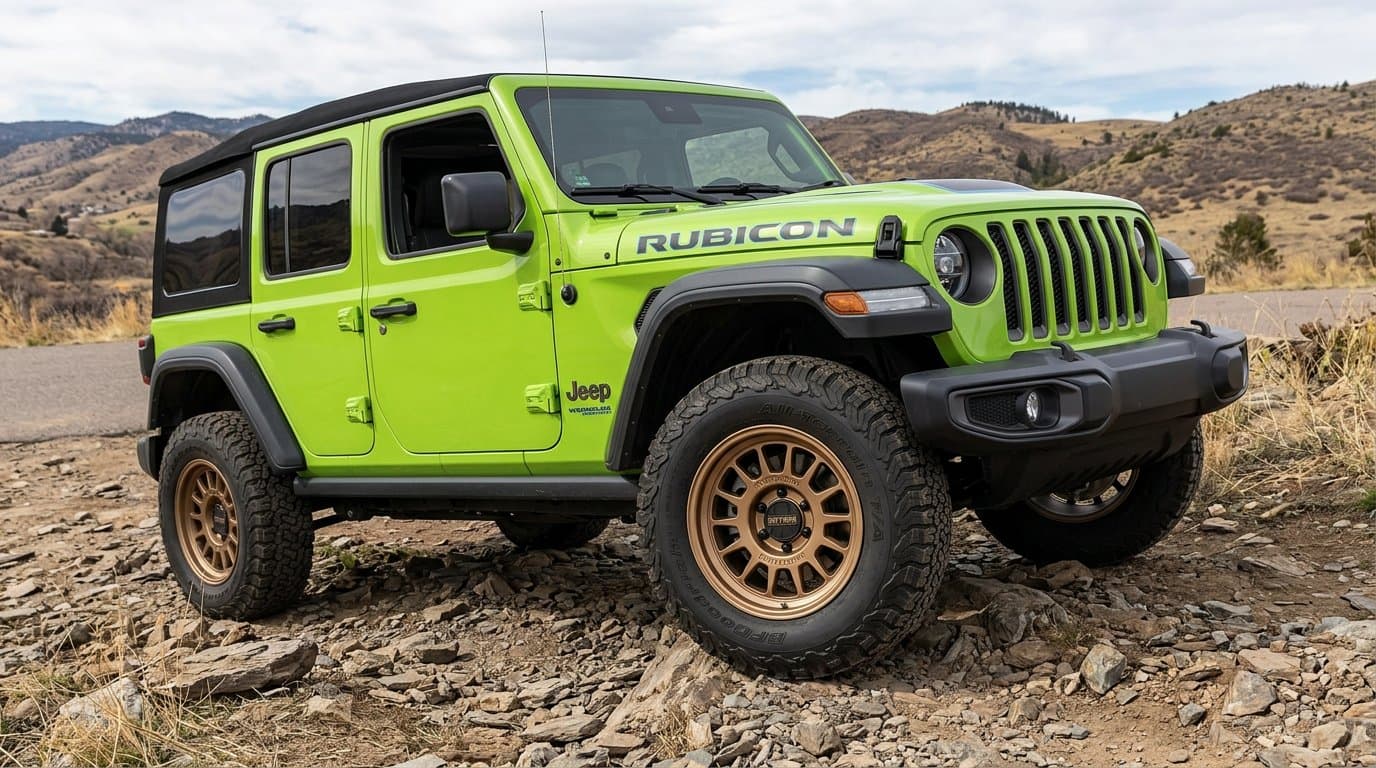
Jeep JL Wheel Guide: Best Rims for Denver Trails
The best-looking rim won’t make a good choice if it doesn’t fit. Choosing Jeep JL wheels starts with matching the wheel’s diameter, width, offset and bolt pattern to your vehicle and tire setup. For mixed street and trail driving, non-beadlock wheels are a common option, while 17-inch rims can provide more tire sidewall than larger rims.
It’s easy to focus first on style or tire size, but fitment is what brings the whole setup together. The right combination depends on how you drive, the look you want and the clearance your Jeep needs.
This guide covers key fitment measurements, compares non-beadlock options and wheel brands, and explains how diameter and width affect your setup. You’ll be better equipped to balance trail use with everyday driving and choose rims that suit your Jeep and plans around Denver.
Key Takeaways
- Match wheel diameter, width, offset and bolt pattern to your Jeep and tire setup before choosing a style.
- Weigh non-beadlock wheels for mixed street and trail driving against your plans for lower tire pressures.
- Compare wheel brands by the designs and fitment options that suit your build, not by name alone.
- Consider how rim diameter and width affect tire sidewall and the overall setup before settling on a size.
Choosing wheels by vehicle fitment
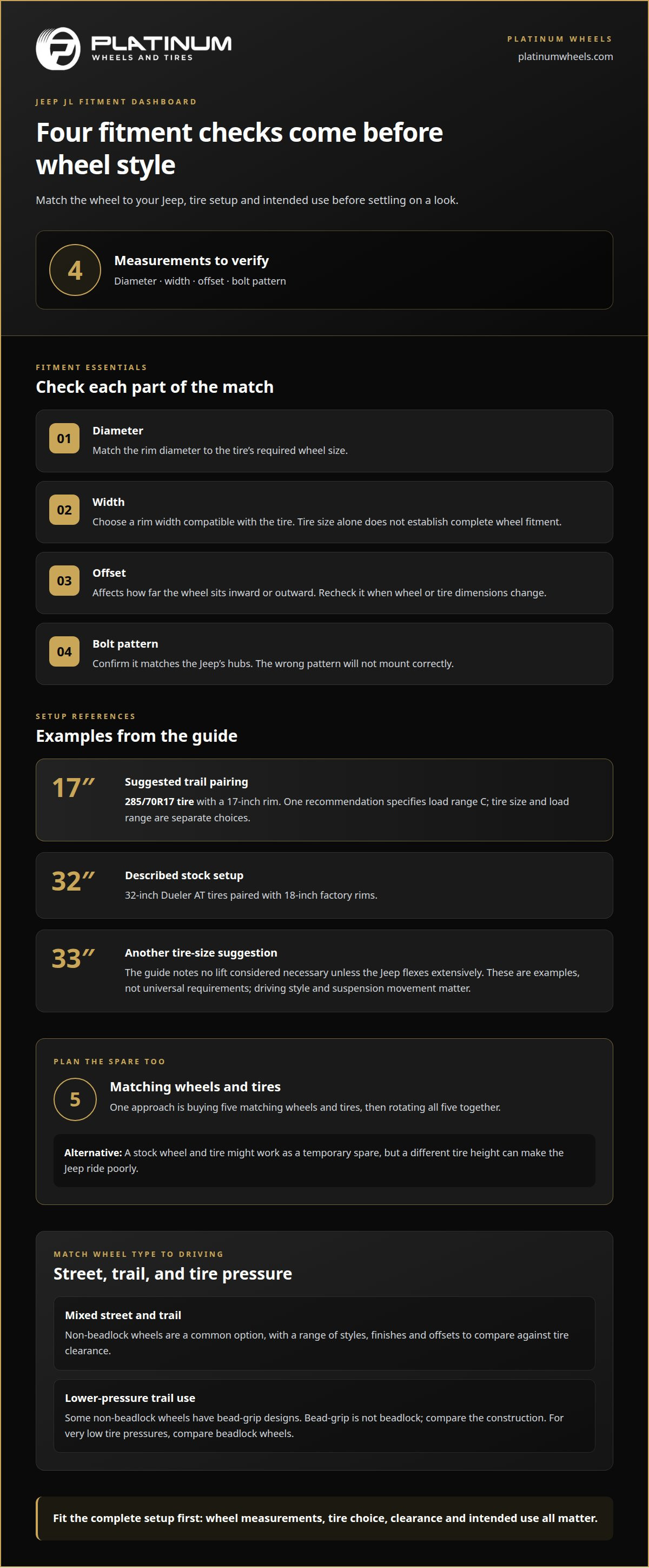
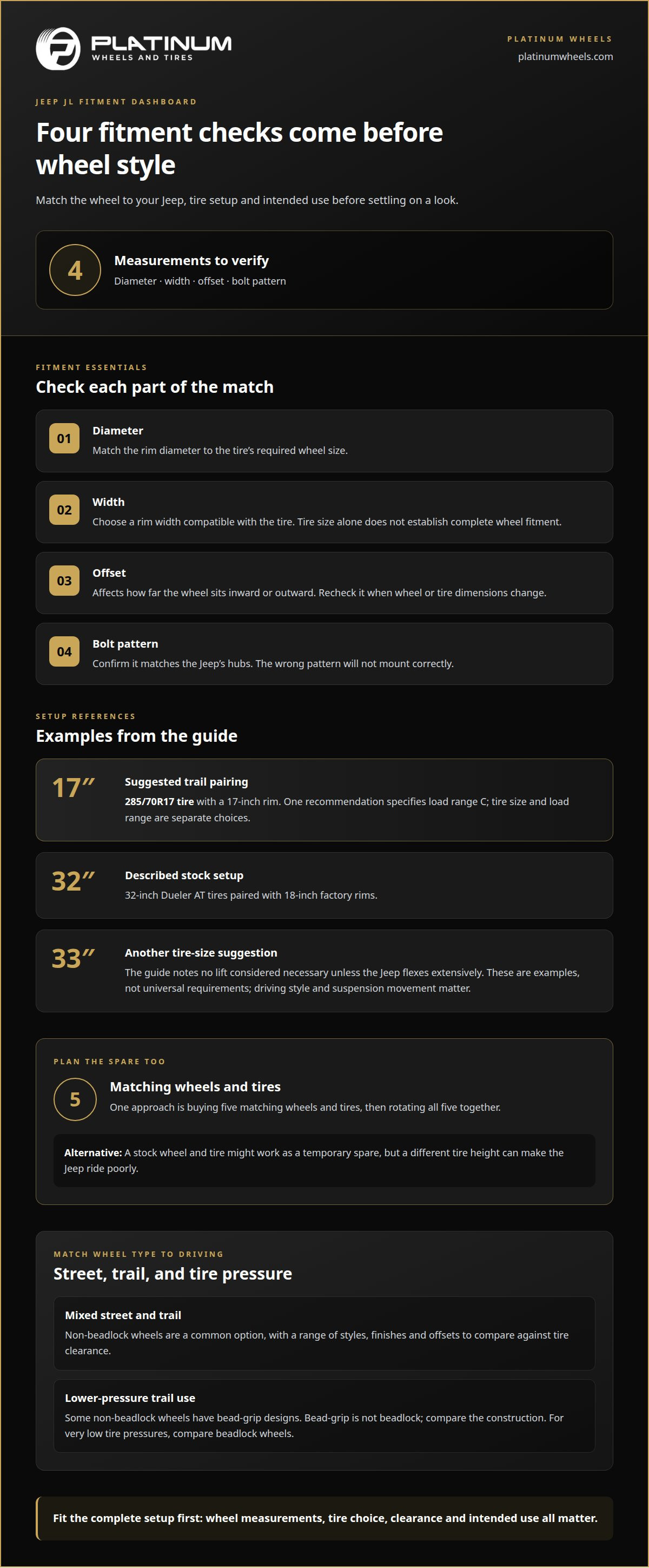
Start with your Jeep’s exact configuration, then match each wheel to the tire and intended use. Jeep JL wheels need the correct diameter, width, offset and bolt pattern. A mismatch can prevent proper mounting or change how the wheel sits on the vehicle. Style matters, but fitment comes first.
Use these four measurements to narrow the options:
- Diameter: Match the rim diameter to the tire’s required wheel size. A suggested trail setup pairs a 285/70R17 tire with a 17-inch rim.
- Width: Choose a rim width compatible with the tire. The tire size alone doesn’t establish the wheel’s complete fitment.
- Offset: This affects how far the wheel sits inward or outward. Include it in the fitment check, especially when changing wheel or tire dimensions.
- Bolt pattern: Confirm the pattern matches the Jeep’s hubs. A wheel with the wrong pattern won’t mount correctly.
Consider the full tire setup, not just the rim. One recommendation for a 285/70R17 specifies load range C, showing that tire size and load range are separate choices. A different suggestion is a 33-inch tire, with no lift considered necessary unless the Jeep flexes extensively. These are setup examples, not universal requirements; driving style and suspension movement affect the choice.
Plan the spare at the same time. A stock wheel and tire might serve as a temporary spare, but a different tire height can make the Jeep ride poorly. Another approach is buying five matching wheels and tires, then rotating all five together. One commenter also described 392 XR take-off wheels as a cost-effective option for their build. Treat these examples as starting points, then match every wheel and tire to the vehicle’s fitment and intended use.
Non-beadlock wheels for mixed street and trail use
For a Jeep driven on Denver streets and trails, non-beadlock wheels are a common choice. They come in a wide range of styles, finishes and offsets, helping you balance appearance with tire clearance. They suit Wrangler JL owners looking for a wheel for varied driving, rather than a setup focused on very low tire pressures.
Non-beadlock wheels are also used on Jeep JK and TJ builds and the Gladiator JT. Compare practical fit and finish, not just appearance. A design that works for one model or tire combination may not suit another. Keep your specific vehicle, planned tires and mix of driving in mind as you narrow your options.
- Mostly street driving: Prioritize a style and finish that fit the Jeep’s everyday look and use.
- Street and trail mix: Look across the available offsets and styles while accounting for the tire setup.
- Frequent low-pressure use: Compare beadlock wheels with non-beadlock choices before deciding.
Some non-beadlock wheels have bead-grip designs that help hold the tire bead at lower pressures. This feature may suit trail driving when you reduce tire pressure, while the wheel remains non-beadlock. The distinction matters: bead-grip is not the same as beadlock, so compare the construction rather than relying on similar-sounding labels.
If you plan to run tires at very low pressures, compare beadlock wheels. Their design focuses on retaining the tire bead, making them relevant when low-pressure trail use is a priority. If your Jeep spends substantial time on pavement, weigh that specialized purpose against the range of styles and offsets available in non-beadlock wheels.
Start with how you drive, then choose a wheel type to match. A Wrangler JL used on both streets and trails may suit a non-beadlock design, while a build centered on very low pressures calls for a closer beadlock comparison. This keeps your choice grounded in your actual trail plans.
Wheel brands
The Jeep wheel category includes options from Method Race Wheels, Icon Vehicle Dynamics, Fuel Offroad, XD Wheels, Dirty Life and Bawarrion. These names offer a useful shortlist, not a ranking. The right choice depends on how a wheel’s design and specifications suit your Wrangler JL and intended driving.
Compare candidates using the details that affect your build. Check each wheel’s diameter, width, offset and bolt pattern against your vehicle and tire combination. Then consider appearance, finish and intended use. A bold spoke design may suit one build, while another driver may prefer a different finish. Neither preference replaces vehicle compatibility.
- Method Race Wheels: Compare its available designs and fitment details with your Jeep’s setup.
- Icon Vehicle Dynamics: Include it in the same fitment and style comparison.
- Fuel Offroad: Assess its wheel options against your tire and driving plans.
- XD Wheels: Compare its available styles and specifications with the shortlist.
- Dirty Life: Evaluate its options using the same vehicle-specific criteria.
- Bawarrion: Consider its available wheels alongside the other candidates.
Keep your comparison consistent. Gather a candidate’s specifications, then assess the same factors for the next wheel. This makes it easier to find one that suits your build instead of choosing by name alone. A brand’s broad reputation doesn’t tell you whether a specific wheel fits your Jeep.
Trail plans can also narrow your choices. If you expect to run tires at very low pressures, compare beadlock wheels, regardless of brand. Some brands offer bead-grip designs intended to help hold the tire bead at lower pressures. Distinguish these from beadlock wheels, then compare construction and fitment details.
For a Wrangler JL used on and off road, shortlist several brands before choosing a specific wheel. Match each candidate to your vehicle, tire setup and street-to-trail priorities. A practical comparison turns a list of names into a wheel choice suited to your build.
Wheel diameters and widths
A stock setup described for the Jeep pairs 32-inch Dueler AT tires with 18-inch factory rims. Wheel width and offset affect tire position, clearance and how the Jeep responds on the road.
Stock Wheel and Tire Sizes by Trim
The available factory-size example is a Jeep with 32-inch Dueler AT tires on 18-inch rims. It gives you a clear reference point for comparing a stock-style setup with a change in rim diameter or tire size.
Use the tire’s full size marking and the rim diameter together. For example, a 285/70R17 tire is designed around a 17-inch rim, unlike the 18-inch factory setup above. A 17-inch rim is also recommended by some Jeep drivers for more tire sidewall, a better ride and slightly lower tire costs. Treat each setup as a specific combination, not a trim-wide assumption.
Width and Offset Effects
Wheel width determines how the tire sits across the rim. A compatible width supports the tire properly, while an unsuitable pairing can affect its profile and fit. Offset positions the wheel inward or outward relative to the hub. Together, width and offset affect clearance between the tire and nearby suspension or body components.
To create a wider stance, offset changes how far the wheel projects outward. This can also bring the tire closer to the fender, while a more inward position may reduce clearance on the inner side. Evaluate the wheel and tire together, including movement through steering and suspension travel. Changing diameter alone won’t resolve width or offset concerns.
Before choosing a rim, compare the complete tire size, rim diameter, width and offset as one fitment package. A 17-inch setup and an 18-inch setup can create different sidewall proportions, but neither is automatically right for every build. Explore custom wheel options to plan a combination around your Jeep and driving priorities.
Platinum Wheels: Wheel & Tire Packages
Platinum Wheels can bring your wheel and tire choices together in a Wheel & Tire Package. If you’re comparing diameters, widths and tire types for a Jeep JL, a matched package helps connect those decisions to your vehicle’s fitment and your driving plans.
Pair Custom Truck Wheels & Off-Road Rims with All-Terrain or Mud-Terrain Tires to shape a setup for pavement and Denver-area trails. If your build also calls for a change in stance, consider Lift Kits & Leveling Kits as part of the overall plan. The right combination depends on your Jeep, tire choice and how you intend to drive.
Ready to discuss a wheel and tire setup for your Jeep? Contact Platinum Wheels to talk through your options.
Set up your next trail-ready build
Let your driving plans guide your final choices. A Jeep that splits its time between pavement and trails needs a setup suited to both, not just a wheel chosen for appearance. Before settling on jeep JL wheels, decide what matters most for your build: everyday usability, trail-focused capability or a balance between them.
That direction can shape a conversation about wheel and tire combinations. Platinum Wheels offers Custom Truck Wheels & Off-Road Rims, All-Terrain & Mud-Terrain Tires, and Wheel & Tire Packages. These options are a practical starting point for discussing a setup around your vehicle and plans, without assuming one combination suits every Jeep.
Contact Platinum Wheels about JL wheels to talk through your next setup. Take the next step with a clearer sense of how you want your Jeep to drive, and build from there.
Frequently Asked Questions
What wheel sizes fit a Jeep Wrangler JL?
Both 17-inch and 18-inch wheels appear in JL setup examples, but the tire must match the wheel diameter. One stock setup pairs 18-inch factory rims with 32-inch Dueler AT tires; another suggested combination uses a 285/70R17 tire. Choose by the full tire-and-wheel combination and intended use, rather than assuming a diameter fits every JL trim.
What is the Jeep JL bolt pattern, center bore, and lug nut size?
The bolt pattern, center bore and lug hardware must all match the JL hub. These are separate specifications: the bolt pattern aligns the wheel’s mounting holes, the center bore fits over the hub, and lug nuts secure the wheel. Match all three to the specific vehicle and wheel. One matching dimension alone doesn’t confirm correct fitment.
What wheel offset and backspacing are recommended for Jeep JL wheels?
Choose offset and backspacing based on wheel position and the clearance your tire setup needs. Offset affects how far the wheel sits inward or outward from its mounting face; backspacing measures the distance from that face to the wheel’s inner edge. Together, they influence clearance near suspension and body components. Check both alongside wheel width and tire size.
Do Jeep JL wheels fit a Jeep JK, and are adapters needed?
Don’t assume a JL wheel will fit a JK without comparing the wheel and vehicle specifications. Check the bolt pattern, center bore, lug hardware, offset and brake clearance. An adapter may address a bolt-pattern mismatch, but it won’t correct unsuitable offset or clearance. For a Denver-area trail build, consider how the full setup will sit through steering and suspension movement.
What wheel and tire combinations fit a Jeep JL without a lift or rubbing?
A suggested example is a 285/70R17 tire on a 17-inch rim, with load range C; another recommendation uses a 33-inch tire and says a lift isn’t needed unless the Jeep flexes extensively. Neither example guarantees clearance on every build. Tire width, wheel position and suspension movement all affect rubbing, so assess the complete combination through steering and suspension travel.
What are the best Jeep JL wheels for off-road use?
The right choice depends on your tire setup and trail plans. For frequent driving at very low tire pressures, compare beadlock wheels; for mixed street and trail use, non-beadlock wheels are a common option. Check diameter, width, offset and bolt pattern against your Jeep.