Custom GMC Sierra Wheels: Best Off-Road Rims in Denver
Imagine pulling into a trailhead near Golden only to hear that unsettling crunch because your tires are rubbing against the wheel well. It's a common frustration for GMC owners who want a bolder look but get caught up in the technical confusion of bolt patterns and offsets. You want your gmc sierra wheels to do more than just look sharp on Speer Boulevard. They need to handle the steep grades of the I-70 corridor and the unpredictable terrain of the Front Range. We agree that a truck as capable as the Sierra deserves a stance that reflects its power without compromising your peace of mind.
This article gives you the tools to master GMC Sierra wheel fitment while exploring the best off-road and street styles tailored for Colorado driving. We'll break down everything from TPMS compatibility to the necessity of leveling kits for larger tires, ensuring your next upgrade is both seamless and professional. You're about to learn how to achieve that aggressive truck stance with the expert local precision your build requires. From navigating technical specs to selecting the right wheel and tire package, we have you covered.
Key Takeaways
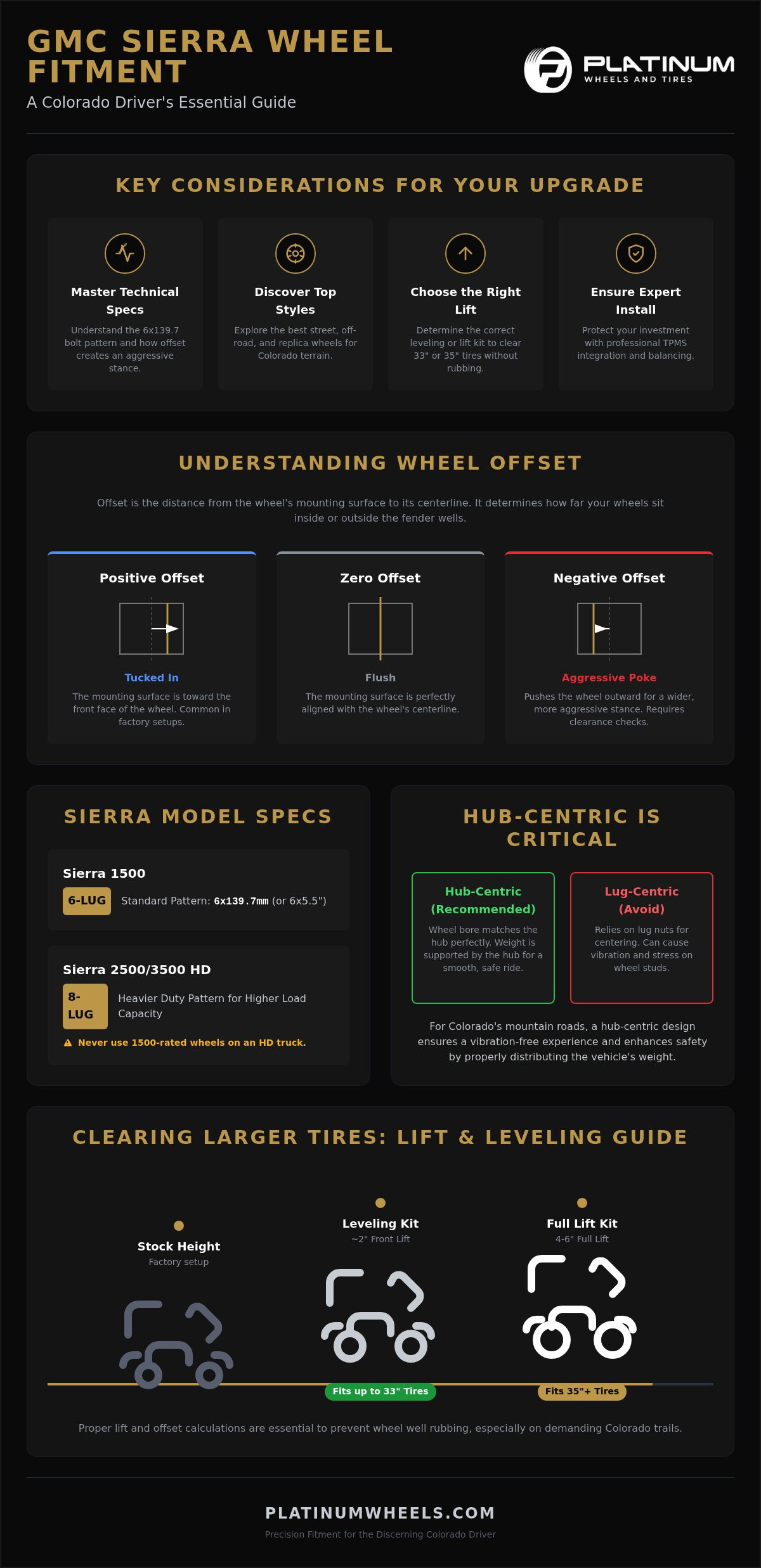
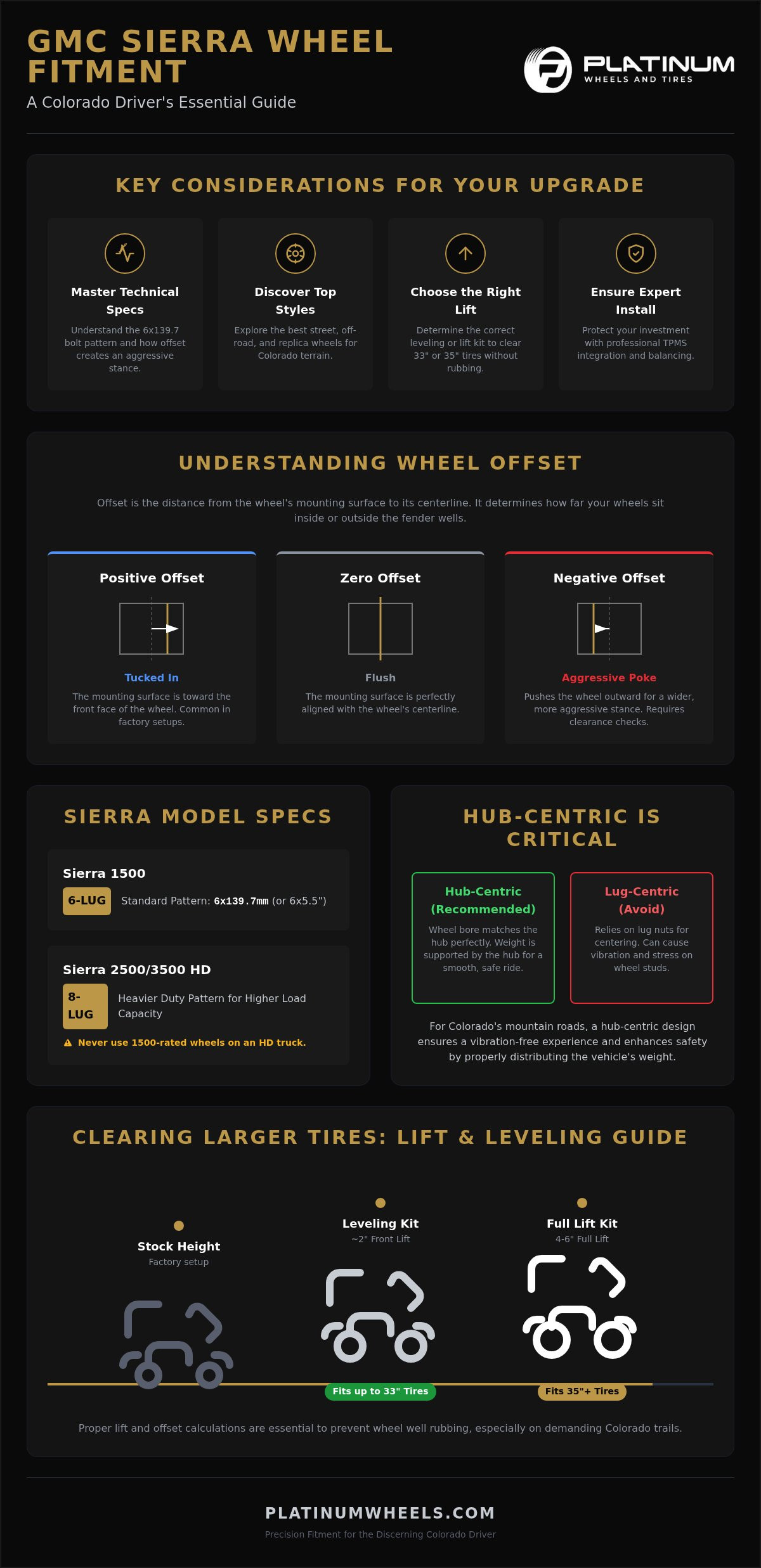
- Master the technical specs of your Sierra, including the standard 6x139.7 bolt pattern and how offset adjustments create that perfect aggressive stance.
- Discover the top street and off-road gmc sierra wheels, from high-end replicas to modern concave designs that thrive on Denver roads.
- Determine exactly which leveling or lift kit you'll need to clear 33-inch or 35-inch tires without the risk of wheel well rubbing.
- Protect your investment with expert installation tips, covering critical TPMS sensor integration and professional balancing for a vibration-free drive.
GMC Sierra Wheels: Performance Meets Style in Colorado
The GMC Sierra stands as a cornerstone of the Denver truck scene. Whether you're cruising through Cherry Creek or climbing toward a trailhead in Clear Creek County, your choice of gmc sierra wheels defines both the look and the capability of your pickup. This truck serves as a rare, versatile platform that transitions seamlessly from a high-end luxury hauler to a rugged off-road beast. However, achieving that balance requires more than just picking a design that looks good in a showroom. It requires an understanding of how your wheels interact with Colorado's unique driving environment.
Upgrading from factory wheels isn't just about aesthetics. Most stock rims are cast for mass production and can be surprisingly heavy. This contributes to high unsprung weight, which is the mass of the vehicle components not supported by the suspension. By switching to high-quality aftermarket alloy or forged options, you reduce this weight. The result is a truck that feels more nimble. You'll notice crisper handling and more responsive braking, which is vital when you're descending steep mountain passes or navigating tight off-road switchbacks. In our high-altitude environment, every bit of efficiency and performance counts.
Why the Sierra is the Perfect Custom Build Platform
One reason we love working on these trucks is their inherent versatility. The Sierra features generous, squared-off wheel well clearance. This design allows for more aggressive fitments than many of its competitors. Because it uses the widely supported 6x139.7 bolt pattern, the options for customization are nearly endless. You can opt for 17-inch wheels with thick sidewalls for maximum off-road traction or step up to a 20-inch street design for a refined, modern look. The aftermarket support for this platform is massive, ensuring you can find a style that truly differentiates your truck from the crowd.
The Platinum Wheels Approach to GMC Builds
At Platinum Wheels, we treat every project as a consultative partnership. We don't just sell you a set of rims; we provide a precision fitment check to ensure your new gmc sierra wheels won't rub or require excessive trimming. We prioritize high-quality materials that stand up to Colorado's harsh winter mag-chloride treatments. Our team specializes in integrating these wheels with the right suspension upgrades. We ensure your lift or leveling kit works in harmony with your new wheel offset to create a perfectly balanced, aggressive stance that is ready to drive the moment you leave our shop.
Technical Specs: Bolt Patterns, Offset, and Sierra Fitment
Before you fall in love with a specific design, you must ensure it actually fits your truck. The foundation of any gmc sierra wheels upgrade is the bolt pattern. For the Sierra 1500, the standard is 6x139.7, which is also commonly referred to as 6x5.5. This pattern has been a staple for the Sierra for years and is expected to remain the standard for 2026 models. While the pattern gets you through the door, the offset and backspacing determine how the wheel actually sits within the wheel well.
Offset refers to the distance from the wheel's mounting surface to its centerline. A negative offset pushes the wheel outward, creating that aggressive "poke" many Denver drivers want for a wider track. Conversely, a positive offset keeps the wheel tucked further inside the fender. Backspacing is equally critical. It measures the distance from the mounting surface to the back edge of the rim. If your backspacing is too deep, you'll likely experience rubbing on your control arms or suspension components during tight turns. This is a common pitfall when jumping to wider off-road tires without checking your clearances first.
We always recommend hub-centric wheels for GMC builds. These are designed so the center bore of the wheel fits perfectly over the truck's hub. This ensures the weight of the vehicle is supported by the hub rather than just the lug nuts. For mountain driving where vibration can be amplified by elevation changes and rough terrain, hub-centric designs provide a much smoother, safer experience. Lug-centric wheels rely solely on the studs for centering, which can lead to annoying steering wheel shimmy at highway speeds.
Sierra 1500 vs. 2500/3500 HD Fitment
Heavy Duty models operate on a different scale entirely. While the 1500 uses a 6-lug setup, the 2500 and 3500 HD models require a beefier 8-lug bolt pattern. Beyond the holes, you must consider load ratings. If you're hauling a heavy trailer over Loveland Pass, your wheels need a high-load capacity to handle the stress of the descent. Never install a wheel rated for a light-duty 1500 on an HD truck. It's a safety risk that can lead to wheel failure under extreme weight.
Measuring for the Perfect Stance
Achieving the right look involves calculating how a wider rim affects your fender clearance. If you jump from an 8.5-inch stock rim to a 10-inch aftermarket option, you're adding width on both sides of the mounting point. Wheel offset is the measurement in millimeters from the wheel's mounting surface to the actual centerline of the rim, dictating whether the wheel sits deep in the well or pushes out past the fenders. To get the math right before you buy, you can browse our fitment-guaranteed wheel and tire packages to see how different offsets look on real Sierra builds.
Choosing the Right Style: Street, Off-Road, and Replica
While technical specs ensure your truck is safe, the style of your gmc sierra wheels defines its personality. Many Denver owners lean toward the "Denali-plus" aesthetic. This look utilizes OEM-style replicas that mirror factory designs but offer larger diameters or more sophisticated finishes. It's a perfect choice for those who want to maintain a professional, clean appearance while adding a touch of custom flair. For a more aggressive street presence, deep-dish and concave designs are popular. These styles create a sense of depth and motion that looks particularly sharp when cruising through the city or parked at a local meet.
If your weekends involve exploring the rugged trails outside of Boulder or Colorado Springs, beadlock-style wheels are the go-to option. These rims feature a reinforced outer lip that provides an industrial, trail-ready look. Beyond the spoke pattern, you'll need to choose a finish that complements your Sierra's paint. Matte black is a timeless favorite for off-road builds. For a more modern twist, tinted clears and bronze finishes have become increasingly popular in the Front Range, offering a unique contrast that stands out against the standard silver and chrome found on stock trucks.
Best Finishes for Colorado Winters
Denver roads are brutal on wheel finishes. The magnesium chloride used for de-icing can quickly pit and peel traditional chrome. We often recommend PVD chrome for owners who want a high-shine look with better durability. PVD is a powder-coated process that resists winter chemicals much more effectively than old-school dipping. High-quality powder coating remains the gold standard for durability in our climate. It creates a thick, resilient barrier against road salt and debris. To keep your custom rims looking new, make it a habit to rinse them weekly during the winter months to prevent chemical buildup from sitting on the surface.
Construction and Performance
Choosing the right construction is vital for mountain driving. Cast wheels are a cost-effective choice for daily drivers, while flow-formed wheels offer a lighter, stronger middle ground. For the most demanding off-road use, forged wheels provide unmatched strength-to-weight ratios. You can explore how these styles compare across different platforms in our guide on Best Custom Wheels for Ford and Chevy Trucks. Selecting the right build quality ensures your gmc sierra wheels can handle the torque and terrain of the Rockies without compromise.
Fitting Larger Tires: Leveling and Lifting Your Sierra
Most Sierra owners notice the factory rake immediately. The front sits lower than the rear. This isn't just a look; it's designed for towing. But when you install aggressive gmc sierra wheels, that rake can make your truck look unbalanced. If you're aiming for 33-inch tires, a leveling kit is usually the minimum requirement. It brings the front up to match the back, creating a level profile that looks much more intentional. For more details on these options, read our Leveling Kit vs. Lift Kit: The Ultimate 2026 Guide.
The Leveling Kit Advantage
Removing the factory rake provides a balanced look. It also improves your approach angles for Colorado trails. When you're climbing over obstacles near Idaho Springs, those extra two inches of front-end clearance matter. It ensures you have enough room for wider aftermarket wheels without immediate rubbing issues. This is the most cost-effective way to transform your truck's presence while maintaining a factory-like ride quality.
Aggressive fitments often require minor modifications. If you choose a wheel with a deep negative offset, you might encounter the "NorCal Mod." This involves trimming a small piece of the inner fender and metal behind the liner. It's a standard practice for Sierra builds that want a wide stance without the tires catching on the cab corner during tight turns. It sounds intimidating, but it's a clean way to get the clearance you need for a truly custom setup.
Running 35-Inch Tires on a Sierra
Achieving the iconic 35-inch look requires a more substantial investment in suspension. You'll generally need a 4-inch or 6-inch lift kit to clear these tires comfortably. Check out our guide on Fitting 35 Inch Tires for Trucks: What You Need to see the specific requirements. Remember that your wheel offset dictates how much lift you actually need. A wheel that pokes out further requires more clearance to arc through its turn without hitting the bumper. Our team can help you select the right gmc sierra wheels to match your desired lift height. Visit our shop to browse our ready-to-drive wheel and tire packages and find the perfect fit for your build.
Expert Installation and TPMS Integration in Denver
After you select the perfect gmc sierra wheels, the installation phase determines whether your truck drives as well as it looks. Large truck wheels are heavy and unforgiving. They require specialized handling that many general tire shops simply aren't equipped to provide. We prioritize a precision-based approach to ensure your investment is protected from the moment it hits our mounting machine. This isn't just about putting rubber on a rim; it's about protecting the finish and ensuring mechanical harmony with your Sierra's drivetrain.
GMC's Tire Pressure Monitoring System (TPMS) is a sophisticated network that requires careful handling during a wheel swap. If you're moving to a new set of rims, you must either migrate your factory sensors or install new, compatible units. Failing to program these sensors correctly leads to persistent dashboard warnings and a loss of safety data. To understand how we manage this transition, read our TPMS Sensor Guide: Avoiding the Dash Light Headache. We ensure your system is calibrated and clear before you leave the shop.
High-speed vibrations are a common complaint for trucks with oversized tires, especially when driving the I-70 corridor. We solve this using road force balancing. This process simulates the weight of the vehicle on the tire while it spins, identifying "heavy spots" or uniformities that standard balancing misses. For a Sierra owner, this is the difference between a smooth highway cruise and an annoying steering wheel shimmy at mountain speeds. We aim for a vibration-free ride regardless of how aggressive your tire tread might be.
The Platinum Wheels Installation Process
Our shop utilizes state-of-the-art, touchless mounting equipment designed for high-end gmc sierra wheels. This prevents any metal-to-metal contact with the face of your rims, keeping your matte black or PVD chrome finish pristine. We also emphasize precision torque settings for every hub assembly. Over-torquing can warp your rotors, while under-torquing is a major safety risk. Every build concludes with a final fitment check and a suspension alignment to verify that your new stance doesn't compromise your truck's handling or tire wear.
Serving the Front Range
We provide specialized service for truck owners across Denver, Aurora, and Lakewood. Local expertise matters because we understand the specific demands of Colorado driving, from steep grades to winter road chemicals. Big-box retailers often lack the specialized tools or the patience required for custom off-road fitments. When you're ready to upgrade, scheduling your transformation at a specialized shop ensures the job is done right the first time. We take pride in being a reliable fixture in the community, helping you achieve a bold, capable build that is truly trail-ready.
Transform Your Sierra for the Colorado Trail
Your truck is more than just a tool; it's an expression of how you tackle the Rockies. By mastering the technical nuances of offset and bolt patterns, you ensure your new gmc sierra wheels provide the aggressive stance you want without the mechanical headaches you fear. Whether you've chosen a refined street look or a rugged off-road setup, remember that the right suspension clearance and precision TPMS integration are what make the build truly successful. Balancing performance with the harsh demands of Denver winters requires a specialized approach that big-box retailers simply can't match.
As Denver’s highest-rated custom truck shop, we take pride in delivering results that look sharp and drive perfectly. We offer a premium selection of off-road and street wheels alongside expert installation of lift and leveling kits to complete your vision. Don't leave your fitment to chance when you can rely on local enthusiasts who know exactly what your Sierra needs. Ready to get started? Build Your GMC Sierra Wheel and Tire Package at Platinum Wheels today. We look forward to seeing your build on the road.
Frequently Asked Questions
What is the bolt pattern for a GMC Sierra 1500?
The standard bolt pattern for a GMC Sierra 1500 is 6x139.7, which is also commonly referred to as 6x5.5. This pattern is consistent across most late-model Sierras and is expected to remain the standard for 2026 releases. Knowing this specification is the first step in finding compatible gmc sierra wheels that fit the hub assembly perfectly. If you're driving a 2500 or 3500 HD model, you'll need a beefier 8-lug pattern to handle the increased load.
Can I fit 33-inch tires on my GMC Sierra without a lift?
You typically cannot fit 33-inch tires on a stock GMC Sierra without experiencing some level of rubbing in the wheel wells. While some owners attempt it, we strongly recommend installing at least a 2-inch leveling kit to provide the necessary clearance. This simple suspension upgrade prevents damage to your inner fender liners and ensures your tires have full range of motion during tight turns or when traversing uneven terrain in the Rockies.
Will aftermarket wheels affect my GMC Sierra towing capacity?
High-quality aftermarket wheels won't decrease your truck's factory towing capacity as long as they meet or exceed the vehicle's specific load rating. It is vital to check the weight capacity of any off-road rim before installation, especially for Heavy Duty trucks. Using a wheel with an insufficient rating is a major safety risk that can lead to structural failure under the stress of a heavy trailer or a steep mountain descent.
Do I need new TPMS sensors when I buy new wheels?
You don't strictly need new TPMS sensors, but installing them with your new gmc sierra wheels is often the most efficient choice. You can migrate your factory sensors, but this requires breaking down your old tires, which adds labor time and cost. New sensors ensure your ready-to-drive wheel and tire package is calibrated perfectly from day one, saving you from annoying dashboard warning lights and future maintenance trips to the shop.
What is the best wheel offset for a GMC Sierra with a leveling kit?
The best offset for a leveled Sierra usually falls between 0mm and +18mm depending on the width of the rim. An offset in this range provides a flush or slightly aggressive stance without requiring significant trimming of the wheel well. If you choose a deep negative offset like -12mm or -44mm, you'll achieve more poke outside the fenders, but you'll likely need to perform the NorCal mod to prevent the tires from catching.
How do I clean my custom truck wheels after a Colorado winter?
Rinse your wheels weekly during the winter to remove magnesium chloride and road salt before they can pit the finish. Use a non-acidic, pH-balanced wheel cleaner and a soft microfiber mitt to avoid scratching the surface. For Denver drivers, applying a high-quality sealant before the first snow provides an extra layer of protection against the harsh chemicals used on Front Range highways. Avoid using stiff brushes that can mar the clear coat finish.
What is the difference between hub-centric and lug-centric wheels for GMC?
Hub-centric wheels are designed so the center bore fits snugly over the Sierra's hub, which supports the vehicle's weight and centers the wheel perfectly. Lug-centric wheels rely entirely on the lug nuts for centering, which often leads to persistent vibrations at highway speeds. For the best ride quality on Colorado mountain passes, we always recommend hub-centric designs to ensure a smooth, vibration-free experience that protects your suspension components over the long term.
Can I use my factory GMC lug nuts with aftermarket wheels?
Most factory GMC lug nuts won't work with aftermarket wheels because the lug holes on custom rims are typically smaller and require a different seat type. Stock nuts are often too bulky to fit inside the narrow recesses of custom designs. You'll usually need a set of spline or tuner style lug nuts with a conical seat to ensure a secure fit and a clean, finished look for your custom truck build.