
Best Chevy Silverado Tires for Denver Drivers
In Colorado, your choice of chevy silverado tires is the difference between a confident mountain pass crossing and a $650 fine for blocking traffic. We all know the feeling of watching the clouds roll over the Front Range and wondering if our current rubber can actually handle the drive home. It's frustrating when factory tires fail you in the slush, or when you're worried that upgrading to a more aggressive look will lead to annoying rubbing and vibration. You want a truck that looks ready for the Rockies without sacrificing the smooth ride of your daily Denver commute.
We understand that choosing the right fitment is about more than just picking a brand; it's about complying with Colorado's strict Traction Laws and ensuring your tread depth is ready for Code 15 conditions. This guide will show you how to achieve the perfect balance of aggressive aesthetics and high-altitude performance. We'll break down the best all-terrain and mud-terrain options for 2026, explain how to avoid fitment issues after a leveling kit, and help you select a tire that keeps you legal and safe from Dotsero to Morrison.
Key Takeaways
- Identify the specific load ratings required for heavy-duty Silverado models to ensure your truck handles mountain grades with maximum stability.
- Compare all-terrain and mud-terrain chevy silverado tires to determine which tread pattern best fits your mix of I-70 commuting and backcountry exploration.
- Unlock the secret to a "no-rub" fitment by choosing the right tire size for stock, leveled, or lifted suspension setups.
- Learn how to stay compliant with Colorado's winter traction laws by selecting tires featuring the critical Three-Peak Mountain Snowflake (3PMSF) symbol.
- Discover the efficiency of professional wheel and tire packages that include expert mounting, balancing, and seamless TPMS sensor integration.
Decoding Chevy Silverado Tire Specifications and Load Ratings
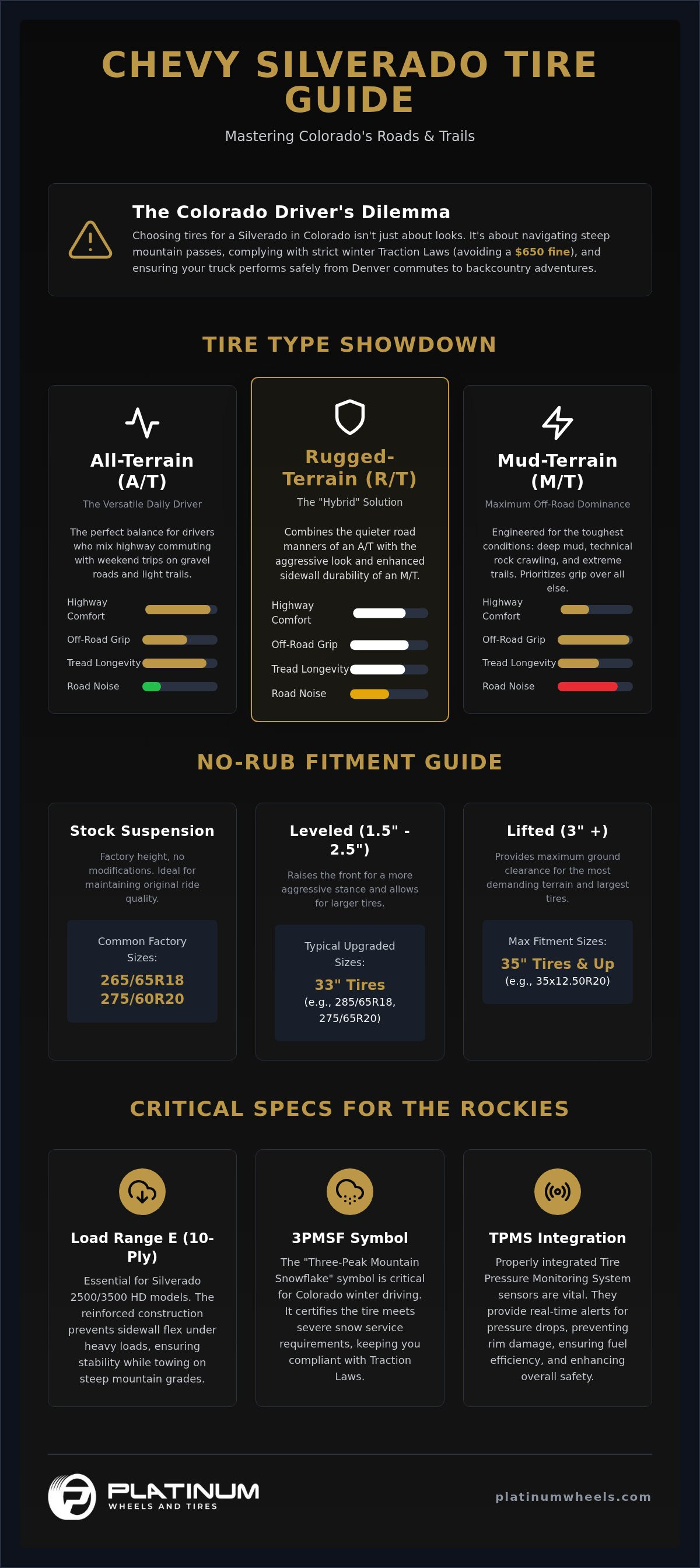
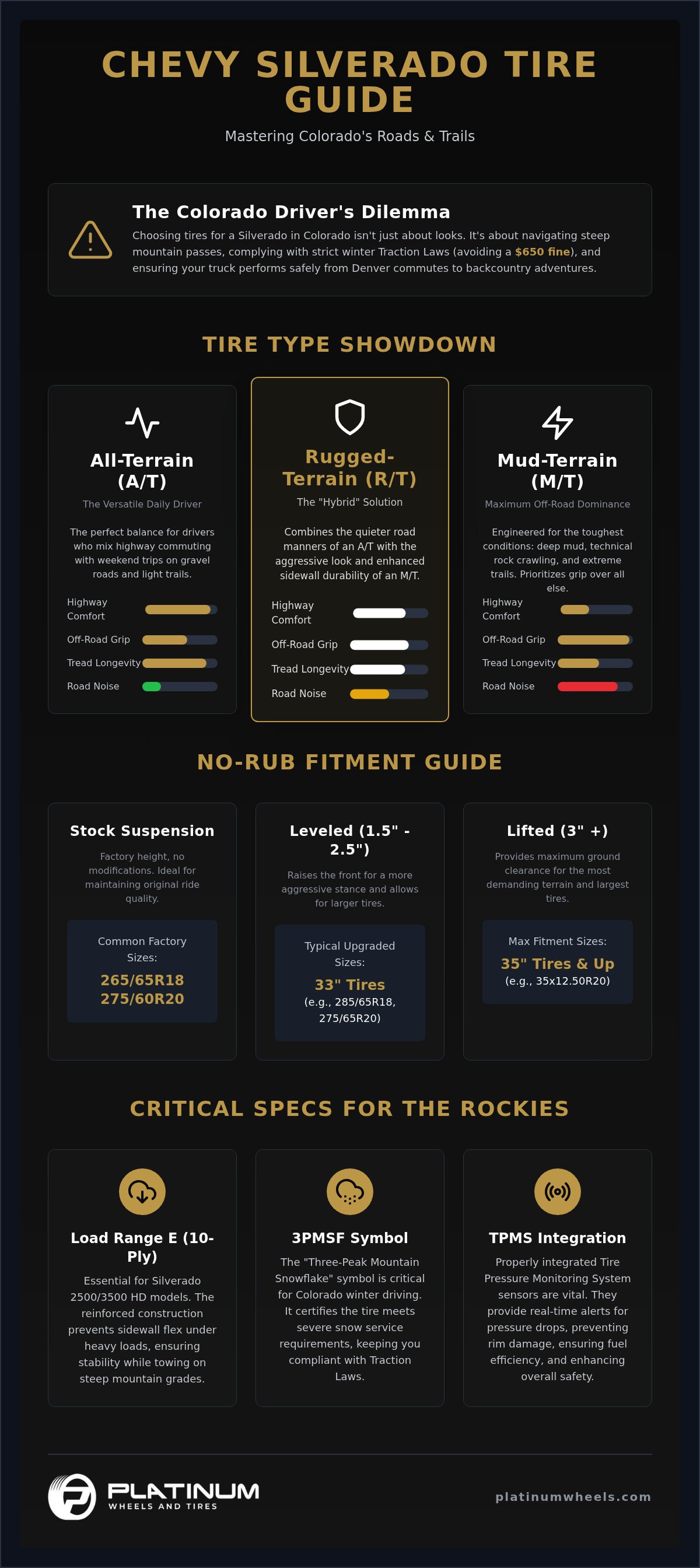
The Chevy Silverado is a high-torque workhorse designed to handle everything from daily commutes to heavy-duty hauling through the Rockies. When you're selecting new chevy silverado tires, you must account for the massive vertical pressure and lateral forces generated during mountain driving. The Load Index is a numerical code that identifies the maximum weight a tire can support at its highest safe inflation pressure, directly impacting your truck's stability when pulling a heavy trailer. For owners of the Silverado 2500HD and 3500, sticking to a Load Range E rating is essential. These tires feature a reinforced 10-ply construction that prevents sidewall flex under extreme weight. This keeps your steering precise and your trailer stable even on steep grades. Safety also depends on your TPMS sensors. These sensors must be correctly integrated with your new setup to ensure you're alerted the moment pressure drops, preventing damage to your rims and maintaining fuel efficiency. Selecting the right chevy silverado tires requires a balance of technical knowledge and local experience.
Factory Sizes vs. Upgraded Dimensions
Most Silverado 1500 Z71 or Trail Boss models leave the factory on 18-inch or 20-inch wheels, typically featuring 265/65R18 or 275/60R20 tires. If you want a more aggressive stance, the "plus-sizing" philosophy allows you to go slightly larger to improve ground clearance and aesthetics. However, understanding tire codes is a critical first step before you commit to a new set. Always start by checking your current specs on the tire and loading information placard located on the driver's side door jamb. This placard provides the baseline for your vehicle's weight capacity and recommended PSI. When you move to larger dimensions, you need to ensure the new tires don't just look good but actually fit within the wheel well geometry without compromising your turning radius.
The Importance of Load Index for Truck Owners
It's common to see a distinction between P-Metric (passenger) and LT-Metric (light truck) tires. While P-Metric tires might offer a slightly softer ride around Denver, they often lack the internal reinforcement needed for a Silverado's towing capacity. LT-Metric tires are built with heavier cords and stiffer sidewalls. This extra stiffness is vital for preventing the "swaying" sensation that occurs when hauling heavy loads or navigating high-wind areas like the I-25 corridor. Load Range is frequently the most overlooked spec in local tire shops, yet it dictates how much heat the tire can dissipate. Choosing the wrong rating can lead to premature wear or even a blowout. Investing in complete wheel and tire packages ensures that every component, from the load index to the TPMS sensors, is professionally matched to your truck's specific demands.
All-Terrain vs. Mud-Terrain: Which is Right for Your Silverado?
Choosing the right chevy silverado tires usually comes down to a choice between daily highway comfort and weekend trail dominance. For those who spend most of their time cruising the I-70 corridor toward the mountains, road noise and longevity are top priorities. All-Terrain (A/T) tires are engineered to handle the high speeds of the highway while providing enough bite for loose Colorado scree and gravel access roads. However, if your weekends involve deep mud pits or technical rock crawling, the aggressive tread blocks of a Mud-Terrain (M/T) tire are essential for self-cleaning and maximum grip. Many Denver owners are now opting for "Hybrid" or Rugged-Terrain (R/T) tires, which combine the quiet center tread of an A/T with the beefy sidewalls of an M/T. Beyond performance, your choice defines your truck's stance; a thick, chunky tread pattern gives the Silverado an unmistakable off-road presence that stands out at any local meetup.
All-Terrain (A/T) Tires: The Colorado Daily Driver
A/T tires are the go-to for most Silverado owners in the Denver metro area because they strike a perfect balance. They perform exceptionally well on wet pavement and light snow, making them reliable for year-round use. Most A/T models come with impressive mileage warranties, often ranging from 50,000 to 65,000 miles, providing excellent long-term value. Following NHTSA tire safety guidelines regarding rotation and pressure will help you maximize this lifespan. If your truck is a work vehicle during the week and a camping rig on the weekend, these tires offer the versatility you need without the "hum" of a more aggressive tread. If you aren't sure which tread suits your route, our team can help you compare all-terrain and mud-terrain tires to find your ideal match.
Mud-Terrain (M/T) Tires: For the Weekend Trail Warrior
If you're building a dedicated off-road rig, M/T tires are the gold standard. Their deep lug designs are specifically built to eject mud and debris, ensuring you don't lose traction in thick, sticky conditions. These tires are perfect for the rugged trails near Boulder and Golden where standard tires might struggle. However, there are trade-offs to consider. M/T tires typically produce more cabin noise and can slightly decrease fuel economy due to higher rolling resistance. They also often have longer wet-braking distances on paved roads compared to their A/T counterparts. For the driver who prioritizes trail capability above all else, the trade-off is well worth the confidence you gain when the pavement ends.
Maximizing Fitment: Tires for Stock, Leveled, and Lifted Silverados
Achieving a perfect stance without the annoying sound of rubber hitting plastic requires a precise understanding of the Silverado's wheel well architecture. On a stock Silverado 1500, you're generally limited to a 32-inch tire if you want to avoid rubbing during full-lock turns or while navigating steep driveway inclines. Wheel offset plays a critical role in this equation. A high positive offset keeps the tire tucked inside the fender, while a negative offset pushes the wheel out for a wider look but increases the likelihood of the tire catching on the bumper or fender liner. Deciding between a leveling kit vs lift kit is the first decision to make because it dictates the maximum tire diameter your Silverado can accommodate. Always ensure your chosen setup aligns with NHTSA tire safety ratings for traction and temperature resistance to maintain factory safety standards on the highway.
Tire Sizing for Leveled Silverados
A leveling kit is the most popular modification for Denver drivers because it eliminates the factory rake and creates room for more aggressive chevy silverado tires. The "Magic Number" for leveled trucks usually falls on the 285/70R17 or 295/70R18 sizes. These 33-inch tires are the sweet spot for truck owners in Aurora who want a beefier look without major modifications. If you opt for wheels with a more aggressive offset to get that "poked" look, you'll likely need to perform minor trimming on the front plastic valance or the "mud flap" area to ensure a rub-free experience during tight maneuvers.
Going Big: Tires for 4-Inch and 6-Inch Lift Kits
When you move to a full suspension lift, you open the door to 35-inch and even 37-inch tires. These larger dimensions provide maximum ground clearance for technical trails, but they come with mechanical responsibilities. Larger chevy silverado tires effectively change your gear ratio, which can make the truck feel less punchy and will cause your speedometer to read lower than your actual speed. Precision is vital here. Oversized setups require high-quality mounting and road-force balancing to prevent vibrations. A professional installation ensures that your suspension geometry remains intact, keeping your Silverado a capable and comfortable daily driver even with massive rubber underneath.
Performance in the Rockies: Winter Traction and Off-Road Durability
Driving a Silverado in the Denver area requires a tire that doesn't quit when the pavement ends or the temperature drops. The Three-Peak Mountain Snowflake (3PMSF) rating has become a non-negotiable standard for anyone frequenting the high country. While mud and snow (M+S) ratings are common, the 3PMSF symbol indicates the tire has passed specific tests for severe snow traction. This is critical because altitude and temperature fluctuations in the Front Range can be extreme. A sudden cold snap can drop your tire pressure significantly; typically, you lose about one pound per square inch for every 10-degree decrease in temperature. Relying on high-quality all terrain tires allows you to maintain grip through these shifts without swapping sets every season.
Winter Driving on the I-70 Corridor
Staying compliant with the Colorado Traction Law is essential between September 1 and May 31 on I-70 between Dotsero and Morrison. For your chevy silverado tires to be legal, they must have a minimum tread depth of 3/16-inch and carry the M+S or 3PMSF rating. Failure to comply can result in fines starting at $130, which can skyrocket to over $650 if you cause a road blockage during a storm. While dedicated winter tires offer the absolute best ice braking, many Silverado owners find that modern snowflake-rated all-terrains provide the perfect balance for Denver's dry winters and the mountains' heavy snow. Check your pressure at the trailhead before heading back down to the city. The change in elevation can mask a low-pressure situation that affects your highway handling.
Off-Road Durability on Colorado Trails
The rocky terrain near Boulder and Golden is notorious for shredding weak sidewalls. When you're selecting chevy silverado tires for trail use, look for chip-resistant tread compounds designed to withstand sharp gravel and shale. Durability also comes from reinforced sidewalls, which are essential if you plan on "airing down" to increase your footprint on technical obstacles. Lowering your PSI provides better traction, but it exposes the tire's shoulder to punctures. This is why offroad tires and wheels should be purchased as a balanced package. A properly matched rim and tire set ensures the bead stays seated even at lower pressures. If you're ready to upgrade your rig for the next mountain adventure, contact us today for a professional fitment consultation tailored to your specific driving style.
The Platinum Advantage: Expert Silverado Tire Packages in Denver
When you're upgrading your truck, you shouldn't have to guess if your setup will work. Choosing aftermarket wheel and tire packages is the smartest way to ensure every component works in harmony from day one. We don't just sell rubber; we provide a complete technical solution that includes professional mounting, high-speed balancing, and precise alignment tailored specifically for the Silverado's suspension geometry. A common frustration for many owners is the dreaded dash light after a swap. We make sure every tpms sensor is correctly calibrated and integrated, so your safety systems remain fully functional from the moment you leave the shop. Local support means you have a partner who understands the specific demands of the Front Range and is here for the life of your chevy silverado tires, providing the peace of mind that a national chain simply can't match.
Seamless Installation and Fitment Guarantee
Our consultative approach focuses on finding the exact stance you want without the technical headaches of rubbing or vibration. We use state-of-the-art equipment designed for scratch-free mounting on high-end custom wheels, ensuring your investment is protected during the installation process. This precision is where local expertise really beats big-box retailers. While a general tire shop might see your Silverado as just another vehicle in the bay, we treat it as a specialized machine that requires specific torque settings and fitment checks. We stand behind our work with a fitment guarantee, giving you the confidence that your truck will perform flawlessly whether you're cruising down the highway or navigating a technical trail in the mountains.
Complete Customization from Suspension to Tires
A truly capable truck is built as a complete system rather than a collection of random parts. Combining your tire upgrade with a professional leveling or lift kit creates a cohesive look and feel that's impossible to achieve with piecemeal modifications. You can browse our massive selection of custom wheels and rims to find the perfect style and offset that complements your new chevy silverado tires. Our team understands how different offsets interact with your wheel wells, allowing us to recommend a setup that looks aggressive while maintaining full steering range. Whether you're looking for a sleek street appearance or a rugged off-road beast ready for the backcountry, we have the inventory and technical skill to make it happen. If you're ready to transform your truck, visit us in Denver or Aurora to see the difference a specialized local shop makes.
Take the Guesswork Out of Your Silverado Stance
Selecting the right chevy silverado tires is about more than just picking a tread pattern; it's about ensuring your truck is legally compliant with Colorado Traction Laws and technically prepared for the high-altitude demands of the Rockies. We've covered the critical importance of Load Range E for heavy-duty hauling, the necessity of the Three-Peak Mountain Snowflake rating for I-70 winter driving, and the precise geometry required to avoid rubbing after a lift or leveling kit installation. By focusing on these technical details, you can ensure your Silverado remains a capable daily driver while looking aggressive enough to turn heads in Denver and Aurora.
As Denver's local truck fitment experts, we specialize in professional lift and leveling kit installations that work in perfect synergy with your new rubber. Our complete packages include high-speed mounting and seamless TPMS sensor integration to keep your dashboard clear and your ride smooth. Build Your Custom Silverado Wheel and Tire Package Today and experience the precision of a shop that truly understands the Colorado automotive lifestyle. Your truck is ready for a transformation, and we're here to help you hit the trails with absolute confidence.
Frequently Asked Questions
What is the largest tire size I can fit on a stock Chevy Silverado 1500?
You can typically fit up to a 32-inch tire on a stock Silverado 1500 without experiencing significant rubbing. Some owners push to a 275/60R20, which measures about 33 inches, but this depends heavily on your specific wheel offset. If you're navigating tight parking garages in downtown Denver or hitting trails with heavy articulation, sticking to factory-recommended dimensions ensures your suspension geometry remains within safe operating limits while avoiding damage to your fender liners.
Will 35-inch tires rub on a Silverado with a 2-inch leveling kit?
Yes, 35-inch tires will almost certainly rub on a Silverado equipped with only a 2-inch leveling kit. While a leveling kit provides enough clearance for many 33-inch chevy silverado tires, fitting 35s typically requires at least a 4-inch or 6-inch lift kit. Without the extra height, you'll likely face significant interference with the bumper and wheel well plastics during full-lock turns. Our team in Aurora often recommends trimming or specific high-positive offset wheels to minimize these issues.
How much does a set of four Chevy Silverado tires typically cost in Colorado?
The cost of a new set of tires depends on the brand, tread type, and specific load rating required for your truck. Premium all-terrain or mud-terrain options designed for Colorado's rugged terrain generally represent a higher investment than standard highway tires due to their reinforced sidewalls and specialized rubber compounds. Factors like the inclusion of professional mounting, balancing, and TPMS sensor integration also influence the total value. We recommend visiting our shop for a personalized quote based on your specific driving needs.
Do I need to recalibrate my speedometer after installing larger tires?
Recalibrating your speedometer is highly recommended whenever you increase the overall diameter of your tires. Larger tires travel a greater distance per revolution, which causes your speedometer to display a speed lower than your actual velocity. This discrepancy can also affect your transmission shift points and odometer accuracy. For Denver drivers frequently using the I-25 or I-70 corridors, an accurate speedometer is essential for safety and avoiding unnecessary speeding tickets while maintaining your truck's long-term performance.
Are mud-terrain tires too loud for daily driving on Denver highways?
Mud-terrain tires are noticeably louder than all-terrain or highway tires due to their large, open tread blocks. While modern engineering has reduced the "hum" significantly, you'll still experience increased cabin noise when cruising at highway speeds in Lakewood or Westminster. If your daily commute involves long stretches of pavement, you might prefer a hybrid or rugged-terrain tire. These options provide the aggressive look of a mud-terrain with a tread pattern optimized for a quieter, smoother ride on paved surfaces.
What does the Three-Peak Mountain Snowflake (3PMSF) rating mean for my truck?
The 3PMSF rating indicates that a tire has been tested and certified to provide superior traction in severe snow conditions. Unlike standard mud and snow (M+S) tires, these are specifically engineered to remain flexible in freezing temperatures, which is a critical requirement for navigating the I-70 Traction Law zones between Dotsero and Morrison. Choosing chevy silverado tires with this symbol ensures you're prepared for sudden Front Range blizzards while maintaining better braking performance on icy mountain passes.
How often should I rotate the off-road tires on my Silverado?
You should rotate your off-road tires every 3,000 to 5,000 miles to ensure even tread wear. Aggressive all-terrain and mud-terrain patterns are more susceptible to "cupping" or irregular wear if left in the same position for too long. Regular rotations are especially important for Denver truck owners who split their time between city driving and weekend trail adventures. Keeping up with this maintenance schedule extends the life of your tires and helps maintain a quiet, vibration-free ride on the highway.
Can I use my factory TPMS sensors with new aftermarket wheels and tires?
You can often reuse your factory TPMS sensors, but many Silverado owners choose to install new ones when purchasing a complete wheel and tire package. Sensors have internal batteries that eventually fail, and swapping them during a new installation prevents the headache of a dash light appearing a few months later. Our specialized shop in Denver ensures that your sensors, whether factory or new, are correctly calibrated to your truck's computer system for accurate real-time pressure monitoring on every drive.