Best Chevy Silverado Wheels in Denver & Aurora | Pro Guide
That perfect, aggressive stance you see cruising down the I-25 isn't just a lucky guess; it's the result of precise engineering and a deep understanding of how the right chevy silverado wheels interact with your truck's suspension. Most owners want to ditch the factory look for something bolder, but the fear of "the rub" or having to trim brand-new fenders keeps many trucks stock. It's frustrating to stare at a catalog and wonder if a specific offset will clear your brake calipers or if you'll need a leveling kit just to pull out of your driveway.
You deserve a setup that's both safe and functional. This guide eliminates the guesswork by mastering the technical specs and style choices needed to transform your truck. We'll show you how to balance backspacing and tire width to achieve that head-turning look without compromising your ride quality or safety on the road.
We are breaking down the essential 6x139.7 bolt pattern requirements and exploring Denver's latest style trends, from the rugged "OE-Plus" aesthetic to minimalist off-road designs. From professional TPMS programming to ensuring your new rims handle the Rockies with ease, you'll find everything you need to build a setup that's truly trail-ready and professionally validated.
Key Takeaways
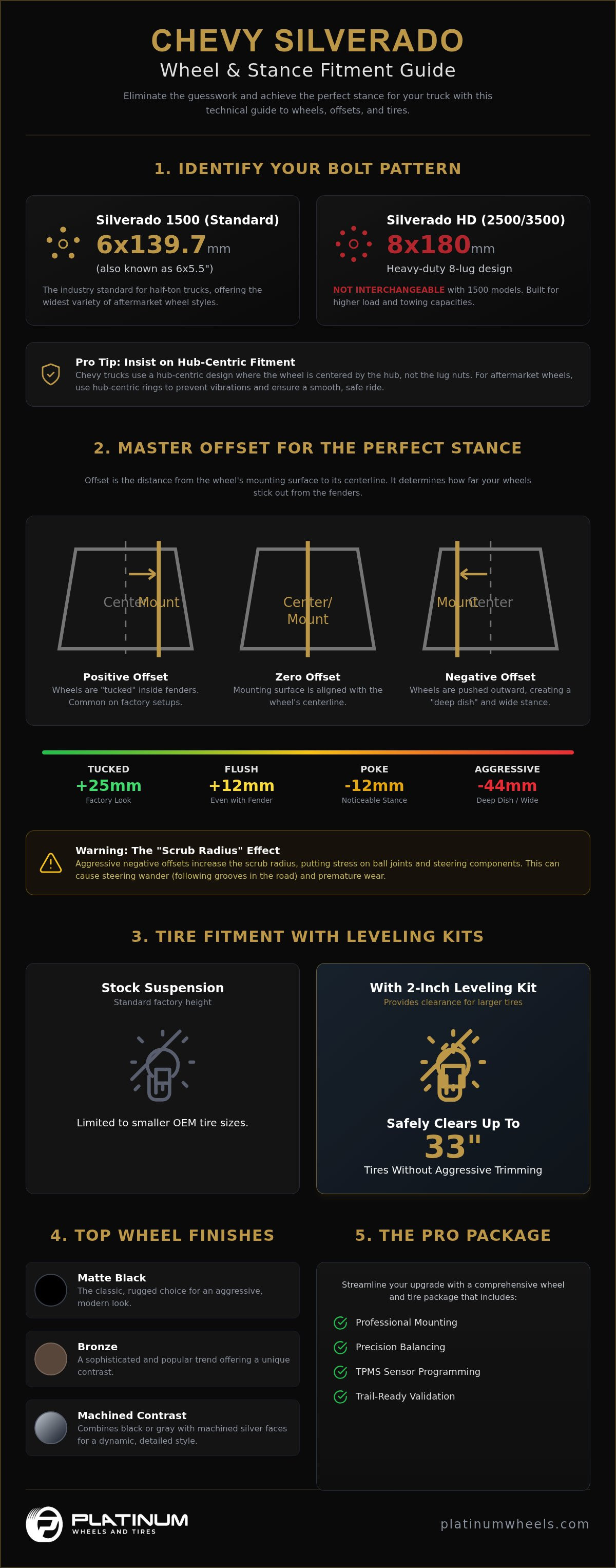
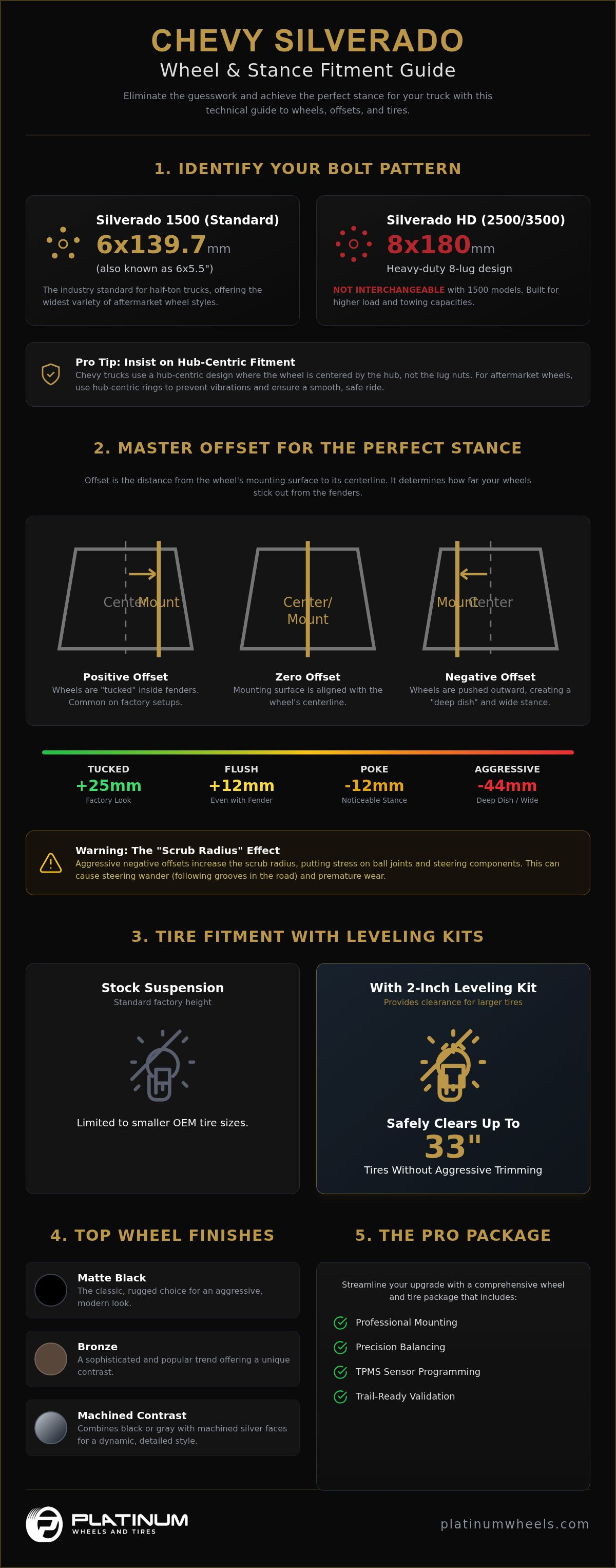
- Identify the correct bolt pattern for your specific model, distinguishing between the standard 1500 6x139.7 pattern and the 8x180 setup required for Heavy Duty trucks.
- Master the technical relationship between offset and backspacing to achieve your desired stance while protecting your truck's steering geometry from the "scrub circle" effect.
- Explore the most popular 2026 finishes for chevy silverado wheels, ranging from the classic matte black revolution to sophisticated bronze and machined contrast options.
- Determine the maximum tire sizes for your setup, including how a 2-inch leveling kit allows you to safely clear 33-inch tires without aggressive trimming.
- Streamline your upgrade process by choosing comprehensive wheel and tire packages that include professional mounting, balancing, and essential TPMS sensor programming.
Chevy Silverado Wheel Specs: Bolt Patterns and Sizing
Getting the right chevy silverado wheels starts with the numbers. If the bolt pattern is off, your project stops before it begins. For the Silverado 1500, the 6x139.7 (also known as 6x5.5) bolt pattern has been the standard for years. It's an industry benchmark because it provides the necessary surface area to handle the truck's torque and weight while allowing for a massive variety of aftermarket styles. Factory rollers typically range from 17-inch work truck setups to the 22-inch rims found on High Country models. Understanding this Chevrolet Silverado history of sizing helps you decide if you want to stay within OEM parameters or push the limits with a custom setup.
Silverado 1500 vs. 2500/3500 Fitment
Don't make the mistake of thinking all Chevy trucks share the same DNA. While the 1500 uses a 6-lug design, the 2500 and 3500 Heavy Duty models utilize a beefier 8x180 pattern. This 8-lug architecture isn't just for show. It's designed to support the massive towing capacities and higher load ratings required for HD trucks. Swapping wheels between these classes isn't possible. A common misconception is that wheels from an older GMT900 will fit perfectly on a modern T1XX chassis. While the bolt pattern might match, differences in brake caliper size and factory offsets often cause fitment issues that require spacers or specialized trimming.
Hub-Centric Design and Vibration Control
Ride quality in Denver's stop-and-go traffic or on the open highway depends heavily on how the wheel sits on the axle. Chevy trucks are designed with a hub-centric setup. This means the center bore of the wheel fits snugly over the hub's pilot, centering the wheel perfectly. Lug-centric wheels, which rely solely on the lug nuts for centering, often lead to annoying vibrations and can put unnecessary stress on your wheel bearings. If you choose universal aftermarket chevy silverado wheels, we always recommend using hub-centric rings to fill that gap. This ensures the weight of the truck is supported by the hub, not just the studs, giving you a smoother and safer ride.
Mastering Offset and Backspacing for the Perfect Stance
Choosing the right chevy silverado wheels requires a solid grasp of how offset and backspacing dictate your truck's final look. Offset is the distance from the wheel's mounting surface to its true centerline. Positive offset, typical of factory setups, keeps the wheels "tucked" inside the wheel wells. Negative offset pushes the wheels outward, creating a wider, more aggressive profile. While a deep lip looks incredible, pushing the wheels too far can lead to fender rubbing and paint chips from road debris. Following standards from The Tire and Rim Association, we ensure every fitment maintains the structural integrity of your vehicle's stance while achieving the look you want.
Changing your offset doesn't just change the look; it alters your scrub circle. This is the pivot point where your tire turns. When you push your wheels out with aggressive negative offsets, you increase the scrub radius. This often results in steering wander, where the truck follows every groove in the pavement, and places extra stress on your ball joints. Before committing to a specific style, learn How to Find Wheel Offset for Your Truck to avoid costly returns or mechanical issues. Backspacing is equally critical, as it measures the distance from the mounting surface to the back edge of the wheel. If this measurement is too deep, your new rims will collide with brake calipers or suspension components.
Achieving the 'Flush' Look
For most Silverado 1500 owners, the goal is a "flush" look where the wheel sits perfectly even with the fender. Achieving this on a stock suspension typically requires an offset between +12mm and +25mm. A 0mm offset provides a slight "poke," while a -12mm offset creates a noticeable wide stance that often requires a leveling kit for clearance. For those wanting an extreme deep-dish appearance, a -44mm offset delivers maximum depth but demands significant suspension modification. Poke is the distance a wheel extends beyond the fender flare. If you're unsure which profile fits your style, our team can show you custom wheel and tire packages that hit the sweet spot for your specific model year.
Suspension Clearance and Backspacing
Deep-dish chevy silverado wheels interact closely with the upper control arms (UCAs). On 2026 models, Chevy has refined suspension components, but the clearance window remains tight. If your backspacing exceeds 5.5 inches on a wide wheel, you risk the inner rim lip or tire sidewall rubbing against the UCA during tight turns. We carefully measure these clearances to ensure your setup is safe for both daily driving in Aurora and weekend adventures in the mountains. This technical precision prevents the premature wear often seen with "universal" fitments that don't account for Chevy's specific steering geometry.
Top Aftermarket Wheel Styles and Finishes for Chevy Trucks
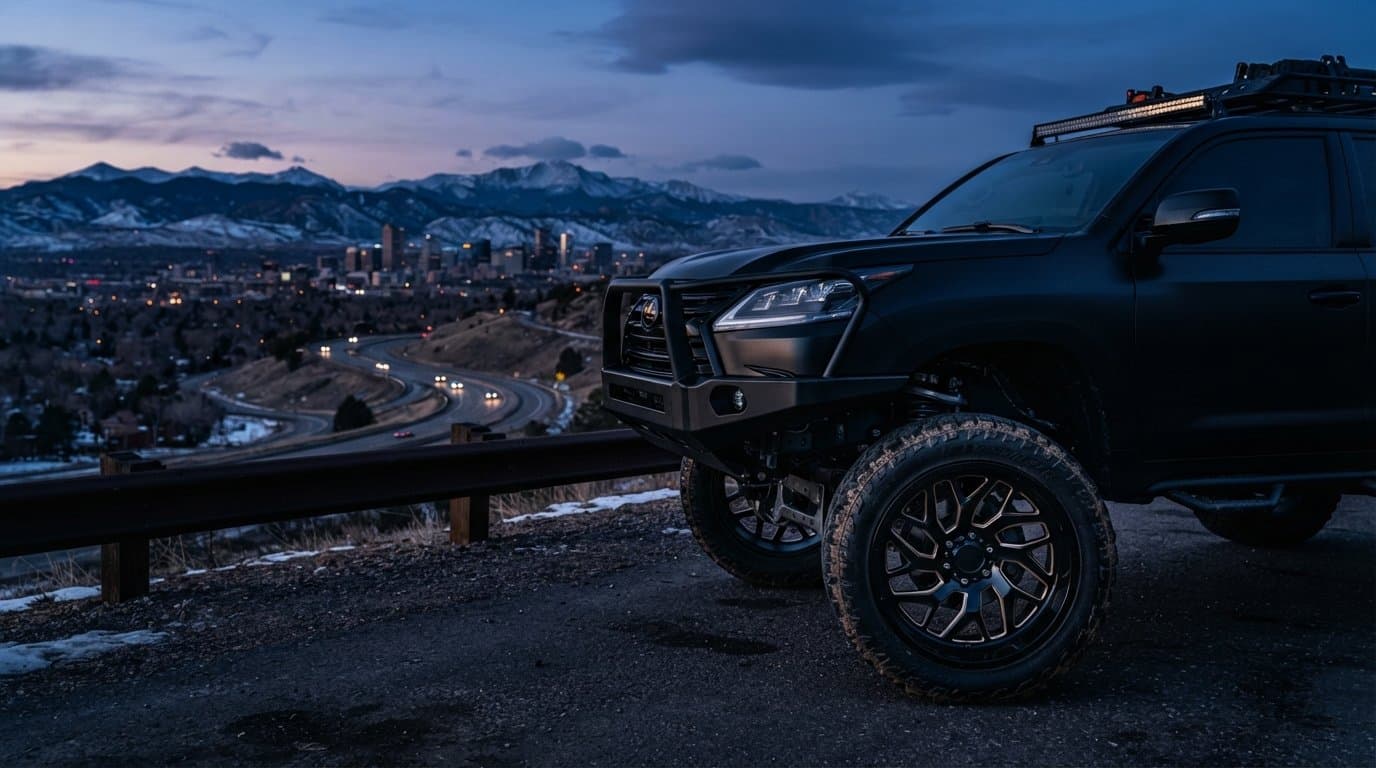
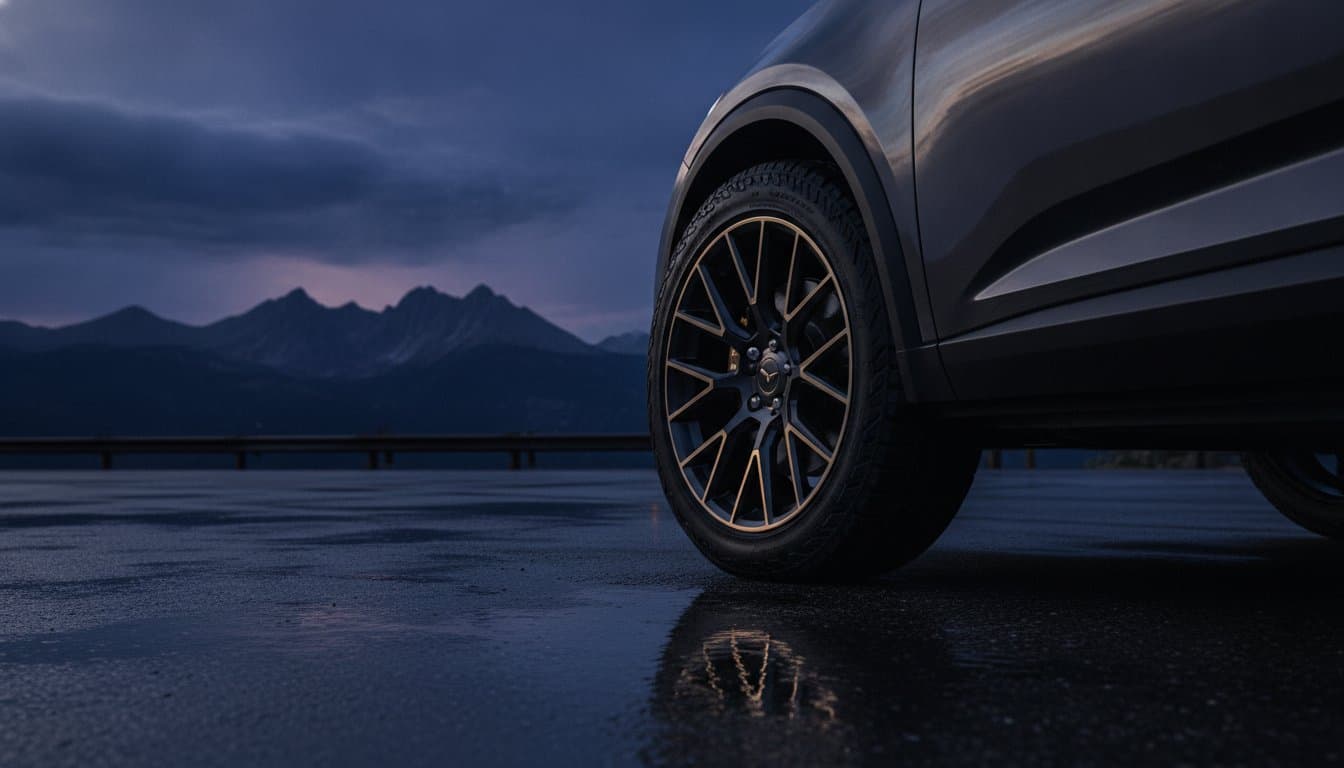
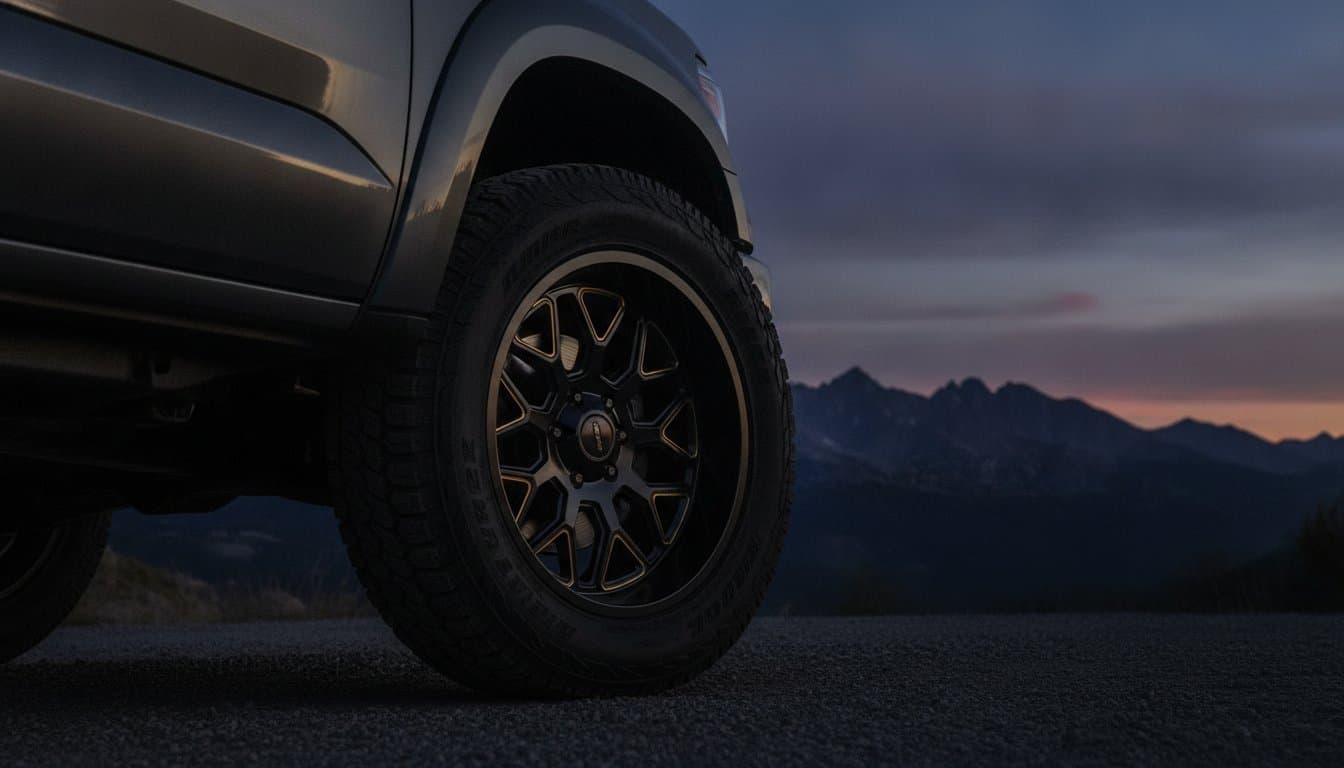
Aesthetics often drive the first step in a truck build, and the matte black revolution continues to dominate the landscape in 2026. This finish provides a rugged, stealthy appearance that hides brake dust and small trail scuffs better than high-gloss options. While blacked-out chevy silverado wheels remain the top choice for many, bronze and machined finishes are gaining significant traction. Bronze offers a sophisticated contrast for trucks in Summit White, Lakeshore Blue, or Sterling Gray, providing a custom look that stands out without being overly flashy. These choices reflect a shift toward more personalized, intentional styling that moves beyond the basic factory options.
Choosing between forged and cast wheels is a decision that balances your budget with performance needs. Cast wheels are the most common aftermarket choice, manufactured by pouring molten aluminum into a mold. They are cost-effective and durable for most daily drivers. Forged wheels are machined from a solid block of aluminum, resulting in a lighter and much stronger rim. This weight reduction improves acceleration and braking performance, which is a key priority for many enthusiasts. According to the latest industry insights from SEMA (Specialty Equipment Market Association), the demand for lightweight, high-strength wheels is at an all-time high as truck owners look to offset the weight of larger tires.
Finish Protection for Colorado Winters
Colorado's harsh winter environment requires more than just a good-looking wheel. Mag-chloride and road salt can quickly eat through traditional chrome plating, leading to unsightly pitting and peeling. If you want a chrome look that lasts, PVD (Physical Vapor Deposition) chrome is the superior choice. It's a powder-coated finish that mimics chrome but withstands the elements far better. For year-round driving in Denver, clear-coated machined finishes are also highly recommended. These provide an extra layer of protection against oxidation. To keep your off-road rims looking new, avoid using acid-based cleaners and stick to mild soap and water to preserve the integrity of the clear coat.
Popular 2026 Silverado Wheel Designs
Wheel design trends for 2026 are splitting into two distinct directions: sophisticated street and rugged off-road. Multi-spoke "mesh" designs are becoming a staple for trucks that spend most of their time on the pavement, offering a high-end look reminiscent of luxury SUVs. Conversely, "beadlock-style" wheels are the go-to for Z71 and Trail Boss owners. These wheels feature a simulated outer ring that provides a tough, industrial aesthetic without the maintenance hassles of true mechanical beadlocks. When deciding on the right material for your build, it's helpful to consider Alloy Rim Wheels vs. Steel: What Is Best for Colorado? to ensure your choice matches your driving habits.
Fitment Guide: Matching Wheels with Lift and Leveling Kits
Achieving the perfect stance requires more than just picking a design you like. It's a balancing act between suspension height and wheel dimensions. At stock height, your options for chevy silverado wheels are limited by the factory wheel wells. You can typically run up to a 32-inch tire on a 20x9 wheel with a +27 offset without any issues. However, if you want to move up to the popular 33-inch tire size, you'll need to address the factory "rake" where the front of the truck sits lower than the rear. Pushing beyond these limits without modifications is a recipe for annoying tire rub and potential fender damage.
When you push the limits with wide tires or aggressive negative offsets, you'll likely encounter "the rub." This is where the tire makes contact with the inner fender liner or the metal behind the wheel well during a full turn. The "NorCal Tuck" is a common modification where technicians discreetly trim these areas to create the necessary clearance for an aggressive stance. This is often required when jumping to a 35-inch or 37-inch setup on a Silverado 1500. It's a precise process that allows for maximum tire size while maintaining a clean, professional appearance. We ensure every modification is functional and safe for Denver's mountain roads.
Leveling Kit vs. Lift Kit for Silverado Owners
A leveling kit is the most cost-effective way to open up your wheel options. By providing a 2-inch front lift, it levels the truck's profile and allows for 33-inch tires with a 0mm offset. For those who want the iconic "big truck" stance, a 4-6 inch lift kit is necessary. This height allows you to comfortably fit 35-inch tires and deep-dish wheels with significant negative offsets. To help you decide which path is right for your build, read our Leveling Kit vs. Lift Kit: The Ultimate 2026 Guide.
The Silverado Fitment Matrix
Understanding the relationship between lift height and wheel specs is vital for a clean build. Use this general matrix as a starting point for your 2026 Silverado: stock setups usually stick to a 20x9 wheel with a +27 offset. Once you install a leveling kit, you can move to a 20x9 wheel with a 0 offset for a wider look. Fully lifted trucks often run 22x12 wheels with a -44 offset to achieve that deep-dish profile. Tire width is a major factor here; a 12.50-inch wide tire requires more clearance than an 11.50-inch tire on the same rim. Because these changes alter your steering geometry, professional lift and leveling kit installation is critical to ensure your truck tracks straight and your tires wear evenly.
Choosing Your Silverado Wheel and Tire Package in Denver
Bundling your chevy silverado wheels with a high-performance tire set is the most efficient way to upgrade your truck's performance and appearance. It ensures that every component is perfectly matched before it ever touches your vehicle. Buying a complete package means you get professional mounting and road-force balancing right out of the gate. This eliminates the vibration issues common with mismatched or DIY setups. It also saves you from the logistical headache of transporting four massive wheels and four even larger tires to a shop in the back of your current daily driver. Our "ready-to-drive" approach means your truck spends less time on the rack and more time on the road.
Modern 2026 Chevy electronics are incredibly sensitive to changes in rolling diameter and sensor data. Swapping your chevy silverado wheels without properly integrated TPMS sensors will leave you with a persistent dashboard warning light and potentially disabled safety features. We include high-quality, compatible sensors in our packages and handle the professional programming required to sync them with your truck's onboard computer. This technical precision ensures your tire pressure monitoring system works exactly as the manufacturer intended, giving you peace of mind during long hauls across the Front Range.
All-Terrain vs. Mud-Terrain for Colorado Drivers
Choosing between all-terrain and mud-terrain rubber depends on your primary driving environment. All-terrain tires are the gold standard for most Denver drivers. They provide a quiet highway ride while meeting the strict I-70 Traction Law requirements for winter mountain passes. If you spend your weekends on technical rocky trails or in deep mud, mud-terrain tires offer the aggressive lugs and sidewall protection you need. However, they come with trade-offs like increased road noise and faster tread wear on dry Aurora pavement. Check out our guide on Choosing the Best All-Terrain Tires for Colorado to find the right balance for your specific driving habits.
The Platinum Wheels Experience
We don't just sell parts; we provide a consultative experience rooted in local community values. Our team understands the specific clearance needs of the Silverado 1500, ensuring your new setup has zero rubbing issues even at full steering lock. We take the guesswork out of the technical specs, from offset to scrub circles, ensuring your build is both safe and functional. Learn more about Why Buy Aftermarket Wheel and Tire Packages? to see how we streamline the entire process. When you're ready for a head-turning stance and improved capability, visit Platinum Wheels in Denver for your custom Silverado build.
Build Your Ultimate Silverado Stance
Transforming your truck from a factory standard to a custom masterpiece requires more than just picking a design; it's about the technical precision of the 6x139.7 bolt pattern and mastering the delicate balance of offset and backspacing. You now have the roadmap to choose chevy silverado wheels that not only look aggressive but also maintain your steering geometry and clear those mountain-ready 33-inch or 35-inch tires. Whether you're aiming for a flush street profile or a deep-dish off-road look, the right combination of style and suspension height is essential for a safe, functional build.
We take pride in providing expert fitment for all Silverado generations and professional lift and leveling kit installation right here in the local community. Our specialized focus ensures your setup is ready for the unique demands of the Front Range. Don't settle for "good enough" when you can have a setup that's engineered for precision and high standards. Build your custom Chevy Silverado wheel and tire package at Platinum Wheels today! We are proud to serve Denver, Aurora, and the entire Front Range with the expertise your truck deserves. Your next adventure is waiting; let's make sure your truck is ready to lead the way.
Frequently Asked Questions
What is the bolt pattern for a Chevy Silverado 1500?
The bolt pattern for a modern Chevy Silverado 1500 is 6x139.7, which is also commonly referred to as 6x5.5 inches. This six-lug configuration is a critical specification for ensuring your new chevy silverado wheels seat properly against the hub. While this pattern has remained consistent across recent generations, always verify your specific model year's center bore and offset requirements to prevent vibration issues during highway drives through Denver.
Can I fit 33-inch tires on my stock Silverado without a lift?
Fitting 33-inch tires on a stock Silverado without a lift or leveling kit often results in significant rubbing against the inner fender liners, especially during full steering lock. While some owners attempt this with narrower tires, we strongly recommend a 2-inch leveling kit to provide the necessary clearance. This simple suspension upgrade fixes the factory rake and allows your truck to accommodate larger rubber safely while navigating Aurora's city streets or mountain trails.
Will aftermarket wheels void my Chevy factory warranty?
Installing aftermarket wheels does not automatically void your factory warranty thanks to the Magnuson-Moss Warranty Act. The dealership can only deny a warranty claim if they prove the specific aftermarket part caused the failure. For example, if an incorrect wheel offset causes premature wheel bearing wear, that specific repair might not be covered. We focus on expert fitment to ensure your new setup remains within safe mechanical tolerances for your peace of mind.
What offset do I need for my wheels to stick out slightly?
To achieve a stance where your wheels stick out slightly beyond the fenders, you should look for an offset between 0mm and -12mm. Factory chevy silverado wheels typically feature a high positive offset, such as +27mm, which keeps the rims tucked inside the wheel wells. Moving toward a lower or negative offset pushes the mounting surface inward, effectively moving the tire outward to create that sought-after aggressive "poke" look popular across the Front Range.
Do I need new TPMS sensors when I buy new wheels?
You don't strictly need new TPMS sensors if your current ones are functional, but we highly recommend them for every new wheel and tire package. The batteries in factory sensors have a finite lifespan, and transferring old sensors to new rims often leads to seal leaks. For 2026 Chevy models, professional TPMS programming is essential to ensure your dashboard warning lights remain off and your safety systems function correctly during Colorado's temperature swings.
What is the difference between hub-centric and lug-centric wheels?
Hub-centric wheels are designed so the center bore fits snugly over the vehicle's hub pilot, which centers the wheel and supports the truck's weight. Lug-centric wheels rely solely on the lug nuts to center the wheel on the studs, which can lead to annoying steering wheel vibrations. Because Silverados are engineered for hub-centric fitment, using hub-centric rings with universal aftermarket rims is vital for maintaining a smooth ride on I-70.
How much does a leveling kit affect my Silverado's fuel economy?
A leveling kit typically has a negligible impact on your Silverado's fuel economy, usually resulting in a loss of about 1 to 2 miles per gallon. This change is primarily caused by the altered aerodynamics of the truck's front end and the increased rolling resistance if you also upgrade to larger, heavier tires. Most Denver owners find this small trade-off well worth the improved aesthetics and the ability to clear more capable off-road rims.
Which wheel finish is best for Colorado's winter weather?
PVD chrome and clear-coated painted finishes are the best choices for Colorado's harsh winter environment. These finishes are specifically engineered to resist the corrosive effects of mag-chloride and road salt used in Denver and Aurora. Avoid raw polished aluminum wheels for year-round driving, as they oxidize quickly when exposed to moisture and road chemicals. A high-quality clear coat provides a durable barrier that keeps your rims looking new through multiple snow seasons.