How to Find Wheel Offset for Your Truck: Positive vs. Negative Explained (2026)
That aggressive, wide-track look you're chasing might actually be the fastest way to destroy your truck's front end if you don't get the geometry right. Most drivers focus on how a wheel looks in the showroom, but understanding positive vs negative wheel offset for trucks is what keeps your rig on the road and out of the shop. It's the difference between a perfectly flush fitment and a set of rims that rub every time you turn the wheel. In our community, getting this wrong also means worrying about Colorado splash guard laws and proper fender coverage when you're heading up the mountain.
We know the fear of investing in a high-end wheel and tire package only to realize it doesn't clear your suspension components or brake calipers. It's a common headache, but it's one you can avoid with a little expert guidance. This guide will help you master the math behind wheel fitment so you can achieve the perfect stance without sacrificing performance or safety. We'll break down the technical jargon, compare backspacing to offset, and show you exactly how to measure your truck for a guaranteed fit before you buy your next set of rims.
Key Takeaways
- Learn how the distance between your wheel's mounting surface and its centerline determines whether your tires sit tucked inside the wheel well or push outward for a wide, aggressive stance.
- Master a simple three-step measurement process using basic tools like a straight edge and metric ruler to calculate your current setup with precision before you shop.
- Understand the critical visual and mechanical differences of positive vs negative wheel offset for trucks to ensure your new rims clear suspension components while achieving your desired look.
- Discover how offset choices impact your truck's scrub radius and wheel bearing longevity, helping you avoid premature wear and "twitchy" handling on the road.
- Find out why standard fitment guides often fall short for Colorado rigs and how professional testing ensures your wide-track setup remains compliant with local splash guard laws.
What is Wheel Offset? Defining the Hub, Centerline, and Stance
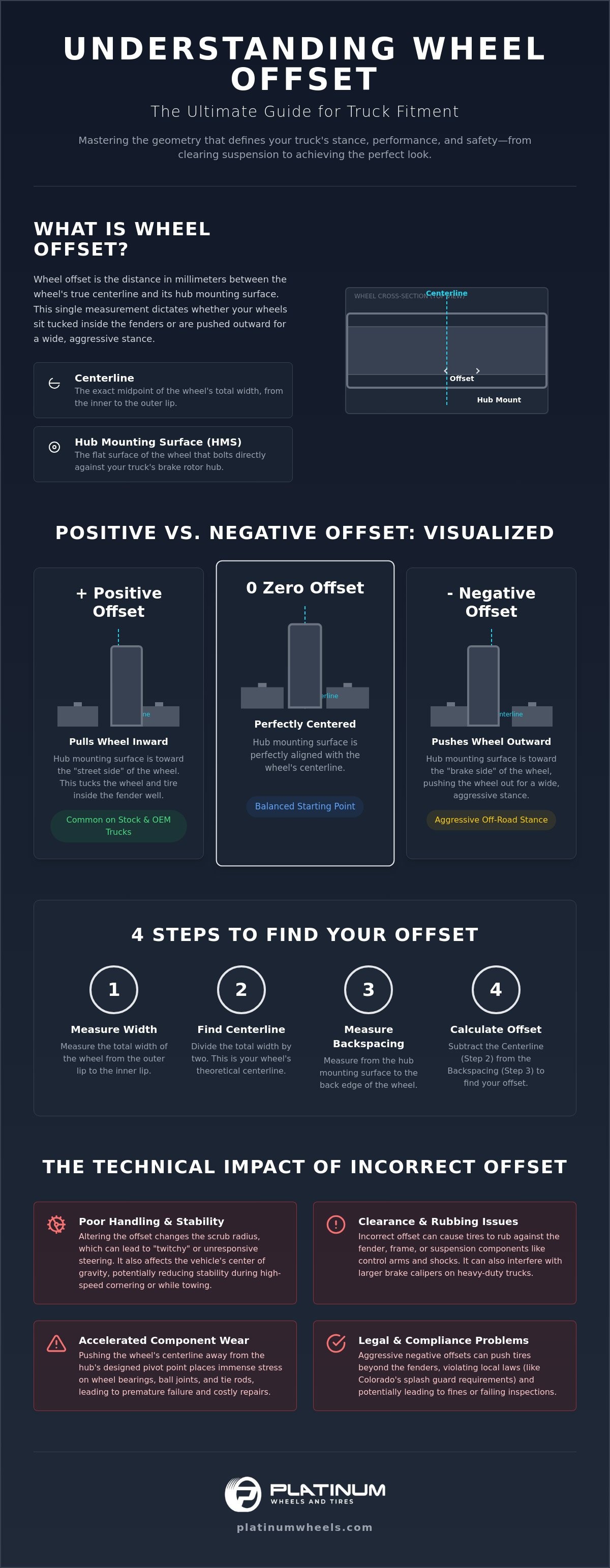
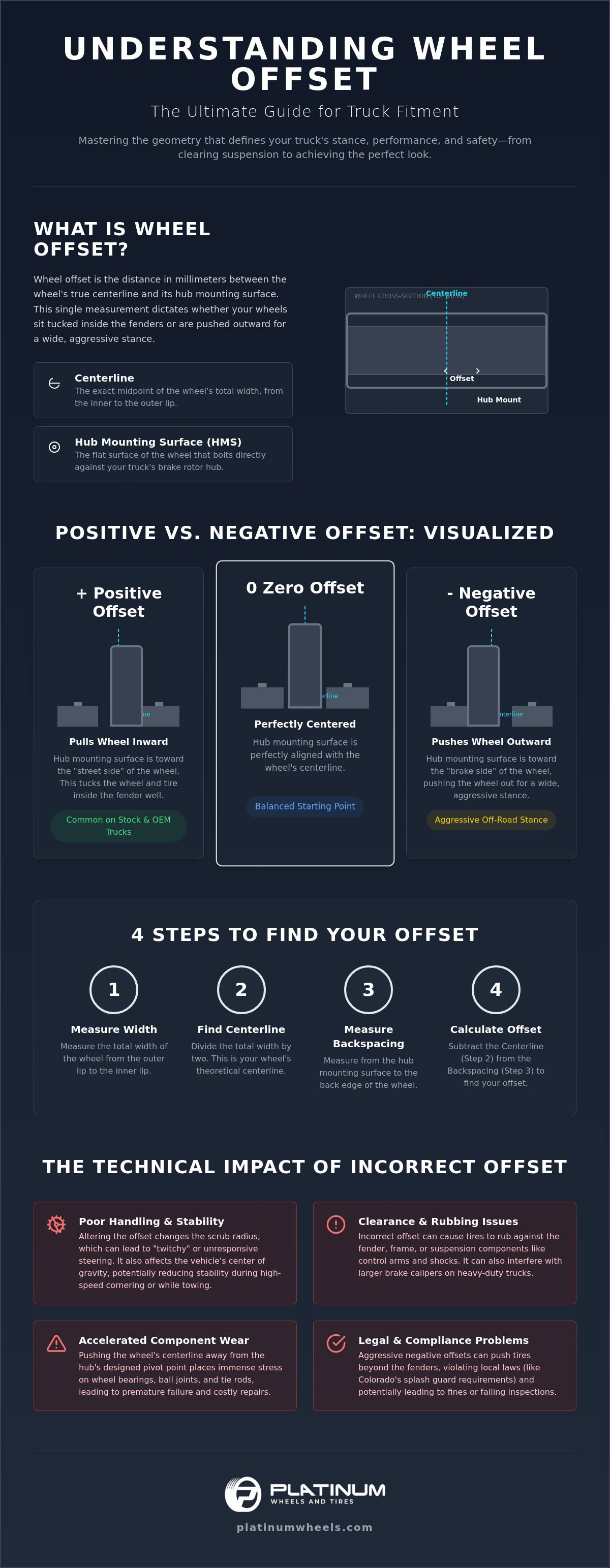
Understanding wheel geometry starts with a single measurement that dictates your truck's entire personality and performance. When asking What is Wheel Offset?, you're looking for the specific distance between the wheel's true centerline and its hub mounting surface (HMS). The HMS is the flat part of the wheel that sits flush against your truck's brake rotor or drum. While most wheel dimensions like diameter and width are measured in inches, the industry uses millimeters for offset because precision is everything. A mere five millimeters can be the difference between a clean turn and a shredded tire liner.
Every wheel falls into one of three categories: positive, negative, or zero offset. A zero offset means the mounting surface is perfectly centered within the rim. When you start comparing positive vs negative wheel offset for trucks, you're essentially choosing where the wheel sits in relation to the body. Positive offset moves the mounting surface toward the street side, pulling the wheel inward toward the frame. Negative offset does the opposite, pushing the mounting surface toward the brakes and forcing the wheel outward for that wide, aggressive stance popular on many off-road rigs.
The Anatomy of a Truck Wheel
To master fitment, you have to look past the spokes and finishes. The wheel's centerline is exactly half the distance between the inner and outer lips. It's a fixed point that doesn't change regardless of the design. Many enthusiasts confuse offset with backspacing, but they aren't the same. Backspacing measures the distance from the mounting surface to the very back edge of the wheel in inches. While offset tells you where the wheel sits relative to its own center, backspacing tells you how much room you have before the wheel hits your suspension or frame rails.
Why Offset is Critical for Truck Fitment
Precision matters because trucks carry immense weight and face extreme stress. Choosing the wrong offset can lead to brake caliper clearance issues, especially on heavy duty trucks with larger rotors. Beyond mechanics, there's the legal side. Colorado law (CRS 42-4-1407.5) generally requires splash guards for tires that extend beyond the fenders, though many light trucks under 10,000 pounds are exempt. Even if you're legally clear, an incorrect offset shifts your truck's track width. This change affects your center of gravity and overall stability during high speed cornering or when you're hauling a heavy trailer through the mountains.
How to Find Wheel Offset: A Step-by-Step Measurement Guide
Calculating your own wheel specs doesn't require a degree in engineering, but it does demand a steady hand and the right tools. To get started, you'll need a straight edge long enough to span the wheel's diameter, a metric ruler, and a calculator. Accuracy here is paramount. We've seen plenty of DIY projects go sideways because of a simple math error, and getting the positive vs negative wheel offset for trucks wrong can lead to expensive rubbing issues or poor handling. Follow these steps to find your number:
- Step 1: Measure the total width of the wheel from the outer lip to the inner lip.
- Step 2: Divide that total width by two. This gives you the Theoretical Centerline.
- Step 3: Lay your straight edge across the back of the wheel and measure down to the hub mounting pad. This measurement is your backspacing.
- Step 4: Subtract the Centerline (Step 2) from the Backspacing (Step 3). If the result is positive, you have a positive offset; if it's negative, you have a negative offset.
Understanding these measurements is vital because of how offset affects your suspension and long-term drivability. If you're feeling unsure about the math, our team at Platinum Wheels can perform a precision fitment check to keep your project on track.
Measuring Wheels Already on the Truck
You can still estimate your needs without pulling the wheels off. Drop a plumb line from the edge of your fender and measure the distance to the hub face to see how much room you have to play with. Don't forget to account for tire bulge, as a wide all-terrain tire often sticks out further than the rim itself. Theoretical Centerline is the exact midpoint of the rim's total width.
Common Math Pitfalls to Avoid
The most frequent mistake is mixing up units. Remember that 1 inch equals exactly 25.4 millimeters. Most aftermarket wheels also have a flange thickness of about 0.5 inches on each side, which can throw off your total width measurement if you aren't careful. Before you finalize any purchase, look for the "ET" code stamped on the back of your current wheels. This is the factory offset, and it serves as the perfect baseline for your new setup. Using this stamped data alongside your manual measurements ensures you won't end up with wheels that don't fit.
Positive vs. Negative Offset: Which is Right for Your Truck?
Deciding on the right stance for your rig involves more than just picking a design you like. It's a balance of physics and personal style. When we talk about positive vs negative wheel offset for trucks, we're discussing where the tire sits relative to the body lines. Positive offset means the mounting surface is toward the front or street side of the wheel, which tucks the tire neatly inside the wheel well. Negative offset moves that surface toward the brake side, pushing the tire outward to create that wide, aggressive stance. If you land right in the middle, you have zero offset, where the mounting surface aligns perfectly with the centerline.
Choosing between these configurations depends on how you use your vehicle. A daily driver that spends most of its time on the pavement has different requirements than a dedicated trail rig. Consider these factors before making the switch:
- Aesthetics: Negative offset provides that "deep dish" look, while positive offset maintains a sleek, factory appearance.
- Maintenance: Tires that stick out further are more likely to sling mud and debris onto your door panels.
- Clearance: You'll need to coordinate your offset with your tire size to prevent rubbing on the bumper or inner fender liners.
The Case for Positive Offset
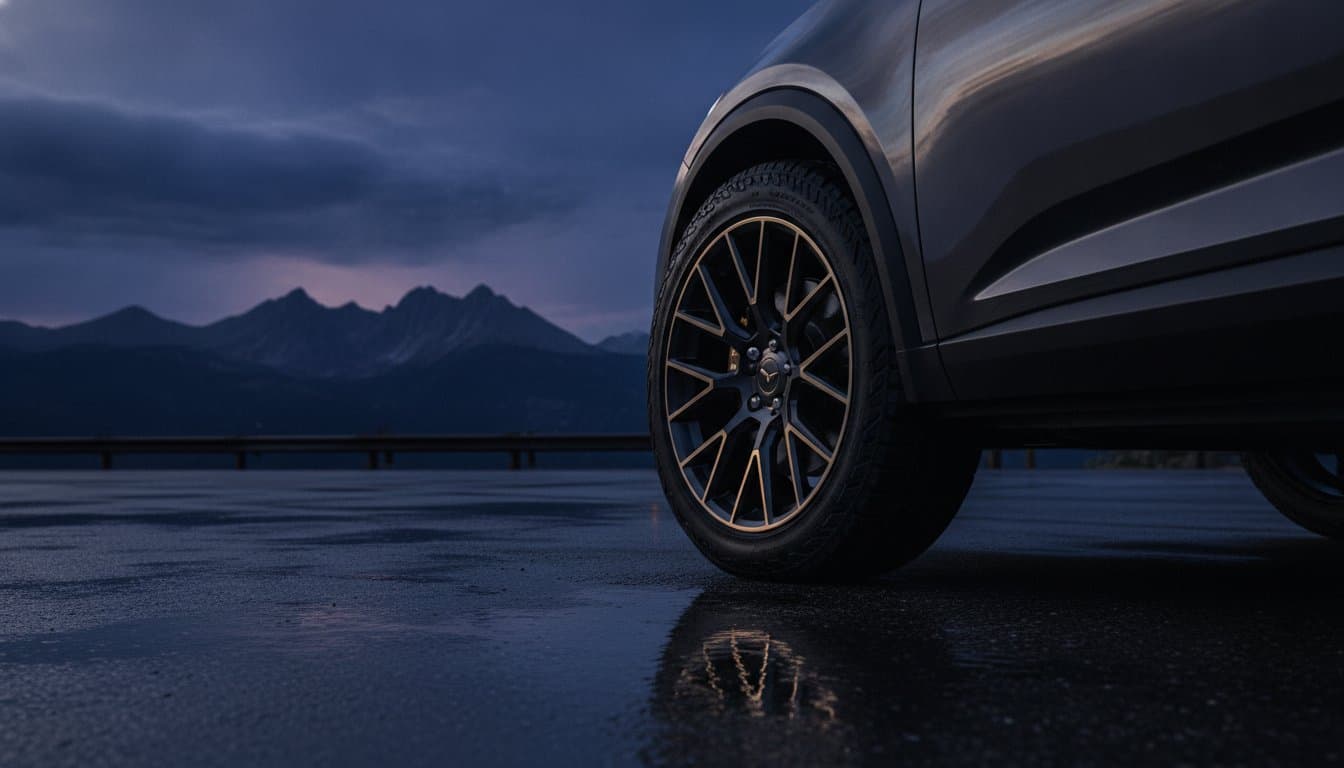
Most modern Ford, Chevy, and RAM trucks leave the factory with a positive offset. This design isn't accidental. Engineers prefer this setup because it improves fuel economy by keeping the tires within the aerodynamic profile of the fenders. It also significantly reduces wind noise at highway speeds. For local drivers, there's a practical benefit too. Keeping your tires tucked inside the fenders helps protect your paint from the abrasive road salt and loose rocks common on Colorado highways during the winter months. It's the reliable choice for those who want a clean look and a quiet ride.
The Case for Negative Offset
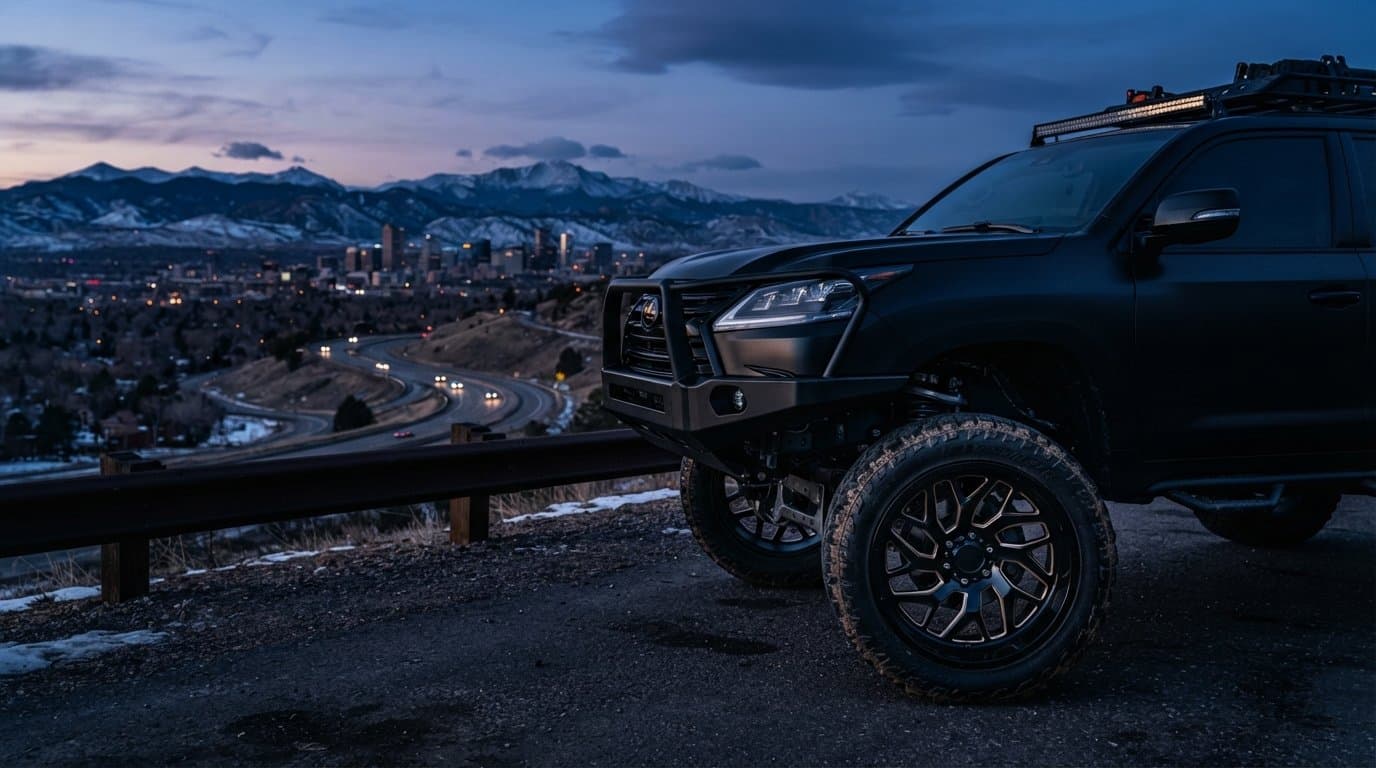
If you're after a bold presence, negative offset is your best friend. This configuration is a staple for off-road enthusiasts who want a wide-track aesthetic. Beyond the visual appeal, a negative offset increases vehicle stability on off-camber trails by widening your truck's footprint. This extra width provides the necessary clearance for wide all terrain tires that might otherwise rub against inner suspension components or frame rails during tight turns. It's a functional necessity for many lifted builds that need to accommodate larger rubber while maintaining a capable stance on technical terrain.
The Technical Impact: How Offset Affects Your Suspension
Physics doesn't care about your aesthetic goals. While the debate over positive vs negative wheel offset for trucks usually focuses on looks, the real consequences happen beneath the wheel well. Think of your wheel as a lever. When you choose a heavy negative offset to push the wheels out, you're effectively lengthening that lever. This "Lever Effect" places immense, unintended pressure on your wheel bearings. Instead of the weight of the truck sitting directly over the bearing, it's now hanging off the side. This leads to premature failure and expensive repairs that could have been avoided with better planning.
Changing your offset also fundamentally alters how your truck handles. If you've ever felt your steering wheel jerk or "kick back" when hitting a pothole, you're likely dealing with an altered scrub radius. This is why some trucks feel rock-solid on the highway while others feel twitchy or unstable in corners. This instability is compounded when you're hauling heavy loads through the winding roads of the Front Range. Precision fitment ensures your truck remains a tool and not a liability.
Then there's the physical reality of clearance. Pushing your tires out often leads to rubbing on the front bumper or the firewall during full-lock turns. Many enthusiasts resort to the "NorCal Mod," which involves cutting and hammering back the metal of the inner fender to create space. While effective, it's a permanent modification that many owners would rather avoid. Understanding your offset before you buy prevents the need for a Sawzall on your expensive rig. It's about finding the sweet spot where the tire sits exactly where it should.
Adding a leveling kit or lift kit only makes these decisions more critical. Lifting a truck changes the suspension angles, which can exacerbate the stress caused by an aggressive offset. You aren't just fitting a tire; you're re-engineering a suspension system. Before you commit to a new look, schedule a professional fitment consultation to ensure your setup is safe and sustainable.
Scrub Radius and Steering Geometry
Scrub radius is the distance between the steering axis and the center of the tire's contact patch. When you move the wheel's centerline with a negative offset, you increase this radius. A positive scrub radius means the tire's center is outside the steering axis, which can provide better feedback but also causes that annoying "kickback" in the steering wheel over bumps. Keeping this measurement within a reasonable range is the secret to a truck that tracks straight and feels controlled at high speeds.
Wear and Tear on Drivetrain Components
The hidden cost of "poke" is the accelerated wear on your ball joints and tie rods. These components weren't designed to handle the extra torque created by a wide-track setup. Furthermore, an incorrect offset can mess with the effectiveness of your tpms sensor and ABS systems if the wheel doesn't sit correctly on the hub. For maximum safety, ensure your truck rims Denver are hub-centric, meaning the center hole of the wheel fits perfectly over the hub of the truck. This transfers the load to the hub rather than the lug bolts, preventing vibrations and potential wheel failure.
Expert Wheel Fitment in the Denver Front Range
Generic fitment charts found online often lead to expensive disappointment. These "off-the-shelf" recommendations rarely account for the subtle differences in suspension wear or the fact that certain tire brands run larger than their stated size. Choosing between positive vs negative wheel offset for trucks requires a localized perspective that considers how you actually use your rig. We see trucks every day that look great in a digital rendering but fail the real-world test on the I-70 corridor. At Platinum Wheels, we move past the guesswork by using a consultative approach rooted in technical precision.
Our team utilizes laser-accurate fitment testing to verify every millimeter of clearance before we mount your tires. We don't just look at the wheel; we evaluate the entire suspension system. If you're planning on a wide-track setup, we ensure the geometry remains stable and safe. We integrate these offset calculations directly with our professional lift and leveling services. This holistic approach ensures your truck doesn't just have a great stance but also maintains the ride quality you expect. We help you find that elusive balance where your truck looks aggressive without feeling twitchy on the highway.
Colorado-Specific Fitment Considerations
Colorado roads present unique challenges for high-offset setups. While extreme "poke" looks incredible at a meet, it often slings gravel, mud, and winter slush directly onto your door panels. This abrasive spray can sandblast your paint in a single season if you aren't prepared. We also consider the physical constraints of our region. A truck built for maximum trail clearance might be a nightmare to navigate through tight Denver parking garages or narrow mountain passes. Professional mounting and balancing are non-negotiable for these builds. High-offset wheels are naturally more sensitive to minor imbalances, and we use high-end equipment to ensure a vibration-free ride at any speed.
Get the Perfect Stance at Platinum Wheels
Achieving a zero-rub fitment on 35-inch or 37-inch tires is where our expertise shines. Our specialists consult with you on custom wheels and rims to find the exact offset that avoids the need for permanent body modifications. We analyze your tire's sidewall profile and your truck's specific trim level to guarantee a clean turn. This level of detail is why local enthusiasts trust us with their most ambitious builds. Visit our shop in the Denver area for a custom fitment consultation today. Let's work together to master the physics of positive vs negative wheel offset for trucks and get your rig exactly where it needs to be.
Drive with Confidence and Style
Mastering the math behind your wheel fitment ensures your truck performs as well as it looks. You now know that offset is a critical piece of suspension geometry that impacts everything from wheel bearing longevity to steering stability. By accurately measuring your centerline and backspacing, you can confidently choose between a tucked factory look or an aggressive wide-track stance without the fear of tire rub or unnecessary suspension damage. It's about more than just aesthetics; it's about protecting your investment.
Getting positive vs negative wheel offset for trucks right is especially vital for our local terrain. Colorado-ready off-road setups need to handle everything from deep mud and winter slush to technical mountain trails. Whether you're upgrading a Ford, Chevy, RAM, or Toyota, our team provides expert fitment and professional installation of lift and leveling kits designed for peak performance. We take the guesswork out of the process, ensuring your drivetrain stays protected while you achieve that perfect stance.
Ready for the perfect stance? Schedule your custom wheel consultation at Platinum Wheels today! We're passionate about helping you build a rig that's as reliable as it is bold. Let's get your truck trail-ready with precision and local expertise.
Frequently Asked Questions
Will a negative offset cause my tires to rub?
A negative offset increases the likelihood of rubbing because it pushes the tire outward and into the path of the bumper or firewall during turns. While it creates a desirable wide stance, you'll need to coordinate this choice with your tire width and suspension height. Many truck owners find that a slight trim or a leveling kit is necessary to maintain a full steering range without metal-to-metal contact.
Is a -12 offset or a +12 offset better for a Ford F-150?
Choosing between a -12 and +12 offset for your Ford F-150 depends entirely on your desired fitment. A +12 offset typically sits flush with the factory fenders, providing a clean, upgraded look without excessive spray. A -12 offset pushes the wheel out significantly for an aggressive poke. Keep in mind that a -12 setup usually requires a leveling kit or minor trimming to avoid rubbing on the front crash bars.
What is the difference between wheel offset and backspacing?
Offset measures the distance from the wheel's centerline in millimeters, while backspacing measures the distance from the mounting surface to the inner lip in inches. While they describe similar geometry, backspacing is a more direct way to check if a wheel will hit your suspension or frame. Understanding positive vs negative wheel offset for trucks helps you dial in the look, but backspacing confirms the actual physical clearance.
Does changing my wheel offset void my truck's warranty?
Changing your offset won't automatically void your entire vehicle warranty thanks to the Magnuson-Moss Warranty Act. However, a dealer can deny a claim if they prove the aftermarket wheels caused a specific failure, such as premature wheel bearing wear. It's often a good idea to keep your factory wheels if you're worried about major drivetrain claims during the first few years of ownership.
How much 'poke' is legal for trucks in Colorado?
Colorado law (CRS 42-4-1407.5) requires vehicles to have splash guards that cover the full tread of the tire to prevent slinging debris. However, there's a specific exemption for trucks with an empty weight of 10,000 pounds or less. Even if you're legally exempt, consider that excessive poke can still lead to rock chips on your paint or cracked windshields for the drivers following behind you on the highway.
Can I use wheel spacers instead of buying new offset wheels?
You can use wheel spacers to achieve a wider stance, but it's generally safer to buy wheels with the correct offset. Spacers add an additional set of hardware and a potential failure point to your drivetrain. If you choose to use them, ensure they are high-quality, hub-centric spacers and check the torque on your lug nuts frequently. For a permanent, worry-free solution, the right wheel offset is always superior.
Do I need a lift kit to run negative offset wheels?
You don't always need a lift kit, but running negative offset wheels on a stock height truck usually leads to clearance issues. Because the wheel is pushed further out, it swings in a wider arc when you turn the steering wheel. This wider arc often causes the tire to strike the fender liner or bumper. A leveling kit is often the minimum requirement for a trouble-free, wide-track setup.
How does offset affect the towing capacity of my truck?
Offset doesn't technically change your manufacturer's rated towing capacity, but it does change the leverage applied to your axles. An aggressive negative offset increases the stress on your wheel bearings and suspension components when you're hauling a heavy trailer. If you plan on frequent heavy towing through the mountains, staying closer to a factory or mild positive offset helps maintain long-term reliability and predictable handling under load.