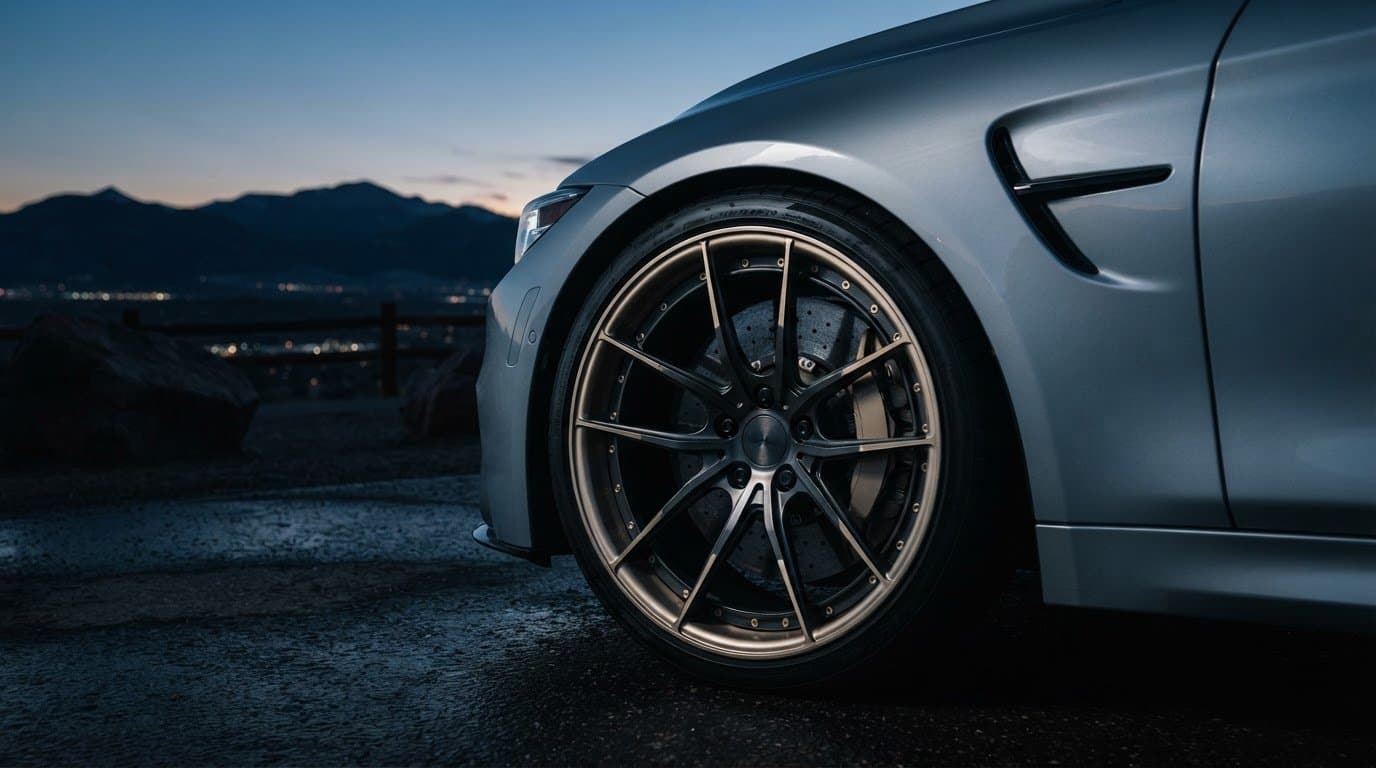
Custom Porsche Wheels & Rims in Denver: Performance Upgrade
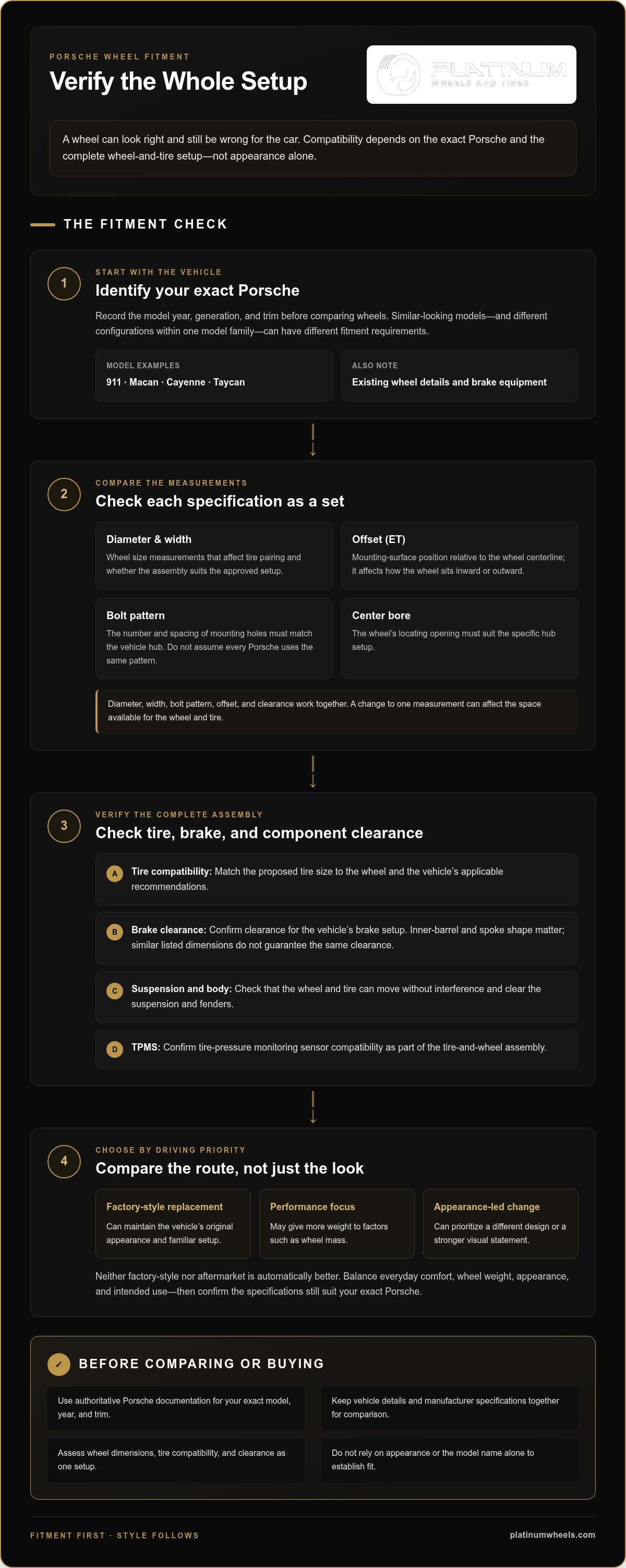
What if the Porsche wheels that look perfect on your car compromise brake clearance or handling? Choosing wheels is more than a style decision: your Porsche’s model, generation, trim, wheel width, diameter, offset, and hub design all affect fit. A setup that works on one 911 may not suit another Porsche, so Denver drivers should start with verified specifications, not appearance alone.
It’s natural to want a sharper stance or a lighter wheel while keeping the comfort and road feel you value. This guide explains how to compare factory-style and aftermarket Porsche wheels, which fitment details matter, and how to weigh materials and sizing against the way you drive. It also covers why brake clearance, tire compatibility, and intended use belong in the decision before you buy.
Use the checks below to make your comparison specific to your vehicle. Platinum Wheels specializes in custom wheels, tires, and suspension upgrades for trucks and SUVs across the Colorado Front Range. If you’re also researching an upgrade for a truck or SUV, you can explore the company’s wheel, tire, and leveling options at the end of this guide.
Key Takeaways
- Start with your Porsche’s exact model year, generation, and trim. Similar-looking models can have different fitment requirements.
- Compare wheel diameter, width, offset, bolt pattern, and clearance with authoritative vehicle and wheel documentation.
- Choose Porsche wheels by balancing your driving priorities, such as everyday comfort, lower wheel weight, or a more distinctive appearance.
- Review the complete wheel-and-tire setup together, including tire compatibility and model-specific recommendations.
- Keep your vehicle details and manufacturer specifications handy so you can compare options before buying.
Porsche Wheels: What Makes the Right Fit Different for Each Model?
A wheel can look right and still be wrong for the car. Fitment means matching the wheel’s diameter, width, bolt pattern, and offset to the vehicle, then confirming clearance around the brakes, suspension, and bodywork. Compatible Porsche wheel fitment combines the diameter, width, bolt pattern, offset, and clearance requirements for the exact model, generation, trim, and year.
These details work together. Diameter and width describe the wheel’s size, the bolt pattern must match the hub, and offset affects where the wheel sits in relation to the suspension and fenders. The wheel also needs enough clearance around the brake components and must move without interference. For an overview of how these measurements relate, see Porsche wheel specifications. Use Porsche documentation to confirm the requirements for your vehicle.
Why 911, Macan, Cayenne, and Taycan wheel needs differ
A 911, Macan, Cayenne, and Taycan illustrate the range of Porsche vehicles, but they are not interchangeable fitment categories. Platform, trim, brake equipment, and model year can all affect wheel compatibility. Requirements may also vary between generations and configurations within one model family. Identify your exact vehicle before comparing designs, then verify its wheel requirements against authoritative Porsche documentation rather than relying on the model name alone.
Factory-style wheels or aftermarket Porsche wheels?
Factory-style replacement wheels can maintain the vehicle’s original appearance and familiar setup. Aftermarket options may offer a different look or put more emphasis on wheel weight or a particular driving purpose. Neither route is automatically better. Choose based on your priorities and whether the wheel’s specifications suit your car. Consider appearance alongside fitment, clearance, and intended use.
It also helps to distinguish a direct replacement from an upgrade. A replacement aims to match the required fit and may keep a factory-inspired look. An appearance-led change prioritizes design, while a performance-focused choice may give more weight to factors such as wheel mass. In every case, the finished setup needs to be compatible with your exact Porsche.
Start with the vehicle, then compare options. Record the model year, generation, trim, and existing wheel details before browsing. This makes it easier to assess designs on practical terms and avoid assuming a wheel that suits one Porsche will fit another.
Porsche Wheel Specifications Explained: Size, Offset, and Clearance
Wheel measurements work as a set. Diameter is the distance across the wheel, while width measures from one rim edge to the other. Both affect which tire can be mounted and whether the assembly suits the vehicle’s approved setup. A wheel’s offset, usually marked as ET, describes where its mounting surface sits in relation to the wheel’s centerline. That position affects how far the wheel sits inward or outward, so an unsuitable offset can cause clearance problems.
The bolt pattern describes the number and spacing of the wheel’s mounting holes. It must match the vehicle’s hub, and you shouldn’t assume every Porsche uses the same pattern. For accurate Porsche wheels fitment, compare each measurement with the documentation for your exact model, year, and trim. A wheel that looks right in a photo may still be the wrong fit.
How diameter, width, and offset affect wheel fit
Diameter and width influence tire pairing, while offset affects the wheel’s position relative to suspension and fender components. Changing one measurement can change the space available for the tire and wheel, so assess the full combination rather than treating each number in isolation. Match proposed dimensions to authoritative vehicle and wheel documentation, and use NHTSA’s guidance on tire safety and fitment for tire-related considerations.
Brake clearance, center bore, and TPMS considerations
Brake clearance depends on the vehicle’s brake setup and the shape of the wheel’s inner barrel and spokes. Two wheels with similar listed dimensions may not provide the same clearance. The center bore, the opening that locates the wheel on the hub, also needs to suit the specific setup. Check TPMS compatibility too, since sensors are part of the tire-and-wheel assembly. For background on sensor considerations, read this TPMS sensor guide.
Before choosing a wheel, verify:
- Diameter and width, with a compatible tire size.
- Offset and bolt pattern for the exact vehicle.
- Brake and suspension clearance, plus center bore.
- TPMS compatibility and applicable manufacturer recommendations.
Keep these details together when comparing options. Precise specifications matter when a wheel and tire are mounted and balanced as a complete setup. If you’re also considering a truck or SUV upgrade, explore Platinum Wheels’ wheel and tire expertise.
Which Porsche Wheels Suit Your Driving: Daily Use, Performance, or Style?
The right choice depends on how you use your car, not just how you want it to look. A factory-style replacement can retain an original appearance. A lightweight option may appeal to drivers focused on wheel mass, while an appearance-led design can make a stronger visual statement. Each option still needs to meet the specifications for your exact vehicle.
Start with your regular routes and ride preferences. Consider how often you drive around Denver, whether mountain trips are part of your routine, and whether you use the car for spirited driving or track days. These priorities can help narrow the type of setup to investigate, but they don’t establish whether a specific wheel fits. Compatibility depends on vehicle-specific documentation.
Daily driving versus spirited or track-focused use
For everyday use, weigh comfort, practical durability, seasonal plans, and the look you prefer. A performance-oriented choice may place more emphasis on weight or intended use, while a style-first option prioritizes appearance. Don’t rely on a general claim that a wheel is “lightweight” or “strong.” Look for reliable information about the specific product. SAE International’s SAE J2530 performance standards provide a reference for understanding aftermarket wheel testing and performance requirements.
| Priority | Potential trade-off | Question to resolve |
|---|---|---|
| Factory-style appearance | Fewer changes to the original look | Does the replacement match the vehicle’s approved specifications? |
| Lower wheel weight | Claims vary by wheel and construction | Is the weight documented for this specific wheel? |
| Distinctive styling | Visual preference doesn’t prove compatibility | Does the design clear the brakes and suit the intended use? |
How Colorado roads and seasons shape the decision
Drivers across the Colorado Front Range may encounter changing weather, varied road surfaces, and mountain routes during the same season. Think about where and when you drive, your comfort preferences, and whether you plan to use a separate seasonal tire setup. These conditions can help define your priorities, but they don’t guarantee that one wheel design will ride or handle better. Match any proposed setup to the vehicle and tire documentation.
Use the table to clarify what matters most before comparing options. For Porsche wheels, a sound decision balances appearance and intended use with documented construction details and verified fitment. Platinum Wheels focuses on wheel, tire, and suspension upgrades for trucks and SUVs, where the same attention to fitment applies. Explore Platinum Wheels’ wheel and tire expertise for truck and SUV upgrades.
How to Check Porsche Wheel Fitment Before You Buy
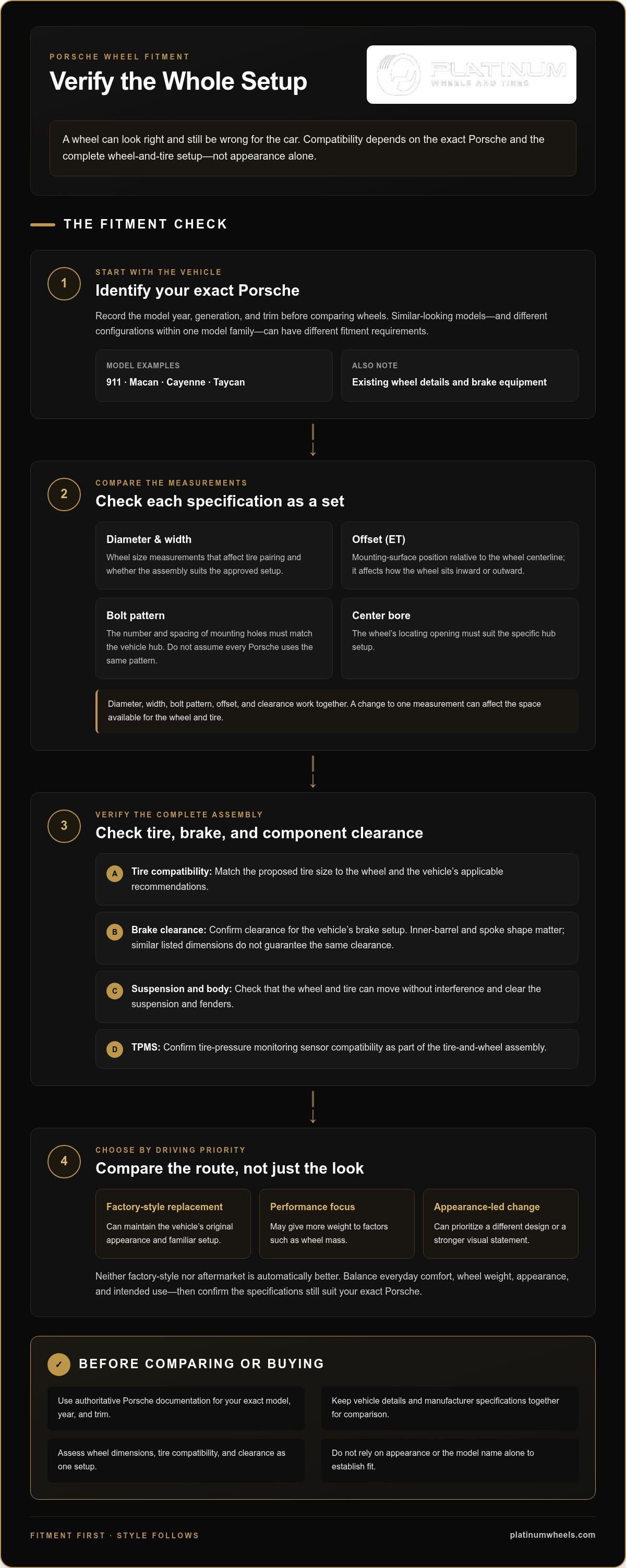
Follow a step-by-step check before choosing a wheel. A model name alone isn’t enough. Use documentation for your exact vehicle and review the complete wheel-and-tire setup you plan to use.
Gather the exact vehicle and current wheel information
Record your vehicle details and the markings on your current wheels. Then compare the proposed setup with Porsche documentation and reliable wheel specifications. Don’t assume a wheel listed for another car with the same model name will fit yours.
- Identify the vehicle. Record the model year, generation, trim, and exact model designation. Use vehicle records or manufacturer documentation to resolve any uncertainty.
- Document the existing setup. Note the current wheel markings and tire size. Treat these as useful comparison details, not proof that a different wheel will fit.
- Compare the proposed wheel specifications. Check diameter, width, offset, bolt pattern, and center bore against authoritative Porsche and wheel documentation for your configuration.
- Review the complete setup. Confirm brake and suspension clearance, compatible tire sizing, TPMS requirements, and suitability for your intended use. Check any staggered or other model-specific arrangement against vehicle documentation instead of assuming the front and rear match.
- Resolve gaps before buying. If specifications conflict, are incomplete, or don’t clearly apply to your exact vehicle, use authoritative manufacturer information before proceeding.
Confirm the complete wheel-and-tire setup
Fitment involves more than a wheel measurement. Tire pairing affects the overall setup, and brake clearance can depend on the wheel’s design as well as its listed dimensions. TPMS requirements and vehicle-system compatibility also deserve attention, particularly if the new setup changes components from the original arrangement. Keep wheel and tire details together so you can assess them as one complete combination.
For broader context on evaluating a coordinated setup, read the aftermarket wheel and tire package guide. Its package-selection perspective can help organize your comparison, but Porsche fitment still needs to be verified against documentation for your specific car.
A clear record of your vehicle, current setup, and proposed specifications makes comparisons easier and helps prevent assumptions from turning into a costly mismatch. For professional wheel and tire expertise on truck and SUV upgrades, explore Platinum Wheels’ wheel and tire options.
Porsche Wheel Buying Next Steps: Make a Confident Fitment Decision
A confident wheel decision follows a clear order: identify the exact vehicle, verify the specifications, decide what matters most in your driving, then review the complete wheel-and-tire setup. Following those steps helps you compare options without letting appearance or a broad model listing stand in for confirmed compatibility.
A final Porsche wheel fitment checklist
Before settling on Porsche wheels, bring together your vehicle details and the documentation for the option you’re considering. Keep manufacturer recommendations and wheel specifications in one place so you can compare them directly instead of relying on memory or assumptions from a similar vehicle.
- Identify the car: Record the model year, generation, and trim.
- Verify wheel specifications: Compare dimensions, offset, bolt pattern, and center bore with approved compatibility information for your exact vehicle.
- Review clearance and components: Check brake clearance, tire pairing, and TPMS requirements for the complete setup.
- Match your priorities: Consider your regular driving conditions, seasonal use, comfort preferences, and whether appearance or another goal takes priority.
If details are missing or conflict across documents, pause the purchase decision until authoritative vehicle and wheel information resolves the discrepancy. A fitment claim based only on a shared model name or similar appearance isn’t enough to establish compatibility.
Explore wheel and tire upgrades with a local specialist
Platinum Wheels is a Colorado Front Range shop focused on truck and SUV wheels, tires, and suspension upgrades. Its wheel-and-tire packages include professional mounting and balancing. This reflects a practical point for any vehicle: precise specifications matter throughout a setup, not just during selection. Porsche fitment decisions should be grounded in Porsche-specific documentation.
Truck and SUV owners around the Front Range can Explore wheel and tire upgrades with Platinum Wheels. Starting with the vehicle and ending with a verified complete setup makes it easier to compare options and avoid treating a visual match as proof of fit.
Make Your Next Wheel Decision with Confidence
Choose Porsche wheels by checking fitment first, then weighing your personal priorities. Start with your exact model year, generation, and trim. Verify wheel dimensions, offset, bolt pattern, brake clearance, tire pairing, and TPMS requirements against authoritative documentation. A familiar design or a fitment listing for a similar model isn’t enough to confirm compatibility.
Next, consider how you drive. Factory-style replacements, lightweight options, and appearance-led designs suit different preferences, but the complete setup still needs to work with your vehicle and real-world use. Keep manufacturer guidance and wheel details together as you compare options. This makes it easier to spot missing information and move forward with clarity.
For truck and SUV owners across the Colorado Front Range, Platinum Wheels is a locally owned and operated shop specializing in custom wheels, tires, and suspension upgrades. Its wheel-and-tire packages include professional mounting and balancing. Explore wheel and tire upgrades with Platinum Wheels for your truck or SUV.
Frequently Asked Questions
How do I know what wheels fit my Porsche?
Compare the wheel specifications with Porsche documentation for your exact model year, generation, and trim. Check diameter, width, offset, bolt pattern, center bore, brake clearance, and tire compatibility as one complete setup. Current wheel markings can help you gather details, but they don’t prove that a different wheel will fit. If specifications conflict or don’t clearly apply to your vehicle, use authoritative documentation before buying.
Can I put aftermarket wheels on a Porsche?
Yes, aftermarket wheels can be fitted to a Porsche if their specifications and construction are compatible with the exact vehicle. Confirm dimensions, offset, bolt pattern, center bore, brake clearance, tire pairing, and TPMS requirements instead of relying on appearance or a broad model listing. Also consider how you drive, and look for reliable, product-specific information about a wheel’s materials and testing before choosing a setup.
What size wheels does a Porsche 911 use?
There isn’t one wheel size for every 911. For the 2026 992-generation lineup, a base Carrera uses a 19-inch front and 20-inch rear setup; other 992 models typically use 20-inch front and 21-inch rear wheels. These are model-year-specific examples, not universal fitment advice. Verify your 911’s year, generation, and trim against Porsche documentation, including any differences in brakes and front-to-rear sizing.
Are Porsche wheels interchangeable between models?
Not necessarily. A wheel that fits one Porsche may have a different bolt pattern, offset, center bore, or brake-clearance profile from what another model requires. Trim and model year can also affect fitment. Some high-performance versions use center-lock hubs, while other vehicles use five-lug hubs, so the mounting system matters too. Check the exact vehicle and wheel specifications before treating wheels as interchangeable.
Do Porsche aftermarket wheels affect ride comfort or handling?
They can, depending on wheel weight, dimensions, tire choice, construction, and how the setup matches the vehicle. A different wheel-and-tire combination may change how the car feels, but no general benefit is guaranteed. Start with your comfort preferences and intended use, then verify fitment and product-specific claims. Include tire sizing and manufacturer recommendations in the decision, not just the wheel’s appearance.
Do I need new TPMS sensors when changing Porsche wheels?
Not always. Whether you need new sensors depends on the vehicle’s TPMS requirements, the sensors already installed, and their compatibility with the new wheel setup. Before buying, determine whether existing sensors can be reused or whether the change requires compatible replacements. Include TPMS in the complete wheel-and-tire plan, since a wheel that physically fits doesn’t confirm that the monitoring system will work as intended.
Should I choose factory Porsche wheels or aftermarket wheels?
Choose factory-style wheels if maintaining an original appearance and setup is your priority. Aftermarket options can offer different designs or focus on considerations such as wheel weight, but fitment and product details still need careful review. Neither choice is automatically better for every owner. Compare approved specifications, construction information, tire compatibility, and your driving needs. Appearance should follow verified compatibility, not replace it.
Can I use the same Porsche wheels year-round in Colorado?
You may be able to keep the same wheels, but year-round suitability depends on your tires, driving conditions, and vehicle recommendations. Denver and Front Range weather can vary, and mountain trips may bring different conditions, so consider whether a separate seasonal tire setup better suits your use. Platinum Wheels serves truck and SUV owners in Denver, Aurora, Lakewood, Englewood, Wheat Ridge, Commerce City, Westminster, Thorton, Broomfield, Arvada, Golden, Littleton, Parker, Highlands Ranch, Castle Rock, Boulder, Fort Collins, and Colorado Springs.