
Upgrade Your Ford Ranger Wheels: Denver’s Top Off-Road Rims
Your Ford Ranger is a mid-size powerhouse, but trying to fit an aggressive set of ford ranger wheels without a technical plan is a fast track to expensive rubbing and ruined crash bars. You want that wide, trail-ready stance that turns heads across the Front Range and conquers the Rockies, yet the shift to the 6x139.7 bolt pattern and high factory offsets makes choosing the right setup feel like a gamble. It's frustrating to invest in a look you love only to hear that dreaded metal-on-rubber sound every time you lock the steering wheel.
We understand that local enthusiasts need more than just a stylish design; you need gear that survives Colorado's harsh winter salt and grueling trail demands. This guide will help you master the technical specs of your upgrade so you can achieve a perfect fitment without the headaches. We'll walk you through the nuances of offset, backspacing, and finish durability to ensure your truck looks as good as it performs. From clearing those stubborn crash bars to selecting finishes that resist the elements, you'll gain the confidence to build a rig that dominates the Denver landscape.
Key Takeaways
- Navigate the technical transition to the 6x139.7 bolt pattern and understand why hub-centric designs are essential for vibration-free driving on Colorado highways.
- Master the nuances of offset and backspacing to select ford ranger wheels that deliver an aggressive stance without interfering with factory crash bars.
- Evaluate the best wheel finishes and materials to protect your investment from the corrosive road salts and abrasive debris found on Front Range trails.
- Determine the specific fitment limits for stock, leveled, and lifted Rangers to confidently clear larger tires while maintaining off-road durability.
- Realize the benefits of professional local installation for precise mounting, balancing, and TPMS sensor programming on the latest Ford models.
Understanding the Ford Ranger Wheel Evolution: Bolt Patterns & Specs
The Ford Ranger has undergone a massive transformation since its reintroduction to the North American market. If you're looking to upgrade your ford ranger wheels, you must first identify which generation is sitting in your driveway. Looking back at the Ford Ranger model history, the older compact versions used a 5-lug pattern that is completely incompatible with modern trucks. Since 2019, Ford has utilized a more robust 6-lug architecture designed to handle the increased towing and off-road demands of the mid-size segment.
The 6x139.7 Bolt Pattern Explained
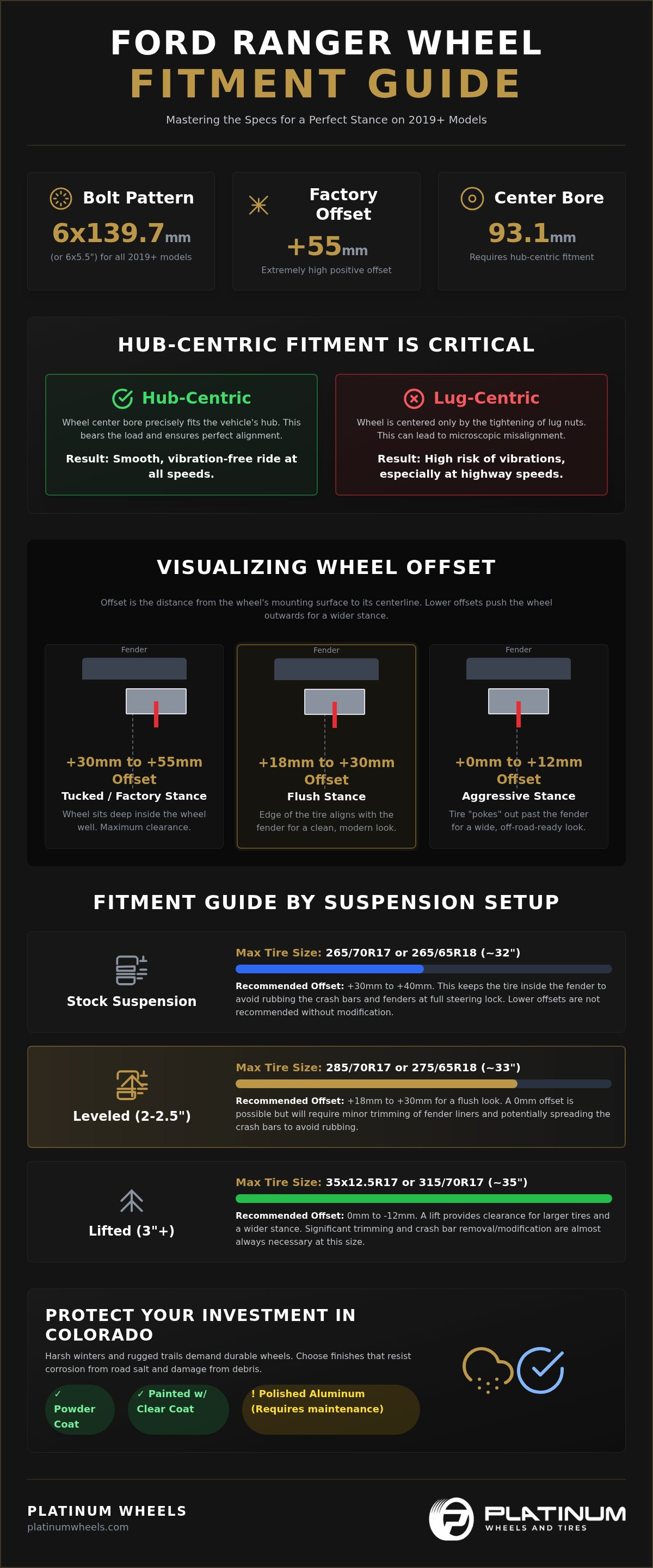
Every Ford Ranger produced from 2019 to the current model year uses a 6x139.7 bolt pattern, also known as 6x5.5 inches. While this pattern is shared with popular rivals like the Toyota Tacoma and Chevrolet Silverado, you can't simply swap wheels between them. The Ranger requires a significantly higher offset than most other 6-lug trucks. Buying used rims from a different brand often results in the wheels sticking out too far or hitting the brake calipers. Always verify your truck's specific year before ordering, especially since the 2024+ "Next-Gen" models have a wider track that changes how certain offsets sit in the wheel well.
Hub-Centric vs. Lug-Centric Wheels
Precision fitment is the difference between a smooth ride and a vibrating steering wheel on the drive up to the mountains. Hub-centric wheels are designed so the center hole of the wheel fits perfectly over the hub of the axle. This ensures the wheel is perfectly centered, which is vital for high-speed stability on Denver highways. Many cheap aftermarket rims are "lug-centric," meaning they rely on the lug nuts to center the wheel. This often leads to microscopic misalignments that cause annoying vibrations. Hub-centric wheels are the standard for Ranger safety. If you fall in love with a wheel that has a larger center bore, you must use high-quality hub-centric rings to fill that gap and maintain a balanced ride.
Standard factory setups usually feature 17-inch or 18-inch rims with very conservative styling. Most Denver owners opt for 17-inch aftermarket upgrades to allow for more tire sidewall, which provides better cushioning on rocky trails. Others prefer the bold look of 20-inch wheels for a street-focused, aggressive stance. Whatever your goal, understanding these base specs prevents you from making a costly mistake before your truck even hits the shop floor.
The Technical Side: Offset and Backspacing for the Ranger
The Ford Ranger is notorious for its exceptionally high factory offset of +55mm. This means the mounting surface of the wheel sits far toward the outside face, pulling the entire assembly deep into the wheel well. While this keeps the tires tucked under the fenders, it leaves your truck looking narrow and limits your ability to run larger, more capable tires. When you start shopping for aftermarket ford ranger wheels, understanding how this number interacts with backspacing is the key to achieving that perfect Colorado stance without compromising your suspension.
Positive offset pushes the wheel inward; negative offset pushes it out. If you go too far into the negative, you increase the "scrub radius," which is the arc the tire travels as you turn the steering wheel. A massive scrub radius can lead to heavy steering and accelerated wear on your front-end components. To stay within safe operating parameters, you should cross-reference your choices with NHTSA tire safety guidelines to ensure your setup remains street-legal and mechanically sound.
Calculating the Perfect Stance
Most Ranger enthusiasts aim for one of three specific looks. A +55mm offset is the stock "tucked" look. Moving to a +30mm offset usually brings the tire edge flush with the fender, providing a cleaner, more purposeful appearance. If you want a wide, aggressive "poke" where the tire sticks out past the bodywork, you'll look toward a +0mm offset. Keep in mind that wheel width matters too. A 9-inch wide wheel with a +30mm offset will sit further out than an 8.5-inch wheel with the same offset. Visualizing this relationship helps you avoid buying a setup that looks too skinny or requires massive fender flares.
The Rubbing Point: Crash Bars and Upper Control Arms
Fitment isn't just about looks; it's about clearance. The Ranger's front crash bars are the primary obstacle for anyone wanting larger tires. These safety bars sit very close to the tire at full lock. If your backspacing is incorrect, your tires will catch these bars during tight turns or while articulating on a trail. Similarly, if you choose a wheel with too much positive offset, the inner sidewall might rub against the factory Upper Control Arms (UCAs). If you're feeling stuck on the math, check out our guide on How to Find Wheel Offset for Your Truck to see how these measurements translate to real-world fitment.
Getting the technical details right ensures your rig handles as well as it looks. If you're ready to skip the guesswork, a professional wheel and tire package can take the stress out of the selection process by ensuring every measurement is dialed in for your specific generation.
Choosing the Right Finish and Material for Colorado Weather
Living in the Front Range means your truck faces a unique set of environmental challenges. Choosing the right material for your ford ranger wheels isn't just about aesthetics; it's about long-term survival. Most aftermarket rims are cast or forged aluminum alloy. They're significantly lighter than steel, which improves your Ranger's agility on mountain passes and helps with braking performance during stop-and-go Denver traffic. While steel rims are rugged and cheap, they're heavy and prone to rust once the winter slush hits. For a detailed comparison, read our guide on Alloy Rim Wheels vs. Steel: What Is Best for Colorado? to see why aluminum is the superior choice for our climate.
Best Finishes for Year-Round Driving
Denver's heavy use of magnesium chloride and road salt can be a death sentence for cheap finishes. Traditional electroplated chrome often pits and peels after just one season of winter driving. If you want that high-shine look, PVD (Physical Vapor Deposition) chrome is the way to go. It's essentially a high-tech powder coat that mimics the look of chrome but provides a durable barrier against corrosive salts. For those who prefer a darker look, high-quality powder coating is the gold standard. It's thicker than traditional paint and resists rock chips from gravel-heavy roads like I-70. Trending colors for the Ford Ranger currently include matte black, bronze, and anthracite, which do an excellent job of hiding trail dust and brake grime.
Beadlock vs. Beadlock-Style Wheels
You'll often see two types of "rugged" wheels on the trail: true beadlocks and simulated beadlocks. True beadlock wheels use a functional ring to bolt the tire's bead to the rim, allowing you to run extremely low air pressure for rock crawling. However, they're maintenance-intensive and require frequent torque checks. For most owners who spend their time on the I-25 corridor, beadlock-style wheels are the better option. They offer the aggressive off-road look with a decorative outer ring but don't have the legal or mechanical complexities of the real thing. They're also lighter, which helps preserve your fuel economy during long hauls across the state.
To keep your new ford ranger wheels looking sharp, develop a post-mountain ritual. Rinse your wheels thoroughly after any trip through the snow or mud to remove salt buildup. Avoid using harsh acid-based cleaners; a simple mix of mild soap and water is usually enough to protect the finish and keep your rig looking showroom-ready for years to come.
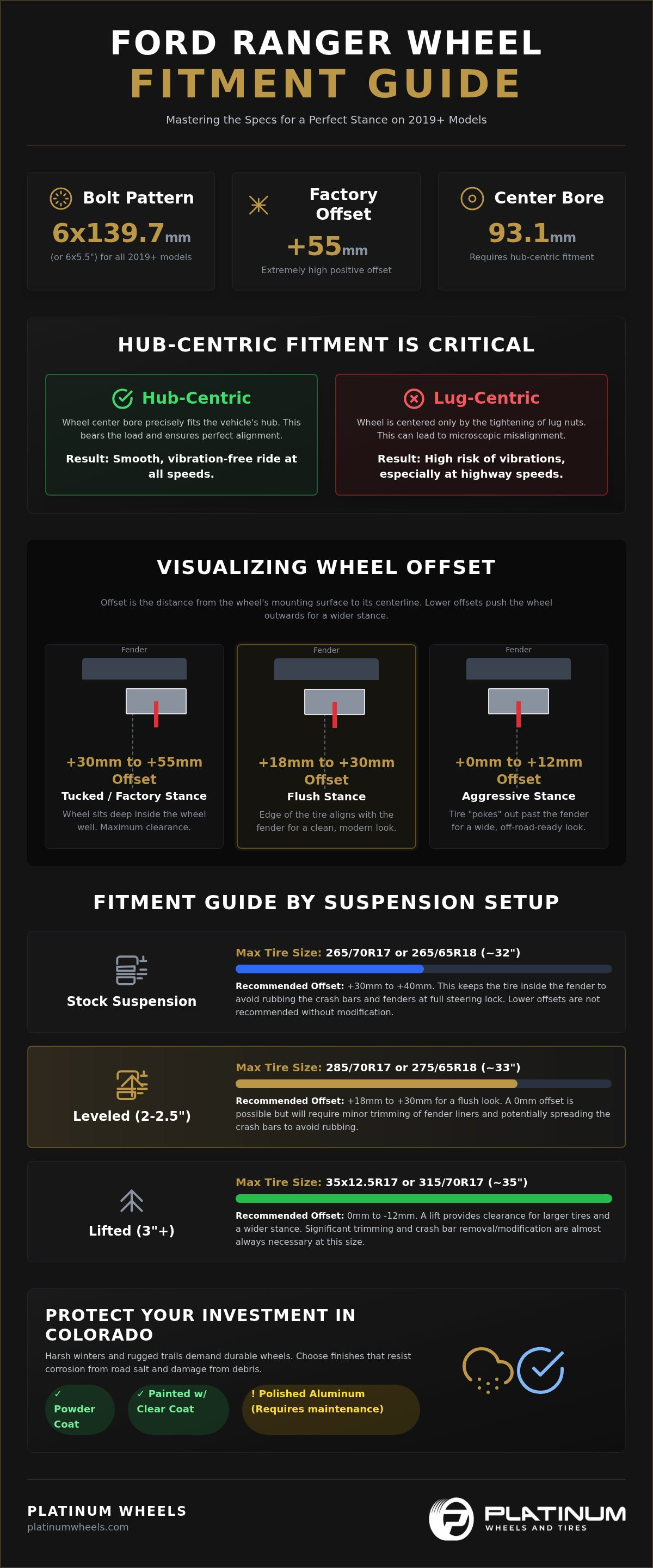
Fitment Guide: Wheels for Stock, Leveled, or Lifted Rangers
Finding the right ford ranger wheels is only half the battle. You also have to ensure they actually fit your specific suspension setup. On a completely stock Ranger, you're mostly restricted to factory tire sizes or very slight upgrades, such as a 265/70R17. The biggest hurdle isn't the fender; it's the high-strength steel crash bars located in front of and behind the front tires. These safety components are notorious for catching the tread of larger tires during tight turns, which is why many Denver owners quickly look toward suspension modifications.
The Leveling Kit Advantage
A 2-inch leveling kit is the most popular modification for the Front Range. It eliminates the factory rake and provides the necessary clearance to run 33-inch tires. When you level your truck, you can move away from the tucked-in +55mm factory offset and opt for something like a +30mm or +25mm. This gives you a wider stance and better trail stability. If you're debating between a subtle height increase or a massive overhaul, read our Leveling Kit vs. Lift Kit: The Ultimate 2026 Guide. For a leveled Ranger, we typically recommend an 8.5-inch or 9-inch wide wheel to keep the tire sidewall properly supported.
Matching Wheels with All-Terrain Tires
Your choice of rims must align with the technical requirements of your rubber. When selecting new ford ranger wheels, the rim width must match your tire manufacturer’s specifications to ensure a safe bead seat. If you're mounting a wide 285mm tire, putting it on a narrow factory rim can cause the tread to crown, leading to uneven wear and poor traction on snowy I-70 passes. You'll want to check out our advice on Choosing the Best All-Terrain Tires for Colorado to find a tread pattern that matches your driving habits. For the best results, look for a balanced wheel and tire package. This ensures the wheel width, offset, and tire diameter all work in harmony to prevent rubbing while maximizing your off-road durability.
If you're ready for the ultimate transformation, fitting 35-inch tires requires a full 6-inch lift kit and some minor trimming of the plastic liners. This setup is the gold standard for serious rock crawling, but it takes precision to get right. Don't leave your fitment to chance. Browse our custom truck wheels and lift kits today to find a combination that's guaranteed to clear your crash bars and dominate the trail.
Professional Ranger Wheel Installation in the Denver Front Range
Buying a set of ford ranger wheels online might seem convenient, but it often leads to a logistical nightmare once the boxes arrive at your doorstep. Shipping damage, incorrect lug nuts, or realizing the offset doesn't clear your suspension are common pitfalls for the DIY enthusiast. Choosing local installation in the Denver Front Range ensures that your investment is handled with the precision it deserves. At Platinum Wheels, we bridge the gap between high-end parts and expert technical execution, serving as the go-to experts for owners in Denver, Aurora, and Lakewood.
Modern Ford systems, specifically the 2026 models, require specialized TPMS sensor programming to maintain your vehicle's safety alerts and dashboard accuracy. We don't just bolt wheels on; we ensure the electronics communicate perfectly with your truck's onboard computer. We also utilize high-speed road force balancing for every package. This process simulates the actual pressure of the road to identify tiny inconsistencies that standard balancers miss. It is the only way to guarantee a vibration-free ride when you're cruising at highway speeds on I-70 or climbing toward the Continental Divide.
The Platinum Wheels Installation Process
Our team performs a comprehensive fitment check before the first lug nut is tightened. We verify that your chosen ford ranger wheels will clear the crash bars and control arms based on the specific suspension height of your rig. If you have opted for a lift kit or leveling kit, we synchronize the installation to ensure the geometry and alignment are spot-on. This holistic approach prevents premature tire wear and keeps your Ranger handling like it came straight from the factory. We take pride in serving the entire community, from the growing neighborhoods in Castle Rock to the rugged trails near Fort Collins.
Building Your Custom Package
We take a consultative approach to every build. Instead of guessing which offset looks best, you can speak with our technicians to visualize the final "poke" or "flush" look for your specific Ranger generation. We act as a true one-stop shop, providing the wheels, tires, sensors, and suspension components in a single, streamlined visit. By bundling these services, you eliminate the headache of coordinating multiple vendors or dealing with incompatible parts. Visit Platinum Wheels in Denver for your Ranger upgrade and let our local experts turn your vision into a trail-ready reality with the efficiency and precision your truck deserves.
Ready to Build Your Trail-Ready Rig?
Mastering the technical specifications of your truck is the first step toward a rig that performs as well as it looks. You now understand the critical shift to the 6x139.7 bolt pattern and how to navigate high factory offsets to clear those notorious crash bars. By selecting durable, weather-resistant finishes like PVD chrome or powder coating, you're protecting your investment against the harsh magnesium chloride used on Front Range roads. Choosing the right ford ranger wheels is about more than just style; it's about ensuring your vehicle is prepared for the diverse terrain of the Rockies.
Don't settle for a generic setup that might rub or vibrate at highway speeds. As specialists in Ford Ranger suspension and fitment, we provide the local expertise you need to dial in your stance. Platinum Wheels is an authorized dealer for premium off-road wheel brands, offering expert local installation in Denver and Aurora. We ensure your TPMS sensors are programmed and your assembly is road-force balanced for the ultimate mountain driving experience. Build Your Custom Ford Ranger Wheel & Tire Package Today. Your next adventure is waiting, and we're here to help you reach it with confidence.
Frequently Asked Questions
What is the bolt pattern for a 2026 Ford Ranger?
The 2026 Ford Ranger uses a 6x139.7 bolt pattern, also known as the 6x5.5 inch measurement. This specification is shared with many modern mid-size trucks, but the Ranger requires a specific high offset to function correctly. It's a significant change from older Ford models that used a 5-lug setup. Getting the correct pattern is the first step before we help you select your new ford ranger wheels at our Denver shop.
Can I fit 33-inch tires on a stock Ford Ranger?
You cannot fit 33-inch tires on a stock Ranger without experiencing significant rubbing against the front crash bars. Most enthusiasts in the Denver area install a 2-inch leveling kit to create the necessary clearance for this tire size. Without a lift or level, you're generally limited to a 31-inch or small 32-inch diameter. Our team in Aurora specializes in matching suspension height with tire size to prevent any fitment headaches.
Will aftermarket wheels void my Ford factory warranty?
Installing aftermarket wheels won't automatically void your Ford factory warranty. Under the Magnuson-Moss Warranty Act, a manufacturer can only deny a warranty claim if they prove that the aftermarket part directly caused the failure. Choosing high-quality ford ranger wheels and having them professionally installed at a local shop like Platinum Wheels ensures your upgrades meet safety standards. This professional approach provides peace of mind while you enjoy your rig's new look across the Front Range.
What wheel offset is best for a flush look on a Ranger?
A wheel offset between +30mm and +35mm is the sweet spot for achieving a flush look on the current Ranger. The factory wheels sit deep in the wells with a +55mm offset. Moving to a +30mm offset pushes the tire edge out so it aligns perfectly with the top of the fender flare. This creates a much broader stance that improves the truck's aesthetic without requiring you to install massive aftermarket fender extensions for street legality.
Do I need to remove my crash bars for wider wheels?
You don't always need to remove your crash bars for wider wheels, but you might need to modify them. These bars are critical safety components that protect the cabin during a collision. Many Denver owners opt for high-clearance crash bars or slight trimming rather than total removal. If you select a wheel with a very low or negative offset, the tire will likely strike the bars at full steering lock. We help you find a safe middle ground.
What is the difference between hub-centric and lug-centric wheels for Ford?
Hub-centric wheels are designed so the center bore fits perfectly over the truck's axle hub, which carries the vehicle's weight. Lug-centric wheels rely solely on the wheel studs for centering. Because the Ranger is sensitive to vibrations, we always recommend hub-centric designs for a smooth ride on I-70. If an aftermarket wheel has a larger bore, we use hub-centric rings to ensure a precise fit. This setup is essential for maintaining long-term suspension health and driving comfort.
Should I get 17-inch or 20-inch wheels for off-roading in Colorado?
We recommend 17-inch wheels for off-roading in Colorado because they allow for a taller tire sidewall. This extra rubber cushions against jagged rocks and lets you air down for better traction on trails near Boulder. While 20-inch rims offer a bold street presence in Lakewood, they leave little sidewall to protect the rim from damage. For the best balance of durability and performance, the 17-inch setup is the local favorite for mountain driving.
Do I need new TPMS sensors when I buy new wheels?
You don't strictly need new TPMS sensors, but we highly recommend them when building a new wheel and tire package. Transferring your old sensors requires dismounting your original tires, which increases labor costs. Since sensor batteries have a limited lifespan, starting with fresh 2026-compatible sensors ensures your dashboard alerts remain accurate for years to come. We handle the programming at our Denver facility so your new setup is ready for the road immediately after installation.