
Best Ford Ranger Tires in Denver: Off-Road & All-Terrain
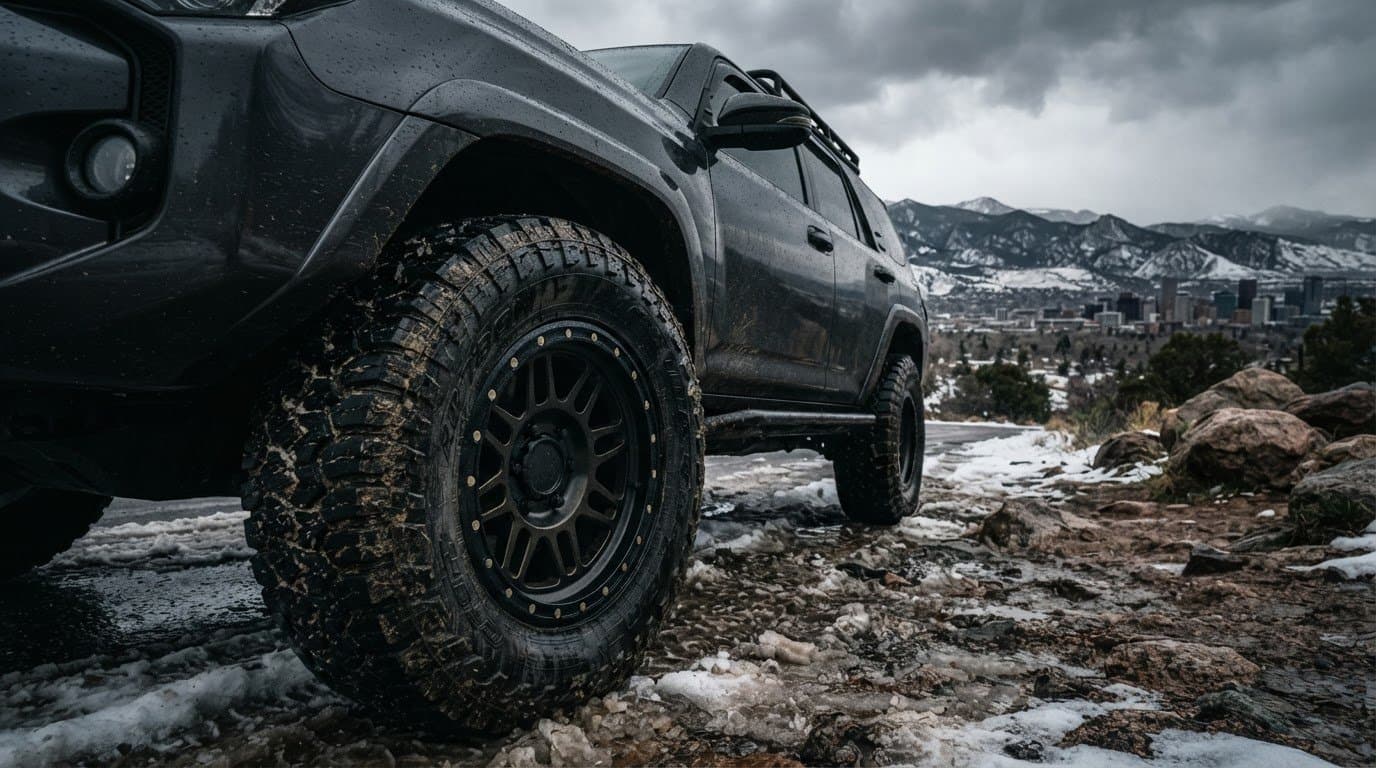
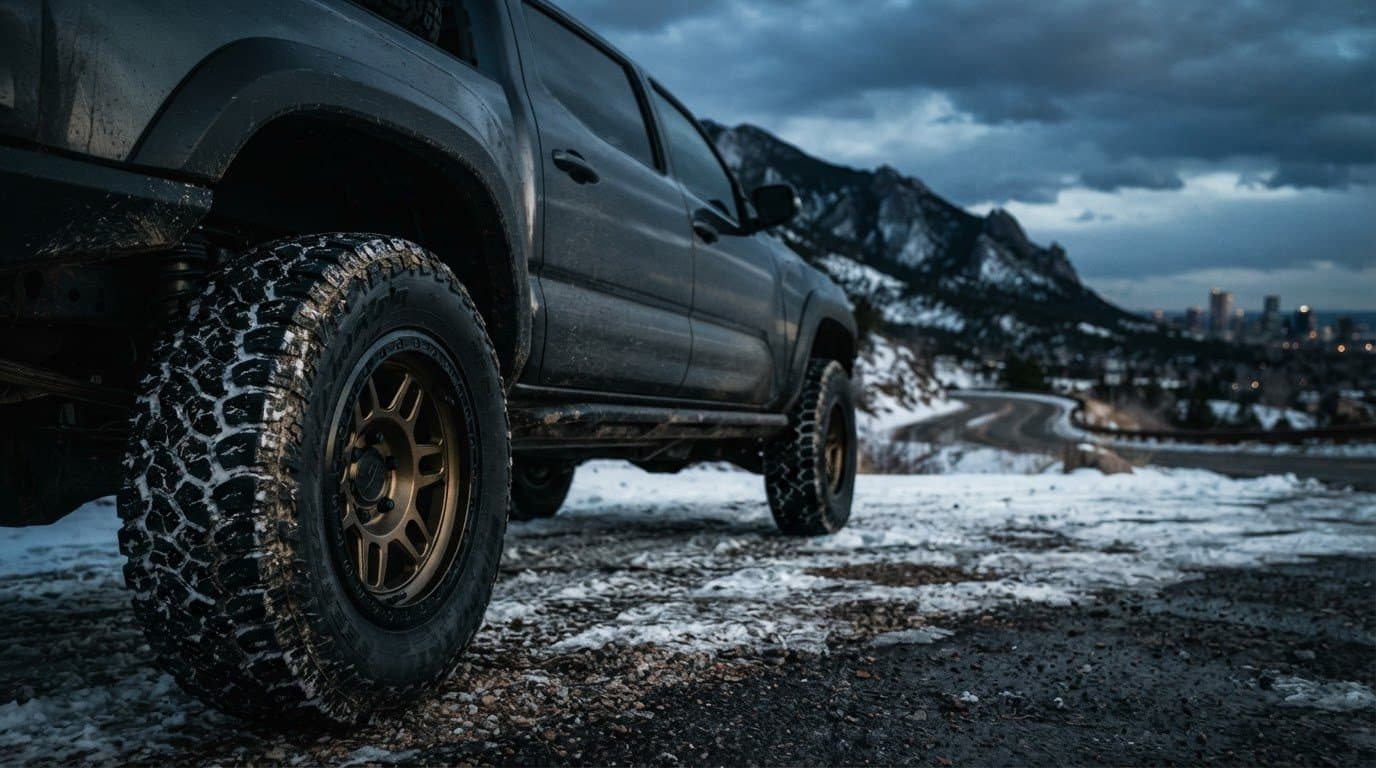
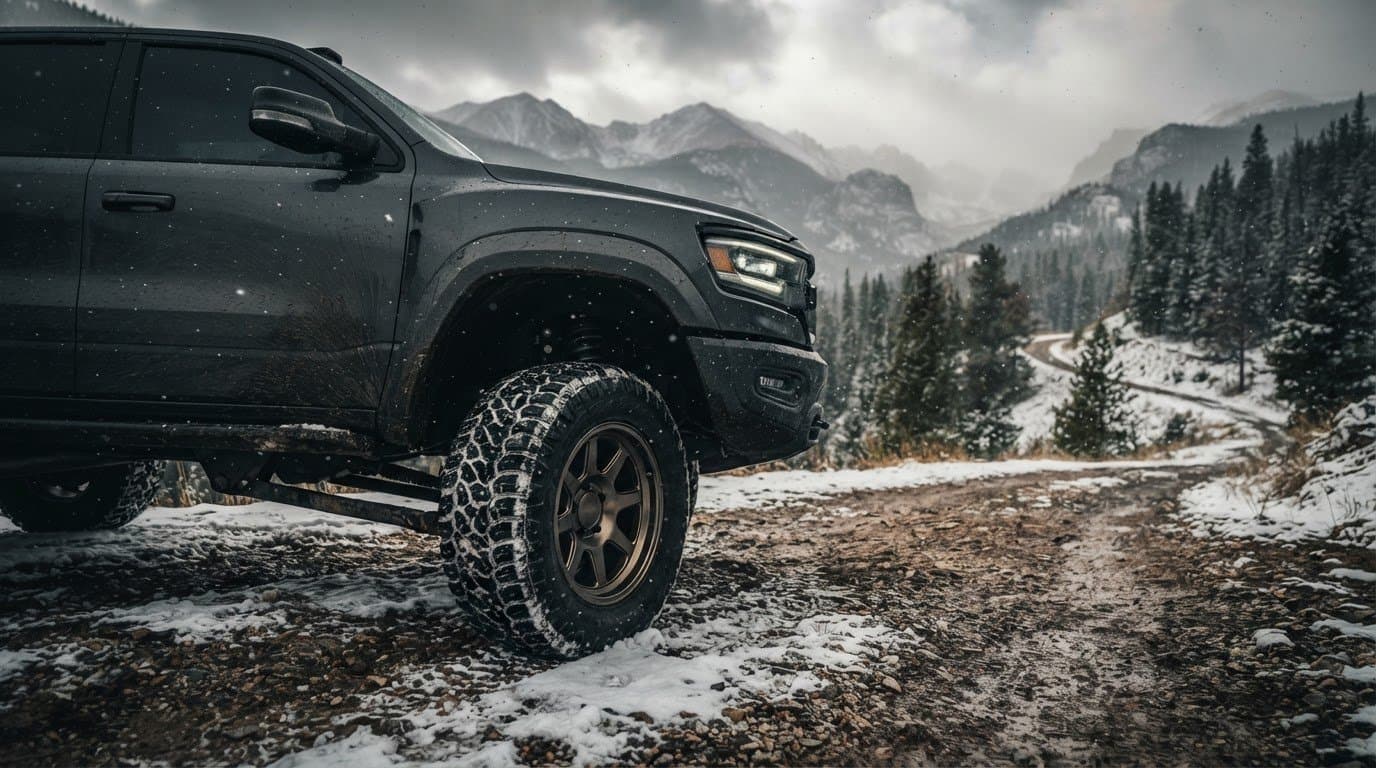
You're heading up I-70 toward Silverthorne on a Friday evening when the sleet turns to heavy snow, and suddenly, your factory rubber feels a lot less reliable than it did in the driveway. It's a common realization for local truck owners who find that the standard setup doesn't always cut it when the pavement ends or the Colorado temperature drops. Finding the right ford ranger tires means balancing the aggressive look you want with the practical traction you need to stay safe on steep mountain passes.
We understand that you're looking for that perfect, beefy stance without the annoying highway hum or the frustration of tires rubbing against your wheel wells. You need a setup that's tough enough for weekend trails but refined enough for the daily commute through Denver. This guide helps you discover the ideal tires for your specific Colorado lifestyle, covering everything from stock replacements to aggressive off-road upgrades. We'll explore top-tier all-terrain options that meet the Colorado Traction Law, break down the best performers for winter weather, and provide the expert fitment advice you need to get your Ranger trail-ready.
Key Takeaways
- Determine how transitioning from OEM sizes to larger aftermarket options can drastically improve your truck's clearance and trail capability.
- Evaluate the trade-offs between All-Terrain and Mud-Terrain treads to ensure your Ranger is prepared for both I-70 snow and weekend off-roading.
- Master the specifics of fitment for stock, leveled, or lifted setups to choose the right ford ranger tires without risking annoying wheel well rubbing.
- Get insights into why top-tier brands like Nitto and Toyo are engineered to withstand the unique environmental challenges of the Denver area.
- See how professional installation and complete packages provide a headache-free upgrade with full TPMS sensor support and precision balancing.
Understanding Ford Ranger Tire Sizes: OEM vs. Aftermarket
Selecting the right ford ranger tires starts with understanding the numbers on the sidewall. These measurements dictate how your truck sits, handles, and grips the varied terrain of the Front Range. The section width is the tire's width in millimeters. The aspect ratio is the height of the sidewall as a percentage of that width. Finally, the wheel diameter is the size of the rim it fits. While factory engineers choose sizes for general efficiency, many Denver owners find these middle-of-the-road specs lacking for deep snow or rocky trails. Upgrading to a more substantial footprint doesn't just change the look; it transforms how the truck interacts with the road.
Common Stock Sizes for Modern Rangers
For the 2026 model year, Ford provides specific configurations based on trim levels. The XL and XLT typically roll out on 255/70R17 rubber, providing a balanced ride for city streets. The Lariat moves to a 255/65R18 setup, favoring a slightly larger wheel for a more premium look. If you look at the Ford Ranger model history, you'll see a steady progression toward larger wheel diameters across all generations. The Raptor stands alone with a massive 285/70R17, a size many non-Raptor owners aim for when planning their first major upgrade. Understanding these baseline numbers is the first step toward customizing your ride for Colorado's unique demands.
The 'Plus-Sizing' Strategy
Plus-sizing is the practice of increasing your tire's total diameter or width while keeping the same wheel size, or moving to a larger wheel with a lower profile tire to maintain the overall diameter. Most Ranger owners in Denver choose this to gain ground clearance and a more aggressive truck stance when selecting new ford ranger tires. It's a smart way to fill out the wheel wells, but it requires precision. A wider footprint improves stability on loose gravel, yet it can throw off your speedometer if the total height changes significantly. We prioritize finding a size that offers maximum traction without causing the tires to rub against the frame during tight turns.
Your daily route in Denver dictates your ideal dimensions. If you spend 90% of your time on I-25, sticking close to OEM widths helps maintain fuel economy and reduces road noise. However, if your weekends involve airing down for trails near Idaho Springs, moving to a wider "plus" size provides the flotation and grip necessary for soft dirt and deep slush. We help you find that sweet spot where capability meets daily drivability, ensuring your truck is ready for anything the Rockies throw your way.
All-Terrain vs. Mud-Terrain: Which is Best for Colorado?
Choosing between All-Terrain vs. Mud-Terrain Tires depends on where you spend your miles. For most Denver drivers, the decision balances highway manners with weekend capability. All-terrain options offer a quieter ride and better longevity. Mud-terrain tires provide the deep voids needed to clear debris on technical trails. Both have their place in the Rockies, but they serve very different purposes.
In Colorado, the Three-Peak Mountain Snowflake (3PMSF) rating is a necessity. This symbol indicates the tire meets specific snow traction requirements. It helps you stay compliant with the I-70 Traction Law during the winter months. While many mud-terrain tires look tough, they often lack the dense siping required for icy highway stability. Choosing the right ford ranger tires means ensuring you can actually stop when a storm hits the foothills. Don't sacrifice safety for a rugged look.
The All-Terrain Advantage in the Front Range
All-terrain tires are the "Goldilocks" choice for the typical Denver commute. They provide a smooth, predictable feel on dry asphalt while maintaining enough bite for light off-roading. Unlike aggressive mud treads, A/T designs feature interlocking blocks that excel on packed snow and ice. The Nitto Ridge Grappler and Toyo Open Country are top-tier picks for 2026. These models offer a refined balance that won't drive you crazy with road noise during a long trip to the mountains. They are built for the driver who needs reliability on every surface.
Mud-Terrain: For the Weekend Warrior
If your Ranger spends its time tackling steep, rocky inclines or deep mud in high-altitude basins, a mud-terrain (M/T) tire is the way to go. These tires feature reinforced sidewalls and massive shoulder lugs to resist punctures. They provide maximum grip on technical terrain where standard tires fail. The trade-off is a distinct road hum and faster tread wear on dry pavement. For those who want the best of both worlds, hybrid rugged-terrain (R/T) options offer an aggressive look with slightly better on-road manners. These hybrids are becoming a favorite for owners who want a bold stance without a punishing ride.
Think about your actual trail-to-tarmac ratio before you buy. If you are unsure which setup fits your suspension and lifestyle, we can help you find the perfect all-terrain or mud-terrain tires to match your driving style. Finding the right balance ensures your truck remains a joy to drive every day of the week.
Ford Ranger Fitment Guide: Stock, Leveled, and Lifted
Analyze your suspension setup before you commit to a new set of rubber. Your truck's height is the primary factor that determines which ford ranger tires will actually fit without causing damage. Beyond just height, we look closely at wheel offset, which is the distance from the hub mounting surface to the centerline of the wheel. A proper offset ensures your wider tires don't rub against the suspension components or the inner fender liners. If you are still deciding how to raise your truck, read our leveling kit vs lift kit guide to understand the mechanical differences between these two popular upgrades.
Maximum Tire Size for Stock Suspension
On 2026 Ford Ranger models, the factory wheel wells are engineered for specific OEM tolerances. You can typically move up to a 265/70R17 without much trouble, but this is often the limit for a stock setup. Pushing for anything larger usually results in "rubbing," particularly when you are backing out of a driveway or making a sharp U-turn in a crowded Denver parking lot. Staying within these factory boundaries preserves your fuel economy and ensures your speedometer remains accurate while still providing a slight boost in trail capability.
Upgrading with a Leveling Kit
Installing a 2-inch leveling kit is the most effective way to improve your truck's stance in Aurora and Lakewood. By raising the front end to eliminate the factory "rake," you create enough clearance to run 32-inch or even 33-inch tires. A common choice for leveled Rangers is the 285/70R17, which provides a much broader footprint and a taller sidewall. This setup offers a significant aesthetic upgrade and better ground clearance for mid-level trails without requiring extensive modifications to your truck's frame or crash bars.
Going Big: Lifted Ranger Tire Options
When you move to a 4-inch or 6-inch lift kit, you enter the territory of 34-inch and 35-inch ford ranger tires. These builds demand professional expertise because fitting 35s on a Ranger often requires modifications to the factory crash bars or minor trimming of the plastic valance. We focus on maintaining your ride quality by selecting the right wheel backspacing to handle the increased unsprung weight. Larger tires put more stress on your braking system and drivetrain, so we ensure your package is balanced for both the steep inclines of the Rockies and the high speeds of the highway.

Top Tire Brands for the Ford Ranger in 2026
Choosing the right brand involves more than just picking a name you recognize. It's about matching the manufacturer's specific rubber compounds and tread designs to the unique temperature swings and terrain of the Front Range. While many brands offer ford ranger tires, only a few have mastered the balance of off-road durability and highway comfort required for Colorado driving. Each manufacturer has a distinct philosophy, ranging from aggressive "hybrid" designs to high-mileage workhorses.
Nitto has become a local favorite due to their aggressive sidewall designs that don't sacrifice streetability. The Ridge Grappler, in particular, is a standout hybrid that bridges the gap between all-terrain and mud-terrain. Toyo is synonymous with longevity; their Open Country A/T III is built with a focus on durability, making it an excellent choice for drivers who rack up high mileage on I-25. For those seeking performance on a budget, the Falken Wildpeak A/T4W offers exceptional grip in wet and snowy conditions. Finally, BFGoodrich remains the industry standard with the KO3, an evolution of the legendary KO2 that features improved chip resistance for rocky trails near Central City.
Performance Comparison: Nitto vs. Toyo
The debate between the Toyo Open Country and the Nitto Ridge Grappler often comes down to ride quality versus trail bite. Toyo generally offers a more refined on-road feel with a focus on wet traction and tread life. Nitto prioritizes a rugged aesthetic and lateral grip for technical trail work. For a deeper dive into these technical comparisons, check out our all terrain tires pillar. In Denver's stop-and-go traffic, Toyo tends to provide a marginally quieter experience, while Nitto is the clear winner for those who want a bold, aggressive stance.
Best Tires for Colorado Winters
Winter traction in the Rockies relies heavily on siping. These are the small slits in the tread blocks that create thousands of biting edges to grip black ice and packed slush. While we've discussed the importance of the 3-peak mountain snowflake (3PMSF) rating, brands like Falken and Toyo have perfected multi-wave siping to prevent tread block squirm during heavy braking. For those who frequently brave the I-70 mountain corridor during snowstorms, we highly recommend the Falken Wildpeak A/T4W for its superior cold-weather rubber compound and deep snow performance.
We can help you navigate these brands to find the specific model that fits your lifestyle and suspension setup. Build your custom Ford Ranger wheel and tire package with us today to ensure your truck is ready for the next Colorado adventure.
Why Get Your Ranger Tires at Platinum Wheels Denver?
Selecting a new set of ford ranger tires is a significant investment in your truck's performance and safety. While big-box retailers might offer a generic selection, they often lack the specialized knowledge required to set up a mid-sized truck for the unique demands of the Rockies. We provide a consultative, expert-led experience that prioritizes your specific driving goals. Our team understands how Colorado's thin air and dramatic temperature swings affect tire pressure and rubber compounds. We don't just move inventory; we build high-performance setups that enhance your truck's capability and your confidence behind the wheel.
Professional installation is the foundation of a great driving experience. We focus on the granular details that matter, such as high-speed balancing to prevent highway vibrations and precise TPMS sensor integration to keep your safety systems functioning perfectly. Our deep roots in the local automotive community mean we treat every customer like a neighbor, offering honest advice on what will actually work for your daily commute and your weekend adventures. We take the time to ensure your fitment is perfect, so you can head straight from our shop to the trailhead without a second thought.
The Platinum Wheels Package Advantage
Choosing one of our complete wheel and tire packages is the most efficient way to upgrade your Ranger. We handle the heavy lifting by providing a "ready-to-drive" solution that includes professional mounting, precision balancing, and full TPMS programming. This integrated approach ensures that every component works in harmony, reducing the risk of technical issues down the road. It is a hassle-free way to transform your truck's appearance and performance in a single visit. For more details on why this is the preferred method for local enthusiasts, read our guide on aftermarket wheel and tire packages.
Expert Installation in the Front Range
We are proud to serve the entire Denver metro area, including Arvada, Wheat Ridge, and Lakewood. Local Ranger owners trust us because we specialize in the suspension geometry necessary to accommodate larger ford ranger tires. We don't just slap on a set of rubber and send you on your way; we verify clearances and ensure your truck's stance is exactly what you envisioned. Whether you need a simple leveling kit or a comprehensive lift package, we have the technical discipline to get the job done right the first time. Visit Platinum Wheels in Denver for your Ranger upgrade! Stop by our shop to discuss your build and see why we are the top choice for truck enthusiasts in the Front Range.
Get Your Ranger Trail-Ready for the Front Range
Choosing the right ford ranger tires is about more than just finding an aggressive tread; it's about ensuring your truck is prepared for the unpredictable reality of Colorado driving. We've explored how a simple 2-inch leveling kit can open the door to 33-inch tires and why the 3-peak mountain snowflake rating is non-negotiable for I-70 commuters. Whether you prioritize the high-mileage durability of Toyo or the relentless trail bite of Nitto, the right setup transforms your Ranger into a true dual-purpose machine.
At Platinum Wheels, we specialize in precise Front Range fitment that eliminates rubbing and preserves ride quality. Our team provides expert TPMS integration and professional balancing to ensure your new setup is ready for the road the moment you leave our shop. Don't settle for a generic experience when you can have a custom solution engineered for the Rockies. Shop Custom Ford Ranger Wheel & Tire Packages today and experience the difference that local expertise makes. Your next adventure is waiting, and we're here to make sure your truck is ready to lead the way.
Frequently Asked Questions
What is the largest tire I can fit on a stock Ford Ranger?
On a stock 2026 Ford Ranger, the largest tire you can safely fit without modification is typically a 265/70R17. While the Raptor trim comes factory with 285s, standard trims like the XL or Lariat don't have the same clearance. Pushing beyond a 265 width on stock suspension often leads to rubbing against the inner fender liners during sharp turns in Denver parking lots. We recommend staying within this limit to maintain factory geometry when selecting ford ranger tires.
Do I need a leveling kit to run 33-inch tires on my Ranger?
You generally need a 2-inch leveling kit to run 33-inch tires on a standard Ford Ranger. Raising the front end eliminates the factory rake and provides the necessary vertical clearance for a 285/70R17 setup. Without this lift, you'll likely experience significant rubbing when the suspension compresses or when steering at full lock. This modification is a popular choice for our customers in Aurora who want a bolder stance without committing to a full lift kit.
Will upgrading my Ranger tires void my factory warranty?
Upgrading your ford ranger tires or adding a leveling kit typically won't void your entire factory warranty. Under the Magnuson-Moss Warranty Act, a dealer must prove that an aftermarket part caused a specific failure to deny a claim. For example, larger tires won't affect your engine warranty, but they might impact claims related to suspension wear. It's always a good idea to check with your local Denver dealer if you have specific concerns about your coverage after an upgrade.
What are the best tires for a Ford Ranger driven mostly on Denver highways?
For Rangers driven mostly on Denver highways, all-terrain tires like the Toyo Open Country A/T III are the best choice. These tires provide a quiet ride and excellent fuel efficiency compared to aggressive mud-terrain models. They also feature the 3-peak mountain snowflake rating, which is essential for staying compliant with the I-70 Traction Law during winter. You'll get the rugged look you want without the annoying road hum during your daily commute to Lakewood or Wheat Ridge.
How does tire size affect the Ford Ranger's fuel economy?
Increasing your tire size will generally decrease your Ford Ranger's fuel economy. Larger tires are heavier, which increases unsprung weight and rolling resistance, forcing your engine to work harder. You might see a drop of one to three miles per gallon depending on how aggressive the tread pattern is. Choosing a lighter all-terrain tire can help minimize this impact while still providing a significant upgrade over the factory rubber for your weekend adventures in the foothills.
Do I need to replace my TPMS sensors when getting new tires?
You don't always need to replace your TPMS sensors when getting new tires, but it's often the best time to do it. These sensors have internal batteries that typically last five to seven years. If your Ranger is older, replacing them during a tire swap saves you from paying for labor twice later on. At Platinum Wheels, we provide expert TPMS integration and programming as part of our comprehensive wheel and tire packages for a ready-to-drive experience.
What is the best tire pressure for off-roading a Ford Ranger?
The best tire pressure for off-roading a Ford Ranger usually falls between 15 and 25 PSI. Airing down increases the tire's footprint, providing better traction on soft sand or jagged rocks near Golden. However, you shouldn't go below 15 PSI without beadlock wheels, as you risk the tire popping off the rim. Always remember to air back up to factory specifications before heading back onto the highway to ensure safe handling and prevent long-term tire damage.
How often should I rotate my off-road tires?
You should rotate your off-road tires every 3,000 to 5,000 miles to ensure even tread wear. Aggressive tread patterns on all-terrain and mud-terrain tires are more prone to uneven wear if they aren't moved regularly. Regular rotations extend the life of your investment and help maintain a quieter ride on the pavement. Given the varied terrain we face in the Front Range, staying on top of this maintenance is key to long-term performance and safety.