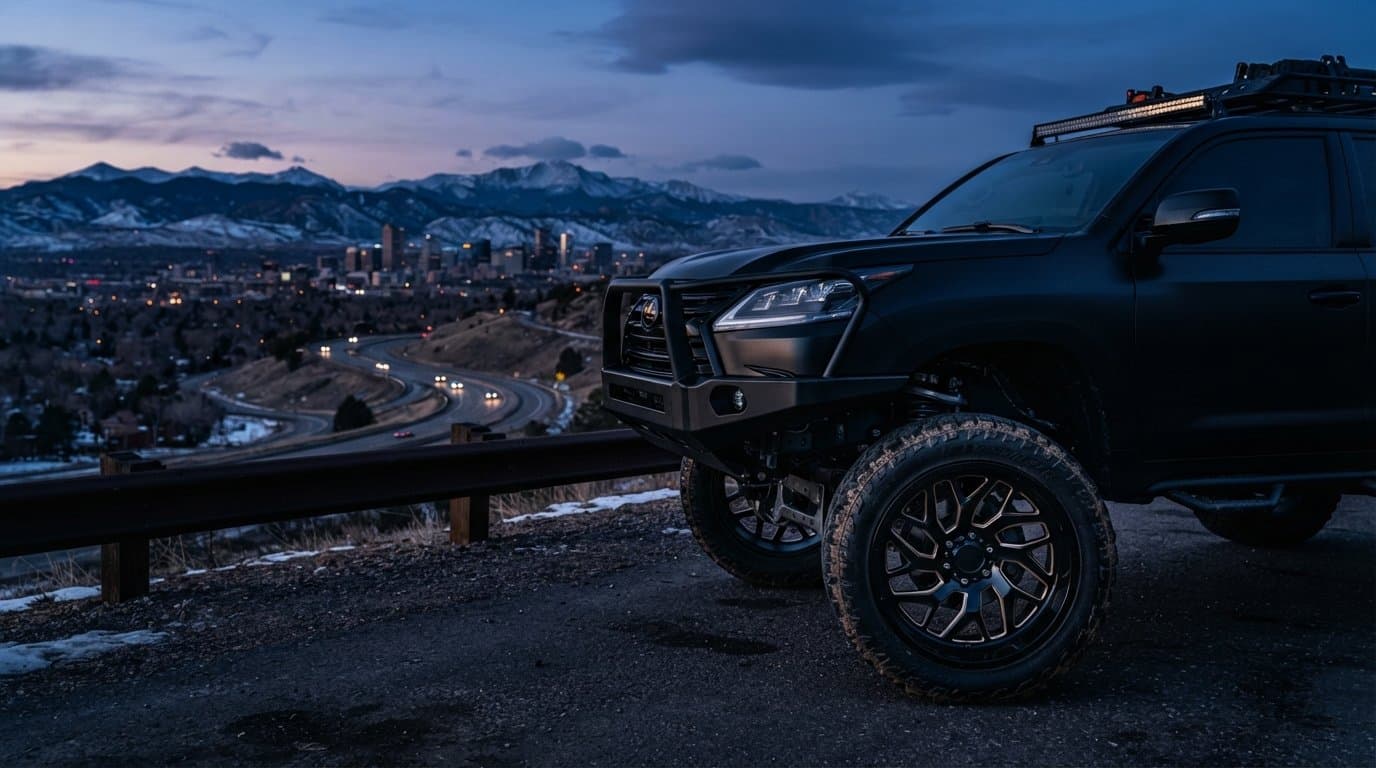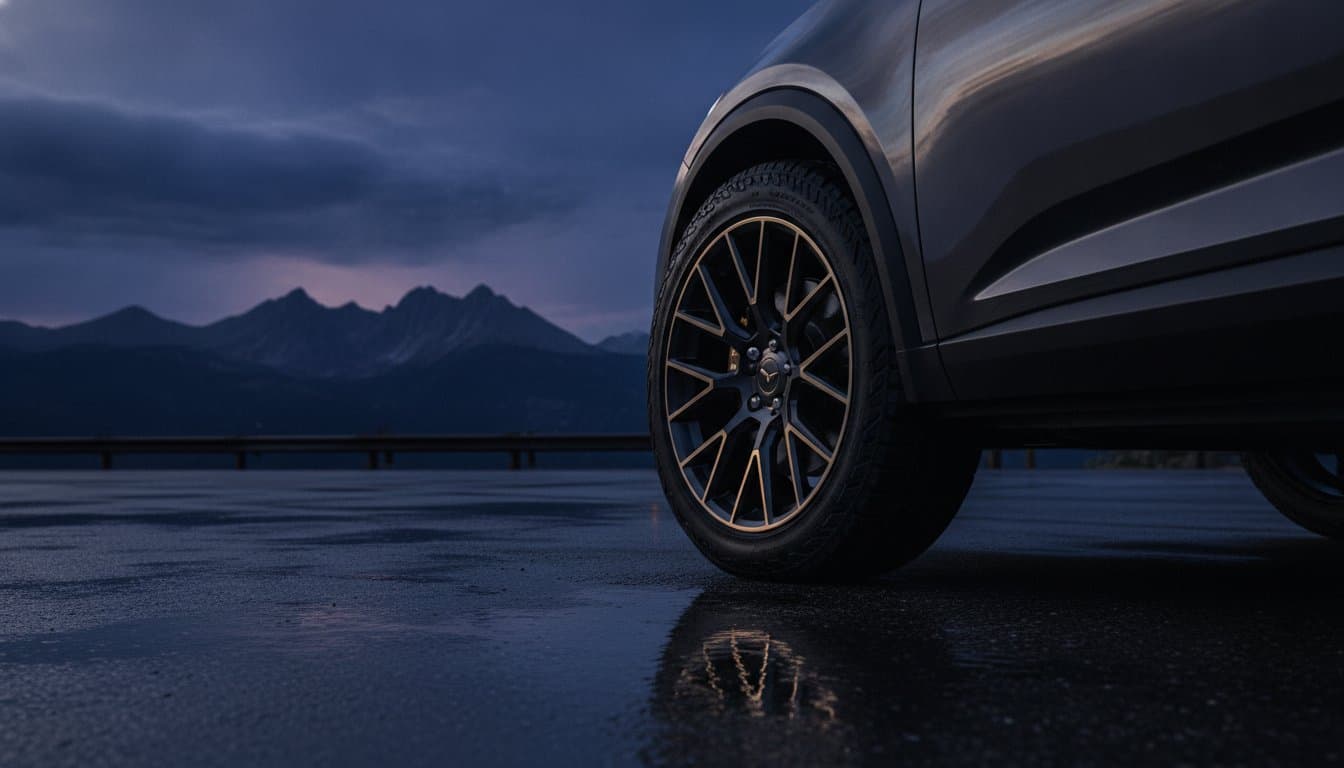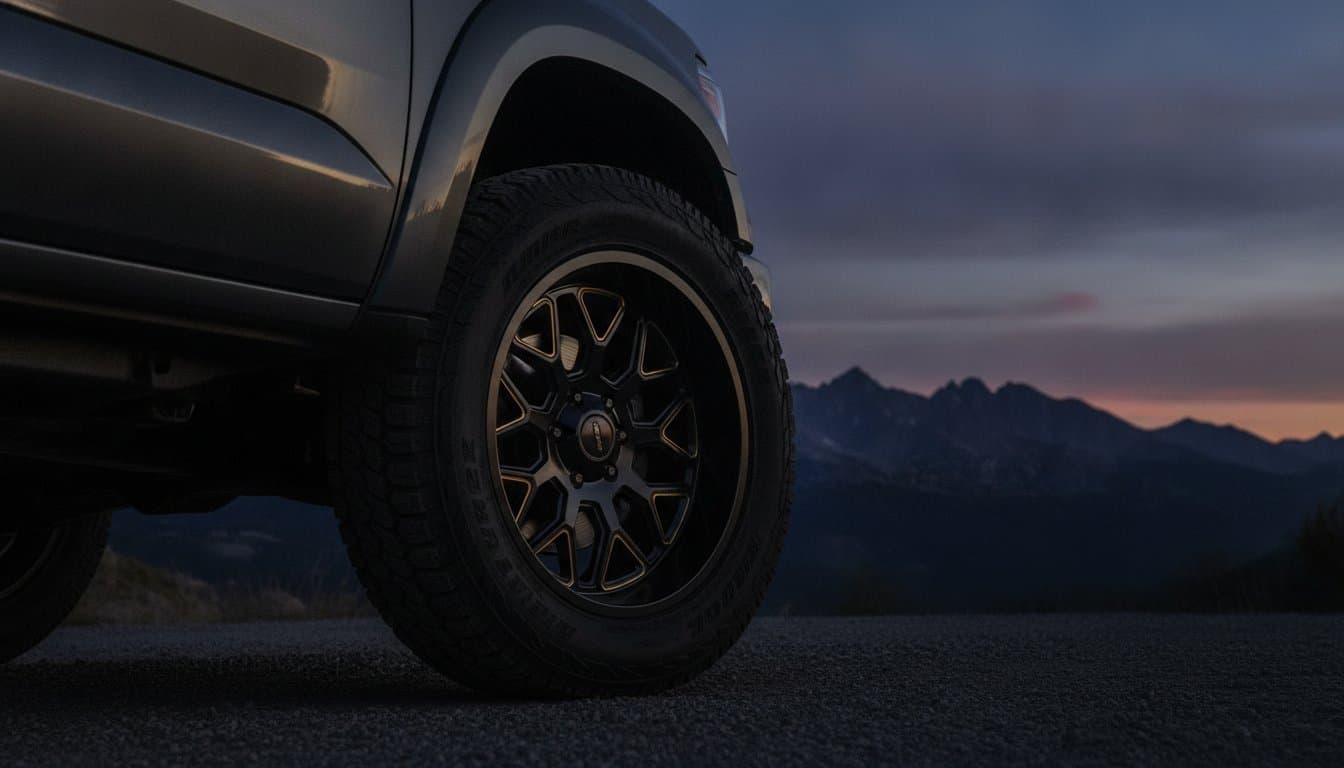
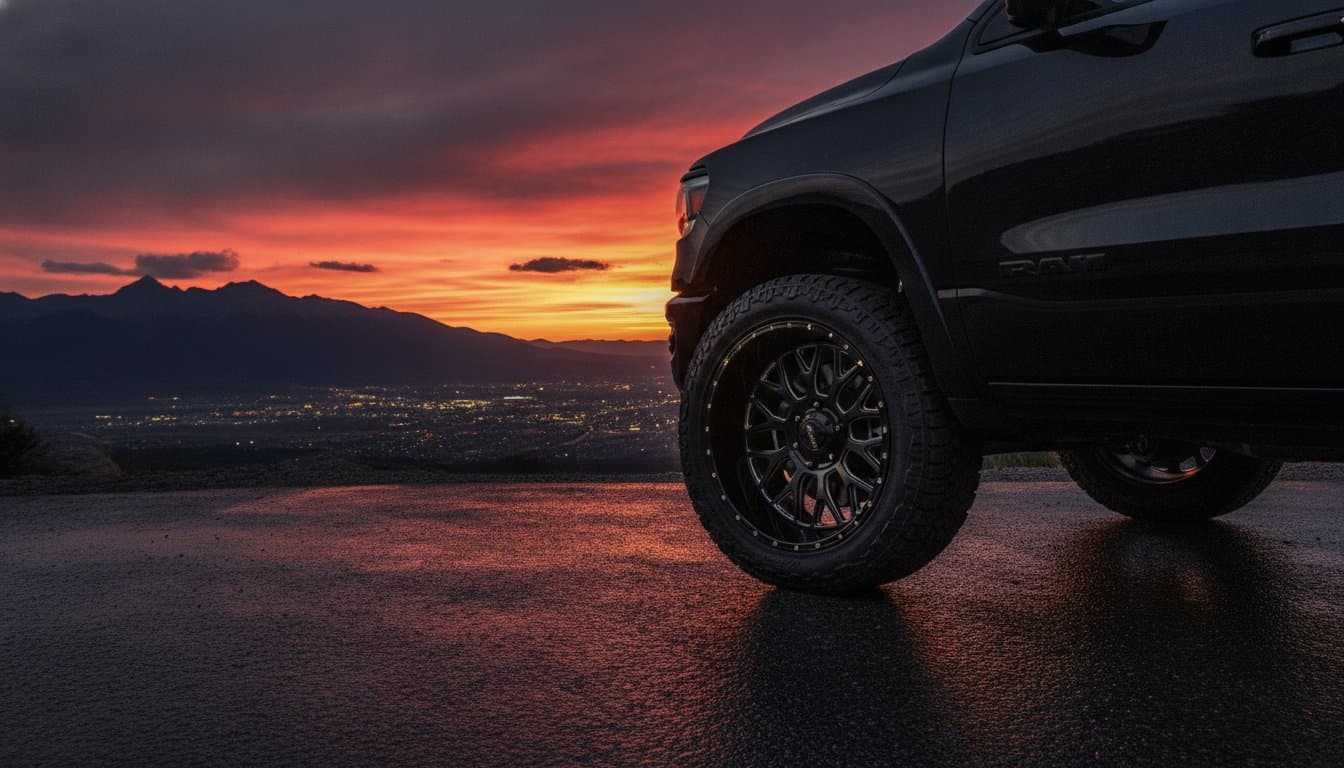
Ram 1500 Wheels: The Ultimate 2026 Guide to Fitment and Style in Denver
Buying the wrong set of Ram 1500 wheels isn't just a blow to your truck's style; it's a fast track to mechanical headaches and potential compliance issues with Colorado's March 2026 suspension laws. You want an aggressive, wide stance that commands respect from Denver to the High Country, but the fear of fender rubbing or a permanent TPMS warning light on your dash is a valid concern. It's frustrating to invest in an upgrade only to find your 5-lug or 6-lug bolt pattern doesn't match or your offset is completely wrong for your specific generation.
We understand that your truck needs to be as functional as it is formidable. This guide promises to help you master the technical specs required to find the perfect set of wheels, optimized specifically for Colorado trails and I-70 winter conditions. You'll learn how to balance aesthetics with precision engineering, ensuring a smooth ride that handles the Front Range with ease. We are going to break down the critical differences in bolt patterns, explain why a 20-inch setup might be your best bet for the street, and show you how professional fitment guarantees your truck looks bold without the guesswork.
Key Takeaways
- Identify your specific bolt pattern to ensure your new Ram 1500 wheels match your truck's generation, whether it's the classic 5x139.7 or the newer 6x139.7 setup.
- Compare the pros and cons of 17-inch versus 20-inch rims to balance off-road durability with highway fuel economy for your Hemi or EcoDiesel engine.
- Learn how to select the ideal offset and width to achieve a flush or aggressive stance without tire rub on leveled or lifted suspensions.
- Understand why hub-centric wheel designs are essential for a smooth, vibration-free driving experience on Colorado’s high-speed highways.
- Discover the advantages of all-inclusive wheel and tire packages that feature expert TPMS sensor integration to keep your dashboard clear of warning lights.
Upgrading Your Ram 1500 Wheels for Colorado Terrain
Upgrading your Ram 1500 wheels isn't just about turning heads at the stoplight. It's a strategic investment in how your truck handles the unique topography of the Mountain West. While the Ram pickup history shows a vehicle designed for heavy work, factory setups often prioritize generic mass-market needs over the specific rigors of the Rockies. A well-chosen aftermarket set improves lateral stability and increases your truck's resale value by giving it the custom, capable look Denver buyers crave.
Most factory wheels suffer from "sunken" offsets and narrow widths that limit your tire choices and leave your truck looking top-heavy. A "Colorado-ready" set of Ram 1500 wheels bridges the gap between rugged durability and aggressive styling. It provides a wider footprint that grips the pavement on I-70 and stays planted on loose gravel trails during a weekend getaway.
Aesthetics vs. Utility: What Is Your Goal?
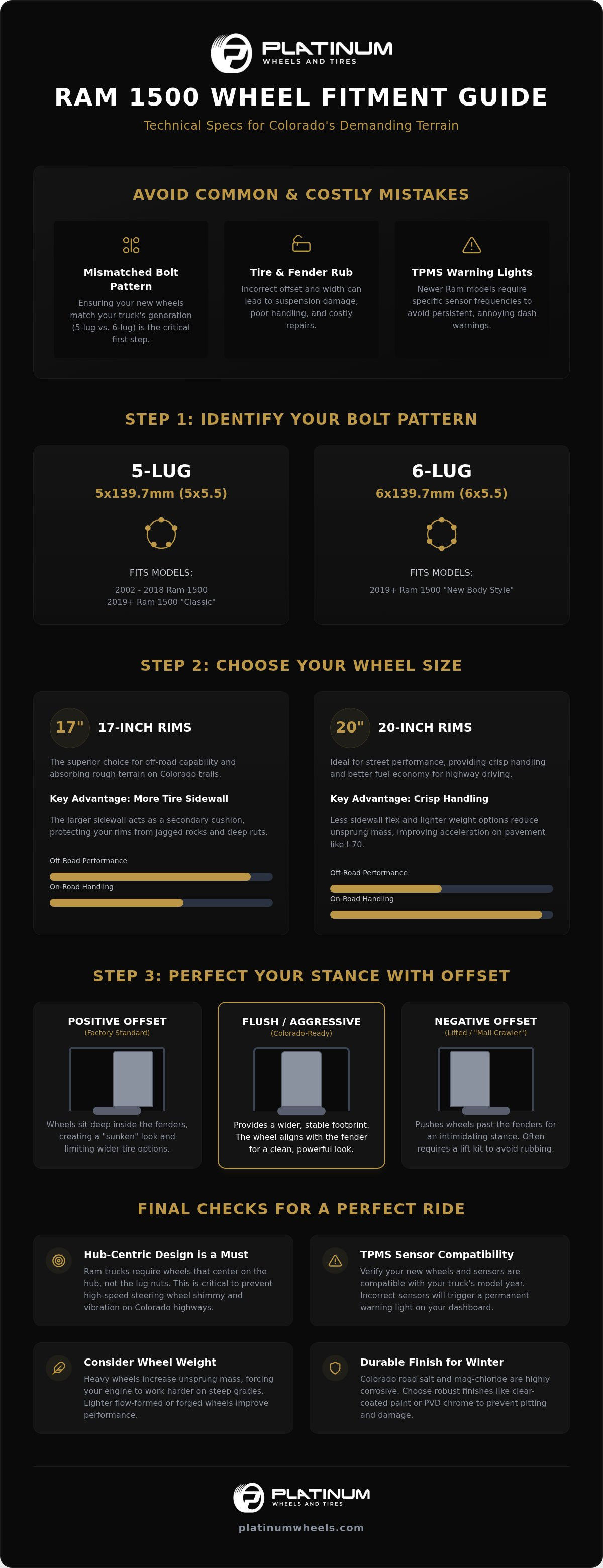
Your driving habits in Aurora and Lakewood dictate your wheel specs. If you spend 90% of your time on the pavement, prioritizing a lighter 20-inch wheel helps maintain fuel economy and crisp handling. However, if you're headed toward Boulder or Golden for weekend adventures, smaller 17-inch rims are the superior choice. They allow for more tire sidewall, which acts as a secondary cushion against jagged rocks and deep ruts. The "Mall Crawler" look is also popular in the Front Range. You can achieve that wide, intimidating stance with a negative offset while keeping your street manners smooth. It's about finding the sweet spot where your truck looks like a beast but doesn't vibrate your teeth out on the way to the grocery store.
Why Local Expertise Matters for Denver Truck Owners
Denver's altitude and steep mountain grades make wheel weight a critical factor. Heavy wheels increase unsprung mass, forcing your Hemi or EcoDiesel to work harder during those long climbs up Floyd Hill. Choosing high-quality flow-formed or forged options can mitigate this performance drag and keep your engine responsive. Winter road salts are another local reality. We see many beautiful wheels ruined by a single season of mag-chloride and salt. We recommend finishes like clear-coated paints or PVD chrome that can withstand the corrosive environment of a Colorado winter. Proper wheel offset ensures that the load is distributed correctly across wheel bearings and ball joints, preventing premature wear on your suspension components. This technical precision is what separates a professional build from a DIY disaster.
Understanding Ram 1500 Bolt Patterns and Offset Specs
Getting the right look for your truck is easy, but achieving a vibration-free ride at 75 mph on I-25 requires technical precision. The most critical factor when shopping for Ram 1500 wheels is the bolt pattern. For nearly two decades, the Ram used a 5x139.7mm (5x5.5) configuration. However, with the launch of the 5th Generation in 2019, the manufacturer transitioned to a 6x139.7mm (6x5.5) pattern. This shift means wheels from an older "Classic" model won't fit a newer body style without dangerous adapters that we never recommend for heavy-duty use.
Beyond the lugs, you must consider the center bore. Ram trucks are designed to be hub-centric, meaning the wheel centers itself on the hub rather than the lug nuts. Using lug-centric wheels on a Ram often leads to persistent steering wheel shimmy. Professional installers follow strict OSHA wheel service safety standards to ensure every component is seated correctly. Additionally, the 2026 models utilize specific TPMS sensor frequencies that differ from older generations. Installing the wrong sensors will leave you with a permanent dash light, so always verify compatibility before mounting your tires.
5-Lug vs. 6-Lug: Which Does Your Ram Have?
Identify your truck's needs by checking the production year. If your Ram 1500 was built between 2002 and 2018, or if it carries the "Classic" badge from more recent years, you have a 5-lug hub. If you drive a 2019 or newer "New Body Style" truck, you have a 6-lug hub. You can spot the difference instantly by counting the studs once the center cap is removed. Don't try to force a fitment that isn't there. If you're unsure, you can browse our verified Ram 1500 wheel and tire packages to see exactly what fits your specific VIN.
The "Golden Rule" of Wheel Offset for Rams
Offset determines where the wheel sits in relation to the fender. A positive offset tucks the wheel inward, which is great for a factory look and fuel efficiency. A negative offset pushes the wheel out, creating that wide, aggressive "poke" stance. For most Ram owners, a "flush" look is the goal. This requires a specific balance of wheel width and backspacing to ensure the inner barrel clears the Ram’s large brake calipers. Check out our detailed guide on how to find wheel offset to visualize how these numbers change your truck's profile. Proper offset isn't just about style; it protects your suspension longevity by keeping the load centered over the bearings.
Choosing the Right Wheel Size: 17-inch vs. 20-inch Rims
Choosing the diameter for your Ram 1500 wheels is a decision that dictates how your truck interacts with the road. While a 20-inch rim is the standard for modern aesthetics, many enthusiasts revert to a 17-inch setup for functional reasons. Larger wheels look incredible, but they add rotational mass. This extra weight forces your Hemi or EcoDiesel engine to work harder. You'll likely notice a slight dip in fuel economy during city driving or when climbing steep grades toward the Eisenhower Tunnel.
Quality matters more than just size. We only recommend rims that meet or exceed SAE J2530 performance standards to ensure they can handle the dynamic loads of mountain driving. Before you commit to a smaller wheel, be aware of brake clearance. Modern high-trim models often feature larger calipers that simply won't accommodate a 17-inch barrel. Always verify your brake rotor size before making the switch to avoid installation day surprises. Selecting a new set of Ram 1500 wheels in a 20-inch diameter is often the fastest way to modernize an older truck's profile while ensuring you clear those heavy-duty brakes.
The 17-Inch Advantage for Off-Roading
Lowering the wheel diameter increases the available tire sidewall. This is a game changer when you're "airing down" for traction on loose Colorado trails near Central City or Empire. A 17-inch wheel is typically lighter than its larger counterparts. This reduction in unsprung weight allows for better suspension articulation and a more comfortable ride over washboard roads. You'll also find the widest selection of rugged, deep-tread rubber in this size. Check out our guide on all terrain tires to see which brands pair best with a smaller rim for serious mountain driving.
The 20-Inch and 22-Inch Street King
If your goal is achieving that premium Limited or Laramie look, 20-inch or 22-inch wheels are the way to go. These larger diameters offer improved handling by reducing tire sidewall flex. This makes your truck feel more planted when navigating tight mountain cornering at speed. You'll have access to high-end finishes like gloss black, machined face, and classic chrome. These sizes transform your Ram into a showpiece while maintaining excellent highway manners for daily commuting between Denver and Castle Rock. It's the perfect balance for the driver who wants presence without sacrificing the smooth ride quality of the Ram’s link-coil or air suspension.
Perfecting the Stance: Wheels for Leveled or Lifted Rams
Modifying your suspension completely changes the fitment equation for Ram 1500 wheels. While a factory truck is limited by tight fender wells, adding a leveling kit or a full suspension lift opens the door to larger tires and wider rims. However, more space doesn't mean you can ignore the math. The relationship between wheel width, tire diameter, and offset becomes much more sensitive once you move away from stock height. Achieving that perfect stance requires balancing aggressive looks with functional clearance.
Upper Control Arm (UCA) clearance is a common pitfall for lifted trucks. Many aftermarket lift kits include beefier UCAs that can rub against the sidewall if you use wheels with a high-positive factory offset. To avoid this, you generally need to move toward a lower or negative offset to push the tire away from the suspension components. If you're pushing the limits with 35-inch tires, be prepared for some minor trimming. This often involves pulling back the plastic inner fender liners or performing a "NorCal tuck" to prevent rubbing at full steering lock. We prioritize a "No-Rub" setup by matching the wheel's scrub radius to your specific lift height.
Wheels for Leveled Rams
A 2-inch front leveling kit is the most popular modification in the Denver area. For this setup, the "sweet spot" for offset usually falls between 0mm and +18mm. This range pushes the wheels out just enough to sit flush with the fenders without requiring heavy body modifications. Using a wider aftermarket rim helps you avoid the "pizza cutter" look that often happens when putting tall tires on narrow factory wheels. If you're still deciding on your suspension height, check out our leveling kit vs lift kit guide to see which path fits your lifestyle.
Aggressive Fitment for 4-Inch and 6-Inch Lifts
When you step up to a 4-inch or 6-inch lift, you can truly embrace deep-dish wheels and deep negative offsets like -12mm, -24mm, or even -44mm. These setups provide a significantly wider track width, which increases lateral stability. This is a major benefit for lifted trucks that naturally have a higher center of gravity. Just remember that a wider stance puts more stress on your steering components, making a professional alignment mandatory after installation. We can help you customize your Ram 1500 stance with a package that looks bold and drives straight. This ensures your truck remains a capable daily driver while dominating the trails near Idaho Springs or Estes Park.
Why Denver Truck Owners Choose Platinum Wheels Packages
Selecting the right Ram 1500 wheels is only half the battle. The real challenge begins with mounting, balancing, and ensuring your truck's sophisticated electronics remain functional. Buying wheels and tires separately from online-only retailers often leaves you with a logistical nightmare. You end up hauling heavy components to a local shop that might not have the specialized equipment or expertise to handle custom truck offsets. We eliminate that friction by providing a turn-key solution that prioritizes precision and local reliability.
Expert TPMS integration is a cornerstone of our service. Modern Ram trucks are sensitive to sensor changes. Using the wrong frequency or failing to sync the system properly leads to persistent dashboard warning lights. We ensure your sensors are programmed correctly before you leave the shop. Our deep roots in the Denver, Arvada, and Thornton communities mean you have a trusted advisor nearby for future rotations and balancing. We don't just sell parts; we provide an expert fitment consultation to guarantee your truck performs as well as it looks.
Complete Wheel and Tire Packages
Purchasing a complete package is the smartest way to upgrade. It saves you significant technical headaches and typically reduces your overall investment compared to buying components individually. Research indicates that customers can save between $200 and $500 by opting for a bundled setup. Our aftermarket wheel and tire packages include professional mounting and high-speed balancing on state-of-the-art equipment. This process is essential for preventing the steering wheel shimmy that often plagues trucks with larger, heavier tires on Colorado’s high-speed highways.
Professional Installation in the Front Range
We serve enthusiasts across Denver, Aurora, and Castle Rock with a level of precision that "Big Box" tire stores simply can't match. General retailers often struggle with the aggressive offsets and wider footprints common in the custom truck world. They might lack the specific torque specs or clearance knowledge required for a leveled or lifted Ram. We understand the nuances of scrub radius and suspension travel. Our team ensures your Ram 1500 wheels are installed to exact specifications, protecting your wheel bearings and ensuring a safe, smooth ride. Stop guessing about fitment and let our specialists handle the details. Visit Platinum Wheels in Denver for your Ram 1500 upgrade!
Transform Your Drive with the Perfect Setup
Upgrading your truck is a significant decision that impacts both performance and your daily driving experience in the Rockies. You now have the technical knowledge to navigate the shift between 5-lug and 6-lug bolt patterns and understand how offset dictates your truck's stance. Whether you choose the rugged durability of 17-inch rims for the trails or the premium look of 20-inch Ram 1500 wheels for the city, the right choice ensures your truck is ready for anything Colorado throws your way.
At Platinum Wheels, we specialize in off-road suspension and custom rims, serving the entire Denver Front Range with specialized expertise. We remove the guesswork with our Expert Fitment Guarantee, ensuring your setup clears every suspension component and stays vibration-free at highway speeds. Don't settle for a generic fitment when you can have a precision-engineered build tailored to your specific needs and lifestyle.
Build Your Perfect Ram 1500 Wheel and Tire Package Today and experience the difference that professional, local guidance makes for your truck. We can't wait to help you get your Ram trail-ready and looking its absolute best.
Frequently Asked Questions
What is the bolt pattern for a 2026 Ram 1500?
The bolt pattern for a 2026 Ram 1500 is 6x139.7mm, which is also commonly referred to as 6x5.5. This six-lug configuration has been the standard for the Ram 1500 since the 2019 model year. If you're looking at older "Classic" models, they utilize a 5x139.7mm pattern, so always verify your specific model before ordering a new set of Ram 1500 wheels.
Will 35-inch tires fit on my Ram 1500 with just a leveling kit?
You can fit 35-inch tires with a leveling kit, but it usually requires a specific wheel offset and minor trimming of the plastic inner fender liners. Without the correct backspacing, the tires will likely rub against the upper control arms or the frame at full steering lock. Many Denver owners choose a 33-inch tire for a "no-rub" experience that remains fully functional for daily commuting and light trail use.
What wheel offset is best for a flush look on a Ram 1500?
An offset between 0mm and +18mm is typically the best range for achieving a flush look where the tire sits even with the fender flare. The exact number depends on your wheel width; a 9-inch wide wheel at +12mm is a very popular choice for a clean, professional stance. Moving into negative offsets like -12mm or -24mm will push the wheels out further for a more aggressive "poke" style.
Do I need new TPMS sensors when I buy aftermarket wheels?
It's highly recommended to install new TPMS sensors when you buy aftermarket wheels to avoid the labor costs of dismounting your factory tires. 2026 Ram models use specific sensor frequencies that must be matched and programmed correctly to prevent dashboard warning lights. We include expert TPMS integration in our packages so your truck's safety systems work perfectly the moment you leave the shop.
Can I use my factory lug nuts with aftermarket Ram 1500 wheels?
You generally cannot use factory lug nuts with aftermarket Ram 1500 wheels because the seat style and socket clearance are different. Most aftermarket rims require a conical seat lug nut and a thinner "spline" drive tool to fit inside the narrower lug holes. Using the wrong hardware can damage your new wheels or lead to a dangerous failure, so we always provide the correct lug kit with every installation.
What is the difference between hub-centric and lug-centric wheels?
Hub-centric wheels use a center bore that matches your truck's hub exactly to center the wheel, while lug-centric wheels rely on the lug nuts for alignment. Ram 1500s are designed for hub-centric fitment, which is critical for maintaining a vibration-free ride on high-speed Colorado highways. If an aftermarket wheel has a larger center bore, we use high-quality hub-centric rings to ensure a precise, professional fit.
How does wheel weight affect my Ram 1500’s fuel economy?
Heavier wheels increase unsprung mass and rotational inertia, which forces your engine to work harder and lowers your overall fuel economy. This is especially noticeable during stop-and-go driving in Denver or when climbing steep mountain passes. Choosing a lighter, flow-formed wheel can help mitigate this MPG loss while improving your truck's braking and acceleration performance.
What are the best wheel finishes for Colorado winters?
Painted, clear-coated, or PVD finishes are the most durable choices for surviving Colorado winters and the corrosive road salts used on our streets. These finishes provide a protective barrier that prevents pitting and peeling better than raw polished aluminum or traditional chrome. A high-quality satin or gloss black finish is a great way to maintain a premium look that can withstand mag-chloride exposure season after season.