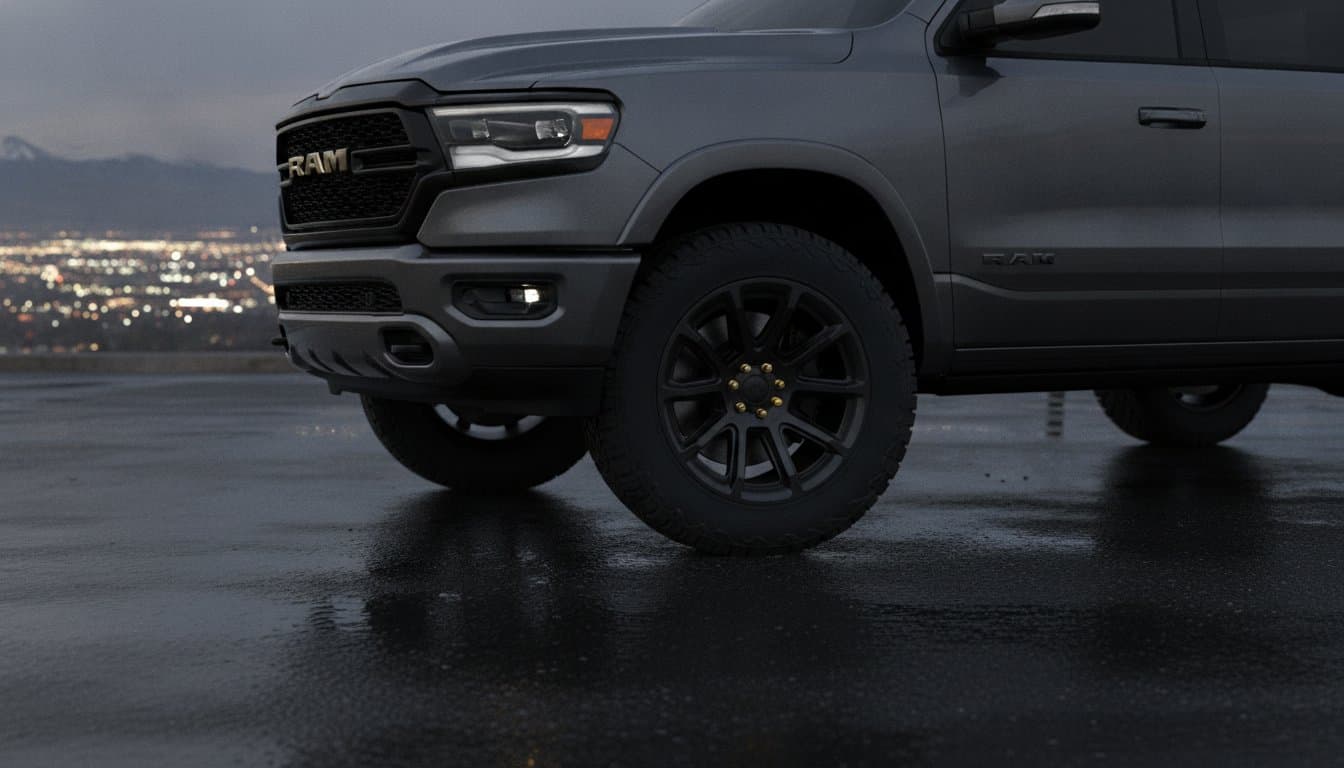
Ram 1500 Wheels: The Ultimate Guide to Stance, Fitment, and Performance (2026)
What if the most expensive upgrade you buy for your truck actually makes it harder to drive? It's a common fear for owners looking at new Ram 1500 wheels, especially when balancing the desire for an aggressive stance with the reality of mountain trails. You want a setup that looks bold and handles the Front Range without the constant worry of tires rubbing against your wheel wells.
We understand that getting the fitment right is about more than just picking a design you like. You need to know the difference between the 5-lug Classic and the 6x139.7mm bolt pattern found on 2019 to 2026 models to avoid a major ordering mistake. This guide provides the expert clarity you need to navigate offsets, hub bores, and the best wheel finishes to survive Colorado road salt. We'll walk you through the perfect wheel and tire combinations for leveled builds so you can achieve that custom look with total peace of mind.
Key Takeaways
- Identify the critical shift in bolt patterns between the 5th generation and Classic models to ensure you order the correct parts for your build.
- Learn how to select Ram 1500 wheels with the precise offset needed to achieve an aggressive stance without fender rubbing.
- Discover which wheel materials and finishes best withstand Colorado's harsh winter road salt and high-altitude braking demands.
- Understand the essential pairing of 33-inch or 35-inch tires with leveling kits to eliminate factory rake and clear larger rubber.
- Explore the benefits of professional local installation in Denver for a seamless, road-force balanced, and ready-to-drive experience.
Understanding Ram 1500 Wheel Specs: Bolt Patterns and Fitment
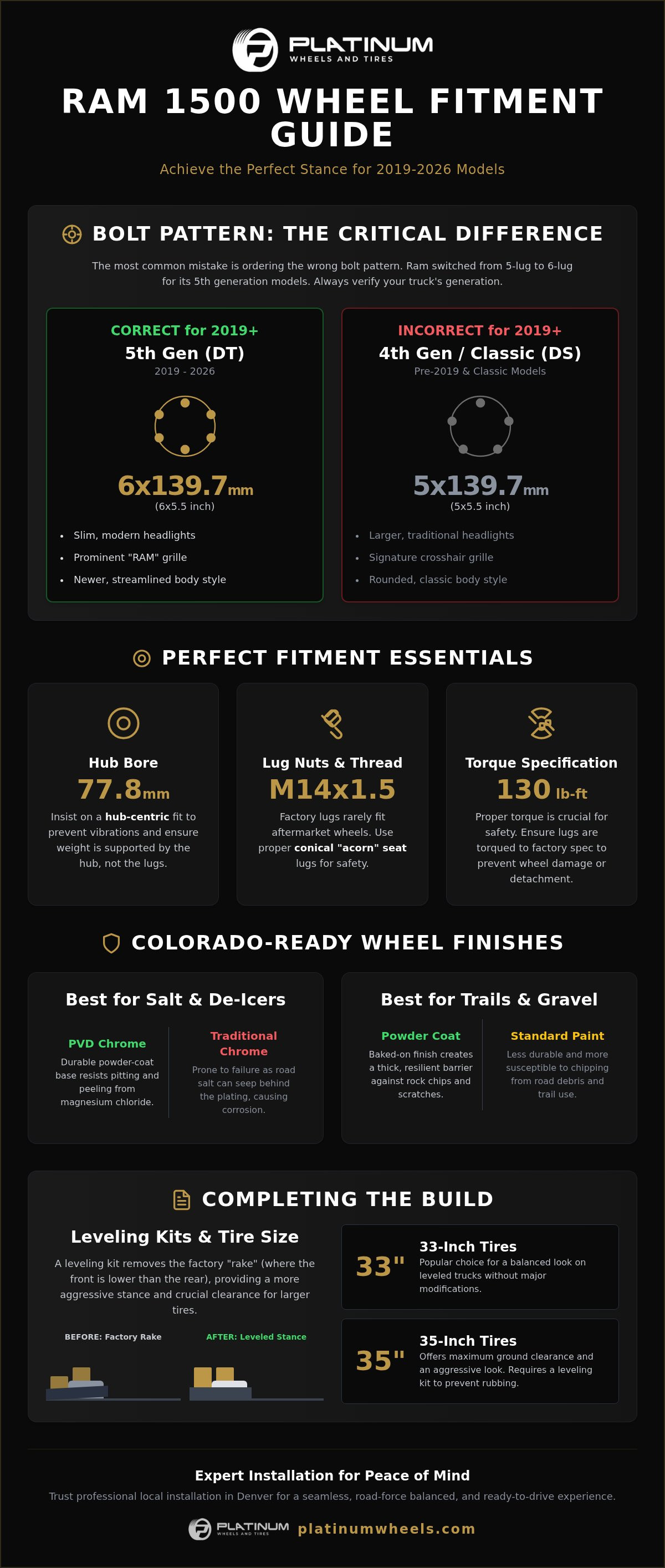
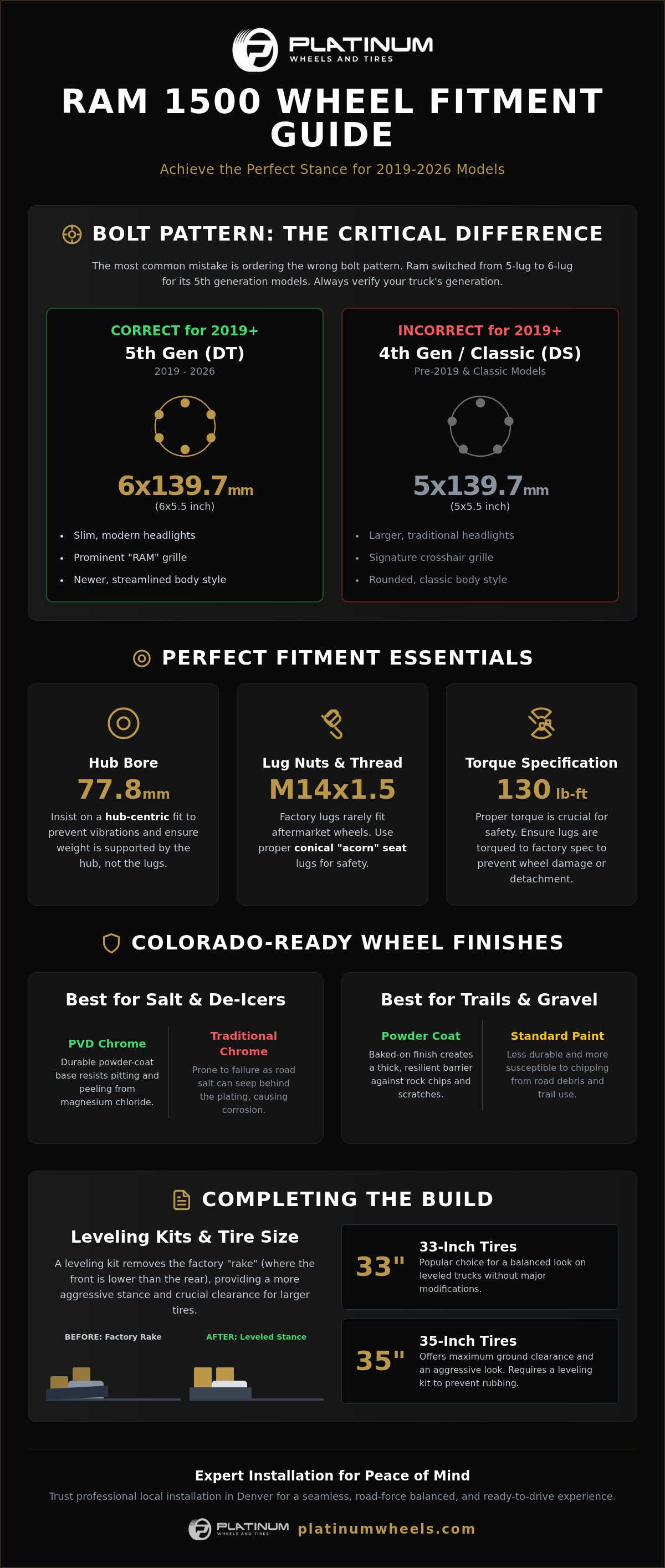
Choosing the right set of Ram 1500 wheels begins with a single, critical number: your bolt pattern. If you get this wrong, your new rims are nothing more than expensive paperweights. For the 5th generation Ram 1500 (DT models from 2019 to 2026), the manufacturer shifted to a 6x139.7mm (6x5.5 inch) bolt pattern. This was a massive departure from the legacy 4th generation and "Classic" (DS) models, which utilize a 5x139.7mm (5x5.5 inch) configuration. Mixing these up is the most common mistake we see in the Denver truck community.
Identifying Your Ram Generation
If you're unsure which model you drive, look at the badging and the headlights. The DT models feature a more streamlined, modern grille and often have the "RAM" lettering prominently centered. The DS or Classic models retain the crosshair grille and a more traditional rounded body style. Always verify your VIN or the manufacturing sticker inside the driver's side door jamb. This is especially vital for 2019 owners, as both the New Body Style and the Classic were sold in the same year. Use these visual cues to confirm your build:
- DT (New Body Style): Slimmer headlights, no crosshair grille, "RAM" badge on the tailgate.
- DS (Classic): Larger headlights, traditional crosshair grille, "1500" badges often on the doors rather than the hood.
Hub-Centric vs. Lug-Centric Wheels
Beyond the bolts, you must consider the hub bore. A hub-centric wheel is designed so that the center hole of the wheel fits perfectly over the 77.8mm hub of the Ram. This ensures the weight of the truck is supported by the hub rather than just the lug studs. Understanding wheel sizing and how it relates to hub-centricity is vital for anyone planning to tackle high-speed mountain driving on I-70 or heavy towing. A hub-centric fitment provides a vibration-free ride by perfectly centering the wheel on the axle's rotating axis. If you fall in love with a universal wheel that has a larger bore, you'll need hub-centric rings to fill that gap and prevent annoying steering wheel shakes at highway speeds.
Don't expect your factory lug nuts to work with custom off-road rims. Most aftermarket wheels require a "conical" or "acorn" seat lug nut, whereas factory lugs are often too bulky to fit into the narrower lug holes of a custom wheel. The 2019 to 2026 Ram 1500 uses M14x1.5 threads with a torque specification of 130 lb-ft. We always recommend a high-quality, spline-drive lug nut kit to protect your investment and ensure a secure fit. Using the wrong lugs can lead to stripped threads or, worse, a wheel coming loose while you're navigating a steep grade near Silverthorne.
Selecting the Right Wheel Material and Finish for Colorado Terrain
Colorado's environment is notoriously hard on truck components. Between the high-altitude sun and the chemical cocktails used to de-ice I-70, your Ram 1500 wheels face a daily gauntlet of corrosion and heat. Traditional electroplated chrome often fails the "Denver Winter" test, as magnesium chloride eventually seeps behind the plating and causes it to peel. For a salt-resistant alternative that maintains a mirror-like shine, many local owners now opt for PVD chrome. This Physical Vapor Deposition process applies a durable powder-coat base that mimics chrome but stands up to the harshest winter road treatments without pitting.
Aesthetics are vital, but maintenance expectations should guide your choice between matte and gloss finishes. Matte wheels look rugged and hide small scratches from gravel roads, but they can trap stubborn brake dust in their texture. Gloss finishes are easier to wipe down after a muddy weekend in the foothills. Regardless of the look, ensure your choice meets NHTSA wheel safety standards to guarantee the structural integrity of your rims under heavy loads. If you're struggling to decide which finish fits your lifestyle, our team can help you compare custom wheel options in person at our Denver shop.
Durability in Extreme Conditions
Powder-coated finishes are the gold standard for the Front Range. Unlike traditional paint, powder coating is baked onto the metal, creating a thick, resilient barrier against rock chips. This is especially important if you frequent the gravel paths near Castle Rock or the rocky trails in the high country. To protect your investment, establish a routine of rinsing your wheels with fresh water after every mountain trip. This simple step removes chemical residue before it has a chance to bond with the finish. High-quality aftermarket wheels are built for year-round use, so you don't necessarily need a separate "winter set" if you choose a resilient finish from the start.
Weight and Performance
Performance on steep inclines near Golden or Boulder is directly tied to wheel weight. Every pound you shave off your wheels reduces unsprung mass, which allows your suspension to react faster and improves braking efficiency on long descents. Understanding the trade-offs in alloy rim wheels vs steel is essential for mountain driving. While steel is incredibly cheap and tough, lightweight aluminum alloy rims offer superior heat dissipation. This keeps your brakes cooler when you're navigating the 6% grades of the Eisenhower Tunnel, ultimately extending the life of your pads and rotors while providing a more responsive driving experience.
Mastering Wheel Offset and Backspacing for the Perfect Ram Stance
Achieving the right look for your truck involves more than just picking a design; it requires a grasp of how offset and backspacing dictate the final position of your Ram 1500 wheels. Offset is the distance from the hub mounting surface to the true centerline of the wheel. If the mounting surface is closer to the street side, you have positive offset. If it's closer to the brake side, it's negative. This measurement is the difference between a truck that looks like it just rolled off the lot and one that has a wide, commanding presence on the road.
Negative offset, typically ranging from -12mm to -44mm, is the secret behind the "deep dish" look. It pushes the wheel further away from the suspension, creating that desirable "poke" where the tires extend past the fender flares. On the other hand, a positive offset between +18mm and +30mm keeps the wheel tucked within the wheel well. This is ideal for owners who prefer a clean, factory-plus aesthetic that doesn't spray road grime all over the doors while driving through slush in Aurora.
Backspacing is a related but distinct measurement that tracks the distance from the mounting surface to the back edge of the rim. This is critical for ensuring your new setup doesn't grind against your brake calipers or upper control arms. When choosing high-performance rims, look for products that meet SAE J2530 aftermarket wheel standards. These guidelines ensure that even with aggressive fitments, the wheel maintains the structural integrity required for the heavy-duty demands of a full-size pickup.
The Stance Spectrum: From Flush to Aggressive
Visualizing your build helps prevent buyer's remorse. A +18mm offset usually sits flush with the fenders on a 5th Gen Ram, providing a subtle upgrade. Moving to a -12mm or -24mm offset creates a noticeably wider track that changes the vehicle's silhouette. While a wide stance looks incredible, it comes with trade-offs. You'll gain better stability in corners, but you'll also increase the risk of rock chips on your paint. If you're currently measuring your wheel wells to see what fits, check out our guide on how to find wheel offset for step-by-step instructions.
Offset and Rubbing Issues
Aggressive offsets change your truck's scrub radius, which is the pivot point of the tire during a turn. A large negative offset increases this radius, making the steering feel heavier and more sensitive to bumps when you're navigating winding mountain passes. As negative offset increases, the outer edge of the tire swings in a wider arc during turns, which significantly increases the likelihood of the rubber contacting the fender liner or bumper. This often means you'll need to consider a leveling kit or minor plastic trimming to ensure your tires can move freely through their full range of motion.
Completing the Build: Tire Packages and Leveling Kits
Selecting your Ram 1500 wheels is just the first step in a total vehicle transformation. To truly capitalize on that new stance, you must pair those rims with the right rubber and the necessary clearance. For most 5th generation owners, 33-inch and 35-inch tires are the gold standard. While a 33x12.50R20 can often squeeze onto a stock setup with the right offset, jumping to a 35-inch tire requires addressing the factory rake. Ram trucks come from the factory with the front end sitting lower than the rear; this "rake" is designed for towing, but it creates a major clearance bottleneck for larger tires.
Choosing the right tread pattern is equally important for the Front Range lifestyle. All-terrain tires offer a quiet, composed ride for daily Denver commutes while providing enough bite for snowy mountain passes. If your weekends involve deep mud or jagged trails, mud-terrain tires provide aggressive sidewall protection and superior traction. Whatever you choose, don't overlook the technical details. Integrating high-quality TPMS sensors into your build ensures your dashboard stays clear of warning lights and your tire pressures remain optimized for safety.
Leveling Your Ram for 35s
A 2-inch or 2.5-inch leveling kit is the most effective way to transform your truck's profile and accommodate 35-inch tires. This modification raises the front end to match the rear, providing the necessary wheel well space to prevent the rubber from contacting the inner fender during full-lock turns. Understanding the difference between a leveling kit vs lift kit is vital for choosing the right balance of cost and capability. Professional installation is mandatory here; a proper alignment after the kit is installed preserves your tire life and ensures the truck tracks straight on the highway. If you're ready to upgrade, you can browse our leveling kit options to ensure your build has the clearance it needs.
The Value of Pre-Assembled Packages
Ordering individual components can be a logistical headache that often leads to fitment errors. Opting for aftermarket wheel and tire packages streamlines the entire process. These bundles arrive with the tires already mounted and road-force balanced, which eliminates the vibration issues common with standard balancing. It also ensures your tire load rating is perfectly matched to your Ram's towing capacity. This "ready-to-drive" approach saves you time at the shop and provides peace of mind that every component was selected to work in perfect synergy with your Ram 1500 wheels.
Why Denver Truck Owners Trust Platinum Wheels for Ram Upgrades
Choosing the right Ram 1500 wheels is a major investment in your truck's capability and style. At Platinum Wheels, we've built our reputation on providing the local expertise that national websites simply can't offer. We understand how the steep inclines of the Front Range and the heavy snow in Castle Rock impact your driving experience. Our team doesn't just sell parts; we provide a consultative experience that ensures every component, from the lug nuts to the suspension, is perfectly matched to your specific Ram model.
Our professional installation center in Denver handles the heavy lifting so you don't have to. We specialize in high-precision mounting and road-force balancing, which is essential for a smooth ride on I-70. Unlike general tire shops, we offer comprehensive solutions that include expert suspension work and TPMS programming. Whether you're in Aurora, Lakewood, or Littleton, we're your neighborly guide for creating a build that performs as well as it looks. We ensure your alignment is spot-on after installing a leveling kit, protecting your tire investment from premature wear and ensuring your truck handles precisely on winding mountain roads.
Expert Consultation and Fitment Guarantee
We stand by a strict "no-rub" fitment philosophy. We know that a daily driver has different needs than a dedicated trail rig. That's why we take the time to explain how different offsets and backspacing will affect your steering and clearance. You won't find any high-pressure sales tactics here. Instead, you'll get honest advice and a fitment guarantee that gives you total peace of mind before you leave our shop. We've helped thousands of Ram owners across the Front Range avoid the common pitfalls of DIY fitment and incorrect online orders.
Ready to Transform Your Ram 1500?
Stop by our Denver-area shop to see our selection of finishes and styles in person. We pride ourselves on quick turnaround times and professional service that gets you back on the road fast. Our packages are designed to be ready-to-drive from the moment we finish the installation. If you're ready to upgrade your truck's stance and performance today, Browse our Ram 1500 Wheel and Tire Packages to find the perfect fit for your build. We look forward to helping you create a truck that stands out in the Colorado crowd while remaining fully functional for your next mountain adventure.
Drive Your Custom Ram Vision into Reality
Navigating the technical details of Ram 1500 wheels is the first step toward a truck that truly performs. From identifying the correct 6-lug bolt pattern to selecting a negative offset for that wide, commanding stance, you now have the blueprint for a successful build. Remember that the synergy between your wheel choice, tire size, and leveling kit is what makes a truck functional for both Denver commutes and weekend mountain adventures. Choosing a salt-resistant finish ensures your investment stays looking sharp through every Colorado winter.
At Platinum Wheels, we specialize in local truck suspension and fitment to help you avoid the pitfalls of generic online orders. Serving Denver, Aurora, and the Front Range, we provide expert mounting, road-force balancing, and TPMS programming with every installation. We take the guesswork out of the process so you can focus on the drive. Upgrade Your Ram 1500 at Platinum Wheels Denver and experience the difference that expert, local craftsmanship makes. Your perfect truck is ready for the trail; let's get to work.
Frequently Asked Questions
Do 2026 Ram 1500 wheels fit older models?
No, 2026 Ram 1500 wheels will not fit models from 2018 or earlier due to a change in the bolt pattern. The 5th generation trucks use a 6-lug configuration, while older 4th generation and Classic models rely on a 5-lug setup. This mechanical difference makes the wheels incompatible without using dangerous adapters. Always verify your truck's generation before purchasing new rims to ensure a safe and proper fit.
What is the largest tire I can put on a stock Ram 1500 without a lift?
You can typically fit a 33-inch tire on a stock Ram 1500 without experiencing significant rubbing. A popular configuration for stock suspension is a 33x12.5R20 tire on a 20x10 wheel with a conservative offset. While some owners attempt to squeeze in larger rubber, doing so often leads to contact with the fender liners during full-lock turns. For anything larger than a 33-inch tire, we strongly recommend installing a leveling kit.
Will aftermarket wheels void my Ram 1500 factory warranty?
Installing aftermarket wheels won't void your entire factory warranty. Under the Magnuson-Moss Warranty Act, a dealer must prove that the aftermarket part caused a specific failure to deny a warranty claim on that component. For example, while your new rims won't affect your engine warranty, they might impact claims related to wheel bearings or suspension wear. We recommend choosing high-quality wheels that meet industry standards to minimize any potential mechanical risks.
What is the bolt pattern for a 5th generation Ram 1500?
The bolt pattern for the 5th generation Ram 1500 is 6x139.7mm, which is also commonly referred to as 6x5.5 inches. This specification applies to all new body style models from 2019 through 2026. It's a critical measurement to get right, as it ensures the wheel lugs align perfectly with the hub. If you drive a Ram 1500 Classic from the same era, keep in mind it still uses the older 5-lug pattern.
Do I need a leveling kit for 20-inch or 22-inch wheels?
You don't necessarily need a leveling kit just because you're switching to 20-inch or 22-inch wheels. The need for a kit depends entirely on the overall diameter of the tire and the wheel's offset. If you're mounting a low-profile tire that maintains the factory overall diameter, you'll have plenty of clearance. However, if you want the aggressive look of 35-inch tires on those larger rims, a leveling kit is essential to prevent rubbing.
Can I use my factory TPMS sensors with new custom wheels?
You can usually transfer your factory TPMS sensors to your new custom wheels. Most modern aftermarket rims are designed to accommodate standard valve-stem sensors. However, if your factory sensors are several years old, it's often more cost-effective to install new ones during the initial mounting process. This prevents you from having to pay for labor twice if a battery fails shortly after you've upgraded your Ram 1500 wheels.
How much does it cost to have a leveling kit and wheels installed in Denver?
Installation costs for a leveling kit and wheels in the Denver area depend on the complexity of the suspension work and the specific type of kit you choose. A basic spacer-style leveling kit requires less labor than a full coilover replacement. You should also factor in the cost of a professional alignment, which is mandatory after any suspension modification. We recommend visiting a local specialist to get an accurate quote tailored to your truck.
What is the best wheel finish for Colorado winters?
PVD chrome and high-quality powder-coated finishes are the best choices for surviving Colorado winters. These finishes are specifically engineered to resist the corrosive effects of magnesium chloride and road salt used on the Front Range. Traditional electroplated chrome is prone to pitting and peeling when exposed to these chemicals over time. Choosing a resilient finish ensures your wheels maintain their appearance and structural integrity despite the harsh seasonal conditions and temperature swings.