Best Ram 1500 Tires for Denver Roads: A Local Guide
Last winter, a local driver heading up to Silverthorne found themselves white-knuckling the steering wheel as their factory rubber struggled to find grip on a slushy I-70. It's a common story in Colorado, where the weather changes faster than the speed limit. Selecting the right ram 1500 tires is about more than just picking a brand. It's about balancing aggressive off-road capability with the smooth, quiet ride you need for the daily commute through Denver. You want a truck that looks ready for the trail but doesn't vibrate your teeth out on the highway or trigger a permanent TPMS warning light on your dash.
We understand the anxiety of fitment and the confusion of tire sizing, especially when you're deciding between a stock replacement or a full 35-inch build. This guide provides the clarity you need to choose a setup that meets Colorado's strict 3/16-inch tread depth requirements and traction laws while delivering the stance you've always wanted. You'll discover the best all-terrain and mud-terrain options for our unique terrain, learn how to avoid rubbing issues, and see how professional installation keeps your sensors happy. Let's get your Ram ready for the Front Range and beyond.
Key Takeaways
- Upgrade from factory P-metric to LT (Light Truck) tires to gain the durability and towing stability needed for rugged Front Range terrain.
- Ensure your new ram 1500 tires carry the Three-Peak Mountain Snowflake (3PMSF) rating to remain compliant with Colorado’s strict I-70 traction laws.
- Master the "secret sauce" of wheel offset and suspension height to fit 35-inch tires without the frustration of wheel well rubbing.
- Avoid dashboard warning lights on 2026 models by integrating fresh TPMS sensors and professional calibration into your wheel and tire package.
- Learn how to balance aggressive tread patterns with specialized rubber compounds to maintain a quiet, smooth ride on Denver’s concrete highways.
Understanding Ram 1500 Tire Basics: OEM vs. Aftermarket Upgrades
Your factory ram 1500 tires were built to maximize fuel efficiency on flat pavement. While this keeps the window sticker looking good, it often leaves Colorado drivers wanting more when they hit the trail or head toward the high country. Most stock trucks come equipped with P-metric tires. These are lightweight and comfortable, but they lack the heavy-duty construction required for frequent towing or navigating rocky passes. If you're planning on hauling a trailer through the mountains, you'll want to look at LT (Light Truck) tires. These feature reinforced sidewalls that handle high-pressure loads and resist punctures much better than their passenger-rated counterparts.
Choosing a more robust tire does come with a small trade-off. Heavier tires increase unsprung weight, which can slightly lower the fuel economy of your Hemi or EcoDiesel engine. However, the 2026 market has introduced an "aggressive but civil" trend. Manufacturers are now producing tires that offer the rugged look of a mud-terrain with the refined road manners of an all-season. This lets you maintain that bold stance without sacrificing the quiet cabin experience Ram is known for. Understanding Off-Road Tire Basics is the first step in deciding which construction style fits your lifestyle and driving habits.
Decoding Ram 1500 Tire Sizes
The string of numbers on your sidewall, such as 275/55R20, provides the blueprint for your truck's footprint. The 275 is the width in millimeters, while 55 is the aspect ratio, or height of the sidewall. Your wheel diameter, typically 18, 20, or 22 inches, determines how much room is left for rubber. While 22-inch wheels look sleek in the city, 18-inch wheels provide more sidewall flex. This flex is ideal for absorbing impacts on washboard roads or rocky trails. Always check the load rating index to ensure your new tires can handle the full payload capacity of your specific Ram trim.
When to Replace Your Ram 1500 Tires
Colorado's environment is brutal on rubber. Between the summer heat and the winter's mag-chloride, tires can degrade faster than expected. Identifying tread wear patterns specific to heavy-duty pickups is vital when inspecting your ram 1500 tires. You should monitor for "cupping" or uneven shoulder wear, which often signals that your suspension needs an alignment. Remember that the Colorado Traction Law requires a minimum tread depth of 3/16-inch during winter months on I-70. If you're nearing that limit, it's time to upgrade. You can find more details in our guide on when to replace tires on your 4x4 truck to stay ahead of the snow.
Choosing the Best All-Terrain Tires for Colorado Driving
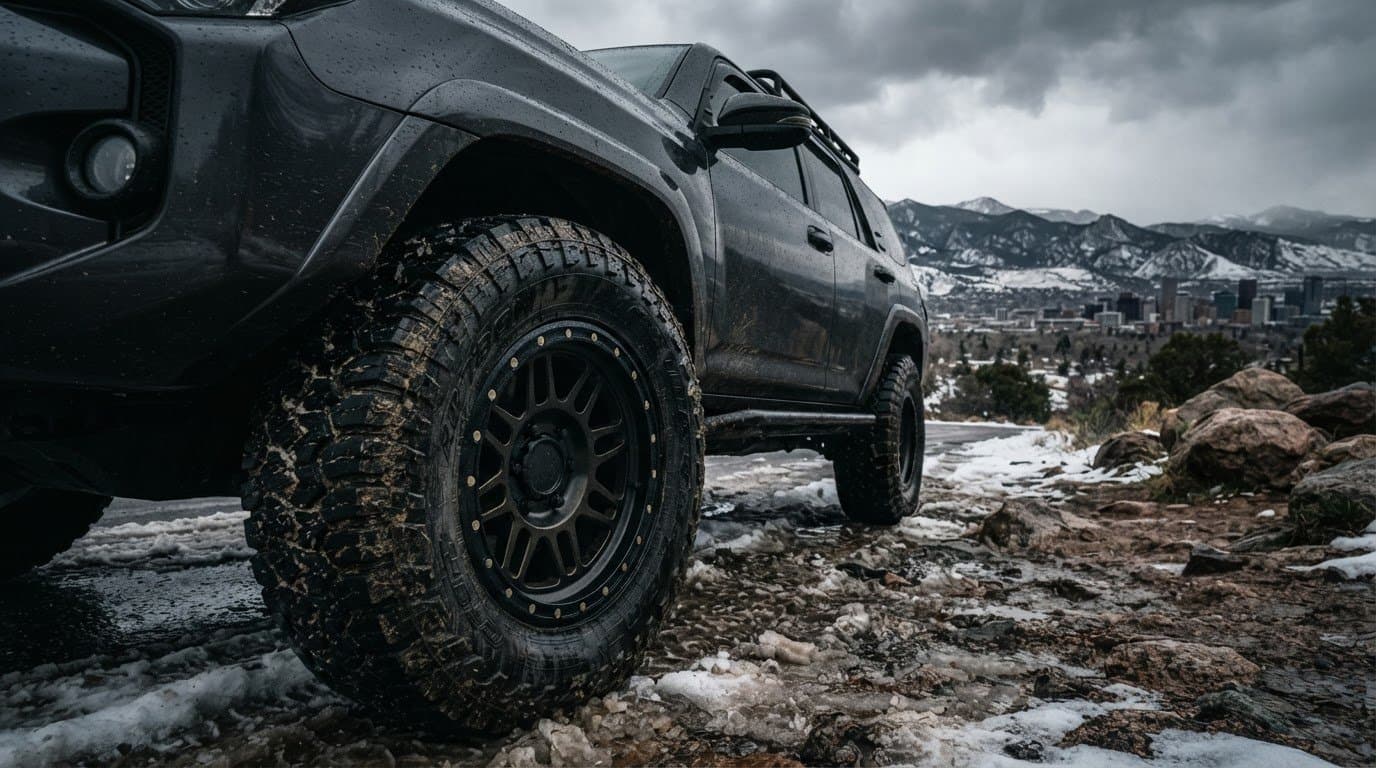
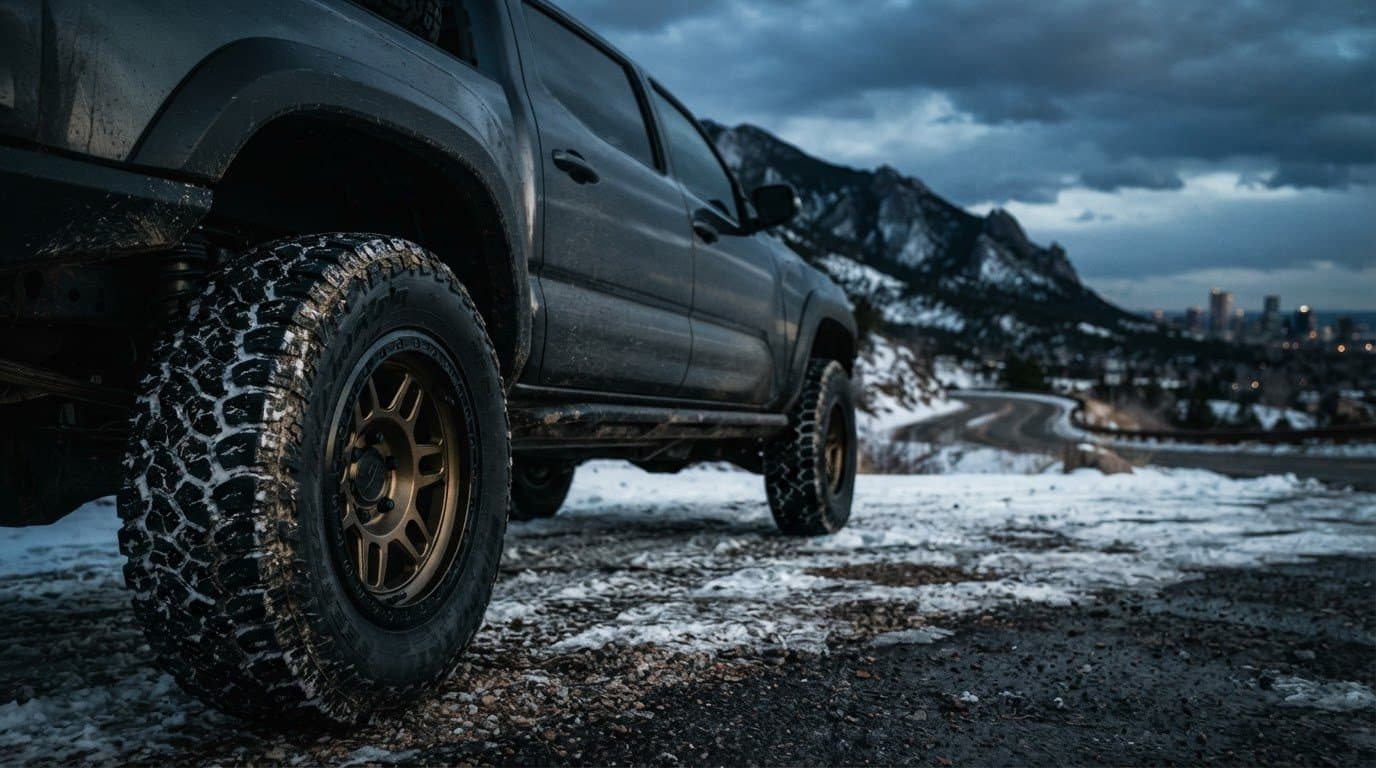
Denver drivers face a unique challenge. You might be navigating sun-baked asphalt on Speer Boulevard in the morning and hitting a blizzard on Vail Pass by the afternoon. This volatility makes choosing the right ram 1500 tires a safety decision as much as a performance one. The most critical feature for any Colorado truck owner is the Three-Peak Mountain Snowflake (3PMSF) symbol. Unlike a standard M+S rating, this certification indicates the tire meets specific traction requirements in severe snow. Following NHTSA Tire Safety Guidelines helps ensure your tread is ready for these shifts, but in the Rockies, that snowflake is your ticket to legal and safe winter travel on the I-70 corridor.
Top brands like Nitto, Toyo, and BFGoodrich have mastered the balance between mountain toughness and city comfort. The Nitto Recon Grappler and Toyo Open Country A/T III are local favorites because they provide aggressive shoulder lugs without the deafening hum of a traditional mud tire. While mud-terrain tires look incredible, they are often overkill for a daily driver in Denver. Their large tread blocks lack the dense siping needed for grip on icy pavement, which can make a morning commute on I-25 feel like a skating rink. Choosing the best ram 1500 tires means finding a tread that bites into the snow rather than just floating over it.
All-Terrain vs. Mud-Terrain for the Front Range
When comparing all terrain tires against mud-terrains, the winner for snow performance is almost always the all-terrain. Mud-terrain tires are designed to eject thick mud, but they often struggle to bite into packed snow or wet pavement. Additionally, the softer rubber compounds in mud tires tend to wear down faster on hot Colorado asphalt during our 90-degree summer days. If you spend 90% of your time on the road and 10% on the trail, an AT tire provides better longevity and wet-weather braking.
Best All-Season Options for Ram 1500
Not every Ram owner needs a deep-lugged off-road tire. High-quality all-season tires can be the smarter choice if you prioritize fuel economy and a whisper-quiet ride for long highway hauls. However, for those who want the best of both worlds, hybrid tires are bridging the gap. These rugged terrain options combine the carcass of an AT tire with the aggressive sidewall of an MT. They offer a compromise that looks great at the job site while remaining composed at 75 mph. If you're unsure which tread pattern fits your specific commute, consult with a local specialist to find the right balance for your build.
Ram 1500 Fitment Guide: Will 35-Inch Tires Fit?
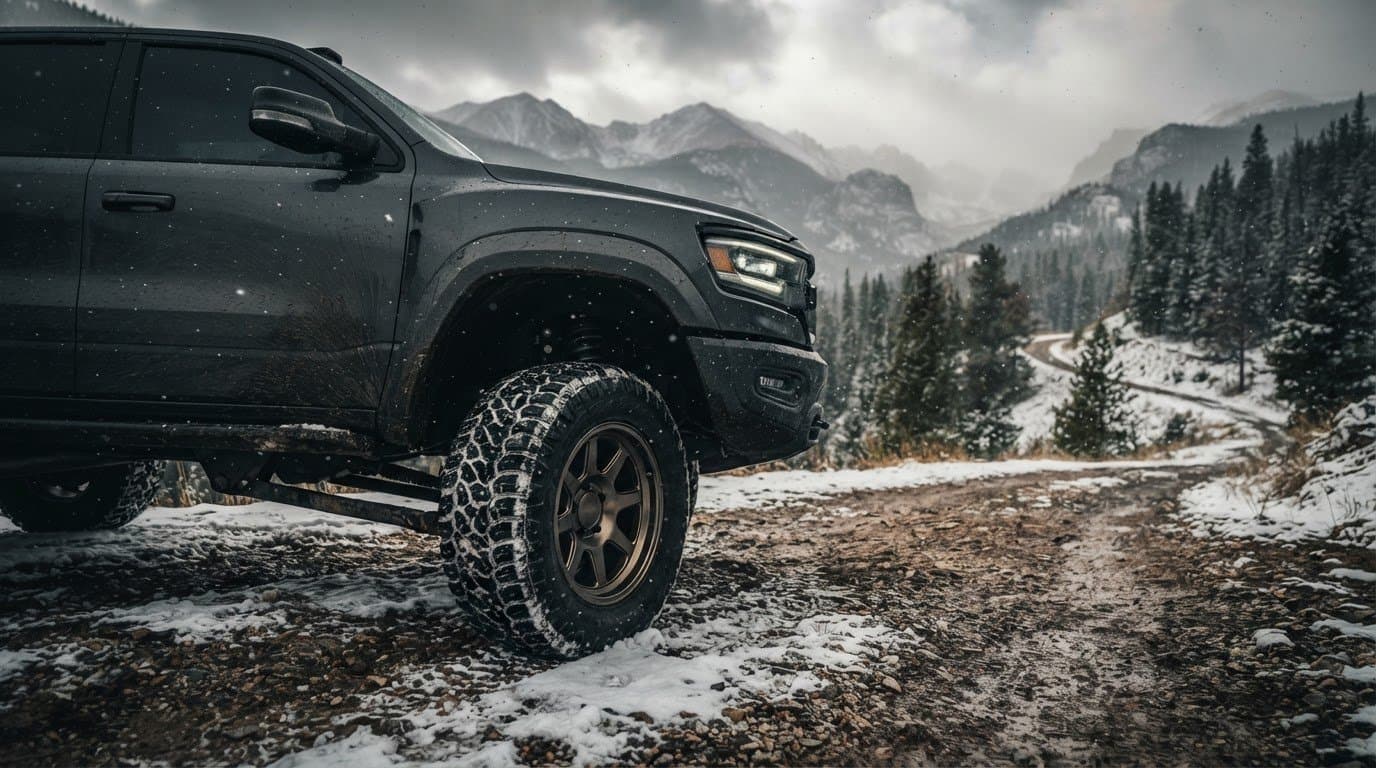
The most common question we hear at the shop is whether 35-inch ram 1500 tires will fit without a massive lift. The answer is usually yes, but with a few technical caveats. Your truck's trim level plays a huge role in this process. A Rebel comes from the factory with a one-inch lift, giving it a head start over a Big Horn or Laramie. On 5th Gen Rams, the main obstacle isn't just the height; it's the "pinch weld" located at the back of the front wheel well. If you don't account for this clearance, you'll hear a cringe-worthy grinding sound every time you turn into a parking spot at the grocery store.
Getting the right fit requires looking at the whole package. While a Car and Driver All-Terrain Tire Review can help you pick the highest-rated tread for performance, it won't tell you if that specific tread will clear your upper control arms. That's where local expertise becomes invaluable. We focus on the specific geometry of the Ram suspension to ensure your truck remains fully functional on the trail and stable on the highway. We want your truck to look aggressive without sacrificing its utility.
Stock Height vs. Leveled vs. Lifted Fitment
On a stock Ram 1500, you're generally limited to a 33-inch tire to avoid significant rubbing. Stepping up to a 35-inch tire usually requires at least a leveling kit to clear the front bumper and fender liner. Choosing between a leveling kit vs lift kit is the first major decision in your build. A level is perfect for the "magic" 35x12.50R20 fitment, providing that aggressive stance without the complexity of a full suspension overhaul. If you want to run 35s with zero trimming and maximum articulation, a 4-inch lift is the safest bet for a daily driver.
The Importance of Proper Wheel Offset
Wheel offset is the distance from the hub mounting surface to the center of the wheel. It's the secret sauce to a rub-free setup. A negative offset pushes the wheel out, creating that desirable "poke" stance, but too much can cause the tire to strike the fender during turns. Conversely, a high positive offset can cause wide ram 1500 tires to rub against the upper control arm or frame. Finding the sweet spot is essential for maintaining your turning radius and protecting your suspension components. Check out our resource on how to find wheel offset to see how different measurements change the look and clearance of your Ram.

TPMS Sensors and Professional Installation for Your Ram
Modern trucks are rolling computers. When you upgrade your ram 1500 tires, you're changing the math the vehicle uses to calculate speed, traction, and safety. The 2026 Ram 1500 is particularly sensitive to these changes. Reusing old TPMS sensors is a common mistake that leads to persistent dashboard warnings. These sensors have finite battery lives. Swapping them into a new wheel set often causes seal failures or signal drops. We recommend starting fresh with new components to ensure your safety systems work exactly as the factory intended.
Understanding TPMS for Aftermarket Wheels
Integrating new tpms sensors into your package is about more than just avoiding a light. It's about maintaining the accuracy of your truck’s safety suite. Our Denver shop uses specialized diagnostic tools to sync new sensors directly to your Ram’s onboard computer. This process ensures the computer recognizes the new frequencies immediately. You won't have to deal with the frustration of driving for miles hoping a light clears, which is a common issue with DIY installs or big-box retailers who lack truck-specific equipment.
Beyond the electronics, larger tires like 35-inch builds physically change how your truck records distance. A larger diameter means the tire travels further with each revolution. This makes your speedometer read slower than your actual speed and can cause your odometer to underreport mileage. We help you understand these offsets so you can stay within legal limits and keep your maintenance schedules accurate. Precision is key when you're moving away from factory specifications.
The Benefits of Professional Mounting and Balancing
Heavy off-road tires require more than a standard spin balance. We utilize road-force balancing to simulate the weight of the truck on the tire while it spins. This identifies "hard spots" in the rubber that a standard balancer would miss. It's the only way to prevent that annoying steering wheel shake at 75 mph on the highway. Additionally, we take extreme care to protect your custom wheel finish. Using specialized mounting arms ensures your new rims look as good on the truck as they did in the box. If you're ready for a vibration-free ride and a clean dashboard, schedule your professional installation with us today.
The Platinum Wheels Advantage for Denver Ram Owners
Choosing the right ram 1500 tires shouldn't feel like a cold transaction at a grocery store. It's a significant investment in your vehicle's safety and capability. Local expertise beats big-box online retailers every time because we understand the specific environmental factors of the Front Range. While an online site might suggest a tire based on a generic database, we know how that rubber performs on a 7% grade in sub-zero temperatures. We prioritize your peace of mind by ensuring every specification, from the speed rating to the sidewall ply, is chosen for the way you actually drive in Colorado.
Our process revolves around creating synergy between your components. We don't just sell rubber; we build complete aftermarket wheel and tire packages that are ready for the trail the moment you leave our shop. Serving drivers from Denver to Colorado Springs, we've established ourselves as the local authority for Ram builds. We take the time to listen to your goals, whether you're looking for better towing stability for your camper or a head-turning off-road stance for the weekend. Our team treats every truck like it's our own, focusing on precision and craftsmanship.
One-Stop Shop for Wheels, Tires, and Leveling
Coordination is the key to a successful build. When you have the same technicians handling your suspension and your tires, you eliminate the risk of "finger-pointing" if a fitment issue arises. We ensure your leveling kit and tires work in perfect harmony, precisely adjusting the alignment to prevent the rubbing we mentioned in previous sections. This integrated approach allows us to customize your truck’s stance for that iconic Colorado look while maintaining the smooth, reliable ride you expect from a premium pickup. You get a cohesive setup that performs as well as it looks.
Ready to Upgrade Your Ram 1500?
No two trucks are identical. Your specific trim level, gear ratio, and intended use all dictate the ideal setup. We provide custom quotes tailored to your exact Ram trim, ensuring you aren't paying for features you don't need or missing out on essential upgrades. Visit us in the Denver area for a professional fitment consultation where we can look at your truck together and discuss your vision. We're enthusiasts first, and we love helping our neighbors build something they're proud to drive every day. Build your custom Ram 1500 package today!
Elevate Your Ram’s Performance on the Front Range
Selecting the ideal ram 1500 tires is the most impactful upgrade you can make for your truck's safety and aesthetic. Whether you're aiming for a rub-free 35-inch stance or a reliable all-terrain setup that stays legal on I-70 during a blizzard, the technical details matter. We've covered the importance of proper load ratings, the "secret sauce" of wheel offset, and why professional TPMS syncing is non-negotiable for modern 5th Gen models. You don't have to settle for factory limitations when you have the right local guidance.
As Denver’s local truck fitment experts, we specialize in these specific upgrades. Our team ensures every installation includes precision road-force balancing and full sensor integration so you can drive away with total confidence. We're here to help you navigate the confusing numbers and find the perfect balance between highway comfort and off-road grit. We treat every build with the precision it deserves.
Upgrade your Ram 1500 with a custom wheel and tire package!
Your next mountain adventure is waiting. Let's make sure your truck is ready to lead the way through any Colorado season.
Frequently Asked Questions
What is the largest tire size I can fit on a stock Ram 1500?
On most 5th Generation Ram 1500 models, the largest tire you can safely fit without modifications is a 33-inch tire. While some owners attempt larger sizes, you'll likely experience rubbing against the fender liner or suspension components during full-lock turns. Sticking to a 33-inch setup ensures you maintain full functionality while still achieving a more robust look than the factory stock rubber. It's the safest way to upgrade without cutting or trimming.
Do I need a leveling kit to fit 33-inch tires on my Ram?
You generally do not need a leveling kit to fit 33-inch ram 1500 tires. Most factory configurations already hover around the 32-inch mark, so a 33-inch tire fits comfortably within the stock wheel well. However, if you choose a very wide tire or a wheel with aggressive negative offset, a leveling kit might be necessary to provide the clearance needed to prevent rubbing on the outer fender. It depends on your specific wheel choice.
Will 35-inch tires rub on a leveled Ram 1500?
35-inch tires often rub on a leveled Ram 1500 if the wheel offset isn't perfectly calculated. The primary contact point is the pinch weld at the rear of the front wheel well. While a leveling kit provides the height needed for the tire to clear the bumper, the width of a 12.50-inch tire often requires specific wheel spacing to avoid hitting the upper control arms or the frame. Proper fitment is a balancing act.
How do larger tires affect my Ram 1500’s fuel economy?
Upgrading to larger ram 1500 tires typically results in a fuel economy decrease of one to three miles per gallon. This happens because larger, heavier tires increase unsprung weight and rolling resistance. Your Hemi or EcoDiesel engine has to work harder to rotate the larger mass, especially during stop and go driving in Denver traffic. Choosing a lighter all-terrain over a heavy mud-terrain can help minimize this impact on your monthly fuel budget.
Do I need to recalibrate my speedometer after getting bigger tires?
Yes, you should recalibrate your speedometer after installing larger tires to maintain accuracy. A taller tire covers more ground per revolution, which causes your speedometer to display a slower speed than you're actually traveling. This mismatch doesn't just affect your dashboard; it also alters your transmission's shift points and odometer readings. Using a calibration tool ensures your truck’s computer understands the new tire diameter for optimal performance and safety on the highway.
Can I reuse my factory TPMS sensors with aftermarket wheels?
While it's possible to reuse factory TPMS sensors, it's rarely a good idea when buying new wheels. These sensors have internal batteries that typically last five to seven years. If your truck is already a few years old, those batteries may fail shortly after the swap. Additionally, the seals can leak when moved to a new rim. Including new sensors in your package ensures long-term reliability and keeps your dashboard clear of annoying warning lights.
What are the best tires for Colorado snow and off-roading?
The best tires for Colorado’s combination of deep snow and rocky trails are those with a Three-Peak Mountain Snowflake (3PMSF) rating. All-terrain models like the Toyo Open Country A/T III or Nitto Recon Grappler are excellent choices for Front Range drivers. They provide the aggressive tread blocks needed for mountain mud while utilizing specialized rubber compounds that remain flexible and grippy when Denver temperatures drop below freezing. They offer the best year-round performance.
How much does it cost to install a leveling kit and tires in Denver?
The cost of a leveling kit and tire installation in the Denver area depends on several factors, including the specific brand of components and the complexity of the labor. High-quality kits vary in price, and tire costs fluctuate based on the size and tread type you choose. It's best to request a custom quote from a local specialist who can account for mounting, balancing, and the necessary alignment to protect your new investment.