
Top Exotic Car Tires for Denver Roads: Performance Guide
What if the tire that delivers sharp handling on a sunny drive is the wrong choice for a cold trip over a Colorado pass? Choosing exotic car tires is not just about a vehicle’s badge or chasing maximum grip. The right match depends on the car’s approved fitment, how and when you drive, and the conditions its tires need to handle.
It’s worth weighing performance against comfort and tread life, especially when Denver’s changing weather and varied road surfaces add another layer to the decision. This guide compares summer, performance all-season, and general-purpose all-season tires, then explains which specifications matter, including tire size, load and speed ratings, and staggered setups. You’ll also learn how winter conditions and mountain routes can shape a practical choice. Platinum Wheels serves drivers across the Colorado Front Range with wheel-and-tire packages, professional mounting and balancing, and TPMS sensors. Use the steps below to narrow your options and plan a setup suited to your vehicle and driving routine.
Key Takeaways
- Choose exotic car tires by the vehicle’s approved specifications and intended use, not its badge alone.
- Compare summer, performance all-season, and general-purpose all-season tires by their seasonal strengths and trade-offs.
- Use the placard, owner’s manual, and current tire markings to check size, load and speed ratings, and staggered fitment.
- Factor Denver’s road surfaces, temperature changes, and mountain trips into seasonal tire planning.
- Careful fitment and installation matter. Platinum Wheels offers wheel-and-tire packages with professional mounting and balancing.
What Makes Exotic Car Tires Different from Standard Tires?
Exotic-car tires are selected to meet a high-performance vehicle’s approved fitment and handling requirements while suiting how its owner drives. The distinction isn’t simply a special label. Tire size, construction, load capacity, and speed rating all need to work with the vehicle’s specifications. The driver’s priorities help determine which tire category makes sense.
A familiar badge alone can’t identify the right tire. Models from the same manufacturer can have different wheel sizes, power delivery, weight, and factory specifications. Even versions of one model may use different approved fitments. Match the exact vehicle rather than assuming one high-performance tire suits every car with a prestigious name.
Capability and intended use are separate considerations. A tire designed for responsive handling may appeal to someone who enjoys spirited drives, while a daily driver may call for greater emphasis on ride comfort and predictable wet-weather performance. Neither choice is automatically better. The right balance depends on the approved fitment and the conditions the car regularly encounters.
Which tire specifications need to match the vehicle?
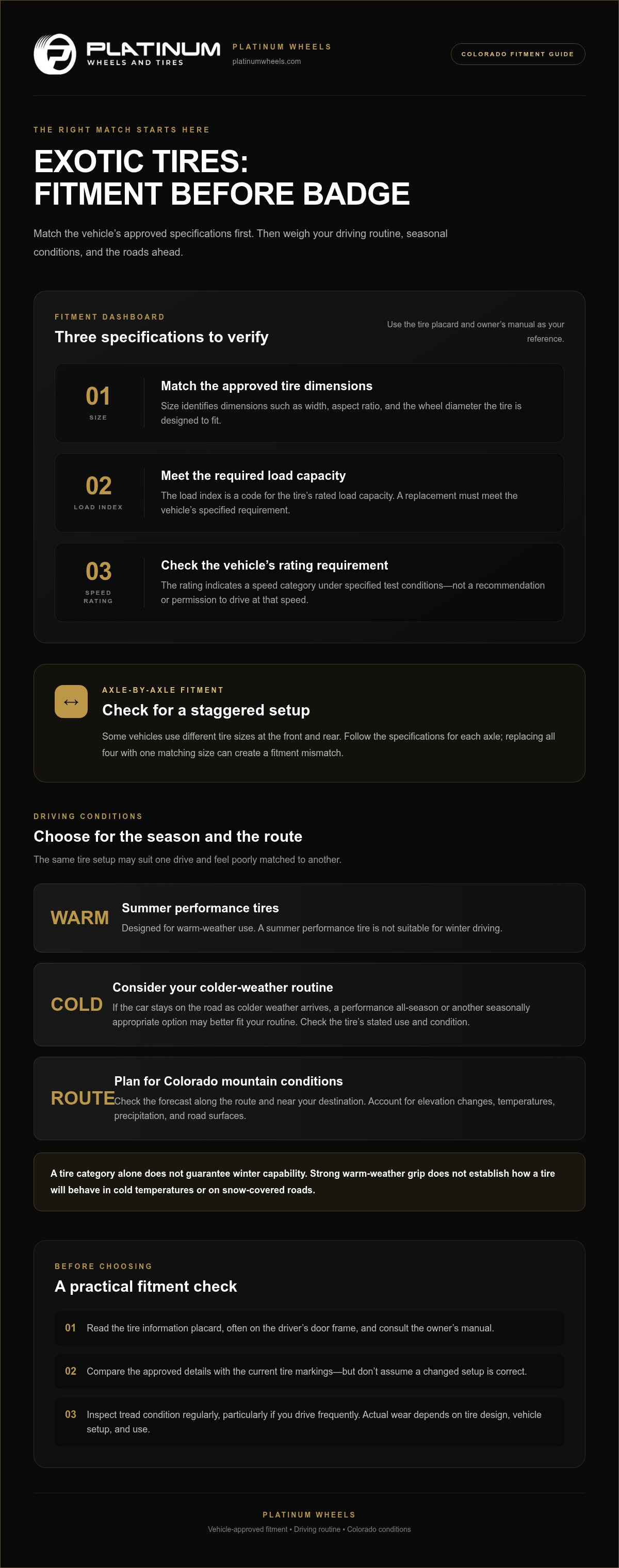
Start with the tire information placard, often on the driver’s door frame, and the owner’s manual. They identify the vehicle’s approved tire size and other requirements. Compare those details with the markings on the current tires, but don’t assume the current setup is correct if someone has changed it from the factory specification.
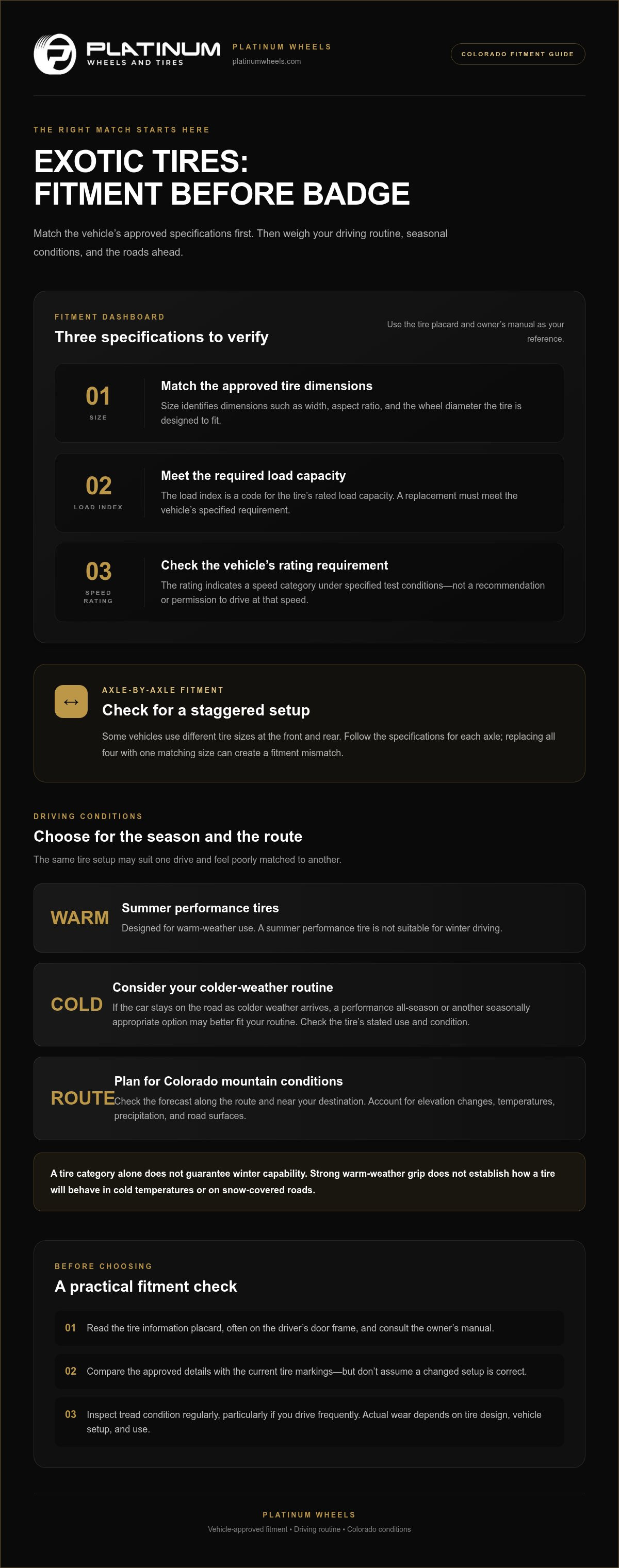
- Tire size identifies dimensions such as width, aspect ratio, and the wheel diameter the tire is designed to fit.
- Load index is a code for the tire’s rated load capacity. A replacement must meet the vehicle’s specified requirement.
- Speed rating indicates the speed category for which the tire is rated under specified test conditions. It is not a recommendation or permission to drive at that speed.
Some vehicles use different tire sizes on the front and rear, a setup commonly called staggered fitment. The wider or differently sized rear tires may be part of the vehicle’s intended design. Replacing all four with one matching size can create a fitment mismatch, so follow the specifications for each axle.
What does performance-focused design prioritize?
Performance-focused designs generally aim to support grip and steering response, but those qualities involve trade-offs. A tire’s compound, internal construction, and tread pattern influence how it responds to cornering forces, road texture, and water. The Tire overview explains how construction and materials contribute to tire behavior.
A design tuned for sharper response may transmit more road feel or deliver a firmer ride. A focus on comfort or longer wear can involve different compromises. These aren’t guaranteed outcomes for every tire in a category. Compare a specific tire’s intended use with your driving routine, and keep the vehicle’s fitment requirements at the center of the decision. That makes exotic car tires a considered match, not a choice based on reputation alone.
How Colorado Roads and Weather Shape Exotic Car Tire Choices
Local conditions belong in a tire decision because the same setup can suit one drive and feel poorly matched to another. Around Denver, a car may spend the week on urban pavement, then head toward a mountain route where temperatures, precipitation, and road surfaces differ. Consider where and when you drive, not just the tire’s performance category.
Road surfaces and driving habits affect tire wear, so inspect tread condition regularly, particularly if you drive frequently. A tire’s actual wear depends on its design, vehicle setup, and use. There is no single lifespan that applies to every driver.
How do temperature changes affect performance tires?
Tire behavior can change as temperatures shift, and the tire’s compound and intended season matter. A summer performance tire is designed for warm-weather use and isn’t suitable for winter driving. Its speed rating does not make it a cold-weather tire. Seasonal suitability and speed capability describe different things. Follow the owner’s manual and tire-maker instructions for guidance specific to the vehicle and tire. The U.S. Tire Manufacturers Association also provides guidance on tire safety and care.
Plan around the months you expect to drive. If the car stays on the road as colder weather arrives, consider whether a performance all-season or another seasonally appropriate option better fits your routine. A category alone does not guarantee winter capability, so check the tire’s stated use and condition. Think ahead rather than waiting for the first cold or snowy drive to reconsider your setup.
What should Colorado mountain drivers consider?
A mountain trip calls for more than a quick glance at the temperature in Denver. Check the forecast along the route and near your destination, consider the road surface and expected conditions, and decide whether the drive suits your tires and comfort level. If conditions look unsuitable, changing the timing or route may be more prudent than expecting a performance tire to handle every scenario.
A performance tire is not automatically an all-condition tire. Strong warm-weather grip doesn’t establish how a tire will behave in cold temperatures or on snow-covered roads. Build a practical decision around the full trip:
- Route: Consider elevation changes and whether conditions may differ between departure and destination.
- Forecast: Review expected temperatures and precipitation for the drive, not only the starting point.
- Tire condition: Inspect tread and look for visible damage before setting out.
- Comfort: Choose a route and timing that fit your confidence in the conditions and equipment.
Drivers across Denver, Aurora, Lakewood, Englewood, Wheat Ridge, Commerce City, Westminster, Thorton, Broomfield, Arvada, Golden, Littleton, Parker, Highlands Ranch, Castle Rock, Boulder, Fort Collins, and Colorado Springs can factor local routes and seasonal conditions into their wheel-and-tire plans. Platinum Wheels offers wheel-and-tire packages with professional mounting and balancing. The right choice still starts with the vehicle, the season, and the roads you actually travel.
Summer, All-Season, and Performance Tires: What Is the Difference?
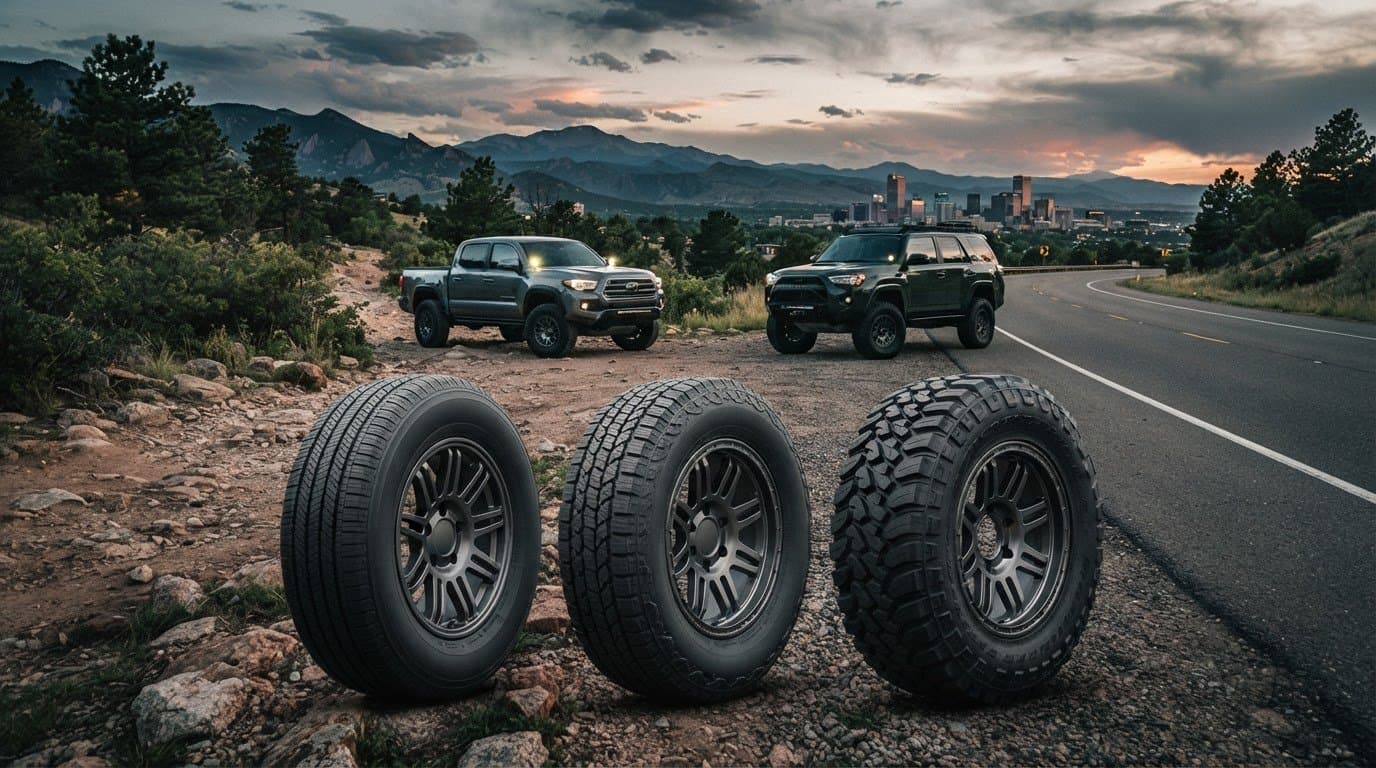
These labels describe different things. “Summer” and “all-season” refer to intended seasonal use, while “performance” describes a design focus that can appear in more than one season category. A performance all-season tire, for example, aims to combine responsive handling with broader seasonal flexibility than a summer tire. Its exact capabilities depend on the model and the vehicle it’s fitted to.
Use this comparison as a starting point, not a substitute for the tire maker’s guidance or the vehicle’s approved specifications.
| Tire category | Intended use | Potential strengths | Trade-offs and seasonal context |
|---|---|---|---|
| Summer performance | Warm-weather driving | Designed to emphasize dry- and wet-road handling in suitable temperatures | Not intended for winter driving; seasonal limits matter for year-round use in Colorado |
| Performance all-season | Drivers seeking responsive handling across a broader range of conditions | Balances performance-oriented behavior with more seasonal flexibility than a summer tire | May not deliver the same focused warm-weather performance as a summer design or the winter capability of a dedicated winter tire |
| General-purpose all-season | Everyday driving across varied conditions | Can prioritize versatility and routine comfort | May place less emphasis on sharp handling than a performance-focused design; winter capability varies by tire |
In short, summer tires focus on warm-weather performance, all-season tires aim for broader everyday flexibility, and performance describes a handling priority that can overlap either category. Exact behavior varies by tire model, vehicle, and conditions. Forbes Wheels discusses performance tire design and testing, offering context for why construction and intended use matter as much as a category label.
When might a summer performance tire make sense?
A summer performance tire may suit an exotic car driven mainly in warmer weather by someone who prioritizes handling. Its design is intended for warm conditions, not year-round use in every climate. Follow the tire manufacturer’s temperature guidance, since a speed or performance rating does not indicate that a tire is appropriate in cold weather. For a Colorado owner who drives through winter, seasonal limitations may call for a different plan.
Can an all-season tire work for an exotic car?
It can, if the tire matches the vehicle’s required specifications and the driver values everyday flexibility over the more focused goals of a summer performance tire. But “all-season” doesn’t mean equivalent to a dedicated winter tire, and capability differs by model. When comparing exotic car tires, weigh how often the car is driven, the conditions it encounters, and the handling compromises you’re comfortable making.
Let normal driving lead the decision. A car used mostly for warm-weather weekend drives has different needs from one driven regularly through changing Front Range seasons. Match the category to that routine, then verify the exact tire’s specifications and guidance rather than choosing by label alone.
How to Choose Exotic Car Tires: A Practical Fitment Checklist
Use this checklist to move from the vehicle’s requirements to a tire choice and installation plan. Start with factory specifications, then account for any wheel changes and the way you drive. The current tires are a useful reference, but they shouldn’t override the vehicle placard or owner’s manual.
- Identify the exact vehicle. Record its year, make, model, and trim. Use the tire placard and owner’s manual to find the recommended tire sizes and ratings for that specific configuration.
- Record what’s fitted now. Write down the tire markings on each axle, including size, load index, and speed rating. Note front-to-rear differences. Compare these markings with the factory specifications rather than assuming the current setup is correct.
- Account for the wheels. If the wheels have been changed, assess the complete wheel-and-tire combination against the vehicle’s approved fitment. Wheel diameter and width can affect which tire sizes fit, and the setup also needs appropriate clearance. A custom wheels and rims guide offers related context on wheel fitment.
- Describe your normal driving. Note whether the car is mainly used for warm-weather drives, daily commuting, or year-round travel. Include typical road conditions, seasonal use, and whether you prioritize responsive handling, comfort, or a broader range of use.
- Compare suitable tire options. Match each candidate’s size and ratings to the vehicle requirements, then consider the tire’s intended season and driving role. Follow the tire maker’s guidance for use and operating conditions.
- Plan the installation details. Include professional mounting and balancing in the plan, and account for the vehicle’s TPMS sensors. They monitor tire pressure and can alert the driver to a pressure issue. For more on their role, see this TPMS sensor guide.
What should you record before shopping?
Keep the vehicle details, placard and manual specifications, current tire markings, and front-to-rear sizes together. Add a short description of your routine: Front Range streets, longer highway trips, mountain drives, seasonal use, and the qualities you value most. This snapshot makes it easier to compare exotic car tires against fitment needs and real-world priorities.
Why do mounting, balancing, and TPMS matter?
Choosing a compatible tire is only part of completing the job. Proper mounting and balancing are important installation steps, while functioning TPMS sensors help monitor pressure. Platinum Wheels offers wheel-and-tire packages with professional mounting and balancing, along with TPMS sensors.
Bring the specifications and driving priorities together before settling on a setup. Explore Platinum Wheels’ tire and wheel options.
Plan Your Tire and Wheel Upgrade with Colorado Fitment in Mind
A sound tire and wheel plan brings together the vehicle’s approved specifications, the way you use it, and the conditions it faces across Colorado. A setup that fits the car but doesn’t suit your usual season or driving priorities may not feel like the right match. Likewise, a preferred tire category can’t replace checking size, ratings, and complete wheel fitment.
Gather your vehicle details, the specifications from its placard and owner’s manual, and the markings on the tires currently installed. Add a plain-language description of your routine, such as occasional warm-weather drives, regular Front Range travel, or trips that may include mountain roads. That context helps frame useful tire comparisons without treating every exotic car or route as the same.
What happens during a tire and wheel service visit?
A practical service process starts with discussing your needs and reviewing the vehicle’s fitment information. Once the appropriate tire and wheel setup is established, mounting and balancing are key parts of completing a wheel-and-tire package installation. Platinum Wheels offers wheel-and-tire packages with professional tire mounting and balancing, along with TPMS sensors. Consider the setup as a whole, including tire specifications and wheel compatibility.
Platinum Wheels is a locally owned retailer and installer serving communities across the Colorado Front Range. Its offerings include new tires, all-season tires, wheel-and-tire packages, TPMS sensors, and custom truck wheels and off-road rims. Careful specification review is central to planning any tire and wheel service.
How can Colorado drivers make a confident next move?
Bring the basics together before choosing: vehicle year, make, model and trim; factory tire specifications; current tire markings; and your typical roads and seasonal driving plans. Be clear about what matters most, whether that’s a performance-oriented feel, everyday flexibility, or preparing the car for a specific driving season. This gives the fitment discussion practical direction.
Professional installation helps turn a tire choice into a complete setup. Mounting and balancing are included with Platinum Wheels’ wheel-and-tire packages, and TPMS sensors are part of its wheel-and-tire offerings. A well-planned installation starts with accurate vehicle details and keeps the complete tire-and-wheel combination in view.
If you’re ready to explore local tire and wheel services, visit Platinum Wheels. Bring your vehicle specifications and driving priorities as the starting point for a considered conversation about your setup.
Take the Next Step Toward a Well-Matched Setup
Before your next tire change, turn your research into a simple plan: note what you want the car to feel like on the road, which seasons you expect to drive, and any questions about its approved setup. That gives the decision a practical starting point. The best exotic car tires are the ones that fit the vehicle and make sense for how you’ll use it, not simply the ones with the most dramatic performance claims.
Platinum Wheels serves drivers across the Colorado Front Range with tire and wheel services, including wheel-and-tire packages with professional mounting and balancing. Bring your priorities and vehicle information into the conversation, then compare options against your driving plans.
Explore Platinum Wheels’ tire and wheel services and take a considered next step toward a setup that suits your driving routine.
Frequently Asked Questions
How long do exotic car tires typically last?
There’s no reliable lifespan that applies to every set of exotic car tires. Tire compound, driving habits, road surfaces, storage, and upkeep all affect wear. Road conditions, hard acceleration, and cornering can also influence how quickly tires wear. Check the tread and sidewalls regularly, and watch for uneven wear or damage. The tire maker’s guidance can help you judge when replacement is due.
Can exotic cars use all-season tires?
Yes, if an all-season tire is approved for the vehicle and matches its required specifications. It may suit an owner who drives regularly in varied conditions and values everyday flexibility over a tire designed for a narrower performance focus. But “all-season” doesn’t mean suitable for every winter situation. Compare the tire’s stated capabilities with your usual routes, driving season, and the vehicle manufacturer’s recommendations.
Do exotic cars need special tires?
They need tires that meet the vehicle’s specifications, but not necessarily a tire labeled exclusively for exotic cars. A car’s weight, power, wheel setup, and approved ratings shape what will fit and function as intended. Avoid choosing based on brand prestige alone. The vehicle placard and owner’s manual provide a more dependable starting point than a broad “exotic” or “performance” label.
How do I find the correct tire size for my exotic car?
Check the tire placard on the vehicle and the owner’s manual for approved sizes. Then compare those details with the markings on each current tire, since front and rear sizes may differ. If the car has aftermarket wheels or its current tires don’t match the vehicle information, don’t rely on the sidewall alone. Have the complete wheel-and-tire fitment reviewed before selecting replacements.
Are summer performance tires suitable for Colorado?
They can suit warm-weather driving, but they aren’t intended for winter use. Colorado temperatures can change quickly, so a summer setup may not suit a car that needs to be driven through colder months. Follow the tire maker’s temperature guidance and plan around when the car will be used. A seasonal tire choice should reflect actual driving plans, not just the car’s performance potential.
Can changing wheels affect exotic-car tire fitment?
Yes. A different wheel diameter or width can change which tire sizes are appropriate, and the combined setup needs to suit the vehicle’s clearances and specifications. For example, choosing a wheel for its appearance without considering the tire it requires can create a mismatch. Review wheel and tire dimensions together before making a change, especially on vehicles with different front and rear fitments.
Do new tires need TPMS sensors?
Not necessarily. If the vehicle’s existing tire pressure monitoring system sensors are compatible and functioning, a tire replacement doesn’t automatically mean they need to be replaced too. Sensors may need attention if they’re damaged, no longer working, or unsuitable for the new wheel setup. TPMS sensors monitor tire pressure, so include their condition in installation planning and follow the vehicle’s guidance after service.