Mickey Thompson Tires: Denver's Best Off-Road Performance
Mickey Thompson tires are listed in sizes including 33x12.50R15, 35x12.50R17, and 37x12.50R17. The right fit depends on your vehicle’s specifications and how you balance daily driving with off-road use. A larger size alone doesn’t tell you whether a tire suits your setup.
For Denver drivers comparing Mickey Thompson tires, tread style and fitment matter as much as the size printed on the sidewall. A tire designed for rugged terrain may feel different from one intended mainly for pavement, so start with your vehicle and the roads you travel. This guide explains how to compare sizes, tire categories, and intended uses, and how to evaluate the overall cost. You’ll also see how wheel fitment and terrain affect your choice, helping you narrow your options with confidence.
Key Takeaways
- Use your vehicle’s fitment requirements as the starting point; a larger tire size isn’t automatically the right choice.
- Match tread style and tire ratings to the balance you want between Denver road driving and off-road use.
- Compare model options by the terrain and driving conditions they’re designed to handle, not by appearance alone.
- Understand how tire size, model, and package choices influence the overall price before settling on a setup.
- Consider wheels and any lift or leveling changes alongside tire fitment to plan a cohesive setup.
Available tire sizes
Mickey Thompson tire listings include 33x12.50R15, 35x12.50R17, and 37x12.50R17 sizes. These examples span different diameters and wheel fitments. They are useful starting points, not automatic recommendations for every truck or SUV. Match each size to the vehicle’s approved fitment and intended use before choosing.
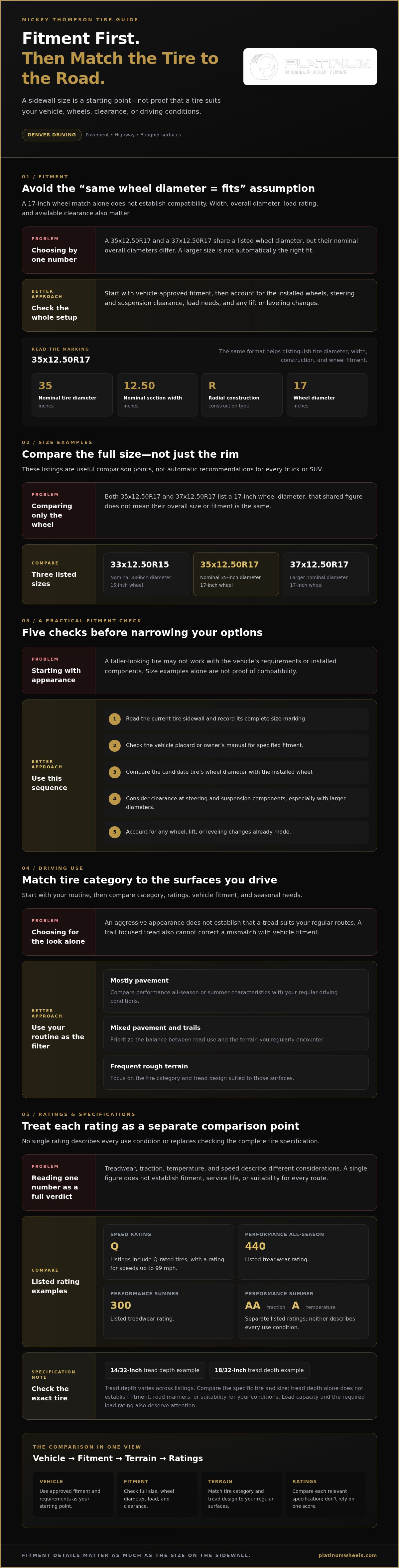
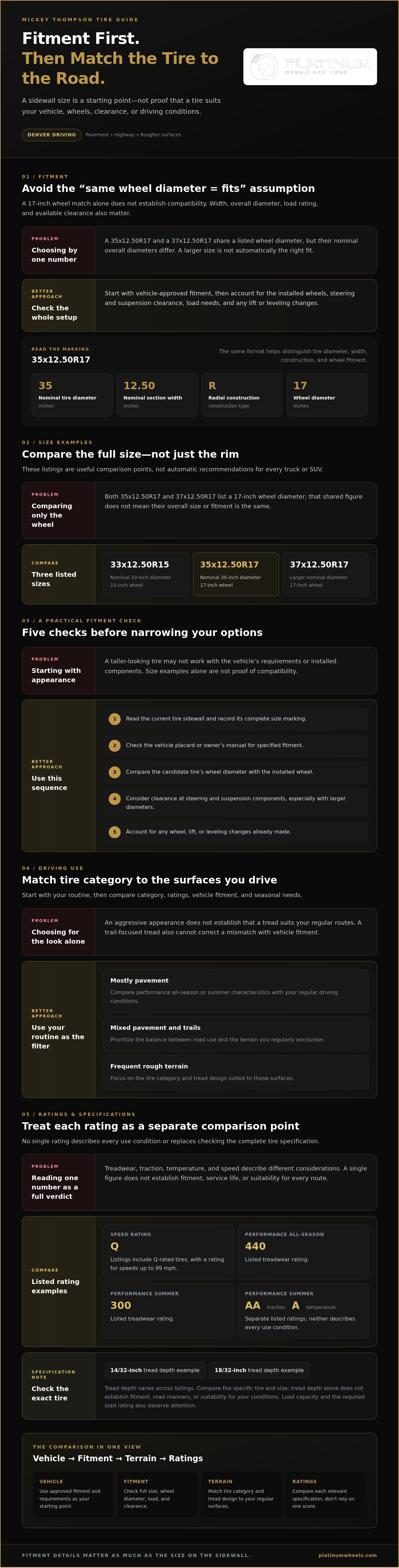
Read the size marking before comparing options. In 35x12.50R17, 35 indicates nominal tire diameter in inches. The 12.50 describes nominal section width in inches. The R identifies radial construction, and 17 is the wheel diameter in inches. The same format helps distinguish a tire that fits a 15-inch wheel from one intended for a 17-inch wheel.
The 33x12.50R15 listing pairs a nominal 33-inch diameter with a 15-inch wheel. The 35x12.50R17 listing pairs a nominal 35-inch diameter with a 17-inch wheel. The 37x12.50R17 listing has a larger nominal diameter, while retaining the same listed wheel diameter as the 35-inch example. Those differences affect fitment planning.
Use this practical sequence to narrow the options:
- Read the current tire sidewall and record its complete size marking.
- Check the vehicle placard or owner’s manual for its specified fitment.
- Compare the candidate tire’s wheel diameter with the installed wheel.
- Consider clearance at steering and suspension components, especially with larger diameters.
- Account for any wheel, lift, or leveling changes already made.
That sequence prevents a common mix-up: matching only the wheel diameter. A 17-inch wheel match does not establish that every 17-inch tire will suit the vehicle. Width, overall diameter, load rating, and available clearance also matter. A 35x12.50R17 and a 37x12.50R17 share a listed wheel diameter, but their overall diameters differ.
Load capacity deserves equal attention. These figures show the listed capacity for the example load indexes. Choose a load rating that meets your vehicle’s requirements and planned load.
Tread depth also varies across the listings. Examples include 14/32-inch and 18/32-inch tread depths. Compare the actual specification for the specific size and tire you’re considering. A tread-depth figure alone does not establish fitment, road manners, or suitability for your driving conditions. Use it alongside the size, load index, and tread design.
For Denver drivers, start with the vehicle, not the appearance of a taller tire. Think through your regular pavement use and the off-road terrain you plan to drive. Then compare that purpose with wheel diameter, width, load needs, and clearance. A larger option such as 37x12.50R17 calls for careful fitment consideration against a 33x12.50R15.
Keep the full sidewall marking handy as you compare tires. If your vehicle has different wheels or suspension components, include those details in the fitment assessment. The right size must work with the vehicle’s requirements, installed components, and intended use. That makes size examples useful comparison points, not proof of compatibility.
Mickey Thompson tire characteristics and uses
Compare each tire’s ratings against your driving priorities, not just its appearance. Speed, treadwear, traction, temperature, and terrain use each describe a different consideration.
Tire Characteristics
Listings include Q speed-rated tires, with a rating for speeds up to 99 mph. Treat that rating as one specification, not a target speed or a complete measure of tire performance. Check the rating for the specific tire, then weigh it alongside your vehicle requirements and normal driving.
Performance all-season listings show a treadwear rating of 440. Performance summer listings show a treadwear rating of 300, traction rating of AA, and temperature rating of A. These figures describe different characteristics. Compare them within the tire category, and don’t treat any one rating as a promise of service life or a substitute for fitment.
Tire Uses
Start with the conditions you encounter most often. For mainly paved driving, you might prioritize a performance all-season or summer tire. If you regularly travel off-road, consider a tread pattern suited to that terrain. Match the tire category to your routine rather than choosing only for an aggressive look.
Denver driving can mean city streets, highway miles, and trips over rougher surfaces. Note your usual routes and the terrain you expect to tackle. Then compare tire category, ratings, vehicle fitment, and seasonal needs. This makes the trade-offs clearer before you choose.
Use ratings as comparison tools, not as a single score. A higher treadwear rating doesn’t show whether a tire suits a particular route, and a traction rating describes a different attribute. A speed rating likewise doesn’t indicate how the tread will perform on every surface. Consider the complete specification.
- Mostly pavement: Compare performance all-season or summer characteristics with your regular driving conditions.
- Mixed pavement and trails: Prioritize the balance between road use and the terrain you regularly encounter.
- Frequent rough terrain: Focus on the tire category and tread design suited to those surfaces.
These are starting points, not substitutes for matching tires to your vehicle. Tire size and load requirements matter, as do the wheels and suspension already installed. A trail-focused tread won’t fix a mismatch between the tire and your vehicle’s fitment needs. Consider the whole setup.
Separate your driving goal from the ratings. If expected tread life matters, compare treadwear information across relevant options. If traction characteristics matter most, review that rating where available. For summer performance tires, the listed AA traction and A temperature ratings offer specific comparison points, but don’t describe every use condition.
Before narrowing your selection, list your usual road surfaces, seasonal needs, and vehicle requirements. Compare each tire’s category and available ratings, then confirm that its full specifications suit your vehicle setup. This approach helps distinguish an all-season tire for regular road use from one selected for more demanding off-road driving.
Popular tire models
Compare Mickey Thompson tires by category and intended driving role. Model names matter, but the right comparison starts with how you drive, your vehicle’s requirements, and the surfaces you encounter.
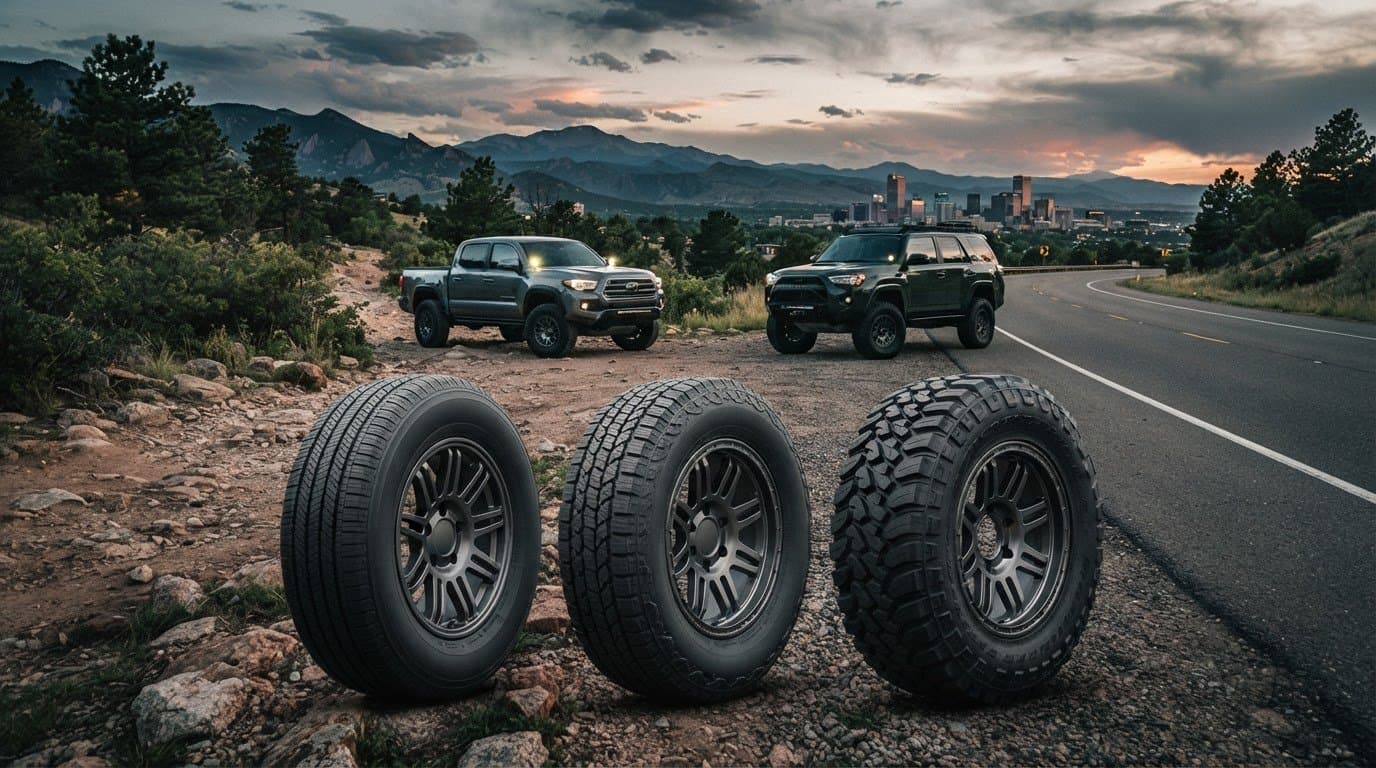
For a truck used on both streets and trails, start by comparing all-terrain options. Check each model’s stated use, available sizes, load rating, and tread design. Then consider how often you drive on pavement versus unpaved routes. A model designed for mixed driving may suit you better than a tire chosen only for its aggressive appearance.
Mud-terrain tires are another category to consider when off-road driving is a priority. Compare the intended terrain with your usual routes, then weigh that against your daily driving needs. A tire designed for demanding off-road conditions must still meet your vehicle’s fitment and load requirements. Match the model to your actual use, not just occasional plans.
For road-focused driving, compare performance all-season and summer categories. Performance all-season listings show a treadwear rating of 440. Performance summer listings show a treadwear rating of 300, traction rating of AA, and temperature rating of A. These ratings describe different attributes, so review them together rather than treating one number as a complete ranking.
A Q speed rating is listed for some tires, with a rating for speeds up to 99 mph. Treat that as a specification to compare against your vehicle’s needs and driving conditions. It doesn’t identify the best model by itself. Read the complete specification for the specific candidate, including fitment and load information.
Use this comparison sequence to narrow model choices:
- Choose the category that reflects your primary use, such as all-terrain, mud-terrain, performance all-season, or performance summer.
- Compare candidate sizes with your vehicle and wheel setup.
- Review load and speed ratings alongside the vehicle’s requirements.
- Compare treadwear, traction, and temperature information where those ratings apply.
- Check that the model’s intended use fits your regular routes and seasonal driving.
For example, a Denver driver who mainly uses paved roads can begin with performance all-season options, then consider whether the vehicle and driving conditions call for another category. Someone who regularly plans off-road trips can compare all-terrain and mud-terrain tires by terrain and road use. Neither category is right for every driver.
Keep model and size decisions connected. Tires in the same category can have different fitments and specifications. A model name or category doesn’t replace checking the exact size, load index, and wheel compatibility. Review the full tire details before comparing models.
Make a short comparison list based on your main driving purpose, vehicle requirements, and relevant ratings. This makes differences between models easier to see. Treadwear ratings, for instance, compare treadwear, while traction ratings provide a separate point of comparison. Choose based on the combination that suits your driving, not on one rating alone.
Tire prices
Compare tire prices by matching the exact size, model, and required specifications. A price for one tire size doesn’t establish the cost of another. For example, 33x12.50R15 and 37x12.50R17 have different dimensions and wheel fitments. Compare like with like before judging which option suits your budget.
Start with the full sidewall size, then identify the tire category. All-terrain, mud-terrain, performance all-season, and performance summer tires serve different driving priorities. Differences between categories can reflect distinct designs and intended uses, not simply a better or worse deal. Compare models within the same category when possible.
Model specifications also shape a useful comparison. Listings include tread depths of 14/32 inch and 18/32 inch, while load index examples include 108 and 109. Those details help identify what you’re comparing, but don’t determine price by themselves. Match the exact size and specification before using any listing as a reference.
Separate tire cost from the cost of the complete setup. Your vehicle may need a specific wheel fitment, compatible TPMS sensors, or other changes to its existing setup. List tire, wheel, sensor, and installation requirements separately to see which components apply to your vehicle.
Use this comparison process to keep options consistent:
- Record the vehicle’s required size and current wheel setup.
- Select the tire category that fits your primary driving use.
- Compare the same size and model specifications across listings.
- Note whether each figure covers a tire alone or a broader setup.
- Include applicable installation and fitment needs in your total.
Quantity matters, too. Compare the cost for the number of tires your vehicle needs, rather than treating a per-tire figure as the full replacement budget. A four-tire replacement and a single-tire purchase have different totals. Keep the quantity consistent when comparing options.
For a modified truck, include wheel and suspension changes in the budget plan. A larger fitment such as 37x12.50R17 may involve different fitment considerations than 33x12.50R15. The tire alone doesn’t describe the full setup. Review the wheel diameter, clearance needs, load requirements, and any related component choices together.
Ratings can help explain why two candidates differ, but they aren’t price labels. A Q speed rating applies to tires rated for speeds up to 99 mph. Treadwear and traction ratings describe other characteristics. Compare each specification for the exact candidate, then decide which characteristics matter for your driving rather than paying for features unrelated to your use.
Create a short budget worksheet with the exact size, category, model, quantity, and required fitment components. Note installation and sensor needs separately, then compare complete, equivalent setups rather than isolated listings. This helps Denver drivers understand how choices affect the total and prevents a lower tire-only figure from obscuring other required parts.
Price research can also distinguish what you pay for a tire from what happens to it after removal. Keep disposal considerations separate from your purchase comparison. An end-of-life fuel classification is not a discount, a retail price, or a statement about every tire. The U.S. Environmental Protection Agency says scrap tires removed from vehicles and managed under established tire collection programs are non-waste fuels when burned in a combustion unit. This applies to that specific managed-use condition; it doesn’t change the size, category, or specifications needed to compare tire listings.
Brand background may help identify the product being considered, but it cannot replace matching its exact fitment and specifications. Tire Agent states that Mickey Thompson has manufactured tires for cars, trucks, and SUVs in the United States for almost 60 years. Treat that history as context rather than a price benchmark: compare actual listings for the same tire and setup, and keep the per-tire amount distinct from the total for the quantity and installation needs you have identified. A brand’s history alone does not establish that a particular option costs less or is appropriate for a given vehicle. Keep your final comparison centered on the specific purchase you are planning.
Platinum Wheels: Custom Truck Wheels & Off-Road Rims
Platinum Wheels can help match Mickey Thompson tires to the rest of your truck’s setup. When comparing all-terrain and mud-terrain tires, wheel fitment matters too. Custom truck wheels, off-road rims, and wheel and tire packages bring those choices together.
Consider lift kits or leveling kits if your build involves changes to ride height or stance. Planning tire, wheel, and suspension changes as one setup helps keep fitment decisions aligned with your driving plans. Platinum Wheels installs lift kits and leveling kits for drivers upgrading trucks and SUVs.
For help planning your setup, visit Platinum Wheels.
Plan Your Next Truck Setup
Decide how you want your truck to perform on Denver roads and beyond. Choosing Mickey Thompson tires is one part of the plan, not the whole setup. Consider how your tires fit your wheels and intended driving, so each choice supports the same goal.
Platinum Wheels brings these decisions together with custom truck wheels and off-road rims, all-terrain and mud-terrain tires, and wheel and tire packages. That’s useful when you’re moving from comparing tires to planning a coordinated truck setup. Start with your vehicle’s requirements and the driving you expect to do, then choose options that fit.
Contact Platinum Wheels about tire options and take the next step toward a setup that suits your plans.
Frequently Asked Questions
What types of tires does Mickey Thompson make?
Mickey Thompson listings include performance all-season and performance summer tires, along with truck-oriented sizes for off-road fitments. These categories serve different priorities: an all-season tire suits drivers seeking year-round road use, while a summer performance tire is a separate option to assess by its specifications. For your vehicle, match the category and full fitment details to your intended use.
What are the best-selling Mickey Thompson tire models?
There’s no sales ranking here identifying a best-selling Mickey Thompson model, and popularity alone can’t determine the right fit for your vehicle. Define your main use, such as regular pavement driving or off-road travel, then compare model specifications and fitment. A model that suits another driver may not meet your vehicle’s requirements or the conditions you regularly encounter.