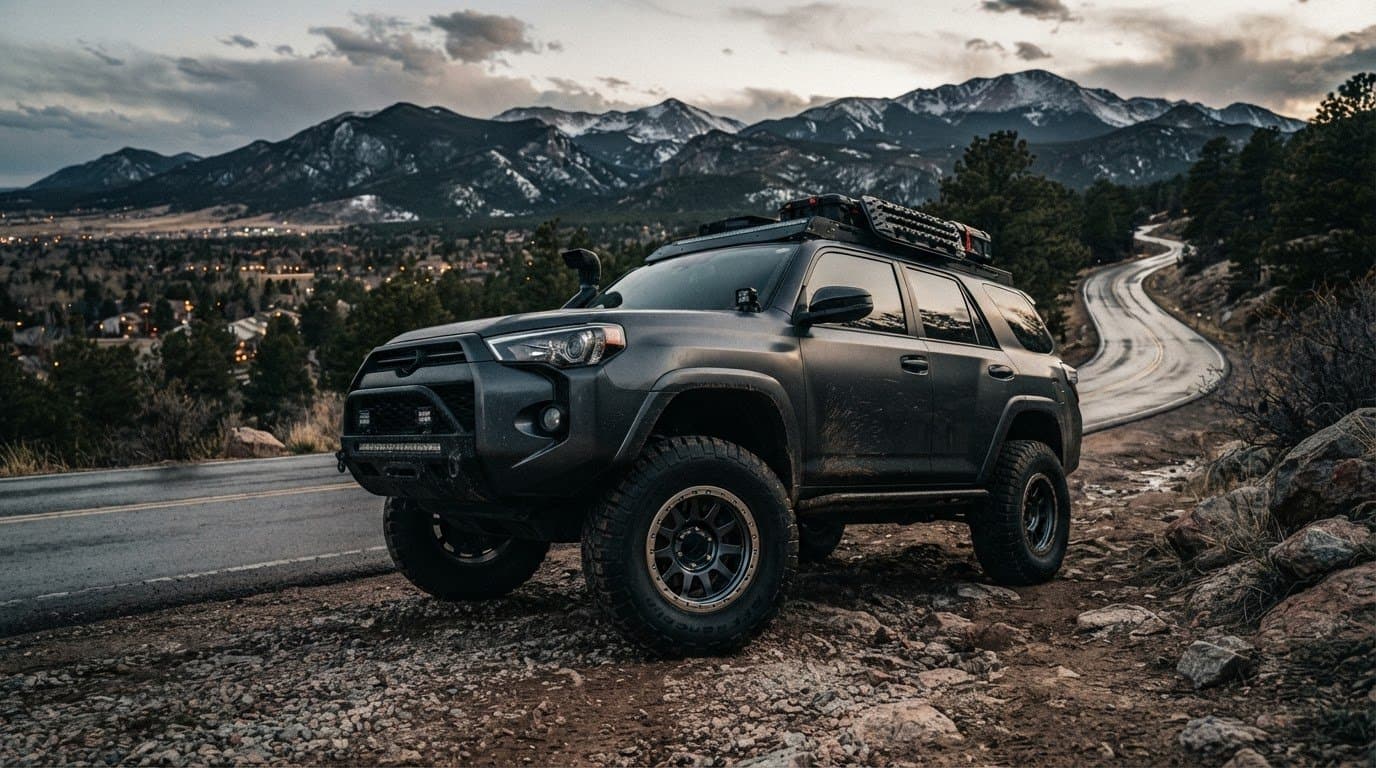
Top Nitto Tires for Denver Roads & Colorado Trails
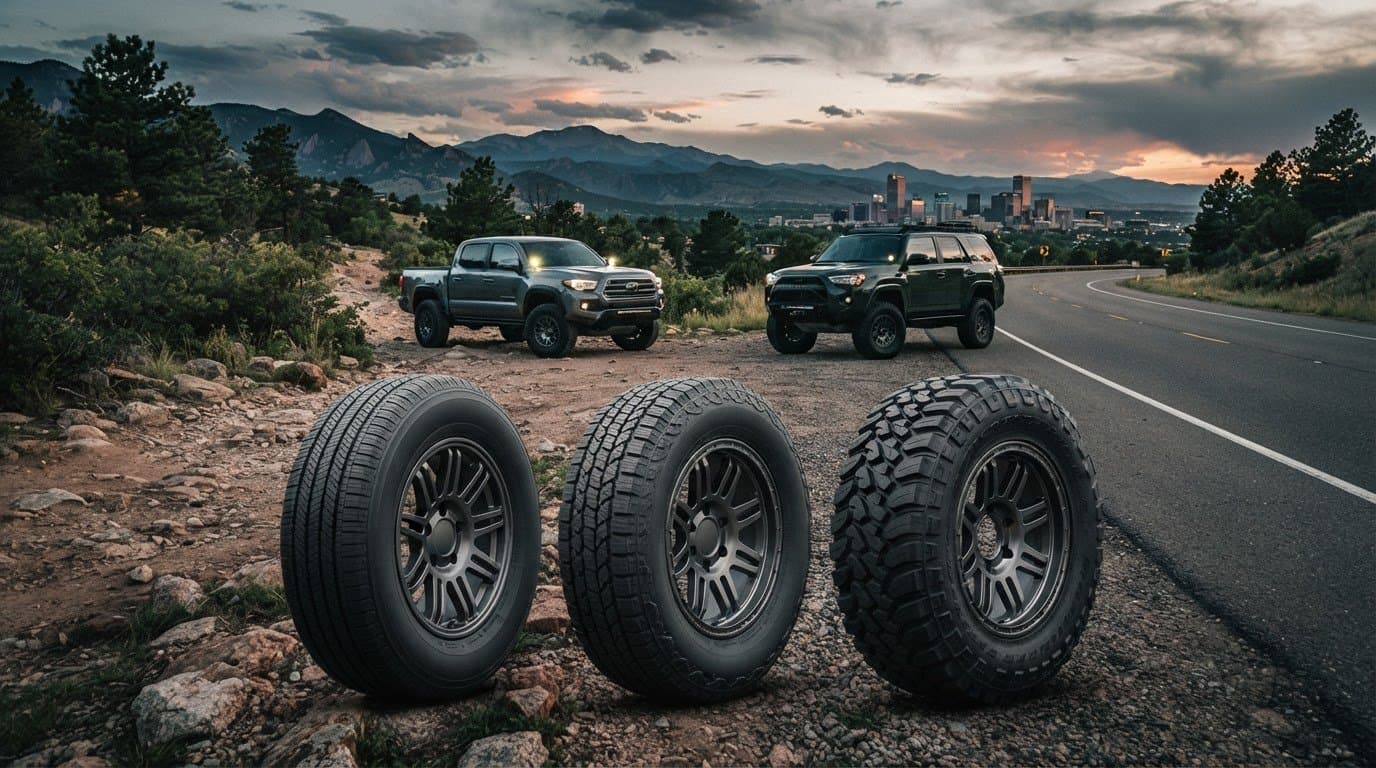
The best Nitto tires for Colorado depend on where your truck spends its time: Nitto’s light truck options suit truck-focused needs, the Motivo 365 is positioned for all-weather performance, and the Ridge Grappler offers a hybrid approach to road and trail use. For Denver streets and Colorado trails, match Nitto tires to your driving mix rather than choosing by tread appearance alone.
It’s easy to focus on an aggressive tread’s appearance, but daily comfort and the terrain you actually drive matter just as much. Consider how Nitto tires fit your regular routes and weekend plans before choosing a setup.
This guide explains how Nitto tires’ light truck options, Motivo 365 all-weather performance, and Ridge Grappler hybrid use fit different Colorado driving needs. You’ll learn how to compare the options and what to consider when choosing tires for your truck or SUV.
Key Takeaways
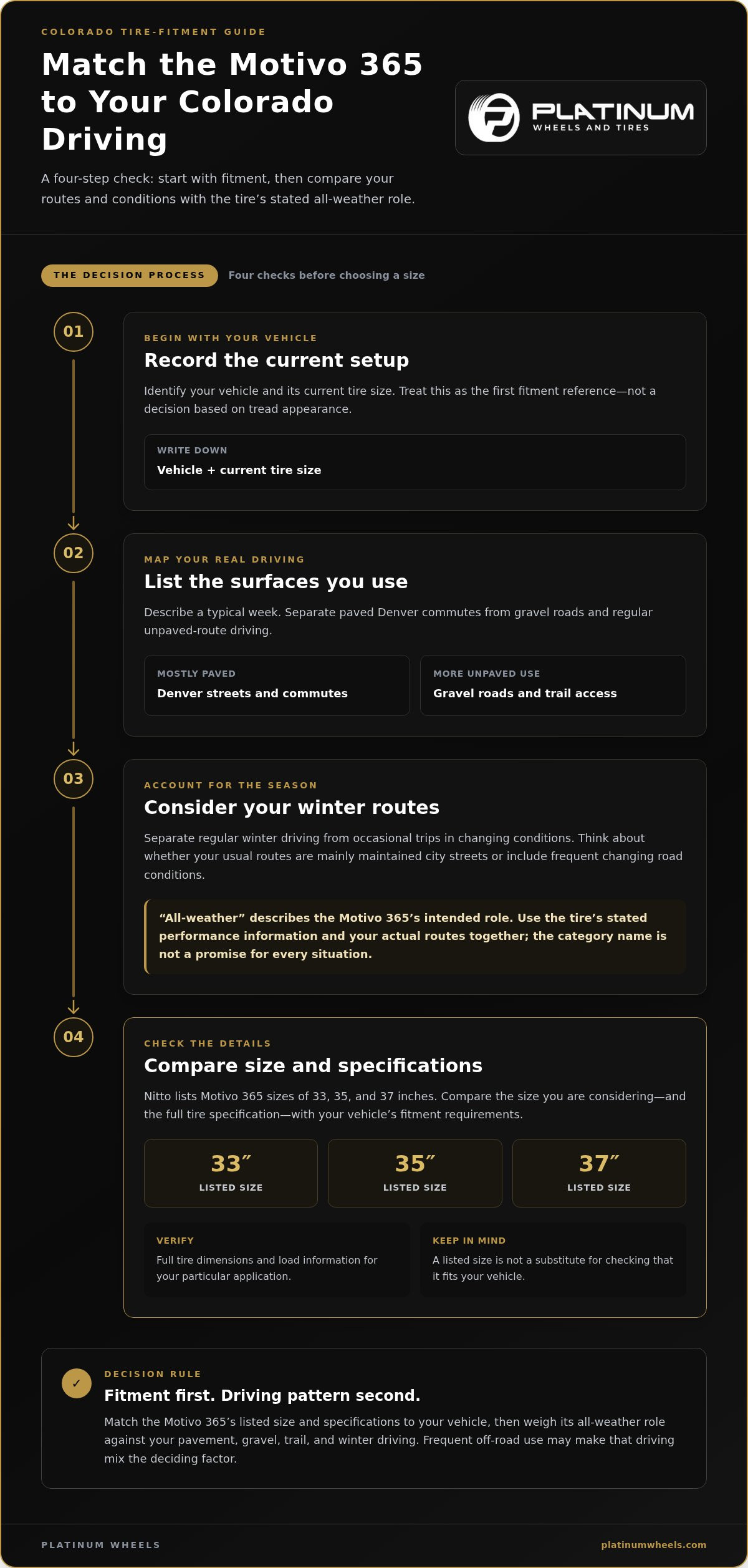
- Match the Motivo 365’s all-weather role to your regular driving, and compare its listed 33-, 35-, and 37-inch sizes with your vehicle’s fitment needs.
- Use Nitto’s long history and enthusiast focus as context, then choose based on how and where you drive.
- Consider the Ridge Grappler when you want a hybrid approach to pavement and trail use; your balance of road driving and off-road plans should guide the choice.
- Compare tire options by your daily routes, trail use, and winter driving conditions instead of relying on tread appearance alone.
- Before choosing a setup, understand how tire fitment and installation needs relate to your vehicle and any planned wheel or suspension changes.
Motivo 365 all-weather performance
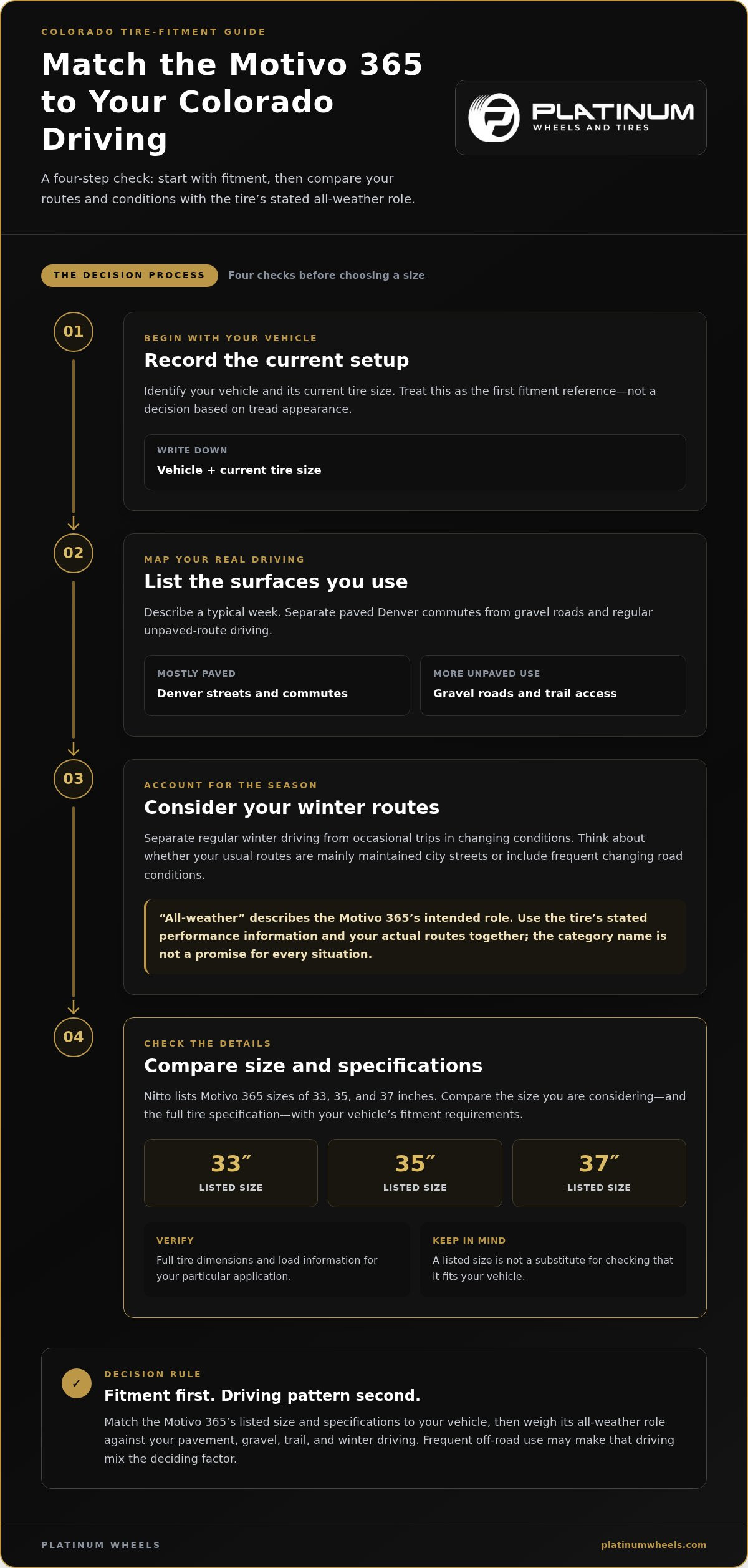
The Motivo 365 is positioned for all-weather driving, making it relevant to drivers who split time between Denver roads and changing Colorado conditions. Its listed sizes give shoppers a concrete starting point, but tire fitment and the driving mix should guide the final comparison.
All-weather driving performance
“All-weather” describes the Motivo 365’s intended role, but the label alone doesn’t explain how it fits your routine. Compare the tire’s available size and manufacturer specifications with your vehicle, then consider the surfaces you drive most. For example, a Denver commuter who rarely leaves paved roads has different priorities from a driver who regularly travels unpaved routes.
Driving condition suitability
Daily driving, trail use, and winter travel place different demands on a tire. Think about a typical week: paved commutes, occasional gravel, and the conditions on your usual winter routes. That pattern can help you decide whether an all-weather option suits your needs or frequent off-road driving should guide your choice.
Size is a practical first filter. Nitto lists 33-inch, 35-inch, and 37-inch tire sizes. Compare the size you’re considering with your vehicle’s existing setup and the fitment requirements for that vehicle. A listed size isn’t a substitute for checking the full tire specification, including the dimensions and load information that apply to your particular application.
Use this short process to narrow the choice:
- Identify your vehicle and its current tire size.
- Write down your typical driving surfaces, such as Denver pavement or gravel roads.
- Separate regular winter driving from occasional trips in changing conditions.
- Compare the Motivo 365’s listed size and specifications against those needs.
This comparison matters because a tire size can look suitable on paper but still fail to meet your vehicle’s fitment requirements. An all-weather designation also doesn’t mean every tire is right for every trail. Weigh the needs of a mostly paved commute differently from plans centered on rough, unpaved terrain.
For Colorado winter use, focus on the actual conditions you encounter and the tire’s stated performance information. Consider whether your routes are mainly maintained city streets or include frequent trips through changing road conditions. Don’t treat a general category name as a promise of performance in every situation; use the Motivo 365’s specifications and your driving pattern together.
The useful takeaway is straightforward: start with fitment, then match the tire’s stated role to your real routes. The listed 33”, 35”, & 37” inches provide a size reference, while your vehicle and daily use determine which comparison makes sense. A clear picture of both helps keep appearance from becoming the only deciding factor.
Nitto's history and enthusiast focus
Nitto has manufactured tires in Japan for more than 60 years. That history gives drivers context, while each model’s intended use remains central to choosing a tire.
Warranty and road-hazard coverage depend on the written terms for the specific tire and coverage. Review what those terms cover, their exclusions, and how claims are handled.
Nitto brand background
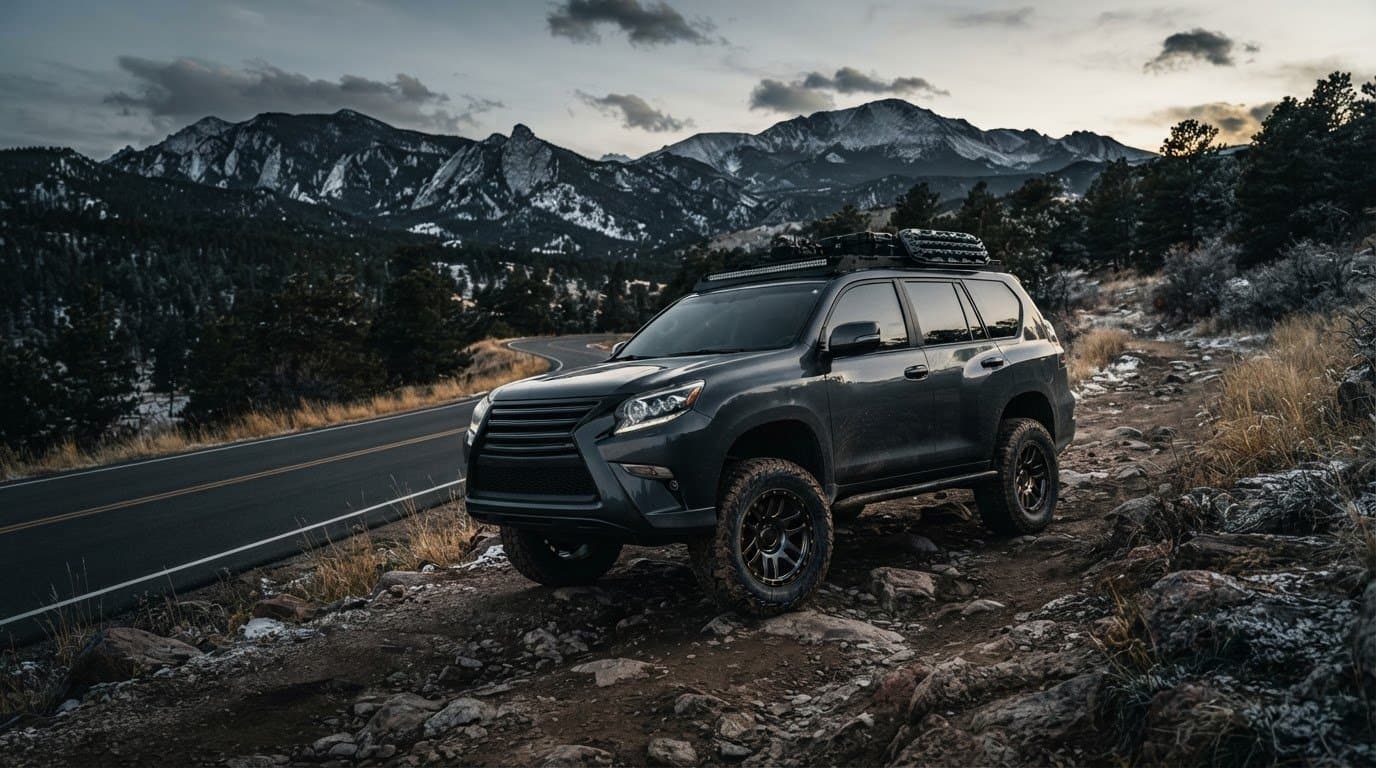
Nitto’s manufacturing history spans more than 60 years in Japan. Use that background as brand context, not as a substitute for comparing the tire itself. For a Denver SUV, for example, the relevant questions include its current fitment, regular road use, and whether its owner also drives unpaved routes.
Make the comparison specific. Record your vehicle and current tire size, identify the Nitto model you’re considering and its stated application, then compare its specifications with your vehicle’s requirements and your regular driving conditions. This puts the brand’s reputation in context without assuming every model suits every driver.
Review coverage separately. A product warranty and road-hazard coverage are distinct, so read the terms that apply to each. Check what qualifies, which exclusions apply, and how to submit a claim. For example, don’t assume road damage is covered under the same terms as a product defect. The written terms explain the difference.
Enthusiast-focused tire options
Drivers often choose tires to match a vehicle’s purpose, such as a truck built for trail access or an SUV used for commuting and outdoor trips. Compare Nitto tires by stated application, size, and specifications, then weigh those details against how you use your vehicle. A distinctive tread may appeal, but it shouldn’t replace fitment research.
Consider two Colorado drivers: one mostly commutes on Denver pavement, while another regularly drives gravel roads to reach trailheads. Their priorities may differ, even if both drive trucks. List the surfaces you encounter and the kind of driving you value. This gives you a practical way to compare models without choosing on styling alone.
Use this sequence to keep your decision grounded:
- Record your vehicle and its current tire size.
- Describe your usual routes and surfaces.
- Compare the model’s stated role with those driving needs.
- Review warranty and road-hazard terms separately.
Nitto tires may appeal to drivers who care about vehicle setup and tire design, but the specific model still matters. Compare fitment, intended use, and written coverage to choose for your vehicle, rather than relying on brand reputation alone.
Ridge Grappler hybrid use
The Ridge Grappler is a hybrid-use option for drivers balancing pavement travel with off-road plans. To assess whether it fits, compare your vehicle’s requirements, regular routes, and intended terrain with the tire’s stated application and specifications.
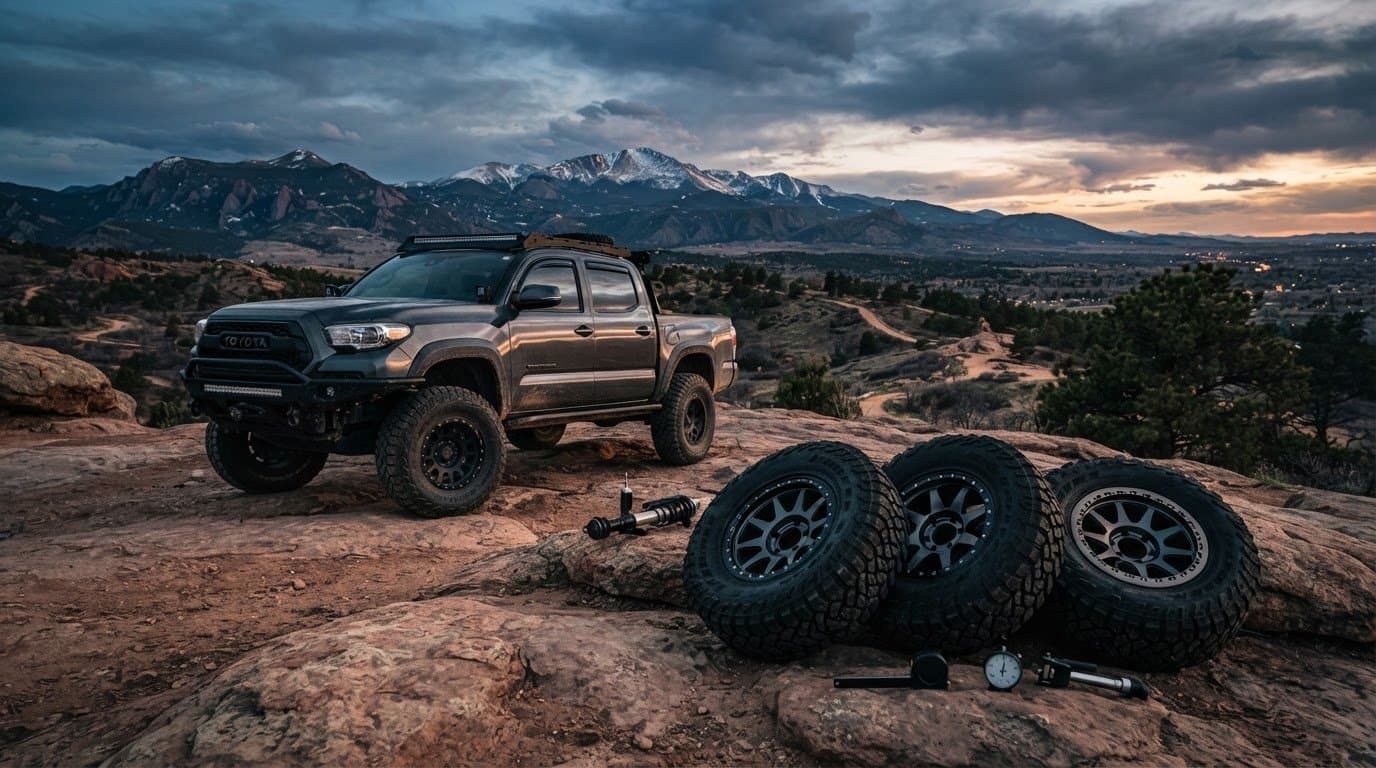
Start by describing how you use your vehicle during a typical week. A truck that mostly commutes has different priorities from one that regularly travels to trail access roads. Evaluate Nitto tires against your actual routine, not just their appearance or model name. Note how often you drive on pavement, gravel, and rougher surfaces before comparing options.
Next, check fitment. Record your current tire size and compare it with the candidate tire’s specifications for your application. If you’re changing wheels too, treat the tire and wheel as a connected setup. Running larger or heavier hybrid tires can also place extra strain on your drivetrain, so staying ahead on vehicle maintenance with Eagle Transmission & Auto Repair is a smart way to protect your truck. A sound comparison accounts for both intended use and vehicle requirements, rather than choosing a size based on appearance alone.
The Terra Grappler G3 is another model to consider, with sizing as a key part of the decision. Begin with the size required for your vehicle, then compare suitable choices by application and intended driving. A name alone won’t determine which size works for a particular setup. Keep the vehicle’s existing configuration and route demands in view as you narrow the options.
The Recon Grappler A/T adds another model to compare. Evaluate its stated application alongside the Ridge Grappler and Terra Grappler G3, using your driving surfaces as the basis. For instance, a driver focused on pavement with occasional unpaved access may weigh the models differently from someone who prioritizes regular trail travel. Let the use case lead the comparison.
Use this process to make the shortlist more specific:
- Record your vehicle and current tire size.
- List the paved and unpaved surfaces you regularly drive.
- Compare each model’s stated use and sizing against your setup.
- Reassess the match if you plan to change the wheels, too.
For drivers comparing Nitto tires, the practical question is which model and size fit both the vehicle and its real-world use. Ridge Grappler brings the hybrid-use option, while Terra Grappler G3 and Recon Grappler A/T provide additional models for comparison. Review each option’s application and fitment details, then choose the setup that aligns with your driving plans.
Are Nitto tires good for daily driving, off-roading, and winter conditions?
Nitto offers tire options for different driving priorities, so the right choice depends on your vehicle and routes. A Denver commuter, a trail-focused truck owner, and a driver facing winter conditions should compare models by intended use, fitment, and stated specifications.
For daily driving, start with the roads you travel most. A truck used mainly on Denver pavement has different priorities from one that regularly reaches gravel roads or trailheads. Consider how much you drive on paved streets, how often you leave them, and which ride characteristics matter to you. Then compare those priorities with each model’s stated application, not just its appearance.
Off-road use calls for a closer look at the terrain. Gravel access roads, uneven trails, and rougher surfaces don’t present identical demands. The Ridge Grappler is positioned as a hybrid option, while the Terra Grappler G3 and Recon Grappler A/T give drivers other named models to compare. Match the intended use and tire specifications to the terrain you actually travel.
Winter decisions need the same specificity. “Winter conditions” can mean changing conditions on city streets or regular travel on roads with snow and ice. Review the tire’s stated performance information for the conditions you expect, and distinguish all-weather positioning from an all-season category. The Motivo 365 is the all-weather option discussed in this guide; its category alone doesn’t replace a careful review of its specifications.
Use this checklist to narrow your options:
- Write down your vehicle’s current tire size and intended fitment.
- Estimate which surfaces dominate your routine, from Denver pavement to trail terrain.
- Identify the winter conditions you encounter on your regular routes.
- Compare each model’s stated role and specifications against that driving pattern.
For example, a driver who commutes on pavement and occasionally takes gravel roads should prioritize that mix. A truck that spends more time on rough trails calls for a different comparison. Frequent winter travel also makes stated cold-weather performance more relevant than an occasional trip in changing conditions.
There isn’t one Nitto tire that automatically suits every driver. Compare the Motivo 365, Ridge Grappler, Terra Grappler G3, and Recon Grappler A/T as distinct options, not interchangeable names. Your vehicle’s fitment, the surfaces you drive, and the conditions you regularly face provide a practical basis for choosing.
Where can I buy Nitto tires near me, and how much does installation cost?
In Denver, Platinum Wheels can help you find a Nitto tire model and size suited to your vehicle. Installation pricing depends on the tire and wheel setup, vehicle requirements, and work included, so the total varies by installation.
Start your search with the exact model and size you’re considering, such as the Ridge Grappler or Motivo 365. Then compare local retailers by whether they can match that specification to your vehicle. A tire’s name alone isn’t enough: size, load requirements, and intended fitment all affect whether it’s appropriate for your setup.
Installation needs can vary with tire dimensions and vehicle configuration. A larger or more involved wheel setup may require different work than a straightforward replacement. The quote may also separate mounting, balancing, valve service, or TPMS sensor work. Review the listed tasks so you know what the installation total includes.
Use this checklist to make the comparison practical:
- Write down your vehicle and current tire size.
- Name the Nitto model you want, or describe its intended use.
- Compare quotes for the same tire size and installation tasks.
- Review whether TPMS sensor work and balancing appear in the estimate.
Comparing an estimate for a standard replacement with one that includes additional sensor work isn’t an apples-to-apples cost comparison. Review the tasks and compare the same work and fitment. If you’re changing wheels too, include that setup in your comparison because tire and wheel choices affect the work involved.
Installation pricing varies by Denver vehicle. Tire size, wheel configuration, TPMS needs, and the scope of work affect the total. Focus on those details rather than a generic figure, especially when comparing a standard road setup with an off-road tire and wheel combination.
For a truck or SUV, choosing tires and wheels together can help keep the intended fitment in view. If you’re weighing a new tire setup, explore tire and wheel options as you narrow your choices.
Platinum Wheels: Custom Truck Wheels & Off-Road Rims
Platinum Wheels can help match your tire choice to a truck or SUV setup suited to your driving plans. The team sells and installs all-terrain and mud-terrain tires, custom truck wheels and off-road rims, and wheel and tire packages. If your build includes a lift or leveling kit, consider how it works with your tire and wheel choices.
Bring your vehicle details and a clear picture of your regular routes, from Denver commutes to trail access. That context helps keep the conversation focused on fitment and intended use, rather than appearance alone. For help planning your setup, contact Platinum Wheels.
Build Your Next Setup Around the Way You Drive
Turn your tire research into a complete vehicle plan. Before choosing Nitto tires, note your vehicle’s current setup, everyday routes, and the kind of trail driving you expect. These details help connect tire selection with fitment and the rest of your build.
Platinum Wheels can help bring your plan together with all-terrain and mud-terrain tires, custom truck wheels and off-road rims, or a wheel and tire package. Consider the complete setup rather than choosing each part in isolation, especially if you’ll drive both around Denver and on Colorado trails.
Share what you drive and how you use it, then explore the options that fit your goals. Contact Platinum Wheels about Nitto tires to take the next step toward a setup that feels right for your plans. Make your choice with confidence and enjoy the drive ahead.
Frequently Asked Questions
What are the best Nitto tires for cars, trucks, and SUVs?
The best choice depends on your vehicle’s fitment and driving priorities, not its body style alone. For primarily paved driving, compare the Motivo 365’s all-weather role; for a truck or SUV that mixes road use with trails, consider the Ridge Grappler’s hybrid positioning. The Terra Grappler G3 and Recon Grappler A/T are additional options to compare. Check the tire’s application and specifications against your vehicle before choosing Nitto tires.
What is Nitto's tire warranty and road hazard coverage?
Warranty and road-hazard coverage depend on the written terms for the specific tire and coverage. Review what each covers, its exclusions, and how to submit a claim. Product defects and road damage may be treated differently.