
Run Flat Tires Denver: Are They Right for Colorado Roads?
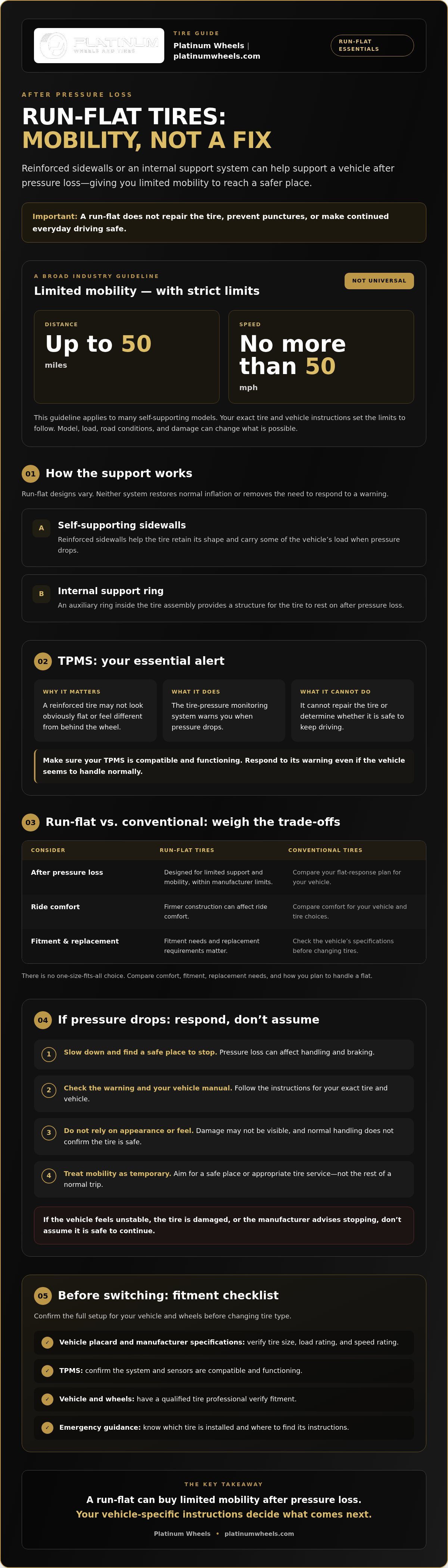
What if a puncture on a Front Range drive didn’t mean stopping immediately, but also didn’t mean you could keep going as usual? Run flat tires use reinforced sidewalls or an internal support system to support a vehicle after pressure loss, giving you limited mobility to reach a safer place. Many self-supporting models use an industry guideline of up to 50 miles at no more than 50 mph, but your tire and vehicle manufacturer’s instructions set the limits you should follow.
It’s understandable to want extra peace of mind on Colorado roads, especially when a flat could leave you far from a convenient stop. But run-flats don’t prevent punctures, and their firmer construction, replacement requirements, and fitment needs can affect whether they’re a good match for your vehicle.
This guide explains what run-flat tires can and can’t do after a puncture, how they compare with conventional tires, and what to check before switching. You’ll also learn why a working TPMS matters and which vehicle, wheel, and tire compatibility questions to discuss with a tire professional.
Key Takeaways
- Check your vehicle and tire manufacturer’s guidance before deciding whether it’s safe to continue after pressure loss.
- Compare run-flat tires with conventional tires based on ride comfort, fitment, and your plan for handling a flat.
- Make sure your TPMS is compatible and functioning so pressure loss won’t go unnoticed.
- Use the vehicle placard and manufacturer specifications to confirm tire size, load rating, and speed rating before changing tires.
- Ask a qualified tire professional to verify fitment for your vehicle and wheels before you make the switch.
What Are Run-Flat Tires, and What Happens After a Puncture?
Run-flat tires are designed to support a vehicle for limited driving after losing air pressure, using reinforced construction or an internal support system. That temporary mobility can help you reach a safer stopping place, but it doesn’t repair the tire or make it suitable for continued everyday driving. A puncture still needs prompt assessment, and the tire may need replacement.
The construction varies. Most run-flats have self-supporting sidewalls reinforced to carry some of the vehicle’s load when pressure drops. Another design uses an auxiliary support ring inside the tire assembly. The Run-flat tire overview explains these broad construction types, but the exact system and instructions depend on your tire and vehicle.
How does a run-flat tire support a vehicle with low pressure?
In a self-supporting design, stronger sidewalls help the tire retain its shape under load despite pressure loss. With a support-ring design, the ring provides an additional structure for the tire to rest on. Neither system restores normal inflation or removes the need to respond to a pressure warning.
A functioning tire-pressure monitoring system (TPMS) is especially important because a reinforced tire may not look obviously flat. Pay attention to the warning and consult your vehicle manual and tire manufacturer’s guidance. Construction, warning messages, and operating instructions can differ, so don’t assume advice for another vehicle applies to yours.
Does a run-flat tire prevent flats or blowouts?
No. Run flat tires can still be punctured, damaged by road hazards, or lose pressure. Their construction is intended to provide limited support after pressure loss, not prevent the loss itself. The tire may also sustain damage that isn’t visible from outside.
Pressure loss can affect how a vehicle handles and brakes, and continuing to drive may worsen tire damage. Treat the warning as a reason to slow down, find a safe place to stop, and check the manufacturer’s instructions before deciding whether to move farther. Don’t treat temporary mobility as a guarantee of safety or a substitute for tire service.
For Denver and Front Range drivers, the practical benefit is time to respond, not permission to ignore a tire emergency. Know which tire type is installed, what your TPMS warning means, and where to find your vehicle-specific guidance before pressure drops on the road.
How Run-Flat Tires Work: Pressure Monitoring, Distance, and Limitations
Reinforced construction can make pressure loss less obvious from behind the wheel. A run-flat tire may retain enough shape to support the vehicle, so ride feel alone may not alert you to a problem. That makes the tire-pressure monitoring system (TPMS) especially important. It warns you when pressure drops, but it can’t repair the tire or tell you whether continued driving is safe.
Why do run-flat tires need TPMS?
Watch for the TPMS warning and respond promptly, even if the vehicle seems to be handling normally. Pull over somewhere safe, then check the warning information and your vehicle manual. The system is an alert, not a substitute for inspection, and damage can’t always be judged from the driver’s seat. For more on sensor alerts and compatibility, see this TPMS sensor guide.
How far can you drive on a run-flat tire?
There isn’t one distance or speed limit that applies to every tire and vehicle. Before an emergency, find the instructions for your exact tire and vehicle. After a warning, follow those instructions and any dashboard messages. The permitted speed and distance can vary by model, while vehicle load, road conditions, and the type or severity of damage can affect whether limited mobility is possible at all.
Think of the allowance as a way to reach a safe place or appropriate tire service, not as permission to finish a normal trip. If the tire is damaged, the vehicle feels unstable, or the manufacturer advises stopping, don’t assume the reinforced construction makes it safe to continue. Broader ownership trade-offs are covered in Kelley Blue Book’s Run-Flat Tires: Pros and Cons.
Follow the limits stated for your exact tire and vehicle. A general run-flat guideline can’t replace model-specific instructions. Keep the manuals accessible, learn what your TPMS warning looks like, and confirm which tires and sensors are compatible before changing tire type. A tire professional can help review vehicle and wheel fitment. Denver-area drivers can also explore tire and TPMS fitment options with Platinum Wheels.
Run-Flat Tires vs. Conventional Tires: Which Trade-Offs Matter?
Neither tire type is automatically the better choice. Run flat tires may offer a short window to reach a safer place after pressure loss, while conventional tires may suit drivers who prefer their vehicle’s approved standard setup or want a familiar replacement option. The right comparison depends on your vehicle, the exact tire models, and how you plan to handle a flat.
| Factor | Run-flat tires | Conventional tires |
|---|---|---|
| After pressure loss | May allow limited movement if the tire and vehicle instructions permit it. | Generally require stopping to use a spare, inflator, or roadside assistance plan. |
| Ride feel | Depends on the tire’s design and the vehicle’s suspension; compare specific models. | Feel also varies by model, size, and vehicle. A direct comparison is more useful than assumptions. |
| Compatibility | Must match vehicle approval and fitment requirements. | Must also meet the vehicle maker’s approved specifications. A change in tire type may not suit every vehicle. |
| Puncture assessment | Repairability depends on manufacturer policy and the tire’s condition after pressure loss. | Repair may be considered after inspection, depending on puncture location, size, and tire condition. |
What are the everyday advantages and compromises of run-flat tires?
If a puncture occurs and the manufacturer’s limits allow continued movement, a run-flat may reduce the immediate need to change a tire beside the road. That convenience can matter on a busy route or in poor weather, but it doesn’t eliminate the need for prompt tire service. Ride comfort, road noise, availability, and replacement options depend on the vehicle and tire model. Don’t assume all run-flats feel or perform alike.
When might conventional tires be the better fit?
A conventional tire may make sense if it’s an approved fitment and aligns with your ride preferences and replacement plan. Having a spare tire or roadside assistance arrangement also changes the comparison because you have another option for handling a flat. Before switching tire types, check the vehicle maker’s specifications and compare size, load rating, speed rating, and other requirements, not just the sidewall label.
Colorado drivers considering conventional all-terrain options can review this Colorado all-terrain tire guide as a starting point. A tire professional can help confirm vehicle and wheel compatibility before you choose a replacement.
What Should You Do If a Run-Flat Tire Loses Pressure?
A pressure warning can be unsettling, especially if you’re on a Front Range route or traveling away from familiar services. Stay calm and treat the warning as a real loss of pressure, even if the vehicle still feels normal. A run-flat tire’s support doesn’t remove the need to follow its specific operating instructions.
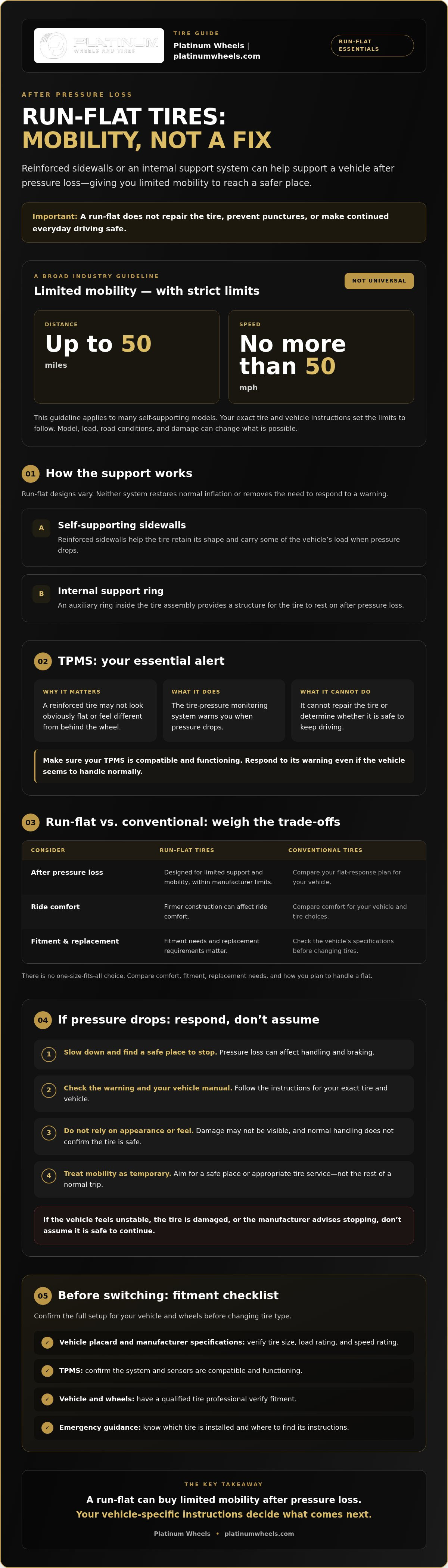
- 1. Acknowledge the warning. Note the TPMS message and any other dashboard alerts. Don’t dismiss it because the tire still looks inflated.
- 2. Reduce speed smoothly. Avoid sudden steering or braking, and pay attention to changes in handling, noise, or vibration.
- 3. Find a safe place to stop. Choose a location away from moving traffic where you can check the vehicle’s instructions without putting yourself at risk.
- 4. Check the guidance before moving again. Consult the vehicle manual, tire instructions, and any dashboard messages. Continue only if those instructions permit it and the vehicle is behaving normally.
- 5. Stop and seek roadside help if needed. Don’t continue if handling changes, you see damage, or the manufacturer’s guidance says to stop. Having a trusted roadside assistance provider—such as Bernabe Towing & Recovery for drivers in the Portland area—ready to call ensures your vehicle is safely transported without risking rim or suspension damage.
What should you check before moving the vehicle?
Once safely stopped, use the vehicle manual to understand the warning and next steps. Look for visible tire damage only from a safe position. Don’t touch or inspect a damaged tire closely beside traffic. A warning light that goes away or is reset doesn’t confirm the tire is undamaged or safe to drive on. If anything is unclear, pause and get qualified assistance rather than guessing.
For a trip from Denver toward mountain destinations, plan ahead: know where to find your tire and vehicle instructions, and decide how you’ll get help if a warning appears. Your route doesn’t change the tire maker’s limits, and a run-flat isn’t a reason to press on with a normal journey.
Should a run-flat tire be repaired or replaced?
That decision depends on the puncture’s location and severity, the tire’s condition, whether it was driven on with low or no pressure, and the manufacturer’s repair policy. Damage may not be visible from outside, so don’t assume a puncture is repairable or that continued mobility means the tire remains serviceable. Have it professionally inspected before deciding between repair and replacement.
For help checking vehicle, wheel, and TPMS compatibility as you plan your tire setup, discuss tire fitment with Platinum Wheels.
How to Choose Run-Flat Tires and Confirm Correct Fitment
Before choosing run flat tires or changing to another tire type, confirm the replacement is approved for your vehicle and compatible with its wheels and TPMS. A tire that fits physically may still fail to meet the vehicle maker’s specifications. Use the vehicle placard and manufacturer guidance as your reference points, then have a tire professional check the exact setup.
What should you confirm before replacing run-flat tires?
Use this checklist to prepare for a fitment conversation:
- Vehicle approval: Check whether the vehicle maker permits the tire type you’re considering. Don’t assume a conventional tire or run-flat is an acceptable substitute.
- Tire size: Match the approved size listed on the vehicle placard or in the manufacturer’s guidance.
- Load rating: Confirm the replacement meets the vehicle’s specified load requirement.
- Speed rating: Verify the rating against the vehicle maker’s requirements.
- TPMS compatibility: Check that the vehicle’s pressure monitoring system and sensors are compatible with the replacement setup and can provide the required warnings.
- Wheel fitment: Confirm the tire and wheel work together as a suitable combination.
Review the vehicle manual as well as the placard. If the guidance differs from an assumption based on the tire’s label, follow the manufacturer’s specifications and ask a qualified tire professional to clarify.
When should a Front Range driver ask a local tire professional?
Get fitment checked before switching tire types or changing wheels, especially if your vehicle has aftermarket wheels or other modifications. Those changes can affect which tire sizes and specifications are appropriate. Bring the vehicle details, current tire information, and wheel specifications so the fitment can be assessed as a complete setup, not just a tire-size match.
Platinum Wheels serves Denver and surrounding Front Range communities, with professional tire mounting and balancing and TPMS sensors among its offerings. Run-flat tire availability isn’t confirmed, so check directly before making plans around a specific tire. For a broader wheel and tire change, explore this custom wheel and tire fitment guide.
Have questions about the right setup for your vehicle? Ask Platinum Wheels to help confirm tire and wheel fitment, and verify run-flat availability before choosing a product.
Choose Your Next Tire Setup With Confidence
Run flat tires can offer limited mobility after pressure loss, but they don’t prevent punctures or remove the need to follow your tire and vehicle manufacturer’s instructions. Your choice should also account for approved fitment, ride preferences, TPMS compatibility, and how you’ll handle a flat. Check the vehicle placard and confirm tire size, load rating, and speed rating before making a change.
For drivers in Denver, Aurora, Lakewood, Englewood, Wheat Ridge, Commerce City, Westminster, Thorton, Broomfield, Arvada, Golden, Littleton, Parker, Highlands Ranch, Castle Rock, Boulder, Fort Collins, and Colorado Springs, getting the complete setup right matters. Platinum Wheels offers professional tire mounting and balancing, along with TPMS sensors, and can help you consider tire and wheel fitment for your vehicle. Run-flat availability isn’t confirmed, so ask before planning around a specific product.
Talk with Platinum Wheels about tire fitment and bring your vehicle’s specifications and questions about switching tire types. A clear fitment check can help you choose a setup that suits your driving and travel plans.
Frequently Asked Questions
Are run-flat tires safe to drive on after a puncture?
They may allow limited driving after pressure loss, but they aren’t automatically safe to keep driving on. Safety depends on the tire’s condition, the vehicle’s handling, and the manufacturer’s instructions. Slow down, find a safe place to stop, and check the vehicle and tire guidance before moving farther. If handling changes, damage is visible, or instructions say to stop, don’t continue; seek roadside assistance.
Can run-flat tires be repaired after a puncture?
Sometimes, but repair depends on the puncture’s location and size, the tire’s condition, whether it was driven on with low pressure, and the manufacturer’s policy. Damage to the sidewall requires replacement, and internal damage may not be visible from outside. Don’t assume a tire can be repaired because the puncture looks small. Have it professionally inspected before deciding, and follow the tire maker’s repair guidance.
Do run-flat tires need a TPMS sensor?
A functioning tire-pressure monitoring system (TPMS) is essential with run-flat tires because reinforced construction can make pressure loss less obvious to the driver. The warning system alerts you to a pressure change, but it doesn’t repair the tire or confirm that it’s safe to drive. Check that your vehicle’s TPMS and sensors are compatible with the tire setup, and respond promptly to any warning.
Can you replace run-flat tires with regular tires?
Possibly, but first confirm that the vehicle manufacturer approves the change and that the replacement meets the required size, load, and speed specifications. Because many European and luxury models are factory-tuned around reinforced tires, you can learn more about Ace Auto Clinic to explore specialized European vehicle care and maintenance considerations. The wheels and TPMS setup must also be compatible. Plan how you’ll handle a flat if you no longer have run-flat capability, such as carrying an approved spare or using another suitable option. Ask a tire professional to verify fitment for your exact vehicle.
Do run-flat tires ride differently from regular tires?
They can, but the difference depends on the tire model and vehicle. Reinforced construction may affect ride feel or road noise, while conventional tires also vary by design, size, and application. Compare specific tires rather than assuming every run-flat feels harsher or louder. If comfort matters in your daily Denver-area driving, ask a tire professional to review approved options for your vehicle and discuss how their specifications and construction may affect the ride.
Are run-flat tires a good choice for Colorado driving?
They may suit Colorado drivers who value limited mobility after pressure loss, provided the tire is approved for the vehicle and the driver follows its operating limits. They don’t prevent punctures or replace a plan for tire service. Drivers in Denver, Aurora, Lakewood, Boulder, Fort Collins, and other Front Range communities should weigh their usual routes, ride preferences, TPMS compatibility, and flat-tire plan before choosing.
Can you drive on a run-flat tire if the TPMS light comes on?
Don’t ignore the warning or assume the tire is fine because it still looks inflated. Reduce speed, find a safe place to stop, and check the vehicle manual and tire instructions before deciding whether to continue. If handling changes, damage is visible, or the instructions require stopping, seek roadside assistance. A TPMS warning reset isn’t proof that the tire is safe; arrange a professional inspection.