
Best Off-Road Tires for Denver Trails: Top Picks 2026
The most aggressive tread isn’t always the best choice for Denver trails. If your truck spends more time on pavement than dirt, a deep mud-terrain pattern may bring extra noise and a different road feel without matching your everyday needs. The best off road tires are the ones that suit your terrain, road mileage, and vehicle fitment.
It’s easy to get lost in bold traction claims and unfamiliar tread categories. Larger, more aggressive tires may also affect ride comfort and fitment, so don’t choose by appearance alone. Start with how and where you actually drive, then compare tires that meet your vehicle’s requirements.
This guide compares all-terrain, rugged-terrain, and mud-terrain options for Colorado drivers. Use it to weigh trail grip against road manners and maintenance, and to check tire size, load requirements, vehicle clearance, and winter traction considerations before buying. The goal is a setup that suits your routes and daily routine, not just one that looks ready for the trail.
Key Takeaways
- The best off road tires depend on your actual trail conditions, paved mileage, vehicle, and priorities, not tread appearance alone.
- Compare all-terrain, rugged-terrain, and mud-terrain designs based on where you drive and the road comfort and maintenance trade-offs you’re willing to accept.
- Denver-area driving can involve varied Front Range and mountain conditions. Consider trail surfaces, trip frequency, highway distance, and seasonal use.
- Before choosing a larger tire, confirm your vehicle’s specifications, load requirements, wheel fitment, and clearance to identify potential fitment changes.
- Professional fitment guidance can help check compatibility and determine whether a tire-only choice or a wheel-and-tire package suits your setup.
What Makes an Off-Road Tire the Best Choice for Your Driving?
Definition: An off-road tire is designed with tread and construction intended to provide traction on unpaved or uneven surfaces, while a general-purpose tire is primarily suited to paved-road use. The right design depends on the conditions you drive through, not simply how rugged the tread looks. This overview of off-road tires covers common design features and tire types, but your own driving needs determine which category makes sense.
There’s no single tire that’s best for every truck or SUV. A tire designed for loose dirt may not be the right match for frequent mud, and aggressive tread doesn’t automatically make a setup better. Tread pattern, vehicle fitment, and your tolerance for road noise, ride comfort, and routine maintenance all matter. The best off road tires suit your real mix of trail and pavement use.
Which driving conditions count as off-road use?
Off-road driving can mean anything from a maintained gravel road to a rocky trail, soft sand, or mud. These surfaces present different challenges, so start by identifying what you drive on most often. While tackling pure sand environments often calls for dedicated machines—such as the dune buggies and dirt bikes provided by adventure outfitters like Desert Detour—mixed-surface driving in a personal truck or SUV adds paved miles to the equation, making the balance between trail traction and everyday road manners especially important.
Colorado drivers can encounter varied conditions across the Front Range and in the Rocky Mountains. Don’t assume every trail, season, or trip presents the same terrain. Make a short list of the surfaces you expect to encounter and how often you’ll drive them before choosing a tread style.
What should you prioritize before comparing tires?
Start with your routine. How often does your vehicle leave pavement? Are your off-road trips mostly on gravel, or do they regularly involve rocky, muddy, or sandy surfaces? How much highway driving do you do between trail outings? A more aggressive tread may suit demanding off-road use, but its noise and ride trade-offs may matter more during a daily commute.
Set your priorities before comparing specific tires:
- Terrain: Identify the surfaces you drive most, not just the toughest surface you might encounter.
- Road use: Consider highway distance and how much noise or ride firmness you’ll accept.
- Vehicle requirements: Confirm the tire’s size and load requirements suit your truck or SUV and its intended use.
- Fitment: Check wheel compatibility and vehicle clearance before purchase. A larger tire may require fitment changes.
These checks are essential, not finishing touches. A tire that suits the trail but doesn’t meet your vehicle’s requirements isn’t the right match. Once you’ve defined your use, compare all-terrain, rugged-terrain, and mud-terrain options by their practical trade-offs.
All-Terrain, Rugged-Terrain, and Mud-Terrain Tires: Know the Trade-Offs
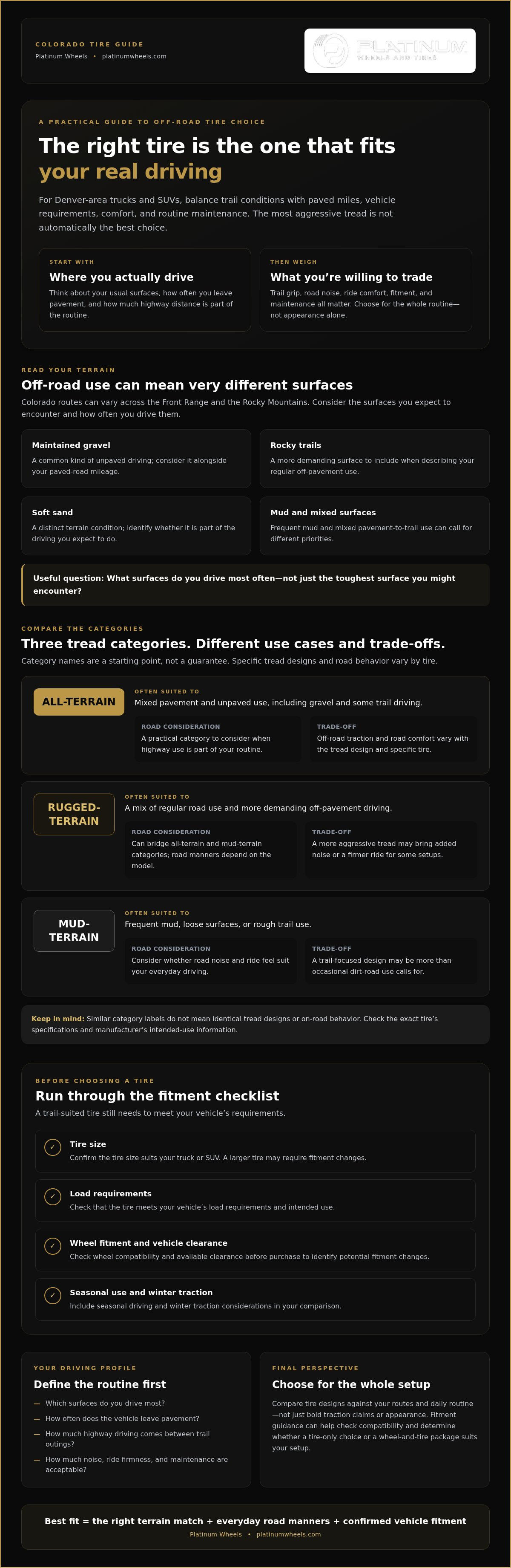
Tire categories offer a useful starting point, not a guarantee of how a specific tire will perform. Compare the tread design and manufacturer’s intended use for the exact tire you’re considering, then weigh those details against your usual terrain and paved mileage. This terrain-focused tire selection advice reinforces a practical point: let the surfaces you drive guide your choice.
| Category | Often suited to | Everyday-road considerations | Trade-offs to weigh |
|---|---|---|---|
| All-terrain | Mixed pavement and unpaved use, including gravel and some trail driving | Often a practical category to consider when highway use is part of the routine | Off-road traction and road comfort vary by tread design and specific tire |
| Rugged-terrain | A mix of regular road use and more demanding off-pavement driving | Can bridge the all-terrain and mud-terrain categories, but road manners depend on the model | A more aggressive tread may bring added noise or a firmer ride for some setups |
| Mud-terrain | Frequent mud, loose surfaces, or rough trail use | Consider how its road noise and ride feel suit your daily driving | Its trail-focused design may be more than occasional dirt-road use calls for |
Use the table to narrow the category, then check the tire’s specifications and intended-use information. Similar category labels don’t mean identical tread designs or on-road behavior. Treat category descriptions as a starting point, not a product-specific performance claim.
When do all-terrain tires make more sense?
If your truck or SUV spends most of its time on pavement and heads onto gravel roads or unpaved trails occasionally, all-terrain tires are a sensible category to explore. Compare each tire’s tread pattern and stated intended use rather than assuming every all-terrain design suits the same conditions. For more guidance, see our Colorado all-terrain tire guide.
When should drivers consider more aggressive tread?
Frequent mud, loose surfaces, or rougher trails may lead you to compare rugged-terrain and mud-terrain options. Include pavement compromises in the decision: more aggressive tread can affect noise and ride feel, though the degree depends on the specific tire and vehicle. Review our off-road tire and wheel roundup for product-focused comparisons.
The best off road tires fit both your use and your vehicle. If you’re weighing categories or checking compatibility, explore professional tire fitment guidance before settling on a tire or wheel-and-tire package.
How to Compare Off-Road Tires for Colorado Trails and Highway Miles
The best tire depends on both the terrain you drive and the road mileage you cover to reach it. A truck that commutes on pavement and occasionally travels gravel roads has different priorities from an SUV that regularly encounters rough, loose, or muddy surfaces. Colorado driving isn’t one uniform test: Front Range trips and Rocky Mountain outings can involve different surfaces, weather, and seasonal needs.
Before comparing tire claims, sketch out a typical month of driving. Note how often you leave pavement, what surfaces you encounter, how long your highway stretches are, and whether you drive in winter conditions. This helps separate features you’ll use regularly from those that may matter only on an occasional trip.
Which tire priorities matter on mixed Colorado drives?
If most miles are paved and trail trips are occasional, give road comfort, noise, and everyday usability meaningful weight alongside off-pavement traction. A highly aggressive tread may be more than your routine requires, especially if your unpaved driving is mainly on maintained gravel. Drivers who regularly take rougher or looser trails may reasonably place more emphasis on traction suited to those surfaces.
Season matters, too. If winter driving is part of your plans, check current Colorado Passenger Vehicle Traction Law requirements and the tire manufacturer’s guidance. Don’t assume four-wheel drive, aggressive tread, or a category label alone settles whether a tire is appropriate for your vehicle and conditions.
How should you judge a tire’s capability claims?
Look past broad labels such as “off-road” and compare the documented features and intended use of the specific tire. Manufacturer information can help you understand its application, but a general category description doesn’t prove performance on a particular Colorado trail. Route conditions vary, so choose based on the surfaces you actually expect to encounter.
Check the specifications against your vehicle before deciding. Confirm that the tire’s load and speed specifications meet the vehicle’s requirements and suit its intended use, including any towing. Then consider practical trade-offs: a tread designed around off-road priorities may change road noise or ride feel, while a tire chosen mainly for highway comfort may not match frequent rough-trail use.
- Mostly pavement, occasional gravel: Prioritize the road manners you want, then verify the tire’s stated unpaved-use application.
- Regular rough or loose trails: Compare the specific tire’s documented features with the terrain you encounter most.
- Seasonal or towing demands: Check applicable requirements and confirm load and speed specifications for your vehicle’s use.
Use the manufacturer’s guidance alongside your actual driving pattern. That gives you a more useful comparison than choosing by appearance or category name alone.
Check Tire Size, Load, and Clearance Before You Buy
A tire that suits your trail plans still needs to fit your truck or SUV correctly. Before choosing among the best off road tires, confirm your vehicle’s requirements and check the complete wheel-and-tire setup. Even a change that looks small on paper can affect clearance, wheel compatibility, and whether the tire rubs during driving.
Which specifications must match your truck or SUV?
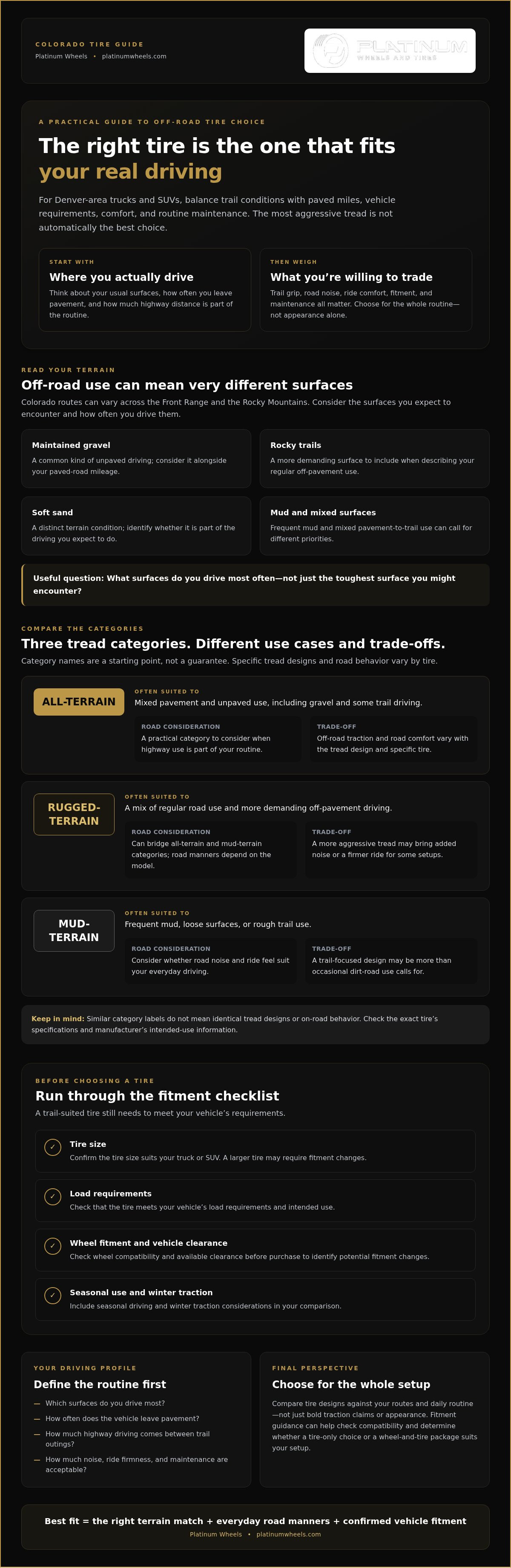
Use this checklist before ordering:
- Vehicle: Confirm the exact year, make, model, and configuration. Fitment can vary between versions of the same vehicle.
- Tire size: Check the recommended size and verify any alternative size against manufacturer information for your vehicle and tire.
- Load requirements: Make sure the tire’s load specification meets the vehicle manufacturer’s requirements and suits how you use the vehicle, including towing.
- Wheel fitment: Confirm the wheel’s width and offset work with the proposed tire size. These dimensions affect how the wheel and tire sit relative to the vehicle.
- Clearance: Check for adequate space around the tire, including during turns and suspension movement.
Wheel details matter, too. A tire may be an appropriate size for a vehicle but still need a compatible wheel width and offset. For a closer look at wheel choices, see this custom wheel and rim guide. Verify fitment details with the tire or vehicle manufacturer, or ask a qualified tire professional to review the complete setup.
Could a larger tire require other changes?
Possibly, but don’t assume a lift or leveling kit is automatically needed. Clearance depends on the vehicle’s configuration and the full combination of tire size, wheel width, and offset. If you’re uncertain or concerned about rubbing, have the proposed setup reviewed before purchase. The lift kit versus leveling kit guide explains how these upgrades differ. Whether either is appropriate depends on the fitment you choose.
Replacing wheels or assembling a complete wheel-and-tire package? Confirm TPMS sensor compatibility as part of the plan. A fitment review can help catch mismatches before installation. Platinum Wheels offers off-road tires, wheel-and-tire packages, and professional installation for trucks and SUVs. Discuss your tire and wheel fitment before you buy so the selected setup can be checked against your vehicle’s requirements.
Choose and Fit Off-Road Tires with a Colorado Tire Specialist
Use your real driving pattern to guide the final choice. Match the tire category to the terrain you encounter, the miles you spend on pavement, and the specifications and clearance your vehicle requires. A fitment review connects those priorities to a compatible tire and wheel setup, instead of relying on tread appearance alone.
What information should you bring to a tire consultation?
A few details make it easier to discuss suitable options for your truck or SUV. Gather:
- Vehicle details: Year, make, model, and current tire size.
- Existing changes: Note any suspension changes, lift, or leveling kit already installed.
- Driving routine: Describe typical highway mileage, how often you leave pavement, and the surfaces you usually encounter.
- Seasonal use: Explain whether winter driving is part of your plans and check applicable requirements for your vehicle and tires.
- Your preferences: Share how you weigh road comfort and noise against more aggressive tread and off-road use.
Specifics help. “Occasional gravel roads, mostly commuting” paints a clearer picture than “I need a tough tire.” Include towing or other vehicle use that may affect tire load requirements, and ask for manufacturer information when specifications need confirmation.
What can a professional tire and wheel setup include?
Platinum Wheels sells off-road and all-terrain tires, wheel-and-tire packages, and related fitment upgrades for trucks and SUVs. A setup can involve choosing a tire category, checking wheel-and-tire compatibility, and professionally mounting and balancing the tires. If you’re replacing wheels or considering a complete package, ask whether TPMS sensors are appropriate for your vehicle and confirm the sensor configuration before purchase. Compatibility can vary, so don’t assume one setup fits every truck or SUV.
Lift or leveling kits may be worth discussing if the selected tire and wheel combination calls for fitment changes. They aren’t automatic requirements. Confirm the proposed setup against your vehicle’s specifications and clearance, especially if you’re unsure about potential rubbing or how a change may affect the vehicle’s intended use.
For Colorado Front Range drivers, explore Platinum Wheels to discuss off-road tire options, wheel-and-tire packages, and fitment for your vehicle. Bring your vehicle details and describe how you drive. That’s a practical starting point for choosing a setup that makes sense both on the road and beyond it.
Build a Setup That’s Ready for Your Next Drive
The right tire choice starts with your actual mix of trails and pavement. Compare all-terrain, rugged-terrain, and mud-terrain options by the surfaces you encounter and the road comfort you want. Then confirm tire size, load requirements, wheel fitment, and clearance before buying. That’s how to narrow down the best off road tires for your truck or SUV without choosing by appearance alone.
Fitment matters just as much as tread. Platinum Wheels offers off-road tires, custom wheels, and TPMS sensors, with professional mounting and balancing for wheel-and-tire packages. The shop serves Denver and surrounding Colorado Front Range communities, so local drivers can discuss tire selection and compatibility in one place.
Ready to plan a setup around your vehicle and driving priorities? Talk with Platinum Wheels about the right off-road tire fitment for your vehicle. Bring your vehicle details and a clear picture of how you drive. Contact Platinum Wheels to discuss tire options, wheel-and-tire packages, and fitment for your truck or SUV.
Frequently Asked Questions
What is the best type of tire for off-road driving?
The best type depends on your most common terrain, road mileage, and vehicle requirements. All-terrain tires can suit mixed pavement and unpaved use; rugged-terrain tires offer another option for drivers balancing regular roads with more demanding trails; mud-terrain tires are designed with frequent off-road use in mind. Compare the specific tire’s documented intended use, load specifications, and fitment rather than choosing by category or appearance alone.
Are all-terrain tires good for Colorado trails?
All-terrain tires can be a practical choice for Colorado drivers who combine pavement with gravel roads or occasional trail trips. Trail conditions vary, so consider the surfaces you actually encounter rather than assuming one tire suits every route. Check the manufacturer’s guidance for the specific tire, including its intended use and vehicle application. If winter driving is part of your routine, review current traction requirements and confirm the tire meets them.
Are mud-terrain tires suitable for everyday highway driving?
Mud-terrain tires can be used on pavement, but their trail-focused tread may involve trade-offs in road noise and ride feel. The experience depends on the specific tire and vehicle, so check manufacturer information and consider how much highway driving you do. If your truck or SUV spends most of its time commuting and only occasionally leaves pavement, compare less aggressive categories too. Choose based on your regular use, not just occasional tough terrain.
How do I choose the right off-road tire size for my truck?
Start with your truck’s recommended tire size and manufacturer load requirements, then verify any proposed change against vehicle and tire manufacturer data. Check that the tire works with the wheel’s width and offset, and confirm there’s adequate clearance. Also account for how you use the truck, including towing. Because fitment varies by vehicle configuration, ask a qualified tire professional to review the complete wheel-and-tire combination if you’re uncertain.
Can I install larger off-road tires without a lift kit?
Possibly, but it depends on the vehicle and complete wheel-and-tire setup. Tire size, wheel width, offset, and vehicle configuration all affect clearance, so a larger tire doesn’t automatically require a lift or leveling kit, and it isn’t guaranteed to fit without one. Check manufacturer fitment information and have the setup reviewed before buying. When planning a build that does require extra clearance, specialized retailers such as STW Autosports can help you source compatible wheels, tires, and suspension lift kits. If you’re concerned about rubbing, get professional guidance rather than relying on appearance or assumptions.
They can, particularly when a tire’s tread is more aggressive, but noise varies by tire design and vehicle. Road feel can vary too. Before choosing, think about how much time you spend on highways and how much noise or firmness you’re comfortable with during daily driving. Compare manufacturer information for the specific tires under consideration, and weigh those road characteristics alongside the traction suited to your usual trail surfaces.
Do I need TPMS sensors when replacing my tires or wheels?
It depends on your vehicle and whether you’re replacing tires alone or changing wheels as well. Ask whether your existing TPMS sensors are compatible with the proposed wheels and package, or whether suitable sensors need to be included. Platinum Wheels offers TPMS sensors and wheel-and-tire packages, with configuration confirmed for the vehicle. The shop serves Denver, Aurora, Lakewood, Englewood, Wheat Ridge, Commerce City, Westminster, Thorton, Broomfield, Arvada, Golden, Littleton, Parker, Highlands Ranch, Castle Rock, Boulder, Fort Collins, and Colorado Springs.