Best All-Terrain Tires for Jeep Wranglers in Denver
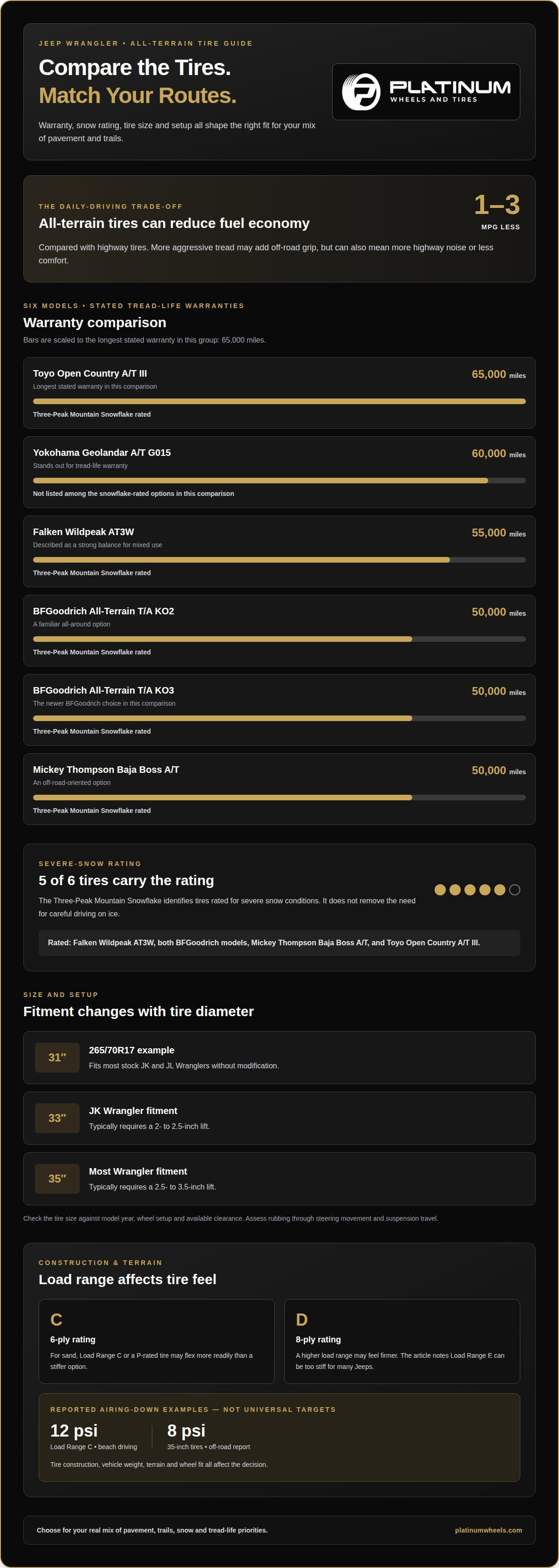
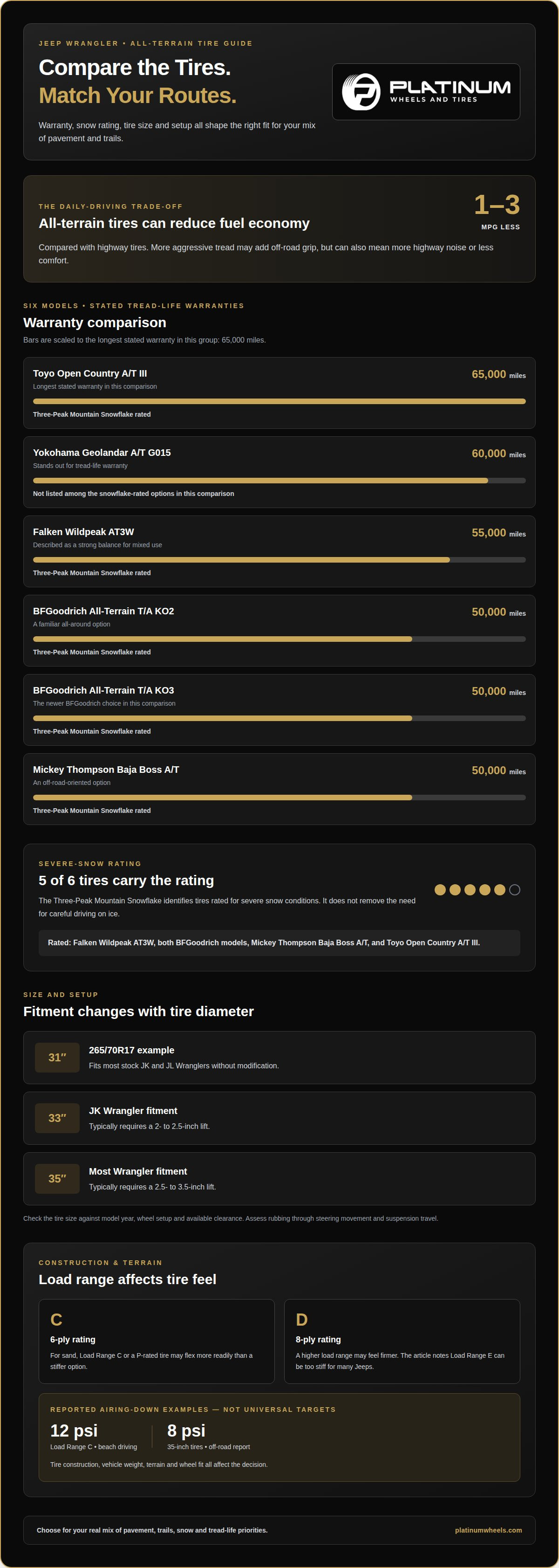
All-terrain tires typically reduce fuel economy by 1 to 3 mpg compared with highway tires, so the best all-terrain tires for a Jeep Wrangler aren’t automatically the most aggressive ones. The right choice balances traction for your routes with the highway comfort, road noise and fuel use you can live with.
If you drive around Denver, you may want the best all-terrain tires for a Jeep Wrangler that can handle weekday pavement, trips beyond the city, rougher roads, and changing conditions. There is a trade-off: tread designed for more off-road grip can be louder or less comfortable on the highway than a less aggressive option.
This guide explains how to choose based on where you drive, how much time you spend on pavement, and what you expect from your Wrangler. You’ll also learn what to compare in tread designs and tire sizes, so you can narrow your options without choosing more off-road capability than you need.
Key Takeaways
- Match tread design to your actual mix of Denver pavement and trail driving; the most aggressive option may not be the best fit for everyday use.
- Compare the six tire models by their strengths and tread-life warranties, then narrow your choice to the priorities that matter most.
- Account for the typical 1 to 3 mpg fuel-economy reduction from all-terrain tires when weighing off-road traction against daily driving costs.
- Consider tread pattern, tire size and vehicle setup together to balance highway noise and comfort with the capability you want.
What Is the Best All-Terrain Tire for a Jeep Wrangler?
The best all-terrain tire depends on how you balance pavement, trails, snow, and tread life. Compare the six options by warranty and intended use, then narrow your choice to your Wrangler’s tire size and driving needs.
- BFGoodrich All-Terrain T/A KO2: A familiar all-around option with a 50,000-mile tread life warranty.
- BFGoodrich All-Terrain T/A KO3: The newer choice in this comparison, also with a 50,000-mile tread life warranty.
- Yokohama Geolandar A/T G015: Stands out for its 60,000-mile tread life warranty.
- Falken Wildpeak AT3W: Offers a 55,000-mile tread life warranty and a strong balance for mixed use.
- Toyo Open Country A/T III: Leads this group in stated warranty length, at 65,000 miles.
- Mickey Thompson Baja Boss A/T: Provides another off-road-oriented option, with a 50,000-mile tread life warranty.
For wet, snowy, and icy roads, tread choice matters, but ice still calls for careful driving. The Falken Wildpeak AT3W, both BFGoodrich models, Mickey Thompson Baja Boss A/T, and Toyo Open Country A/T III carry the Three-Peak Mountain Snowflake rating for severe snow conditions. The Yokohama model isn’t among the options listed here with that rating.
The Three-Peak Mountain Snowflake rating isn’t essential for every Wrangler’s winter driving, but it helps identify tires rated for severe snow conditions. Five tires in this comparison carry it. For 33-inch or 35-inch sizes, compare the model’s tread and warranty, then account for fitment: 33-inch tires typically require a 2- to 2.5-inch lift on JK Wranglers, while 35-inch tires require a 2.5- to 3.5-inch lift on most Wranglers.
A 31-inch all-terrain tire, such as 265/70R17, fits most stock JK and JL Wranglers without modification. Check fitment by matching the tire size to the Wrangler’s model year, wheel setup, and available clearance; assess rubbing through steering movement and suspension travel. Per-tire and full-set costs vary by model and size, so compare those choices alongside tread life rather than treating one tire’s price as universal.
Daily driving versus serious trail use
Start with how much time your Wrangler spends on pavement. For daily driving, choose an all-terrain setup suited to commuting, errands, and occasional dirt roads, rather than selecting a tire only for demanding trails. More aggressive tread may make sense if you regularly drive rocky routes or go off-road. The right balance depends on how often you leave pavement and the terrain you encounter.
Load range also changes how a tire feels. In the guidance used here, Load Range C is rated as 6-ply, while Load Range D is rated as 8-ply. A tire with a higher load range may have a firmer feel; for many Jeeps, Load Range E can be too stiff. For sand, Load Range C or a P-rated tire may flex more readily than a stiffer option. Match the tire’s construction to your Jeep and terrain, not just its appearance.
Trail drivers may air down to increase the tire’s contact with loose ground, but reported pressures are examples, not universal targets. One driver described airing down Load Range C tires to 12 psi for beach driving; another reported running 35-inch tires at 8 psi off-road. Those accounts show how different setups can be. Tire construction, vehicle weight, terrain, and wheel fit all affect the decision.
For mixed Denver driving, make a simple route list: paved commuting, occasional gravel, or frequent technical trails. If pavement dominates, prioritize a setup suited to daily use; if trails dominate, consider how its load range and construction fit that terrain. Before changing sizes or wheels, account for clearance and suspension setup, since fitment can affect trail usability. Explore all-terrain tire options with your driving mix in mind.
Fuel economy effects
Compared with highway tread, all-terrain tread can increase rolling resistance and affect fuel use during Denver commutes. The effect depends on the whole tire, not its label alone: tread design, size, construction, and inflation all play a part. A Wrangler used mainly on paved roads encounters this trade-off more often than one taken on occasional trail trips. Consider your regular routes before choosing more aggressive tread.
Pay close attention to tire size. A larger tire may weigh more and take more effort to turn, while its added height changes effective gearing. Together, these factors can affect acceleration and fuel use, especially in stop-and-go traffic. Compare the exact size with your current setup, and don’t assume that tires in the same all-terrain category will feel or perform alike.
Construction matters, too. A heavier tire adds rotating mass, and the engine must move that mass whenever the Wrangler accelerates. For example, comparing the Falken Wildpeak AT3W and Yokohama Geolandar A/T G015 means looking beyond tread appearance. The tire’s size and construction for your specific fitment matter more than its model name alone.
Keep tire pressure consistent with the vehicle and tire guidance. Underinflation can increase rolling resistance and uneven wear, while excessive inflation can affect the contact patch and ride. After changing tires, monitor pressure and handling in everyday driving. Frequent stops on a Denver commute may reveal different effects than steady highway travel, so consider both.
Use a simple before-and-after comparison to see how a new setup affects your Wrangler. Record fuel purchases and odometer readings during comparable driving, then repeat after the tire change. Keep routes, driving habits, and tire pressure as consistent as practical. Note whether you’re carrying trail gear or other loads, since added weight can affect fuel use. This method won’t isolate every variable, but it can help you judge whether the setup suits your everyday priorities.
Highway comfort and road noise
On Denver highways, tire noise comes largely from tread blocks meeting pavement. Larger gaps and more pronounced tread elements can create a louder hum than a less aggressive pattern. Noise varies with road surface and speed, so a tire that seems quiet on neighborhood streets may sound different on a longer highway drive. Tread design is only one factor.
Comfort also depends on tire size and construction. A larger, heavier setup may feel different over pavement seams and rough patches than a stock-size tire. Sidewall stiffness affects how impacts reach the cabin, while tire pressure influences how the tread meets the road. Follow vehicle and tire guidance for pressure rather than choosing a setting based on appearance or an off-road example.
Compare models such as the BFGoodrich All-Terrain T/A KO2, Falken Wildpeak AT3W, and Toyo Open Country A/T III by the specific size you’re considering. The same model name doesn’t establish how loud every size will sound on your Wrangler. Avoid assuming a snow rating or tread-life warranty predicts highway quietness; those details address different tire qualities.
Assess comfort on a consistent route after changing tires. Note cabin hum on smooth pavement, coarse asphalt, and at a steady highway speed. Also pay attention to unusual vibration or roughness in the steering wheel or cabin. Tire pressure, balance, and vehicle condition can affect the ride alongside tread design. A short local drive may not reveal the noise you hear on a longer Denver-area trip, so include roads you regularly travel.
If low road noise matters most, prioritize a less aggressive tread and a size suited to your everyday driving. If trail traction carries more weight, decide how much added hum and firmness you’ll accept in return. Explore tire options for your Wrangler’s driving needs and weigh highway comfort alongside the terrain you plan to tackle.
Platinum Wheels: All-Terrain & Mud-Terrain Tires
Platinum Wheels offers a free wheel and tire fitment consultation to help match all-terrain tires to your Wrangler’s driving mix, from Denver commutes to regular trail use. If you’re changing wheel size or tire dimensions, a custom wheel and tire package can bring the choices together. Lift kits and leveling kits can add clearance and accommodate larger wheel setups.
Bring your priorities into the decision: highway comfort, road noise, fuel economy, winter traction, and the trails you drive. This makes it easier to assess tread and fitment as a complete setup rather than choosing by appearance alone. If your Wrangler stays mostly on pavement, daily comfort may matter more; frequent off-road use can shift the balance toward trail capability.
Contact Platinum Wheels to discuss all-terrain tires for your Wrangler and the setup that fits your driving needs.
Choose a Setup That Fits Your Next Drive
Choosing the best all-terrain tires for a Jeep Wrangler involves more than selecting a tread pattern. Think about how you want your Wrangler to feel on everyday pavement and on the trails you plan to explore. Wheels and tires work together, so consider the complete setup rather than treating each choice separately.
Platinum Wheels offers all-terrain and mud-terrain tires, wheel and tire packages, and custom truck wheels and off-road rims. These options can help bring tire choice and wheel style together around your driving priorities. If you’re ready to talk through your setup, contact Platinum Wheels about your tire options. Take the next step toward a Wrangler equipped for the drives ahead.
Frequently Asked Questions
Do All-Terrain Tires Affect Gas Mileage?
Yes. All-terrain tires typically reduce fuel economy by 1 to 3 mpg compared with highway tires. The change depends on tire size, construction, tread design, and vehicle setup. A Wrangler used for frequent Denver commutes may make the difference more noticeable than one driven mainly on occasional trails. Consider fuel use alongside traction and comfort when deciding whether an aggressive tread suits your routine.
Load Range: C, D, or E?
Choose a load range suited to your Wrangler’s weight and intended terrain. Load Range C is rated as 6-ply, and Load Range D as 8-ply. Load Range E can feel too stiff for many Jeeps, while C or P-rated tires may flex better on sand. A higher load range isn’t automatically a better fit; match tire construction to your vehicle and use.
What Is the Highest Rated All-Terrain Tire?
If “highest rated” means the longest tread-life warranty among the compared models, the Toyo Open Country A/T III leads with a 65,000-mile warranty. That figure doesn’t establish the best choice for every Wrangler. For instance, someone prioritizing a severe-snow rating may weigh that feature differently from a driver focused on tread life or daily highway use.
What are the best all-terrain tires for a Jeep Wrangler in 2026?
There isn’t one best tire for every Wrangler in 2026. The Toyo Open Country A/T III stands out for its 65,000-mile tread-life warranty, while the Falken Wildpeak AT3W, BFGoodrich KO2 and KO3, and Mickey Thompson Baja Boss A/T carry the Three-Peak Mountain Snowflake rating. Your driving mix, tire size, and winter priorities should guide the final choice.
How do top all-terrain tires for Jeep Wrangler compare in off-road traction and on-road comfort?
More open, aggressive tread patterns are designed for loose or rough terrain, but their tread blocks can create more hum on pavement. A less aggressive pattern may suit a Wrangler that spends most of its time on roads. Compare the exact tire size and tread pattern, since a model name alone won’t tell you how the tire will feel on your vehicle.
How do all-terrain tire weight and rolling resistance affect Jeep Wrangler fuel economy and handling?
Heavier tires add rotating mass, so the Wrangler needs more effort to accelerate them. Rolling resistance also affects the energy needed to keep the tires moving. Together, these factors can influence fuel economy and how the vehicle responds. For a useful comparison, consider the tire’s full size and construction, not its weight or tread appearance in isolation.