
Best All-Terrain Tires for Denver & Front Range Driving
The most aggressive-looking tread isn’t automatically the best choice for Denver-to-mountain driving. The right all terrain tires should suit your daily highway miles, changing weather, and the dirt roads you actually travel, without making every commute louder or rougher than necessary.
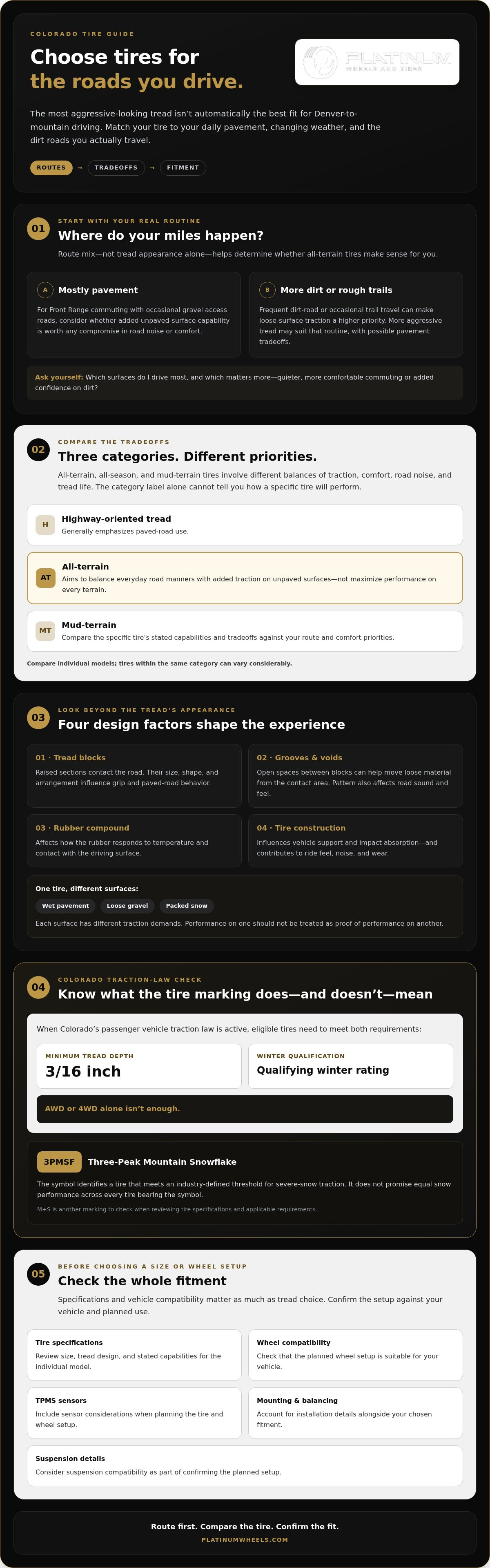
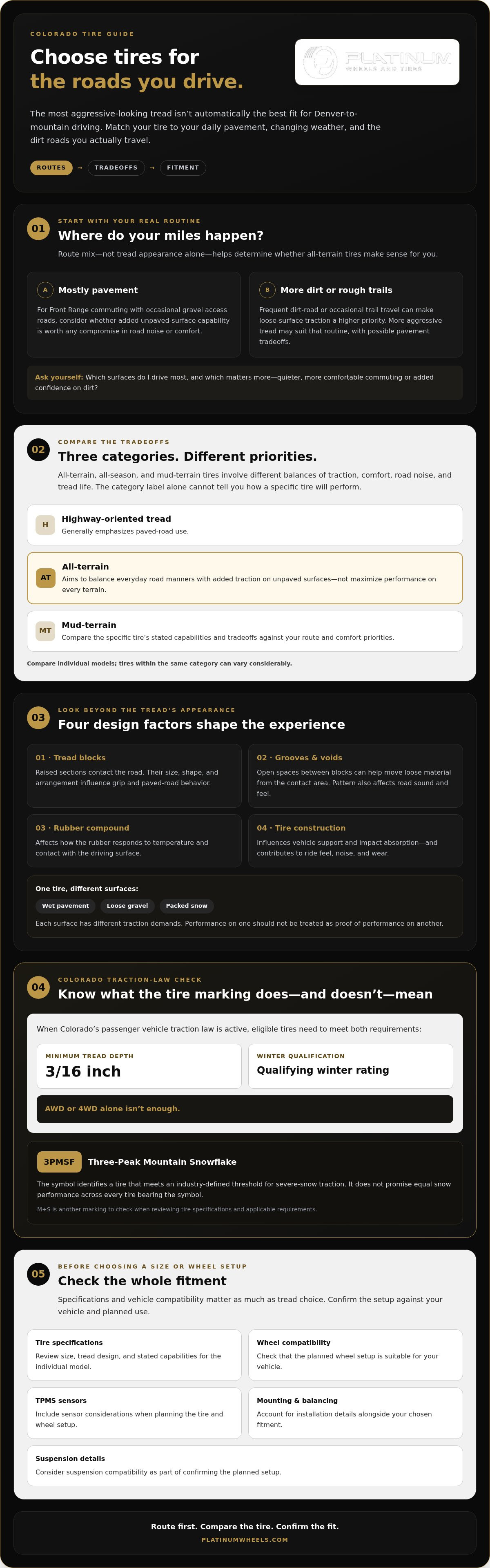
It’s reasonable to want one set of tires that can do a little of everything. But all-terrain, all-season, and mud-terrain tires make different tradeoffs in traction, comfort, road noise, and tread life. The right fit depends on your vehicle and routes. Colorado’s passenger vehicle traction law also makes tire choice more than a style decision: when the law is active, eligible tires need at least 3/16-inch tread depth and a qualifying winter rating. AWD or 4WD alone isn’t enough.
This guide explains what all-terrain tires can and can’t do, how to weigh wet and snowy grip against everyday comfort, and what to check before choosing a size or wheel setup. You’ll also learn when professional fitment advice can help confirm compatibility, including wheel, TPMS, and suspension considerations, so your setup suits your vehicle and the roads ahead.
Key Takeaways
- Use your regular mix of Front Range commuting, mountain travel, and gravel roads to decide whether all terrain tires fit your needs.
- Compare all-terrain, all-season, and mud-terrain options by the comfort, traction, and road manners you prioritize.
- Look beyond tread appearance: tire pattern, compound, and construction all influence grip, ride, and wear.
- Check tire specifications and vehicle fitment before choosing a size or wheel setup.
- Consider how mounting, balancing, TPMS sensors, and suspension details relate to your planned setup.
What Are All-Terrain Tires, and What Can Colorado Drivers Expect?
An all-terrain tire is designed to balance everyday road manners with added traction on unpaved surfaces, not to deliver peak performance on every kind of terrain. Its tread is generally more substantial than a highway-oriented design, while still being intended for paved roads. The balance of comfort and capability depends on the individual tire, so the category name alone can’t tell you how a specific model will feel or perform.
Start by considering the surfaces you drive most. A truck that spends weekdays on Denver-area pavement and occasionally travels a gravel access road has different needs from one that regularly encounters rough, loose trails. A more aggressive tread may suit the second routine, but it can bring tradeoffs on pavement. For an overview of the category’s hybrid design and compromises, see All-terrain tires.
These tires aren’t a shortcut around choosing for your actual use. Weather, vehicle, route, and priorities such as a quieter commute or more confidence on dirt all matter. Models within the all-terrain category can vary considerably, so compare their specific design and stated capabilities rather than assuming the label guarantees a certain result.
How All-Terrain Tread Differs from Highway-Oriented Tread
Look at the pattern across the tire. Tread blocks are the raised sections that contact the road; grooves and open spaces, called voids, separate them. Their size, shape, and arrangement can influence how the tire grips loose surfaces and behaves on pavement. More pronounced tread can also affect road noise and ride comfort, but the outcome depends on the tire’s full construction, not appearance alone.
Highway-oriented tires generally emphasize paved-road use, while all-terrain designs aim to add unpaved-surface capability. There’s no single tread pattern shared by every model. Compare the specific tire’s design and intended use before deciding whether its balance suits your driving.
Where All-Terrain Tires Fit in a Colorado Driving Routine
For a Front Range commute with occasional gravel access roads, an all-terrain option may offer a useful middle ground. If most miles are on pavement, road noise and comfort may carry more weight. If your routine includes frequent dirt roads or occasional trail travel, loose-surface traction may matter more. Neither scenario points to one universal choice.
Map your regular routes, then consider seasonal conditions, your vehicle, and the tradeoffs you’re willing to accept. For more detail on comparing tire models for the state, explore this Colorado all-terrain tire guide.
How All-Terrain Tire Design Affects Grip, Comfort, and Wear
All-terrain capability means balancing grip across different surfaces, not maximizing traction in every condition. Tread pattern, rubber compound, and tire construction work together, and each design choice can involve tradeoffs. A tire that feels composed on wet pavement may behave differently on loose gravel or packed snow, so performance on one surface shouldn’t be treated as proof of performance on another.
Tread blocks and grooves shape how the tire meets the road. The compound affects how the rubber responds to temperature and contact with the surface, while construction influences how the tire supports the vehicle and absorbs impacts. These factors can also affect road noise, ride feel, and wear. Compare specifications and manufacturer guidance for individual models rather than assuming all all terrain tires share the same strengths.
Why Tread Blocks and Grooves Matter on Roads and Trails
Open spaces between tread blocks can help a tire move loose material from the contact area, which may be useful on gravel or dirt. The result depends on the pattern and the tire’s overall design. Larger, more pronounced blocks can also create a different sound and feel on paved roads than a less aggressive tread. That doesn’t automatically mean a tire will be uncomfortable or loud; model-specific construction matters.
Consider the surface itself. Wet pavement calls for attention to water handling, loose gravel can shift beneath the tread, and packed snow has different traction demands than either. No single general feature guarantees the same grip across all three.
What 3PMSF and M+S Markings Do, and Don’t, Tell You
The Three-Peak Mountain Snowflake (3PMSF) symbol identifies a tire that meets an industry-defined threshold for severe-snow traction. It’s a useful indicator, but it doesn’t promise equal snow performance across every tire bearing the symbol, nor does it tell you how a tire will perform on ice. M+S, or mud and snow, describes a tread-design designation; it shouldn’t be read as equivalent to the 3PMSF severe-snow qualification.
Read the tire maker’s stated capabilities alongside the markings, and match them to the conditions you expect to encounter. For broader guidance on tire care and choosing tires, consult the NHTSA’s Tire safety and maintenance resource.
To weigh tread style against your driving priorities and vehicle setup, you can review all-terrain tire and fitment options from Platinum Wheels.
All-Terrain vs. All-Season vs. Mud-Terrain Tires: Which Tradeoffs Matter?
Choose by your regular driving, not by the tire label alone. All-season tires generally prioritize paved-road use across a range of conditions. All terrain tires aim to balance road use with loose-surface traction, while mud-terrain tires are more specialized for demanding off-road conditions. Each category includes different designs, so the specifications for the individual tire matter more than the category name.
| Tire type | Paved-road comfort | Loose-surface use | Often suits |
|---|---|---|---|
| All-season | Generally oriented toward everyday paved driving; noise and ride vary by model. | Not specifically focused on frequent gravel or trail use. | Drivers who spend most miles on streets and highways. |
| All-terrain | Designed to retain road manners, though tread can affect noise and comfort. | Built to add capability on surfaces such as dirt and gravel. | Drivers who regularly mix pavement with unpaved routes. |
| Mud-terrain | More aggressive tread may bring daily-driving compromises, depending on the tire. | More specialized for challenging off-road use; performance still varies by model and conditions. | Drivers whose off-road needs justify the tradeoffs on pavement. |
When All-Terrain Tires Make More Sense Than All-Season Tires
If your routine includes frequent gravel roads, construction access, or a mix of paved and unpaved driving, all terrain tires may match that use better than a highway-focused all-season option. Added tread features can come with tradeoffs in noise, ride comfort, or efficiency, and the degree varies by model. For a closer look at road-oriented choices, see the all-season tire guide for Denver weather.
“All-season” doesn’t mean every tire in the category has the same winter capability. Check the specific tire’s ratings and manufacturer guidance for the conditions you expect. A category label alone isn’t a substitute for verifying its suitability.
When Mud-Terrain Tires Are Worth Considering Instead
Mud-terrain tires may make sense for drivers who regularly tackle rough, loose, or muddy routes and are willing to accept possible compromises during daily pavement driving. Their aggressive tread doesn’t guarantee better performance on every trail or in every weather condition. Noise, comfort, and other road characteristics depend on the tire’s construction and specifications.
Compare intended use, ratings, and manufacturer details for each tire before deciding. Resources such as NHTSA tire safety information can help with broader tire considerations, but the best match still depends on your vehicle, routes, and priorities. Compare individual all terrain tires by their stated capabilities, not appearance alone.
How to Choose All-Terrain Tires for Colorado Roads and Weather
Choose tires by matching your regular routes, vehicle fitment, and seasonal needs, then verify the specifications for the exact tire. A Front Range commute, mountain travel, gravel access roads, and occasional trails can call for different priorities. Use this process to narrow your options:
- Map your regular routes. Estimate how much you drive on pavement, gravel, rough roads, or trails. Include mountain trips and changing conditions, not just your weekday commute.
- Set your priorities. Decide what matters most: paved-road comfort, loose-surface traction, winter-rated capability, or a balance. Be realistic about how often you’ll use each capability.
- Check the tire specifications. Review the exact model’s size, load rating, speed rating, and manufacturer guidance. For winter use, confirm its markings and capabilities rather than relying on the all-terrain label.
- Confirm vehicle fitment. Compare the proposed tire size and load rating with the vehicle manufacturer’s specifications and tire placard. Check that the wheel is compatible and that the tire has suitable clearance for your vehicle setup.
- Review the tradeoffs. Consider the tire’s expected road noise, ride feel, and suitability for your mix of pavement and unpaved travel before settling on a model.
Match Tire Priorities to Front Range and Mountain Routes
A driver who mostly commutes on pavement and visits gravel roads occasionally may prioritize comfort differently from someone who regularly travels rough access roads. Mountain travel can also mean encountering different elevations and weather than at home. Plan around the conditions you may face on your own routes, and check current road and weather information before a trip.
Check Tire Size, Load Rating, and Vehicle Fitment
Start with the manufacturer’s approved specifications and your vehicle’s tire placard. A tire’s load rating must suit the vehicle’s requirements, while tire dimensions and wheel compatibility affect whether the setup fits correctly. Changes to wheels, suspension, or vehicle height can also make a fitment check especially useful. For more context, see this custom wheels and rims guide.
Winter suitability deserves a specific check in Colorado. For the 2026-2027 season, the state passenger vehicle traction law is in effect September 1 through May 31. It’s always active on I-70 between Dotsero and Morrison, and CDOT can activate it on other state highways. When active, passenger vehicles of any drivetrain must have tires with at least 3/16-inch tread depth and a qualifying winter rating, including 3PMSF or M+S markings, or use chains or an approved alternative traction device. Conditions still matter, so confirm the tire’s specifications and check current requirements before travel.
For help comparing tire fitment with your truck or SUV’s intended use, explore all-terrain tire and fitment options at Platinum Wheels.
Get All-Terrain Tires Matched and Installed for Your Truck or SUV
Choosing a tire is only part of the job. Professional fitment can help check whether your selection suits your vehicle and intended driving, including how a proposed tire size, wheel, and existing suspension setup work together. Platinum Wheels sells and professionally installs all-terrain tires for trucks and SUVs across the Colorado Front Range, with fitment guidance grounded in the vehicle and how you use it.
What to Bring Up During a Tire-Fitment Consultation
Share your vehicle’s year, make, and model, its current tire size, and any modifications, such as different wheels or suspension changes. Then describe how you drive. A daily Front Range commute, regular gravel access roads, occasional trail travel, and winter mountain trips each point to different priorities.
Be clear about what matters most, too. Do you want to limit road noise, preserve a comfortable ride, or prioritize added traction on unpaved routes? The more specific you are, the easier it is to discuss suitable options. Ask the installer to confirm tire and wheel compatibility before settling on a tire or wheel-and-tire package.
When Wheels, TPMS, or Suspension Changes Affect the Plan
Wheel dimensions can affect how a tire sits on the vehicle, while suspension changes may alter available clearance. A setup that looks right on paper still needs to be checked against the specific vehicle and its modifications. If you’re considering new wheels or a package, include those details early rather than treating tire choice as a separate decision.
TPMS sensor needs depend on the vehicle and installation details. Confirm whether your setup requires compatible sensors and discuss how they’ll be accounted for as part of the wheel-and-tire package. Platinum Wheels packages can include TPMS sensors, mounting, and balancing; confirm what’s included for the setup you’re considering.
Bring your vehicle details, current tire information, and a clear picture of your usual routes to start a practical fitment conversation. Front Range truck and SUV owners can explore Platinum Wheels tire and wheel options for professional guidance on choosing and installing a setup that fits their vehicle and driving plans.
Choose a Setup That Fits the Roads Ahead
The best tire choice comes from matching your everyday routes with the surfaces and seasons you plan for. All terrain tires can balance paved-road driving with added capability on unpaved roads, but tread design, ride comfort, and winter suitability vary by model. Check the tire’s specifications, then confirm the size, load rating, wheel compatibility, and clearance for your truck or SUV.
Fitment is part of the decision, not an afterthought. Platinum Wheels sells and professionally installs all-terrain tires, and wheel-and-tire packages can include TPMS sensors, mounting, and balancing. A conversation about your vehicle, modifications, and driving priorities can help clarify which setup makes sense for your Front Range routine.
Talk with Platinum Wheels about tire fitment for your truck or SUV and take the next step with a setup chosen for the way you drive. Bring your vehicle details and route priorities to discuss a suitable option.
Frequently Asked Questions
Are all-terrain tires good for everyday driving?
Yes, all terrain tires can work for everyday driving if their road manners suit your priorities and they fit your vehicle correctly. Their tread is designed to add capability on unpaved routes, but noise, comfort, and wear vary by model. If your truck or SUV spends most of its time on pavement, compare those tradeoffs with how often you drive gravel roads or trails before choosing a tire.
Are all-terrain tires good in Colorado snow?
Some all terrain tires are suitable for snow, but performance depends on the specific model, its winter markings, tread condition, and road conditions. Look for a Three-Peak Mountain Snowflake symbol or M+S marking, then check the manufacturer’s guidance. Packed snow, slush, and ice pose different challenges, so don’t assume one marking guarantees the same grip in every situation. Match the tire to your routes and drive carefully as conditions change.
Can all-terrain tires replace winter tires?
They can be an option for some drivers, but an all-terrain tire isn’t automatically a substitute for a dedicated winter tire. Check its winter rating and consider the conditions you regularly face. When Colorado’s passenger vehicle traction law is active, tires must meet its specified winter-rating and tread-depth requirements, or drivers must use chains or an approved alternative traction device. Meeting the law doesn’t guarantee the same performance as a winter tire in every snow or ice condition.
How do all-terrain tires compare with all-season tires?
All-season tires generally prioritize paved-road driving across a range of conditions, while all-terrain tires are designed to add capability on unpaved surfaces. That difference may involve tradeoffs in noise, comfort, or efficiency, depending on the model. Neither category label alone guarantees winter performance. Compare the specific tire’s specifications and manufacturer guidance with your vehicle, regular routes, and seasonal needs before deciding which type fits your driving.
Do all-terrain tires make more road noise?
They can, but noise varies by tire model, tread design, vehicle, and road surface. More pronounced tread blocks may sound different on pavement than a highway-focused design, but appearance alone won’t predict exactly how loud a tire will be. Check manufacturer information and ask about the model’s on-road character. Consider noise alongside ride comfort and traction needs, especially if you spend a large share of your driving time on highways.
What does the Three-Peak Mountain Snowflake symbol mean on a tire?
The Three-Peak Mountain Snowflake symbol identifies a tire that meets an industry-defined severe-snow traction performance threshold. It helps indicate winter capability, but doesn’t promise equal performance among marked tires or guarantee grip on ice. Check the manufacturer’s specifications and consider your regular routes and conditions. The symbol also doesn’t replace checking tread condition, which affects a tire’s ability to perform as intended.
Can I install larger all-terrain tires without a lift kit?
Possibly, but the answer depends on your vehicle, tire size, wheel dimensions, and available clearance. A larger tire may contact vehicle components during turns or suspension movement, so don’t assume it will fit just because it mounts to the wheel. Check manufacturer specifications and confirm compatibility before purchasing. Platinum Wheels serves truck and SUV owners in Denver, Aurora, Lakewood, Englewood, Wheat Ridge, Commerce City, Westminster, Thorton, Broomfield, Arvada, Golden, Littleton, Parker, Highlands Ranch, Castle Rock, Boulder, Fort Collins, and Colorado Springs.