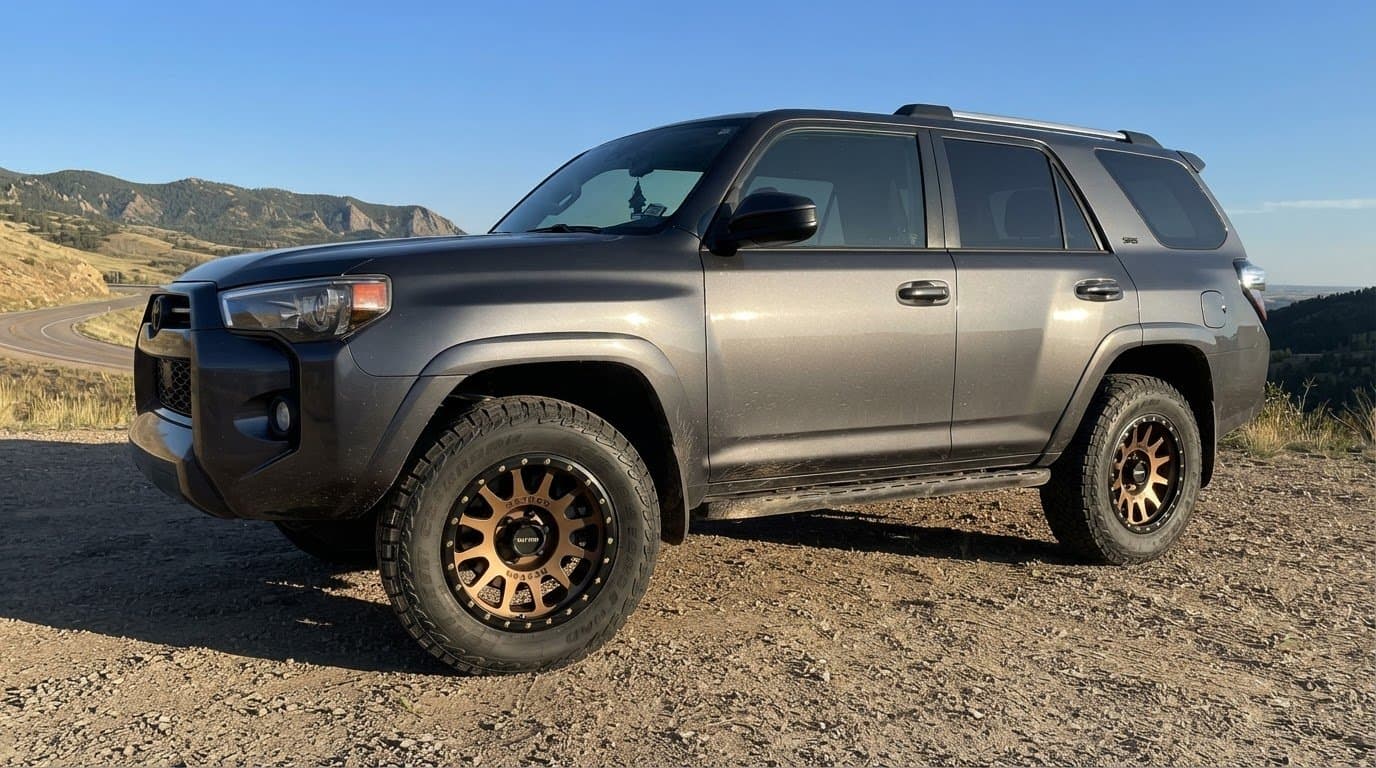
Best 4Runner Rims for Denver Off-Roading
The most aggressive-looking 4Runner rims aren’t automatically the right choice for Denver off-roading. Listings include a 6x5.5 bolt pattern, but matching that pattern alone doesn’t establish fit: rim diameter, width, offset and hub fit all matter. The right combination depends on your specific 4Runner and how you plan to drive it.
It’s natural to start with a finish or style that gives your SUV the stance you want. But fitment deserves equal attention, especially when you’re comparing very different sizes and offsets. This guide explains how to read rim listings, compare bolt patterns and hub fit, and weigh brands and styles for your driving needs.
You’ll also learn what a professional considers when matching rims with tires and other fitment choices, and when a wheel-and-tire package or suspension change may be part of the plan. The goal is a confident choice that balances appearance, compatibility and off-road use.
Key Takeaways
- Read wheel listings as a complete specification, weighing diameter, width and offset alongside finish and style.
- Use the bolt pattern as one fitment filter, then account for hub fit before choosing a wheel.
- Understand how a professional evaluates hub bore and hubcentric fitment to support a precise match.
- Compare brand and design choices against your driving priorities, then consider whether a wheel-and-tire package or suspension change fits your setup.
4Runner wheel listings
Compare each listing by diameter, width, offset, finish, and fitment details. A matching style matters, but the complete specification determines whether the wheel suits your 4Runner.
Lifted Fitment Offset and Backspacing
For a lifted 4Runner, no single offset or backspacing works best across every setup. The lift, tire size, wheel width, and clearance around suspension and body parts all affect fit. Offset describes the wheel’s mounting position relative to its centerline; backspacing describes the distance from its mounting surface to its inner edge. A professional weighs both against the vehicle and intended tire.
Listings show why the exact numbers matter. A 17x9 Ion Alloy 141 Satin Black wheel has +13mm offset, while a 17x9 version in Gloss Black Milled has -12mm offset. Their diameter and width match, but their offsets differ. Incorrect positioning can cause rubbing or reduce clearance; spacers also move the wheel outward and change its relationship to surrounding components. A listing’s appearance alone can’t establish fit.
Stock Rim and Suspension Tire Fit
There isn’t one largest tire size that fits every 4Runner with stock rims and suspension. Fit depends on the specific vehicle, wheel width and offset, tire dimensions, and available clearance. A professional evaluates the complete combination rather than choosing a tire from diameter alone. That distinction matters because changing tire size can affect how the tire clears nearby components during steering and suspension movement.
Consider the listing’s full size notation before comparing options. An 18x9 Ion Alloy 141 Gloss Black Milled wheel has 0mm offset, while a 20x9 Ion Alloy 143 Matte Black wheel also has 0mm offset. The shared offset doesn’t make the wheel sizes interchangeable. Changing rim or tire dimensions can influence speedometer accuracy when overall tire diameter changes. Added wheel-and-tire weight or different dimensions can also affect fuel economy and handling. That’s why a fitment decision accounts for the full package, not finish alone.
Bolt patterns
A bolt pattern is a core fitment specification, not a style detail. Compare the pattern in the listing with your vehicle’s exact requirements before considering finish or spoke design.
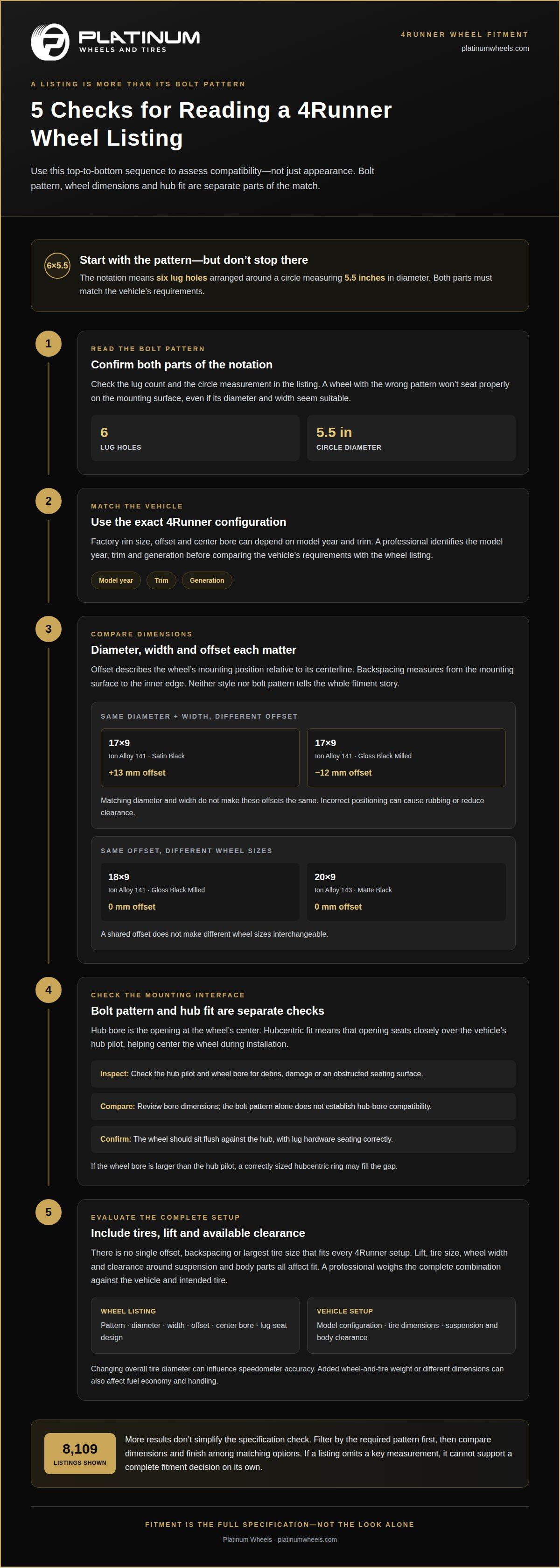
The notation 6x5.5 describes six lug holes arranged around a circle measuring 5.5 inches in diameter. Both parts matter: the number of holes and the circle measurement must match. A wheel with the wrong pattern won’t seat properly on the mounting surface, even if its diameter and width seem suitable.
Several listed examples use 6x5.5. These include a 20x9 Ion Alloy 141 Chrome wheel with 0mm offset and a 17x9 Ion Alloy 141 Satin Black wheel with +13mm offset. The pattern matches between these examples, but their diameters and offsets differ. Bolt pattern alone therefore doesn’t establish complete fitment. Offset, wheel dimensions, hub fit, and other specifications still need consideration.
Use a clear sequence to assess a listing:
- Read the pattern. Find the lug count and measurement, such as 6x5.5.
- Compare the exact vehicle fitment. Don’t infer compatibility from appearance or another wheel’s specifications.
- Review the other dimensions. Diameter, width, and offset remain separate fitment details.
- Consider the mounting interface. Hub bore and lug-seat design also affect how the wheel mounts.
A listing page showing 8,109 products can offer plenty of choices, but more results don’t simplify the specification check. Filter by the required pattern first, then compare dimensions and finish among matching options. If a listing omits a key measurement, it can’t support a complete fitment decision on its own.
For Denver-area driving, start with the correct bolt pattern, then evaluate the wheel as a complete assembly. This helps distinguish an attractive listing from one that meets your vehicle’s mounting requirements.
Professional Hub Bore and Hubcentric Fitment Checks
Factory wheel dimensions aren’t one universal set across every 4Runner. Rim size, offset, and center bore depend on model year and trim, so a professional matches those details to the specific vehicle rather than assuming one specification fits every generation.
Hub bore is the opening at the wheel’s center. Hubcentric fit means that opening seats closely over the vehicle’s hub pilot, helping center the wheel during installation. A bolt pattern such as 6x5.5 describes lug layout, but it doesn’t establish hub-bore compatibility. Those are separate measurements, and both matter.
For an accurate match, the professional identifies the 4Runner’s model year, trim, and generation, then compares its fitment requirements with the wheel listing. This prevents a listing for one model configuration from being treated as universal. The wheel’s diameter, width, offset, bolt pattern, and center bore are reviewed together, not in isolation.
- Inspect the hub and wheel. The professional checks the hub pilot and wheel bore for debris, damage, or an obstructed seating surface.
- Compare bore dimensions. A wheel bore that doesn’t match the hub requires a suitable fitment solution, rather than relying on the bolt pattern alone.
- Confirm the mounting face. The wheel should sit flush against the hub, with the lug hardware seating correctly.
- Recheck the vehicle configuration. Model year, trim, and generation guide which factory specifications apply.
These checks help distinguish a close-fitting hubcentric setup from one centered primarily by its lug hardware. If a wheel’s bore is larger than the hub pilot, a hubcentric ring may fill the gap when correctly sized for that combination. The professional evaluates that relationship alongside the other fitment details before installation. That’s how factory dimensions become a vehicle-specific decision, rather than a guess based on a 4Runner badge alone.
Wheel brands and styles
Ion Alloy appears across the listings, with several finishes and wheel designs. Compare each brand and style only after narrowing choices by vehicle fitment. A finish can shape the 4Runner’s appearance, but it doesn’t establish compatibility or suitability for your driving plans.
Finish names help distinguish options within a product listing. Examples include Gloss Black Milled, Satin Black, Matte Black, and Chrome. These labels describe different appearances, not a ranking of performance. Start by deciding which look suits your 4Runner, then compare available sizes and fitment details for that specific wheel.
Use a consistent comparison process:
- Choose a visual direction. Compare dark finishes such as Matte Black with brighter Chrome options.
- Read the exact model name. Ion Alloy 141 and Ion Alloy 143 are separate listed designs.
- Match the complete specification. Review diameter, width, offset, bolt pattern, and hub fit for each option.
- Consider the full setup. A wheel-and-tire package brings rim selection together with tire choice.
Style alone can hide important differences between listings. Two black wheels may have different widths or offsets, and listings from the same brand may feature different models. Compare each wheel’s specifications rather than assuming a similar finish or brand makes them interchangeable.
For Denver off-roading, make the decision around both appearance and intended use. A polished finish may suit a street-focused look, while a matte or milled appearance gives a different visual character. Neither finish replaces checking how the wheel fits the vehicle or works with the selected tire. Prioritize fitment first, then choose the style that complements your 4Runner.
To narrow the selection around your preferred look and setup, explore custom wheel options.
Listings show how a design and finish can vary by size, offset, and price.
Compare the complete specifications alongside the finish.
Platinum Wheels: Custom Truck Wheels & Off-Road Rims
Platinum Wheels helps match custom truck wheels and off-road rims to your 4Runner’s fitment and driving priorities. Turn to the team when you’ve narrowed down the style but want a coordinated wheel-and-tire setup for Denver roads and off-road plans.
Platinum Wheels offers custom truck wheels and off-road rims alongside all-terrain and mud-terrain tires, with wheel-and-tire packages that bring the choices together. If your setup also calls for more clearance or a change in stance, lift kits and leveling kits are options to consider. The right combination depends on your vehicle and intended use, so evaluate each component as part of the overall fitment.
Bring your preferred finish, driving plans, and 4Runner details into the conversation. Platinum Wheels can help you explore the available wheel options and related packages. Contact Platinum Wheels to discuss your 4Runner setup.
Plan Your Next 4Runner Setup
Choose your next 4Runner rims around the driving you actually plan to do. A setup for daily Denver commutes may prioritize a different balance of appearance and capability than one built for frequent trail use. Decide which matters most before settling on a final configuration, and keep the vehicle’s intended use central to the conversation.
Bring your preferred style and driving priorities to the next step. A clear picture of how you use your 4Runner helps shape a focused discussion about the right direction for its wheel setup. Platinum Wheels can help you consider options that suit your goals without losing sight of fitment.
Contact Platinum Wheels to discuss your 4Runner setup and take the next step with confidence.
Frequently Asked Questions
What information should you provide to a professional to choose the right 4Runner rims for your model year and trim?
Provide your 4Runner’s model year, trim, and generation, plus details about its current setup. Include the tire size shown on the sidewall, any lift or leveling changes, and whether you prioritize daily driving, trail use, or both. Photos of the current wheels can help identify their markings. Mention whether you want to reuse existing TPMS sensors or include new sensors in a wheel-and-tire package.
How much do OEM and aftermarket 4Runner rims cost?
Choose based on the complete fitment specifications, not price alone.
Which 4Runner rims are best for off-roading, towing, or daily driving?
There is no single best rim for every 4Runner setup. Match diameter, width, offset, bolt pattern, and hub fit to your vehicle and intended use; wheel-and-tire packages offer all-terrain or mud-terrain tire options.