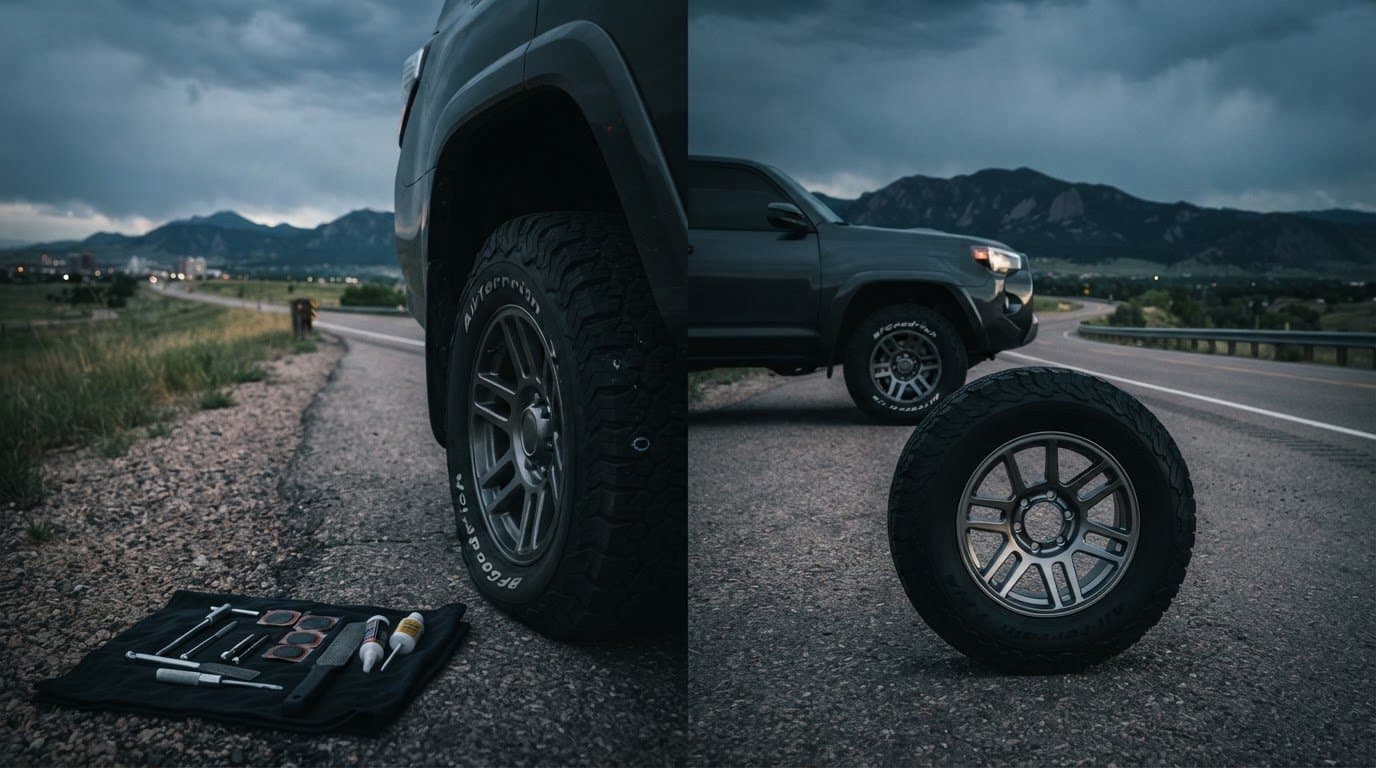
Flat Tire Repair in Denver: When to Patch or Replace
A flat tire doesn’t automatically mean you need a new tire, but driving on the wrong kind of damage can make the problem worse. If you’re searching for “flat tire repair near me,” it’s understandable to wonder whether to drive, use a plug, or replace the tire. If it’s losing air, pull over somewhere safe and avoid driving on it.
The right choice depends on more than the puncture. Its location and size, the tire’s overall condition, and your vehicle’s requirements all matter. This guide explains what to do after a flat, how repairability is assessed, and when replacement may be the safer option.
For drivers in Denver, Aurora, Lakewood, Englewood, Wheat Ridge, Commerce City, Westminster, Thorton, Broomfield, Arvada, Golden, Littleton, Parker, Highlands Ranch, Castle Rock, Boulder, Fort Collins, and Colorado Springs, changing weather and road conditions also factor into tire decisions. We’ll cover repair considerations, signs that point toward replacement, and how all-season, all-terrain, and mud-terrain tires suit different Colorado driving needs.
Key Takeaways
- If you’re searching for “flat tire repair near me,” sudden pressure loss, visible damage, unusual handling, or a TPMS alert are reasons to stop safely and arrange an assessment.
- Whether a tire can be repaired depends on an inspection of where and how it is damaged, its condition, and any previous repairs.
- Compare repair and replacement only after considering the inspection findings, your vehicle’s requirements, and applicable repair standards.
- After a flat, follow a safety-first checklist and consult your owner’s manual for spare-tire instructions and vehicle-specific limits.
- If you need a replacement, consider how all-season, all-terrain, and mud-terrain tires suit your vehicle, routes, and Colorado driving conditions.
Flat Tire Near Me in Denver: Recognize the Problem and Put Safety First
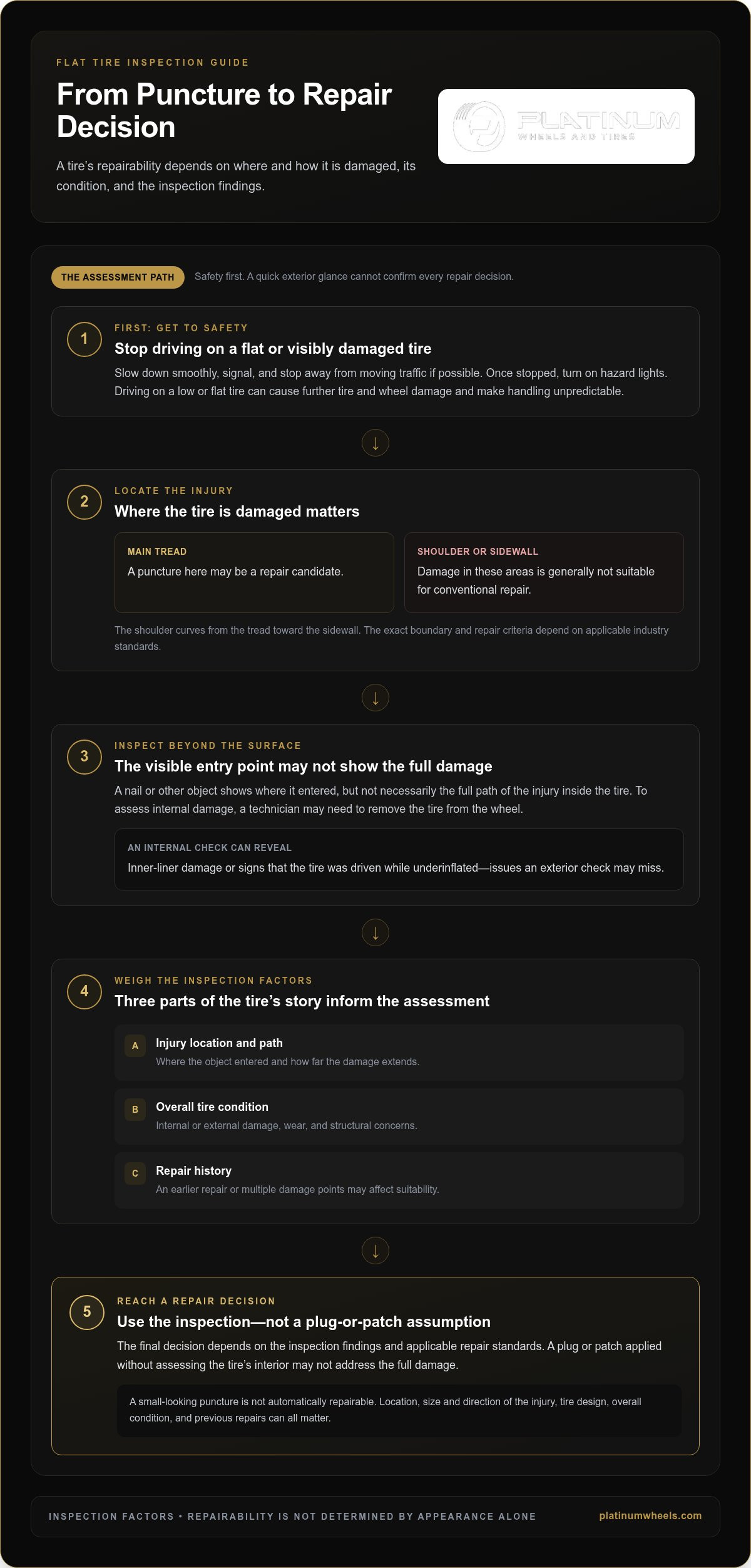
A flat can turn an ordinary Denver commute into a stressful decision, especially in traffic or far from a safe stopping place. If you’re searching for “flat tire repair near me,” put safety ahead of choosing a repair method. Slow down smoothly, signal, and stop away from moving traffic if possible. Once stopped, turn on your hazard lights. Don’t keep driving on a tire that looks deflated or visibly damaged. Doing so can damage the tire and wheel further, and make handling unpredictable.
Pressure loss isn’t always obvious at first. The tire may look low, the steering may feel different, or the vehicle may pull or vibrate. A puncture can also cause rapid air loss with little warning. Don’t rely on appearance alone to decide that a tire is safe to drive on.
How to tell whether a tire needs immediate attention
Sudden pressure loss, a bulge, a cut, or an object lodged in the tread calls for prompt attention. Even a slowly deflating tire can affect how the vehicle responds, so “it still rolls” doesn’t mean it’s safe to continue. A TPMS alert means the tire pressure needs attention, but it doesn’t identify the cause or tell you whether the tire can be driven on.
- Notice a change in handling: Pulling, vibration, or a heavy, soft steering feel can indicate a tire problem.
- Look for visible changes only from a safe position: Don’t drive on a tire that is visibly low, torn, bulging, or separated from the wheel.
- Take pressure warnings seriously: Check the tire when safely stopped, but don’t assume the warning tells you how quickly air is escaping.
If you’re on a busy road, focus first on getting yourself and your passengers out of immediate danger. Don’t inspect a tire from a position exposed to traffic. Arrange an appropriate tire assessment before driving again, especially if the tire is flat or the vehicle’s behavior has changed.
What Colorado driving conditions can change
Denver’s temperature swings can affect tire pressure, and changing road conditions are another reason to pay attention to warning signs. Use the cold-pressure recommendation on your vehicle’s tire placard, commonly found on the driver-side door area. The pressure printed on the tire sidewall is not the target pressure for your vehicle. Check pressure when the tires are cold, following your owner’s manual for vehicle-specific guidance.
A Front Range commute on city streets has different demands from a mountain-bound trip, where weather and road conditions can change along the way. A TPMS alert before a longer drive deserves attention before you set out. Routine checks of inflation and tire condition are useful tire maintenance practices, but they can’t diagnose damage you can’t see. If pressure keeps dropping or the tire’s condition is uncertain, don’t treat a quick top-up as permission to continue. Get the tire assessed first.
When Can a Flat Tire Be Repaired? Understand the Inspection
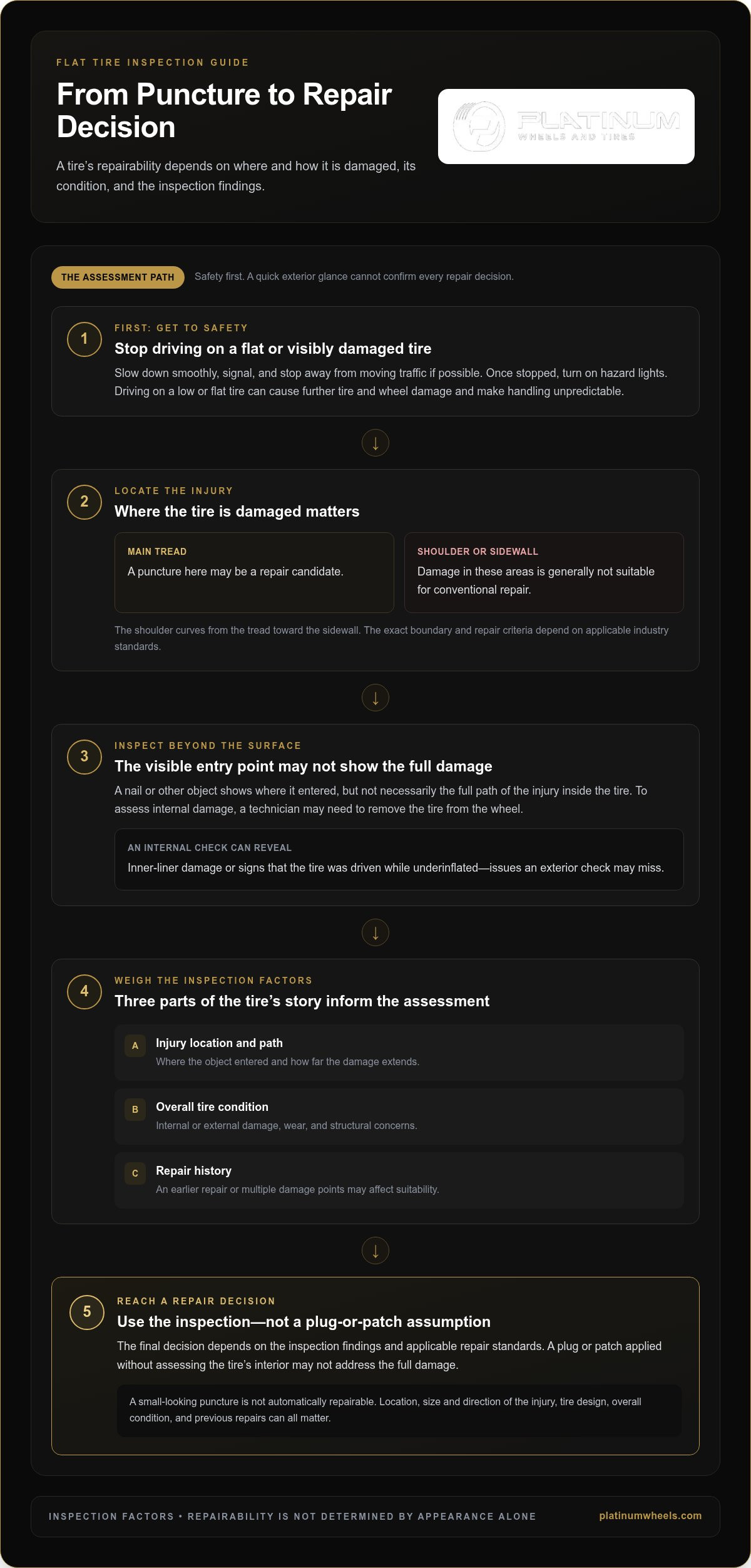
A puncture isn’t automatically repairable just because it looks small from the outside. The decision depends on the damage and the tire’s overall condition, assessed against applicable repair standards. A reliable answer to “flat tire repair near me” comes from a proper inspection, not a quick look at the tread or an assumption that every puncture can be plugged.
Damage location is a key factor. A puncture in the main tread area may be a repair candidate, while damage near the shoulder or in the sidewall is generally not suitable for a conventional repair. These areas flex differently and have distinct structural roles. A repair must suit the damaged part of the tire, not just look manageable from the outside.
Why puncture location matters
The tread is the part that contacts the road, while the shoulder curves toward the sidewall. A puncture near that transition can be difficult to assess from the outside, and sidewall damage can compromise the tire’s structure. The exact boundary and repair criteria depend on applicable industry standards, so one measurement shouldn’t be treated as a universal pass-or-fail rule.
Location isn’t the only consideration. The size and direction of the injury, the tire’s design, and its condition can all affect whether a repair is appropriate. A visible nail, for example, shows where an object entered, but not necessarily the full path of damage inside the tire.
What a proper tire inspection considers
To evaluate internal damage, a technician may need to remove the tire from the wheel. An internal inspection can reveal damage an exterior check misses, including injury to the inner liner or signs the tire was driven while underinflated. Driving on a low or flat tire can cause additional internal damage, even if the original puncture appears limited.
An inspection can consider:
- Injury location and path: Where the object entered and how far the damage extends.
- Overall tire condition: Signs of internal or external damage, wear, or structural concerns.
- Repair history: An earlier repair or multiple damage points may affect whether another repair is suitable.
These are assessment factors, not a do-it-yourself checklist that guarantees a safe outcome. A plug or patch applied without assessing the tire’s interior may not address the full damage. For broader safety information, consult the NHTSA tire safety guidelines alongside your vehicle owner’s manual. The final decision should follow a physical inspection and current repair standards.
If inspection indicates the tire should be replaced, choosing the right replacement involves vehicle fitment and driving needs. Platinum Wheels offers new tires with professional mounting and balancing, helping drivers choose a suitable tire solution for their vehicle and regular routes.
Flat Tire Repair or Replacement? Compare the Safer Next Step
Once a tire has been inspected, the next step is clearer. Repair may be possible if the damage meets current standards and the tire remains in suitable condition. Replacement may be safer if inspection finds damage or wear that rules out repair. Treat these as two separate questions: can this tire be safely repaired, and if not, what replacement suits your vehicle and driving needs?
Use this comparison as a guide, not a substitute for an inspection. A search for “flat tire repair near me” can point you toward options, but the tire’s condition, vehicle requirements, and applicable repair standards determine the right decision.
| Inspection finding | Possible next step |
|---|---|
| Damage appears limited and is in an area that may qualify under current repair standards. | Have the tire assessed for repairability, including its internal condition and repair history. |
| Damage is near the shoulder or in the sidewall. | Replacement may be appropriate because damage in these areas can affect structural integrity. |
| Inspection finds severe damage, unsafe wear, or other structural concerns. | Consider replacement if the tire cannot safely return to service. |
| The tire may be repairable, but its condition or vehicle fitment raises questions. | Base the decision on inspection results, vehicle specifications, and manufacturer guidance. |
When replacement may be the practical option
Sidewall or shoulder damage is a common reason a tire may not qualify for repair. Replacement may also be necessary if inspection reveals serious internal damage, structural concerns, or wear that makes the tire unsuitable for continued use. The puncture alone doesn’t settle the question. Damage from driving while underinflated or the tire’s overall condition can change the recommendation. Not every puncture can be repaired, and not every damaged tire automatically needs replacement.
For Denver-area drivers, replacement needs can also depend on how and where the vehicle is used. Regular city commuting, changing seasonal conditions, and mountain travel place different demands on tires. Consider your typical routes and driving habits rather than choosing solely based on the original puncture. Drivers weighing off-pavement and variable-road use can explore this Colorado all-terrain tire guide.
How vehicle setup affects replacement choices
Start with the tire size and specifications recommended for your vehicle. A replacement must meet the vehicle’s fitment requirements, not just look similar to the damaged tire. For all-wheel-drive vehicles, replacement guidance can vary by model and drivetrain. Check the owner’s manual or manufacturer guidance before deciding whether to replace one tire or more. Don’t assume the same approach applies to every AWD vehicle.
When inspection indicates replacement, professional mounting and balancing help complete the tire fitment. The right option should suit both your vehicle and the Front Range roads you regularly travel.
What to Do After a Flat: A Denver-Area Driver’s Checklist
A clear sequence helps you make safer decisions and gives the person assessing the tire useful information. Don’t put yourself near traffic to inspect or photograph a wheel. Wait until the vehicle is stopped in a safe place, and follow your owner’s manual for spare-tire instructions and any vehicle-specific limits. If you can’t handle the flat safely where you are, arrange appropriate assistance rather than driving on a deflated tire.
- Stop somewhere safe. Slow down carefully, signal, and move away from traffic if possible. Turn on your hazard lights after stopping. Avoid driving farther on a visibly flat or damaged tire.
- Check the manual before using a spare. Vehicle instructions explain where the spare and tools are located, how to install them, and any limits on spare-tire use. Follow those instructions rather than assuming every spare works the same way.
- Record what you can safely observe. Note which tire is affected, whether you saw an object or visible damage, and whether the vehicle displayed a TPMS warning. Don’t touch or examine the tire if the roadside location isn’t safe.
- Gather the tire and vehicle details. The tire size is printed on the sidewall. The vehicle placard, often inside the driver-side door area, lists the recommended cold pressure and tire information. Your owner’s manual can provide additional fitment guidance.
- Arrange an appropriate assessment. Share the tire size, affected wheel, warning lights, and any recent pressure changes. An inspection can help determine whether repair is appropriate or replacement should be considered.
Prepare useful information about the tire and vehicle
Details gathered safely can help clarify the next step, but they don’t replace an inspection. Note, for example, whether the pressure warning appeared before the tire looked low or whether pressure dropped again after it was adjusted. If you can’t read the sidewall or placard without standing in an unsafe area, leave it for later. Safety comes before collecting information.
Check pressure monitoring after tire work
A TPMS uses sensors to monitor tire pressure and alert the driver when pressure needs attention. If the warning light stays on or returns after tire work, don’t ignore it or assume the tire is ready for the road. Follow the vehicle manual and technician guidance to understand the warning. The TPMS sensor guide explains the system’s role and why a dashboard alert deserves attention.
If inspection points to replacement, Platinum Wheels offers new tires, professional mounting and balancing, and TPMS sensors. Explore tire and fitment options suited to your vehicle and Front Range driving needs.
When Replacement Makes Sense, Choose Tires for Colorado Driving
Replacement is the next step when an inspection or the tire’s condition shows it isn’t suitable for continued use. Once that decision is made, consider which tire fits your vehicle and the routes you drive. A Denver commuter, a driver who regularly heads into the mountains, and someone who uses a truck off pavement may have different priorities. Choose based on fitment and real driving needs, not simply because one tire was damaged.
Match replacement tires to everyday and Colorado routes
Think about where you spend most of your time behind the wheel. All-season tires can suit everyday driving across varied conditions. All-terrain tires are designed for drivers who split their use between paved roads and rougher routes. Mud-terrain tires are a more specialized option for drivers who regularly seek muddy or challenging off-road conditions. No category is the universal best choice. Match the tire to your vehicle, regular routes, and seasonal use.
Consider those needs separately:
- Daily commuting: Consider how much of your driving is on city streets and highways, and which seasonal conditions you typically encounter.
- Mountain trips: Account for changing weather and road conditions along your usual routes. Check current requirements for the roads and conditions you plan to travel.
- Occasional off-road use: Decide how often you leave pavement and what terrain you actually encounter, rather than choosing a more specialized tread for looks alone.
If you’re searching for “flat tire repair near me,” it helps to think beyond the immediate damage. If inspection points to replacement, your regular Front Range driving and any mountain or off-road trips can guide the tire category you consider.
Make fitment and installation part of the plan
Start with the tire size and vehicle specifications, using the owner’s manual and vehicle placard as reference points. A tire that appears close in size may still be the wrong fit for your vehicle. For all-wheel-drive vehicles, follow the manufacturer’s guidance on replacement choices and whether other tires need to be considered too. Requirements can differ by vehicle, so don’t assume one rule applies to every AWD system.
Platinum Wheels offers new tires, including all-season, all-terrain, and mud-terrain options, with professional mounting and balancing. If the replacement involves a wheel or tire change, TPMS sensor fitment is another part of the overall setup. Wheel-and-tire packages can include TPMS sensors. Proper fitment and pressure monitoring help bring the replacement decision together as a complete tire solution.
If replacement is the right outcome for your vehicle, compare options that suit your routes and driving priorities. Platinum Wheels offers tires and fitment for life on Denver streets, Front Range highways, and beyond.
Choose Your Next Tire with Confidence
A flat can interrupt the day, but your next tire decision can be guided by more than the immediate problem. If you searched “flat tire repair near me,” use this moment to consider what your driving asks of your vehicle. Think about your usual commute, the routes you take in changing seasons, and whether mountain trips or occasional off-pavement travel are part of your plans.
Those details help make a replacement choice more practical. Keep your vehicle’s tire specifications in mind, too, and follow manufacturer guidance for fitment. The aim isn’t to choose the most aggressive option or anticipate every possible road. It’s to find a suitable match for how you drive around Denver and across the Front Range.
When replacement is the right next step, compare tire options for your vehicle and routine. Explore tire options for your vehicle and find a suitable fit for the roads ahead. Platinum Wheels offers new tires, wheel-and-tire packages, and professional mounting and balancing for Front Range drivers.
Frequently Asked Questions
Can a tire with a nail in it be repaired?
Possibly, but a nail doesn’t automatically mean the tire is repairable. The damage’s location, size, direction, and the tire’s condition all matter, and a full assessment may reveal damage that isn’t visible from outside. Don’t pull the nail out at the roadside, since air may escape faster. Note where it is if you can do so safely, then have the tire inspected before deciding whether repair is appropriate.
Is it safe to drive on a flat tire to a nearby shop?
No. Driving on a flat or visibly deflated tire can affect vehicle control and damage the tire or wheel. If you’re looking for “flat tire repair near me,” don’t treat a nearby destination as a reason to keep driving. Stop somewhere safe and arrange suitable assistance. In Denver-area traffic, focus on getting yourself and your passengers away from moving vehicles before dealing with the tire.
How do technicians decide whether a flat tire can be repaired?
Technicians assess the injury and the tire as a whole, rather than judging only by the object that caused the leak. They may remove the tire from the wheel to examine the inner liner and check for damage caused by driving with low pressure. Previous repairs, multiple injuries, and the tire’s remaining condition can also affect the decision. The final recommendation should follow current repair standards and the inspection findings.
Can a tire be repaired after being driven while flat?
Sometimes, but only if inspection shows the tire hasn’t sustained disqualifying internal damage. Driving while flat can cause heat and stress that damage the inside, even if the outer surface looks intact. How far the vehicle traveled doesn’t determine repairability by itself. Tell the technician that the tire was driven while deflated and, if you know, roughly how long. That context helps guide a thorough assessment.
What should I do if my spare tire is also low on air?
Don’t assume a low spare is safe to use. Check your owner’s manual for the spare’s pressure requirement and instructions, since spare tires can have different specifications from regular tires. If you can’t bring it to the correct pressure safely, or it appears damaged, don’t rely on it for the trip. Arrange roadside assistance or another safe way to have the vehicle and tire handled.
Can a tire pressure warning stay on after a tire is repaired or replaced?
Yes. A warning may remain if pressure is still outside the vehicle’s recommended range, a sensor has an issue, or the system needs a vehicle-specific reset or relearn procedure. Check pressure using the vehicle’s recommended cold-pressure information, then follow the owner’s manual. If the light stays on or returns, have the pressure-monitoring system assessed rather than ignoring the alert or assuming the tire work resolved it.
Do I need to replace all four tires if one tire cannot be repaired?
Not necessarily. The right number depends on the vehicle, the condition and tread of the remaining tires, and manufacturer guidance. This is especially important for AWD vehicles, where tire circumference requirements can vary by model. Check the owner’s manual before deciding that replacing one tire is suitable. A tire professional can use the vehicle specifications and condition of the other tires to help determine an appropriate replacement plan.