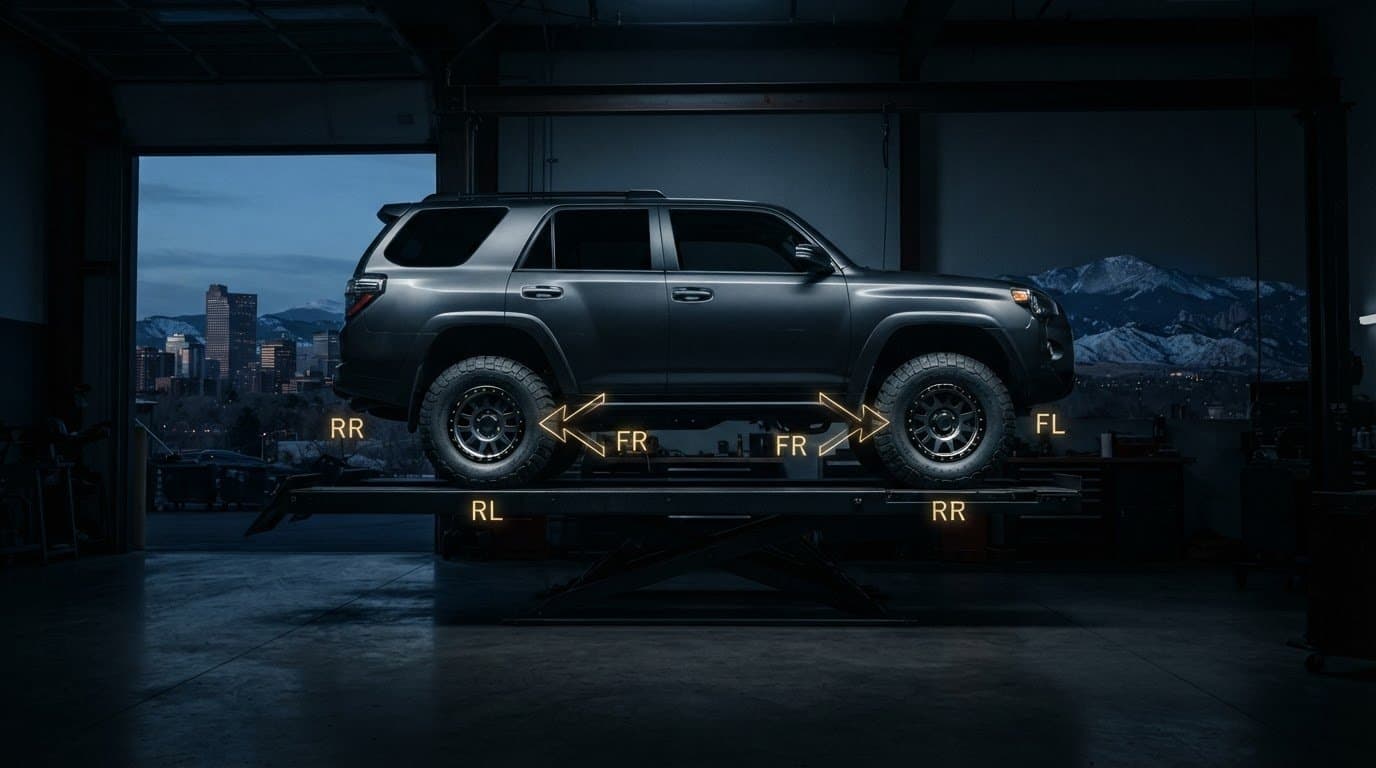
Denver Tire Rotation Guide: Extend Your Tread Life
What if the right tire rotation schedule depends on more than the number on your odometer? Denver drivers may combine city commutes with mountain roads and changing weather, so tire wear can vary with how and where a vehicle is driven. Conflicting mileage advice and unfamiliar rotation patterns can make it difficult to know what your vehicle needs.
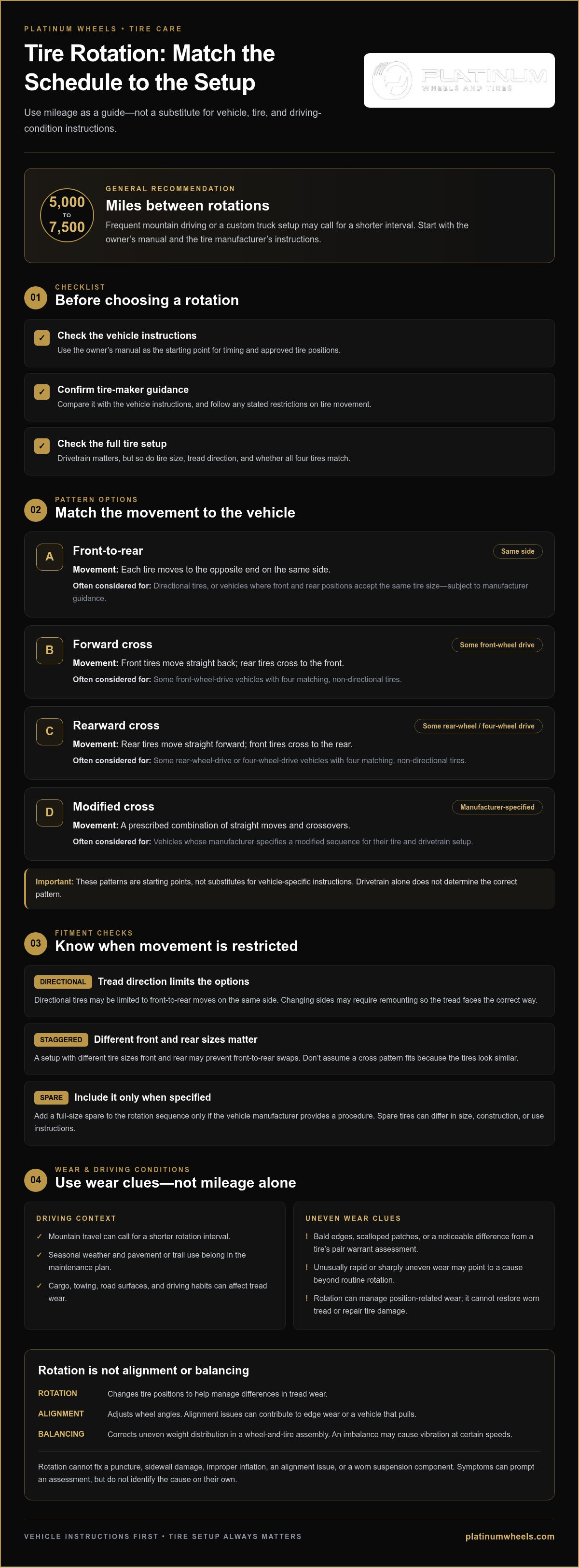
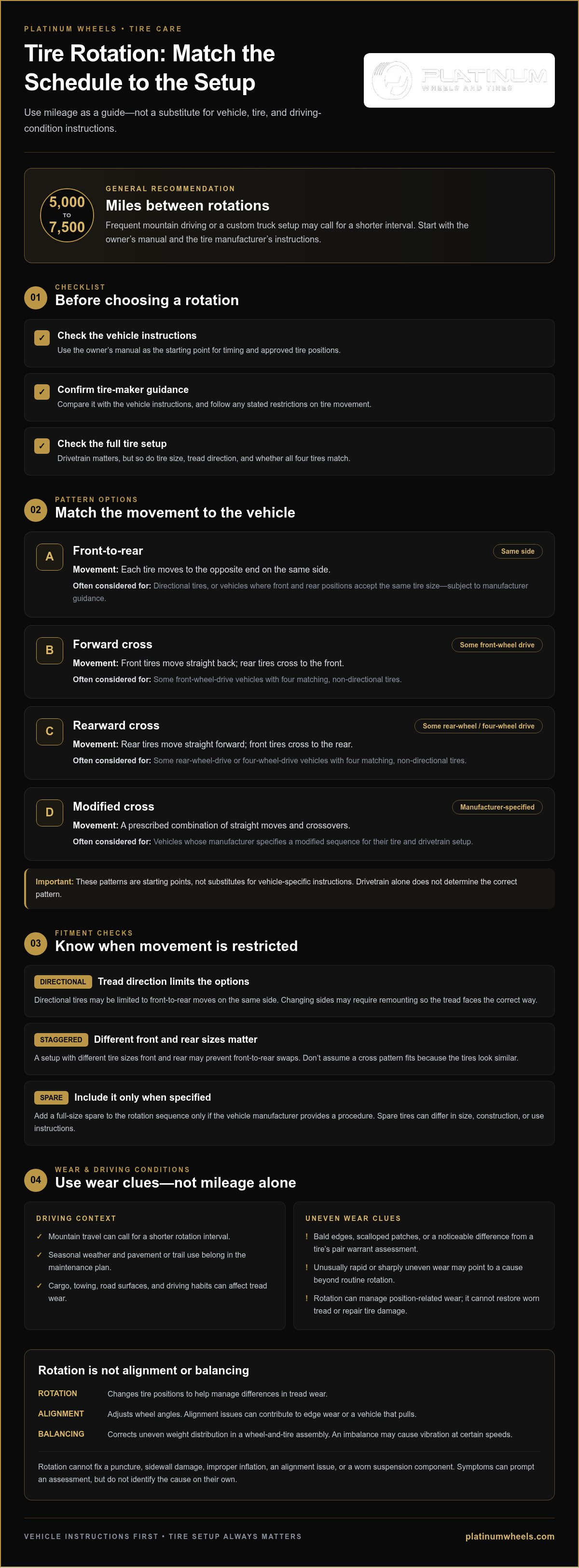
Rotation can help distribute tread wear, but it can’t correct every cause of uneven wear or restore worn tires. General recommendations often range from every 5,000 to 7,500 miles, while frequent mountain driving or a custom truck setup may call for a shorter interval. Start with your owner’s manual and the tire manufacturer’s instructions.
This guide explains how drivetrain, tire design, and Colorado driving conditions affect rotation timing and pattern. You’ll learn which tires can move where, what rotation can and can’t do for tread life, and when to follow the vehicle manufacturer’s guidance or get professional fitment advice.
Key Takeaways
- Use your owner’s manual as the starting point for rotation timing; mileage advice isn’t one-size-fits-all.
- Choose a tire rotation pattern based on your drivetrain and tire configuration, especially if tires are directional or different sizes.
- Rotation can help manage uneven tread wear, but it can’t address every underlying cause.
- Factor mountain travel, seasonal weather, and pavement or trail use into your tire maintenance plan.
- Match tire specifications and intended driving with properly fitted wheel-and-tire options for your vehicle.
What Tire Rotation Does, and What It Cannot Fix
Tire rotation is the planned movement of tires between approved vehicle positions to help manage differences in tread wear. The right pattern depends on the vehicle and tire setup. Tires can’t simply move to any corner. Rotation may help distribute position-related wear over time, but it can’t promise a particular mileage gain or restore tread that has already worn away. For a general overview of common practices and purpose, see Tire Rotation Wikipedia.
Think of rotation as a way to manage wear, not a repair. A puncture, sidewall damage, or other tire defect needs separate attention. Rotation also won’t correct an underlying alignment issue, improper inflation, or a worn suspension component. If wear is unusually rapid or sharply uneven, repeating a rotation may hide a clue rather than address the cause.
Why tire positions can wear differently
Each tire’s job depends partly on where it sits. Front tires steer and, on many vehicles, also deliver engine power. Braking and cornering place additional forces on the tires. Rear tires may carry a different share of the load, while cargo, towing, road surfaces, and driving habits can also affect tread wear.
For example, a front-wheel-drive car may show more wear at the front because those tires handle both steering and engine power. That’s an illustration, not a rule for every vehicle. If one tire has a bald edge, scalloped patches, or a noticeable difference from its pair, have the cause assessed before assuming a routine position swap is enough.
Rotation, alignment, and balancing are different
Rotation changes tire positions; alignment adjusts the angles of the wheels; balancing corrects uneven weight distribution in a wheel-and-tire assembly. These are separate procedures, and one doesn’t automatically replace another. A vehicle may need rotation while its alignment is within specification, or an alignment assessment even if its tires were recently rotated.
Alignment problems can contribute to edge wear or a vehicle that pulls. An imbalance may cause vibration at certain speeds. Neither symptom identifies the cause on its own, so treat it as a prompt for assessment rather than proof that a particular procedure is needed. Moving tires won’t repair a damaged tire or resolve a mechanical issue that causes uneven contact with the road.
Before moving tires, confirm which positions are approved for your vehicle and tire design. Some setups restrict movement, including directional tires or combinations with different front and rear sizes. This matters for custom wheel-and-tire fitments as well as standard configurations. Follow the vehicle and tire maker’s instructions, and treat an unexpected wear pattern as useful diagnostic information, not just a reminder to rotate.
How Tire Rotation Patterns Work for Different Vehicles
A suitable tire rotation pattern depends on more than whether a vehicle is front-wheel drive, rear-wheel drive, or four-wheel drive. Tire size, tread direction, and manufacturer instructions matter, too. Use the comparison below as a starting point, not a substitute for your owner’s manual or tire manufacturer guidance. The U.S. Tire Manufacturers Association Tire Care resource also explains why rotation guidance needs to match the tire and vehicle.
| Pattern | Typical movement | Often considered for |
|---|---|---|
| Front-to-rear | Each tire moves to the opposite end on the same side. | Directional tires or vehicles with front and rear positions that accept the same tire size, subject to manufacturer guidance. |
| Forward cross | Front tires move straight back; rear tires cross to the front. | Some front-wheel-drive vehicles with four matching, non-directional tires. |
| Rearward cross | Rear tires move straight forward; front tires cross to the rear. | Some rear-wheel-drive or four-wheel-drive vehicles with four matching, non-directional tires. |
| Modified cross | A prescribed combination of straight moves and crossovers. | Vehicles whose manufacturer specifies a modified sequence for their tire and drivetrain setup. |
Choosing a pattern for drivetrain and tire setup
Drivetrain can influence common recommendations, but it doesn’t determine the pattern by itself. Some front-wheel-drive vehicles use a forward cross, while some rear-wheel-drive and four-wheel-drive vehicles use a rearward cross. Others call for a different sequence. The pattern also depends on whether all four tires are the same size and type, so check your vehicle-specific instructions before using a generic diagram.
Start with the owner’s manual, then compare its instructions with the tire maker’s guidance. If either limits tire movement, follow the stated restriction rather than adapting a pattern that looks similar.
Directional, staggered, and spare-tire exceptions
Directional tread is designed to roll in a particular direction. This can limit tires to front-to-rear moves on the same side. Changing sides may require remounting the tires so the tread faces the correct way. Staggered setups, with different tire sizes front and rear, may prevent front-to-rear swaps altogether. Don’t assume a cross pattern is suitable just because the tires appear similar.
Include a full-size spare in the sequence only if the vehicle manufacturer specifies a procedure for it. Spare tires may differ in size, construction, or use instructions, so adding one without guidance can create an unsuitable setup.
For a custom truck setup, consider the approved movement pattern alongside tire size, tread design, and intended use. Drivers considering a matched setup can explore custom truck wheel and tire fitment suited to their vehicle and driving plans.
When to Rotate Tires: Intervals, Wear Clues, and Common Misconceptions
Start with your owner’s manual. It’s the primary reference for your vehicle’s maintenance schedule and tire-rotation instructions, which may depend on its drivetrain, original tire setup, or other specifications. A general mileage suggestion is a starting point, not a substitute for the vehicle maker’s schedule. Bridgestone, for example, suggests rotating tires every 5,000 miles on its guidance page; that figure isn’t a universal rule.
Tire design and driving conditions can also affect the appropriate schedule. A truck used for mountain travel, towing, or a mix of pavement and trails may wear differently from a car used mainly for commuting. Aftermarket wheels or a non-standard tire setup can also change which positions are approved. Follow the vehicle’s instructions and review the tire maker’s guidance if it differs from general advice.
Use the owner’s manual before a generic mileage rule
Look in the maintenance schedule, tire-care section, or index for rotation guidance. Some manuals list a mileage interval; others tie the task to a service visit or include a diagram showing the approved pattern. Follow the interval as written rather than replacing it with a broad industry suggestion. If the tire manufacturer provides different instructions for your tire type, read those alongside the vehicle guidance.
Keep a simple record of the odometer reading and date whenever tires are moved. This makes it easier to follow the specified interval and notice changes in wear between checks. If the vehicle has aftermarket wheels, staggered tire sizes, or directional tread, confirm that the published diagram applies to that exact setup before using it.
Recognize wear patterns without diagnosing by sight alone
Uneven tread wear is a cue to inspect the tires and review maintenance history, not proof that another rotation will solve the problem. Note whether wear is concentrated on an edge, appears in patches, or differs noticeably from one tire to another. These observations can guide an assessment, but they don’t identify the cause on their own. Cupping, a vehicle that pulls, or recurring uneven wear may call for checks beyond rotation.
Pressure is another part of tire care. Use the vehicle’s recommended pressure and treat a TPMS warning as a prompt to check the tires, not as a replacement for routine attention. Drivers who want to understand how pressure monitoring works can read this TPMS sensor guide. A sensor can help flag a pressure issue, but it doesn’t determine the correct rotation pattern or explain every wear concern.
For Front Range drivers, the practical sequence is simple: check the manual, account for the tire configuration, then follow the approved schedule. If the setup has changed since the vehicle left the factory, use guidance that matches the tires and fitment currently on the vehicle.
Tire Rotation for Colorado Driving and Custom Truck Setups
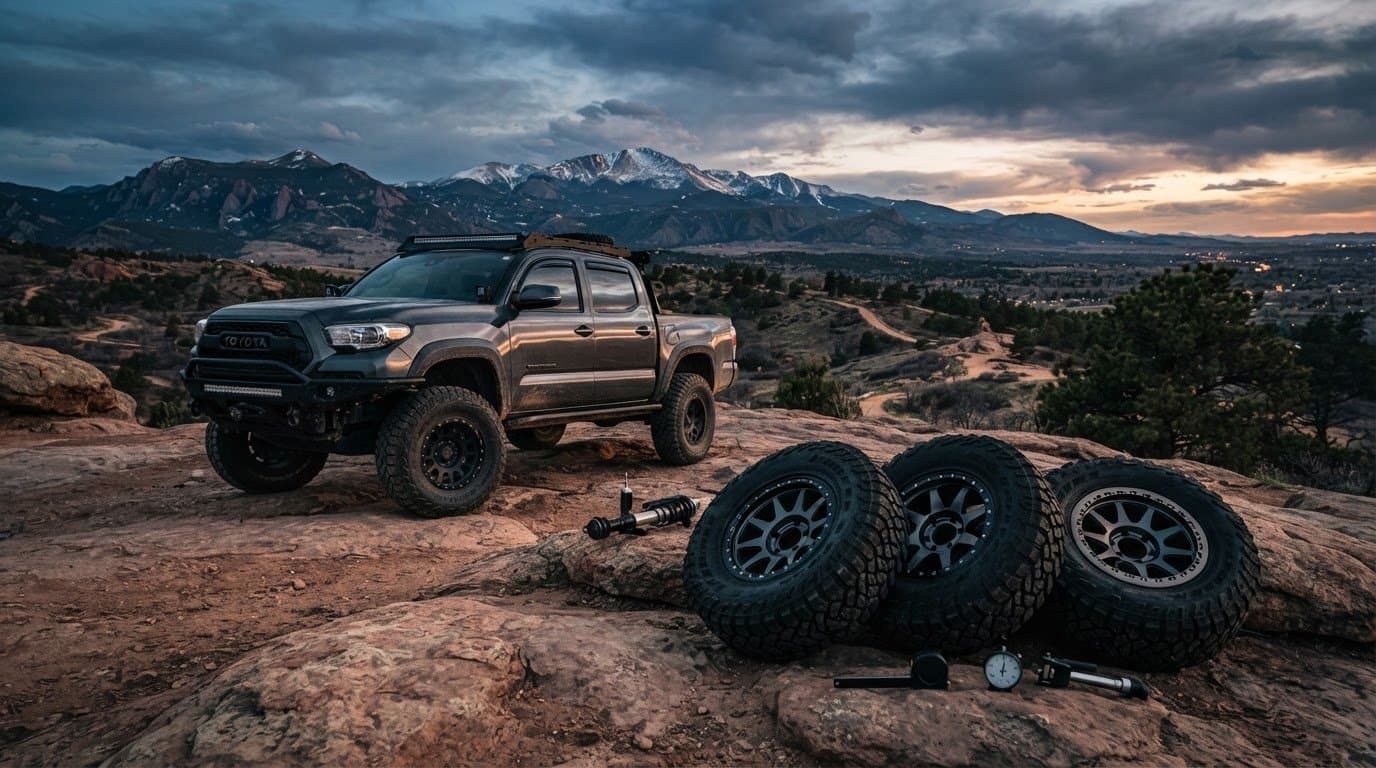
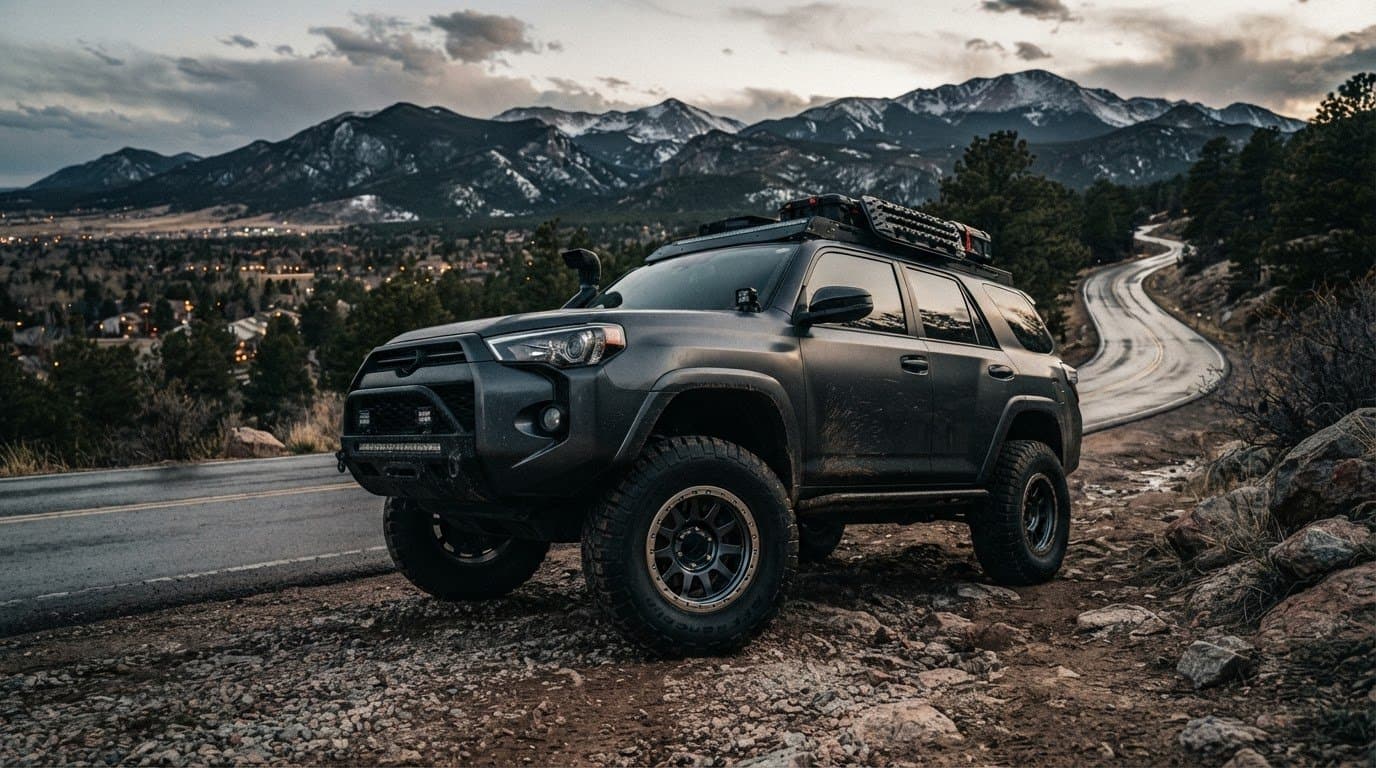
Denver-area driving can shift from city pavement to mountain roads, changing weather, and trail access. Those conditions are useful context when monitoring tire condition, but they don’t create a separate mileage rule or override vehicle and tire manufacturer instructions. Start with the specifications for the setup you’re actually driving, especially if your truck has aftermarket wheels or tires.
- Check the vehicle owner’s manual for its maintenance schedule and approved rotation pattern.
- Identify the tire setup, including front and rear sizes, directional markings, and whether the tires match.
- Use only a rotation pattern approved for both the vehicle and tire configuration.
Account for Front Range and mountain driving
Make a note of how you use the vehicle: regular highway and city commuting, mountain travel, seasonal trips, or a mix of pavement and trails. Share those details when the tires are inspected, along with any changes in noise, vibration, or visible tread wear. They help put tire condition in context, but elevation, weather, and trail use alone don’t set a new rotation interval. Keep the schedule anchored to the vehicle and tire makers’ recommendations.
Tire choice matters to the overall plan, too. An all-terrain tire guide for Colorado driving can help you consider how intended road and trail use relates to tire selection. The manual remains the reference for the vehicle’s maintenance schedule.
Check fitment before using a standard rotation diagram
Before applying a generic pattern, compare the front and rear tire sizes and check for directional arrows or other tread markings. Confirm that the wheels and tires fit the vehicle as a set. Aftermarket choices can change the configuration from the factory setup, while staggered sizing or directional tread may limit which tires can move. A familiar diagram isn’t automatically suitable just because the vehicle has four tires.
For custom truck setups, consider wheel fitment and tire specifications together rather than treating them as separate choices. The custom wheels and rims guide covers fitment fundamentals that can help frame those decisions. If you’re planning a new setup, bring the vehicle’s specifications and intended driving into the conversation so the wheel-and-tire fitment is considered as a whole.
Use the manual first, then match its instructions to the tires currently installed. If the setup has changed, don’t assume the original diagram still applies. For custom truck wheels, all-terrain or mud-terrain tires, or a wheel-and-tire package suited to your fitment goals, explore wheel and tire options with Platinum Wheels.
Plan Your Next Tire and Wheel Fitment Step with Platinum Wheels
A sound tire plan starts with knowing what’s on your vehicle and how you use it. If you’re comparing new tires or considering a custom wheel setup, gather a few details before discussing options. They help focus the fitment conversation on your truck, SUV, or other vehicle instead of a generic recommendation.
Bring the right details to a tire-fitment discussion
Have your vehicle year, make, and model ready, along with the size printed on your current tire sidewall. Note your priorities, too: daily commuting, mountain travel, towing, or regular off-road use. If your vehicle has a lift or leveling kit, include that information. These details give the discussion a practical starting point and connect tire and wheel choices to your vehicle and intended driving.
- Vehicle year, make, and model
- Current tire size and any known wheel specifications
- Typical road, seasonal, and off-road use
- Lift or leveling modifications
- Preferences for appearance, capability, and everyday driving
Explore tire and wheel options for your driving
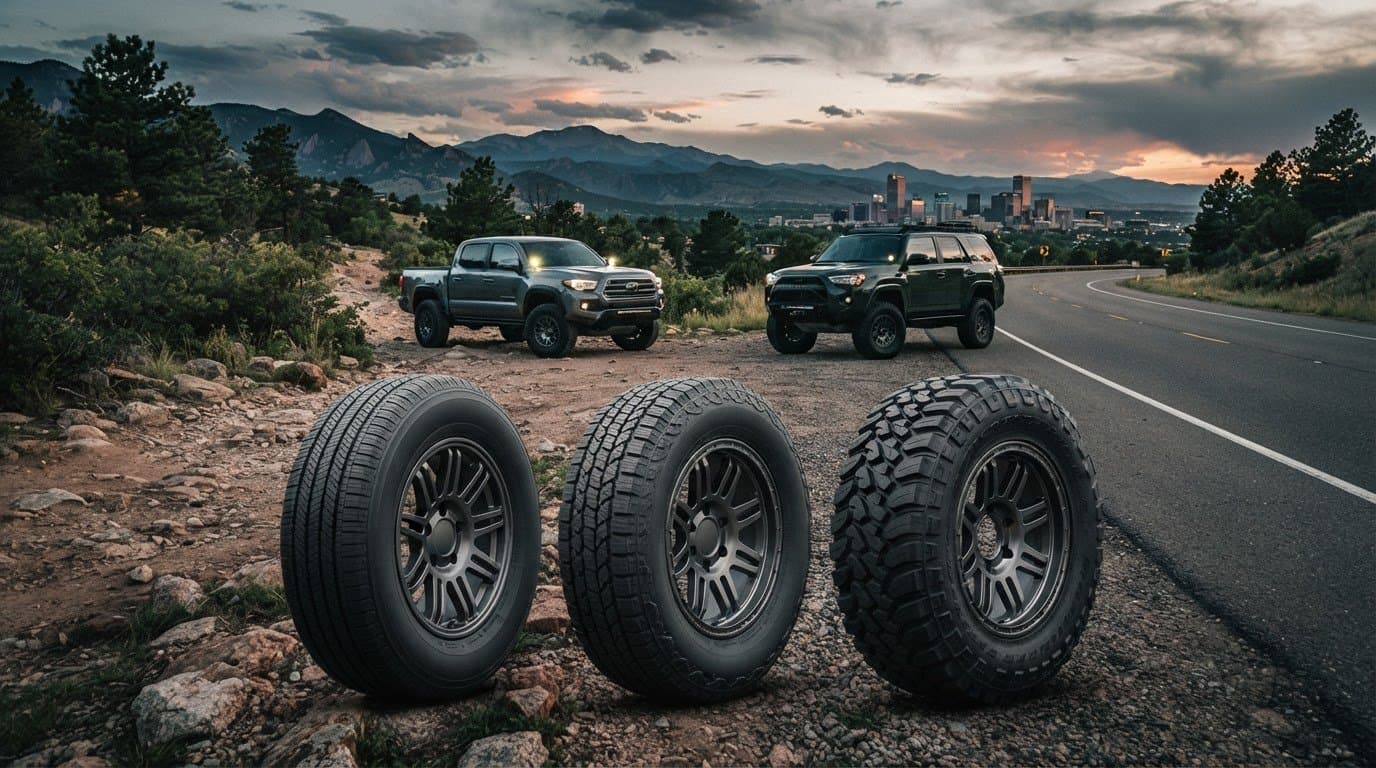
Match tire style to where you spend time behind the wheel. All-terrain tires can suit drivers balancing paved-road use with trail travel, while mud-terrain tires are designed for drivers with a stronger off-road focus. Your vehicle specifications and priorities help guide the choice; no tread style is automatically right for every driver.
Custom truck wheels and off-road rims add another fitment decision. Wheel dimensions and tire size need to work with the vehicle and any lift or leveling changes. Platinum Wheels offers custom wheels, all-terrain and mud-terrain tires, new tires, and wheel-and-tire packages. Packages can include TPMS sensors and professional mounting and balancing.
Keep maintenance in view as you compare options. Tire design, sizing, and fitment can affect which positions are approved for a future tire rotation, so the vehicle and tire makers’ instructions remain important after a new setup is installed. A fitment discussion can connect those specifications with how you intend to drive, without treating one setup as a universal answer.
Bring your vehicle details and driving priorities together, then explore wheel and tire options at Platinum Wheels for a setup suited to your fitment goals.
Make Your Next Tire Decision with Confidence
Your next step is to connect tire care with the setup you want to drive. Keep your vehicle’s maintenance guidance handy, and consider how your usual routes, seasonal travel, and off-road plans shape your tire and wheel choices. Rotation is part of ongoing care; choosing a compatible setup helps ensure future maintenance guidance remains relevant to the tires on your vehicle.
Platinum Wheels is a locally owned Colorado Front Range shop offering custom wheels, all-terrain and mud-terrain tires, and wheel-and-tire packages. Bring your vehicle details and priorities into the decision, whether you’re refreshing your current setup or planning a new fitment. A clear starting point makes it easier to compare options thoughtfully.
Explore wheel and tire options at Platinum Wheels and take the next step toward a setup that fits your driving plans.
Frequently Asked Questions
Is tire rotation the same as wheel alignment?
No. Tire rotation moves tires to different approved positions, while wheel alignment adjusts the angles of the wheels. One doesn’t replace the other. If the steering wheel sits off-center or the vehicle drifts on a level road, those symptoms may warrant an alignment check, even if the tires were recently moved. Keep track of when symptoms occur and whether they change after tire maintenance, as that can help with diagnosis.
Can tire rotation improve fuel economy?
Not by itself in a dependable, measurable way. Rotation changes tire positions, but it doesn’t reduce a tire’s rolling resistance or correct low pressure. If fuel economy seems different after tires are moved, other factors may be involved, such as a pressure adjustment, route, weather, or driving style. Check pressure against the vehicle’s door-jamb placard and compare fuel use over similar trips before drawing a conclusion.
Why do my front tires wear faster than my rear tires?
Front tires may wear faster because they steer and, on front-wheel-drive vehicles, also transfer engine power to the road. Braking and cornering place demands on them as well. The difference isn’t always a problem, but compare both shoulders and the center of each tire rather than judging from one spot. If one tire wears much differently from its partner, note the pattern and have the cause assessed.
Can a tire pressure warning light come on after a tire rotation?
Yes. A warning may appear if a tire is underinflated, pressure changed during maintenance, or the vehicle’s TPMS needs a position relearn after tires move. Check all tires with a pressure gauge when they’re cold and use the pressure listed on the vehicle placard, not the maximum printed on the tire sidewall. If the warning remains after correcting pressure and following the vehicle’s reset instructions, don’t ignore it.
Does tire rotation stop a vehicle from pulling to one side?
Not reliably. A pull can be related to tire pressure or wear, alignment, road surface, or another vehicle condition, and moving tires doesn’t diagnose the cause. Notice whether the vehicle pulls consistently on different roads or only while braking, and check that tire pressures match the vehicle placard. If the pull persists, have the vehicle and tires assessed instead of relying on repeated position changes.
Do new tires need to be rotated sooner than older tires?
Not automatically. New tires should follow the vehicle and tire makers’ schedule, not an extra early rotation just because they’re new. If replacing fewer than four, check the vehicle maker’s instructions for matching tire size and tread depth, especially on AWD vehicles. Across Denver, Aurora, Lakewood, Englewood, Wheat Ridge, Commerce City, Westminster, Thorton, Broomfield, Arvada, Golden, Littleton, Parker, Highlands Ranch, Castle Rock, Boulder, Fort Collins, and Colorado Springs, varied driving doesn’t create a separate break-in schedule.