Denver Wheel Alignment Costs for Trucks & Off-Roaders
What should a wheel alignment cost for your truck, and how can you tell whether you need a quick check or a full alignment? If you drive a lifted truck or off-roader, uneven tire wear or a steering wheel that sits crooked can raise questions. A useful estimate starts with your vehicle and the service it needs, not a generic price range.
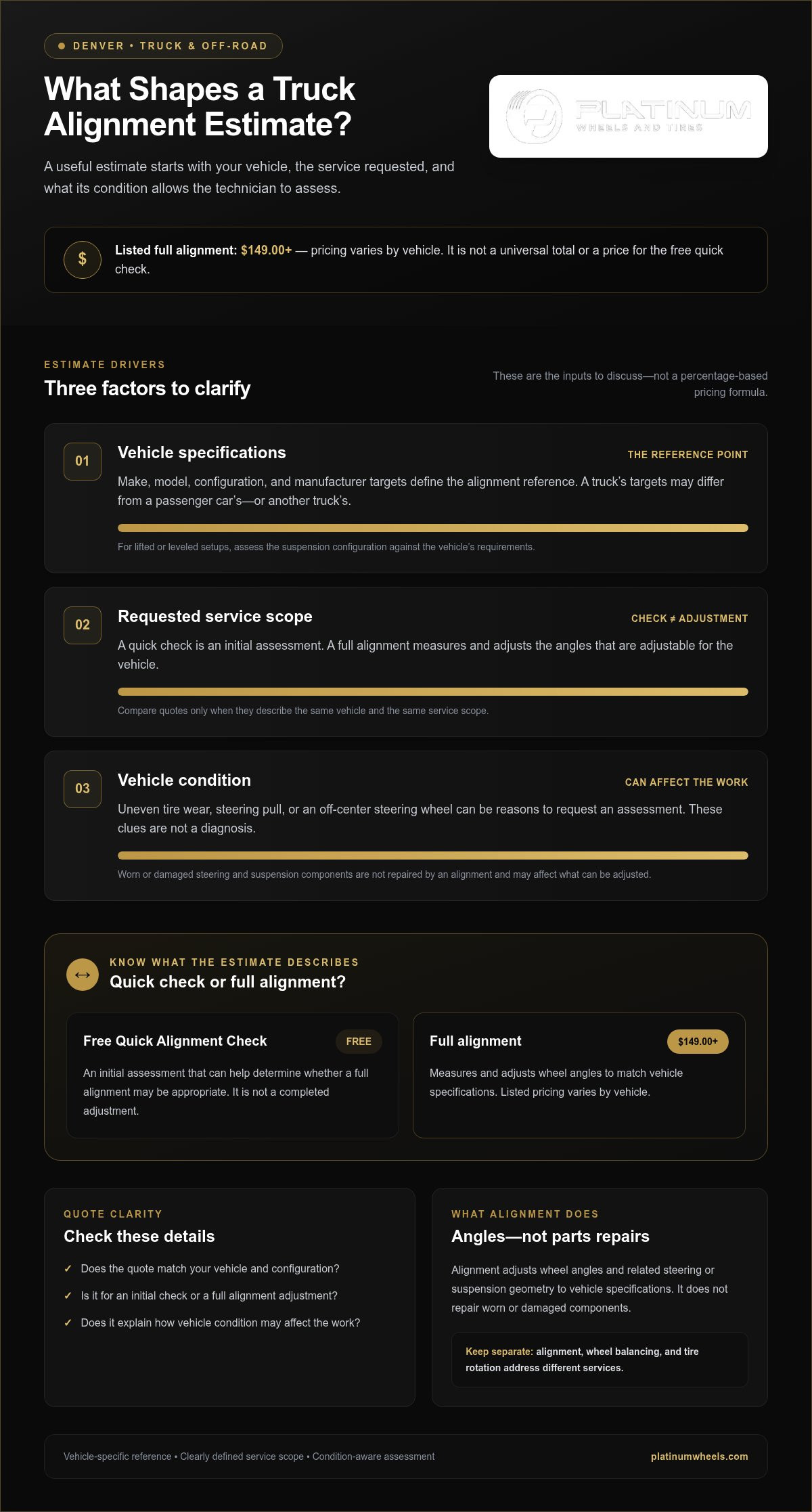
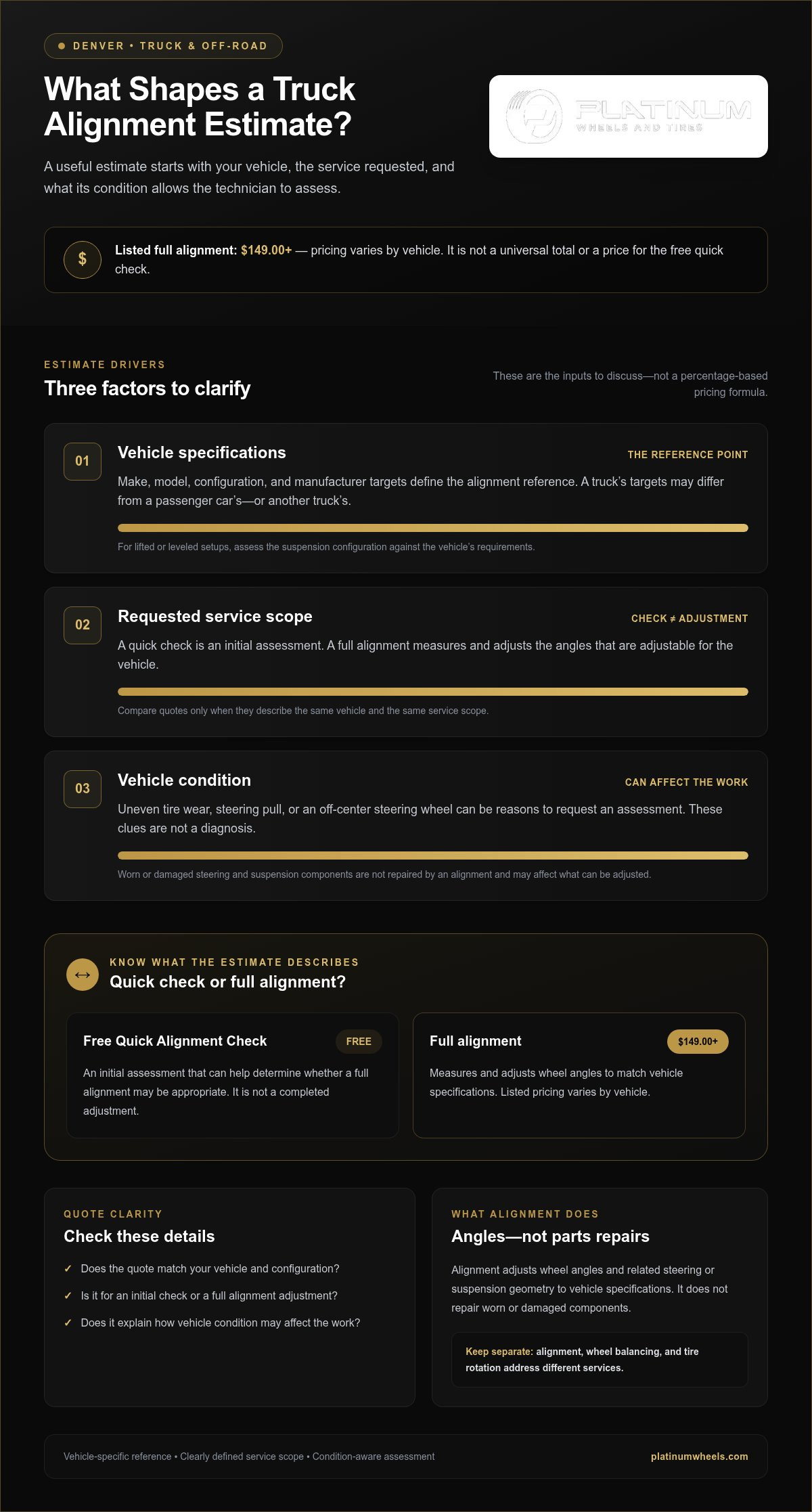
At Platinum Wheels, Denver drivers can start with a free Quick Alignment Check. A check is an initial assessment; a full alignment adjusts wheel angles to match the vehicle’s specifications. The full alignment price is $149.00+ and varies by vehicle. Clear information about your vehicle and the service scope helps make the estimate easier to understand, with transparent pricing and no surprise charges.
This guide explains what can affect a wheel alignment estimate, which symptoms and vehicle changes make a check worth considering, and what to expect at a Denver service visit. You’ll also learn how to compare quotes fairly and use a free quick check to decide on a next step.
Key Takeaways
- Wheel alignment adjusts wheel angles and related steering or suspension geometry; it’s different from balancing or rotating tires.
- Your wheel alignment cost depends on your vehicle, the service scope, and its condition.
- Compare quotes for the same vehicle and service. A quick check is not a full alignment.
- Steering pull, an off-center steering wheel, or uneven tire wear are reasons to request an alignment check.
- Platinum Wheels offers a free Quick Alignment Check. Full alignment is listed at $149.00+ and varies by vehicle.
What Does Wheel Alignment Cost, and What Does the Service Actually Adjust?
Wheel alignment adjusts a vehicle’s wheel angles and related steering or suspension geometry to match the manufacturer’s specifications. It isn’t wheel balancing, and it doesn’t change tire pressure. In plain language, alignment sets the wheels at angles designed for your vehicle so they track as intended on the road.
That distinction matters when you’re evaluating wheel alignment cost. The amount depends on the vehicle and work involved, so a quick measurement or check isn’t the same service as a full alignment. For a truck or off-roader, the relevant reference is the vehicle’s own specifications, not a broad price range that may describe a different vehicle or service.
What does a wheel alignment change?
A technician measures wheel angles and adjusts the angles that are adjustable for the vehicle. Three terms you may see are toe, camber, and caster. Toe describes whether the front edges of the tires point slightly toward or away from each other. Camber is the inward or outward tilt of a wheel when viewed from the front. Caster describes the steering pivot angle when viewed from the side, which helps define steering behavior.
These angles work together, but their target values differ by vehicle. One truck’s specifications may not match another’s, even if the vehicles look similar. The technician uses the manufacturer’s specifications as a reference rather than aiming for one universal setting. For an overview of the geometry and terminology, see What is wheel alignment?
An alignment adjusts angles; it doesn’t repair worn or damaged steering and suspension components. A loose, worn, or damaged component can affect measurements or limit adjustment. An alignment shouldn’t be presented as a fix for an underlying parts problem.
Alignment, balancing, and rotation: what is the difference?
These services address different parts of tire care. Check which one an estimate describes so you can compare the right services.
- Alignment: Measures and adjusts wheel angles and related steering or suspension geometry to vehicle specifications.
- Balancing: Corrects uneven weight distribution in a wheel-and-tire assembly, typically by placing small weights where needed. It doesn’t set alignment angles.
- Rotation: Changes tire positions on the vehicle according to an appropriate rotation pattern. It doesn’t adjust steering or suspension geometry.
An estimate for balancing or rotation doesn’t automatically include an alignment. A dashboard warning related to tire-pressure monitoring is a separate issue, too. The TPMS sensor guide can help explain that system.
Which Factors Change a Wheel Alignment Estimate?
A useful alignment estimate reflects the vehicle’s specifications, the requested service, and what the vehicle’s condition allows the technician to assess or adjust. In short, wheel alignment cost depends on the vehicle’s design, the alignment scope, and condition-related findings that affect the work. That’s more useful than comparing headline prices for different vehicles or services.
How vehicle type and alignment scope affect cost
Vehicle design matters because alignment measurements and procedures follow manufacturer specifications. A truck and a passenger car can have different targets. Suspension changes, such as a lift or leveling kit, also make it important to assess the setup against the vehicle’s requirements. The make, model, and configuration help define what a full alignment involves.
Scope matters, too. A free quick alignment check is an initial assessment, not a full alignment. It can help you decide whether a full alignment may be appropriate, but it isn’t a completed adjustment. Platinum Wheels lists full alignment at $149.00+, with pricing varying by vehicle. That listed price is vehicle-dependent, not a universal total.
When reviewing an estimate, identify the service and confirm that it applies to your vehicle. A price for a quick check isn’t directly comparable to one for a full alignment. Quotes for vehicles with different specifications or suspension setups can also describe different work. Look for a clear explanation of the scope and applicable pricing.
When vehicle condition can change the work involved
Tire wear and changes in steering feel are useful clues, not a diagnosis. Uneven wear, an off-center steering wheel, or a vehicle that pulls to one side can be reasons to request an alignment assessment. The technician can evaluate the measurements and discuss whether a full adjustment is indicated.
Condition affects what an alignment can accomplish. An adjustment sets wheel angles within the specifications; it doesn’t replace worn or damaged suspension parts. If a component needs attention, that’s separate from alignment work and may need to be addressed before an adjustment can be completed appropriately. Keeping the two distinct helps you understand what the estimate covers.
- Vehicle specifications: Make, model, configuration, and manufacturer targets establish the reference for the service.
- Requested scope: A quick check assesses; a full alignment involves adjustment.
- Condition: Tire wear or steering symptoms can prompt an assessment, while worn or damaged components may affect what an alignment can address.
For a vehicle-specific starting point, Platinum Wheels offers a free Quick Alignment Check. It helps assess whether a full alignment is worth discussing.
How Can You Judge an Alignment Quote Without Comparing Misleading Prices?
A quote is useful only when you know what service it covers and which vehicle it applies to. A quick check, full alignment, wheel balancing, and tire rotation address different needs, so their prices aren’t directly comparable. To judge wheel alignment cost fairly, match the vehicle and service scope first, then review what the estimate includes.
| Service | What it covers | How to compare it |
|---|---|---|
| Quick alignment check | An assessment of alignment, not a full adjustment. | Compare it with another check, not with a full alignment. |
| Full alignment | Alignment service for the vehicle, based on its specifications. | Compare quotes for the same vehicle and full-service scope. |
| Wheel balancing | Balancing the wheel-and-tire assembly. | Don’t treat it as an alignment service. |
| Tire rotation | Changing tire positions on the vehicle. | Compare rotation with rotation, not alignment. |
Compare the vehicle, service type, stated scope, and whether the amount is a starting price or a vehicle-dependent estimate. This keeps the comparison focused on the work being offered, rather than a headline price for a different job.
What should a clear alignment estimate explain?
Start with the basics: does the estimate identify your vehicle, and does it describe a quick check or a full alignment? Those labels matter because an assessment and an adjustment aren’t equivalent. The estimate should explain the service clearly and distinguish alignment from other work, such as balancing or rotation.
Platinum Wheels lists full alignment at $149.00+, with pricing varying by vehicle. The “+” and vehicle-dependent pricing matter: the listed amount isn’t a promise that every vehicle will have the same final price. Platinum Wheels emphasizes transparent pricing, no hidden fees, and no surprise charges, so the estimate should make the service and applicable vehicle pricing clear.
Why a quick check is not the same as a full alignment
Platinum Wheels’ free Quick Alignment Check and Quick-Check Alignment are assessment services. A check can help you decide whether a full alignment may be appropriate, but it isn’t the full alignment itself. Treat it as a useful first step: the assessment helps clarify whether a full service is worth discussing for your vehicle.
If you’re unsure which scope fits your situation, Platinum Wheels offers a free Quick Alignment Check. Start with an assessment of your vehicle rather than comparing prices for different services.
When Should Denver Drivers Consider a Wheel Alignment Check?
Pay attention to how your truck tracks, how the steering wheel sits, and how the tires wear. These clues don’t prove alignment is the cause, but they can help you decide when to get an assessment. Whether you drive a daily commuter, work truck, or off-roader around Denver, notice a change, get a quick check, then discuss a full alignment if the assessment indicates it.
- Notice a change. Watch for steering pull, an off-center steering wheel while driving straight, or uneven tire wear.
- Request a quick check. An assessment can help determine whether alignment needs closer attention.
- Discuss full service if indicated. Use the assessment to understand whether a full alignment is a suitable next step for your vehicle.
What symptoms can make an alignment check worthwhile?
If your vehicle drifts or pulls to one side, alignment is one possible factor, but it isn’t the only explanation. An off-center steering wheel can also be a reason to have the setup assessed. Check the tread, too. Uneven wear across a tire is a cue to evaluate tire condition and alignment rather than assume a single cause.
Note when the change occurs and whether you’ve noticed more than one symptom. That context can make the assessment more useful. A symptom alone doesn’t prove alignment is the issue, and an alignment adjustment shouldn’t be expected to resolve concerns caused by worn or damaged components.
Why wheel, tire, or suspension changes deserve attention
A change in wheel or tire fitment can make an alignment check a sensible next step, especially if steering feel or tire wear changes afterward. Fitment selection is separate from alignment: wheel size, offset, and package choices need their own consideration, while an alignment assessment focuses on the vehicle’s wheel angles and setup. Platinum Wheels’ custom wheels guide covers fitment considerations.
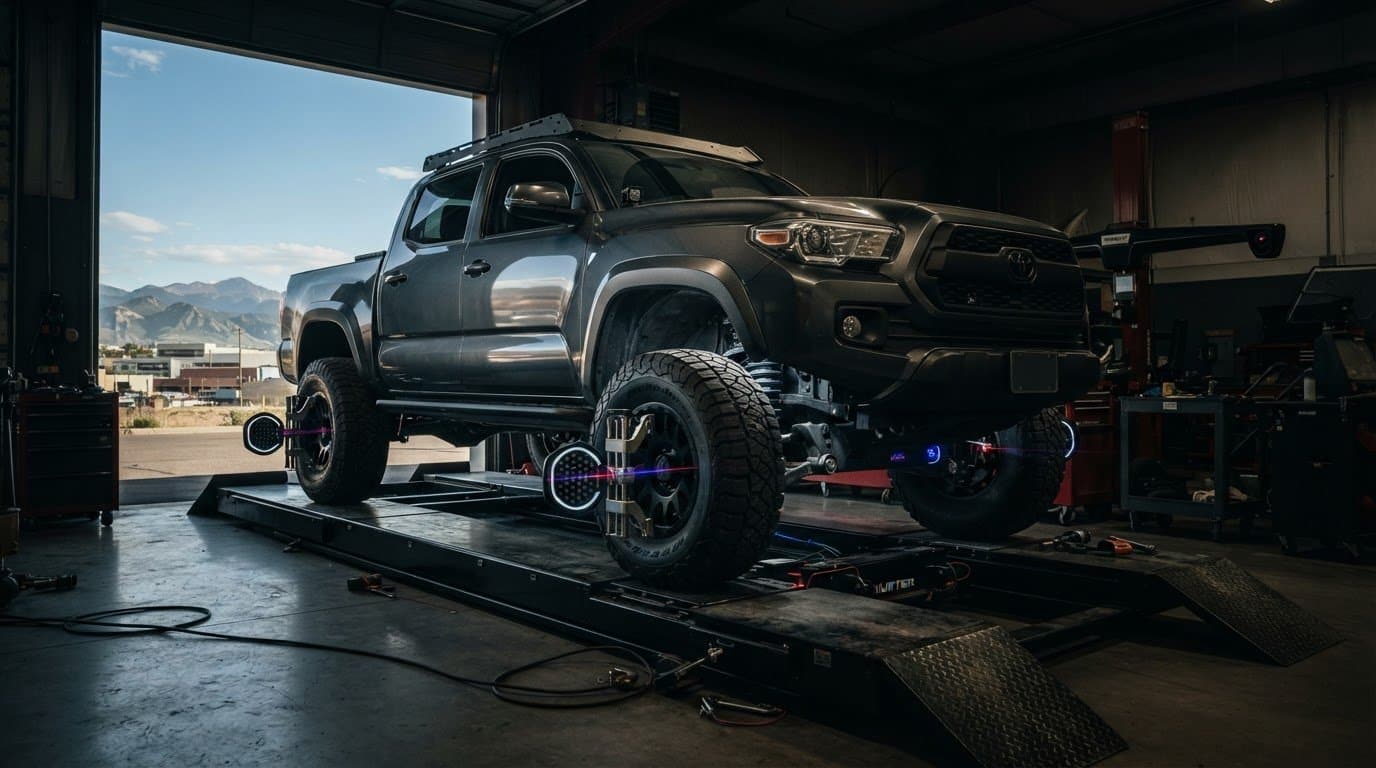
Lift kits and leveling kits change the suspension setup, so it’s practical to consider an alignment check after those changes. The point isn’t to assume the vehicle is out of alignment, but to assess it against the appropriate specifications after the setup has changed. For background on the difference between the two modifications, consult the lift-versus-leveling guide alongside this alignment advice.
Whether you’ve noticed a symptom or changed your setup, start with an assessment rather than guessing from how the vehicle feels. Platinum Wheels offers a free Quick Alignment Check to help Denver drivers decide whether a full alignment may be appropriate. That gives you a next step without treating every steering change or tread pattern as proof of a particular problem.
Get a Clear Wheel Alignment Next Step at Platinum Wheels in Denver
For Denver truck and off-road drivers, Platinum Wheels offers a local path from an alignment concern to a clear next step. The shop is independently owned and operated in Denver, not a franchise. Full alignment is listed at $149.00+, with pricing varying by vehicle. Transparent pricing helps you understand what the service covers, with no hidden fees or surprise charges.
What to expect from a Denver alignment visit
Platinum Wheels is at 2600 S Broadway, Denver, CO 80210, and is open Monday to Saturday, 9 AM to 5 PM. Same-day service is available for most installations. Most four-wheel installations take 45 minutes to 1 hour; plan for 1.5 to 2 hours when alignment or TPMS service is included. These are installation estimates, not a standalone alignment duration.
The shop has 158 five-star Google reviews and a 4.9-star rating. If you’re weighing an alignment after noticing a change in steering or tire wear, a free check can help assess whether a full alignment is the relevant next step. Begin with an assessment rather than assuming the vehicle needs an adjustment.
Start with a free check and straightforward pricing
Platinum Wheels offers a free Quick Alignment Check and a free Quick-Check Alignment. These are assessment services, not substitutes for a full alignment. If a full service is indicated, the listed price starts at $149.00+ and varies by vehicle. Clear scope and vehicle-dependent pricing help you understand the estimate, with no hidden fees and no surprise charges.
Other free services available at Platinum Wheels include:
- Air
- Wheel Test Fitment
- Quick Alignment Check
- Rim/Tire/Package/Shipping Quote
- TPMS Programming
- Quick-Check Alignment
Drivers considering new wheels or tires can also use the Free Wheel & Tire Fitment Consultation to discuss fitment as part of planning their setup. It complements an alignment assessment by focusing on wheel and tire fitment, while keeping the alignment decision tied to the vehicle’s needs.
Understanding the difference between a free check and a full alignment makes it easier to evaluate wheel alignment cost for your vehicle. For a no-pressure first step, visit Platinum Wheels for alignment service and start with a free check.
Make Your Next Alignment Step Count
Before your visit, note when you first noticed a steering change or uneven wear, and mention any recent wheel, tire, or suspension changes. Those details can keep the discussion focused on your truck’s current setup and the service that makes sense, rather than a generic estimate. A clear understanding of wheel alignment cost starts with the vehicle in front of you.
You don’t need to guess based on a symptom alone or commit to a full service before an assessment. Let the check help guide the conversation. Platinum Wheels takes a neighborly, transparent approach, with no hidden fees or surprise charges, so you can make an informed decision.
Schedule a free Quick Alignment Check with Platinum Wheels and take a practical next step for your truck’s setup.
Frequently Asked Questions
How much does a wheel alignment cost in Denver?
Platinum Wheels lists a full alignment at $149.00+, with pricing varying by vehicle. It isn’t a universal total: the estimate depends on the vehicle and service scope. A free Quick Alignment Check can help establish whether full alignment is a relevant next step. Platinum Wheels serves drivers in Denver, Aurora, Lakewood, Englewood, Wheat Ridge, Commerce City, Westminster, Thornton (also searched as Thorton), Broomfield, Arvada, Golden, Littleton, Parker, Highlands Ranch, Castle Rock, Boulder, Fort Collins, and Colorado Springs. Its broader Colorado coverage includes Northglenn, Brighton, Henderson, Dupont, Evergreen, Conifer, Morrison, Indian Hills, Kittredge, Idledale, Pine, Buffalo Creek, Bailey, Centennial, Castle Pines, Lone Tree, Sedalia, Louviers, Franktown, Larkspur, Elizabeth, Elbert, Kiowa, Longmont, Louisville, Lafayette, Erie, Lyons, Nederland, Eldorado Springs, Allenspark, Loveland, Greeley, Windsor, Johnstown, Berthoud, Timnath, Severance, Mead, Firestone, Frederick, Dacono, Evans, Fort Lupton, Estes Park, Platteville, Idaho Springs, Georgetown, Empire, Dumont, Black Hawk, Central City, Silver Plume, Breckenridge, Keystone, Frisco, Silverthorne, and Winter Park.
Is a wheel alignment the same as wheel balancing?
No. Alignment addresses whether wheel angles match the vehicle’s specifications; balancing corrects uneven weight distribution in the wheel-and-tire assembly. They’re separate services, and one doesn’t replace the other. A new vibration while driving may make balancing worth discussing, while steering changes or irregular tire wear can make an alignment check relevant. Platinum Wheels offers a free Quick Alignment Check to help assess whether alignment should be considered.
Can new wheels or tires affect wheel alignment?
A wheel or tire change doesn’t automatically mean your alignment is out of specification, but it’s a sensible time to consider an assessment, particularly if steering feel or tread wear changes afterward. Mounting and balancing are separate from alignment. For upgrade planning, Platinum Wheels offers free Wheel Test Fitment and a free Quick Alignment Check, so fitment questions and alignment concerns can be considered separately.
How often should I get a wheel alignment?
There isn’t one schedule that fits every vehicle and driving pattern. Follow your vehicle’s maintenance guidance, and consider a check if the steering wheel no longer sits straight, the vehicle starts pulling, or the tread wears unevenly. Regular off-road driving or rough roads may also make an assessment worthwhile. A free quick check can help you decide whether full alignment is a reasonable next step.
What happens if I keep driving with misaligned wheels?
Depending on the cause and severity, misalignment can affect how the vehicle tracks and contribute to uneven tire wear. Those signs can have other causes, so they don’t confirm alignment is the only issue. If you notice a change, an assessment can help clarify whether alignment deserves attention. If it does, Platinum Wheels provides vehicle-dependent full-alignment pricing, with transparent service and no hidden fees or surprise charges.
Do trucks with a lift or leveling kit need an alignment check?
It’s sensible to consider an alignment check after a lift or leveling change because suspension modifications can affect wheel geometry. The appropriate next step depends on the vehicle and its setup, so an assessment can guide the decision rather than assuming an adjustment is always required. Platinum Wheels installs lift kits and leveling kits and offers full alignment and a free Quick Alignment Check. Keep alignment assessment separate from choosing a kit or tire size.