
Best Porsche Tires in Denver: Expert Performance Guide
What if the right Porsche tires for a Denver commute aren’t the right choice for a winter drive over the mountains? Choosing replacements means looking beyond brand and tread pattern. Your Porsche’s exact fitment, including tire size, load index, speed rating, and approval markings, matters just as much as the conditions you drive in.
It’s understandable to want sharp handling without giving up comfort or confidence when Colorado weather changes. Summer, all-season, and winter tires each have different strengths. A tire suited to warm city roads may be a poor match for cold, snowy routes.
This guide explains how to identify your vehicle’s specifications and compare tire categories against your regular driving. You’ll learn which markings to look for, why Porsche-approved fitment deserves attention, and how Denver’s temperature swings and nearby mountain roads can shape your choice. Use the checklist before replacing your tires to make a decision that fits your Porsche and the way you drive.
Key Takeaways
- Use your Porsche’s model and year to locate its vehicle-specific tire requirements before comparing replacements.
- Matching the tire size alone isn’t enough; review the full specification and any applicable approval markings.
- Compare summer, winter, and all-season tires by their strengths and trade-offs, rather than assuming one category suits every driver.
- Choose Porsche tires with your regular routes in mind, including whether you mainly drive around Denver or frequently travel mountain roads.
- Before replacing tires, review your vehicle’s guidance and the current tires’ condition to decide whether a complete set is appropriate.
Porsche Tires: Why Exact Fitment Matters Before You Shop
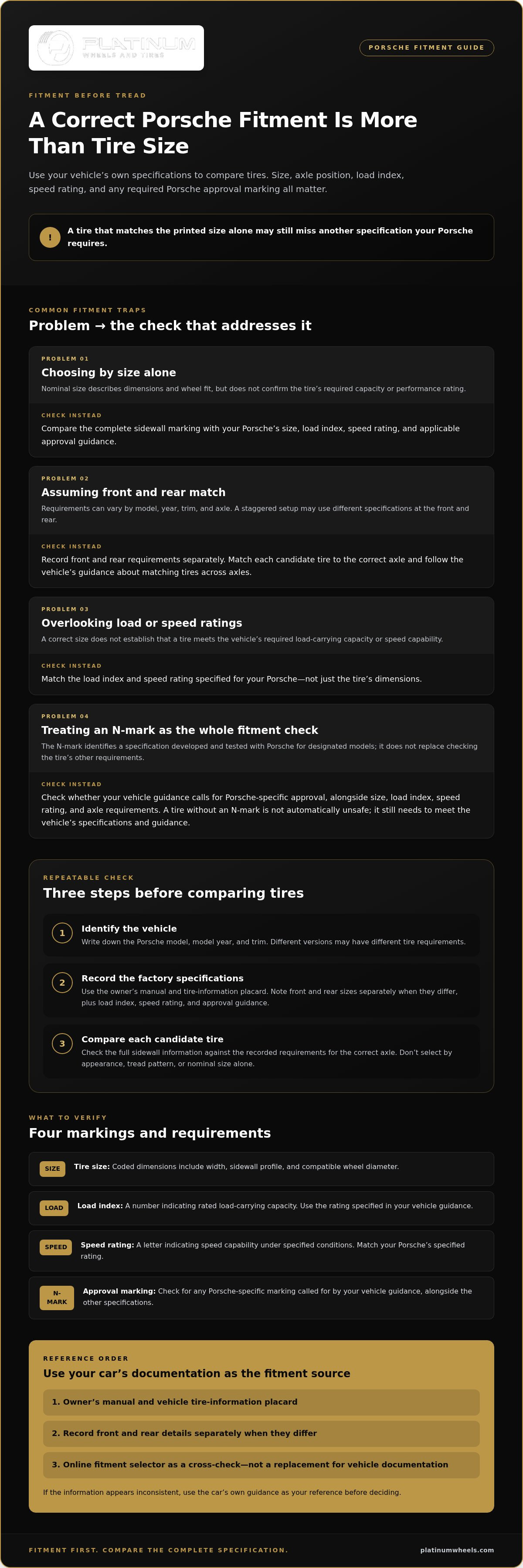
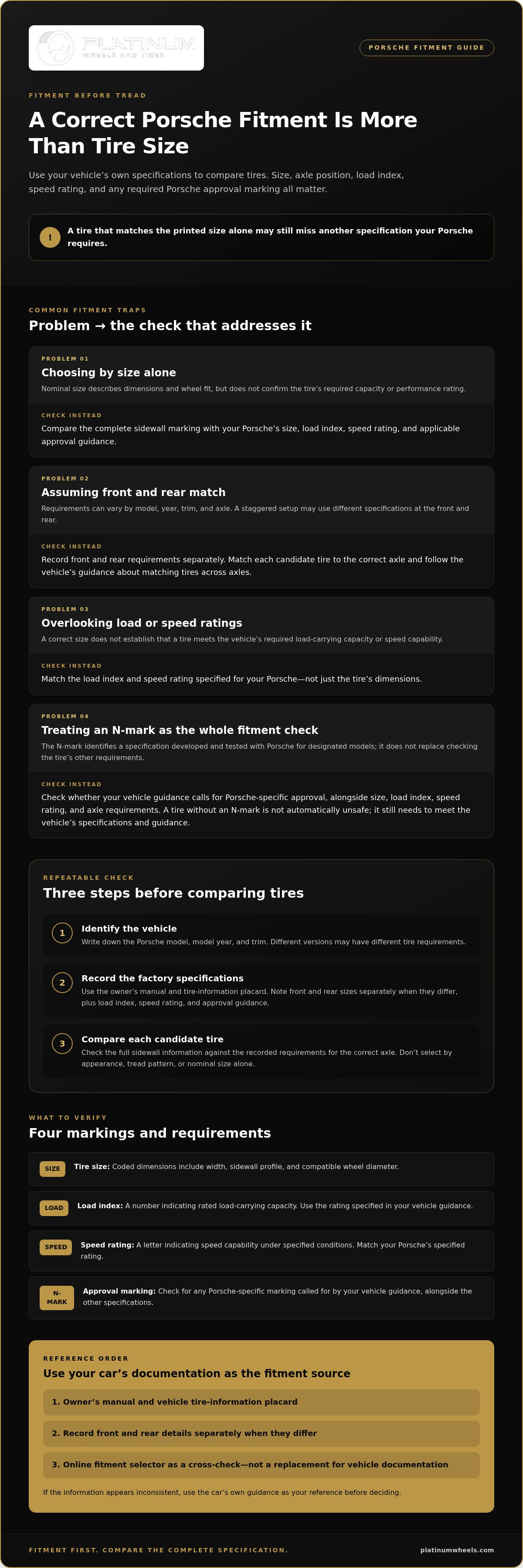
Start with the specifications for your exact vehicle, not a tire that looks right or carries a familiar brand name. Fitment is the vehicle-specific combination of tire size and required performance specifications. Requirements can vary by Porsche model, year, trim, and axle, so the correct front tire may differ from the rear. A tire’s contact patch is the area where the vehicle meets the road. Its size and construction influence steering response, braking, traction, and ride comfort. For background on how tire construction and design affect performance, see Understanding Tire Technology.
A Porsche-approved tire is more than a size match: its approval reflects testing for a particular vehicle application, while the same printed size alone doesn’t establish that it meets every required specification. This distinction provides a more reliable starting point when comparing options. It also helps you avoid assuming that any tire that fits the wheel will deliver the intended balance of handling and comfort.
What does Porsche N-marking mean?
An N-mark on a tire identifies a specification developed and tested with Porsche for use on designated Porsche models. Porsche works with tire manufacturers to assess characteristics such as handling and braking for the intended vehicle application. Treat the marking as model-specific guidance, not as a substitute for checking size, load index, speed rating, and axle requirements. A tire without an N-mark isn’t automatically unsafe; it still needs to meet your vehicle’s specifications and guidance.
Which specifications should Porsche owners identify first?
Use your owner’s manual and the vehicle’s tire-information placard as references for your exact requirements. Record the front and rear specifications separately, then compare each candidate tire’s sidewall markings with them. The nominal size describes the tire’s dimensions and the wheel it’s designed to fit, but matching that size alone doesn’t confirm that the tire has the appropriate capacity or performance rating.
- Tire size: The coded size identifies dimensions such as width, sidewall profile, and compatible wheel diameter.
- Load index: A number indicating the tire’s rated load-carrying capacity. Your vehicle guidance specifies the required rating.
- Speed rating: A letter indicating the tire’s speed capability under specified conditions. Match the rating specified for your Porsche.
- Approval marking: Check for any Porsche-specific marking called for by your vehicle guidance, alongside the other specifications.
Don’t assume one specification applies to every version of a model. Trim, model year, and staggered front-to-rear setups can change what’s required. Read the placard carefully and compare complete specifications for each axle before selecting Porsche tires. This fitment-first approach keeps your decision grounded in your vehicle’s requirements, rather than size alone.
How to Check Porsche Tire Fitment Before Replacing a Set
Follow a short, repeatable process before comparing brands or tread patterns. The goal is to match the complete tire specification to your car, including any differences between the front and rear axles. A sidewall size that appears to fit is only one part of the decision.
- Identify the vehicle. Write down the Porsche model, model year, and trim. These details help distinguish versions that may have different tire requirements.
- Record the factory specifications. Read the vehicle’s tire-information placard and owner’s manual. Note the front and rear tire sizes separately if they differ, along with the required load index, speed rating, and any approval guidance.
- Compare each candidate’s markings. Check the complete sidewall information against the recorded requirements for the correct axle. Don’t choose a tire based only on its nominal size, appearance, or tread pattern.
Before choosing Porsche tires, compare your owner’s manual, vehicle tire-information placard, and each candidate tire’s size, load index, speed rating, and applicable approval markings.
Where to find the correct Porsche tire specifications
Begin with the documents for your individual car: its owner’s manual and tire-information placard. Record the front and rear details separately if the vehicle uses different sizes or ratings by axle. An online fitment selector can be a useful cross-check, but it shouldn’t replace the vehicle documentation. If the information appears inconsistent, use the car’s own guidance as your reference before deciding.
This is especially important for a staggered setup, where front and rear tires use different specifications. Don’t assume a front tire can be moved to the rear, or that you can choose a replacement pair by matching only one axle’s size. Plan the replacement around the requirements for each position and follow the vehicle’s instructions about matching tires across axles. Specifications vary, so don’t rely on a size example from another Porsche.
How to compare size, load index, and speed rating
Read the complete marking, not just the most prominent numbers. The size describes tire dimensions and wheel fit, the load index identifies rated load capacity, and the speed rating indicates the tire’s speed capability under specified conditions. Each must meet your vehicle’s requirements. Changing dimensions for a different look or preferred tread can alter the intended fitment, so don’t make that choice without vehicle-specific guidance. For an overview of how tire categories relate to performance, see Tire Types and Performance.
Include the tire pressure monitoring system in your replacement plan. Tire work may involve TPMS sensors, and sensor condition or compatibility can affect monitoring after installation. Platinum Wheels sells TPMS sensors and offers wheel-and-tire packages that can include them, along with professional mounting and balancing. Explore tire and TPMS information as you plan your next set.
For more detail on sensor function and replacement considerations, see this TPMS sensor guide. Keep your vehicle details and recorded markings together while comparing options. That simple step makes it easier to catch a mismatch before choosing replacements.
Porsche Summer, Winter, and All-Season Tires Compared
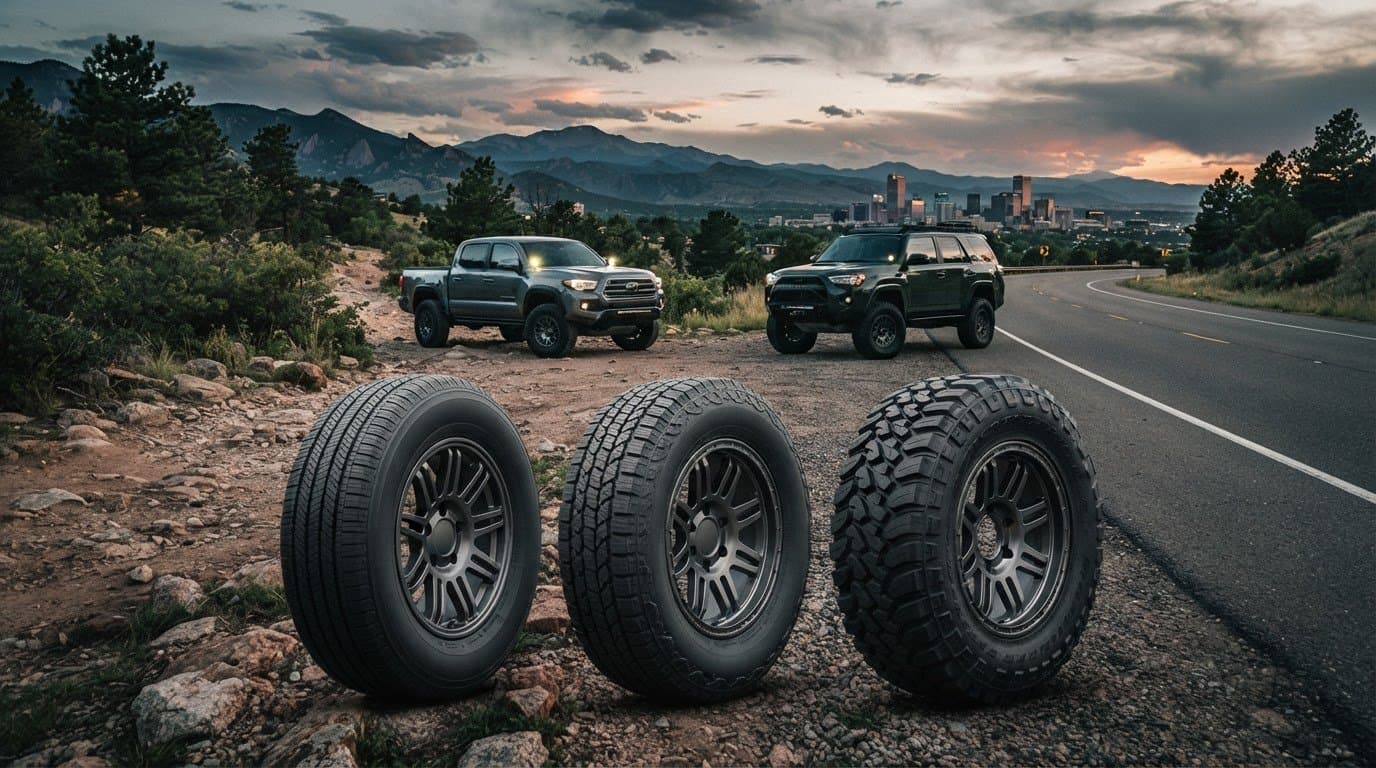
The right tire category depends on the conditions you regularly drive in and the performance you want from your car. Summer, winter, and all-season tires can each make sense for particular uses, but none is the best fit for every Denver-area Porsche owner. First consider the season and routes, then verify that the specific tire meets your vehicle’s requirements.
Keep two questions separate: Is this tire suitable for my driving conditions, and is it an approved, correctly specified fit for my Porsche? A seasonal category describes a tire’s intended use and general trade-offs. Porsche approval relates to a particular vehicle application. One doesn’t automatically answer the other.
| Tire category | Intended conditions | Strengths | Trade-offs |
|---|---|---|---|
| Summer or sport | Warm-weather driving, generally on dry or wet roads | Performance-focused handling and grip in suitable conditions | Less suited to cold-weather and winter-road use; follow the tire maker’s and vehicle’s guidance |
| Winter | Cold-season driving, including snow and icy conditions | Designed to provide more winter-focused traction | May be less suited to warm-weather use than a seasonal alternative |
| All-season | Drivers seeking one tire category for varied conditions | Versatile across a wider range of everyday conditions | A compromise; it may not provide the same specialized performance as summer or winter tires in their intended conditions |
When do summer or sport tires make sense?
Summer or sport tires are intended to emphasize responsive performance in warm conditions. They may suit drivers whose regular use is mainly in warmer weather and who prioritize handling feel. Their suitability changes as temperatures fall or roads become wintry: summer tires can lose traction in cold conditions and may be vulnerable to cold-weather damage. If you drive year-round in Denver, weigh those limitations against your seasonal plans rather than assuming a performance-focused tread is suitable all year.
Check your Porsche’s guidance for approved options and specifications. A tire’s category alone doesn’t establish that it’s appropriate for a particular model or axle.
How do winter and all-season tires differ?
Winter tires prioritize traction in cold-season conditions. All-season tires aim for broader versatility, which can be useful when driving conditions vary and you want to avoid a dedicated seasonal change. But “all-season” doesn’t mean every tire is equally capable in severe winter conditions. Consider how often your routes bring you into snow or ice, and choose based on actual use rather than the label alone.
Denver and nearby mountain routes can present different seasonal demands, so let your regular travel guide the trade-off. Platinum Wheels’ Colorado all-terrain tire guide offers broader regional context about tire choices, but it isn’t a Porsche fitment recommendation. For your car, pair seasonal suitability with vehicle-specific specifications before making a final selection.
Choosing Porsche Tires for Colorado Weather and Mountain Routes
Colorado driving conditions vary by season, route, and the weather on the day. A tire choice that suits regular city trips may involve different trade-offs from one intended for frequent mountain travel. Start with how and where you actually drive, then weigh seasonal needs against the tire specifications approved for your Porsche. No tire can guarantee traction or safety in every condition, so account for changing weather and road surfaces in your plan.
What should Front Range drivers consider?
For a Front Range commute, think beyond your usual route on a clear day. Consider how often you drive in cold or snowy conditions, whether your car is parked outside, and whether winter travel is part of your routine. These details can help you judge whether a versatile year-round option fits your needs or seasonal tires better suit your plans.
Use your own driving pattern as a guide:
- Do most trips stay on maintained city and suburban roads?
- Does your schedule require driving when conditions change?
- Do you travel beyond your usual commute during colder months?
- Can you store a second set if seasonal changeovers suit your needs?
Your answers won’t replace the vehicle’s approved specifications, but they clarify which seasonal trade-offs matter most to you.
What changes when you regularly drive mountain roads?
Frequent mountain travel makes route exposure and timing more central to tire planning. Consider how often those trips happen, which seasons you make them in, and whether your schedule lets you avoid poor conditions. Someone who visits occasionally may plan differently from a driver whose regular travel includes mountain routes. Neither pattern points automatically to one tire category.
Before choosing Porsche tires, compare your expected conditions with the tire maker’s guidance and your Porsche’s approved specifications. A tire suited to the vehicle still needs to suit the conditions you encounter, and an appropriate seasonal category doesn’t excuse a fitment mismatch. Reassess your plan if your commute or travel habits change.
Seasonal planning also includes practical details. If you’re considering a dedicated set for a different season, think about where you’ll store the unused tires and how you’ll manage changeovers. Plan around the vehicle’s requirements for each axle, and follow Porsche and tire-maker instructions for use, care, and storage. Don’t extend a tire’s intended use based on a general calendar rule; rely on its guidance and the conditions you expect to face.
Platinum Wheels sells and professionally installs tires and serves drivers in Denver, Aurora, Lakewood, Englewood, Wheat Ridge, Commerce City, Westminster, Thorton, Broomfield, Arvada, Golden, Littleton, Parker, Highlands Ranch, Castle Rock, Boulder, Fort Collins, and Colorado Springs. If you’re planning a replacement around your driving needs, explore tire options.
Your Porsche Tire Replacement Checklist and Next Steps
A confident replacement decision brings together your vehicle’s requirements, the condition and markings of the tires currently fitted, and the seasons and routes you expect to drive. Keep your notes with the owner’s manual or other original vehicle information. This gives you a useful reference when comparing Porsche tires and helps prevent a familiar-looking size from distracting you from the full specification.
What to record before comparing replacement tires
Make a simple record for your car before browsing options. Include its model year and trim, and write down front and rear details separately if the specifications differ. Photographing the tire sidewalls and placard can help preserve the markings accurately, especially if the current tires are replaced before you finish comparing candidates.
- Vehicle details: Model year, trim, and other identifying information in your vehicle documents.
- Current tire markings: Front and rear size, load index, speed rating, and any approval marking shown on the tire.
- Vehicle guidance: Relevant tire information from the owner’s manual and vehicle placard, including any model-specific recommendations.
- Driving needs: Typical commute, seasonal travel, mountain-route frequency, and the conditions you commonly encounter.
- Replacement planning: Whether seasonal changeovers and storage for another set are practical for you.
Keep the original specification information even if the car already has replacement tires installed. Current sidewall markings describe the tires on the car; they don’t necessarily show that those tires match the vehicle’s original requirements.
How to make a confident replacement decision
Use your notes in order. First, match candidate tires to the vehicle’s required size and performance specifications, including any differences by axle. Then review Porsche’s current guidance for approval and model-specific recommendations. Only after those checks should you weigh preferences such as handling feel, ride comfort, or seasonal versatility. This sequence keeps a preferred tread pattern or category from becoming a substitute for correct fitment.
Consider replacing a complete set when the condition of the existing tires, differences in wear, or vehicle-specific guidance makes a matched set appropriate. That isn’t an automatic rule for every Porsche or every situation. Follow the manufacturer’s instructions for your vehicle, and account for each axle’s requirements before deciding whether to replace one tire, a pair, or all four.
Add the tire pressure monitoring system to your plan, too. Replacement tires and wheels must work with the vehicle’s monitoring setup, so include TPMS sensor compatibility in your fitment considerations rather than assuming a sensor will suit every application. Keep any sensor information with your vehicle notes and review the relevant vehicle guidance as part of the replacement process.
Platinum Wheels sells and professionally installs tires, and offers wheel-and-tire packages that can include TPMS sensors, mounting, and balancing. For your next step, explore tire and fitment services.
Make Your Next Tire Decision with Confidence
Your next replacement doesn’t have to be a guess or a choice driven by brand recognition alone. Keep your vehicle’s requirements and your real driving routine at the center of the decision. As your routes or seasonal habits change, revisit whether your tire plan still suits the way you use the car. This makes future replacements more deliberate and helps you compare options based on the details that matter to you.
Platinum Wheels sells and professionally installs new tires. Wheel-and-tire packages can include TPMS sensors, mounting, and balancing, bringing important replacement details together. Explore tire and fitment services to plan your next step. The goal is a considered choice that fits your needs, not pressure to select an option before you’re ready.
Take your time, use the vehicle-specific guidance as your reference, and move forward with confidence. The right questions make the next decision clearer.
Frequently Asked Questions
Are Porsche tires different from regular passenger-car tires?
Some Porsche models call for tires with vehicle-specific performance characteristics, but “Porsche tire” doesn’t mean every tire is a unique design. The key is whether a candidate meets your car’s documented requirements and intended use. A standard passenger tire that fits the wheel may still differ in load capacity, handling response, or approval. Compare complete specifications, especially if considering Porsche tires for a model with performance-focused driving demands.
Can I use non-N-marked tires on a Porsche?
Possibly, but base the decision on Porsche’s current guidance for your exact vehicle, not on the presence or absence of a marking alone. Check the tire’s complete specifications and any model-specific recommendations in the owner’s manual or official Porsche information. If you’re comparing alternatives, consider how they may affect the handling characteristics the vehicle was designed around. Keep the tire documentation with your vehicle records for future replacements.
How often should Porsche tires be rotated?
Follow the rotation schedule in your owner’s manual, since the appropriate interval and pattern can vary by model, tire setup, and whether the tires are directional or staggered. Some front-to-rear combinations can’t be swapped because the sizes differ. During routine tire-pressure or tread checks, note uneven wear across the inner, center, and outer tread. A change in wear pattern is a reason to review the car’s maintenance guidance sooner.
What happens if I replace only two Porsche tires?
Replacing two may be suitable in some situations, but differences in tread depth or tire characteristics can change the balance of grip between axles. The effect depends on your Porsche’s drivetrain, tire setup, and manufacturer guidance. Before fitting a pair, compare the remaining tires’ condition and specifications, then follow Porsche’s direction on axle placement and acceptable matching. Don’t assume the newest tires should always go on the same axle across every model.
How can I tell how old my Porsche tires are?
Look for the DOT identification code molded into a tire sidewall. Its final four digits indicate the production week and year: for example, “2324” means the tire was made in the 23rd week of 2024. The full code may appear on only one sidewall, so you might need to inspect the inner side. Record the date alongside tread condition, and use tire-maker guidance when assessing aging or storage history.
Can I change my Porsche tire size for a different look?
Don’t change tire dimensions for appearance alone. A different size can affect clearance, speedometer readings, handling, and the interaction of vehicle systems, particularly if front and rear dimensions are designed to work together. Check Porsche’s guidance for your exact model and wheel setup before considering a change. In Denver, where seasonal road conditions can influence tire needs, prioritize a documented compatible fitment over visual preference.