
Best Audi Tires in Denver: Expert Selection & Fitting
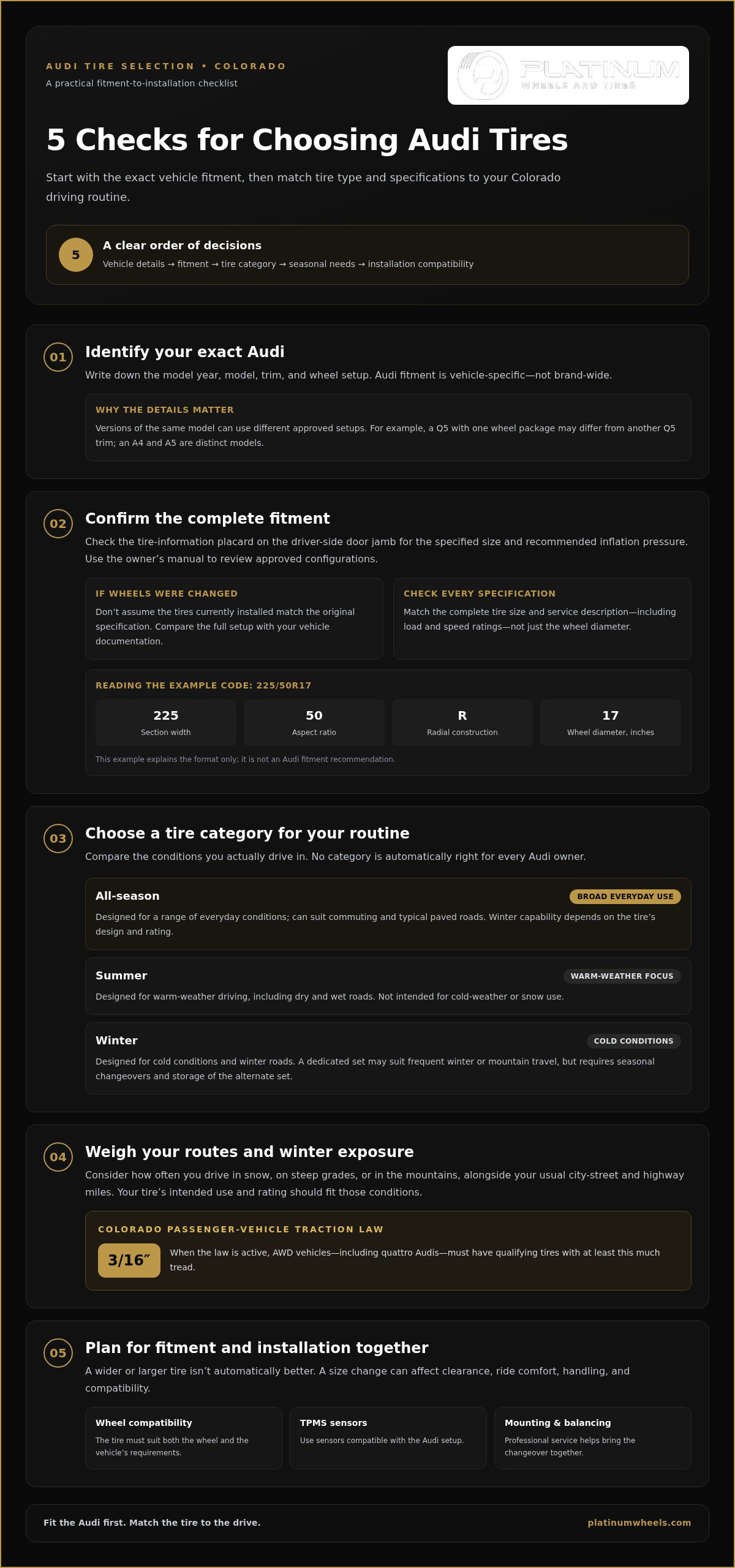
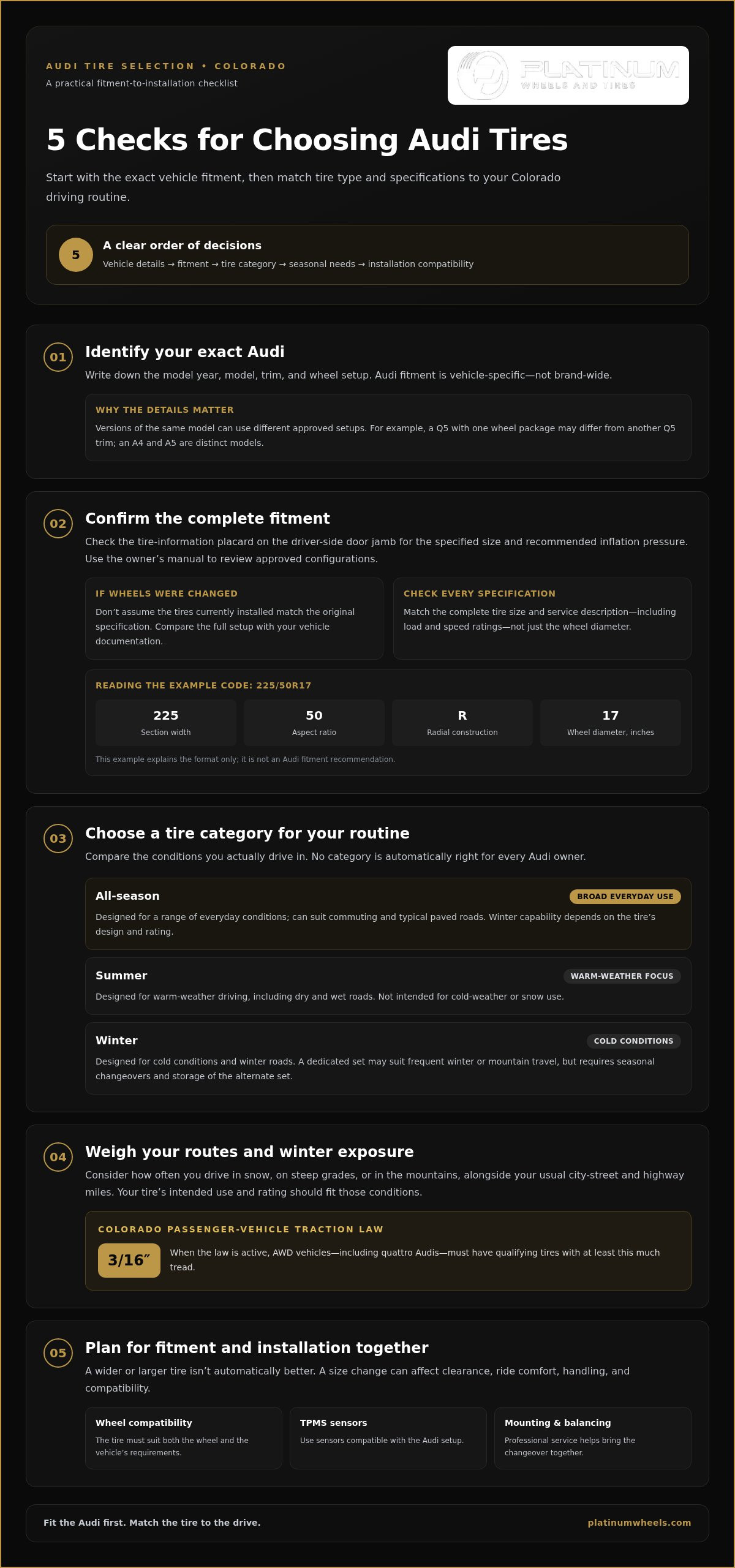
An Audi’s all-wheel drive can’t make the wrong tires right. In Denver, choosing Audi tires starts with the exact fitment for your model year and trim, then turns to how you drive through Colorado’s changing seasons. Even quattro drivers need to pay attention: when Colorado’s passenger-vehicle Traction Law is active, AWD vehicles must have qualifying tires with at least 3/16 inch of tread.
It makes sense to want one set that feels comfortable on daily commutes, stays composed on mountain roads, and handles winter conditions. But all-season, all-weather, summer, and winter tires each involve trade-offs. The right choice depends on your Audi, routine, and routes. This guide explains what vehicle information to use when choosing compatible tires, how tire types compare for local conditions, and how fitment can affect ride quality, handling, and TPMS operation.
Professional mounting and balancing, along with compatible TPMS sensors, help bring the changeover together. From checking your Audi’s tire placard to matching tire type to your seasonal driving, you’ll have a clear path to a setup that fits your vehicle and routine.
Key Takeaways
- Choose Audi tires by matching the exact model year, trim, and wheel setup to the vehicle’s specified fitment.
- Compare all-season, summer, and winter tires by the conditions you drive in, not by a one-size-fits-all ranking.
- A wider or larger tire isn’t automatically better; changing size can affect clearance, ride comfort, and compatibility.
- Use a five-step checklist to weigh fitment, driving habits, tire category, specifications, and installation needs.
- A coordinated wheel-and-tire package with TPMS sensors, mounting, and balancing can simplify installation at Platinum Wheels.
Audi Tires Start with the Right Fit: What Owners Need to Know
The right replacement tire needs to meet your Audi’s specifications and suit the way you drive. Model, model year, trim, and wheel setup all matter because vehicles that share a name can have different original equipment or approved tire configurations. A Q5 with one wheel package, for example, may call for a different specification than another Q5 trim.
Audi fitment is vehicle-specific, not brand-wide. Start with information for your own vehicle rather than choosing by the Audi badge or copying the tire size from another owner’s car. Tire construction and function also influence performance; Understanding Tire Basics can help explain terminology you’ll see while comparing options.
Where to find the correct tire size for your Audi
Start with the tire-information placard on the driver-side door jamb. It identifies the size and recommended inflation pressure for the specified setup. The owner’s manual is another useful reference, particularly for approved configurations. If the wheels have been changed, don’t assume the tires currently installed match the original specification. Compare the setup with your vehicle documentation.
A tire code combines several details. In a marking such as 225/50R17, the first number indicates section width, the second is the aspect ratio, “R” identifies radial construction, and the final number is the wheel diameter in inches. This example explains the format only; it is not a fitment recommendation for an Audi. Match the complete specification, not just the last number or wheel diameter. Load and speed ratings matter too, since a correct-looking size alone doesn’t establish that a tire meets the vehicle’s requirements.
Why Audi model and trim details matter
Two Audi vehicles can look nearly identical and still use different tire specifications. An A4 and an A5, for instance, are distinct models. Even versions of the same model can have different approved setups depending on trim or wheel package. Model year matters as well, so don’t assume a size that fits an older vehicle is correct for a newer one.
Before shopping, write down the model year, model, trim, and wheel details. Compare them with the door-jamb placard and manual, and check all markings on the tire, including its size and service description. Don’t rely on a partial number or a photo of another car. If your Audi has a non-original wheel setup, treat fitment as a complete compatibility question: the tire needs to suit both the wheel and the vehicle’s specified requirements.
Getting these details right is the foundation for a comfortable, predictable result. Once fitment is clear, you can compare tire types and performance priorities without mistaking a similar-looking Audi or matching wheel diameter for proof of compatibility.
All-Season, Summer, or Winter Audi Tires for Colorado Driving?
Colorado driving can shift from dry pavement to cold mornings, snow, or mountain weather across the same routine. The best tire category depends on where and when you drive, how often you travel in winter, and whether you prefer one set year-round or a dedicated seasonal setup. No category is automatically right for every Audi owner.
Use this comparison as a starting point, then weigh each tire’s specifications and intended conditions. The NHTSA Tire Safety Guidelines offer additional background on tire safety and selection.
| Tire category | Strengths | Trade-offs and potential use |
|---|---|---|
| All-season | Designed for broad use across a range of everyday conditions. | A practical option for commuting and typical paved-road driving, but winter capability depends on the tire’s design and rating. |
| Summer | Designed for warm-weather driving, including dry and wet roads. | Not intended for cold-weather or snow use. Consider it if your driving is focused on warmer months and conditions. |
| Winter | Designed for cold conditions and winter roads. | Requires seasonal changeovers and storage of the alternate set. It may suit frequent winter or mountain travel. |
When all-season Audi tires may fit everyday driving
For drivers who commute mainly on paved roads and want one set for much of the year, all-season tires can offer a useful balance. They’re designed for a wider range of conditions than summer tires, making them a practical everyday option for routines that include city streets and highway miles.
That broad-use design doesn’t guarantee winter performance in every storm. Check the specific tire’s rating and intended use, then consider how often your route includes snow, steep grades, or mountain travel. The right match depends on both the tire and your seasonal routine.
When to consider summer or winter tires
Summer tires prioritize warm-weather performance; winter tires are designed for cold conditions. A dedicated winter setup gives you a seasonal option rather than asking one tire category to cover every condition. In exchange, you’ll need to plan changeovers and store the tires not in use. Frequent winter driving or mountain trips may make that trade-off worthwhile, while a mostly urban routine may point to a different choice.
Think about road surfaces, too. If your Colorado routes include gravel or rougher surfaces, compare your needs with this Colorado all-terrain tire guide while keeping your Audi’s fitment requirements in view. Platinum Wheels serves Front Range drivers with tire options and professional installation, so you can consider tire choice alongside fit and setup through Platinum Wheels tire services.
Audi Tire Myths: More Grip or a Bigger Tire Is Not Always Better
A wider tire or a larger wheel can change how an Audi looks, but that doesn’t make it an automatic upgrade for grip, comfort, or everyday handling. Tire performance depends on more than width: construction, tread design, pressure, load and speed ratings, and driving conditions all play a part. The U.S. Tire Manufacturers Association’s overview of tire construction and technology offers useful context for understanding those differences.
Keep three decisions separate: selecting a tire category for the season, changing tire or wheel size, and modifying suspension or ride height. Each affects a different part of the setup. A tire that suits your winter routine doesn’t automatically need to be wider, and a wheel or suspension change doesn’t make every tire size compatible.
Does a wider tire automatically improve Audi handling?
No. Width alone can’t predict grip or handling. A wider tire may change the contact patch and how the tire fits the wheel, but the overall result depends on the complete specification and road conditions. A tire designed for warm, dry pavement won’t become a winter tire simply because it’s wider.
Compare the full tire specification and intended use, not one number in isolation. Consider whether you prioritize comfort on daily commutes, traction in cold weather, or performance in warmer conditions. The best match fits your Audi’s approved requirements and your driving priorities, not just the most aggressive appearance.
Can you change Audi tire size without checking fitment?
Don’t treat a different size as a simple visual swap. Tire diameter, wheel width, offset, and the space around the tire all influence compatibility. A change from the specified setup can reduce clearance and may cause rubbing, depending on the Audi’s configuration and suspension position. A different rolling diameter may also affect vehicle readings or systems that rely on wheel-speed information. Assess the exact effects for the specific vehicle rather than assuming.
Before installation, compare the proposed tire and wheel combination with the vehicle’s specifications and check clearance through the range of steering and suspension movement. Tire pressure monitoring also deserves attention: compatible TPMS sensors and correct setup help the system report pressure as intended. For more on the sensor side of a tire change, see this TPMS sensor guide.
Consider wheel, tire, and suspension changes as a coordinated fitment decision, not a shortcut to better performance. Exact effects depend on the Audi’s model, year, trim, and existing setup. A professional fitment review and installation help keep the selected tires compatible; professional tire fitting brings specifications and installation details together.
How to Choose Audi Tires: A Practical Five-Step Checklist
A clear sequence makes tire shopping a practical decision instead of a contest between brand names or bold tread patterns. Start with your Audi’s specifications, then weigh how and where you drive before settling on a tire category. Choose tires vehicle-first: meet the Audi’s requirements, then match the tire to your routine and roads.
- Step 1: Confirm fitment. Record the model year, trim, wheel setup, and full tire specification shown on the door-jamb placard or in the owner’s manual. If the wheels have changed, don’t assume the current tire size is the approved one.
- Step 2: Define your use. Think about commute length, highway miles, typical road surfaces, winter driving, and occasional mountain trips. A predictable daily route may call for different priorities than frequent cold-weather travel.
- Step 3: Choose a tire category. Compare all-season, summer, or winter options according to their intended conditions and your seasonal routine. If you regularly drive in winter weather, consider whether a dedicated seasonal setup fits your needs.
- Step 4: Compare complete specifications. Look beyond the tire’s name or width. Match its size, load rating, and speed rating to the Audi’s requirements, and consider comfort, seasonal use, road conditions, and driving priorities together.
- Step 5: Plan installation. Include the wheel setup, TPMS sensors, mounting, and balancing in your purchase plan. That keeps tire selection and installation details coordinated.
Match tire priorities to your Audi and daily route
Start with your actual routine. A driver focused on urban commuting and highway comfort may prioritize a composed ride and broad everyday use. Frequent winter driving or mountain travel can make cold-weather capability a higher priority, while rougher surfaces may call for a different tread and use profile. These are starting points, not universal prescriptions. The suitable choice still depends on your Audi’s exact specifications and the routes you drive.
Compare specifications and prepare for installation
Compare the complete tire size and service description, including load and speed ratings, against the vehicle’s requirements. Those ratings describe the tire’s capacity and speed classification, so don’t select a replacement based on size alone or assume a familiar brand guarantees a match. Include TPMS in the plan: sensors may need attention when tires or wheels are replaced, and the appropriate setup depends on the vehicle and components.
Professional mounting and balancing bring fitment and installation steps together. Explore tire and wheel services at Platinum Wheels, where wheel-and-tire packages can include TPMS sensors, mounting, and balancing.
Get Audi Tires Installed for Colorado Driving with Platinum Wheels
Choosing tires is only part of the job. Fit, pressure-monitoring components, and installation all need to work together for your vehicle and the roads you drive. Platinum Wheels is a locally owned retailer and installer serving Colorado’s Front Range, helping Denver-area drivers coordinate tire selection and professional fitting.
The process starts with your Audi’s details and driving routine. A daily commute around Denver, regular highway miles, and occasional mountain travel can point to different tire priorities. From there, match fitment to the vehicle’s specifications before choosing a tire type for your season and comfort preferences. The model year, trim, wheel setup, and tire information provide a useful starting point for selecting a setup that suits your Audi.
What to expect from a coordinated tire installation
Mounting is the process of fitting the tire onto the wheel. Balancing helps distribute weight evenly around the wheel and tire assembly, supporting smooth rotation. These are important parts of a professional installation, not details to overlook after choosing a tire.
TPMS sensors are another part of the picture. They monitor tire pressure, and a wheel-and-tire package can include sensors along with mounting and balancing. When replacing tires or changing wheels, include TPMS in the plan so the components work with the installation. The appropriate setup depends on the vehicle and parts being used.
A local tire-shopping path for Denver-area Audi owners
Colorado Front Range driving can mean everyday pavement one day and a mountain route or changing weather the next. A local tire-shopping process should account for that mix without losing sight of your Audi’s fitment needs. Bring your vehicle details, describe your usual routes and seasonal plans, then compare suitable tire options before installation. This practical order helps: understand the car, define driving priorities, choose tires, and coordinate the fitting.
Platinum Wheels brings tire and wheel selection together with professional mounting and balancing for drivers across the Front Range, including Denver, Aurora, Lakewood, Englewood, Wheat Ridge, Commerce City, Westminster, Thorton, Broomfield, Arvada, Golden, Littleton, Parker, Highlands Ranch, Castle Rock, Boulder, Fort Collins, and Colorado Springs. Whether you’re replacing worn tires or planning a wheel-and-tire package, a coordinated approach keeps fitment, TPMS, and installation in view from the start.
Ready to take the next step? Explore tire and wheel options at Platinum Wheels.
Make Your Next Tire Choice with Confidence
Your next set of Audi tires can be a thoughtful match for both the vehicle and the miles ahead. Before you shop, consider what you want from your drive: quiet comfort on daily routes, a setup for seasonal changes, or tires suited to the roads you travel most. That priority gives your decision a practical starting point.
You don’t need to memorize every specification. Bring your Audi’s details and driving priorities into the conversation, then keep fitment and intended use in view as you choose. A well-matched setup can help you feel prepared for everyday drives and the Colorado trips ahead.
Take the next step at Platinum Wheels and explore tire and wheel options for your vehicle. Start with what matters to you, then choose a setup that fits your Audi and your driving.
Frequently Asked Questions
How do I know what tires fit my Audi?
Use the tire information on your Audi’s driver-side door-jamb placard and in the owner’s manual as your starting references. Compare them with the markings on the tires currently installed, but don’t rely on those alone if the wheels or tires have been changed before. Record the model year, trim, and wheel setup too. These details help narrow the options to Audi tires that match the vehicle’s specified requirements.
Are all-season tires good for an Audi in Colorado?
They can suit an Audi used mostly for everyday commuting and paved-road driving, but whether they’re right for you depends on your routes and winter routine. Consider how often you drive in snow or take mountain trips, and check the specific tire’s intended use and rating rather than assuming every all-season tire offers the same winter capability. Keep tire condition and inflation in mind as seasons change.
Do Audi tires need to be the same size as the original tires?
Use the original size unless your Audi documentation identifies another approved fitment for your particular configuration. Some vehicles may have more than one specified setup, so the original size isn’t the only possible option in every case. Don’t treat a size already installed as proof that it’s correct, especially if the wheels have been replaced. Check the vehicle information and full tire specification before choosing a different size.
Can I use winter tires on my Audi all year?
Winter tires are designed for cold-weather use, so running them through warm months may not suit your driving needs. Their winter-focused design can involve trade-offs in warmer conditions, including how the tires wear and feel on the road. If you’re considering one set year-round, compare the tire’s stated use with your seasonal routes. Drivers who regularly face winter conditions may prefer to plan for a separate seasonal set.
Do Audi tires need TPMS sensors?
It depends on the tire-pressure monitoring system fitted to your specific Audi. Some systems use sensors in the wheels, while others monitor pressure differently, so a new tire doesn’t automatically mean new sensors are required. If your setup uses sensors, their compatibility and condition matter during a tire or wheel change. Include TPMS in the installation plan, and follow the vehicle’s instructions for any system setup afterward.
Should I replace all four tires on my Audi at once?
Not in every situation. The right choice depends on the remaining tread, tire condition, Audi’s drivetrain, and the vehicle manufacturer’s guidance. Have all four tires assessed together rather than judging only the damaged or worn tire. This is especially useful if you have an all-wheel-drive Audi, since the vehicle’s requirements may affect whether tires with different tread depths are suitable. Use the owner’s manual or vehicle guidance for the final decision.
Where can I buy Audi tires near Denver?
Denver-area drivers can explore tire and wheel options at Platinum Wheels, a locally owned retailer and installer serving the Colorado Front Range. The shop serves communities including Aurora, Lakewood, Englewood, Wheat Ridge, Commerce City, Westminster, Thorton, Broomfield, Arvada, Golden, Littleton, Parker, Highlands Ranch, Castle Rock, Boulder, Fort Collins, and Colorado Springs. Tire and wheel packages can include TPMS sensors, mounting, and balancing.