
Best Mercedes Tires for Denver: Expert Local Buying Guide
The best Mercedes tires for your car aren’t necessarily the most expensive or sportiest option. The right choice depends on your exact Mercedes-Benz model and its tire specifications, as well as how you drive around Denver and the Colorado Front Range. A sedan used mostly for commuting has different priorities from an SUV that regularly heads into the mountains.
Choosing a replacement set means balancing comfort, handling, traction, and tread life. It can also be difficult to confirm the correct tire size and ratings, decide whether all-season or winter tires suit your routine, and account for TPMS. Mercedes Original (MO) tires are engineered for specific vehicle characteristics, but fitment still starts with your vehicle’s requirements.
This guide explains how to identify the right specifications for your Mercedes-Benz, compare tire categories for Denver-area conditions, and weigh comfort, performance, and seasonal needs. You’ll also learn what professional mounting, balancing, and TPMS service contribute to a complete replacement setup.
Key Takeaways
- Choose Mercedes tires by your exact model’s factory specifications, not just the vehicle badge.
- Use the door placard, owner’s manual, and tire sidewall to record key fitment details, including any different front and rear sizes.
- Compare all-season, winter, and performance tires against your Denver commute, mountain trips, and driving priorities.
- Plan for the full replacement setup, including wheel fitment, professional mounting and balancing, and TPMS needs.
- Platinum Wheels serves Denver and Front Range drivers with wheel and tire packages, installation, and TPMS sensors.
Mercedes tires start with your exact model, year, and factory specifications
Correct tire fitment means matching tire dimensions and ratings to your specific vehicle, not just choosing a tire that appears to fit the wheel. Your Mercedes-Benz model, year, trim, and wheel setup can all affect the required specifications. Even versions of the same model may use different sizes or ratings, so start with information for your exact vehicle.
The Mercedes-Benz name is associated with the broader Mercedes-Benz Group, but tire fitment is determined vehicle by vehicle. Use the tire information on the driver-door placard and in the owner’s manual as your primary references. The current sidewall is useful for comparison, but it may show a non-factory size if the wheels have been changed.
Where to find the right Mercedes-Benz tire size
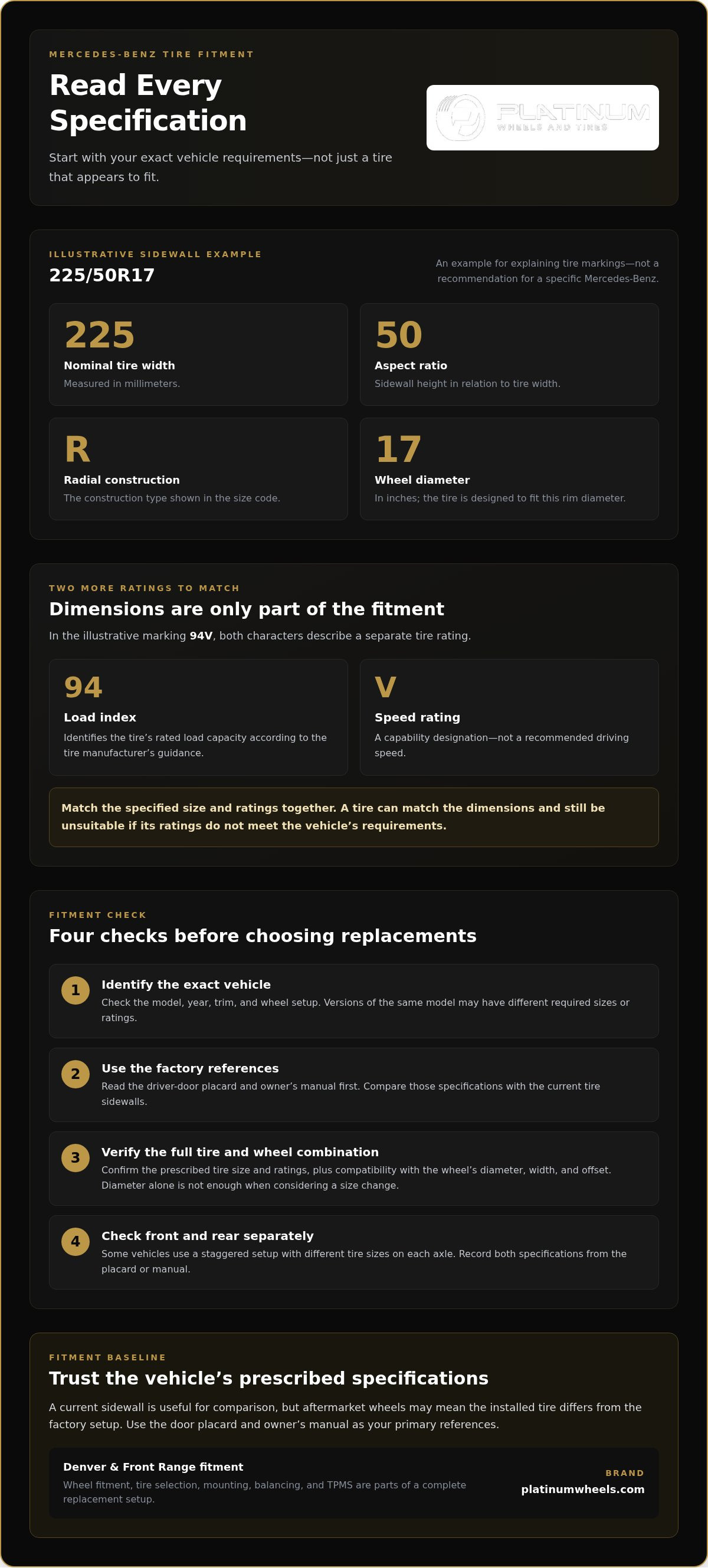
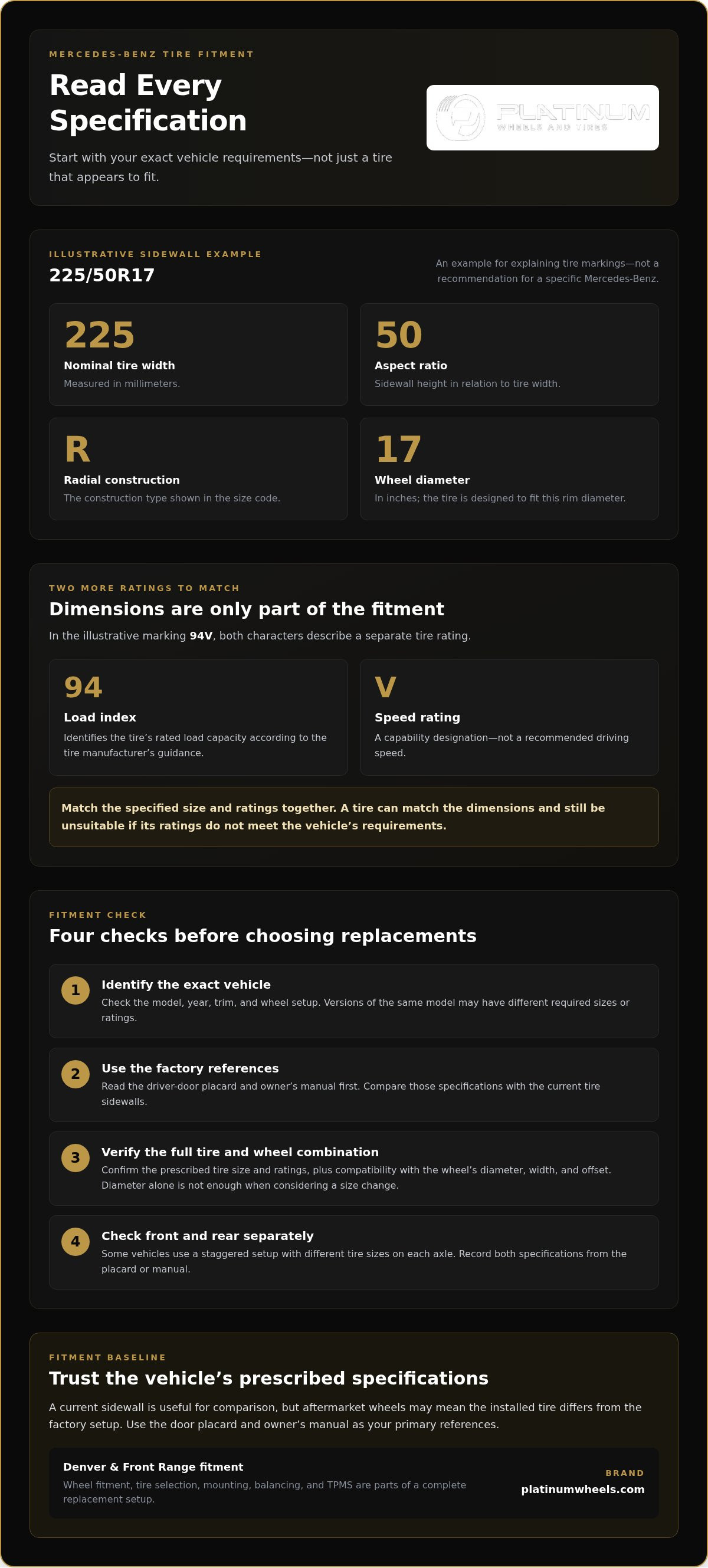
Find the recommended tire size on the driver-door placard or in the manual, then compare it with the markings on your current tires. A size such as 225/50R17 is an illustrative example, not a recommendation for a particular Mercedes-Benz:
- 225 is the tire’s nominal width in millimeters.
- 50 is the aspect ratio, describing the sidewall height in relation to the width.
- R indicates radial construction.
- 17 is the wheel diameter, in inches, the tire is designed to fit.
Use the placard and manual as your baseline rather than relying only on the current sidewall. If the vehicle has aftermarket wheels, the installed tire size may differ from the factory specification, so don’t assume it’s the right reference for replacements.
What tire load and speed ratings mean
Size is only part of the specification. A marking such as 94V after the tire size contains two additional ratings: 94 is the load index, and V is the speed rating. This example explains the markings; it isn’t a recommendation for a specific vehicle.
The load index identifies a tire’s rated load capacity according to the tire manufacturer’s guidance. The speed rating is a capability designation, not a recommended driving speed. Both matter: a tire can match the dimensions but still be unsuitable if its ratings don’t meet the vehicle’s requirements. Match the specified size and ratings together, and account for the wheel setup, including any staggered arrangement where front and rear tires differ.
How to check Mercedes tire compatibility before choosing replacements
Before ordering Mercedes tires, work through a simple fitment check: identify the vehicle, record the tire markings, verify the required ratings, then confirm the tire and wheel combination. Use the driver-door placard and owner’s manual as your baseline. Check the current sidewalls too, but remember that a previous wheel change may mean those tires don’t match the factory setup.
Before you order, match the vehicle’s prescribed tire size and ratings, then make sure the tire works with the wheel’s diameter, width, and offset. Wheel diameter determines which tire can mount to the rim, while width and offset affect the wheel’s position and clearance. If you’re considering a tire-size change, assess the complete combination rather than matching diameter alone.
How to read the sidewall and compare it with the placard
Read the size marking as a sequence. In a marking such as 225/50R17, 225 is the nominal width in millimeters, 50 is the aspect ratio, R indicates radial construction, and 17 is the rim diameter in inches. This is an illustrative example, not a fitment recommendation for a specific Mercedes-Benz.
Compare the full sidewall information with the vehicle’s prescribed specifications, including load and speed ratings. A tire that fits the rim physically may still be the wrong choice if its dimensions or ratings don’t meet the vehicle’s requirements. For general tire-safety information, consult the National Highway Traffic Safety Administration (NHTSA) tire safety guidelines.
When front and rear Mercedes tires may use different sizes
A staggered setup uses different tire sizes on the front and rear axles. Some vehicles are designed this way, so don’t assume all four tires share one size. Record both axle specifications from the placard or manual and compare them with the front and rear sidewalls before purchasing. If you’re also changing wheels, the custom wheels and rims guide offers broader fitment context.
For Denver drivers planning a wheel-and-tire change, Platinum Wheels brings tire selection, wheel fitment, and professional mounting and balancing together. Explore Platinum Wheels’ tire and wheel services as you plan a complete replacement setup.
Compare Mercedes tire types for Colorado roads and changing seasons
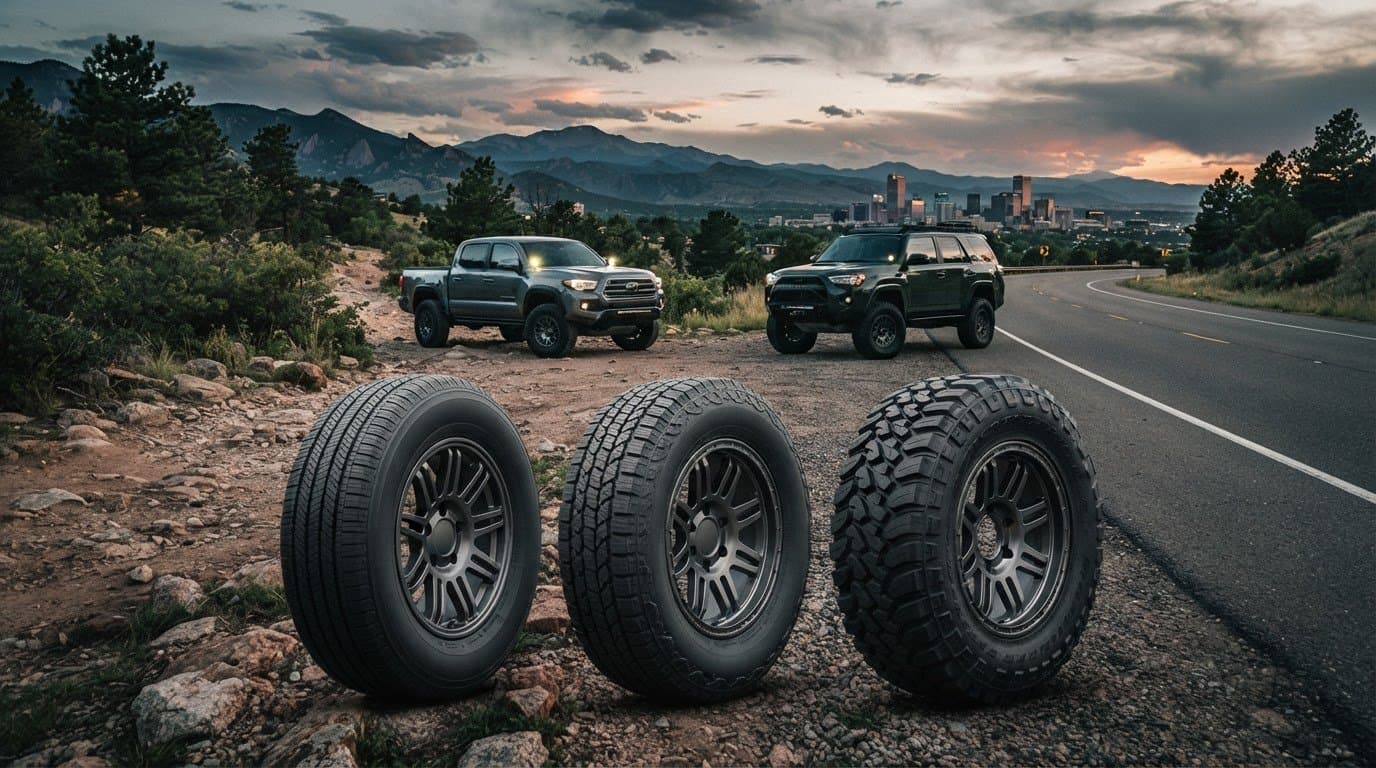
Denver-area driving can mean weekday commuting on cleared roads, changing temperatures along the Front Range, and mountain trips where conditions shift quickly. The best tire category depends on the routes you drive and what you prioritize: year-round versatility, added cold-weather traction, or responsive handling. No category is automatically best for every Mercedes-Benz.
| Tire category | Typical priority | Trade-off to consider |
|---|---|---|
| All-season | Versatility for everyday driving across varied conditions | A compromise, not equal performance in every temperature or road condition |
| Winter | Cold-weather traction, especially for winter routes and mountain travel | A seasonal option that may require a separate set and storage planning |
| Performance | Responsive handling and road feel in suitable conditions | May be less suited to drivers who prioritize cold-weather traction or year-round versatility |
Are all-season Mercedes tires enough for your driving?
All-season tires can suit drivers who want one set for regular commuting and a broad range of everyday conditions. But the label doesn’t promise equal grip in summer heat, cold weather, and snow. Consider how often your routes take you to higher elevations, whether winter travel is routine, and how much traction confidence matters to you. For Colorado-specific context, review the Colorado Department of Transportation winter tire recommendations.
Colorado’s terrain makes route choice part of the decision. The Colorado all-terrain tire guide offers useful context on tire condition for regional driving. It focuses on all-terrain tires, often associated with truck and off-road use, so use it for general road-condition considerations, not as a Mercedes fitment recommendation.
When should you consider winter or performance tires?
Consider winter tires if your driving regularly involves cold conditions and you prioritize winter traction. Performance tires may better suit drivers who value sharper handling in conditions appropriate for that tire category. Either choice still needs to match the Mercedes-Benz’s required specifications.
Before changing categories seasonally, follow the vehicle manual and tire-maker guidance on fitment, use, and storage. Platinum Wheels offers new and all-season tires, with professional mounting and balancing for a coordinated tire setup.
Plan Mercedes tire replacement, TPMS, and professional installation
A complete tire replacement plan covers more than choosing a new set. Consider the condition of the existing tires, the vehicle’s required specifications, the wheel setup, and whether the tire pressure monitoring system needs attention. If you’re changing wheels as well, sensor compatibility becomes part of the package decision.
Professional mounting and balancing prepare the tire-and-wheel assemblies for use. Mounting secures each tire to its wheel; balancing corrects weight distribution to help reduce vibration while driving. The process depends on the vehicle, tire, and wheel combination, so fitment and balance should be handled as one installation, not treated as separate afterthoughts.
What happens to TPMS when Mercedes tires are replaced?
TPMS monitors tire pressure and alerts the driver when the system detects a pressure issue. Replacing tires doesn’t automatically mean the sensors need replacement: a tire may be worn while its sensor remains functional. But a damaged or faulty sensor may require service or replacement, and changing wheels can raise a sensor-compatibility question. Mercedes-Benz models may differ in sensor design and reset procedure, so don’t assume one process applies to every vehicle.
During tire or wheel service, the TPMS may need attention so the system can continue reporting pressure correctly. If a warning remains after installation, it may relate to pressure, sensor condition, or the vehicle’s reset procedure. The TPMS sensor guide explains sensor issues in more detail.
What professional mounting and balancing covers
A properly planned installation matches the tire to the wheel, mounts it, and balances the completed assembly. Post-installation checks should include tire inflation against the vehicle’s prescribed pressure and attention to TPMS status. Details can vary with the tire and wheel combination, especially if the setup includes replacement wheels or sensors. Platinum Wheels provides professional mounting and balancing, and its wheel and tire packages can include TPMS sensors.
For a coordinated replacement setup, explore tire and wheel services at Platinum Wheels.
Choose Mercedes tires with a local Colorado fitment plan
A confident replacement decision comes down to three steps: verify the vehicle’s specifications, choose a tire category that suits your routes and priorities, then plan the wheel fitment and TPMS details. That approach helps Denver and Front Range drivers balance everyday comfort with seasonal needs without assuming one tire setup suits every Mercedes-Benz.
A practical checklist before selecting your next set
Gather the details that make tire selection more precise before comparing options:
- Identify the vehicle: Note the model year and trim.
- Record tire specifications: Copy the placard information and the markings on each tire. If front and rear sizes differ, write down both.
- Describe your driving: Consider commuting, regular mountain routes, seasonal conditions, and whether comfort, traction, or responsive handling matters most.
- Include wheel and TPMS details: If changing wheels, account for their dimensions and offset, along with sensor compatibility and any TPMS needs.
This information gives the replacement plan a clear starting point. It also helps prevent a common mismatch: choosing a tire based on size alone while overlooking ratings, axle differences, or the wheel setup.
Where Denver-area Mercedes owners can get tire fitment support
Platinum Wheels is a locally owned tire and wheel resource serving Denver and the Colorado Front Range. The shop offers new tires, all-season tires, wheel and tire packages, and TPMS sensors, with professional mounting and balancing. Tire selection can be considered alongside custom wheels and sensor needs, bringing the parts of a replacement setup together.
For Mercedes owners, the goal is a properly matched tire and wheel combination, installed with attention to the vehicle’s specifications and the driving conditions ahead. Bring your recorded details and priorities into the planning process, then choose a setup that makes sense for your daily routes and Colorado travel.
Plan your tire and wheel upgrade with Platinum Wheels and explore local tire and installation options.
Make your next tire change a confident fit
The right Mercedes tires start with your exact vehicle specifications, then match the tire category to how and where you drive. For Denver and Front Range conditions, weigh daily comfort and handling against seasonal traction needs, and treat wheel fitment and TPMS as part of the replacement plan, not afterthoughts.
A complete setup brings the details together. Platinum Wheels is a locally owned Colorado Front Range shop offering new tires, professional mounting and balancing, and wheel and tire packages that can include TPMS sensors. Its services bring tire selection, wheel fitment, and installation together.
Ready to plan your replacement? Explore tire and wheel services with Platinum Wheels and take the next step toward a setup suited to your Mercedes-Benz and Colorado driving. With the right specifications and fitment in place, you can head out with greater confidence.
Frequently Asked Questions
What tires fit my Mercedes-Benz?
The right tires are the ones that match your exact Mercedes-Benz model, year, trim, and wheel setup. Check the driver-door placard and owner’s manual for the prescribed tire size, load index, and speed rating. Compare those details with the tire sidewall, but don’t rely on the current tires alone if the wheels have been changed. Mercedes tires must match the full vehicle specification, not just the rim diameter.
Can I put different tires on the front and rear of my Mercedes?
Yes, if your Mercedes-Benz is designed for a staggered setup, which uses different tire sizes on the front and rear axles. Check the placard or manual and record both axle specifications before buying. Don’t assume all four tires are the same size, or that a size used on one axle will fit the other. Replacements should also meet the required ratings and suit the wheel setup.
Are all-season tires good for Mercedes vehicles in Colorado?
All-season tires can suit Colorado drivers who want year-round versatility for commuting and everyday travel, but they’re a compromise rather than a guarantee of equal grip in every condition. Consider your winter routes, mountain trips, elevation changes, and traction priorities. Drivers who regularly travel in cold or snowy conditions may prefer a dedicated winter tire. Match any tire category to your Mercedes-Benz’s specifications and follow the vehicle manual and tire-maker guidance.
Do Mercedes tires need to be Mercedes Original tires?
No, a replacement doesn’t automatically have to carry the Mercedes Original (MO) marking, but it must meet your vehicle’s specified size and ratings. Mercedes-Benz recommends MO tires, which are engineered and tested for particular vehicle characteristics. Treat that marking as a useful fitment consideration, not a substitute for checking the placard or manual. Choose a tire that matches the required specifications and the conditions you drive in.
How do I know when my Mercedes tires need replacing?
Inspect the tread and sidewalls regularly. Replace tires if tread wear reaches the wear bars, or if you notice damage such as cuts, bulges, or exposed cords. Uneven wear can also signal that the tires need attention. Check the owner’s manual and tire-maker guidance for additional replacement recommendations, and don’t rely on appearance alone if you’re unsure about tire condition. A professional tire inspection can help assess wear and damage.
Will changing Mercedes tires affect the TPMS?
Changing tires doesn’t necessarily mean the tire pressure monitoring system (TPMS) sensors need replacement, but the system may need attention during tire or wheel service. A sensor can be faulty or incompatible with a changed wheel setup, and Mercedes-Benz models may use different sensor designs or reset procedures. Make sure the sensors are compatible and functioning after installation. Platinum Wheels offers TPMS sensors and wheel and tire packages that can include them.
Can I change my Mercedes wheel size without changing tire fitment?
Changing wheel size requires choosing a tire that fits the new rim, so the tire’s size marking will need to match that wheel diameter. The complete combination also matters: tire dimensions, wheel width, offset, and clearance should suit the vehicle. Check the prescribed specifications before changing wheels, and consider TPMS sensor compatibility as part of the setup. Platinum Wheels serves Denver, Aurora, Lakewood, Englewood, Wheat Ridge, Commerce City, Westminster, Thorton, Broomfield, Arvada, Golden, Littleton, Parker, Highlands Ranch, Castle Rock, Boulder, Fort Collins, and Colorado Springs.