Best BMW Tires in Denver: Premium Performance Guide
The best BMW tires for your car aren’t necessarily the ones with the sportiest name or the biggest tread blocks. Start with your BMW’s exact fitment, then match tire type and performance to your priorities and Colorado driving conditions. Size is only part of the equation: load index, speed rating, and whether your vehicle is set up for run-flats all matter.
Comparing run-flat, all-season, and winter options can feel complicated, especially if your routine shifts from Denver streets to mountain roads. This guide explains how to find the specifications for your BMW and compare tire types based on your routes, seasonal weather, and ride preferences.
You’ll learn where to find fitment details, what BMW star-marked tires indicate, and the trade-offs of run-flat and conventional tires. We’ll also cover how Colorado’s changing conditions can shape your choice, plus what professional mounting, balancing, and TPMS service contribute to a complete installation. With precise fitment and local driving needs in view, choosing your next set can feel more straightforward.
Key Takeaways
- Use your BMW’s placard or owner’s manual to verify tire size, load index, speed rating, and pressure before choosing a replacement.
- Compare all-season, winter, and performance tires by the balance of seasonal traction, handling, comfort, and driving conditions you need.
- Choose bmw tires based on your exact vehicle setup and regular routes, not just a tire’s category or performance label.
- Weigh run-flat convenience against ride comfort and the need for an alternative if a conventional tire goes flat.
- Include professional mounting, balancing, and TPMS needs in your wheel-and-tire installation plan.
BMW Tires: Start With Your Driving Needs and Exact Vehicle
BMW tires are vehicle-specific choices shaped by exact fitment, driving performance, and how you use your car. The goal isn’t simply to find a replacement that looks right. Match your BMW’s required specifications to support predictable handling and help the tires perform as intended.
Start with your vehicle, then think about how and where you drive. Model year, trim, and wheel setup can affect tire requirements. Your priorities matter, too: a daily Denver commute may call for a different balance of comfort and wet-weather grip than frequent highway miles, spirited driving, or mountain travel. Colorado Front Range weather changes across seasons and routes, so no single tire type suits every BMW owner.
Why BMW tire fitment varies by model and trim
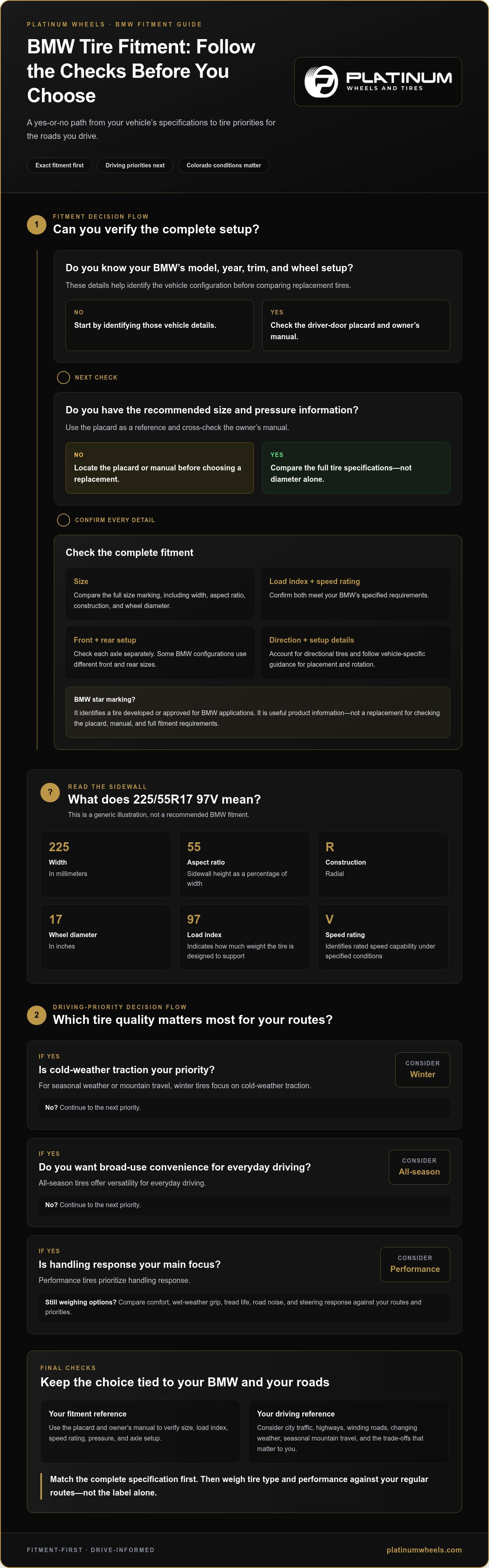
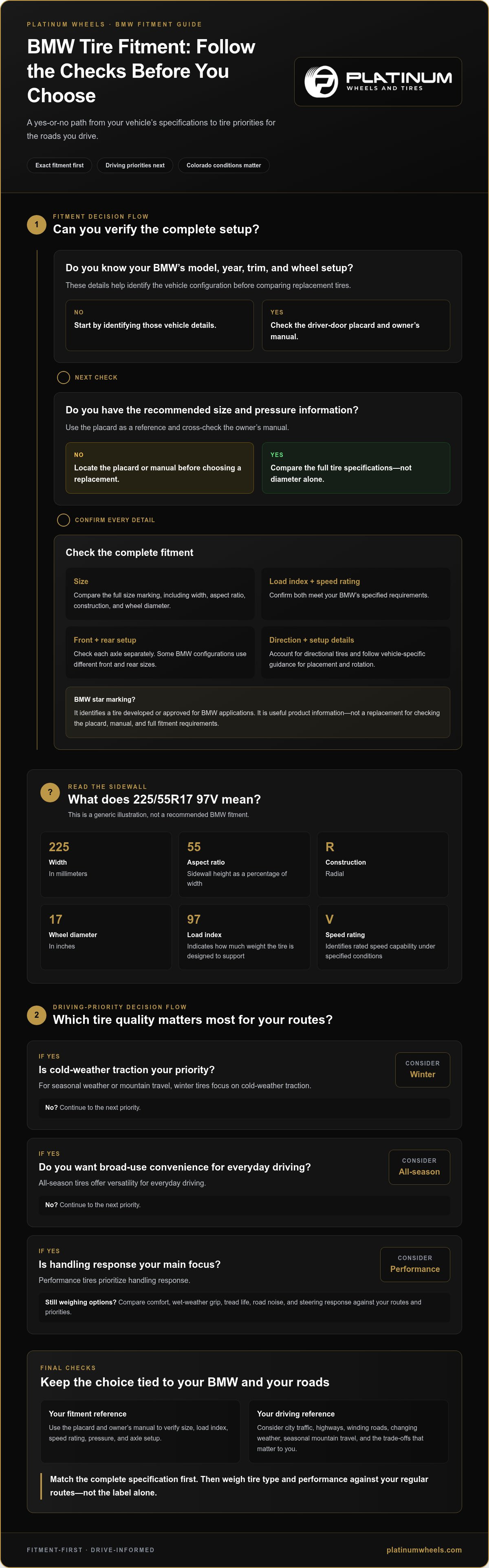
Find vehicle-specific specifications on the driver-door placard and in the owner’s manual. Tire size describes dimensions and construction. The load index indicates how much weight a tire is designed to support, while the speed rating identifies its rated speed capability under specified conditions. Match all required details, not just the size. Some configurations use different front and rear sizes, so verify each axle instead of assuming all four tires are interchangeable.
Some tires also have a BMW star marking on the sidewall, identifying a tire developed or approved for BMW applications. Treat that mark as useful product information, not a substitute for checking your vehicle’s placard, manual, and full fitment requirements. For drivers maintaining vintage or collector models who need broader professional vehicle care, visit Grand Prix Cafe to learn about their specialized classic automotive services.
Which driving priorities should guide your tire choice?
Decide which trade-offs matter most. A quieter, more comfortable ride may be important on long commutes, while responsive handling may take priority on winding roads. Wet-weather grip, tread life, and road noise also vary across tire designs. Consider your typical mileage, usual routes, and seasonal mountain travel. If your BMW is equipped with run-flats, the Run-flat tire technology overview explains how these tires are designed to function after a loss of pressure and outlines their limitations.
Use these questions to narrow your priorities before comparing options:
- Do you spend more time in city traffic, on highways, or on winding roads?
- Is ride comfort, wet traction, tread life, or steering response most important?
- Will your seasonal driving include changing weather or mountain travel?
Clear answers make it easier to compare tire categories. Keep your BMW’s placard and manual as fitment references, then weigh each option against the roads you actually drive.
How to Read BMW Tire Sizes and Check Compatibility
The driver-door placard and owner’s manual are the starting points for BMW tire fitment because they list specifications for your vehicle’s configuration. Matching only the tire’s overall diameter isn’t enough. Width, construction, load index, speed rating, and front-to-rear setup can all affect compatibility.
Use this process before comparing replacement options:
- Identify the vehicle. Note the BMW’s model, year, trim, and current wheel setup.
- Read the placard. Find the recommended tire sizes and pressure information on the driver-door placard, then cross-reference the owner’s manual.
- Compare the full specifications. Check size, load index, and speed rating, not just the diameter or the first numbers on the sidewall.
- Confirm the configuration. Verify whether front and rear sizes differ, and account for directional tires or other setup details.
What do the numbers and letters on a tire mean?
Look for the size marking on the tire’s sidewall. In the generic illustration 225/55R17 97V, which is not a recommended BMW fitment, “225” is the width in millimeters, “55” is the aspect ratio, or sidewall height as a percentage of width, “R” indicates radial construction, and “17” is the wheel diameter in inches. “97” is the load index, while “V” is the speed rating. The NHTSA tire safety guidelines provide additional background on tire information and safety.
Ratings matter as much as dimensions. A tire that fits the wheel may still be unsuitable if its load index or speed rating doesn’t meet your vehicle’s requirements. Don’t treat a matching diameter as proof of compatibility. Compare the complete marking with the specified setup.
How do you confirm the right setup for your BMW?
Compare each tire’s sidewall markings with the placard and manual, checking the front and rear separately. Some BMW configurations use staggered sizes, meaning the front and rear tires differ. Directional tires are designed to roll in a particular direction, so their placement and rotation require attention. Follow vehicle-specific guidance instead of assuming a standard rotation pattern or interchangeable setup.
For broader context on how wheel choices affect fitment, see our custom wheels and rims guide. Platinum Wheels brings tire and wheel selection together with professional installation through its tire and wheel solutions.
All-Season, Winter, and Performance BMW Tires Compared
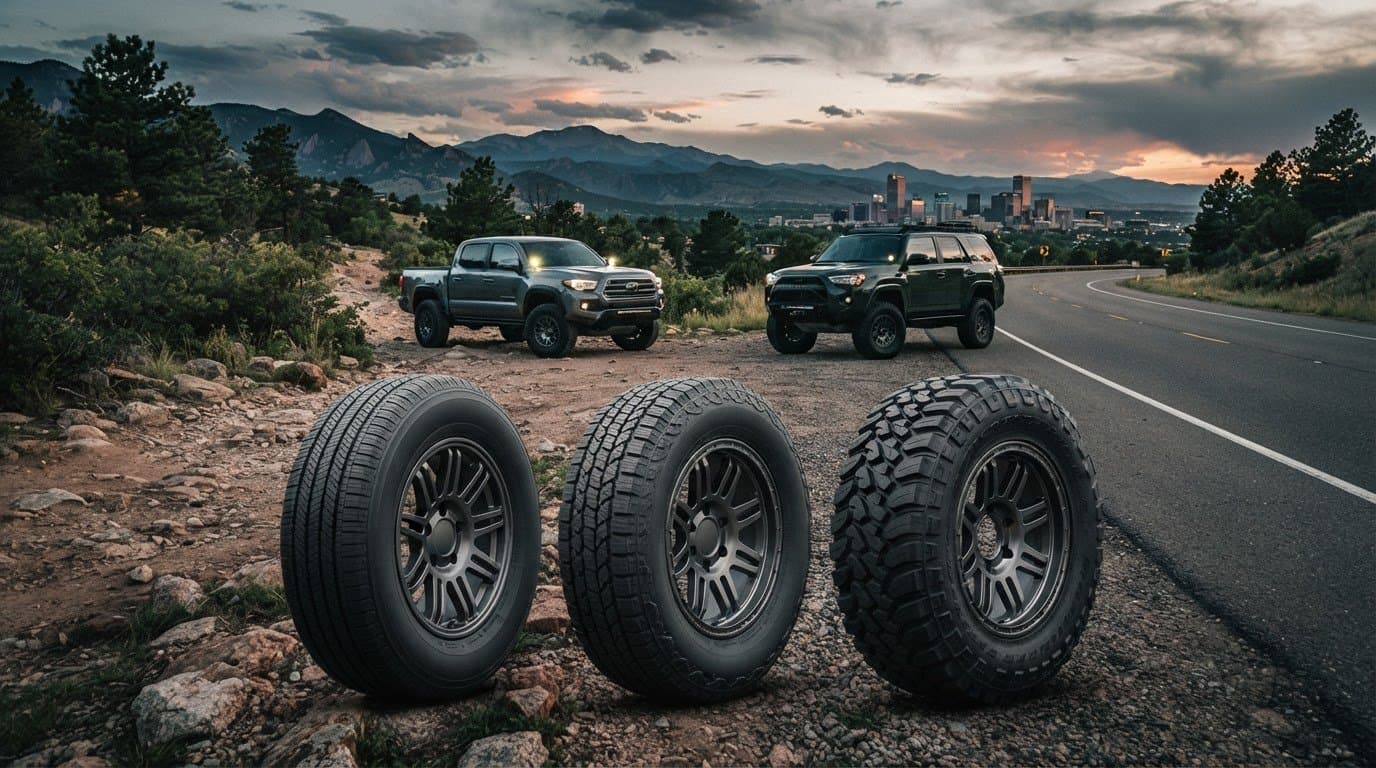
The right tire category depends on how you drive your BMW, not just the badge on the hood. All-season tires offer broad-use convenience, winter tires focus on cold-weather traction, and performance tires prioritize handling response. Each category has trade-offs, and results vary by tire model, vehicle setup, and road conditions.
| Tire type | Potential strengths | Trade-offs to consider |
|---|---|---|
| All-season | Versatile for everyday driving across a range of conditions. | Broad-use capability doesn’t make every model suited to demanding winter weather or every driver’s priorities. |
| Winter | Designed to prioritize traction in cold-weather conditions. | A seasonal choice that may involve changing tires as conditions shift; confirm the correct size and setup for your BMW. |
| Performance | Can emphasize steering response, handling, and road feel. | Ride comfort, road noise, and seasonal suitability can vary by tire model and intended use. |
Are all-season tires enough for Colorado driving?
All-season describes a broad-use category, not a guarantee of suitability for every winter condition. Consider the roads you use, when you travel, elevation changes on mountain trips, and how much cold-weather capability matters to you. Compare each tire’s specifications and intended use instead of relying on its category name alone. The NHTSA tire safety information is a useful reference when reviewing tire selection and safety basics.
When should BMW owners consider winter or performance tires?
Winter tires are worth considering if your seasonal plans and cold-weather routes make traction in those conditions a priority. Performance tires may suit drivers who value responsive handling and road feel. Also weigh comfort, noise, and seasonal use. Before changing categories, match the tire to your BMW’s approved sizes and configuration. For a BMW SUV used on rougher roads, explore whether the vehicle and your driving needs make the Colorado all-terrain tire guide relevant.
Compare bmw tires by their specifications and intended conditions, then weigh those details against your regular routes and seasonal plans. No category is automatically the best fit for every BMW.
Run-Flat Tires, TPMS, and BMW Tire Replacement Decisions
Choosing replacement bmw tires involves more than matching size. If your BMW came equipped with run-flats, compare their convenience with their ride characteristics and the roadside plan you would need with conventional tires. The right choice depends on your vehicle’s equipment, its existing setup, and manufacturer guidance, not a blanket rule for every BMW.
Should you replace BMW run-flat tires with conventional tires?
Run-flat tires are designed to provide some mobility after losing pressure, which may help you reach a safe place rather than stop immediately. Their reinforced construction can feel firmer on the road. Conventional tires may have a different ride feel, but switching means planning for a flat, such as carrying a spare or suitable mobility kit if your vehicle’s setup allows it. Check your BMW’s equipment and guidance before switching, and confirm the replacement setup is compatible.
What should you know about TPMS when replacing tires?
The Tire Pressure Monitoring System (TPMS) tracks tire pressure and can alert you when pressure drops. A warning light signals a pressure-system concern, but it doesn’t identify the tire’s physical condition or explain the cause. Inspect the tires and verify pressure rather than treating the warning as a complete diagnosis. During tire replacement, preserving proper sensor function helps keep pressure monitoring available. Platinum Wheels provides TPMS sensors as part of its tire and wheel solutions. For more detail, read the TPMS sensor guide.
Before replacement, use this checklist:
- Match the specifications: Compare size, load index, and speed rating with the vehicle placard or owner’s manual.
- Review tire condition: Look for uneven tread wear, visible damage, or other changes that may affect the replacement decision.
- Consider the existing setup: Determine whether the BMW uses run-flats and whether the proposed tire type fits the vehicle configuration.
- Account for TPMS: Include sensor condition and pressure monitoring in the installation plan.
A warning light and visible tire wear call for different checks, so consider both when planning a replacement. Platinum Wheels’ tire and wheel services include fitment-focused options for your setup.
Choose and Install BMW Tires With a Fitment-First Plan
A confident tire decision comes from a clear process, not guesswork. Platinum Wheels helps bring tire selection and installation together by considering vehicle specifications and driving priorities. Use your BMW’s fitment details alongside the way you drive to narrow down suitable options.
Use this sequence to plan your replacement:
- Collect vehicle details. Record your BMW’s model, year, and trim, along with the current tire sidewall markings and driver-door placard specifications.
- Describe your driving. Note your usual routes, typical driving patterns, seasonal travel, and whether your current setup uses run-flat tires.
- Compare tire options. Weigh handling, comfort, tread life, and weather needs against the tire’s intended use.
- Confirm fitment. Match the complete specifications to your vehicle, including any different front and rear sizes.
- Plan installation. Include mounting, balancing, and TPMS needs in the complete wheel-and-tire setup.
What information should you have ready for a tire fitment?
Have the BMW model, year, trim, current tire markings, and placard details ready. Add a brief description of your typical commute, highway use, and seasonal or mountain travel. Mention whether the existing setup includes run-flats. These details give Platinum Wheels a practical basis for guiding tire and wheel choices instead of relying on a general recommendation that may not suit your vehicle or daily routes.
What happens during professional tire installation?
During mounting, each tire is fitted to its wheel. Balancing helps distribute weight around the wheel-and-tire assembly to support smoother rotation. A complete installation also accounts for compatible TPMS sensors so the vehicle’s pressure-monitoring system can function as intended. Platinum Wheels provides professional mounting and balancing, along with tires, wheel-and-tire packages, and TPMS sensors.
Fitment guidance and careful installation belong in the same plan. Bring your vehicle details and driving priorities together, then review Platinum Wheels’ tire and wheel options for Colorado driving.
Make Your Next Tire Choice With Confidence
The best bmw tires for your vehicle are the ones that match its exact specifications and your real driving conditions. Start with the door placard or owner’s manual, then weigh your everyday routes, seasonal travel, and priorities such as comfort or responsive handling. Run-flat and conventional options each have trade-offs, and your BMW’s existing setup should guide the decision.
Fitment is only part of the job. Professional mounting and balancing help complete the wheel-and-tire setup, while compatible TPMS sensors support pressure monitoring. Platinum Wheels brings these tire and wheel services together for drivers across Denver, Aurora, Lakewood, Englewood, Wheat Ridge, Commerce City, Westminster, Thorton, Broomfield, Arvada, Golden, Littleton, Parker, Highlands Ranch, Castle Rock, Boulder, Fort Collins, and Colorado Springs.
For a fitment-first tire and wheel plan for your Colorado driving, explore tire and wheel options at Platinum Wheels.
Frequently Asked Questions
How do I know which tires fit my BMW?
Start with the tire specifications on your BMW’s driver-door placard and in the owner’s manual. Compare the full tire size, load index, and speed rating, and check whether the front and rear specifications differ. The sidewall markings on your current tires can help, but the placard and manual are key references for the vehicle’s required setup. Platinum Wheels serves Denver and communities across the Colorado Front Range.
Can I put regular tires on a BMW with run-flat tires?
A switch from run-flat to conventional tires depends on your BMW’s configuration and manufacturer guidance. Run-flats are designed to provide some mobility after pressure loss; conventional tires don’t offer that same capability. Before changing types, consider how you’d handle a flat and whether your vehicle has a suitable spare or mobility kit. Don’t assume every BMW requires run-flats or that every replacement setup is interchangeable.
Are all-season tires good for Colorado winters?
All-season tires can suit a range of everyday conditions, but the category name doesn’t guarantee the winter capability you need for every Colorado route. Consider typical temperatures, local roads, elevation changes, and whether your plans include mountain travel during winter weather. Compare the tire’s specifications and intended use, then decide whether broad year-round convenience or a seasonal winter tire better matches your driving priorities.
Do BMWs need different tire sizes in the front and rear?
Some BMW configurations use different front and rear tire sizes, while others use the same size at both ends. Check the driver-door placard and owner’s manual for your specific model, year, and trim. Don’t assume the tires are interchangeable just because they fit the wheels. A staggered setup also affects rotation options, so follow vehicle-specific guidance when replacing or maintaining the tires.
How often should BMW tires be rotated?
Follow the rotation guidance in your BMW owner’s manual, since the recommended approach depends on the vehicle’s tire configuration. Staggered sizes, directional tread, or other mixed setups may limit whether tires can move between axles or sides. Check tread wear regularly, too. If wear appears uneven, use the manual’s guidance and have the tire setup assessed rather than applying a generic rotation pattern.
Does replacing BMW tires affect the TPMS?
Tire replacement can involve TPMS sensors, so the installation should preserve pressure monitoring and system function. TPMS tracks tire pressure and can alert you to a pressure issue, but a warning light doesn’t diagnose the tire’s physical condition. Check tire pressure and inspect the tire if a warning appears. Platinum Wheels offers TPMS sensors alongside tire and wheel services as part of a complete setup.