
Best All Season Truck Tires for Denver Driving
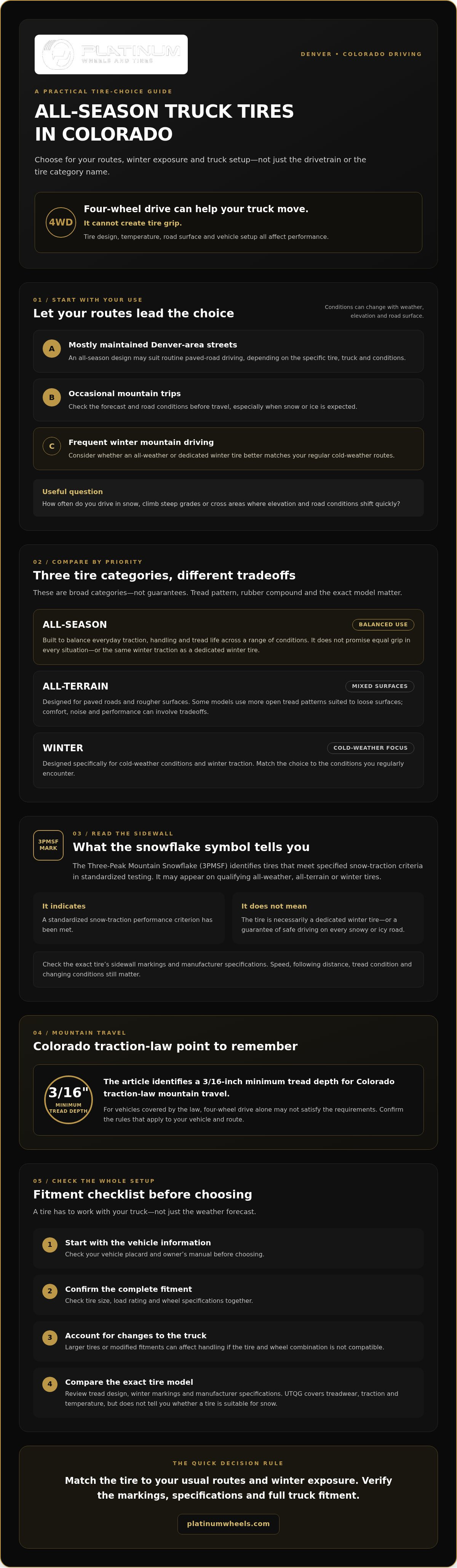
Four-wheel drive can help your truck move, but it can’t create tire grip. That’s why choosing all season truck tires for Denver means looking beyond your drivetrain. Consider your daily commute, exposure to cold and snow, mountain trips, and your truck’s exact setup.
It’s reasonable to want one tire for everyday driving without guessing how it will handle when Colorado weather changes. All-season tires can suit many city routes, but snow performance varies by model. Larger tires or modified fitments can also affect handling if the tire and wheel combination isn’t compatible.
This guide helps you weigh all-season strengths and limitations against your routes and truck use. You’ll learn how to compare tread types and markings, when an all-weather or winter tire may be a better fit, and what to confirm before buying. We’ll also cover Colorado traction-law considerations for mountain travel, including the 3/16-inch minimum tread depth and why four-wheel drive alone may not satisfy requirements for vehicles covered by the law. Finally, you’ll get a fitment checklist to help make sure your choice works with your truck, not just the weather forecast.
Key Takeaways
- Match all season truck tires to your usual routes and winter exposure. Performance varies with tire design and road conditions.
- Compare all-season, all-terrain, and winter tires by comfort, rough-road use, and snow priorities rather than choosing by category name alone.
- Check your vehicle placard and owner’s manual before buying, then confirm tire size, load rating, and wheel specifications as a complete fitment.
- Account for your truck’s intended use and any fitment changes when comparing tires, since compatibility can affect handling.
- Discuss your routes and specifications before choosing a model, and confirm current sizes and availability with the retailer.
What All-Season Truck Tires Can, and Cannot, Do in Colorado
Denver weather can shift from dry pavement to snow or cold rain, so a tire designed for varied everyday conditions may seem like a practical fit. All-season truck tires are a year-round tire category built to balance everyday traction, handling, and tread life across a range of conditions, rather than maximize performance in one season or on one surface. That balance can work well for routine driving, but it doesn’t promise the same grip in every situation.
Performance depends on the tire’s tread pattern and rubber compound, as well as the vehicle, temperature, and road surface. A tire that feels composed on a dry commute may respond differently on packed snow, ice, or a cold, wet road. “All-season” also doesn’t mean equal winter traction to a dedicated winter tire, which is designed specifically for cold-weather conditions.
How all-season tires differ from all-terrain and winter tires
All-season: A balance for everyday paved-road driving and changing conditions. All-terrain: A mixed-use design intended for paved roads and rougher surfaces. Winter: A cold-weather-focused design intended to provide traction in winter conditions. These are broad categories, not guarantees that every tire within one category behaves alike.
Tread blocks, grooves, and rubber compounds vary by model. Some all-terrain designs use more open tread patterns suited to loose surfaces, while winter tires are engineered for cold-weather traction. Those design choices can involve tradeoffs in road comfort, noise, and performance across conditions. For a closer look at mixed-surface priorities, see the Colorado all-terrain tire guide.
UTQG ratings offer another point of comparison. The Uniform Tire Quality Grading (UTQG) system covers treadwear, traction, and temperature. These ratings don’t tell you whether a tire is suitable for snow, so check winter markings and the manufacturer’s specifications too.
What the Three-Peak Mountain Snowflake symbol tells you
The Three-Peak Mountain Snowflake (3PMSF) symbol identifies tires that meet specified snow-traction performance criteria in standardized testing. It may appear on qualifying all-weather, all-terrain, or winter tires. The marking doesn’t mean every tire with the symbol is a dedicated winter tire.
Use the symbol as a performance indicator, not a guarantee of safe driving on every snowy or icy road. Speed, following distance, tread condition, and changing conditions still matter. Before choosing a tire, check its sidewall markings and review the manufacturer’s specifications for its intended use.
How Colorado Routes and Weather Affect All-Season Truck Tire Choice
Colorado driving covers a range of conditions. A truck that spends most of its time on maintained Denver-area streets has different tire demands from one that regularly climbs into the mountains, where elevation, steep grades, and winter weather can change the drive. Match your tire choice to the routes and conditions you actually encounter, not just the state or season on the calendar.
Front Range commutes versus frequent mountain driving
Start by asking how often you drive in snow, climb steep grades, or cross areas where elevation and road conditions shift quickly. If most trips are paved commutes around Denver, an all-season design may suit routine use, depending on the specific tire, truck, and conditions. For occasional mountain trips, check the forecast and road conditions before setting out, especially when snow or ice is expected.
If mountain travel is a regular part of your winter routine, consider whether a dedicated winter tire better matches your needs. Cold temperatures can affect tire performance, and snow and ice demand more than a general-purpose design can promise. No tire eliminates the need to adjust speed and driving behavior for the road.
Shoulder seasons add another complication: a mild, dry day can give way to cold rain or snow. Think about the roads you use most, the conditions you’re willing to drive in, and whether you can change plans when weather worsens. That route-based assessment is more useful than choosing solely by a broad “Colorado driving” label.
How to evaluate winter capability without overpromising
Read the markings on the exact tire you’re considering, then compare them with the manufacturer’s specifications and stated intended conditions. All-season, all-weather, and winter are not interchangeable labels. Tires in the same category can also differ in tread design and winter capability, so don’t infer performance from the category name alone.
Before mountain travel, check current road and weather conditions, and reassess if conditions change. Tire choice is only one part of trip preparation. For general guidance on tire ratings, aging, and maintenance, consult the NHTSA tire safety guidelines. Colorado traction requirements may also apply on some routes. Check Colorado’s official tire requirements for current details, including the 3/16-inch minimum tread depth and the requirements that apply to your vehicle. Four-wheel drive alone may not satisfy those requirements.
Once you’ve identified your routes and winter exposure, compare suitable tire specifications with your truck’s requirements. A local fitment discussion can help connect those needs to available all-season truck tires. You can review all-season tire options as a starting point for that conversation.
All-Season Truck Tires vs. All-Terrain and Winter Tires: Which Fits?
Start with how and where you drive, then compare tire models that meet your truck’s specifications. Category labels offer a useful first filter, but they don’t guarantee identical comfort, traction, or capability across every tire. Consider your mileage, load needs, winter exposure, and typical road surfaces.
| Tire category | Intended use | Road comfort | Rough surfaces | Winter priorities |
|---|---|---|---|---|
| All-season | Everyday driving, often on paved roads | Designed for varied routine use; feel differs by model | Not the primary focus | Balanced performance; verify the specific tire’s snow capability |
| All-terrain | Drivers splitting time between pavement and unpaved roads | Tread design may affect noise and ride feel on pavement | A stronger priority, depending on design | Winter performance varies; check markings and specifications |
| Winter | Cold-weather driving | Optimized for seasonal use; road feel varies by model | Not necessarily designed for trail use | Cold-weather traction is the focus |
When all-season truck tires make sense
If your truck spends most of its miles on paved roads and you want one tire category for varied everyday conditions, all season truck tires may be worth considering. They can suit commuting and routine errands, but performance depends on the tire, vehicle, road surface, and weather. Before narrowing your choices, consider how much snow you encounter, how far you drive, what loads you carry, and whether your routes include gravel or other rough surfaces.
When all-terrain or dedicated winter tires may fit better
Regular unpaved driving may shift your priorities toward an all-terrain tire, especially if your routes include gravel or trails. If trail use is a major part of your plans, explore this off-road tire and wheel guide. For frequent driving in severe winter conditions, compare dedicated winter tires with other options and confirm cold-weather performance for the specific model.
Don’t treat brand reputation or a broad category name as a substitute for checking the exact tire’s capabilities. Review its markings and manufacturer specifications, and consult Colorado’s official tire requirements when evaluating winter travel needs. The best fit is the one whose documented capabilities and specifications align with your routes and truck.
How to Check All-Season Truck Tire Fitment Before You Buy
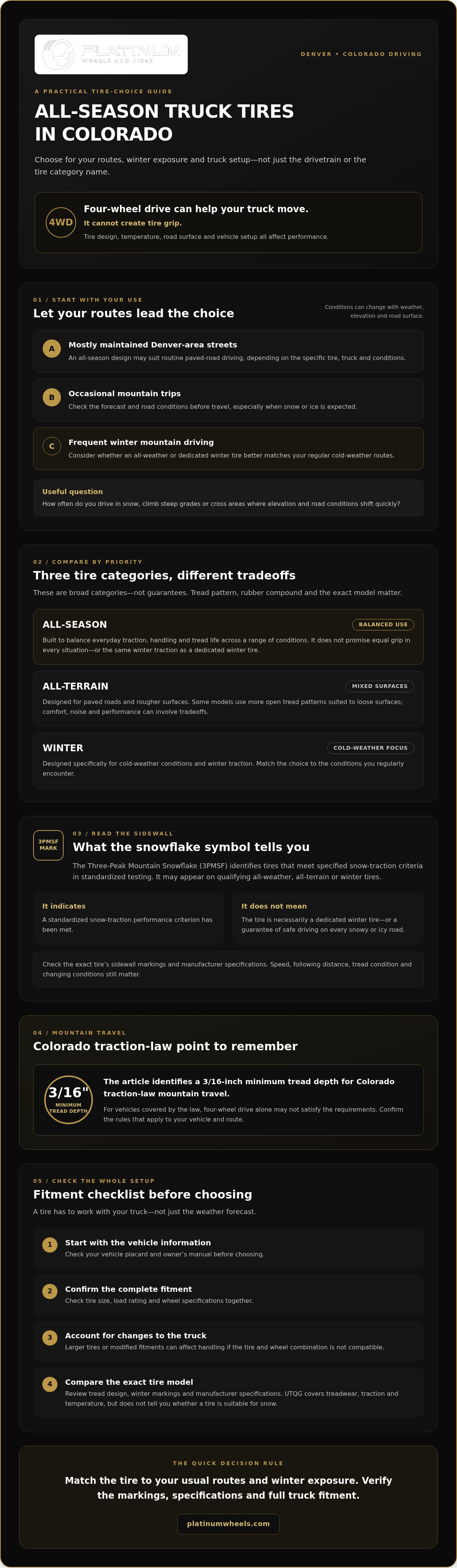
A tire can suit your routes and still be wrong for your truck if its size, load rating, or wheel fit isn’t compatible. Before choosing all season truck tires, verify your vehicle’s requirements and account for any changes to its wheels or suspension. Use this checklist to get started.
- Start with the vehicle placard and owner’s manual. Find the recommended tire size and load information for your specific truck. Use these as your baseline, especially if the vehicle has been modified.
- Confirm the exact tire size. Compare the full size designation with your vehicle’s listed specifications. Don’t assume a tire will fit because it looks close to the current one. Even a size change can affect clearance and compatibility.
- Check the load rating. This indicates how much weight a tire is designed to carry under specified conditions. The right rating depends on your truck and its requirements, so don’t choose based on a general rule or appearance.
- Match the tire to the wheel. Verify that the wheel’s specifications are compatible with the tire. If you’re changing wheels, consider the complete tire-and-wheel combination rather than evaluating either part on its own.
- Factor in how you use the truck. Your typical road surfaces, driving conditions, and load needs should inform your choice. Check the manufacturer’s specifications for the exact tire model to confirm it suits your vehicle and intended use. For commercial rigs or heavy-duty fleets requiring specialized maintenance and chassis evaluations, commercial service facilities like IQ Truck Center can provide comprehensive support.
- Account for modifications and TPMS. Larger tires, different wheels, or suspension changes can affect fitment and clearance. Ask a qualified professional to check that the setup clears appropriately. Also confirm TPMS sensor compatibility when replacing tires or changing wheels. For more on sensors, see this TPMS sensor guide.
These details work together. The tire size must suit both the vehicle and wheel, the load rating must meet the truck’s needs, and the complete setup must fit without clearance issues. On a modified truck, don’t rely on the original specification alone or assume a larger size will work without checking.
Professional mounting and balancing can help complete a compatible setup. For a practical review of your tire and wheel choices, discuss your truck’s tire fitment with Platinum Wheels.
Choose and Install All-Season Truck Tires with a Local Fitment Check
Before settling on a tire model, bring together what you’ve learned about your routes, winter exposure, tire category, truck specifications, and fitment. This quick review helps turn a broad preference into a choice that suits your driving. A conversation about how you use your truck can also surface details, such as frequent hauling or a modified setup, that affect which options are appropriate.
Prepare useful details before asking for tire recommendations
Have your truck’s year, make, model, current tire size, and any wheel or suspension modifications handy. Then describe a typical week behind the wheel: paved commuting, unpaved roads, mountain trips in winter, or hauling. Specific details make it easier to compare options based on your needs rather than choosing by label or appearance alone.
Ask which tire specifications fit your vehicle and intended conditions. Confirm the recommended size and load rating, and ask whether the tire’s stated capabilities align with your usual roads and seasonal exposure. For all season truck tires, model-specific details matter. The category name alone can’t answer every fitment or performance question.
What professional installation can help verify
Before installation, confirm that the selected tire and wheel combination is appropriate for your truck. This matters especially if you’re changing wheel specifications or have modified the suspension, since the setup may affect clearance. Discuss TPMS requirements too, including whether compatible sensors are needed when replacing tires or changing wheels.
Platinum Wheels offers professional mounting and balancing, and wheel-and-tire packages can include TPMS sensors. Discussing these details beforehand connects tire selection with the complete setup, rather than treating the tire as a standalone purchase. Current sizes and inventory can vary, so confirm what’s available for your vehicle before choosing a specific option.
For Denver and other Colorado Front Range drivers, a local fitment check can bring questions about routes, specifications, modifications, and installation into one discussion. If you’re ready to review your needs, talk with the Platinum Wheels team about tire and fitment options for your truck.
Choose a Tire Setup That Fits Your Colorado Driving
The right tire choice starts with your real-world use: daily paved routes, regular mountain travel, winter exposure, and any unpaved roads or hauling. All season truck tires can be a practical option for varied everyday driving, but their capabilities differ by model. Compare the tire’s specifications with your truck’s requirements, and confirm that the full tire-and-wheel setup fits, especially if your truck has been modified.
A fitment conversation can connect those details before you settle on a model. Platinum Wheels serves Colorado Front Range drivers with tire sales and professional mounting and balancing. Wheel-and-tire packages can also include TPMS sensor options, so you can discuss the complete setup together.
Ready to talk through your routes, tire needs, or truck fitment? Talk with Platinum Wheels about your truck’s tire fitment. With the right questions and a careful compatibility check, you can move forward with greater confidence in your choice.
Frequently Asked Questions
Are all-season truck tires good in Colorado snow?
They can provide some snow capability, but performance varies by tire design, tread condition, vehicle, and road conditions. Everyday all-season use isn’t the same as winter-specific traction, so check the tire’s sidewall markings and manufacturer specifications rather than relying on its category name alone. Consider how often your routes involve snow or ice, steep elevation changes, and mountain roads. No tire label guarantees performance in every winter condition.
Can I use all-season truck tires year-round?
Yes, some drivers use them year-round, but whether they suit your truck depends on the exact model, tire condition, climate, and routes. All season truck tires are designed to balance everyday conditions, not guarantee ideal performance in every season. If your regular driving includes severe winter conditions, consider whether another tire strategy is more appropriate. Check the manufacturer’s guidance and weigh your actual driving needs before choosing.
What is the difference between all-season and all-terrain truck tires?
All-season tires are designed to balance everyday road conditions, while all-terrain tires are intended for a broader mix of paved and unpaved driving. The categories don’t tell the whole story: tread design and model specifications affect comfort and capability. Compare manufacturer information for the specific tires you’re considering. If your truck mostly commutes on pavement, your priorities may differ from those of a driver who regularly uses gravel roads or trails.
Are all-season tires the same as all-weather tires?
No. All-season and all-weather are different tire categories, so don’t assume the labels mean the same thing or indicate identical winter capability. Check the exact tire’s markings, tread design, and manufacturer specifications to understand its intended conditions. Recognized winter-performance markings can provide useful information, but they aren’t a guarantee of safe driving on every snowy or icy road. Consider your usual routes and winter exposure when comparing specific models.
How do I know which all-season tire size fits my truck?
Start with the tire size and load information on your truck’s vehicle placard and in the owner’s manual. Then compare those requirements with the specifications for the exact tire you’re considering. Load rating matters because it indicates the tire’s load-carrying capacity under specified conditions. Modified wheels or suspension can change fitment and clearance considerations, so don’t choose a larger size based on appearance alone. Ask a fitment professional if you’re unsure.
Do I need new TPMS sensors when replacing truck tires?
No, replacing tires doesn’t automatically mean the TPMS sensors must be replaced. The right decision depends on sensor condition, compatibility, your wheel setup, and your truck’s TPMS requirements. Ask to have the sensors checked and confirm what the installation requires before work begins. Platinum Wheels serves Colorado Front Range drivers in Denver, Aurora, Lakewood, Englewood, Wheat Ridge, Commerce City, Westminster, Thorton, Broomfield, Arvada, Golden, Littleton, Parker, Highlands Ranch, Castle Rock, Boulder, Fort Collins, and Colorado Springs.