Tire Height Calculator: The Ultimate Guide to Truck Tire Fitment
That brand new set of 35-inch tires you just ordered might actually measure 34.4 inches, and that small discrepancy is often the only thing standing between a perfect stance and a shredded fender liner. It's a common frustration for truck owners. You want that aggressive look and better ground clearance for the trail, but staring at a metric code like 285/70R17 feels like trying to crack a secret cipher. Using a tire height calculator is the only way to ensure your vision matches reality before you commit to a purchase. You're right to be cautious. Nobody wants to spend thousands on a wheel and tire package only to hear that dreaded rubbing sound the first time they pull out of the driveway.
We're here to take the guesswork out of your build. We'll help you master the math behind these sizes and understand exactly how a tire's diameter impacts your truck's performance and suspension clearance. This guide will teach you how to translate metric numbers into real-world dimensions, helping you choose the ideal height for your specific setup. We'll explore the relationship between tire size and mountain driving demands; this ensures you have the confidence to order your next package and tackle Colorado's strict Traction Law requirements with ease.
Key Takeaways
- Learn the exact mathematical formula to convert metric tire codes into inches to accurately plan your truck's stance.
- Use a tire height calculator to determine your true ground clearance before investing in a new set of off-road tires.
- Understand the "Actual Height" myth and why factors like tread depth and brand manufacturing can change your real-world fitment.
- Identify how wheel offset and backspacing work alongside tire height to prevent rubbing and maintain proper steering geometry.
- Discover the benefits of professional test fitments to ensure your wheel and tire package fits perfectly without fender interference.
What is Tire Height and Why Does It Matter for Your Truck?
Tire height is the total vertical diameter of your tire, measuring from the ground to the highest point of the tread when fully inflated. While it sounds simple, this single measurement dictates how your truck interacts with the road and the trail. When you use a tire height calculator, you're looking for more than just a number; you're looking for the key to your truck's off-road capability. Increasing this height is the most direct way to gain ground clearance. This allows your axles and differential to clear rocks and debris that would otherwise leave you stranded on a trail.
Every build involves a calculated trade-off. Taller tires significantly improve your approach and departure angles, which is vital for navigating steep inclines without crunching your bumpers. However, they also raise your vehicle's center of gravity. This change can make your truck feel less stable during high-speed cornering or sudden maneuvers on the highway. Beyond the pure physics of the drive, tire height is the foundation of a modern truck's stance. It provides that commanding, aggressive look that many of our local enthusiasts want for their daily drivers and weekend warriors alike.
The Anatomy of a Tire: Sidewalls and Rims
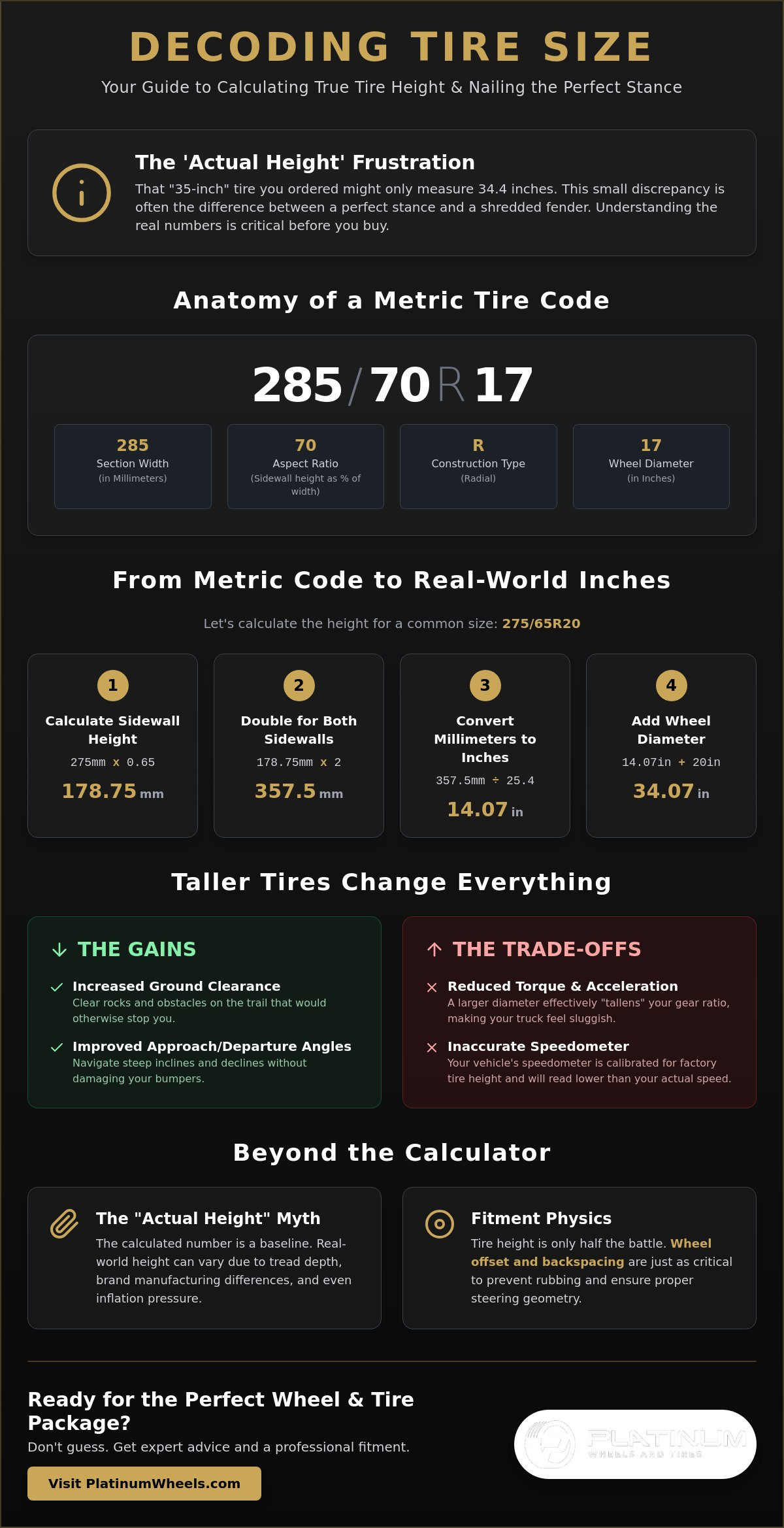
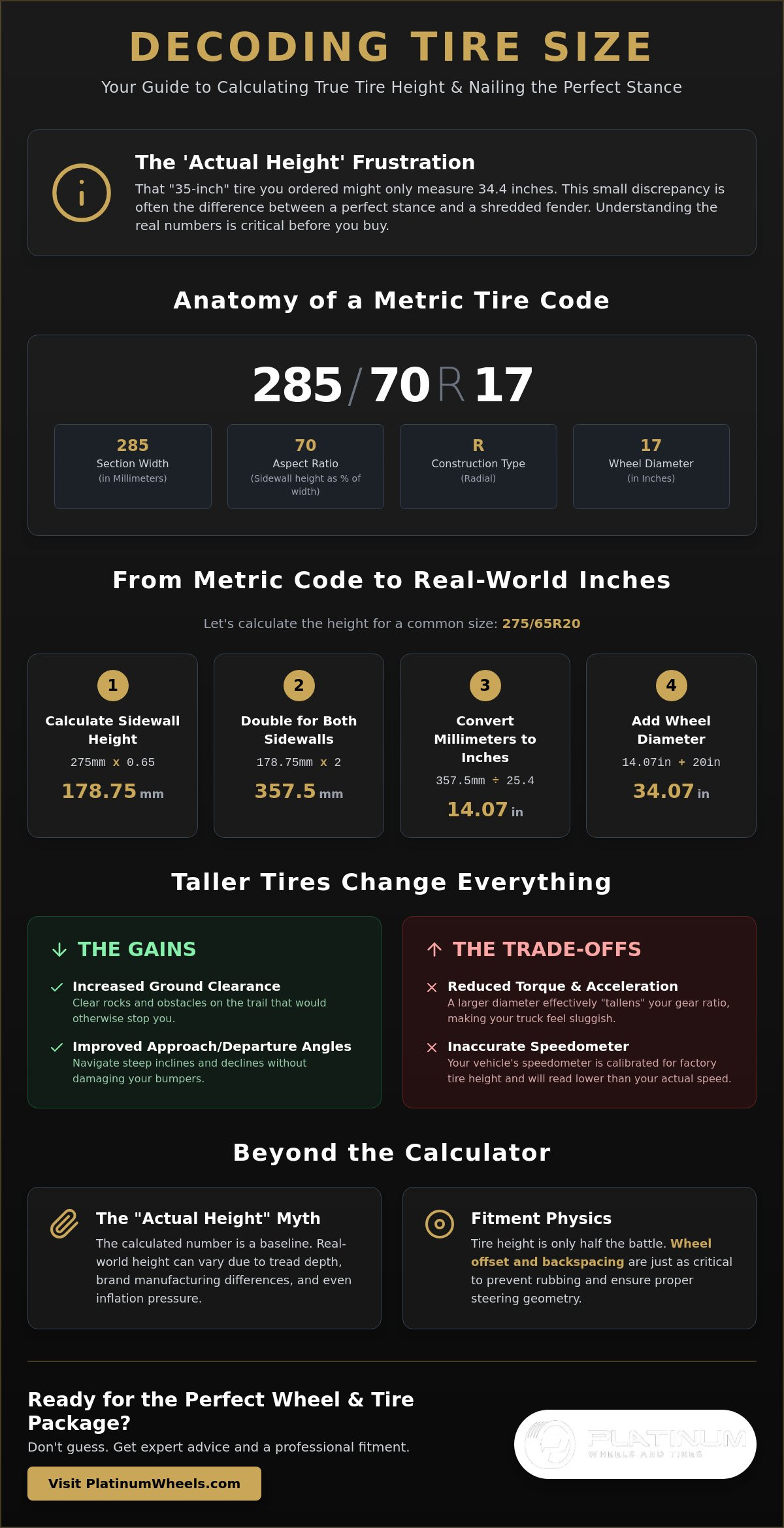
Deciphering a tire’s sidewall requires understanding three specific numbers: section width, aspect ratio, and wheel diameter. To find the total height, you have to account for the rim and the sidewall on both the top and bottom of the wheel. Understanding How to Calculate Tire Height involves converting these metric and imperial units into a single cohesive measurement. Aspect ratio is a percentage of the tire’s width. For example, in a 285/70R17 tire, the "70" means the sidewall height is 70% of the 285mm width. You must double this sidewall measurement and add it to the 17-inch wheel diameter to determine your final diameter.
The Impact of Height on Vehicle Performance
Taller tires don't just change how your truck looks; they fundamentally alter your drivetrain's physics. A larger diameter tire covers more ground in a single rotation, which effectively "tallens" your gear ratio. This results in less torque reaching the pavement, making your truck feel sluggish when accelerating from a stop. Your speedometer will also be inaccurate, as it’s calibrated for a specific factory diameter. This performance dip is especially noticeable here in Denver. Our high altitude already reduces engine output due to thinner air; adding massive tires without using a tire height calculator to plan for potential re-gearing can make those steep I-70 mountain climbs feel like a struggle.
How to Calculate Tire Height: Metric vs. Imperial
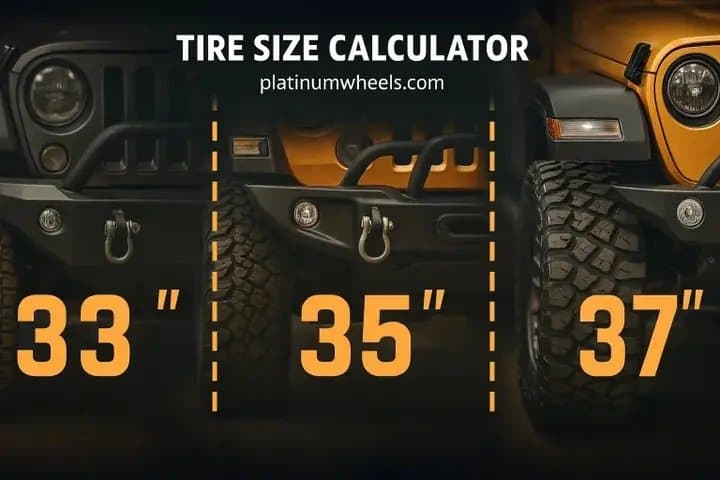
Metric tire codes look like a math problem because they are. Most truck owners in Denver are aiming for the classic 33-inch or 35-inch benchmark. A 33-inch tire is the standard "step up" for a leveled truck, while 35s often require a bit more trimming or a full lift kit. Using a tire height calculator allows you to see exactly where your desired tire falls between these two popular targets. If you're switching from a factory metric size to a larger off-road setup, a tire height calculator is your best tool for avoiding expensive fitment mistakes.
The math follows a specific sequence: (Width x Aspect Ratio x 2 / 25.4) + Wheel Diameter. First, multiply the width by the aspect ratio (expressed as a decimal). Second, multiply that number by two to account for both the top and bottom sidewalls. Third, divide by 25.4 to convert those millimeters into inches. Finally, add the wheel diameter to find your total height. Metric sizing is incredibly precise, but imperial sizing, also known as high-flotation sizing, is much easier to read at a glance. A 35x12.50R20 tells you exactly what you need to know: it’s 35 inches tall and 12.5 inches wide. While this is simpler for clearance planning, it’s often less accurate than metric measurements.
Converting Metric to Inches: A Practical Example
Let’s look at a 275/65R20, a common size for modern heavy-duty trucks. First, multiply 275 by 0.65 to get 178.75mm of sidewall height. Double that to 357.5mm. Now, use the magic number: divide 357.5 by 25.4, which is the exact number of millimeters in one inch. This converts the metric height into 14.07 inches. Add your 20-inch wheel, and you have a nominal height of 34.07 inches. This calculation provides the nominal height of the tire, which serves as a mathematical baseline rather than an exact physical measurement.
Reading High-Flotation (Imperial) Sizes
When you see a 37x13.50R22, the first number is the height, the second is the width, and the last is the rim size. Off-road enthusiasts often prefer this system because it makes it easier to visualize how much room they need in the wheel well. However, even these labels can be misleading. Always check the manufacturer’s spec sheet for the "actual" measured diameter, as a "37-inch" tire might only measure 36.6 inches once mounted. Understanding these nuances is vital for vehicle safety and longevity. This is Why Does It Matter for Your Truck? because improper sizing can affect braking and handling. If you're ready to upgrade, browsing our wheel and tire packages is the best way to see how these sizes look on real builds.
The "Actual Height" Myth: Why Math Can Fail You
A tire height calculator provides a perfect mathematical baseline, but your truck lives in the real world, not a textbook. The diameter you calculate is the "nominal" size. In reality, a tire labeled as a 35-inch might measure anywhere from 34.4 to 35.2 inches. This discrepancy often comes down to tread depth. A dedicated Mud-Terrain tire typically features lugs that are 18/32" to 21/32" deep, whereas a standard All-Season tire might only have 10/32". That extra rubber on the top and bottom of the tire can easily add half an inch to the total vertical diameter, potentially turning a "safe" fitment into a rubbing nightmare.
Air pressure also plays a silent role in your truck's final stance. High PSI makes the tire stand taller, while airing down for the trail reduces the "standing height" significantly. For accurate safety and maintenance information, the NHTSA TireWise Program offers excellent guidance on how these variables impact vehicle performance. Brand variance is the final piece of the puzzle. We often see a Nitto Ridge Grappler measure closer to its advertised height than some budget alternatives, which can run notoriously small. This is why our Denver team doesn't just trust the tire height calculator alone; we trust the tape measure.
Tread Depth and Sidewall Flex
Aggressive shoulder lugs are the most common cause of unexpected rubbing. Even if the math says your tire fits, those chunky side-biters might catch your frame at full steering lock. You must also consider the weight of your vehicle. A heavy diesel engine will compress the front tires more than a light gas engine, reducing the "static loaded radius." This measurement, the distance from the center of the wheel to the ground, is far more important for fender clearance than the total unmounted diameter. It's the difference between a truck that handles well and one that struggles with every bump in the road.
Brand-Specific Sizing Nuances
Different manufacturers test their tires on specific "measured rim widths." If you mount a tire on a rim that is wider than the manufacturer's test wheel, the tire will stretch, effectively lowering its total height. Brands like Toyo and Nitto are legendary for running "true to size," making them favorites for builds with tight tolerances. For more details on how these brands handle Colorado's diverse peaks, check out our guide on choosing the best all terrain tires for mountain driving. Always consult the manufacturer spec sheet to see how a specific tire was measured before you finalize your order.
Fitment Physics: Clearance, Rubbing, and Colorado Terrain
Calculating the diameter with a tire height calculator is only the first step in a successful build. Fitment is a three-dimensional geometry problem. While height dictates ground clearance, your wheel offset and backspacing determine where that tire sits in the wheel well. Negative offset wheels push the tire further out from the hub, creating that sought-after wide stance. However, this also increases the scrub radius, which is the arc the tire travels when you turn the steering wheel. A wider arc means a much higher chance of the tire catching on your front bumper valance or the back of the fender liner, even if the math says the height should fit.
When you're navigating tight switchbacks or rocky sections on Colorado trails, you have to account for suspension compression. Off-roaders call this "stuffing" the tire. As your suspension cycles up, the tire moves deeper into the wheel well. If you've sized your tires based only on how they look sitting in a flat parking lot, you might experience severe rubbing against the frame or the Upper Control Arm (UCA) the moment you hit a trail obstacle. We always recommend leaving a buffer for this vertical movement to ensure your tire height calculator results translate to real-world capability.
Lift Kits and Leveling Kits: Making Room for Height
Most modern half-ton trucks can accommodate 33-inch tires with a simple leveling kit. If you have your heart set on 35s, you generally need a 4-inch to 6-inch lift kit to maintain full steering range without significant metal trimming. For enthusiasts who want an aggressive stance without a massive lift, techniques like the "NorCal Mod" involve trimming the inner metal of the fender to create extra clearance. To decide which path is right for your build, read our guide on Leveling Kit vs. Lift Kit: Which Does Your Truck Need? to see how each option impacts your final clearance.
Mountain Driving and Speedometer Error
Taller tires cover more ground per revolution, which means your speedometer will read slower than your actual speed. This is a major concern in Colorado speed traps like Morrison or Idaho Springs, where even a few miles per hour over the limit can lead to a ticket. Beyond legal issues, larger diameters confuse your truck’s ECU. The vehicle may struggle to find the right gear while climbing I-70, leading to "gear hunting" and increased transmission heat. We recommend using a digital programmer to recalibrate your truck’s computer for the new diameter. This restores factory shift points and ensures your speedometer stays accurate across all terrains. If you're ready to upgrade your setup, explore our custom truck wheels and off-road rims to find the perfect match for your new tire height.
Professional Fitment at Platinum Wheels: Beyond the Math
A tire height calculator is a fantastic tool for the planning stages, but it can’t see the specific wear on your ball joints or the exact clearance of your aftermarket bumper. Mathematical models provide a baseline; our Denver experts provide the reality. We perform hands-on "test fitments" for complex builds to ensure zero rubbing before you ever leave the shop. This physical verification is the only way to be 100% certain that your aggressive new stance won't result in a shredded tire the first time you hit a pothole. We serve the entire Front Range, from Lakewood to Castle Rock, providing a level of expert craftsmanship that national chains simply can't match.
Our consultative approach focuses on your specific lifestyle. We don't just ask what size you want; we ask what you do with your truck. If you’re towing a heavy horse trailer through the foothills, your tire height and sidewall stiffness requirements are vastly different than someone building a dedicated weekend rock crawler. We help you navigate these choices, ensuring your truck remains a tool you can rely on. Every installation at Platinum Wheels includes precision mounting, high-speed balancing, and expert TPMS programming to keep your safety systems functioning exactly as the manufacturer intended.
Custom Wheel and Tire Packages Built for Colorado
We specialize in curating wheel and tire packages that strike a perfect balance between aggressive height and daily drivability. It’s about finding that sweet spot where your truck looks incredible but still fits in your garage and doesn't scream on the highway. We ensure your TPMS sensors are correctly synced with your new taller setup, which is vital for monitoring pressure during Colorado’s extreme temperature swings. Whether you need All-Terrain versatility or Mud-Terrain grip, we build setups that handle the I-25 commute as well as they handle the trail. Get a custom quote for your wheel and tire package today!
Visit Our Shop for a Precision Fit
Local expertise matters because our terrain is unique. A tire that performs well in the desert might struggle on a slushy morning in Lakewood or an icy climb near Castle Rock. Professional installation of lift kits and leveling kits is essential to maintain proper suspension geometry and vehicle safety. We take pride in being a reliable fixture in the community, acting as a trusted advisor for enthusiasts who value precision and honesty. Our team understands the specific environmental demands of the region and treats every truck like it’s our own. Don’t guess the fitment; let the Platinum Wheels pros handle the math.
Build Your Perfect Stance with Precision
Choosing the right diameter for your truck is about more than just aesthetics; it's about performance and peace of mind on the trail. While a tire height calculator provides the essential mathematical baseline, remember that actual fitment is a complex geometry problem involving suspension travel, wheel offset, and real-world tread depth. You now have the knowledge to navigate metric codes and understand why brand variance matters for your specific Colorado build. This foundation ensures you won't be surprised by rubbing or speedometer errors during your next mountain adventure.
At Platinum Wheels, we specialize in off-road fitment tailored for the unique demands of the Front Range. Our team provides expert installation of lift and leveling kits to ensure your new tires have the room they need to perform under full compression. As an authorized dealer for premium brands like Nitto, Toyo, and Fuel Wheels, we possess the local expertise to help you curate a setup that handles the I-70 commute and rocky switchbacks with equal confidence. Browse our Custom Wheel and Tire Packages in Denver and let us help you turn your vision into a reality. Your truck is ready for its next upgrade, and we're here to make sure it's done right.
Frequently Asked Questions
Will 35-inch tires fit on my stock truck without a lift?
No, 35-inch tires will almost certainly rub on a stock truck without at least a leveling kit or a suspension lift. Most modern pickups experience significant contact with the inner fender liners or the frame when you turn the steering wheel to full lock. Even if they seem to clear while parked, the tires will hit the bodywork as soon as the suspension compresses over a bump or a driveway entrance.
How much does a 33-inch tire affect my gas mileage?
Expect a drop of 1 to 2 miles per gallon when switching to a 33-inch tire from a smaller factory size. This happens because the larger diameter is heavier and creates more rolling resistance than original equipment. If you choose an aggressive mud-terrain tread pattern, the impact on your fuel economy will be even more noticeable during highway cruising around the Front Range.
Do I need to recalibrate my speedometer after changing tire height?
You definitely need to recalibrate your speedometer to ensure your truck's computer understands the new diameter. Since a taller tire covers more ground in one rotation, your speedometer will read slower than your actual speed. This also affects your transmission's shift points, which can lead to sluggish performance and gear hunting when you're driving through the mountains.
What is the difference between a 285/70R17 and a 33-inch tire?
A 285/70R17 is a metric size that measures roughly 32.7 inches tall, while a 33-inch tire is an imperial flotation size. While they're often used interchangeably for the same builds, a tire height calculator reveals that the metric version is slightly shorter and usually narrower. This small difference can be the deciding factor in whether a tire rubs against your upper control arms.
How does tire height affect my truck’s towing capacity?
Increasing tire height reduces your effective towing capacity by tallening your gear ratio. This means your engine has to work harder to turn the wheels, which is especially tough on the transmission when pulling a trailer up steep Colorado grades. You'll notice a decrease in low-end torque, making it harder to get a heavy load moving from a dead stop at an intersection.
Can I put taller tires on my factory rims?
You can put taller tires on factory rims as long as you stay within the rim's recommended width range. The main issue with factory wheels is their high positive offset, which tucks the tire deep into the wheel well. This often causes taller or wider tires to rub on the suspension components even if they appear to have plenty of clearance at the outer fender.
What is the max tire height I can run with a 2-inch leveling kit?
Most half-ton trucks can safely run a 33-inch tire with a 2-inch leveling kit without major modifications. While some enthusiasts squeeze in a 34-inch tire, it often requires minor trimming of the plastic air dam or the inner fender liner. Sticking with a 33-inch diameter ensures you have enough room for the suspension to cycle fully without damaging your truck during off-road use.
How much taller is a 35x12.50R20 than a 33x12.50R20?
A 35x12.50R20 is exactly two inches taller than a 33x12.50R20, which results in one inch of additional ground clearance. A tire height calculator helps you visualize that this extra height also raises your truck's center of gravity by that same inch. This change makes a significant difference in how the truck handles on the highway and dictates the amount of lift required for proper fitment.