5 Best Mud Terrain Tires for Colorado Trails: 2026 Expert Guide
Colorado trails aren't just about deep mud; they're a brutal gauntlet of jagged granite and steep, loose inclines that demand a "hybrid-minded" approach to your rubber. We understand the struggle of wanting that aggressive look and off-road bite without the deafening highway drone or white-knuckle slides on a slushy I-70. It's frustrating when your new mud terrain tires look great in the driveway but feel like a liability when you're navigating a late-season snowstorm near Morrison. You need a setup that easily handles the 3/16-inch tread depth requirements of the Colorado Traction Law while still eating up the rocks at Holy Cross.
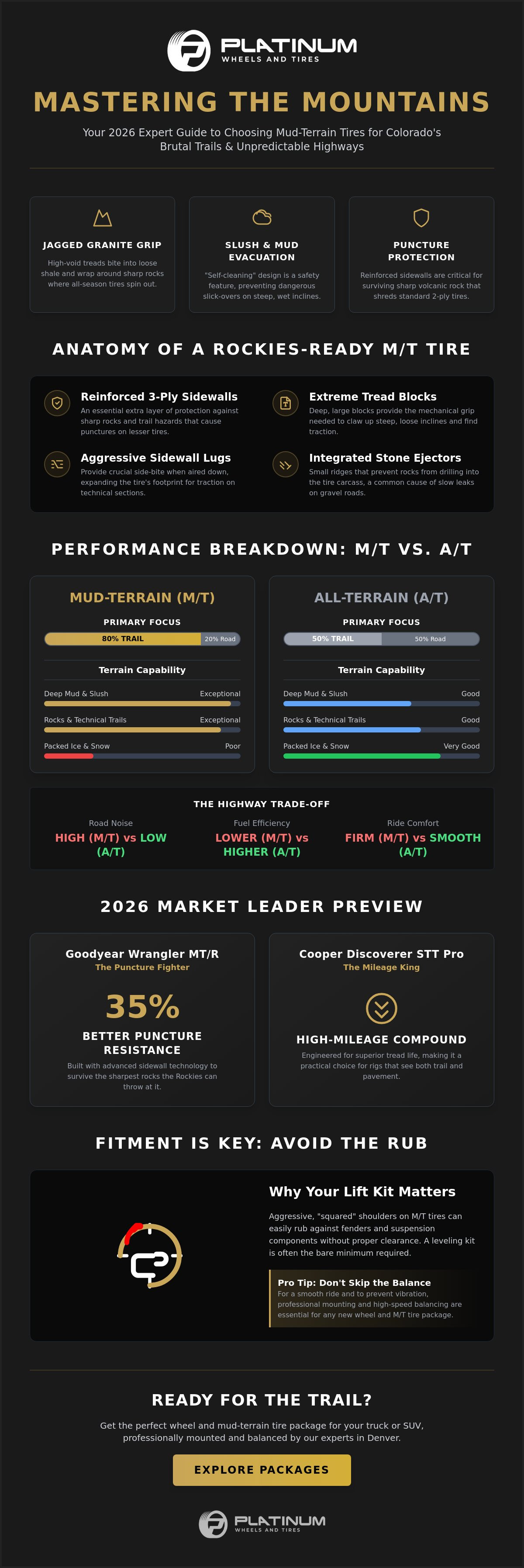
This guide will help you discover the top-rated mud terrain tires specifically suited for our state's unpredictable environment, ensuring you get maximum traction without sacrificing your peace of mind on the pavement. We've vetted the best options for 2026 to solve your biggest headaches, from premature tread wear on heavy rigs to the fear of tires rubbing after a fresh installation. We'll preview the 2026 market leaders, including the Goodyear Wrangler MT/R with its 35% better puncture resistance and the high-mileage Cooper Discoverer STT Pro, to find the perfect fit for your truck or SUV.
Key Takeaways
- Learn how high-void tread patterns provide the necessary debris evacuation for navigating Colorado’s unique mix of loose shale and jagged granite.
- Evaluate the 80/20 trail-to-road balance of mud terrain tires to decide if their superior off-road traction outweighs the increased road noise on the highway.
- Identify the specific sidewall technologies in 2026’s top models that offer the best protection against the sharp rock punctures common in the Rockies.
- Understand the fitment requirements for larger tires, including why a leveling kit is often the bare minimum needed to prevent "squared" tire shoulders from rubbing.
- Discover the practical benefits of professional mounting and high-speed balancing when opting for a complete wheel and tire package for your truck or SUV.
What Makes a Mud Terrain Tire Right for the Rockies?
In the high country, the term "mud terrain" is often a bit of a misnomer. While these tires excel in the spring runoff muck of the Front Range, their true value in Colorado lies in their ability to conquer "Mountain" terrain. Unlike standard tires, off-road tires designed for mud are defined by high-void tread patterns. This means there is significantly more space between the rubber blocks, allowing the tire to bite into loose shale and wrap around jagged granite edges that would leave an all-season tire spinning. For local drivers, choosing the right mud terrain tires isn't just about aesthetics; it's about having a tire carcass built to survive the San Juan Mountains or the technical climbs of Holy Cross.
Anatomy of a Rockies-Ready M/T Tire
The anatomy of a serious M/T tire starts with reinforced 3-ply sidewalls. This extra layer of internal protection is vital when you're navigating trails littered with sharp, volcanic rock that can easily slice through a standard 2-ply tire. Beyond the internal structure, you'll notice extreme tread blocks. These aren't just for show. Depth matters because it provides the mechanical grip needed to claw up steep, loose inclines. Additionally, aggressive sidewall lugs are a game changer for technical sections. When you air down your tires to 15 or 20 PSI for a weekend on the trails, these lugs expand your footprint and provide traction on the sides of the tire. Finally, look for integrated stone ejectors. These small ridges at the base of the tread grooves prevent small rocks from "drilling" into the tire carcass, which is a common cause of slow leaks on long gravel access roads.
Why 'Self-Cleaning' is a Safety Feature
Self-cleaning isn't just about keeping your truck looking clean for the drive home; it's a critical safety feature for Colorado's unpredictable weather. As the tire rotates, centrifugal force flings out the debris that gets trapped in the grooves. If a tire can't clear itself, it becomes "slicked-over." A tire packed with mud or heavy snow effectively becomes a racing slick. This is incredibly dangerous on a steep mountain incline or a narrow shelf road. High void ratios ensure that every rotation provides a fresh, clean biting edge. This debris evacuation is what separates a true M/T from a hybrid tire. When you're facing a 20-degree grade covered in wet slush, you'll want that maximum evacuation capability to keep your vehicle moving forward rather than sliding backward toward a ledge.
Performance Breakdown: Mud-Terrain vs. All-Terrain in Colorado
Choosing between All-Terrain (A/T) and Mud-Terrain (M/T) tires usually comes down to where you spend your time. A/T tires are designed for a 50/50 balance, split between highway comfort and light trail use. In contrast, mud terrain tires are 80/20 trail-focused. They're built for the person who spends their Saturday winching through technical obstacles and their Sunday washing off mountain mud. While the aggressive look is undeniable, it's vital to understand the functional differences before you commit to a set.
The Highway Trade-off
Cruising I-25 at 75 mph reveals the "Noise Penalty" of an aggressive tread. The large voids that clear mud also trap air, creating a distinct hum or roar. Modern designs like the Nitto Trail Grappler have made strides in noise reduction, but they'll never be as silent as a highway-rib tire. Beyond the sound, expect a slight dip in fuel efficiency due to increased rolling resistance. Vibration can also become an issue if you don't stay on top of maintenance. We recommend following NHTSA tire safety guidelines for regular rotations and pressure checks to ensure your rig stays stable. To keep your ride smooth, our team at Platinum Wheels provides professional mounting and high-speed balancing for every wheel and tire package we sell.
Traction Comparison: Rocks, Mud, and Snow
In deep "Colorado Slush," M/T tires are the undisputed kings. Their massive tread blocks act like paddles, pushing through heavy, wet snow that would clog a tighter A/T pattern. However, the story changes on packed ice or frozen blacktop. Because mud terrain tires often lack the dense "siping" (small slits in the rubber) found on winter-rated tires, they have fewer biting edges for slippery pavement. Off the pavement, the M/T carcass typically offers an "Airing Down" advantage. The heavy-duty construction allows the tire to flex and "wrap" around rocks at low pressures, providing a massive contact patch for technical crawling. Hybrid terrain tires represent the 2026 sweet spot for many drivers, blending the quiet interior of an A/T with the aggressive sidewall and shoulder lugs of a dedicated mud tire.
Longevity and Wear
M/T compounds are typically softer to provide better grip on slick rock. This means they usually wear faster than their A/T counterparts, especially on heavy trucks. If you do a lot of highway miles, you might see a shorter lifespan. Regular rotation is the best way to fight uneven wear and extend the life of your investment. It's a trade-off for the extreme durability and puncture resistance you get when you're miles away from the nearest paved road.
Top 5 Mud Terrain Tires for 2026: Platinum Wheels Expert Picks
Selecting the right set of mud terrain tires for 2026 requires looking past the aggressive tread and into the specific rubber compounds that handle our temperature swings. At Platinum Wheels, we've tested the latest releases on local trails to see which ones actually live up to the hype. Whether you're commuting from Aurora or heading up to Estes Park, these five picks represent the pinnacle of off-road performance and reliability. We prioritize tires that offer more than just a "mean look," focusing instead on structural integrity and technical grip.
The Nitto Trail Grappler M/T remains the reigning king of the Colorado Front Range. It's the tire we most frequently recommend for 3/4-ton trucks in Denver because it balances heavy-duty load capacity with a surprisingly civilized highway manner. For those who prioritize pure durability, the Toyo Open Country M/T is renowned for having the toughest sidewalls in the industry. It's the go-to choice for our customers in Lakewood who want a tire that can withstand the sharp shale of the high passes while still delivering maximum mileage. Some drivers even report getting over 50,000 miles from a single set.
For 2026, the "Quiet-Tech" challenger is the BFGoodrich Mud-Terrain T/A KM3. By using an optimized pitch sequence, it reduces the rhythmic drone common in older designs. This model is often cited among the best mud-terrain tires for its 8% improvement in rock traction over its predecessor. If you're looking for a high-value option, the Cooper Discoverer STT Pro offers a budget-friendly trail performer that doesn't sacrifice puncture resistance. Finally, for the dedicated weekend warriors frequenting Moab or the technical sections of Estes Park, the Mickey Thompson Baja Boss M/T stands as the extreme rock crawler of choice.
The Heavyweight Champions: Nitto and Toyo
Our real-world feedback from Platinum Wheels customers confirms that the Nitto Trail Grappler handles the weight of modern diesel rigs without feeling "squishy" on the curves. Toyo’s construction is equally impressive. Many local drivers appreciate the peace of mind that comes with their overbuilt sidewalls when navigating jagged granite. These two brands dominate the market because they've perfected the balance between trail bite and structural integrity. They're built to be abused on the weekends and driven to work on Monday morning.
Best Value and Specialized Options
When you're selecting a tire, pay close attention to the ply rating. For most Colorado SUVs and trucks, "Load Range E" is the standard. This 10-ply equivalent provides the stiffness needed to prevent sidewall roll during mountain cornering. Additionally, consider how tread compound affects your wet-weather braking distances on slushy roads. Softer compounds grip rocks better but can feel different on wet pavement. Finally, your wheel diameter changes everything. A 17-inch wheel allows for more "sidewall cushion" when aired down, while a 20-inch setup offers sharper handling but less protection for the rim on jagged trails.
Fitment and Clearances: Why Your Lift Kit Matters
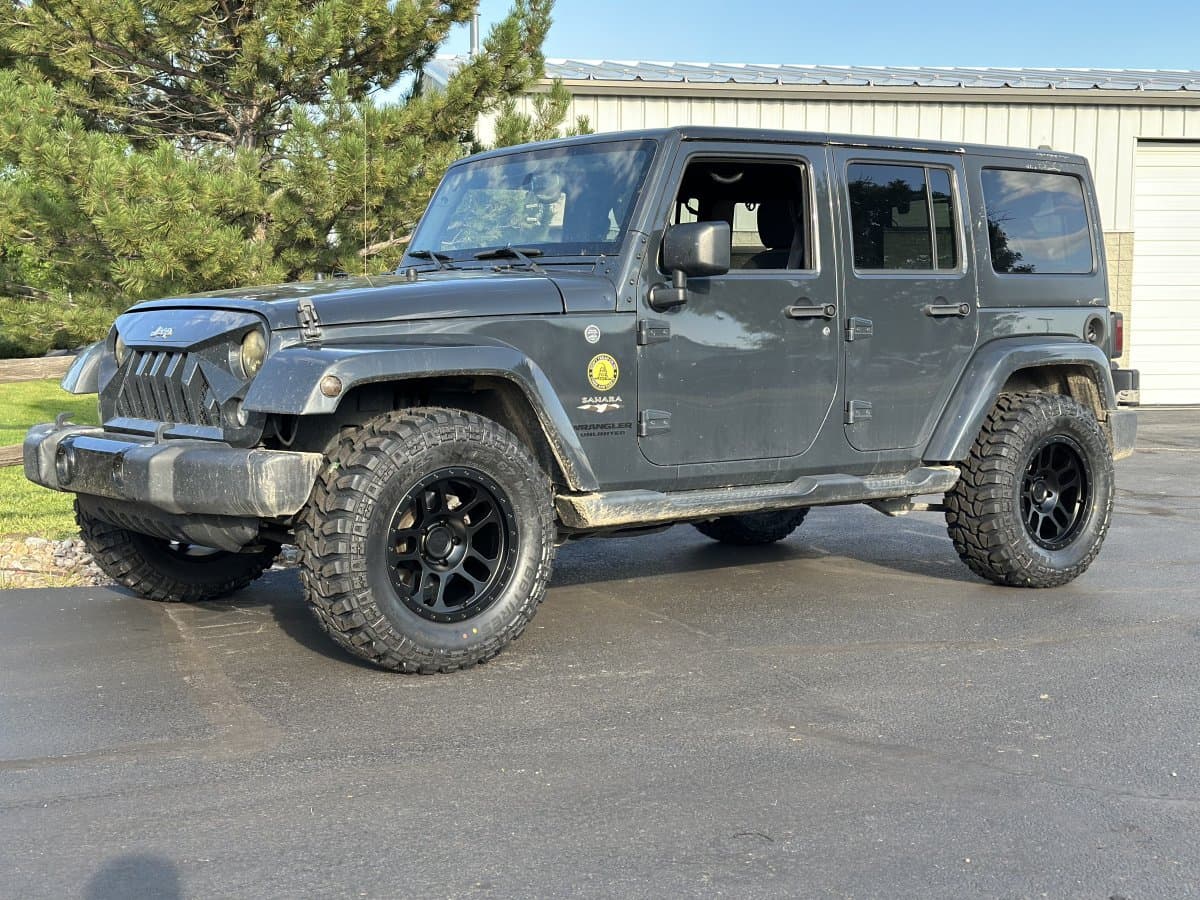
Installing a set of aggressive mud terrain tires isn't as simple as matching the numbers on the sidewall. Many drivers assume that if a 33-inch all-terrain tire fits, a 33-inch mud tire will too. However, mud-terrain designs often feature "squared" shoulders and massive side biters that extend the tire's actual width. These aggressive lugs frequently rub against suspension components or fender liners where a rounded A/T tire wouldn't. Understanding the relationship between your tire's shape and your vehicle's wheel well is the first step to avoiding a costly mistake.
The 35-inch tire dilemma is a common conversation at our shop. For most modern trucks, a 35-inch tire is the goal, but it rarely fits on a stock suspension without significant issues. A leveling kit is usually the bare minimum requirement for fitment. By raising the front of the vehicle to match the rear, you create just enough vertical clearance to house that extra rubber. However, vertical space is only half the battle. You also have to account for the tire's path when the steering wheel is at full lock. This is where wheel offset and backspacing become critical factors in your build's success.
When you move beyond standard sizes, professional installation sometimes requires minor modifications known as the "Chop and Trim." This might involve trimming plastic fender liners or performing a body mount chop to ensure the tires don't catch during heavy suspension articulation. It's a precise process that requires an expert eye to maintain the structural integrity of your vehicle while maximizing its off-road potential.
Leveling Kits vs. Suspension Lifts for M/T Tires
A 2-inch leveling kit is often the "sweet spot" for Colorado truck owners. It provides a cleaner stance and allows for larger tires without completely redesigning the suspension geometry. If your goal is to run 37-inch tires for more technical trails, a full suspension lift is mandatory. These kits do more than just add height; they drop the differential and extend control arms to maintain factory ride quality while increasing ground clearance. Selecting the right lift kits and leveling kits ensures your rig performs as well on the highway as it does on the rocks.
The Role of Wheel Offset
Wheel offset determines how far your wheels sit inside or outside the fender. A negative offset creates that aggressive, wide stance that many enthusiasts crave. While it looks great, pushing the tire outward changes its scrub radius. This means the tire travels in a wider arc when you turn, making it more likely to strike the front bumper or the rear of the wheel well. Too much offset can turn a simple upgrade into a headache of constant rubbing. At Platinum Wheels, we use laser-precise measurements to calculate the perfect offset for your specific vehicle. Our goal is a "no-rub" fitment, ensuring your tires have plenty of room to breathe even when the trail gets rough.
Get Trail-Ready at Platinum Wheels in Denver
Choosing the right rubber is only half the battle. Bringing your vision to life requires a shop that understands the specific demands of the Front Range. At Platinum Wheels, we serve the Denver and Aurora communities with a focus on precision and local expertise. When you're ready to upgrade to mud terrain tires, we're here to ensure the transition from the showroom to the trailhead is seamless. We don't just sell parts; we provide the professional guidance needed to build a rig that performs as good as it looks.
Opting for one of our wheel and tire packages is the most efficient way to transform your vehicle. Buying these as a bundle saves you both money and the headache of matching offsets to tire widths on your own. We handle the technical heavy lifting, ensuring that your new mud terrain tires are perfectly mated to your rims before they even touch your truck. This integrated approach eliminates fitment surprises and ensures your setup is trail-ready the moment you leave our shop.
Our installation process is built on technical accuracy. We utilize a high-speed balancing process that is essential for the heavy, aggressive lugs found on M/T tires. Without this precision, you'll feel every vibration when you're cruising down I-25. Additionally, we prioritize the installation of new TPMS sensors with every upgrade. These sensors are vital for maintaining your vehicle's safety systems, especially when you're adjusting pressures for different trail conditions. We make sure your tech works perfectly with your new hardware.
The Platinum Wheels Advantage
We pride ourselves on being professional enthusiasts. Our technicians actually spend their weekends off-roading, so they understand the practical challenges you face. This hands-on experience allows us to provide expert fitment consultations for your Ford, Chevy, or RAM. We know exactly where a 35-inch tire might catch on a Ford F-150 or how much clearance a RAM 2500 needs for full articulation. Beyond the initial install, we're your local partner for long-term support. Bring your rig back to us for regular rotations and re-balancing to ensure you get the maximum lifespan out of your investment.
Ready to Transform Your Truck?
Don't leave your off-road performance to chance. Whether you're looking for a specific load range or need advice on the best tread compound for Colorado slush, we're ready to help. You can browse our gallery of local Colorado builds to see how different combinations look on vehicles just like yours. If you're ready to take the next step, we'll provide a detailed quote for a custom setup tailored to your driving style.
Schedule your expert tire consultation at Platinum Wheels today and let’s get your rig ready for the high country.
Conquer the High Country with Confidence
Navigating the Rockies requires more than just a set of aggressive treads. We've explored how the right tread anatomy protects your rig from jagged granite and why precise fitment is the difference between a smooth ride and constant rubbing. Choosing the best mud terrain tires for 2026 means balancing aggressive trail bite with the technical requirements of your specific suspension setup. It's about having the peace of mind that your vehicle is truly ready for whatever the trail throws your way, from deep spring mud to sharp mountain shale.
At Platinum Wheels, we specialize in Colorado-specific truck setups that handle everything from the I-70 corridor to technical mountain passes. Our team provides expert installation of lift and leveling kits to ensure your new rubber has the clearance it needs to perform without compromise. We're proud to be a local fixture, serving the entire Front Range from Denver to Colorado Springs with precision craftsmanship and honest, neighborly advice. Let's get your rig dialed in so you can focus on the journey ahead rather than worrying about your equipment.
Build Your Custom Wheel and Tire Package Today. Your next adventure is waiting just past the pavement. We'll see you on the trails.
Frequently Asked Questions
How long do mud terrain tires typically last on Colorado roads?
Most mud terrain tires last between 30,000 and 50,000 miles depending on the rubber compound and your driving habits. Heavier trucks or softer compounds designed for extreme rock crawling will see faster wear on hot summer pavement. Regular rotations every 3,000 to 5,000 miles are critical to prevent "cupping" and uneven tread depth. Staying on top of this maintenance ensures you get the maximum value from your investment while driving between Denver and the trailheads.
Are mud terrain tires good in the snow and ice found in the Rockies?
These tires are fantastic for deep, heavy slush but can be tricky on packed ice. The large tread blocks act like paddles in deep snow, but they often lack the small slits, or sipes, that grip frozen pavement. If you drive the I-70 corridor often, remember that the Colorado Traction Law requires at least 3/16 inch of tread depth. For icy conditions, a siped hybrid or dedicated winter tire might feel more stable than a traditional M/T.
Do I need a lift kit to run 33-inch or 35-inch mud tires?
You'll typically need at least a leveling kit for 33-inch tires and a full suspension lift for 35s. Because mud terrain tires have squared-off shoulders, they take up more room during a turn than standard factory tires. A 2-inch leveling kit is usually enough to clear 33s on most modern half-ton trucks. For 35s, you'll need the extra height and specific wheel offsets to prevent the lugs from catching on your fender liners or suspension components.
How much louder are M/T tires compared to standard factory tires?
Expect a noticeable hum or "drone" that increases with speed and as the tread wears down. This noise is caused by air being trapped and released from the large tread voids. While modern designs use variable pitch sequences to dampen the sound, they're never as silent as a highway-rib tire. If you aren't rotating them regularly, the noise usually becomes more pronounced over time. Professional balancing at our shop helps minimize vibrations associated with this aggressive tread.
Can I use mud terrain tires for towing a heavy trailer or camper?
You can absolutely tow with M/T tires if you choose a Load Range E or 10-ply equivalent rating. These reinforced sidewalls handle the extra weight of a camper or trailer without excessive swaying on mountain curves. Always check your tire's maximum load capacity on the sidewall before hitching up. Maintaining proper high-pressure levels is essential when towing on steep grades to keep the tire carcass cool and stable throughout your trip.
What is the best tire pressure for off-roading on Colorado trails?
Most drivers drop their pressure to 15 or 20 PSI for technical trails to gain better grip on rocks and shale. This allows the tire to "wrap" around obstacles and increases your contact patch. Don't go below 12 PSI unless you have beadlock wheels, as you risk popping the tire bead off the rim. Always carry a portable compressor to air back up to street pressures before you head home on the highway to avoid heat buildup.
Is it worth getting a 'Hybrid' tire instead of a full Mud Terrain?
It's worth it if your rig is a daily driver that only hits the dirt once or twice a month. These tires offer the quiet highway ride of an all-terrain with the aggressive sidewall look of a mud-terrain. They often provide better wet-pavement braking and typically last longer than traditional M/T models. It's a practical compromise for someone who wants mountain capability without the full highway noise penalty or faster tread wear.
Why should I replace my TPMS sensors when getting new off-road tires?
Replacing sensors during a tire swap is the most efficient choice because the batteries typically last 5 to 10 years. Since the tire is already off the wheel for your upgrade, you avoid paying for the same labor twice later on. New sensors ensure your dashboard alerts stay accurate when you're adjusting pressures for different trail conditions. This gives you peace of mind that your safety systems are monitoring your pressure correctly during every high-country adventure.