Best Wheel and Tire Packages in Denver | Expert Guide
Wheels are only half the package. Wheel and tire packages pair wheels with tires, but the combination must also fit your truck and the way you drive. Mounting and balancing are part of preparing the setup, and package inclusions can vary.
It’s easy to focus on the look of a new setup, especially when choosing a stance for Denver roads and weekend trails. Fitment matters just as much: wheel diameter, width, offset, and bolt pattern all affect whether a setup works for your vehicle.
This guide explains what a wheel and tire package includes, how to choose compatible sizes, and what mounting and balancing involve. You’ll also learn what affects package pricing, so you can compare options with a clearer picture of what you’re getting. From all-season tires for daily driving to aggressive tread for off-road use, the details can help you choose a setup that suits your truck and your needs.
Key Takeaways
- Start with your vehicle and fitment details to narrow down combinations that suit your truck and driving needs.
- Compare wheel diameter, width, offset, and lug pattern before choosing a tire size or tread style.
- Know what mounting and balancing involve so you understand the installation steps behind a ready-to-drive setup.
- Look beyond the package price: the components and services included shape what you’re comparing.
What's in a Tire & Wheel Package?
A package pairs wheels and tires selected to work together on a vehicle. Start with vehicle-specific fitment, then compare the components and installation details included.
Vehicle-Specific Fitment
Search by year, make, model, and trim, then use your vehicle’s fitment details to narrow the options. Check wheel diameter and width, offset, bolt pattern, and tire size together. A tire may fit the rim but still be unsuitable if the wheel’s mounting pattern or position doesn’t match the vehicle. If you tow or haul, consider the wheel’s weight rating for those tasks.
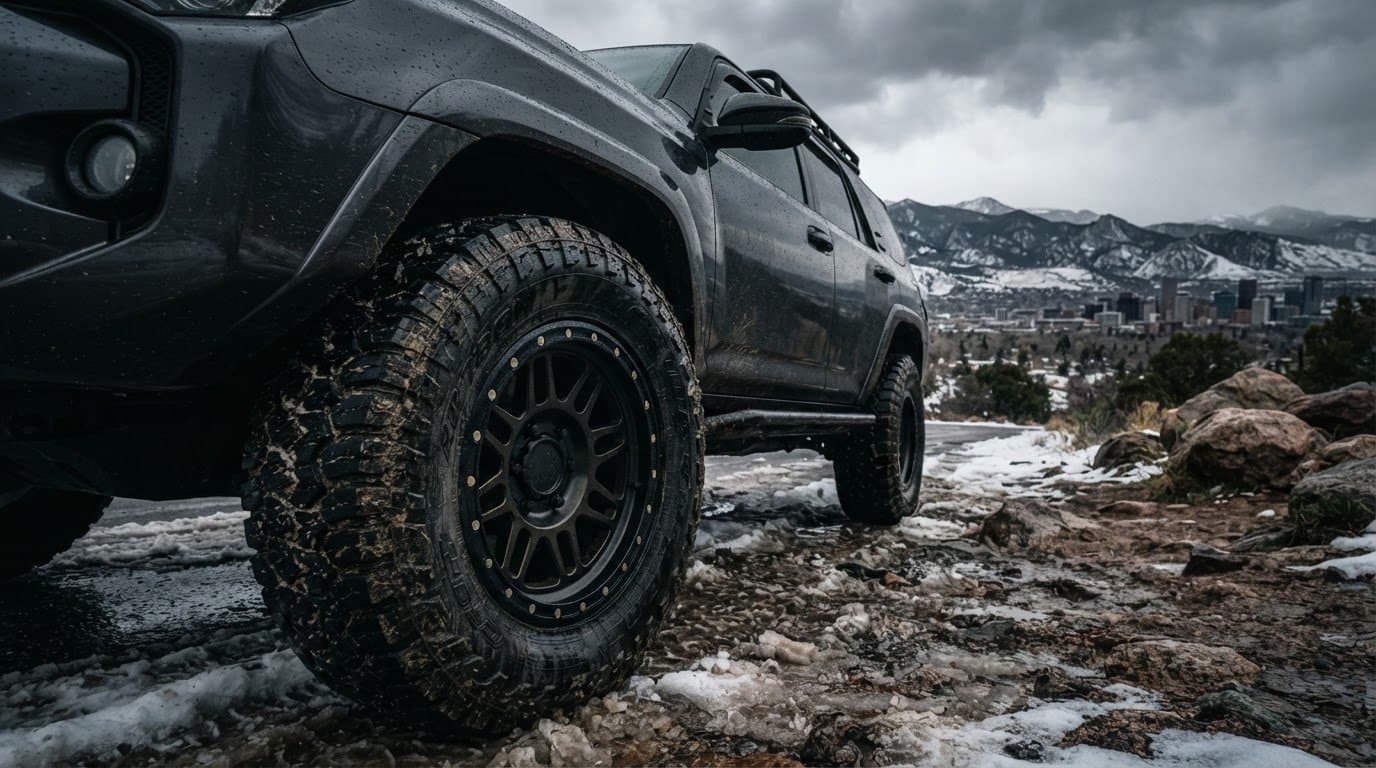
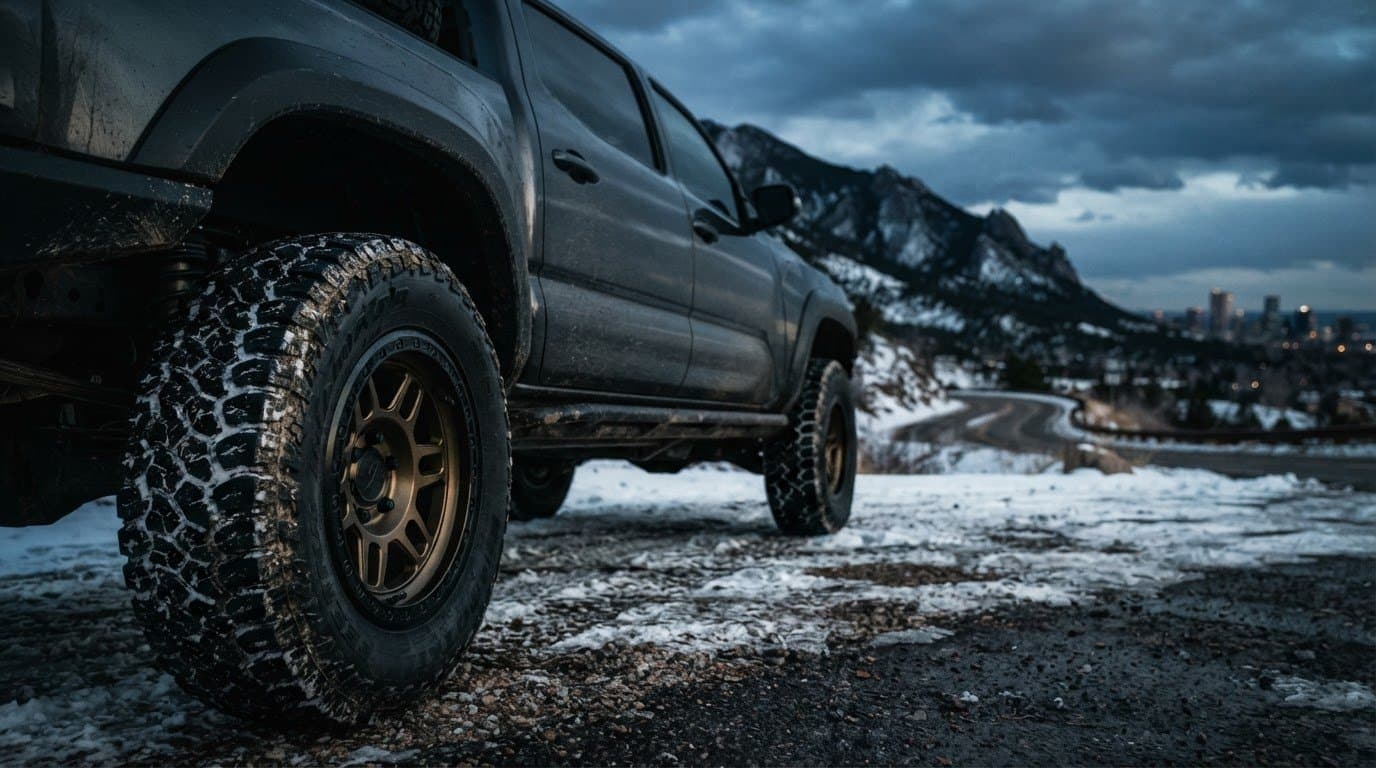
All-terrain and mud-terrain tires have deeper, more aggressive tread than many other tires. All-season tires can suit pickups used for daily driving in varied conditions. Choose based on how you drive, not appearance alone.
Fitment Verification
Before choosing a larger or wider setup, compare its dimensions with your vehicle’s current fitment. Check clearance around suspension and body components, wheel offset, bolt pattern, and the tire’s overall size. A wider rim and tire can create a larger road contact patch and may support steering and stability, particularly at higher speeds, but compatibility still matters.
In Colorado, don’t assume a size change is automatically compliant. Requirements can depend on the vehicle and its modifications, so confirm the rules that apply before installation. Inspect existing wheels, too: cracks or warping are signs they need replacement.
Package Versus Separate Purchases
Buying wheels and tires together groups the fitment decisions, making it easier to compare a coordinated combination. Buying each separately gives you more control over individual choices, but you must ensure the tire fits the wheel and both suit your vehicle. Either way, compare the listed components and check whether mounting and balancing are included.
You can shop online using your vehicle and fitment details, or visit a local retailer to review options in person. Warranty coverage and return terms vary, so read the written terms for the specific wheels and tires before purchase.
Choosing wheel and tire sizes
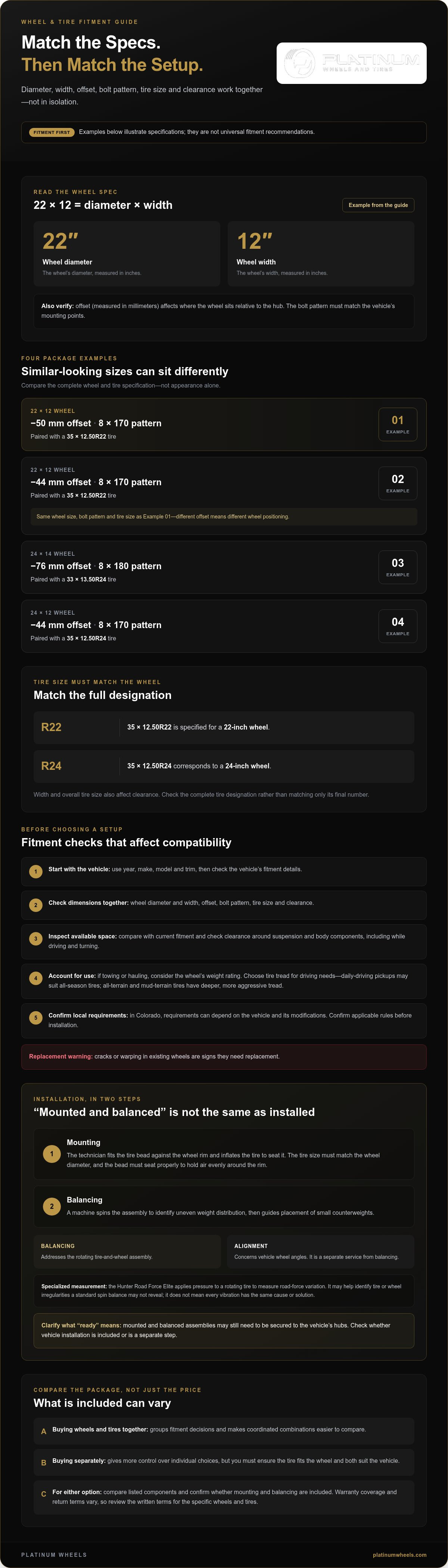
Choose a wheel and tire combination by matching its dimensions to your truck and intended driving. Consider diameter, width, offset, bolt pattern, tire size, and clearance together as one fitment decision.
Wheel Sizes and Bolt Patterns
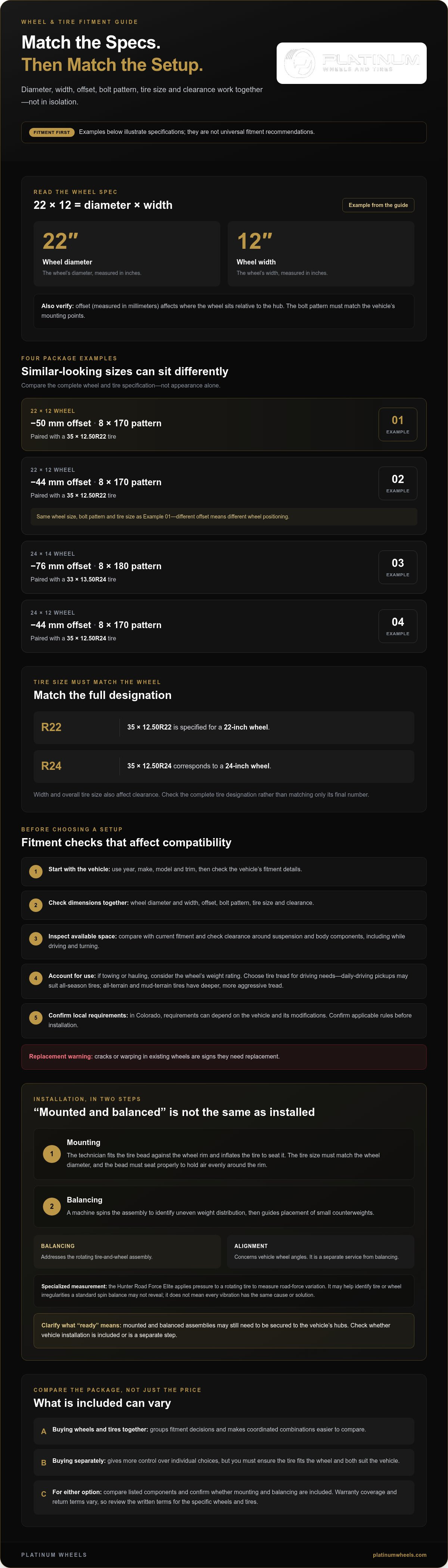
A wheel size such as 22x12 describes a 22-inch diameter and 12-inch width. Offset, measured in millimeters, affects how the wheel sits relative to the hub, while the bolt pattern must match the vehicle’s mounting points. For example, an 8x170 pattern differs from an 8x180 pattern, so those wheels are not interchangeable simply because their diameters look similar.
Tire Sizes and Types
Read the full tire size alongside the wheel diameter. A 35x12.50R22 tire is specified for a 22-inch wheel, while a 35x12.50R24 tire corresponds to a 24-inch wheel. The width and overall size also affect clearance, so compare the complete tire designation rather than matching only its final number.
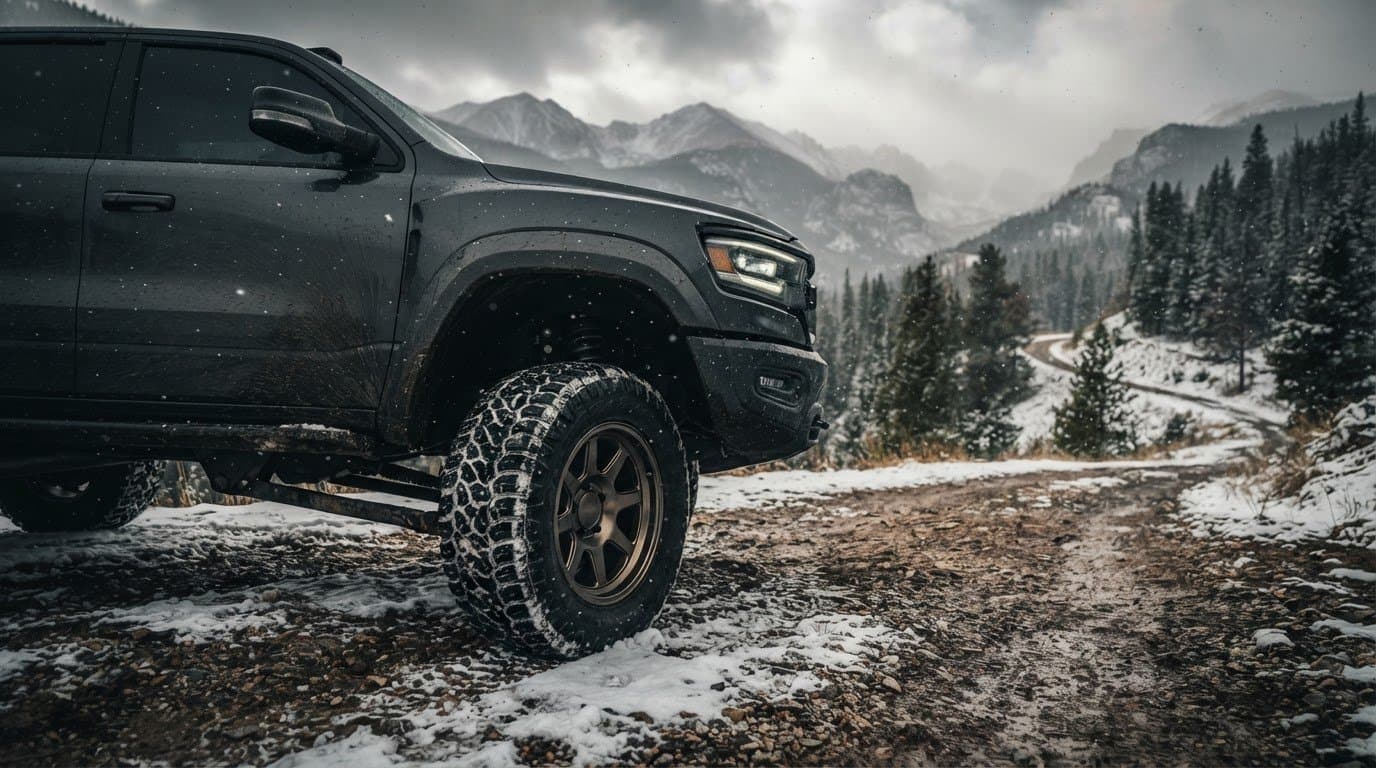
For a lifted truck, assess tire size against the truck’s suspension, wheel offset, and available clearance. A larger tire needs more space around the wheel while driving and turning. Don’t assume a lift alone settles fitment; wheel width and offset also affect where the tire sits.
Package examples show why every specification matters: a 22x12 wheel with a -50mm offset and 8x170 pattern is paired with a 35x12.50R22 tire. Another 22x12 example uses a -44mm offset, the same 8x170 pattern, and the same tire size. Similar dimensions can still mean different wheel positioning.
A 24x14 wheel with a -76mm offset and 8x180 pattern is shown with a 33x13.50R24 tire. A separate 24x12 example uses a -44mm offset, an 8x170 pattern, and a 35x12.50R24 tire. These combinations illustrate why compare-and-match selection must include the pattern, offset, width, and tire size, not appearance alone.
A wider rim and tire can create a larger road contact patch and may support steering and stability, particularly at higher speeds. Weigh those potential benefits against your truck’s fitment and driving needs before choosing.
Mounted and balanced wheel-and-tire packages
“Mounted and balanced” describes two separate preparation steps. Mounting secures each tire to its wheel; balancing corrects uneven weight distribution before the assembly goes onto the vehicle.
During mounting, a technician fits the tire bead against the wheel rim and inflates the tire to seat it. The tire’s size must match the wheel diameter, such as a 22-inch tire specification paired with a 22-inch wheel. Proper bead seating matters because the tire must hold air evenly around the rim. The completed assembly is then ready for balancing.
Balancing addresses heavy and light spots in the tire-and-wheel assembly. A balancing machine spins the assembly, identifies imbalance, and guides placement of small counterweights. This differs from wheel alignment: balancing concerns the rotating assembly, while alignment concerns vehicle wheel angles. A balanced assembly may still need separate alignment work if the vehicle’s handling or steering indicates an issue.
The Hunter Road Force Elite is a specific balancing machine that applies pressure to a rotating tire to measure road-force variation. This additional measurement can help identify tire or wheel irregularities a standard spin balance may not reveal. It’s a tool, not a promise that every vibration has the same cause or solution.
Before choosing a mounted-and-balanced package, clarify what “ready” means for your purchase. A package may include tires mounted and balanced on wheels, while installation onto the vehicle is a separate step. Check whether the assemblies are ready to install on the vehicle or need more work after delivery. For example, four assemblies mounted on rims still need to be secured to the vehicle’s hubs.
Use this short checklist to compare package details:
- Confirm the tire size matches the wheel diameter.
- Check whether balancing is included with mounting.
- Clarify whether delivery includes vehicle installation.
- Inspect each assembly for visible damage before installation.
Wheel and tire package pricing
Compare the whole package, not just the wheels and tires shown first. The total depends on wheel material and design, tire type and size, fitment, and included preparation or installation. A custom off-road combination and an all-season daily-driving setup use different components, so their prices aren’t directly comparable.
Start by identifying what the listed price covers. Check whether it includes four wheels, four tires, mounting, balancing, TPMS sensors, and installation on the vehicle. These are distinct items. A package with mounted assemblies, for example, may not include fitting them to your truck. Comparing the same inclusions gives you a more useful cost picture.
Next, compare the specifications that shape component choice. Wheel diameter and width, offset, bolt pattern, and load rating help determine which wheels suit the vehicle. Tire size and tread type matter, too. Mud-terrain and all-season tires serve different driving needs, so choosing by price alone can lead to an unfair comparison.
Look for added options or surcharges in an online configurator, and note what each option changes. A different finish, tire model, or fitment can change the package total. Separate product costs from services shown at checkout, such as mounting, balancing, delivery, or vehicle installation. This helps you see whether two listings offer the same finished setup.
Use a simple comparison: record the wheel specifications, tire model and size, included preparation, TPMS components, and installation terms. Then compare packages with matching details. The clearest takeaway is that package pricing follows the parts and work selected, not a single standard rate for every truck. For a tailored combination, explore custom wheel and tire options and compare the components that fit your priorities.
Platinum Wheels: Custom Truck Wheels & Off-Road Rims
Platinum Wheels helps Denver truck owners match fitment choices with the look and driving demands they have in mind. Its offerings include custom truck wheels and off-road rims, all-terrain and mud-terrain tires, wheel and tire packages, and lift and leveling kits.
Turn to Platinum Wheels to compare a coordinated wheel-and-tire setup, choose tread suited to your driving, or plan wheels alongside a lift or leveling kit. Bring your vehicle details and priorities, such as daily driving, towing, or off-road use. That information helps guide a choice based on fitment and intended use, not appearance alone.
If you’re ready to discuss a setup for your truck, contact Platinum Wheels.
Choose a Setup That Fits Your Next Chapter
Let your truck’s real-world role guide the final decision. Think beyond your next drive: consider the roads you use around Denver, the seasons you drive through, and whether your routine includes work, travel, or off-road weekends. Clear priorities make it easier to choose a setup that suits your everyday needs.
When comparing wheel and tire packages, picture how each option fits your routine, not just how it looks parked. Choosing around your needs helps make the decision more purposeful and keeps you focused on specifications that matter to your plans. If your driving needs are changing, factor that in now.
Bring your vehicle details and priorities into the conversation, then explore the options with Platinum Wheels. Start a conversation about your setup and take the next step with confidence.
Frequently Asked Questions
Is mounting and balancing really free?
Mounting and balancing aren’t automatically free across the market. Platinum Wheels’ complete packages include mounting and balancing. Free services include a wheel and tire fitment consultation, wheel test fitment, air, TPMS programming, quick alignment checks, quick-check alignment, and rim, tire, package, and shipping quotes. For a separate purchase, review the service details instead of assuming installation is included.
What exactly is included in a package?
Platinum Wheels’ complete packages include wheels, tires, mounting, balancing, and alignment. TPMS sensors are also available with its packages and tire offerings; the exact components depend on the selected setup. Consider whether your vehicle needs sensors and whether the package includes the work you need, not just the parts.
Will the package fit my truck?
A suitable package must match your truck’s wheel specifications and tire clearance. Platinum Wheels offers a free wheel and tire fitment consultation and wheel test fitment to help you decide. Have your truck’s year, make, model, and trim ready, and note any lift or leveling changes. These details help identify fitment considerations before you settle on a combination.
What are wheel and tire packages?
Wheel and tire packages combine wheels and tires as a coordinated setup, rather than requiring you to choose each component separately. For example, a truck owner might pair custom off-road rims with all-terrain or mud-terrain tires. Package options can also account for vehicle fitment and installation needs, helping you assess the full setup instead of comparing a wheel or tire on its own.
How much do these packages cost in the United States?
There’s no single price for wheel and tire packages across the United States. The total depends on wheel design and specifications, tire type and size, and any selected TPMS or installation work. Alignment, shipping, and other included services can also affect what a package covers. Compare quotes using the same components and services, rather than relying on the headline price alone.
How do I find the correct wheel and tire package for my vehicle?
Start with your vehicle’s year, make, model, and trim, then define how you drive and whether the suspension has been changed. Use these details to guide fitment before choosing components. Platinum Wheels serves drivers in Denver, Aurora, Lakewood, Englewood, Wheat Ridge, Commerce City, Westminster, Thornton, Broomfield, Arvada, Golden, Littleton, Parker, Highlands Ranch, Castle Rock, Boulder, Fort Collins, and Colorado Springs.