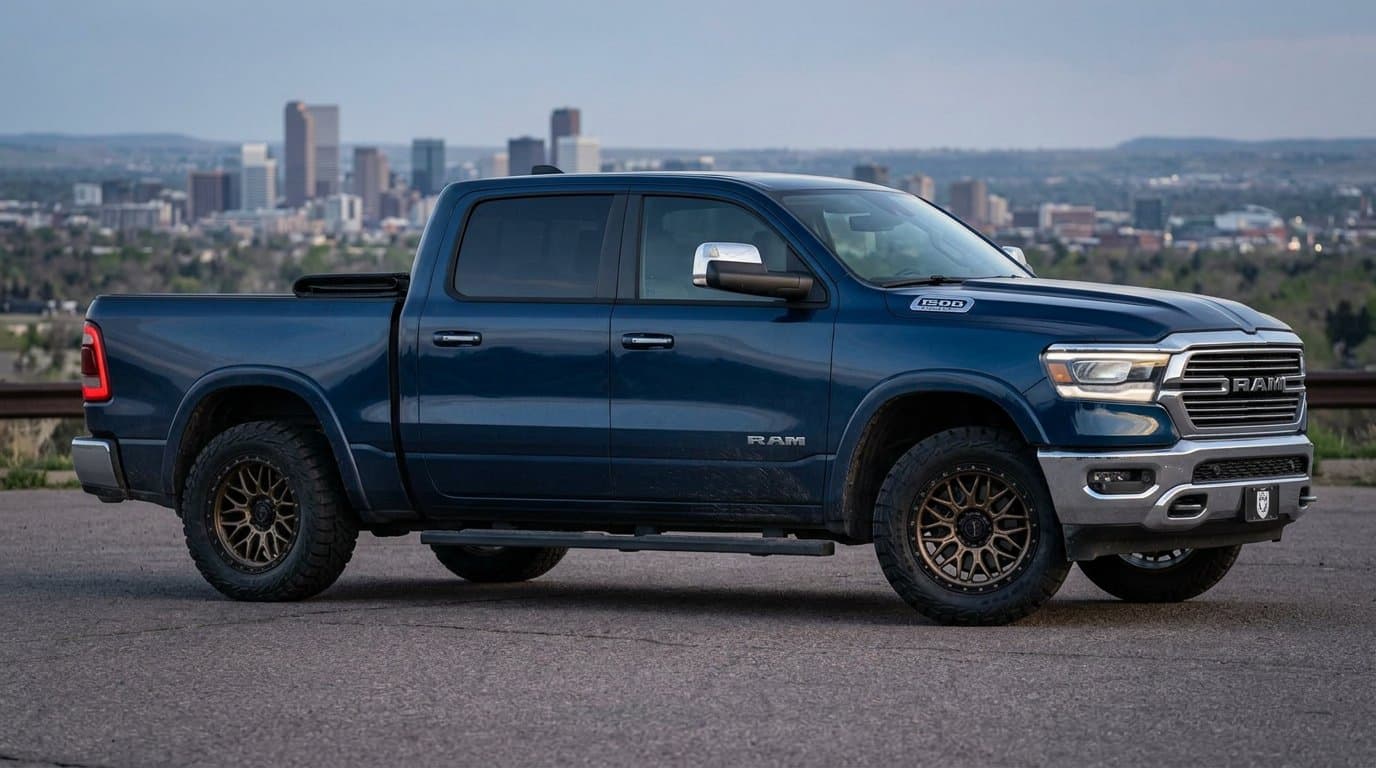
Ram 1500 Leveling Kit Guide: Pro Installs in Denver, CO
A taller Ram 1500 doesn’t automatically mean a better-fitting truck. A leveling kit for a Ram 1500 can raise the front by 2 or 3 inches, changing the stance and available clearance, but tire fitment still depends on model year, trim, and wheel setup. Available kit heights range from 0.50 inch to 3.50 inches.
It’s reasonable to expect more lift to create more room, but height alone doesn’t settle whether a tire will fit or how the truck will behave at speed. The tire and wheel combination matters, too. This guide explains how a leveling kit for your Ram 1500 affects front-end stance, clearance, speed-related considerations, and tire fitment across model years.
You’ll also see why a setup that works for one truck may not suit another, and what details matter when choosing a kit and planning the installation in Denver. The goal is a well-matched Ram 1500 leveling-kit setup, not simply the tallest front end.
Key Takeaways
- Choose lift height around your desired front-end stance and tire clearance; height alone doesn’t determine how a truck performs at speed.
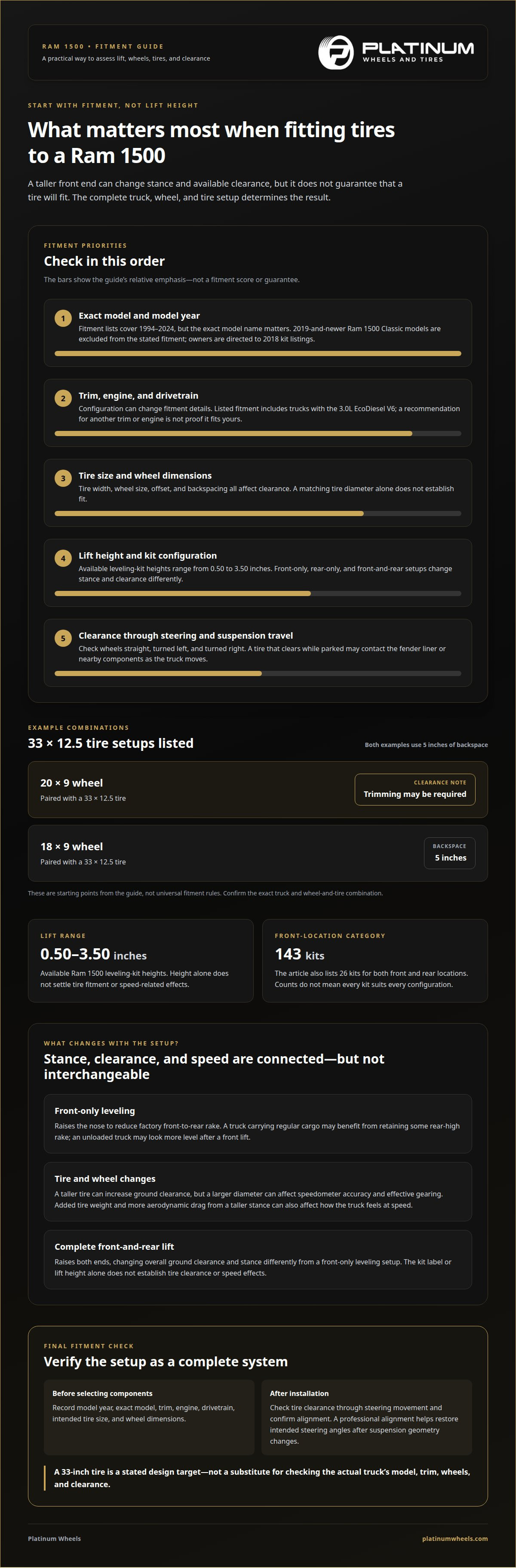
- Use model year, trim, wheel dimensions, and backspacing to narrow tire fitment. A 33 x 12.5 tire setup may require trimming.
- Compare front-only, rear-only, and front-and-rear kit configurations to understand how each affects stance and clearance.
- Check model-specific fitment carefully, especially for 2019-and-newer Ram 1500 Classic trucks and setups with the 3.0L EcoDiesel V6.
Does leveling kits affect speed?
A leveling kit doesn’t set a new speed limit or change the speedometer by itself. For a Ram 1500, a leveling kit can affect speedometer accuracy if larger-diameter tires change the distance covered per wheel rotation. Added tire weight and increased aerodynamic drag from a taller stance can also affect how the truck feels at speed. The result depends on the complete setup, not lift height alone.
Available Ram 1500 leveling-kit heights range from 0.50 inch to 3.50 inches. A front leveling kit raises the nose to reduce the factory front-to-rear rake, while a complete front-and-rear lift kit raises both ends. That distinction changes overall ground clearance and stance. A Ram 1500 SST mid-level lift kit is another category to compare by its intended height and included components; the label alone doesn’t establish tire clearance or speed effects.
Tire size is a key variable. A taller tire can increase ground clearance, but it may also change effective gearing and speedometer readings. Its width, wheel offset, and backspacing affect clearance around suspension and body components. For example, a tire that clears at rest may contact a component during steering or suspension travel. Fitment needs to account for the tire and wheel together.
Installation also matters. The installer checks the Ram 1500’s model and suspension configuration, installs the selected front leveling components, then checks alignment and tire clearance. A complete lift kit may involve front and rear components. After suspension geometry changes, working with a full-service repair facility like On Top Diesel & Automotive for a professional alignment helps restore the intended steering angles.
A leveling kit on a Ram 1500 doesn’t automatically determine warranty coverage or create a universal safety-inspection requirement. Warranty decisions depend on applicable terms and the relationship between a modification and a failed part; inspection requirements depend on rules that apply to the vehicle. Alignment is a practical post-install step, not a substitute for checking fitment and steering behavior.
Maximum tire fitment by model year and lift
There isn’t one maximum tire size that fits every Ram 1500. Fitment lists cover model years 1994 through 2024, but the right combination depends on the exact year, trim, lift height, and wheel dimensions. Treat a tire-size recommendation as a starting point, not a universal fitment rule.
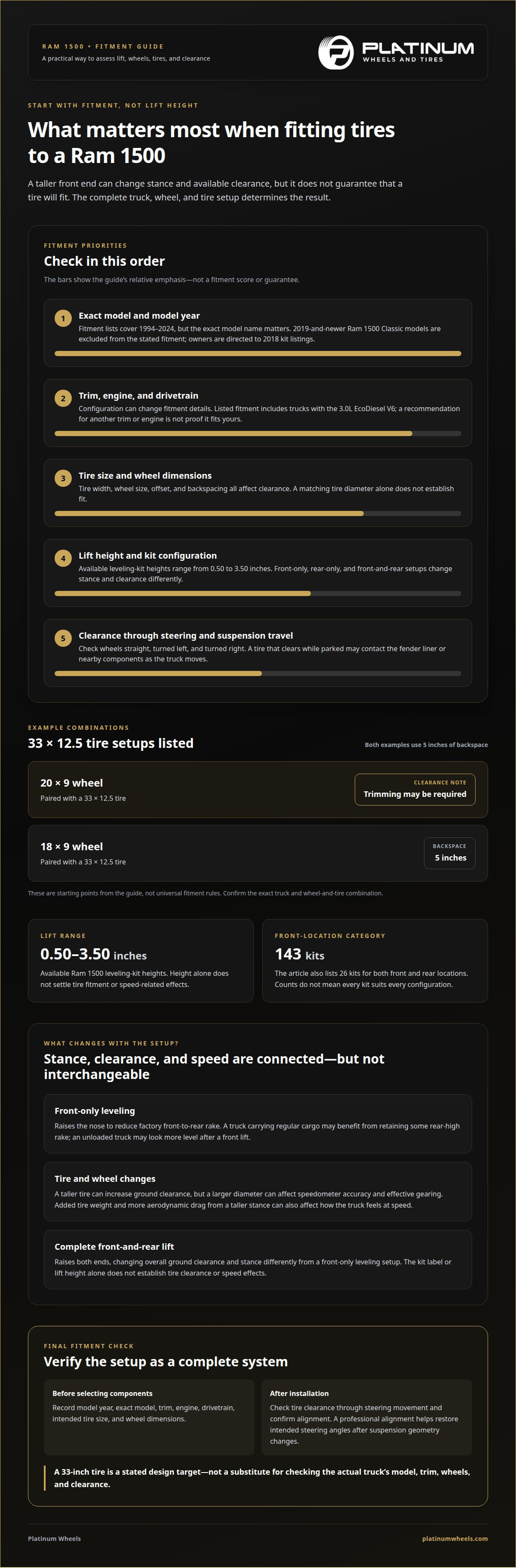
A recommended setup pairs 33 x 12.5 tires with 20 x 9 wheels and 5 inches of backspace. Another pairs the same 33 x 12.5 tires with 18 x 9 wheels and 5 inches of backspace. Trimming may be required for the first combination. Tire width and wheel placement affect clearance, so a matching tire diameter alone doesn’t establish fit.
Start by matching the kit to the truck’s model year and trim. Then account for drivetrain and engine configuration, since fitment details can vary across Ram 1500 versions. Listed fitment includes trucks with the 3.0L EcoDiesel V6. A recommendation for another engine or trim shouldn’t be treated as proof that the same setup fits yours.
Pay special attention to the Ram 1500 Classic designation. The stated fitment excludes 2019-and-newer Classic models and directs those owners to 2018 kit listings. That model-specific distinction matters even when the truck’s year appears to fall within the broader 1994-through-2024 fitment range. Match the exact model name as well as the model year.
Can a leveling kit cause suspension or drivetrain problems? Yes. A kit that does not match the truck, or a tire-and-wheel combination without adequate clearance, can create fitment issues and affect suspension geometry. The truck’s model, trim, engine, and wheel details all help determine a compatible setup.
For a practical fitment plan, organize the truck’s model year, trim, engine, and intended wheel dimensions before selecting components. These details make model-specific Ram 1500 fitment planning more precise.
Front-end clearance and stance
A front leveling setup changes the Ram 1500’s nose height relative to its rear. That shift reduces the factory rake and creates a more even side profile. The category lists 143 kits for the front location. The right choice depends on the stance you want and the tire clearance your setup needs. A truck carrying regular cargo may benefit from retaining some rear-high rake, while an unloaded truck may look more level after a front lift.
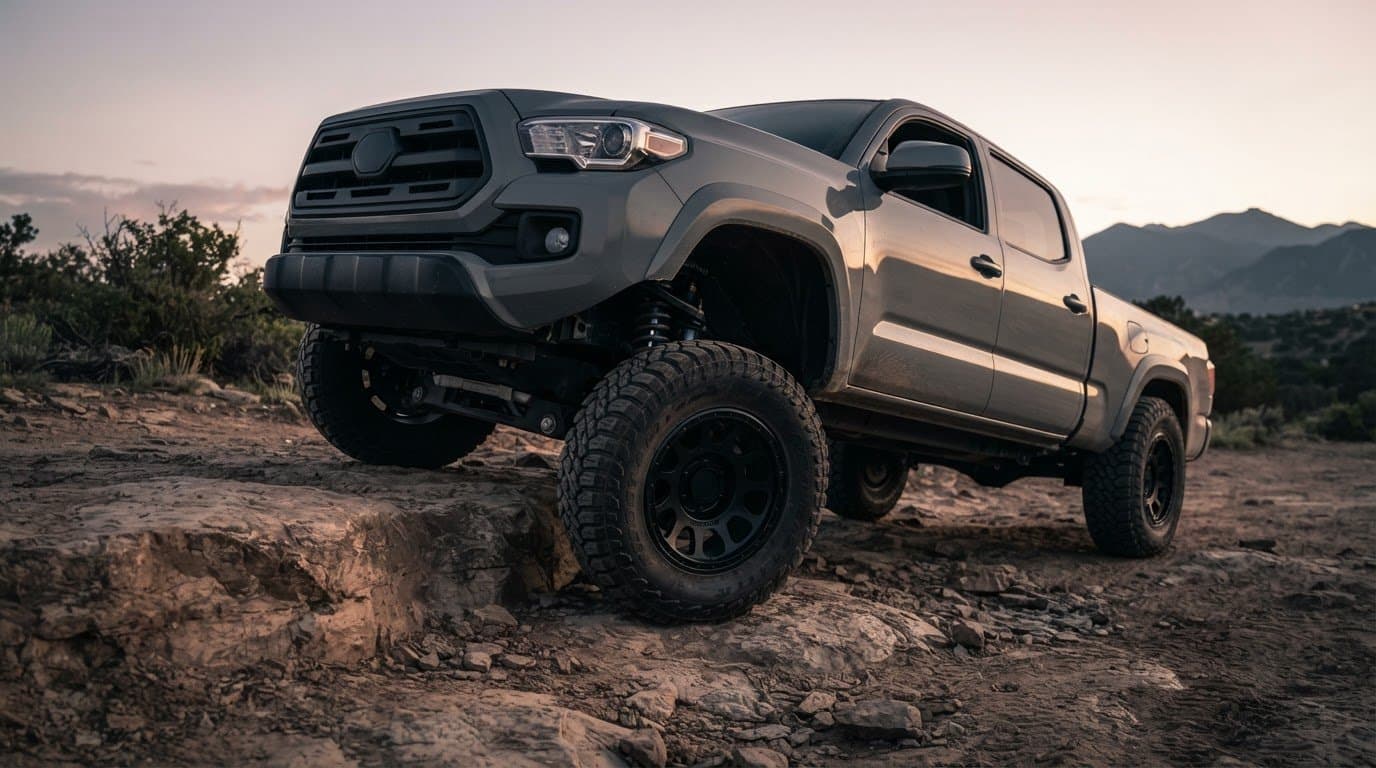
Clearance and stance are related, but they aren’t the same measurement. Raising the front can create more room above the tire, yet clearance near the wheel well also depends on tire width, wheel position, and suspension movement. The kit is designed to allow clearance for 33-inch tires on the Ram 1500. That design target doesn’t remove the need to assess the complete wheel-and-tire setup against the truck’s model and trim.
Check the front at more than one steering position. A useful fitment assessment includes the wheels pointed straight, turned left, and turned right. The tire must have room near the fender liner and other nearby components as steering and suspension move. A tire that appears clear while parked may sit differently under steering input. The 33-inch tire target is a starting point for this assessment, not a substitute for checking the truck’s actual configuration.
For a balanced result, decide whether appearance or functional clearance leads the build. Then match the front lift to the tire dimensions and wheel placement, rather than choosing height alone. A front-only change alters the truck’s rake; a front-and-rear setup changes overall height differently. After installation, inspect tire clearance through steering movement and confirm alignment. These steps connect the intended Ram 1500 stance with practical clearance, instead of judging the setup from a side-view photo alone.
Ram 1500 leveling kit fitment
Fitment starts with the exact Ram 1500 model, not just the truck’s year. The category lists 26 kits for both front and rear locations, but that count doesn’t mean every kit suits every configuration. Match the kit’s stated application to the truck’s model year, trim, and engine before selecting components. A leveling kit for a Ram 1500 needs to match the vehicle, not merely its general model name.
Model names matter. The listed fitment excludes 2019-and-newer Ram 1500 Classic models and directs those owners to 2018 kit listings. A 2019 Ram 1500 and a 2019 Ram 1500 Classic shouldn’t be treated as interchangeable fitment cases. Confirm the exact model designation before selecting a kit.
Engine details matter, too. Stated fitment includes Ram 1500 trucks with the 3.0L EcoDiesel V6. That inclusion doesn’t replace checking the truck’s trim and model-year application. A useful sequence is to identify the model designation, record the year and trim, then match the engine and kit application against those details.
Next, connect the kit to the intended setup. Front-and-rear kits differ from front-only designs, and the correct configuration depends on fitment requirements and desired stance. Wheel and tire choices also form part of the complete setup. A kit’s vehicle application alone doesn’t establish that every wheel-and-tire combination will clear. For a leveling kit on a Ram 1500, treat vehicle compatibility and component clearance as separate fitment checks.
The key takeaway: match the kit to the complete truck identity, including its Classic designation, trim, and engine. The 2019-and-newer Classic exclusion shows why year-only selection can lead to the wrong application. A listed EcoDiesel fitment is useful, but doesn’t make every trim or model year automatically compatible.
For a fitment plan built around your truck’s exact details, review Ram 1500 fitment options before choosing the setup.
Platinum Wheels: Lift Kits & Leveling Kits
Platinum Wheels installs lift kits and leveling kits for Ram 1500 owners planning a change in stance or clearance. Bring your truck’s model year, trim, and engine details into the fitment conversation, along with your intended tire and wheel setup. Those details help align the suspension choice with the rest of the build.
If you’re changing wheels or tires at the same time, Platinum Wheels offers custom truck wheels and off-road rims, all-terrain and mud-terrain tires, and complete wheel and tire packages. Planning these choices together helps account for fitment, rather than treating ride height and tire selection as separate decisions.
For a Ram 1500 setup in Denver, contact Platinum Wheels to discuss your fitment goals.
Plan the Next Step for Your Ram 1500
Turn your preferred stance into a complete build plan before choosing parts. Consider how you use the truck, the look you want, and how the suspension, wheels, and tires need to work together. That broader view helps keep the next decision focused on fitment, not just lift height. A leveling kit for your Ram 1500 should support the way you intend to drive and the setup you want to run.
Platinum Wheels can help you coordinate a leveling kit with custom truck wheels and off-road rims, all-terrain and mud-terrain tires, or a wheel and tire package. Bring your Ram’s model details and build goals to a free Wheel & Tire Fitment Consultation to discuss a suitable setup.
Contact Platinum Wheels about fitment and take the next step toward a Ram 1500 setup that feels considered from the start.
Frequently Asked Questions
Does a 2 or 3 inch lift make a difference?
Yes. A 3-inch lift adds one inch compared with a 2-inch lift, changing the front stance and available space. That extra height may suit a visibly taller look, but it doesn’t guarantee a particular tire fit. Choose based on your preferred appearance, wheel-and-tire plan, and Ram 1500 fitment rather than automatically selecting the taller option.
Should I put a leveling kit on my Ram 1500?
Consider a leveling kit if you want to reduce the factory front-to-rear rake or accommodate a planned wheel-and-tire setup. It may not suit you if you want to preserve the truck’s current stance. Weigh how you use your Ram, the look you want, and whether the planned components fit your specific configuration. This guidance is relevant to Ram owners in Denver, Aurora, Lakewood, Englewood, Wheat Ridge, Commerce City, Westminster, Thorton, Broomfield, Arvada, Golden, Littleton, Parker, Highlands Ranch, Castle Rock, Boulder, Fort Collins, and Colorado Springs.
What does a leveling kit do for a Ram 1500?
A leveling kit for a Ram 1500 raises the front relative to its original stance, making the truck look more level from front to rear. Depending on the setup, it can also create additional room for a tire choice. It changes suspension height, not the truck’s basic purpose, so choose components around the stance and wheel-and-tire combination you want.
What is the best leveling kit for a Ram 1500 by model year and trim?
The best fit is the kit specified for your exact Ram 1500 model year and trim, with engine configuration considered too. For example, the listed fitment includes trucks with the 3.0L EcoDiesel V6. Ram 1500 Classic fitment needs special attention: 2019-and-newer Classic models are directed to 2018 kit listings. Match the full model designation, not the year alone.
How much front lift does a Ram 1500 leveling kit provide?
Available Ram 1500 leveling-kit heights span 0.50 inch to 3.50 inches. The amount of front lift depends on the specific kit and its application, so the category range isn’t a recommendation for every truck. Choose a height that suits your stance goal, then assess the wheel-and-tire setup against the truck’s model and trim.
How much does a Ram 1500 leveling kit cost, including installation?
The installed total depends on the kit, truck configuration, and installation scope. Platinum Wheels offers a free Wheel & Tire Fitment Consultation to discuss your setup. Other free services include Air, Wheel Test Fitment, Quick Alignment Check, Rim/Tire/Package/Shipping Quote, TPMS Programming, and Quick-Check Alignment. Request a quote from Platinum Wheels for the kit and work you’re considering.