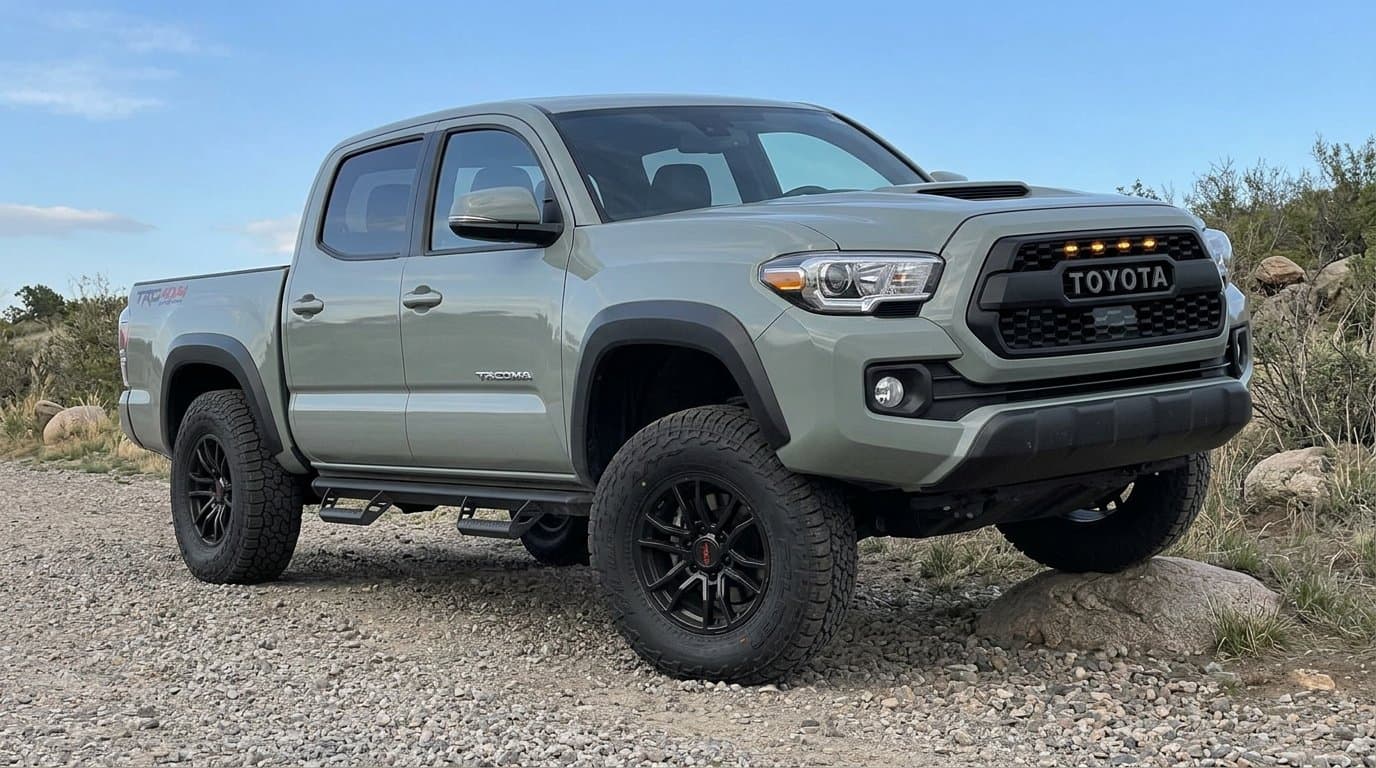
Top Tacoma Leveling Kits for Denver Off-Roaders
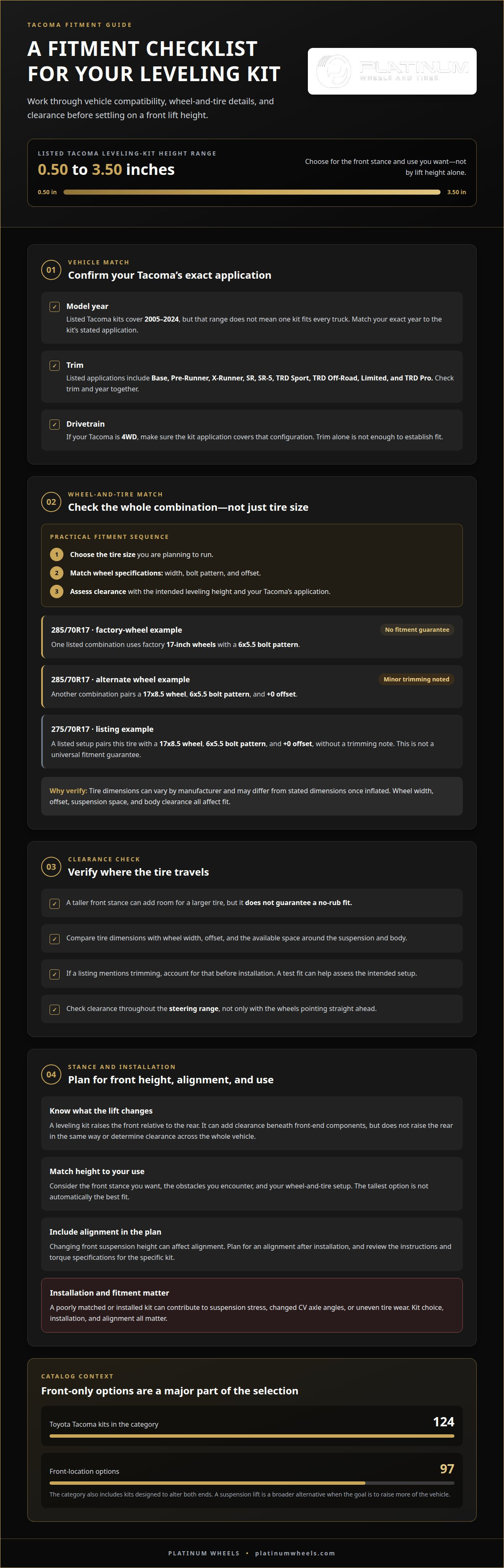
A Tacoma leveling kit can raise ride height from 0.50 to 3.50 inches, depending on the option you choose. That range matters: the right lift for your truck depends on how much front height you want and what tire-and-wheel fitment you’re aiming for. Choosing a leveling kit for your Tacoma is about more than picking a lift number.
You may be looking to reduce the truck’s nose-down stance or make room for a larger tire setup. Either way, fitment details matter as much as advertised height, especially when you want a setup that works for Denver driving and off-road use. This guide explains how lift height affects front stance and tire clearance, what to consider when matching a kit to your Tacoma’s year and trim, and how to think through fitment before settling on an option. You’ll have a clearer basis for choosing a setup that suits your truck and how you use it.
Key Takeaways
- Choose a kit based on the front stance you want and how you use your Tacoma, not lift height alone.
- Match tire size with wheel width, offset, and available clearance to understand where trimming may be needed.
- Use your Tacoma’s model year and trim to narrow fitment options before choosing a setup.
- Consider how a leveling kit, wheels, and tires work together to create a compatible off-road setup.
Benefits of Tacoma leveling kits
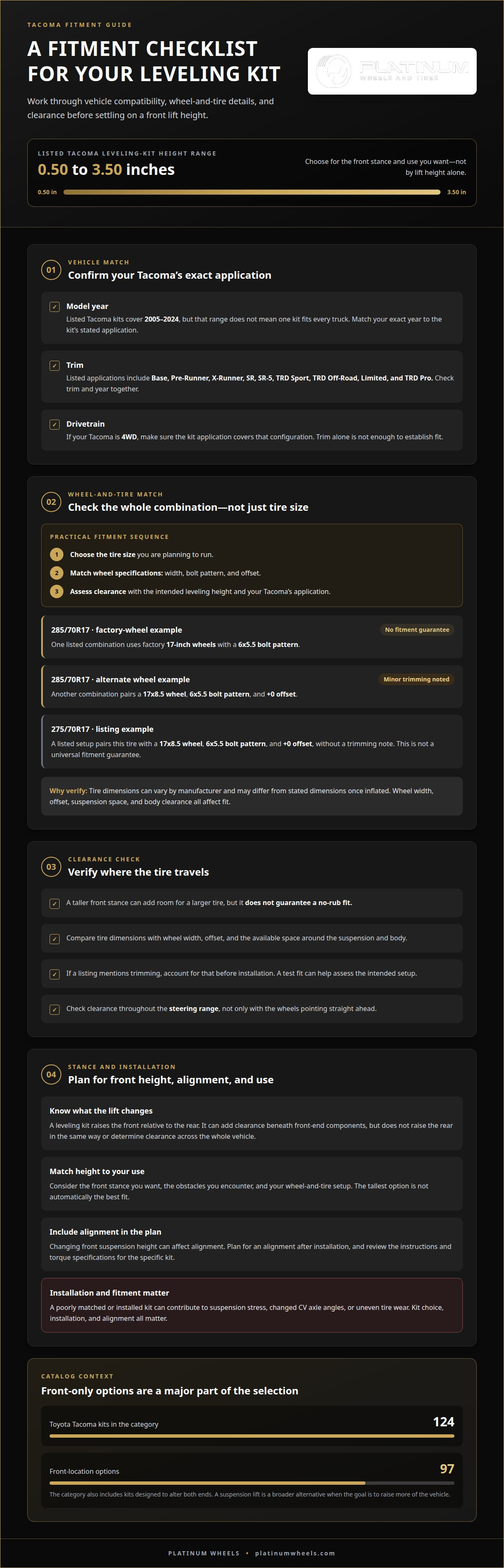
A Tacoma leveling kit raises the front relative to the rear, changing the truck’s stance without replacing the full suspension system. The category includes 124 Toyota Tacoma kits, with front-location options making up 97. That range lets drivers compare front-only approaches with kits designed to alter both ends. A suspension lift kit is a broader alternative when the goal involves raising more of the vehicle, rather than addressing front height alone.
Extra front clearance can help create room for a larger tire setup, but the kit does not determine fitment by itself. Tire dimensions, wheel width, offset, and suspension movement all affect clearance. For example, a 285/70R17 combination may need different clearance consideration than a smaller tire. Treat lift height as one part of the fitment decision, not a guarantee that a particular tire will clear.
Warranty, inspection, and legality questions do not have a universal answer based on the kit alone. Consider your vehicle’s warranty terms, whether a modification affects a covered component, and the rules that apply where the truck is registered.
The installed cost depends on the kit and the work involved. A front spacer kit and a suspension lift kit use different parts and require different installation work, so there is no single figure for every Tacoma setup.
Ride quality, handling, and towing can change when suspension geometry or ride height changes. The effect depends on the kit, installation, tires, and how the truck is loaded. Towing adds weight, which also affects suspension behavior.
Installation involves safely supporting the Tacoma, removing and fitting suspension components, reassembling the front end, and checking alignment. The procedure varies by kit, so follow its instructions and torque specifications.
A poorly matched or installed kit can contribute to suspension stress, changes in CV axle angles, or uneven tire wear. Careful kit selection and installation, followed by an alignment, help address these risks.
Front leveling height and tire clearance
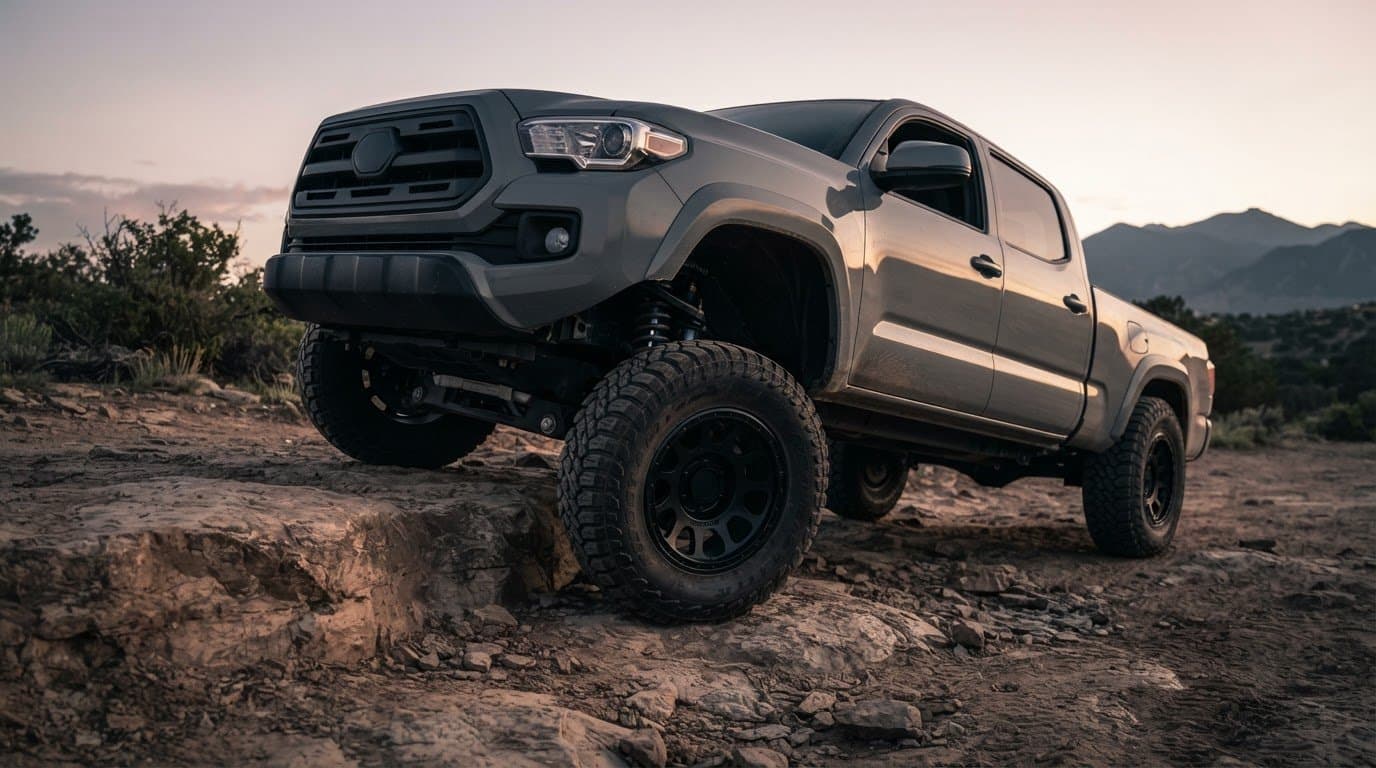
A Tacoma leveling kit raises the front to change the truck’s stance and can add ground clearance and room for larger tires. The right choice depends on where you need clearance and how your wheel-and-tire combination fits.
Ground Clearance Changes
Raising the front can increase clearance beneath front-end components, which can help on uneven ground. The change is concentrated at the front, so it does not raise the rear in the same way. Consider the obstacles you encounter, such as ruts or rocks, and which parts of the truck need more room. A taller front stance alone does not determine clearance across the whole vehicle.
Larger Tire Clearance
Added height can create more room for a larger tire, but it doesn’t guarantee a no-rub fit. A listed 285/70R17 setup uses factory 17-inch wheels with a 6x5.5 bolt pattern. Another 285/70R17 combination pairs a 17x8.5 wheel, 6x5.5 bolt pattern, and +0 offset, with minor trimming noted. Those details show why tire size alone can’t predict clearance.
Compare the tire’s actual dimensions with the wheel width, offset, and space around the suspension and body. Measurements can vary by manufacturer and may differ from stated dimensions once a tire is inflated. A test fit is useful before installation, especially if the product listing mentions trimming. Check clearance throughout the steering range, not just with the wheels pointing straight ahead.
For a practical fitment sequence, choose the tire size first, match it with the wheel specifications, then assess clearance with the intended leveling height. A 275/70R17 tire on a 17x8.5 wheel with a 6x5.5 bolt pattern and +0 offset appears in a listing without a trimming note. That example isn’t a universal fitment guarantee; Tacoma year, wheel, and tire measurements still matter.
Use all-terrain and mud-terrain tire options as part of planning a wheel-and-tire setup that complements the front height you want.
Tacoma leveling kit fitment
Start with your Tacoma’s model year, trim, and drivetrain. Confirm that the kit fits those specifications before comparing lift height or installation requirements.
Model-Year Compatibility
Listed Toyota Tacoma leveling kits cover model years 2005 through 2024. That range doesn’t mean a single kit fits every truck in those years. Start with the exact model year, then compare it with the kit’s stated application. A leveling kit for a Tacoma should match the vehicle’s specified year range, since suspension mounting details can vary. Year-specific fitment narrows the choices before you consider the rest of your setup.
Trim-Level Compatibility
Listed applications include Base, Pre-Runner, X-Runner, SR, SR-5, TRD Sport, TRD Off-Road, Limited, and TRD Pro. Use the exact trim alongside the model year when assessing a kit. For example, identifying a truck only as a TRD Off-Road doesn’t establish that every kit listed for that trim fits its year. Match both details to reduce the chance of selecting an unsuitable application.
Drivetrain is another fitment detail to account for. A 4WD Tacoma should be matched to an application that covers that configuration, rather than relying on trim alone. Keep the year, trim, and drivetrain together as you assess a leveling kit for your Tacoma. This gives a more useful fitment basis than a general Tacoma label.
Alignment and Modification Needs
Changing the front suspension height can affect alignment, so plan for an alignment after installation. Other modifications depend on the kit design and your truck’s wheel-and-tire setup. Review the fitment details and installation notes for your specific year and trim. The stated lift height alone does not tell you whether additional work is needed; the application and components matter too.
Tacoma leveling kit lift heights
Listed Tacoma leveling kit heights span 0.50 to 3.50 inches. Most kits raise ride height by at least 0.5 inches, and many raise it by 2 inches or more. That range makes height a central choice. Match the lift to your desired stance and use, rather than assuming the tallest option is the best fit.
Start with your goal. If you want a modest front-height change, compare options toward the lower end of the range. For a more pronounced lift, consider higher options alongside their fitment details. A 2-inch setup and a 3.50-inch setup are distinct choices; the advertised height alone doesn’t explain how either will work with your truck.
Treat the stated lift height as one factor in the final result. Your Tacoma’s existing suspension and configuration also affect its stance. Before choosing a Tacoma leveling kit, decide how you want the front to sit relative to the rear, then use the listed height to narrow your options. This keeps the decision focused on your intended look, not simply the largest number on a product listing.
Lift height also affects other build decisions. A greater lift can change what you need to consider for suspension geometry and tire clearance. Review the kit’s fitment details alongside your Tacoma’s year, trim, and planned tire setup. Consider these factors together instead of choosing a height first and checking compatibility later.
The takeaway is simple: choose a height that meets your stance and driving goals, then assess the full setup. For help choosing a suitable option, explore Tacoma leveling kit options.
Platinum Wheels: Lift Kits & Leveling Kits
Platinum Wheels installs lift kits and leveling kits for Tacoma owners, helping match front height to the intended setup. If you have settled on a preferred stance but need to coordinate the kit with your tire and wheel fitment, start with a free Wheel & Tire Fitment Consultation.
For a coordinated build, Platinum Wheels also offers custom truck wheels and off-road rims, all-terrain and mud-terrain tires, and wheel-and-tire packages. Considering these options alongside the suspension choice helps bring the full setup together, especially when tire clearance is one of your goals.
When discussing your setup, share your Tacoma’s model year, trim, and intended use. Contact Platinum Wheels to discuss lift kits and leveling kits for your truck.
Build Your Tacoma Around the Way You Drive
Choose your next step based on how you use the truck. Denver commutes, trail outings, and carrying gear can call for different priorities. Decide whether stance, tire choice, or off-road use matters most. That focus gives a Tacoma leveling kit a clear purpose and helps guide the rest of the build.
Before choosing a leveling kit for your Tacoma, consider how it will work with your planned wheels and tires. A coordinated setup starts with your truck’s configuration and how you drive, not just the lift height. This helps keep the build practical and personal.
Ready to plan your setup? Contact Platinum Wheels about Tacoma leveling kits and take the next step toward a truck that suits your adventures.
Frequently Asked Questions
What does a leveling kit do on a Toyota Tacoma?
A leveling kit raises the Tacoma’s front ride height, changing its stance and creating more room around the front tires. It can suit a truck whose nose sits lower than you prefer or a planned wheel setup that needs more clearance. The change focuses on the front, unlike a suspension lift that raises more of the vehicle.
What leveling kit sizes fit different Toyota Tacoma model years and trims?
Fitment is determined by the Tacoma’s exact model year, trim, and drivetrain, rather than by the nameplate alone. Listed applications cover 2005 through 2024 and include Base, Pre-Runner, X-Runner, SR, SR-5, TRD Sport, TRD Off-Road, Limited, and TRD Pro. Match all vehicle details to the kit application, then compare its lift height with your intended stance.
What tire sizes fit a Tacoma with a leveling kit without rubbing?
There isn’t one tire size that clears every leveled Tacoma without rubbing. A listed 285/70R17 setup uses factory 17-inch wheels, while another 285/70R17 combination on a 17x8.5 wheel with +0 offset notes minor trimming. Wheel dimensions, tire measurements, and truck fitment all affect clearance. A test fit reveals interference that a tire-size label alone can’t show.
Is a leveling kit or lift kit better for a Toyota Tacoma?
A leveling kit suits Tacoma owners focused on changing the front height, while a suspension lift kit is the broader option for raising more of the vehicle. The right match depends on your build goal: adjusting the front stance calls for a different approach than raising the overall suspension. Consider your intended tire setup and driving use as well as the appearance you want.
What are the best Tacoma leveling kits and how do they compare?
There is no single best kit for every Tacoma. Compare lift height, model year, trim, drivetrain, and tire-and-wheel fitment. The Rough Country kit requires minimal trimming to the upper strut studs. An upper control arm is not stated as required for the Elevate Suspension kit, although one can improve alignment and drivability.